Travel as Life’s Universal Cure: An Incomplete Memoir of the Sichuan-Tibet Highway
Meta Description: Discover the transformative power of the Sichuan-Tibet Highway journey. From Chengdu to Daocheng, this SEO-optimized travel memoir reveals how adventure heals, with altitude tips, route insights, and life lessons.
Introduction: Why the Sichuan-Tibet Highway Calls to Every Traveler
It’s been nearly two months since I stepped off the high plateau and back into the chaos of Beijing. Before my 30th birthday, I managed to squeeze in a 12-day journey along one of the world’s most legendary roads—the Sichuan-Tibet Highway. If you’re reading this, I’d suggest cueing up the theme song “Stay Alive” from The Secret Life of Walter Mitty. It sets the mood in a way words alone cannot.
Let me borrow a passage that’s been circulating online—perhaps overused, but still painfully true. I offer it to you, to anyone reading this, and especially to those who dream of this road but haven’t yet found the courage to begin:
“While you’re squinting at your PowerPoint, a marmot in Sêrtar is just waking up and crawling out of its burrow. While you’re wrestling with spreadsheets, a yak in Daocheng is grazing lazily beneath Mount Yangmaiyong. While you’re sweating in a crowded subway, an eagle is circling above the Potala Palace. While you’re arguing across a conference table, backpackers on the Sichuan-Tibet Highway are gathered around a campfire, raising glasses, talking about roads you can’t walk in leather shoes, air you can’t get from a ventilation system, and interesting people you’ll never meet in a high-rise office.”
This is not just a travelogue. It’s a story about stepping away from the grind—and finding yourself again.
From Chengdu to Sêrtar: A Strange Leap from Smooth Roads to the Wild

Day 1: Beijing → Chengdu – The Leap of Faith
After weeks of preparation—endless rounds of packing, discarding, and repacking—I still left Beijing with two suitcases and two backpacks. By midday, I was in Chengdu. Just 24 hours earlier, I’d been hunched over a keyboard in an office. Now I stood at the starting line of the Sichuan-Tibet Highway. It felt surreal.
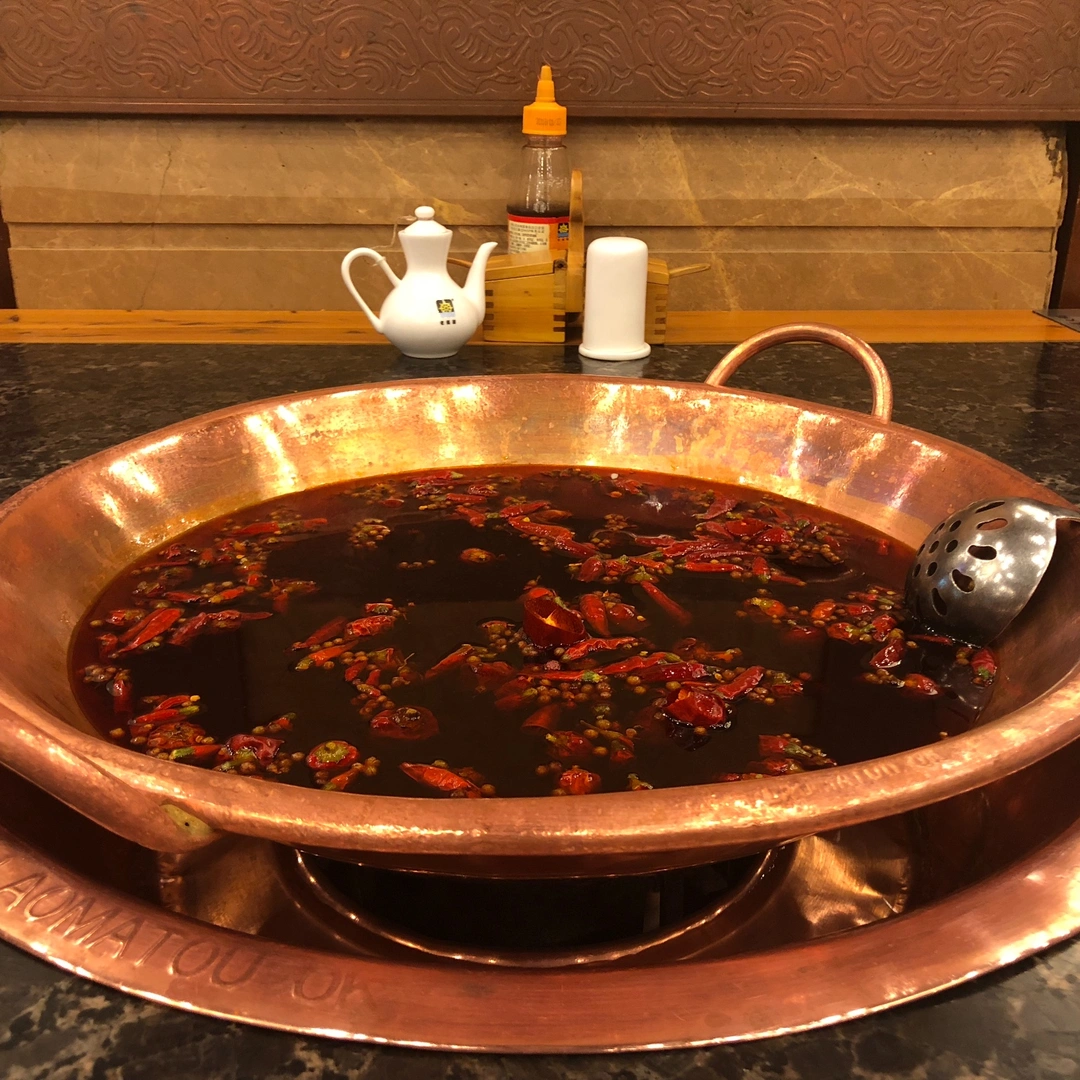
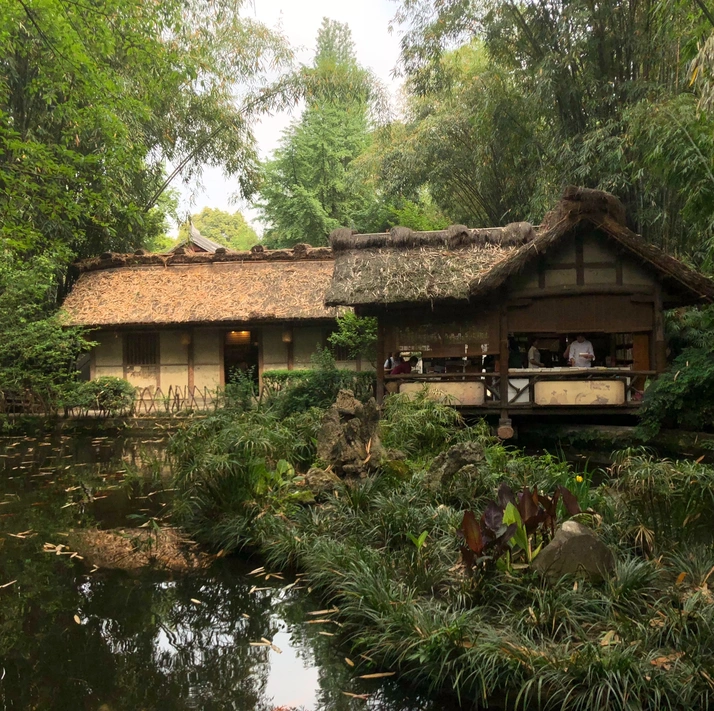
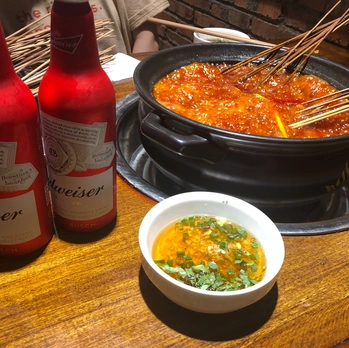
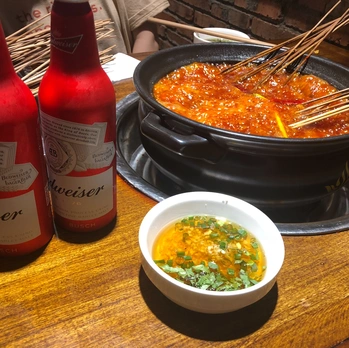
Chengdu welcomed us with a fiery hotpot—the kind that leaves your lips tingling and your soul satisfied. While Beijing was still shivering under cold April rain, Chengdu was already sweating through early summer. We spent the afternoon wandering through the Sichuan Museum and Du Fu’s Thatched Cottage, making final preparations for the road ahead. The day ended with skewers—because in Chengdu, you never have just one meal.
[Link: Best Sichuan hotpot restaurants in Chengdu]
Day 2: Chengdu → Guanyinqiao – Into the Mountains
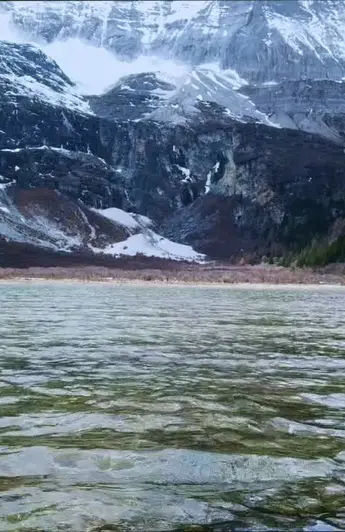
We left at 8 a.m., heading toward Guanyinqiao before continuing to Sêrtar via National Highway 317. Our driver, Dawa, was a quiet Tibetan man. The car was silent at first, but the scenery soon demanded our full attention.
We passed through Wenchuan and Lixian—places still scarred by the earthquake that shook the world a decade ago. The ground remembers. By lunch, we’d left the last stretch of expressway behind. The real journey had begun.
We arrived in Guanyinqiao by evening—elevation 2,600 meters. The town had only one main road, but it was surprisingly well-stocked, even featuring an imported goods store. We stayed at the Jiarong Guju Inn, a cozy spot. After dinner, we grabbed skewers on the street, sharing a few with two stray dogs who’d mastered the art of the pitiful stare.
Day 3: Guanyinqiao → Sêrtar – Altitude Meets the Sacred
Before leaving, Dawa took us up to the Guanyin Temple on the hill. It felt like a blessing for the road ahead. The view from above was stunning—the entire town laid out like a map. A temple dog watched us with serene, almost philosophical eyes.
By afternoon, we reached Sêrtar. After a quick lunch, we headed to the sky burial site. Vultures gathered like an army, their wingspans stretching over two meters. As they swooped overhead, I chose not to take photos. Some moments demand presence, not documentation. I stood on a hillside, watching in silence.
Afterward, we drove west to see marmots. These creatures have grown accustomed to tourists—and to the snacks they bring. Apparently, they’ve become picky, refusing bread that isn’t a certain brand. Life is good when you’re a marmot in Sêrtar.
Then came the main event: the Larung Gar Five Sciences Buddhist Academy. Getting in was more complicated than expected. Visitors must take a shuttle bus to the core valley, then return with a permit to bring their own vehicle inside. I underestimated the process—and my own stamina. By the time I reached the top, I was at over 4,000 meters. Headache, shortness of breath, fever. Altitude sickness had arrived.
I collapsed onto the hotel bed, unable to move. My heart rate hovered near 100, blood oxygen around 70%. I put on headphones and listened to Tokiko Kato’s “Toki ni wa Mukashi no Hanashi wo.” It was a gentle balm for a body under siege.
[Link: Altitude sickness prevention tips for Tibet travel]
Day 4: Sêrtar → Xinduqiao – Snow and Recovery
I woke up still dizzy—but Sêrtar had transformed overnight. Snow. A blizzard, actually. The red houses were now half-buried in white. I forced myself up, grabbed my gear, and went out to capture the contrast: red against white, the sacred against the mundane. By noon, I couldn’t take the altitude anymore. We left.
Lunch in Luhuo was a yak hotpot—expensive, but the real meat and hot broth revived me. The rest of the afternoon passed in a haze. We passed Yala Snow Mountain and Tagong Grassland before arriving in Xinduqiao. I took two aspirin, and for the first time, the headache eased.
Daocheng: Where All the Beauty and Fantasy of the Highway Converge
Day 5: Xinduqiao → Daocheng – The Gateway to Shangri-La
Morning in Xinduqiao was bright and sunny. My altitude sickness had finally loosened its grip. Breakfast was Sichuan food—as it would be for the entire trip.
We climbed the “Heavenly Road Eighteen Bends” and entered the 318 National Highway. The landscape opened up. At Kazila Mountain, we reached our first real high point. Lunch was in Litang, the “City of High Altitude.” Then we pushed on toward Daocheng, passing Rabbit Mountain and ancient glacial remains.
We decided to skip Yading Village and stay in the lower-altitude Shangri-La Town. It was the right call. The town was comfortable, with proper restaurants and even a café. After dinner, we strolled through the square. A lazy black dog lay outside the café, embodying the town’s unhurried rhythm.
[Link: Best accommodation in Shangri-La Town for budget travelers]
Day 6: Yading Nature Reserve – The Hike That Tests Your Soul
We set out early, aiming for Milk Lake via Mount Yangmaiyong. After entering the main gate, we took a shuttle bus up to 4,000 meters. At a viewpoint, we caught our first glimpse of Mount Xiannairi. It was breathtaking.
From Chonggu Monastery to Luorong Cattle Farm, I chose to take a short ride to save energy. At the farm, I understood why Joseph Rock was so captivated. The scenery wasn’t famous because of a movie—the movie was famous because of this scenery.
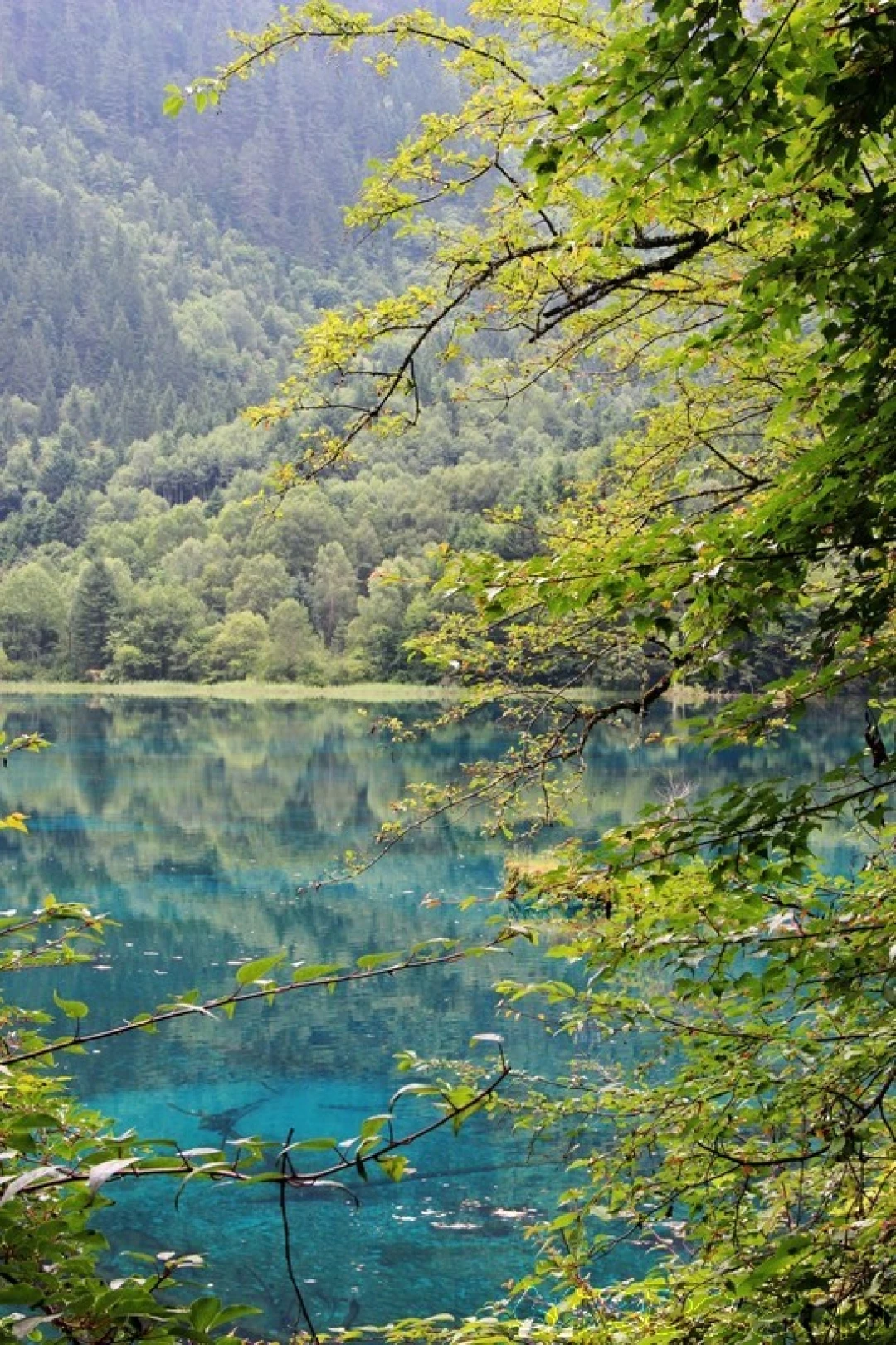
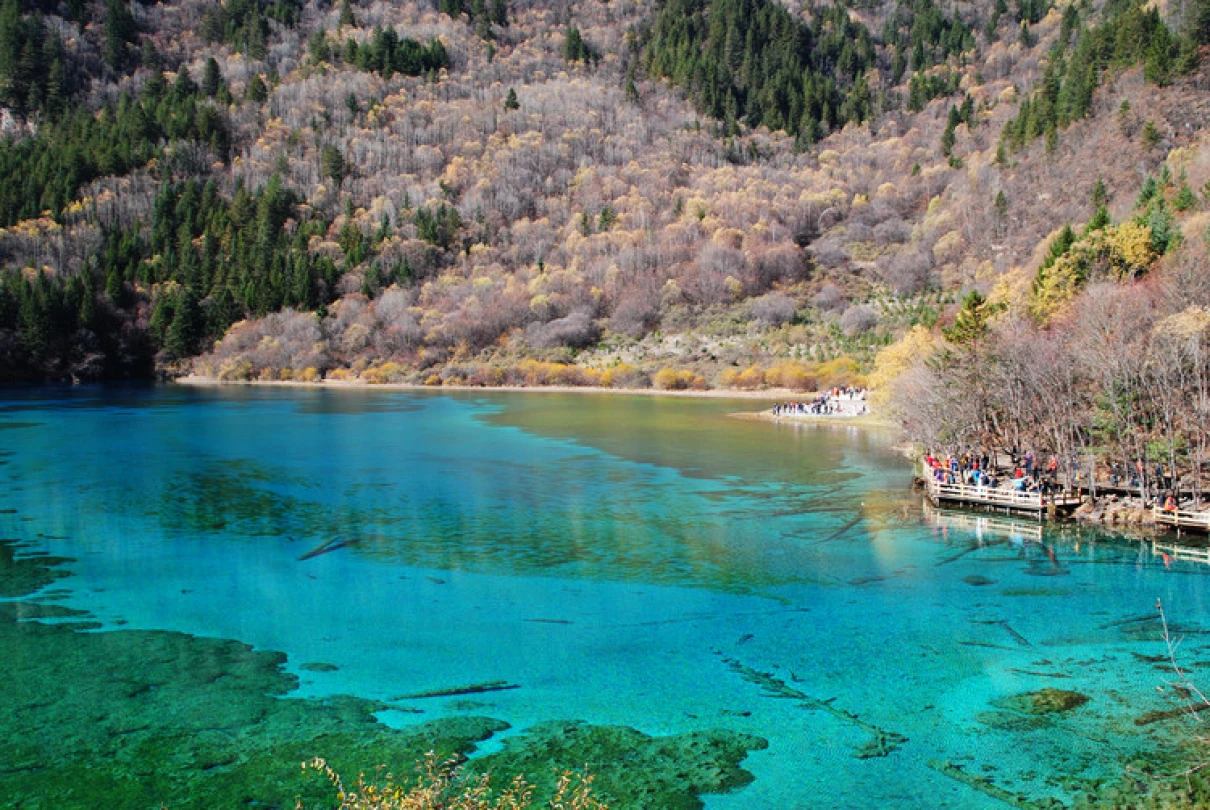
The hike to Milk Lake began. I was carrying nearly 10 kilograms of camera gear. It was torture. But every time I wanted to stop, the view pushed me forward. At Five-Color Lake, I set up for a 30-second long exposure. The result was almost perfect—clouds, snow, and water blending into one.
The climb to Milk Lake was brutal. Oxygen thinned. Breathing became a luxury. But I kept shooting. My gear list: Canon 6D, 16-35mm, 50mm, 70-200mm, Fuji X-T20, DJI Mavic Pro, GoPro Hero 4 Black. My advice: carry as much as you can. Regret is heavier than any camera.
At Milk Lake, the weather turned. Snow began to fall. The lake couldn’t show its famous turquoise blue. But the low light gave me great tonal range. Most tourists were filming TikTok videos, muttering, “TikTok tricked me into climbing this damn place.” But standing there, surrounded by sacred peaks, I realized: you don’t own these moments. You only experience them.
By 6 p.m., I was back down. Fever returned. All I wanted was to go home, sleep in a real bed, eat familiar food. But all I had was a handful of altitude pills. They worked, barely. The hotel was below 3,000 meters, and I finally slept.
[Link: Photography tips for high-altitude landscapes]
From Sichuan to Tibet: Climbing the Geographical Ladder
Day 7: Daocheng → Mangkam – The Road to Tibet
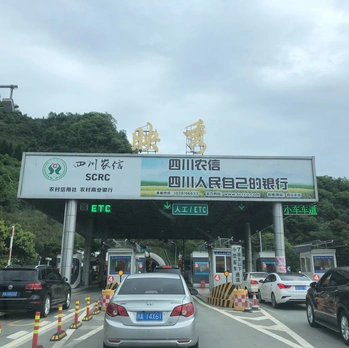
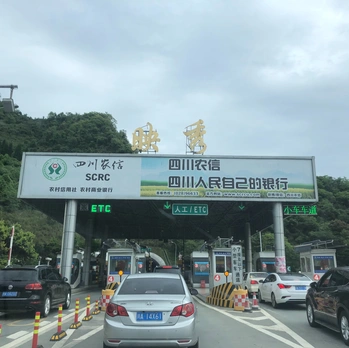
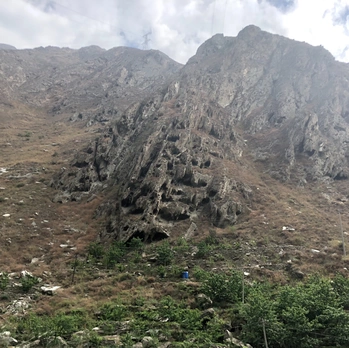
We left Daocheng under thick clouds. The landscape felt alien—ancient glacial plains, mist curling through valleys. I wanted to stop and photograph, but I never asked. The driver knew the rhythm. We crossed into Tibet Autonomous Region at the border checkpoint. The air felt different—thinner, more sacred.
We arrived in Mangkam by evening. This small town sits at 3,800 meters and serves as a gateway for travelers heading deeper into Tibet. Dinner was simple—noodles and tea. I checked my blood oxygen: 75%. Not great, but manageable. The night was cold and silent.
[Link: Essential gear for the Sichuan-Tibet Highway road trip]
FAQ: Your Questions About the Sichuan-Tibet Highway Answered
1. What is the best time to travel the Sichuan-Tibet Highway?
 The ideal season is April to October. Spring and autumn offer mild weather, clear skies, and fewer landslides. Avoid winter (November to March) due to snow closures and extreme cold.
2. How do I prevent altitude sickness on this route?
Acclimatize gradually: spend 2–3 days in Chengdu (500m) before heading higher. Stay hydrated, avoid alcohol, and carry acetazolamide (Diamox). Descend immediately if symptoms worsen.
3. Do I need a permit to travel the Sichuan-Tibet Highway?
 Yes, if you’re entering Tibet Autonomous Region. Foreign travelers need a Tibet Travel Permit, arranged through a registered tour operator. Chinese nationals need only a valid ID.
4. How long does the full Sichuan-Tibet Highway trip take?
 A typical 12–15 day itinerary covers Chengdu to Lhasa, with stops at Sêrtar, Daocheng, Litang, and Nyingchi. Add 2–3 days for side trips like Yading Nature Reserve.
5. What should I pack for the Sichuan-Tibet Highway?
Essentials include: warm layers, waterproof jacket, sturdy hiking boots, sun protection (SPF 50+), altitude sickness medication, portable oxygen cans, and a power bank. Camera gear is optional but rewarding.
Conclusion: Your Journey Awaits
The Sichuan-Tibet Highway is more than a road. It’s a mirror that reflects your fears, your limits, and your resilience. From the fiery hotpot of Chengdu to the snow-covered peaks of Yading, every kilometer strips away the noise of modern life and leaves you with what matters: presence, connection, and the courage to keep moving.
I returned to Beijing with a fever, a lighter wallet, and a heavier heart—not from the altitude, but from the beauty I’d witnessed. The marmots, the vultures, the monks, the mountains—they don’t care about your deadlines or your spreadsheets. They exist in a world that predates and outlasts ours.
So here’s my challenge to you: Stop reading. Start planning. Book that ticket. Pack that bag. The road is waiting.
Ready to begin your own Sichuan-Tibet journey? [Link: Book a guided tour of the Sichuan-Tibet Highway] or [Link: Download our free Sichuan-Tibet Highway packing checklist].
Your story is incomplete until you write it on this highway.
You may also like