Jiuzhaigou in Late Autumn and Early Winter: An SEO-Optimized Travel Guide to China's Fairy Tale Wonderland
Meta Description: Discover the quiet beauty of Jiuzhaigou in late autumn and early winter. This SEO-optimized travel guide covers tickets, transportation, accommodation, and must-see spots like Five Flower Lake and Mirror Lake. Plan your off-peak adventure now.
Introduction: Why Visit Jiuzhaigou When Autumn Fades and Winter Begins
Most travelers flock to Jiuzhaigou in mid-autumn, when the mountains erupt in fiery reds and golds, and the turquoise lakes shimmer like gemstones. But there's a secret the crowds don't know: the cusp between autumn's end and winter's beginning offers something even more magical—a quiet, profound beauty that feels like a heartfelt dialogue with a fairy tale world.
When the last red leaf falls and the first chill of winter arrives, Jiuzhaigou sheds its vibrant finery and reveals its truest self. The crowds thin, the air becomes crisp, and the landscape transforms into a serene masterpiece. This is my third visit to Jiuzhaigou, and each time, she greets me with a different face—leaving me amazed, intoxicated, and reluctant to leave.
If you're searching for the best time to visit Jiuzhaigou for peace, solitude, and unforgettable scenery, late autumn to early winter (late October through November) might be your perfect window. Let this comprehensive Jiuzhaigou travel guide help you plan your journey.
Practical Guide: How to Plan Your Jiuzhaigou Trip
Jiuzhaigou Ticket Prices: Peak vs. Off-Peak
Jiuzhaigou's ticket prices are often debated, but most visitors agree: even at full price, the experience is worth every yuan. The scenic area operates with seasonal pricing:

| Season | Dates | Admission | Sightseeing Bus |
|---|---|---|---|
| Peak Season | April 1 – November 15 | 220 yuan/person | 90 yuan/person |
| Off-Peak Season | November 16 – March 31 | 80 yuan/person | 80 yuan/person |
Pro Tip: Visiting during off-peak season not only saves money but also means fewer crowds and a more intimate experience with nature.
Huanglong Scenic Area is another must-visit nearby. Admission is 200 yuan/person, with the cable car costing 80 yuan for the ascent and 40 yuan for the descent. The two areas offer strikingly different landscapes—both leave you in awe of nature's extraordinary craftsmanship.
How to Get to Jiuzhaigou: Transportation Options
By Air (Fastest Option): - Fly from Chengdu or Chongqing to Jiuhuang Airport - Chengdu offers nearly 20 flights daily (about 40 minutes flight time) - Ticket prices: around 1,000 yuan (discounts available from Chongqing) - Airport to Jiuzhaigou entrance: 88 km (about 1.5 hours by car) - Airport to Huanglong: over 50 km (about 1 hour) - Note: From late November, the shuttle from the airport to Huanglong stops until spring
By Bus (Budget-Friendly): - Depart from Chengdu's Chadianzi Bus Station (more departures, faster exit from city) - Ticket price: around 125 yuan (including insurance) - Journey time: about 10 hours - Alternative: If direct tickets are sold out, go to Songpan first, then transfer
Getting to Huanglong from Jiuzhaigou: - Option 1: Charter a car from the airport to visit Huanglong before heading to Jiuzhaigou (around 400 yuan per vehicle) - Option 2: Visit Jiuzhaigou first, then take the 7:00 or 7:30 bus to Huanglong the next day (tickets must be purchased a day in advance; phone: 0837-7739900)
Where to Stay: Jiuzhaigou Accommodation Guide
Near Jiuzhaigou Entrance: Outside of Golden Week, finding accommodation is easy, with prices ranging from tens of yuan to over a thousand:
- Five-star hotels (Sheraton, Jiuzhai Paradise): 600–1,800 yuan/night
- Four-star hotels: around 260 yuan/night
- Three-star hotels: around 150 yuan/night
- Budget inns: 80–100 yuan/night
Inside the Scenic Area: Overnight stays inside are technically not allowed, but if you want to experience sunrise in the park, you can find lodging in Shuzheng Village (20–100 yuan). Contact options include Uncle Shi (0837-7738529), Zeng Suying (13909044780), and Xiao Liu (0837-7738559).
Near Huanglong: It's recommended to stay in Chuanzhusi or Songpan to make the next day's itinerary easier.
Best Time to Visit Jiuzhaigou: Seasonal Guide
Jiuzhaigou is beautiful year-round, but each season offers a unique experience:
- Late Autumn (October 10–30): Peak foliage, most dazzling colors
- Late Autumn to Early Winter (Late October–November): Quiet beauty, fewer crowds, transitional landscapes
- Winter (December–February): Snow-covered wonderland, unique charm (advance booking essential during Spring Festival)
Seasonal Packing Guide:
| Season | Temperature | What to Pack |
|---|---|---|
| Spring | 9–18°C (48–64°F) | Heavy jacket |
| Summer | 19–22°C (66–72°F) | Light clothing, thin jacket at night, sunscreen |
| Autumn | 7–18°C (45–64°F) | Sweater or warm jacket, rain gear (large temperature swings) |
| Winter | 0–3°C (32–37°F) | Warm layers, moisturizer, sunglasses (prevent snow blindness) |
Jiuzhaigou Itinerary: The Y-Shaped Route Explained
Jiuzhaigou's layout is shaped like a "Y": - Front section: Shuzheng Valley - Left branch: Zechawa Valley - Right branch: Rize Valley - Hub: Nuorilang Waterfall (transportation center)
Recommended Jiuzhaigou itinerary: 1. Morning: Rize Valley (most scenic) 2. Midday: Zechawa Valley 3. Afternoon: Shuzheng Valley (exit from here)
Rize Valley Highlights: Must-See Spots
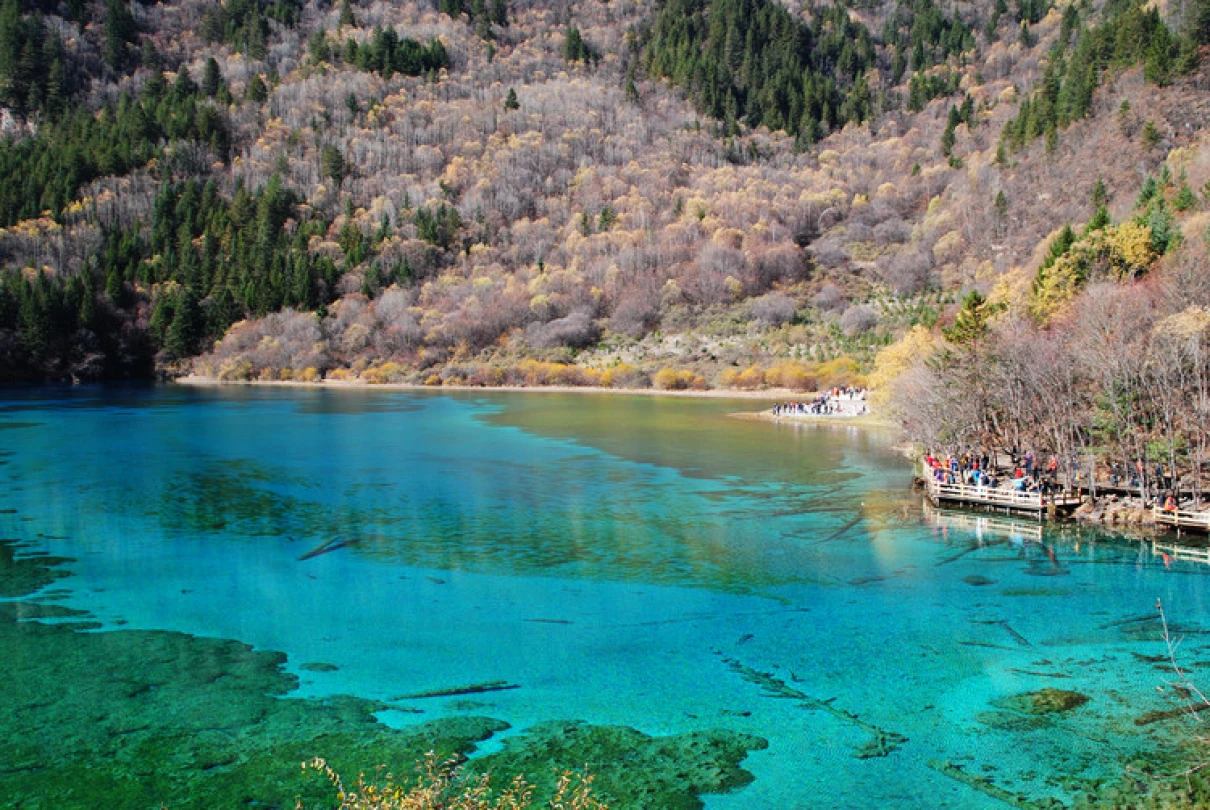
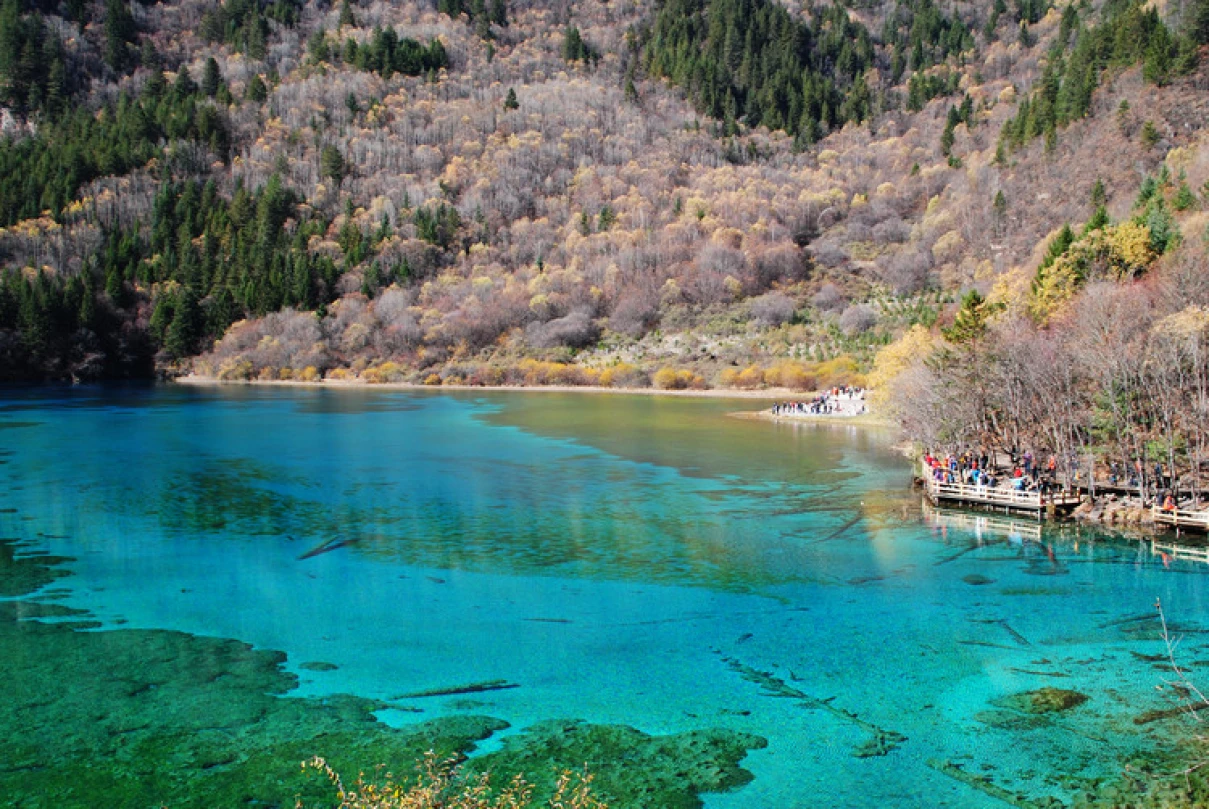
- Five Flower Lake: The soul of Jiuzhaigou—jade green, dark green, deep blue, indigo, and golden yellow mingle without blending
- Pearl Shoal Waterfall: Cascading water that sparkles like pearls in sunlight
- Pearl Shoal: Calcium-carbonate limestone riverbed creates natural pools
- Mirror Lake: Perfect reflections of mountains and sky
- Panda Lake & Arrow Bamboo Lake: Serene, mirror-like surfaces
- Skip: Primeval Forest (save time for more beautiful spots)
Zechawa Valley Must-Sees
- Long Lake: Towering peaks on both sides, mysterious and grand
- Five-Color Pond: Intense, concentrated beauty
- Upper and Lower Seasonal Lakes: View from the bus only
Shuzheng Valley Standouts
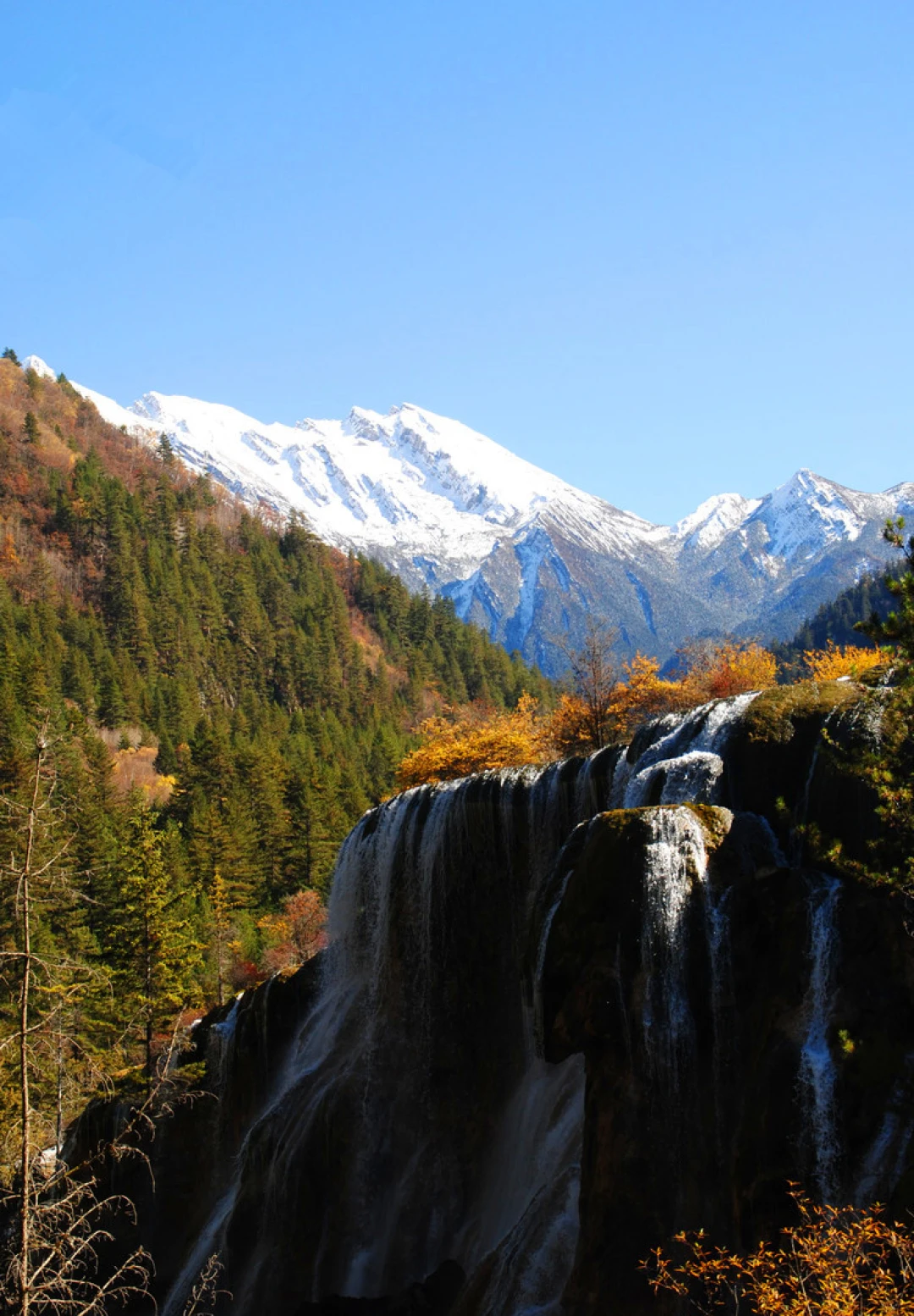
- Nuorilang Waterfall: The transportation hub and a spectacular cascade
- Shuzheng Cluster of Lakes: A series of interconnected turquoise pools
- Shuzheng Waterfall: Peaceful and photogenic
- Reed Lake: Golden reeds contrasting with blue water
Huanglong Scenic Area Tips
Huanglong Temple sits at over 4,000 meters altitude, with the Five-Color Ponds as the highest point. Recommended approach: Take the cable car up and walk down (still need to walk about an hour to reach the Five-Color Ponds). Elderly visitors or those prone to altitude sickness should proceed with caution.
Jiuzhaigou in Late Autumn and Early Winter: A Visual Feast
Mirror Lake: Heaven and Earth as One
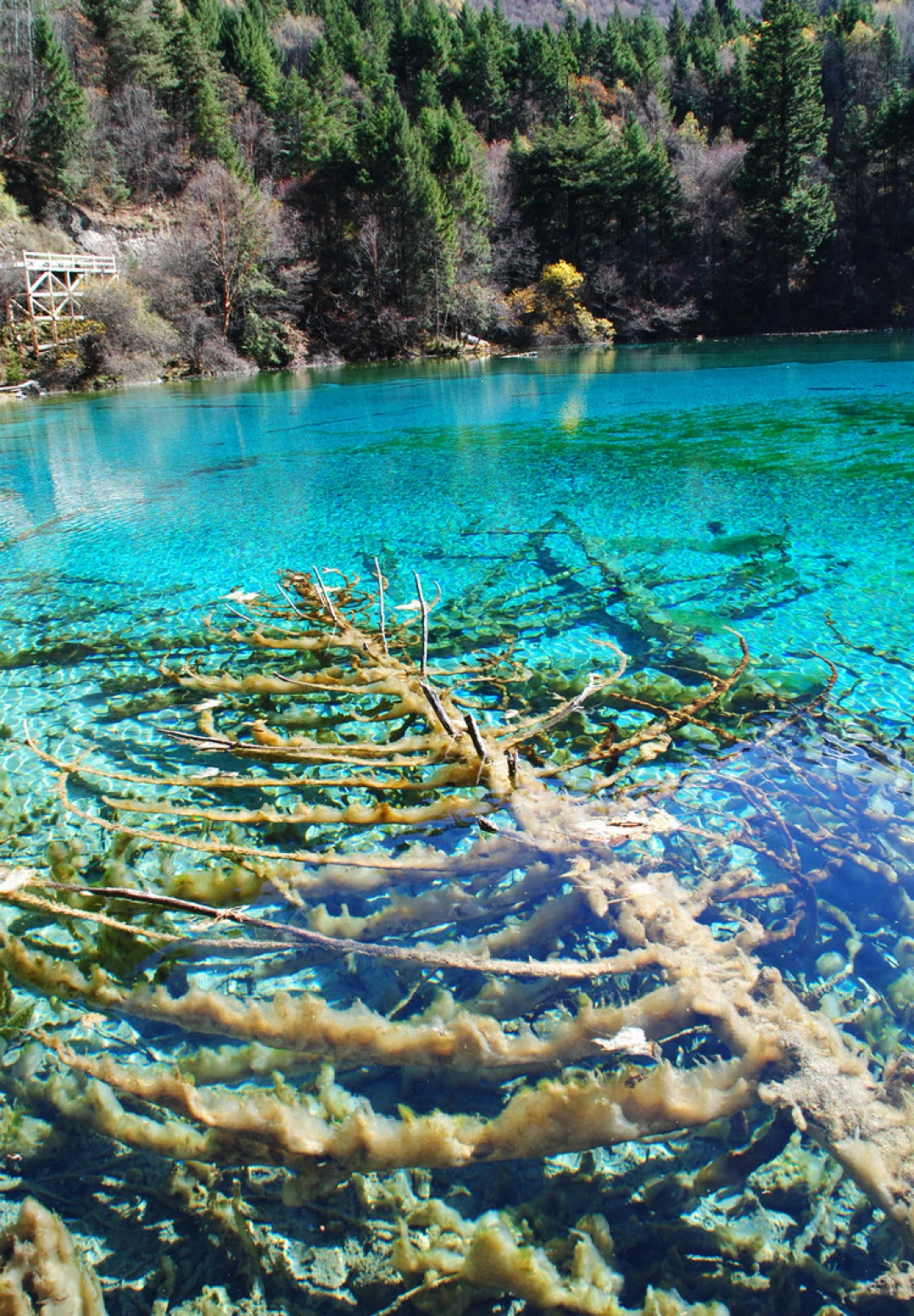
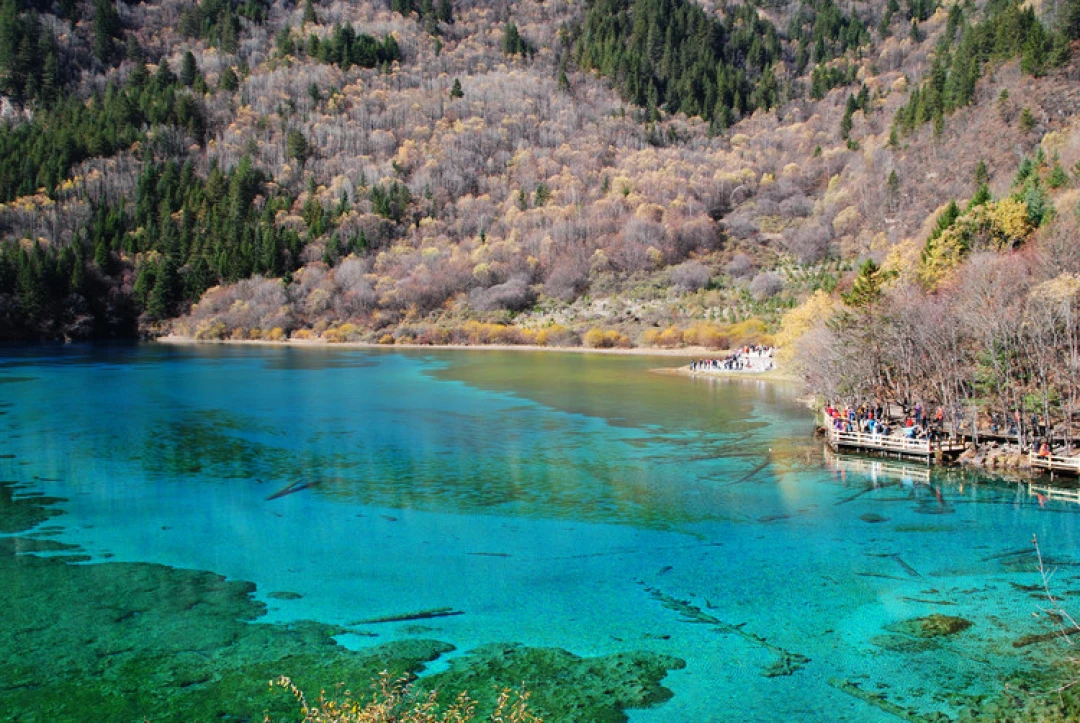
In the early morning, we arrived at Mirror Lake first. The water's surface was as smooth as glass, reflecting the dark blue-green mountains and the golden white birch trees. Submerged tree trunks at the bottom looked like rusty long halberds and giant swords, telling tales of time's passage. Standing by the shore, you could hear the purest breath between heaven and earth.
Five Flower Lake: Nature's Palette
Five Flower Lake is the soul of Jiuzhaigou. The colors—jade green, dark green, deep blue, indigo, golden yellow—mingle without blending, complement each other without encroaching. Aquatic plant communities at the lake's bottom, combined with calcium-carbonate-rich water, create a kaleidoscope of colors under sunlight. The colorful leaves on the shore are reflected in the water—a beauty so intense it takes your breath away.
Walking north along the boardwalk through a secluded forest, you reach the junction where Five Flower Lake's outlet meets Peacock River. To the south of the bridge, the lake resembles a peacock's colorful feathers; to the north, the river bend looks like a peacock's head and neck, with three ancient trees standing like a feathered crown. Viewed from the mountain road above, the scene is simply breathtaking.
Arrow Bamboo Lake and Pearl Shoal: The Water's Song of Life
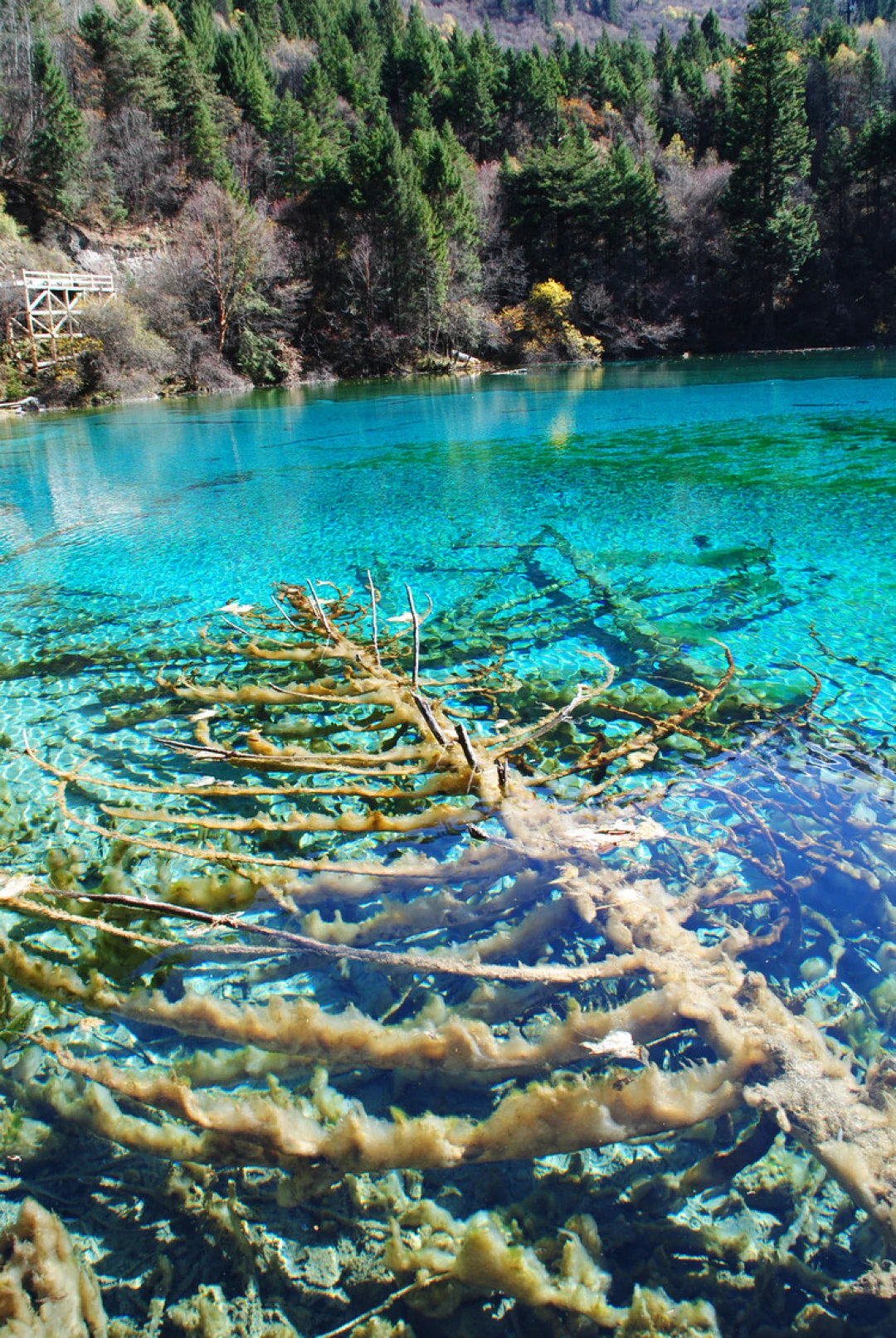
Arrow Bamboo Lake sits at over 2,600 meters altitude and is 6 meters deep. The mirror-like surface reflects dark green mountain shadows, while tree trunks lying diagonally in the water look as rugged as stalactites. Since this was our third visit, we made a beeline for Pearl Shoal during the best light.
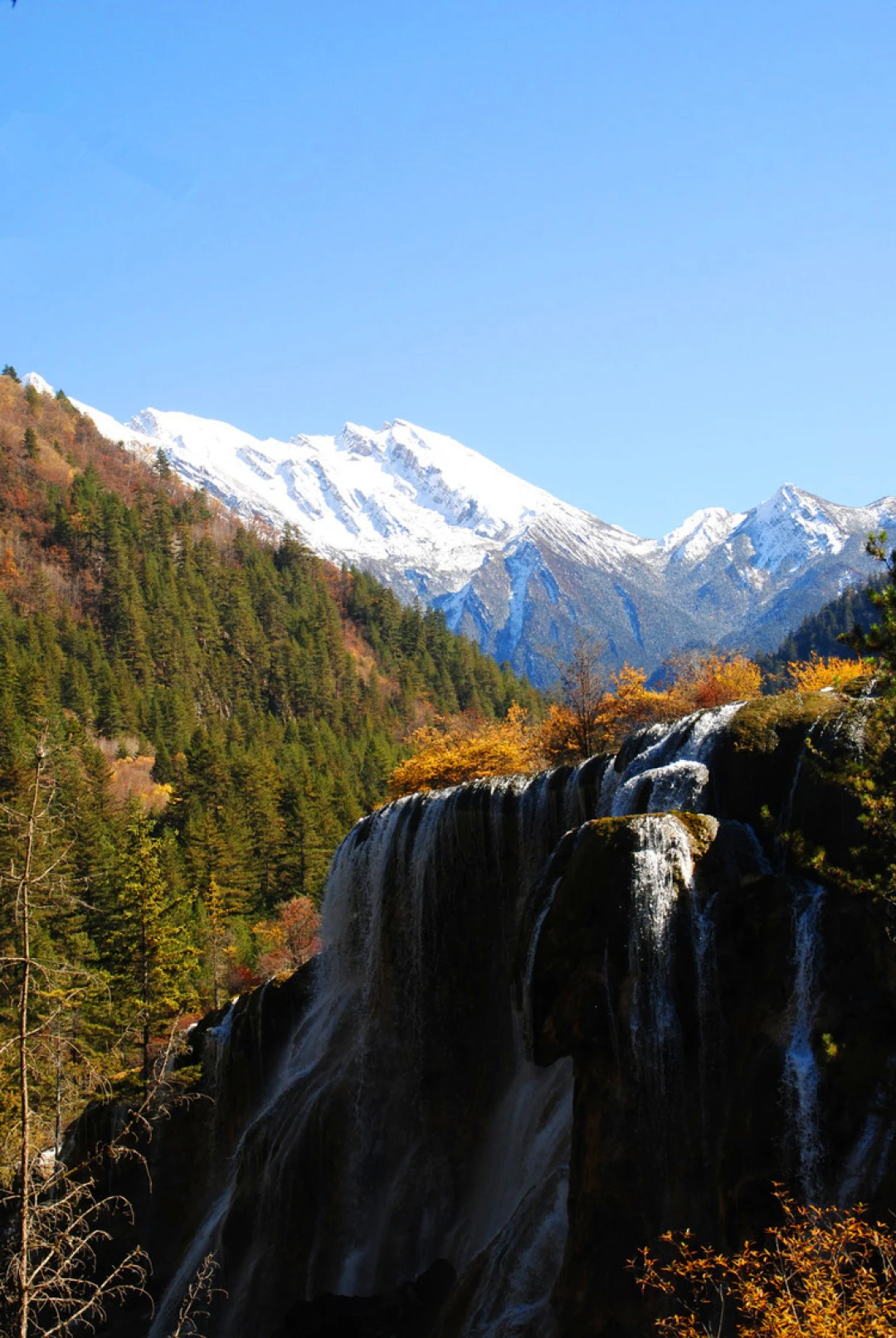
The waterfall clusters at Pearl Shoal are arranged in a staggered pattern. The calcium-carbonate limestone riverbed, shaped by flowing water, forms pits and hollows of various sizes. As water cascades down, droplets sparkle like pearls in the sunlight, playing a pastoral symphony.
Long Lake and Five-Color Pond: Mystery and Essence
On both sides of Long Lake, towering peaks rise steeply. The lake's deep blue water feels mysterious and ancient. Five-Color Pond, though smaller, packs an intense punch of color—a concentrated essence of Jiuzhaigou's beauty.
FAQ: Everything You Need to Know About Jiuzhaigou
Q1: Is Jiuzhaigou worth visiting in late autumn and early winter? Absolutely. While mid-autumn offers peak foliage, late autumn to early winter (late October through November) provides a quieter, more intimate experience. The crowds thin, the air is crisp, and the landscape takes on a serene, almost ethereal quality. You'll see the last of autumn's colors against the first hints of winter's chill—a unique and unforgettable combination.
Q2: What is the best way to get to Jiuzhaigou from Chengdu? The fastest option is flying from Chengdu to Jiuhuang Airport (40 minutes, around 1,000 yuan). The budget-friendly option is taking a bus from Chadianzi Bus Station (10 hours, around 125 yuan). If you're flexible with time and budget, flying is recommended for convenience, especially during off-peak season when road conditions can be unpredictable.
Q3: How many days do I need to visit Jiuzhaigou and Huanglong? A minimum of 3 days is recommended: 2 days for Jiuzhaigou (to fully explore the Y-shaped route without rushing) and 1 day for Huanglong. If you have more time, consider adding a day for relaxation or exploring nearby villages like Songpan.
Q4: What should I pack for a Jiuzhaigou trip in late autumn? Pack layers: a warm jacket or sweater for chilly mornings and evenings, lighter clothing for midday, rain gear (weather can change quickly), comfortable walking shoes, sunscreen (even in cooler weather), and sunglasses. Temperatures range from 7–18°C (45–64°F), with large temperature swings between day and night.
Q5: Can I stay overnight inside Jiuzhaigou scenic area? Technically, overnight stays inside the park are not officially allowed. However, some travelers arrange lodging in Shuzheng Village (20–100 yuan). If you want to experience sunrise in the park, this is an option, but be aware that it's not officially sanctioned. Most visitors stay at hotels near the entrance, which are convenient and offer a wide range of prices.
Internal Linking Suggestions
[Link: Best time to visit Jiuzhaigou for fall foliage] [Link: How to plan a Sichuan road trip itinerary] [Link: Top 10 most beautiful lakes in China] [Link: Huanglong vs Jiuzhaigou: Which scenic area should you visit?] [Link: Budget travel tips for Chinese national parks]
Final Thoughts: Your Jiuzhaigou Adventure Awaits
Jiuzhaigou in late autumn and early winter is not just a destination—it's a heartfelt dialogue with a fairy tale world. When the last red leaf falls and the first chill of winter arrives, this magical place sheds its finery and reveals its truest, most profound self.
Whether you're a first-time visitor or a returning traveler, Jiuzhaigou never fails to amaze. The mirror-like lakes, the kaleidoscope of colors at Five Flower Lake, the thunderous beauty of Pearl Shoal Waterfall—every moment feels like stepping into a painting.
Don't wait for the perfect season. The perfect season is now.
Book your tickets, pack your bags, and discover why Jiuzhaigou is one of China's most beloved natural wonders. The fairy tale is waiting for you.
Have you visited Jiuzhaigou in late autumn or early winter? Share your experience in the comments below! For more travel guides and tips, subscribe to our newsletter.
You may also like


