Chasing Autumn in Danba, Leaving My Heart in Jiaju: The Ultimate Western Sichuan Travel Guide

Meta Description: Discover the magic of autumn in Danba, from Jiaju Tibetan Village’s golden forests to the self-inflicted trekking ordeal of Dangling. A personal travelogue with insider tips, hidden gems, and the story of a heroine among us.
Introduction: An Unexpected Encounter That Stunned the Entire Autumn
Some places you never plan to visit, yet when you stumble upon them by chance, they become the most vivid and unforgettable chapter in your memory. For me, Danba was exactly that kind of accident.
I had originally set out from Chengdu, heading west along the G318 highway, planning to complete a route through Yunnan, Sichuan, and the Qinghai-Tibet Plateau, passing through Kangding, Xinduqiao, and Litang, finally reaching Yading in Daocheng before looping back through Shangri-La in Yunnan. Danba was nothing more than a spontaneous detour. Yet, it was this "let's just take a look" decision that gifted me with a shock and emotion far beyond my expectations amidst the autumn colors of western Sichuan.
[Link: Best G318 road trip itinerary from Chengdu]
Known as the "Land of a Thousand Watchtowers" and the "Valley of Beauties," Danba is one of the birthplaces of the Jiarong Tibetan culture. Here, you'll find not only the rare ancient watchtower clusters of Zhonglu and Suopo but also Jiarong Tibetan dwellings that embody harmony between heaven and humanity. When a friend learned I was heading to Danba, they teased, "Now Danba only has the mothers of beauties left." I just smiled and brushed it off. It wasn't until I actually set foot on this land that I realized: perhaps the legend of beauties has faded with time, but Danba's beauty had never dimmed.
Part One: Jiaju Tibetan Village – Walk, Watch, and Enjoy
Two Trees Guesthouse: The Warmth of a Home in the Heart of Jiaju
In Jiaju, I stayed at a guesthouse called "Two Trees." The owner, Brother Tree, is an avid outdoor enthusiast with superb photography skills and an easygoing, humorous personality. He now serves as the village secretary and often jokes, "Most people are happy when they find a job; I'm sad when I find one." Since becoming a village official, he's been bogged down with trivial matters and can no longer roam the mountains and waters as freely as before. Sister Tree, his wife, is a hardworking and down-to-earth woman who cooks delicious meals and always seems to have endless tasks—cooking for guests, helping neighbors with farm work, bustling about nonstop.
The name "Two Trees" came from a female guest a few years ago, who had a stroke of inspiration and even handcrafted the signboard. Today, that sign has become quite famous, with tourists often making special trips to take photos in front of it.
Tibetan-style houses have always been, in my mind, the most harmonious color palette in architecture. Two Trees has a spacious terrace where corn is spread out to dry—I later learned this corn was actually for feeding cattle. I often sat on the rooftop with a book, soaking up the sun and daydreaming, letting time slip through my fingers.
[Link: Best guesthouses in Danba for autumn photography]
The "Sweet Burden" of Fruit Trees: Harvesting Nature's Bounty

What surprised me most in Jiaju were the fruit trees everywhere. Apples and pears hung heavy from the branches, yet no one picked them. The locals told me these trees were over 15 years old, and the fruit wasn't particularly tasty or profitable, so they just let them rot on the branches. This was a delight for us tourists—just reach up and grab free fruit. Who said they weren't good? The apples were crisp and juicy, the pears fragrant and sweet—I couldn't stop eating them.
So, climbing fruit trees every day became one of my greatest pleasures. Couldn't finish them all? No problem—since they'd just rot anyway, I might as well let my stomach benefit. Ha, good things are never too much.
Slow Life Hidden Among Flowers
Every household in Jiaju has a yard full of flowers. At Two Trees, photographing flowers became my pastime during breaks. Brother Tree's cat was also quite amusing: every mealtime, it would circle around our feet, begging for food like a little beggar.
Sometimes, when Sister Tree was busy with farm work, we'd cook for ourselves. In a foreign kitchen, chopping vegetables, stir-frying, and cooking rice somehow felt like home.
Jiaju Tibetan Village: A Fairy Tale Scattered in the Forest
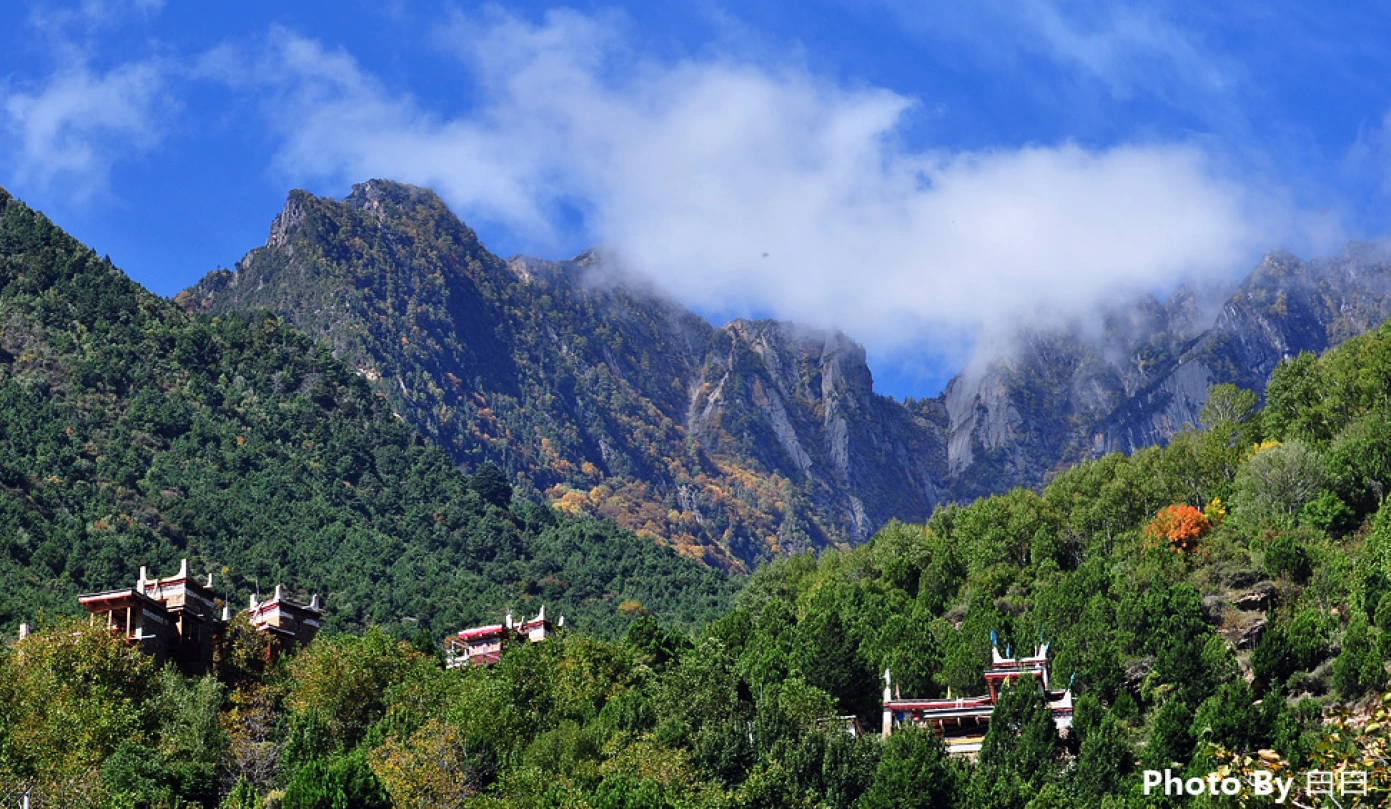
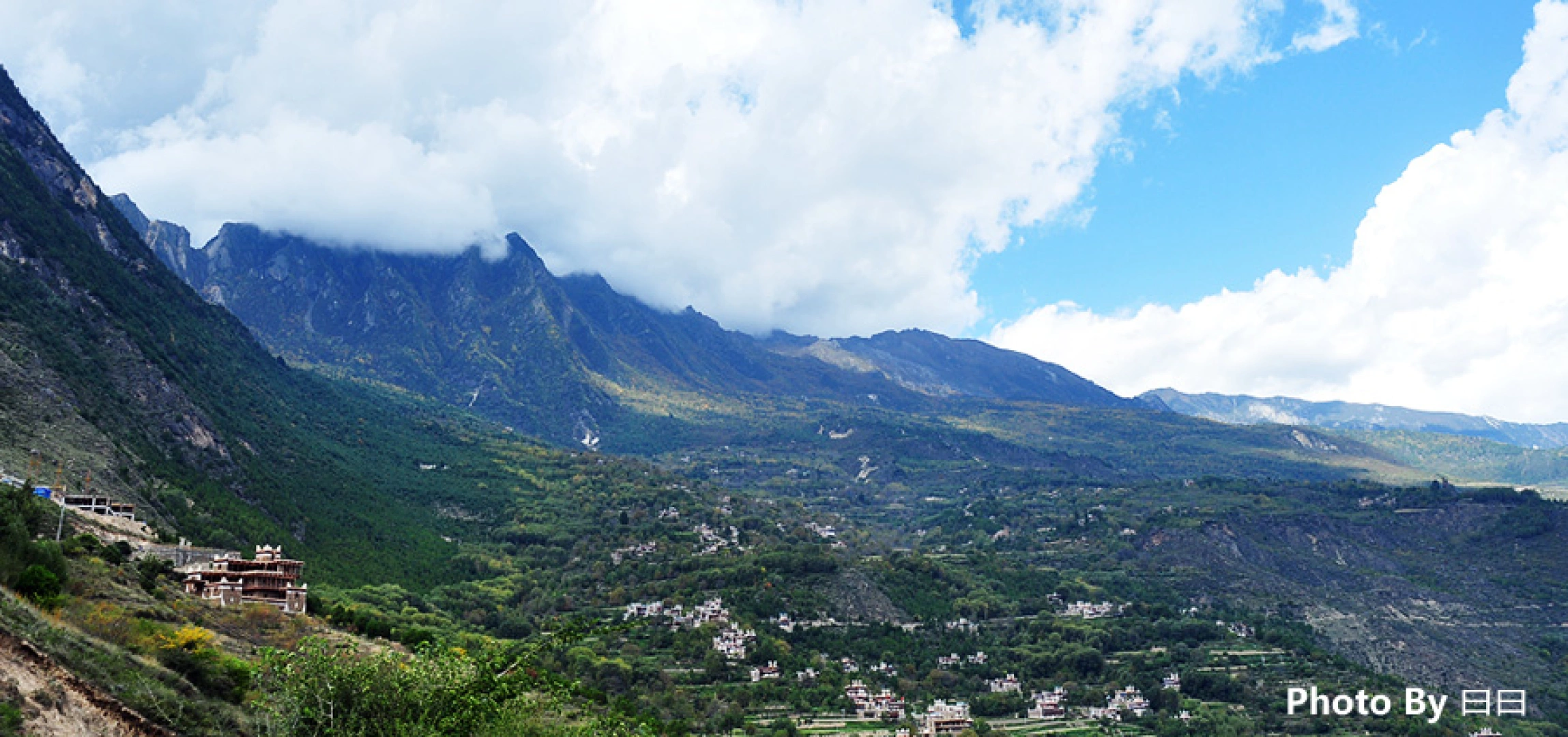
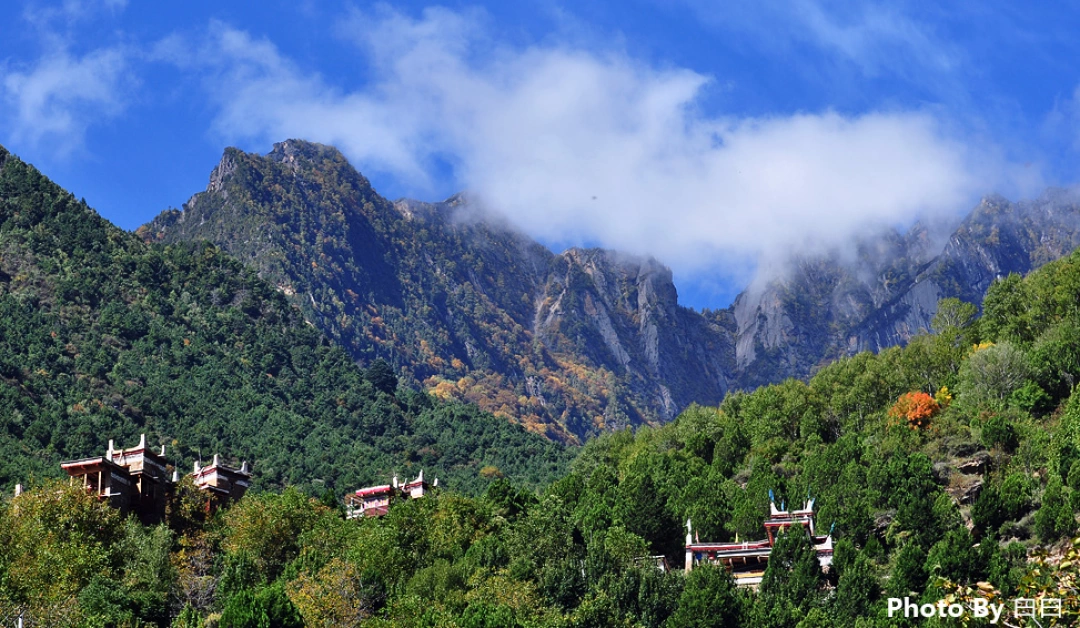
Jiaju Tibetan Village is like stars scattered across the lush green forest. Each household has its own tower-like house built along the mountainside—some clustered in groups of three or five, others standing alone. Although it wasn't yet the peak of late autumn, early autumn in Jiaju was already intoxicating enough.
Since being featured in Chinese National Geography magazine in 2005, Jiaju has attracted a steady stream of visitors, especially photography enthusiasts who are downright obsessed. The wooden structures and eaves of Tibetan houses are painted red, with unique shapes and distinct layers, perfectly complementing the blue sky, white clouds, green mountains, and lush trees.
Early morning is the best time for photographing Jiaju. As the rising sun casts its light over the opposite mountain peaks onto the towers, the colors become vibrant and layered. Although early autumn isn't the best shooting season, the beauty before me was already breathtaking. November is when it truly reaches its peak.
Walking along Jiaju's paths, shaded by green trees and accompanied by birdsong and floral scents, the air was so fresh I couldn't help but take deep breaths. Tibetan watchtowers, trees hinting at autumn, babbling streams, and the misty Yaxiao Sacred Mountain—every scene made it hard to leave.
The vegetation in the village was lush, with a dazzling array of flowers and plants. In a few spots, autumn had quietly crept onto the branches, with leaves turning yellow and red. There was also a strikingly handsome cow, with sharp eyes and a bit of stubble, looking like a Western cowboy.
Seeing these buildings for the first time, I even thought they looked like toys—intricate, unreal, yet standing solidly on this land.
Suopo Ancient Watchtowers: A Thousand-Year Vigil in the Land of a Thousand Towers
Danba is called the "Ancient Kingdom of a Thousand Watchtowers," and Suopo is where these ancient towers are most concentrated. Some of these towers date back over a thousand years. From the road on the opposite bank of Suopo, the cluster of watchtowers is a magnificent sight. However, taxi fares in Danba are outrageously expensive: a mere 3 kilometers from the county town to the Suopo viewing platform costs 20 yuan one way. Luckily, walking (on foot) is both a money-saver and a healthy choice.
[Link: Complete guide to Danba ancient watchtowers]
Part Two: Dangling – Snow Trekking and Camping, Where Self-Inflicted Ordeal Becomes Enjoyment
The Road to a Hidden Paradise
Dangling is 67 kilometers from Danba County town and requires a chartered vehicle. Every early October, Dangling is enveloped in captivating autumn colors, with colorful forests covering the mountains, a sight so stunning it takes your breath away. Some say the scenery here rivals Jiuzhaigou (a famous scenic area in Sichuan). Majestic snow-capped peaks, scattered alpine lakes, dense green forests, gently flowing streams, grassy meadows like green carpets, rare plants and animals, and the simple Jiarong Tibetan culture all combine to create Dangling's unique charm.
Setting out from Danba County town, the mountaintops along the way were shrouded in clouds and mist, a spectacular view. We frequently stopped the car to take photos, even feeling that some spots bore a resemblance to Zhangjiajie (a famous national forest park in Hunan). Along the way, we also encountered a Tibetan class reunion: tents set up at a doorstep, people singing and dancing, full of lively energy.
As the altitude climbed, distant snowy scenes gradually came into view. My younger sister, seeing snow for the first time, was as happy as a child, jumping and playing in the snow.
Hulu Lake: An Unexpected Joy of Camping in the Snow
After arriving at Dangling, we had lunch and then began the uphill trek. The ascent took nearly six hours, while the descent took three and a half. Except for less than a kilometer of flat ground, the entire trail was steep and demanding. But the reward? Priceless.
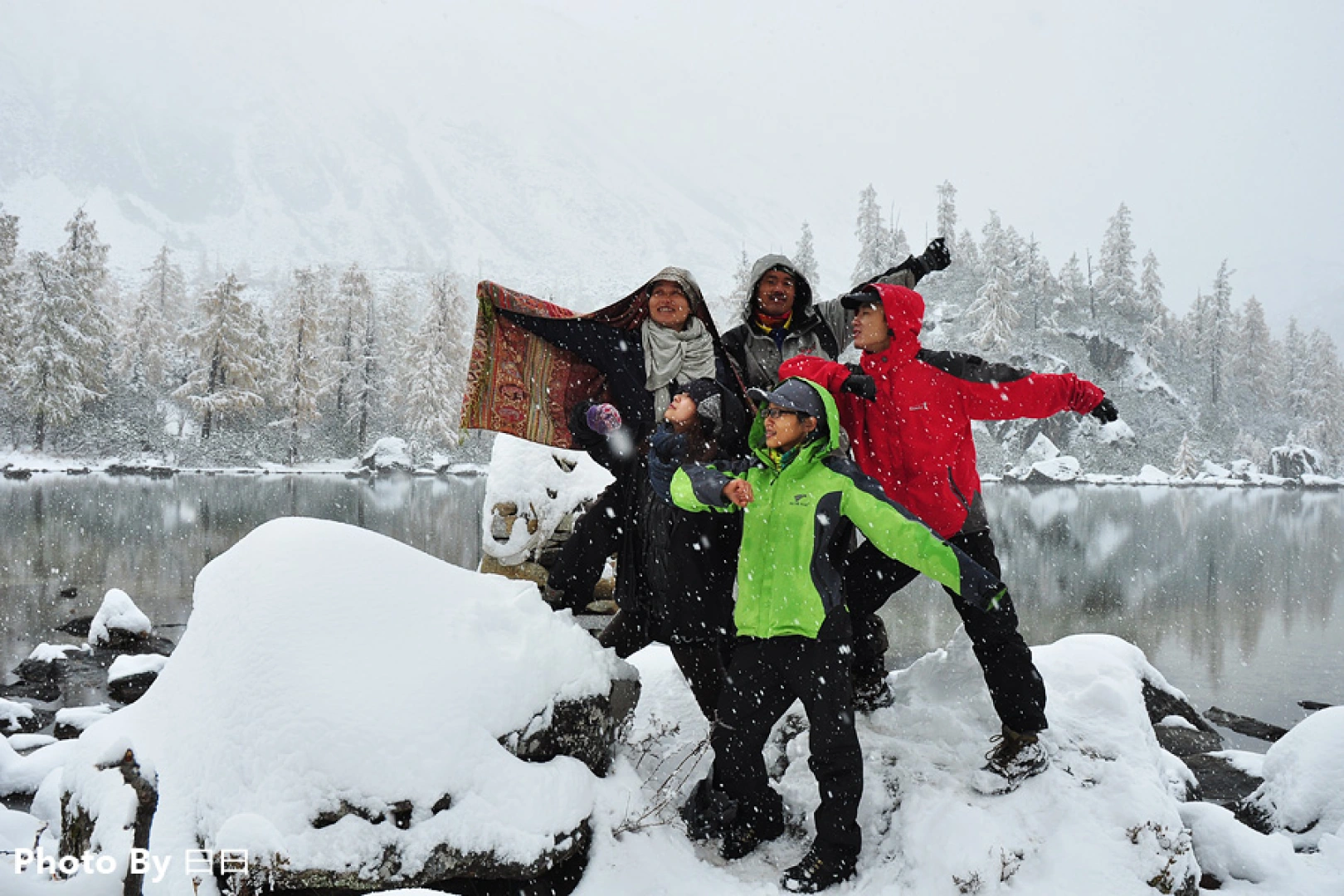
Hulu Lake (Gourd Lake) sits at an elevation of over 4,000 meters, surrounded by snow-capped peaks and pristine forests. Camping here under a starry sky, with the sound of wind whistling past your tent, is an experience that borders on spiritual. The "self-inflicted ordeal" of the climb transforms into pure enjoyment once you reach the top.
[Link: Dangling trekking guide – altitude, gear, and tips]
Part Three: A Heroine Among Us
Amidst the beauty of Danba and the challenge of Dangling, there was one person who stood out—a fellow traveler I met on the trail. She was a solo female trekker in her 50s, carrying a heavy backpack and trekking poles, navigating the steep, snow-covered path with determination. She had already been traveling for three months, covering western Sichuan, northern Yunnan, and parts of the Qinghai-Tibet Plateau.
Her story was one of resilience: she had left a corporate career, sold her apartment, and dedicated herself to exploring China's remote landscapes. She had no fixed itinerary, no backup plan—just a map, a tent, and an unshakable spirit. She taught me that age, gender, and circumstance are no barriers to adventure. She was the heroine among us—proof that the road is open to anyone brave enough to walk it.
FAQ: Everything You Need to Know About Danba Autumn Travel
1. When is the best time to visit Danba for autumn colors?
 The peak autumn foliage in Danba, especially in Jiaju Tibetan Village, occurs from late October to mid-November. Early October offers early autumn hues, but November is when the golden and red leaves are at their most vibrant.
2. How do I get to Danba from Chengdu?
Danba is about 340 km from Chengdu. You can take a bus from Chengdu's Chadianzi Bus Station (approx. 8-10 hours) or drive via the G318 highway. Private chartered vehicles are common for more flexibility.
3. Is Dangling suitable for beginner trekkers?
Dangling's trek to Hulu Lake is challenging, with steep ascents and high altitude (over 4,000m). It is recommended for experienced hikers or those with good fitness. Beginners should consider hiring a local guide and allowing extra days for acclimatization.
4. What should I pack for a Danba autumn trip?
 Pack warm layers (temperatures can drop near freezing at night), waterproof hiking boots, a headlamp, sunscreen, altitude sickness medication, and a good camera. For camping at Dangling, a 4-season tent and sleeping bag rated to -10°C are essential.
5. Are there accommodation options in Jiaju and Dangling?
Yes. Jiaju has many guesthouses like Two Trees, offering home-cooked meals and warm hospitality. Dangling has basic homestays and camping grounds. Booking in advance during peak autumn is recommended.
Conclusion: Leave Your Heart in Danba
Danba is not just a destination—it's a feeling. It's the warmth of Two Trees' terrace, the sweetness of free apples, the golden glow of Jiaju's watchtowers at sunrise, and the aching legs after a Dangling summit. It's the story of a heroine who reminded me that the road belongs to those who dare to take it.
If you're searching for an autumn adventure that will leave you breathless (literally and figuratively), pack your bags and head to Danba. Let the thousand-year watchtowers guard your memories, and let the snowy peaks of Dangling test your limits.
Your next journey starts now. Book your Danba trip today and chase the autumn of a lifetime.
[Link: Best travel insurance for high-altitude trekking in China]
You may also like


