Jiuzhaigou & Huanglong Autumn Travel Guide: Why "Jiuzhai Like Jade, Huanglong Like Gold" is Worth the Trip

Meta Description: Planning a Jiuzhaigou and Huanglong trip? Discover why a "belated autumn" visit still stuns—from jade-like lakes to golden travertine pools. Includes tips, photos, and a FAQ section.
Introduction: Why I Fell in Love with Jiuzhaigou and Huanglong—Even in "Off-Season"
Golden October, and the plane tree leaves outside my window are beginning to turn yellow. I scroll through the photos on my phone from this day last year, and my thoughts drift back to that land blessed by heaven. To be honest, when I set out a year ago, I carried a trace of regret in my heart—mid-September, still two weeks shy of Jiuzhaigou's most dazzling season of colorful forests. The red leaves hadn't turned, the yellow leaves hadn't yellowed. I thought I had missed the best time.
But as I revisit these photos now, every single frame takes my breath away. Suddenly, I understood something: why must we chase perfection in everything? What I saw, what I received—it was already enough to fill a lifetime with gratitude.
If you're also planning a Jiuzhaigou and Huanglong trip, this article isn't one of those exhaustive guides—there are already so many online that they make your head spin. I simply want to quietly share my photos and tell you about the most beautiful scenery I've ever seen.
First Stop: Shangsi Village – A Tibetan Settlement That Feels Like a Hidden Gem
On the road from Jiuzhai Huanglong Airport to Jiuzhaigou, my first stop was Shangsi Village. This Tibetan settlement, tucked between the airport and the scenic area, feels like a forgotten gem—untouched by overdevelopment.
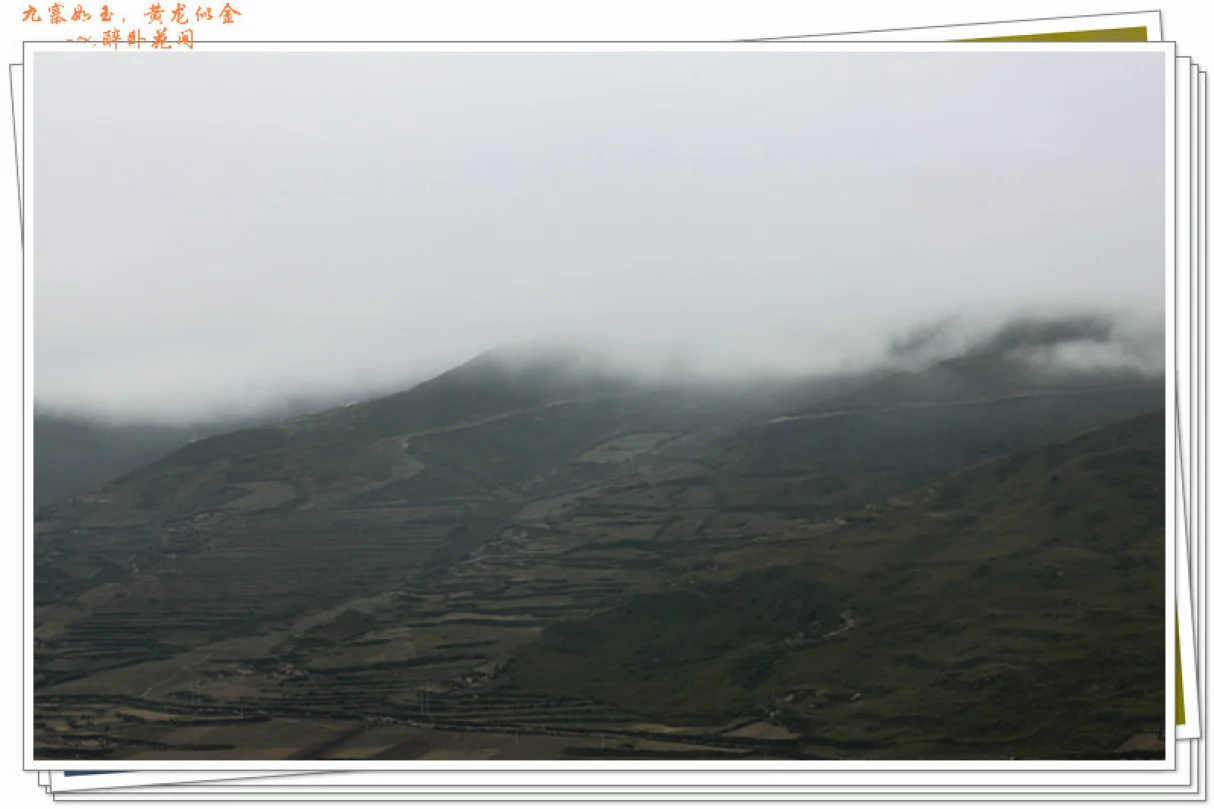
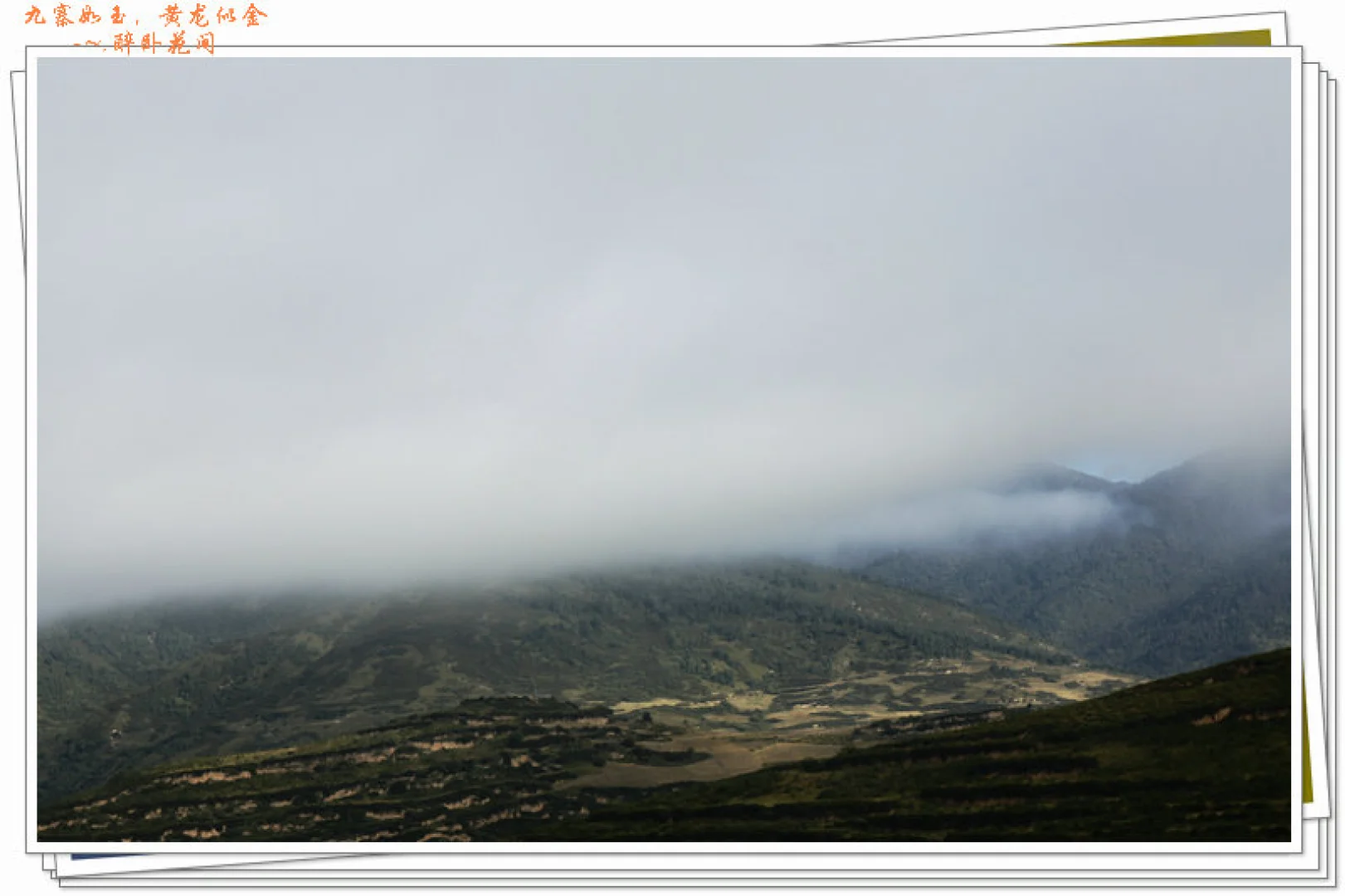
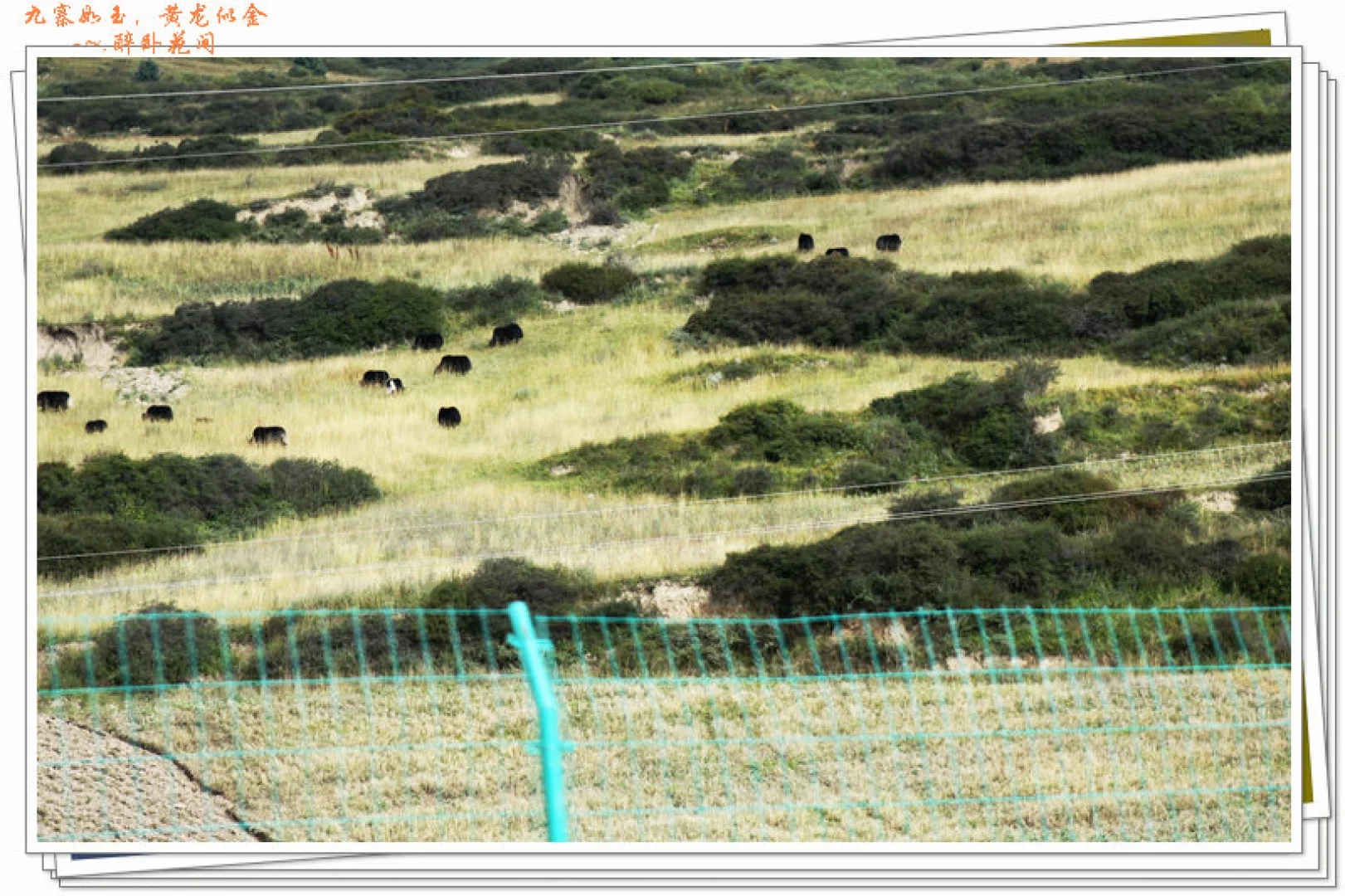
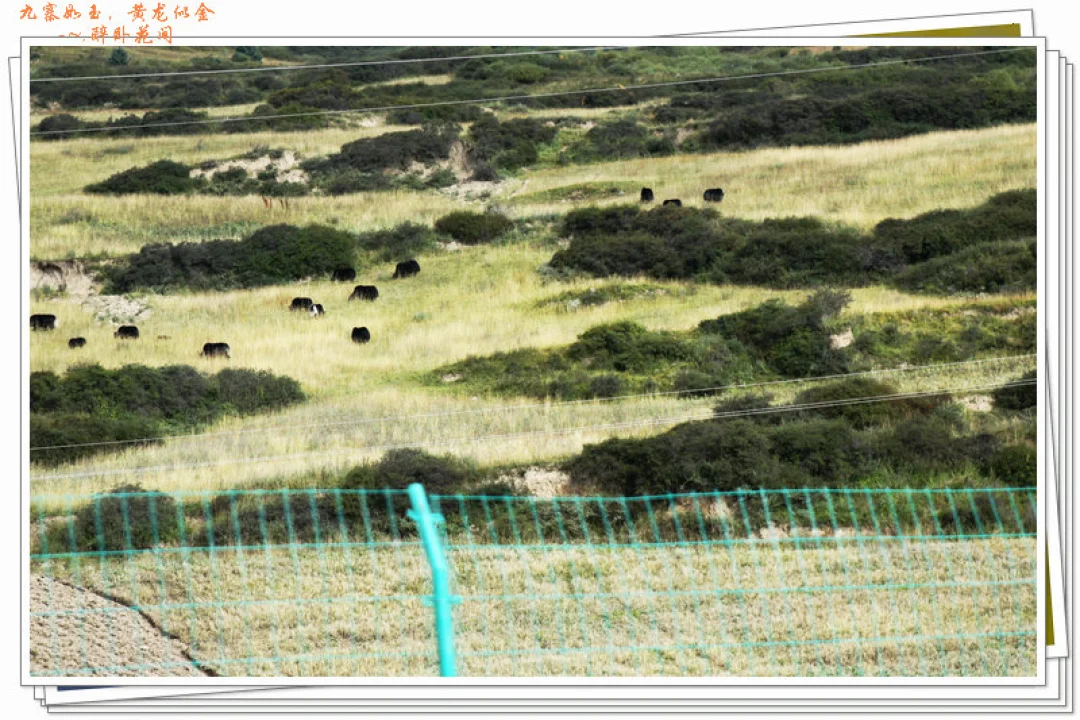
Outside the car window, low-hanging clouds nearly pressed against the mountain ridges. On the green slopes, yaks lazily swished their tails. The brightly colored Tibetan houses looked as if they had stepped straight out of a painting. I couldn't help asking the driver to stop. Standing by the roadside, I took a deep breath—the high-altitude air was crisp as mint, every inhale a cleansing pleasure for the lungs.

Shangsi Village isn't large, but one experience there stayed with me: horseback riding in Jiuzhaigou. I chose a gentle brown horse and rode up the mountain path. The view from horseback was entirely different—the village below grew smaller, the distant snow mountains drew closer. So this is what it feels like, riding on the rolling mountains.
In the village stood a bare, withered tree. The locals called it a sacred tree, where you could pray for peace and health. I touched its rough trunk and silently made a wish. Though this tree had lost all its leaves, it inspired more reverence than any lush, leafy tree—how many generations of prayers and hopes had it witnessed?
This was my first impression of Jiuzhai: lush green as far as the eye could see, boundless blue skies, and the colorful prayer flags fluttering from Tibetan homes. In that moment, I knew—this trip was worth it.
[Link: Best things to do in Jiuzhaigou]
Ganhaizi: A Hidden Wetland Worth Stopping For
Leaving Shangsi Village, I visited nearby Ganhaizi. This wetland sits right by the road between the airport and Jiuzhaigou, just a few minutes' drive away. But most people rush past, missing this hidden treasure.
Ganhaizi's beauty lies in its simplicity. A green mountain, a curve of clear water, a patch of wild grass, a wooden boardwalk, a blue sky, a lone withered tree, a touch of lavender wildflowers—these elements, casually arranged, create a scene so beautiful you can't look away.
What surprised me most was a chance encounter: a couple from Hong Kong, taking wedding photos. The bride, in her white dress against the blue sky and green water, looked like a fairy. I stood nearby for a long time, filled with envy—how wonderful it must be to capture lifelong memories in such a setting.
If you visit Ganhaizi, I recommend staying a while. Walk slowly along the boardwalk, listen to the wind, watch the water birds. Or, like me, find a spot to sit, do nothing, and just daydream. You'll discover that sometimes the most beautiful scenery needs no embellishment.
[Link: Jiuzhaigou off-the-beaten-path spots]
Jiuzhai Like Jade: Why the Lakes Are the Real Stars
The next day, I officially entered Jiuzhaigou Scenic Area. That famous saying—"No need to look at water after returning from Jiuzhai"—I was finally going to test it myself.
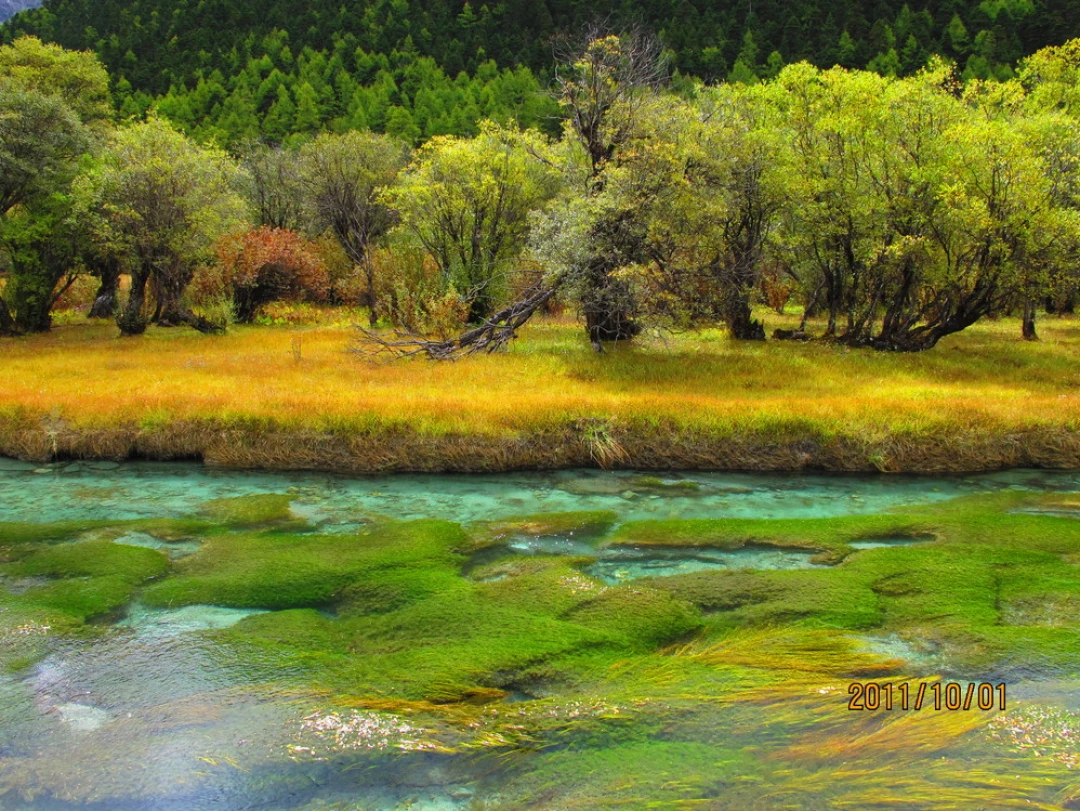
Though I didn't see the magnificent sight of red leaves covering the mountains, the moment I stood before the first lake, all my regrets vanished instantly. Those lakes—calm as mirrors, crystal clear as if carved from jade. The blue water was heartbreakingly blue; the green water, intoxicatingly green.
I walked along the boardwalk, passing Reed Lake, Arrow Bamboo Lake, Five Flower Lake, and Pearl Shoal Waterfall. Each lake had its own personality. Some were gentle as a maiden, others exuberant as a youth. At the bottom of Five Flower Lake, submerged dead trees and calcium carbonate deposits formed strange, beautiful patterns—like a natural ink-wash painting.
The roar of Pearl Shoal Waterfall was deafening. Spray flew everywhere, catching the sunlight and forming rainbows. I stood before the waterfall, letting the mist hit my face. That coolness, that awe—I still remember it vividly.
Jiuzhaigou's charm isn't in its grandeur. It's in its magic to quiet the soul. When you stand before those lakes, you forget time, forget your worries, even forget yourself. You just want to keep watching, forever.
[Link: Jiuzhaigou lake photography tips]
A Tibetan Home Dinner: Finding Warmth in a Strange Land
On my last night in Jiuzhaigou, a taxi driver arranged a Tibetan home dinner experience for me. Sharing the room was a tour group of Malaysian Chinese. Though we were all strangers, sitting together around the table, we quickly became familiar.
The dinner dishes were simple, but each carried the flavor of Tibet. What I remember most was the roasted yak meat—crispy on the outside, tender inside, dipped in special chili powder. So fragrant I couldn't stop eating. The Tibetan brothers and sisters were talented singers and dancers. They played the 扎木聂 (Tibetan lute) and sang melodious Tibetan songs, filling the whole house with joy.
After dinner, a bonfire was lit in the courtyard. Everyone joined hands and danced the Guozhuang dance around the fire. I didn't know the steps, but a Tibetan girl warmly pulled me in and taught me one move at a time. The firelight reflected on everyone's faces—smiles so genuine, so pure.
In that moment, I was lost in this unfamiliar land. I realized: the meaning of travel isn't just about seeing scenery. It's about meeting the warm-hearted people along the way.
[Link: Tibetan culture experiences in Sichuan]
Scenery on the Road: A 128-Kilometer Gallery of Beauty
From Jiuzhaigou to Huanglong, 128 kilometers, about a three-hour drive. This road is one of the most beautiful I've ever seen.
Along the way, I asked the driver to stop three times for photos. The first time was when I saw the source of the Min River—a small stream trickling down from a high mountain peak. Who would have thought this tiny stream would eventually become the mighty Min River? The power of life always begins in the most humble places.
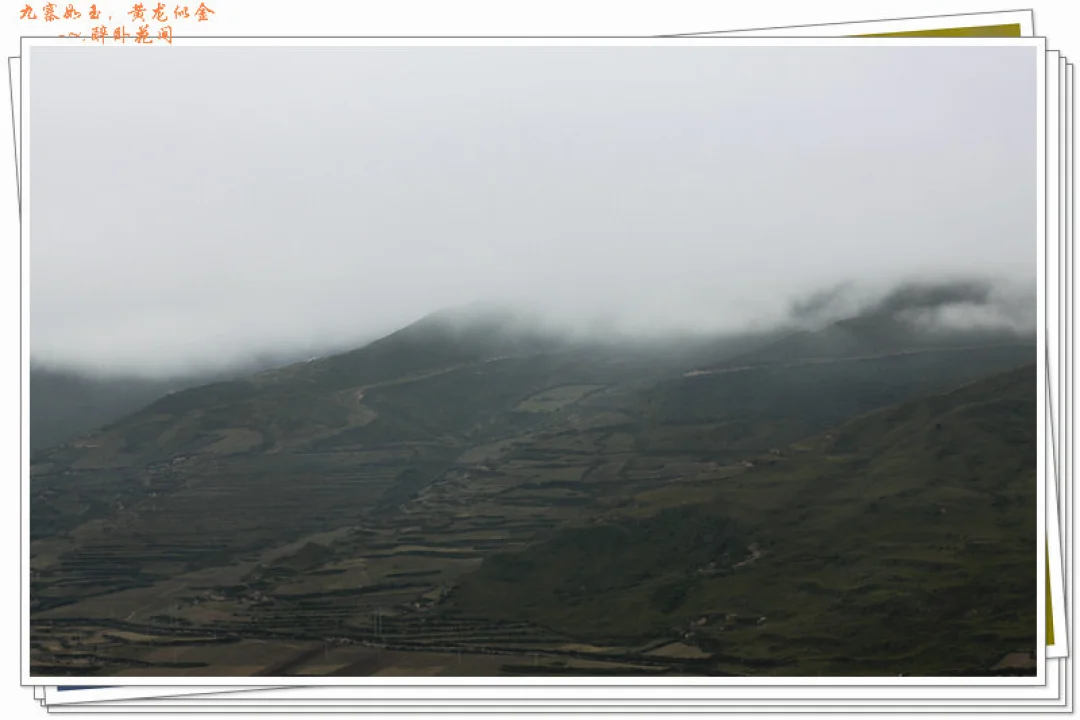
The second stop was for Xuebaoding (Snow Treasure Peak) . This snow mountain gleamed silver in the sunlight, its summit snow never melting—like a silent guardian.
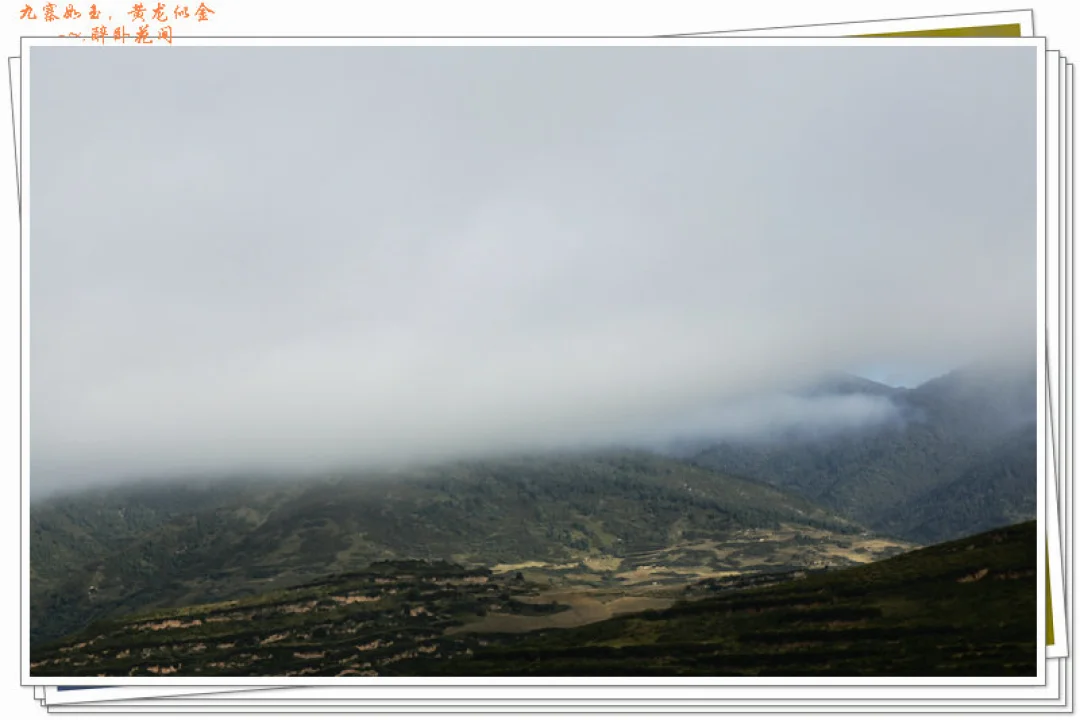
The third stop was because I saw the high-altitude vegetation beginning to turn yellow and red. Just scattered patches, but enough to stir my heart. Standing by the roadside, looking at the canvas of blue sky, white clouds, snow mountains, terraced fields, yaks, and farmhouses, I felt both satisfied and regretful—satisfied to witness such breathtaking beauty, regretful that I hadn't come during the most vibrant season.
But then I thought: isn't this the charm of travel? Every regret is a reason to set out again.
[Link: Scenic drives in Sichuan]
Huanglong Like Gold: The Celestial Pool on Earth
Taking the uphill cable car into Huanglong Scenic Area, I began my top-down tour of this place known as "the Celestial Pool on Earth."
Huanglong's beauty is completely different from Jiuzhaigou's. Jiuzhai is gentle, lively; Huanglong is magnificent, awe-inspiring. Pools formed by calcium carbonate deposits cascade layer upon layer, shimmering in shades of gold, turquoise, and emerald. The water flows down the mountain like a golden dragon—hence the name "Yellow Dragon."
The Five-Color Pond at the top is the crown jewel. From a distance, it looks like a giant jadeite inlaid in the golden mountain. Up close, the water is so clear you can see every pebble at the bottom. The colors shift with the light—sometimes deep blue, sometimes warm gold, sometimes a mix of both.
Walking along the boardwalk, I passed Welcome Pond, Flying Waterfall, and Bonsai Pond. Each pool had its own character. Some were small and delicate, others vast and grand. The sound of rushing water was constant, a natural symphony that accompanied me the entire way.
Huanglong's golden travertine pools are unlike anything else I've seen. They feel almost otherworldly—like stepping onto a different planet. If Jiuzhaigou is jade, then Huanglong is undoubtedly gold.
[Link: Huanglong vs Jiuzhaigou comparison]
FAQ: Jiuzhaigou and Huanglong Travel Tips
Q: When is the best time to visit Jiuzhaigou and Huanglong?
A: The peak autumn season is typically late October to early November for vibrant red and yellow leaves. However, as this article shows, mid-September still offers stunning scenery with fewer crowds. Summer (June-August) is lush and green, while winter (December-February) offers snow-covered landscapes.
Q: How many days do I need for Jiuzhaigou and Huanglong?
A: Most travelers spend 3-4 days: 1 day for Jiuzhaigou, 1 day for Huanglong, plus travel time. If you want to explore villages like Shangsi Village or Ganhaizi, add an extra day.
Q: Is it worth visiting Jiuzhaigou in September?
A: Absolutely! While the autumn colors may not be at their peak, the lakes are still breathtaking, crowds are smaller, and the weather is pleasant. You'll also find lower accommodation prices.
Q: What should I pack for a Jiuzhaigou trip?
A: Layered clothing is essential—temperatures vary from cool mornings to warm afternoons. Bring comfortable walking shoes, sunscreen, a hat, and a reusable water bottle. If visiting in autumn, a light jacket is recommended.
Q: How do I get to Jiuzhaigou from Chengdu?
A: The fastest way is to fly into Jiuzhai Huanglong Airport (about 1 hour from Chengdu). Alternatively, you can take a bus from Chengdu (about 8-10 hours) or drive. Many travelers combine both options for flexibility.
[Link: How to plan a Jiuzhaigou itinerary]
Conclusion: Why This Journey Will Stay With You Forever
Looking back at my photos, I realize that Jiuzhaigou and Huanglong aren't just scenic spots—they're experiences that change how you see the world. The jade-like lakes, the golden travertine pools, the warm Tibetan hospitality, the breathtaking mountain views—they all come together to create something truly unforgettable.
If you're hesitating about whether to visit, let me tell you this: don't wait for the "perfect" season. Go when you can. Every moment in Jiuzhaigou and Huanglong is a gift. The scenery will stun you, the people will warm you, and the memories will last a lifetime.
Ready to plan your own Jiuzhaigou and Huanglong adventure? Start by booking your flights and accommodation early—especially if you're visiting during peak autumn. Pack your camera, your sense of wonder, and an open heart. You won't regret it.
[Link: Book Jiuzhaigou tours and tickets]