The Summit is the Peak: A Record of Climbing Siguniang Mountain's Big Peak (5038m)
Meta Description: Discover the raw, emotional journey of climbing Siguniang Mountain's Big Peak (5038m). From battling altitude sickness to finding peace above the clouds, this first-hand account reveals what it truly takes to summit one of China's most iconic four sisters peaks.
Prologue: Standing Above the Clouds, Making Peace with the Past
July 23, 2018, 6:40 AM. The summit of Siguniang Mountain's Big Peak, elevation 5,038 meters.
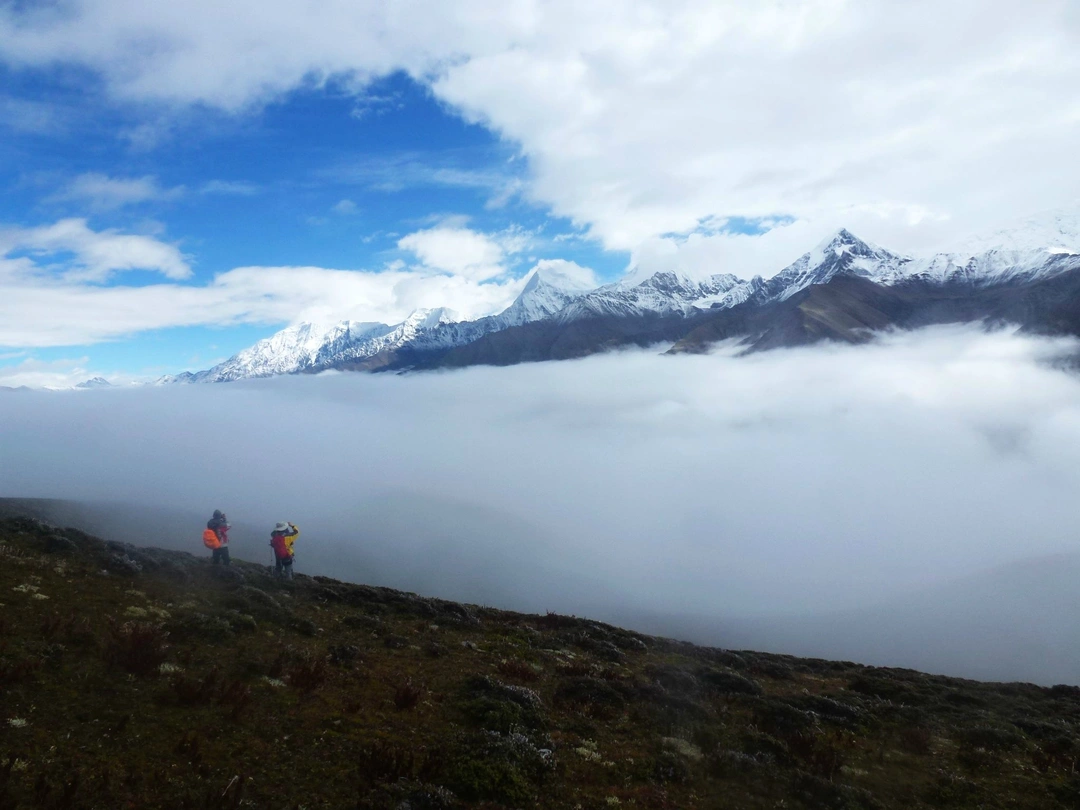
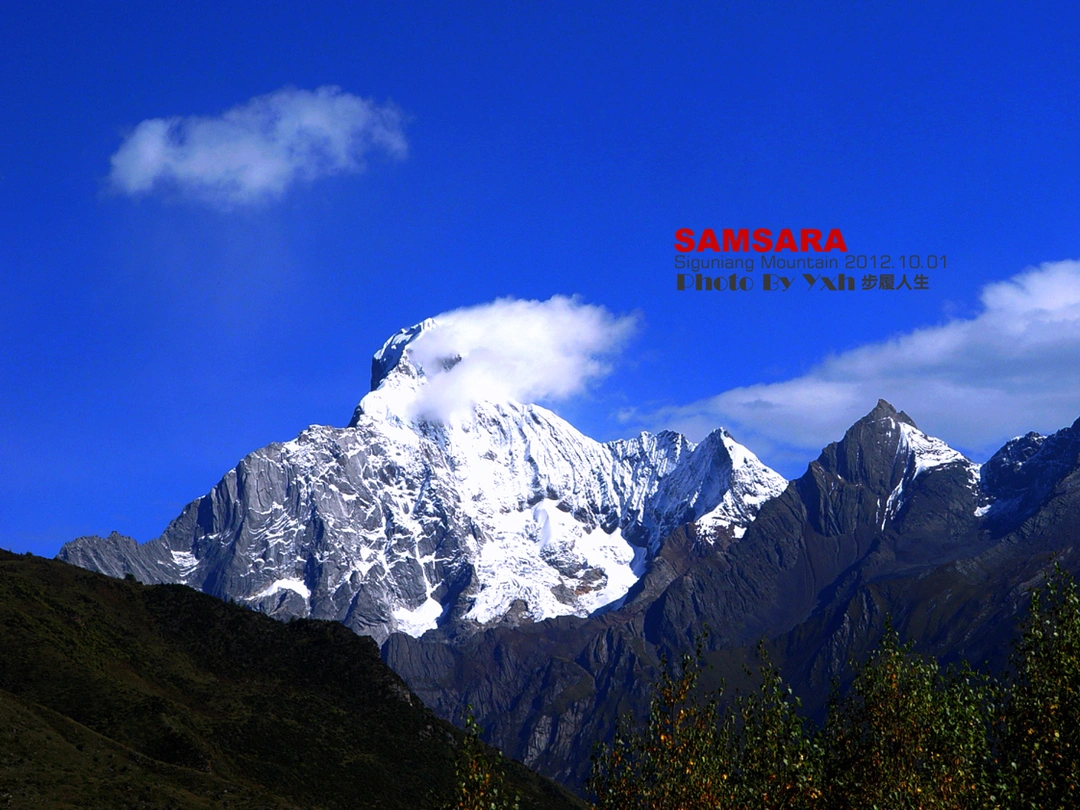
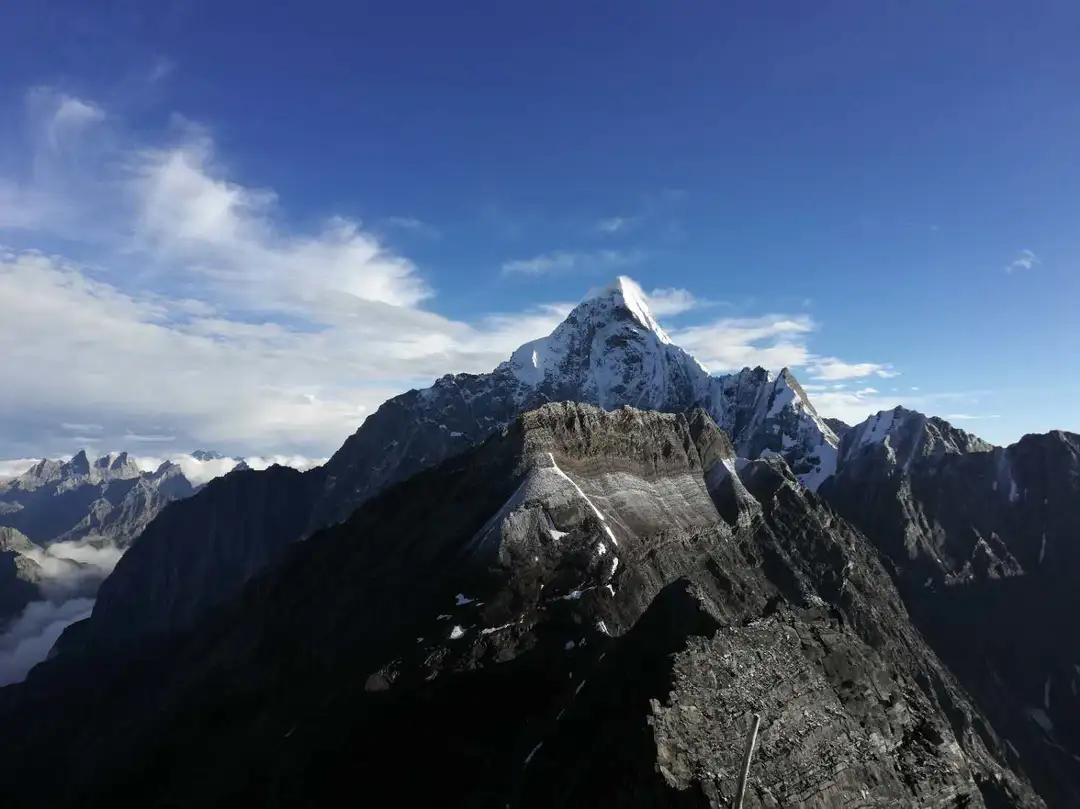
In the thin air, our group finally stood on this patch of earth kissed by morning light. The biting wind, carrying the raw chill of the snow-capped mountains, swept over us. Between heavy gasps, the world before us was bathed in a soft golden glow—in the distance, the summit of Younger Sister Peak, its banner clouds slowly dispersing, as if the sacred mountain were lifting a mysterious veil for us.
At that moment, I pulled out my phone. The front-facing camera showed a face slightly puffy from oxygen deprivation, with snow-covered peaks in the background. I looked into the lens and said, "Mom, Dad, I made it to the top. I'm fine now."
Only I knew how much bitterness those words carried.
A little over a year ago, I was far from "fine." Insomnia clung to me like a shadow—I'd lie awake all night, waiting for dawn. Gastritis and pharyngitis took turns tormenting me. Walking felt like treading on cotton. Forget 5,000 meters—when friends invited me to hike Yuelu Mountain, that little hill barely 500 meters high, I'd first have to calculate whether it was one of my "good" days.
Fortunately, fueled by that undying cockroach spirit, I pulled myself back up over the course of a year. Coincidentally, this journey of self-healing overlapped perfectly with my first steps into outdoor trekking.
Though I'm still just a rookie hiker, standing on Big Peak's summit as the Madonna-like sacred light poured through the clouds and fell upon Younger Sister Peak's graceful silhouette, I understood—this would not be the end.
Good morning, Four Sisters.
Departure: Three Girls and a Green Train to Chengdu
July 18, noon. The sun in Changsha was practically roasting people alive. Xiaohuan, Junjun, and I dragged our luggage toward the green train bound for Chengdu.
I'd once fantasized about this scene: amidst the crowd of people hauling suitcases and woven bags, three backpackers would appear—decked out in sleek waterproof jackets and pants, wearing high-top hiking boots, carrying massive trekking packs. And the kicker? These three were "not-so-bad-looking" young women. How stylish would that be?
But reality always exceeds expectations. The other two's outfits were something else:
- Junjun, in a nutshell: strong enough to carry a ton, cool as a cucumber.
- Xiaohuan, rocking a bohemian maxi dress paired with a huge trekking pack, with a pair of hiking boots dangling off the side—sporty meets girly, an eye-catching fusion of styles.
Why Chengdu Keeps Calling Me Back
Chengdu. This was my third consecutive year visiting. Returning to a familiar place is the highest compliment you can pay it.
- First time: a graduation trip with my roommate, chatting about everything and nothing, carefree.
- Second time: bringing my parents along—their happiness was mine.
- This time: Chengdu was just a transit point, but I knew it still held remnants of old memories and promises of new loves.
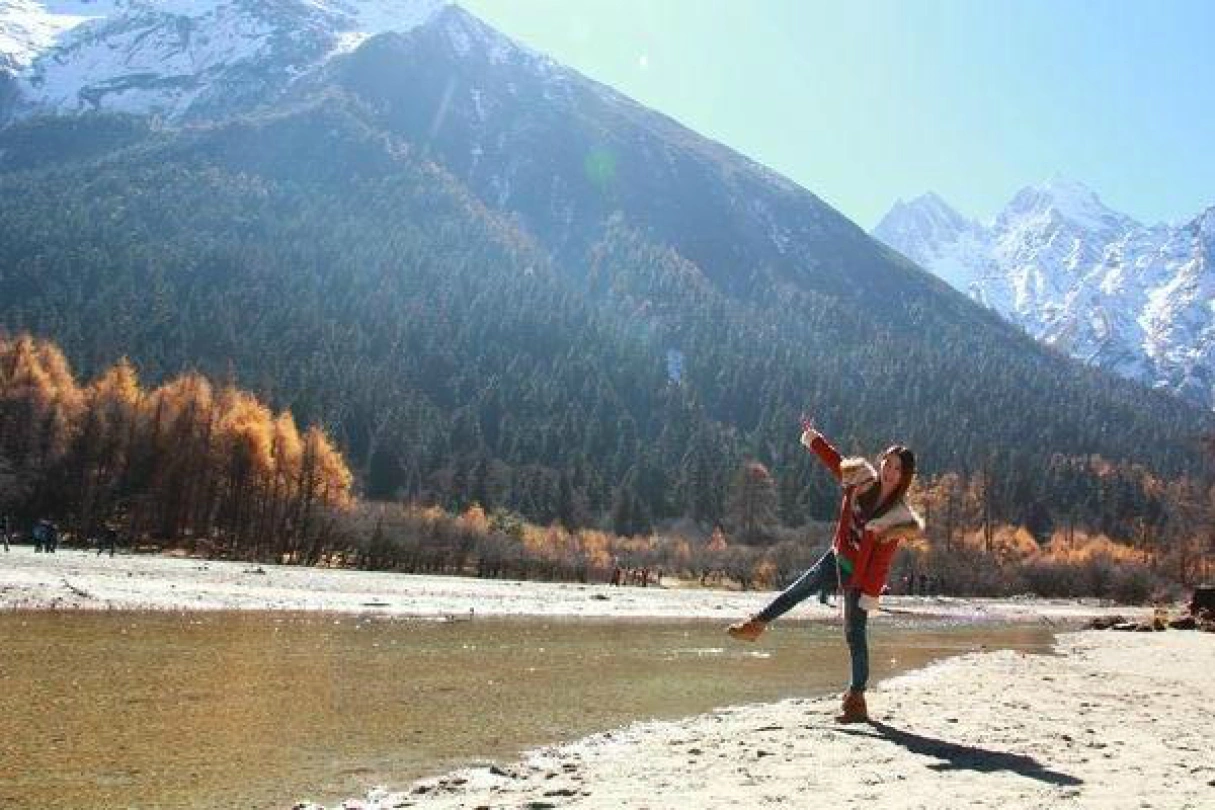
As I walked through Chunxi Road for the third time, snapping a photo of IFS's giant panda butt; strolled through Du Fu's Thatched Cottage, passing beneath green bamboo and red walls; squeezed through the bustling crowds of Jinli Ancient Street, watching red lanterns light up one by one—I knew I'd fallen for Chengdu's vibrant, everyday charm all over again.
If someone keeps returning to the same place, there must be a reason. Chengdu holds a piece of my memories and emotions. Across time, the good and the bad are all softened by a rosy filter. The longer the time, the thicker the filter, the stronger the emotion—a feeling I can't quite put into words for others.
The old saying goes, "Don't enter Sichuan when young, don't leave when old." Truer words were never spoken.
Into the Mountains: Transition from City to Wilderness
The bus pulled out of Chengdu, passing through Dujiangyan to Yingxiu, then to Wolong. After tunneling through Balang Mountain and a few downhill stretches, the town of Siguniangshan appeared before us.
We checked into a youth hostel, rested for half a day, and waited for tomorrow's departure.
The day we set out, the previous day's drizzle had given way to brilliant morning sunshine. In the middle of the dog days of summer, we actually had to wear two layers—the contrast was exhilarating.
Before leaving, we sent a quick "we're safe" message to the outside world and posted on social media. For the next two days, we'd cut off all signals, immerse ourselves in nature, and refuse to be phone-addicted zombies.
Key Waypoints on the Siguniang Big Peak Trek
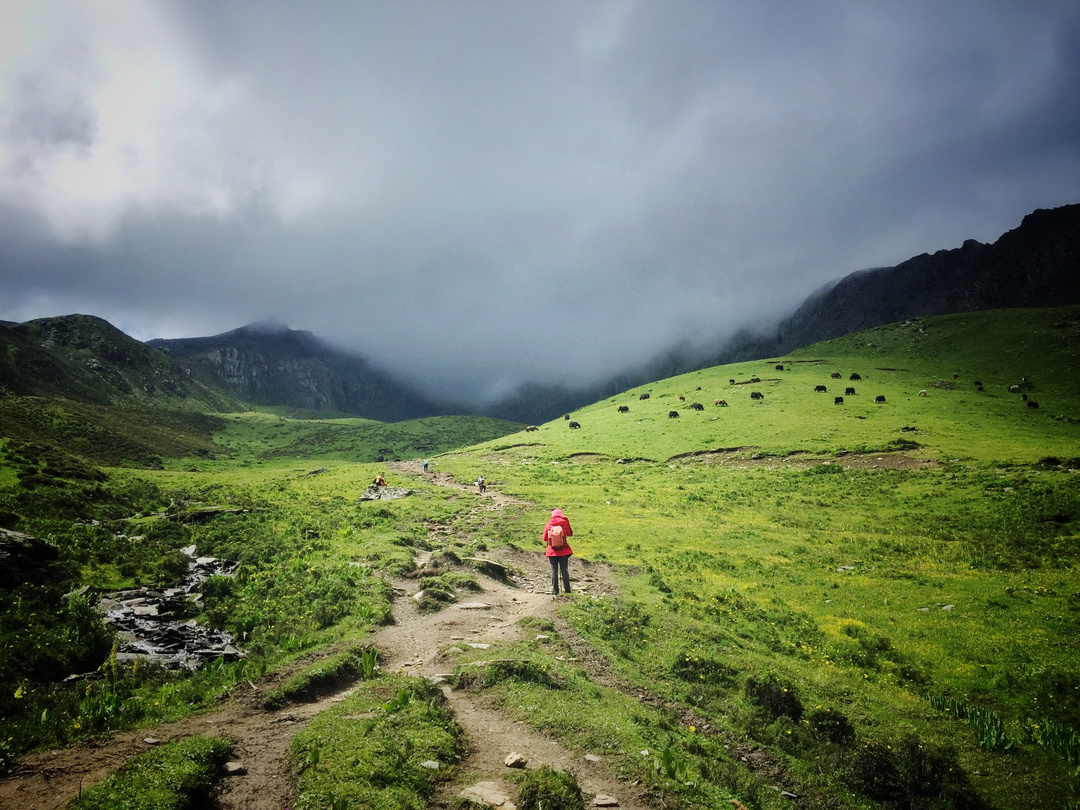
A few steps in, we left the boardwalk, pushed through a patch of shrubbery, and suddenly the view opened up—a vast alpine meadow spread before us. That was Zhaijieping (Abstinence Meadow) . Looking back at the path we'd come, I had no idea that this stretch, which felt so short now, would seem endless on the return journey.
Further ahead, we reached Guozhuangping (Guozhuang Meadow) . Its biggest draw: wildflowers everywhere—named and nameless, scattered in the grass like eyes, like stars. Art really does imitate life.
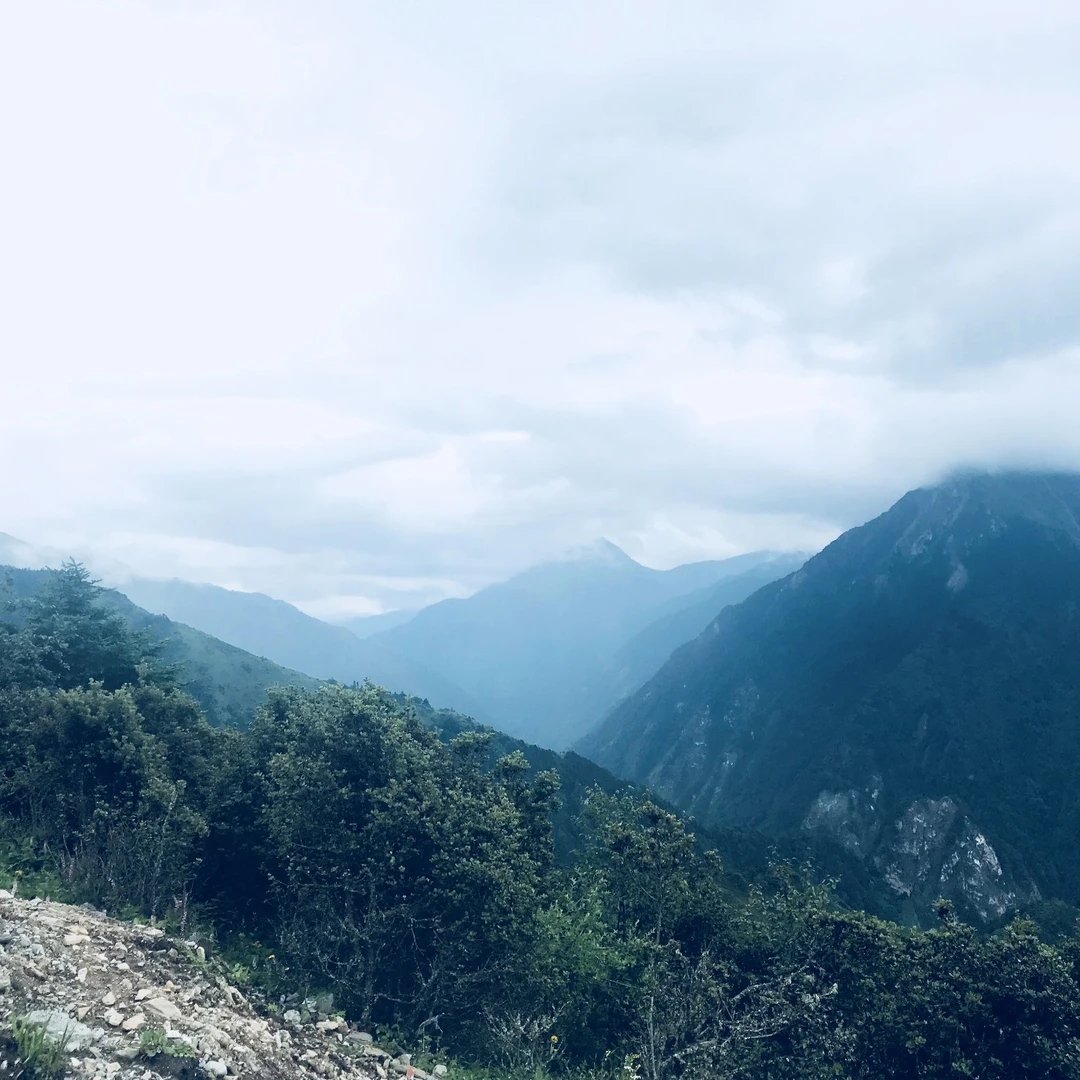
From Shibantang (Slab Hotspot) to Jipengzi (Chicken Shed) , we mostly trudged through shrubbery. The altitude had already topped 3,600 meters. Every few steps, we had to stop and catch our breath. The trail was narrow and muddy, visibility limited, and without stunning scenery to distract us, it was a boring slog. Everyone was tired. No one spoke. Heads down, we just pushed on, desperate to get through this patch of brush.
The Agony: The Farthest Distance in the World
The shrubbery began to thin out. The altitude climbed higher, and the views opened up again. This section, despite the elevation, had the advantage of flat terrain—practically like walking on level ground.
But what came next became an unforgettable memory of pure suffering: we had to rapidly gain altitude to reach the base camp at 4,200 meters.
My teammate Xiaoyu was already exhausted. On the final stretch, I started to run out of steam too. Slowly, Xiaoyu and I fell to the back of the group. The others were dozens of meters ahead, soon disappearing from sight.

Anxiety gnawed at me. But the more I panicked, the more my rhythm fell apart. My heart pounded faster, my steps grew heavier. I could feel my heartbeat throbbing in my temples. I had to rely on deep breaths to steady myself.
There were moments when I thought: I'm not going to make it today. I'll have to turn back. But watching the others ahead push so hard, I couldn't bear to give up. I tried to catch up—and was hit by another wave of dizziness.
So I trudged on in agony, finally reaching the last dozen meters of steep slope. On flat ground, this slope would take seconds. Here, it was a life-or-death struggle.
A phrase I'd never truly understood finally clicked: "The farthest distance in the world is not between life and death—it's when you're right there in front of me, but my feet are filled with lead, my mind is a fog, and I just can't reach you."
The stone shelter at the camp, so close, became a distant memory.
Base Camp: A Night of Altitude Sickness
Finally, we stumbled into the stone shelter at base camp. I dropped my pack, lay down, and tried to recover. But my chest felt tight, the back of my head throbbed. Every time I stood up and took a few steps, I was winded again. Stop, go, stop—I couldn't find a comfortable position.
We had to wake up at 3 AM to summit, so bedtime was 8:30 PM. We propped the door open with trekking poles, wedged the window shut with our packs. The stone room went pitch black as everyone fumbled into their sleeping bags.
Then, a few raindrops hit the roof. Within moments, it was a crackling downpour. Cold wind seeped through the stone cracks, sending chills through the room. Would tomorrow be good weather? I no longer cared—what I really cared about was: could I fall asleep?
Frequently Asked Questions About Climbing Siguniang Mountain's Big Peak

1. How difficult is climbing Siguniang Big Peak (5038m)?
The Big Peak is considered a moderate technical climb suitable for beginners with good fitness. While it doesn't require advanced mountaineering skills, the altitude gain from 3,200m to 5,038m presents significant challenges, especially for those new to high-altitude trekking. Proper acclimatization and fitness preparation are essential.
2. What is the best time of year to climb Siguniang Mountain?
The optimal climbing season runs from June to October, when weather conditions are most stable. July and August offer the warmest temperatures but also the highest chance of afternoon thunderstorms. Spring and autumn can be colder but offer clearer skies.
3. Do I need a guide to climb Siguniang Big Peak?
 Yes, a local guide is strongly recommended and often required by park regulations. The terrain includes exposed sections, crevasses, and unpredictable weather. Local guides know the route, can manage altitude emergencies, and ensure safety protocols are followed.
4. What altitude sickness symptoms should I expect at 4,200m base camp?
Common symptoms include headache, nausea, dizziness, fatigue, and shortness of breath. In severe cases, you may experience confusion, loss of coordination, or persistent vomiting. The author's experience of chest tightness and throbbing headache is typical. Descending immediately is the only cure for severe AMS.
5. How long does the entire Siguniang Big Peak climb take?
Most itineraries take 3-4 days: - Day 1: Arrive at Siguniangshan town (3,200m) - Day 2: Trek to base camp (4,200m) – 5-7 hours - Day 3: Summit attempt (3 AM start) and descend to town – 8-12 hours - Day 4: Departure

Internal Linking Suggestions
[Link: Altitude sickness prevention tips for beginners] [Link: Best hiking gear for 5000m peaks in China] [Link: Chengdu to Siguniangshan travel guide] [Link: How to train for high-altitude trekking] [Link: Four Sisters Mountain climbing routes comparison]
Final Thoughts: Why This Summit Matters
Standing on the summit of Siguniang Big Peak at 5,038 meters, I realized something profound: the mountain doesn't care about your past. It doesn't know about your insomnia, your gastritis, or the days you couldn't climb a 500-meter hill. The mountain only asks one thing—that you keep moving forward, one breath at a time.
For anyone who has ever felt broken, lost, or stuck in a cycle of pain—this climb is proof that healing is possible. The summit isn't just a physical destination; it's a symbol of inner peace. When you stand above the clouds, the problems that once felt insurmountable suddenly shrink to their proper size.
Your turn now. Whether you're battling illness, grief, or simply the monotony of daily life, consider this your sign. The mountains are waiting. The trail is open. And the summit—your summit—is within reach.
[CTA: Ready to plan your own Siguniang Big Peak adventure?] Download our free High-Altitude Trekking Checklist and join our community of summit seekers. Sign up below for exclusive tips, route updates, and stories from the trail.
This article is based on a first-hand climbing record from July 2018. Conditions, regulations, and recommended gear may have changed. Always check current park advisories and consult with local guides before attempting any high-altitude climb.
You may also like