The Joy of Leshan: An Unexpected Encounter with Buddha, Mountains, and Culinary Delights
Meta Description: Discover Leshan travel tips, from the iconic Giant Buddha and Lingyun Mountain hikes to cold-braised skewers. Explore Leshan cuisine, temples, and scenic views in this SEO-optimized guide.
Life is like a journey, every step hiding unexpected surprises. Two summers ago, when all our friends had scattered in different directions, my wife and I found ourselves adrift in the sunny days, restless and uncertain. We quickly settled on a trip to Chengdu and Mount Emei, planning with feverish enthusiasm as visions of travel joy filled our minds. But then came a call from our friend Fatty's wife, all the way from Xining, her mesmerizing voice painting pictures of endless rapeseed flower fields stretching for miles and the salt-rimmed wonders of Chaka Salt Lake. We surrendered without a fight. The Qinghai-Gansu Grand Loop became the most stunning journey of that year, and Qinghai remains my favorite travel destination in China to this day.
This year, history repeated itself. We had once again prepared our Chengdu-Emei itinerary, messaging Fatty's wife: "Let's go to Chengdu and Emei together this year!" She replied: "We're back in Xining." I pulled out my trump card: "Chengdu has hotpot..." Fatty's wife: "Xining has pleasant weather." "Chengdu has hotpot..." "Xining has..." "Chengdu has hotpot..." "Fine, we'll meet you in Chengdu." There's nothing in this world that a hotpot can't solve. If one isn't enough, then two. And if that still doesn't work, three, four, five, six, seven, eight! No one escapes the pull of a good meal.
First Taste of Leshan: The World in a Bowl of Cold-Braised Skewers
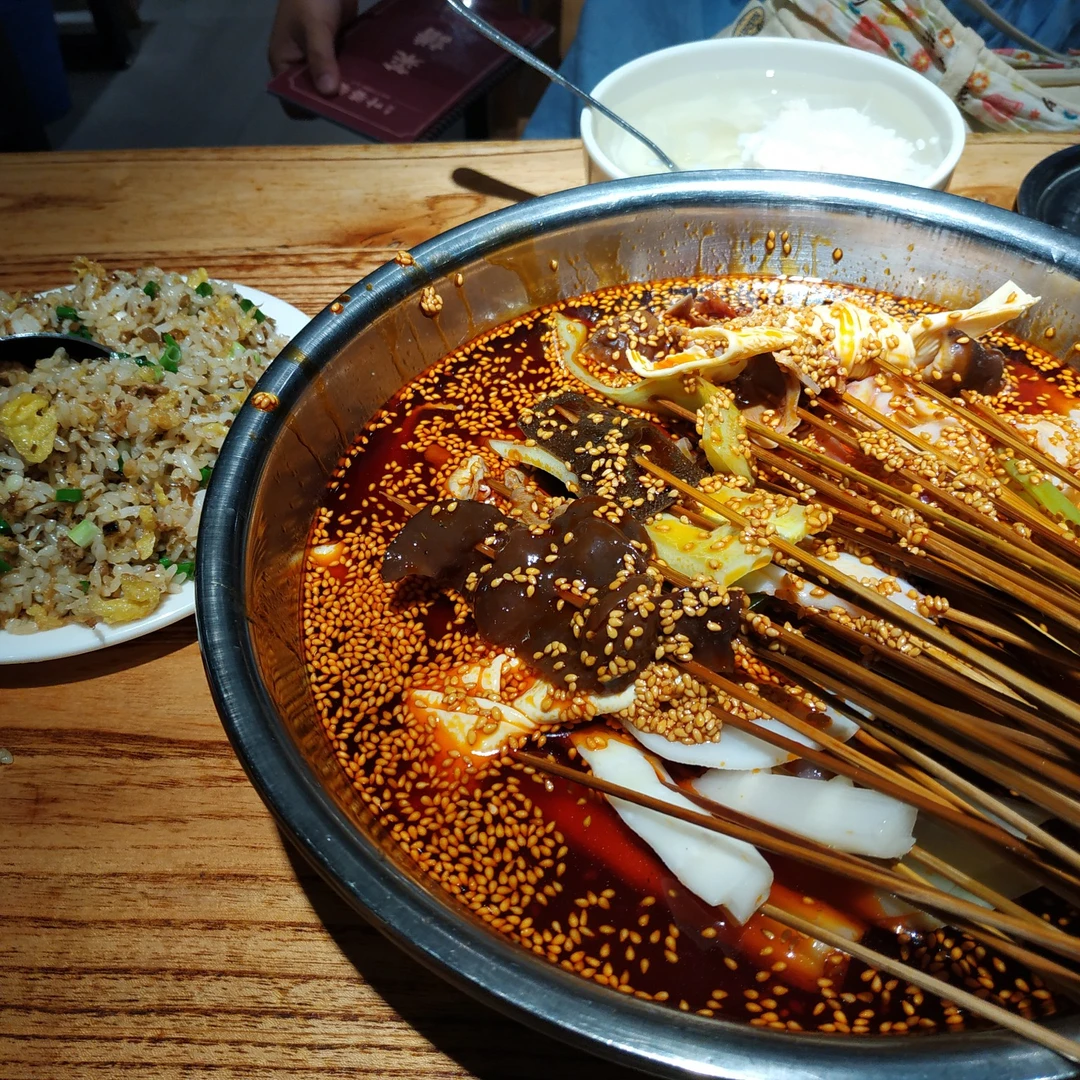
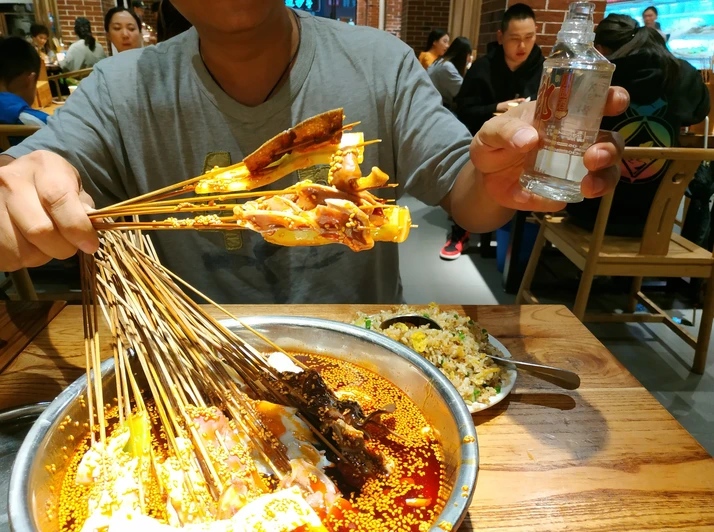
At two in the afternoon on July 29th, under a light drizzle, my wife and I arrived in Leshan. Flight delays had left me irritable and ravenous. At that moment, the person I most wanted to see wasn't Fatty or his wife—it was Grandma Ye. More precisely, her cold-braised skewers (钵钵鸡, boboji). When that massive platter of skewers was set before me, the glistening ingredients impaled on bamboo sticks dazzled my eyes and made my mouth water. My sinful hands reached out impatiently, my mouth already open, the soul-stirring deliciousness banishing all thoughts of Fatty and his wife waiting at the hotel.
A quick aside: Fatty's wife isn't fat at all. We call her that only because of Fatty himself—he's genuinely big! But you can't blame me. First, I was starving. Second, when I encounter good food, it's like a hero meeting a beauty, a weasel spotting a... no, a cat seeing a fish. Well, anyway, I simply couldn't control myself. It's in my nature.
Leshan food tip: Cold-braised skewers are a must-try street food in Leshan. They come in two varieties—red oil (spicy) and clear broth (mild). Grandma Ye's is legendary, but you'll find excellent options across the city. [Link: Best street food in Leshan]
Climbing Lingyun in the Rain: Buddha as Mountain, Mountain as Buddha
The forecast had predicted rain for both days. Taking advantage of the intermittent drizzle, we met up with Fatty and headed straight for the Leshan Giant Buddha. We didn't choose the "low-effort" boat tour route. Instead, we climbed the mountain directly, getting up close to the Lingyun Buddha that had been etched into my memory from childhood movies.
We'd barely admired a few calligraphy carvings left by ancient literati when the rain returned. My wife nervously pulled out a raincoat and insisted I put it on. I refused, of course—wearing a raincoat makes for terrible photos, and besides, it was just a light drizzle. Hiking in the rain, gesturing toward the river from the mountainside—this isn't something you experience every day. Lian Po may be old, but he can still point at the landscape and boast! The feeling was fantastic!
But soon the rain stopped, and my spirits plummeted. Remembering all the times I'd been caught in the rain, I thought of my friend Jiang Jie's poem "The Beautiful Lady Yu": "Listening to rain in my youth, singing in the pleasure house..." Suddenly inspired, I composed my own version to express my feelings: "Getting soaked in rain in my youth, my girlfriend was a real mess; getting soaked in rain in middle age, carrying bricks with blurry eyes swaying in the west wind. Now getting soaked in rain at the foot of Leshan, my temples already gray, the joys and sorrows of life as light as smoke, letting the rain slap my face till dawn."
Don't lecture me about tonal patterns. If I hadn't been constantly drenched, my brain waterlogged to the point of overflowing, I would have been truly commanding the landscape instead of being this aging, sleazy, greasy uncle seizing rare opportunities to put on airs. Sigh, in a few more years, I won't even be an uncle anymore—I'll automatically upgrade to a decrepit old man. Am I talking too much? Why is my face all wet?
Leshan hiking tip: The Lingyun Mountain trail is steep but rewarding. Wear comfortable shoes and bring a rain jacket—weather changes fast. [Link: Leshan Giant Buddha hiking guide]
Atop the Buddha's Head: Where Three Rivers Meet
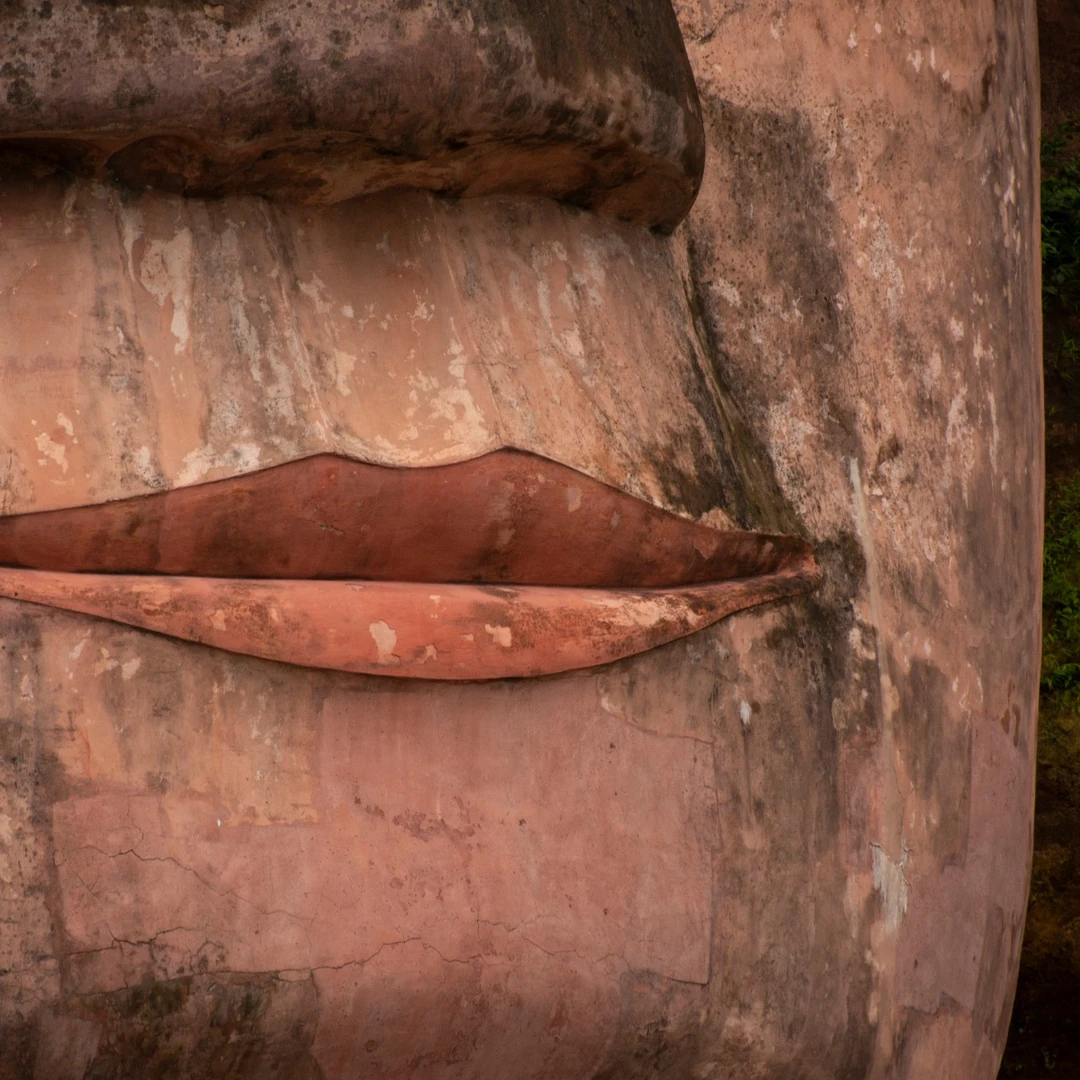
We kept walking until we reached the mountain beside the Giant Buddha's head. Leshan Buddha is famous for the saying, "The Buddha is a mountain, and the mountain is a Buddha." The Buddha's head sits at the mountain's summit. I stood beside the head, facing the same direction, trying to mimic the Buddha's expression: eyes slightly open, mouth slightly parted, with a faint, flower-holding smile. Of course, I bore no resemblance, and I certainly lacked the capacity or compassion to save all beings.
Before me, the Min River, Qingyi River, and Dadu River converged. Thanks to two days of heavy rain, the muddy yellow waters surged violently, with towering waves crashing thunderously through the mountains. Yet I felt no tremor—"Climb a high mountain, and the rivers seem small," as the saying goes. The height at which one stands determines one's vision, and one's breadth of mind. That's absolutely true. Many understand this principle, but few truly live it.

I put on the air of an enlightened master, the only one awake in a world of dreamers, intimidating my companions into waiting silently. After a lengthy celestial reverie, I could no longer maintain the act and slowly moved on.
The narrow, steep path carved along the mountainside was treacherous. My wife didn't ask many questions about this Maitreya Buddha, built during the Kaiyuan era of the Tang Dynasty (713 AD). Perhaps she'd learned enough during our planning, or maybe last summer's crash course at Mount Song and Luoyang had stuck. More likely, she knew that whatever she asked now would be forgotten by tomorrow—everything she should and shouldn't remember would slip away.
Leshan Giant Buddha history: Carved into the cliff face over 90 years, this 71-meter-tall statue is the largest stone Buddha in the world. It was designed to calm the turbulent waters of the three rivers. [Link: History of Leshan Giant Buddha]
At the Buddha's Feet: Awe and Perspective
At the Buddha's feet, less than a meter from the raging river, the thunderous roar of the waves was deafening. Only then did I truly feel the surging power. Looking up at the Buddha, I could find no better words than majestic, solemn, and awe-inspiring. Standing by the torrential river, a human is as insignificant as a blade of grass. Beneath the towering Buddha, we are as tiny as ants! Height truly determines perspective!
After paying homage, we climbed the Nine-Turn Plank Path. At each turn, I paused briefly, looking at the Buddha, then at the great river. With every step upward, my heart felt a little more open. Reaching the summit, an imperial swagger welled up inside me—height truly expands the soul!
Leshan scenic viewpoint: The Nine-Turn Plank Path offers the best views of the Buddha from different angles. Expect crowds during peak season—visit early morning for a quieter experience. [Link: Best photo spots at Leshan Giant Buddha]
Lingyun Temple and Dongpo Tower: Footsteps of the Literati
After paying respects to the Buddha, we continued on. Since this was a Buddhist mountain, temples were inevitable. Lingyun Temple wasn't large, and we circled through it quickly. There were plenty of pavilions and towers too—Zai Jiu Ting (Wine-Carrying Pavilion) and Dongpo Tower were old, beautiful, clean, and quiet. Taking a rest there after circling the Buddha was a pleasant choice.
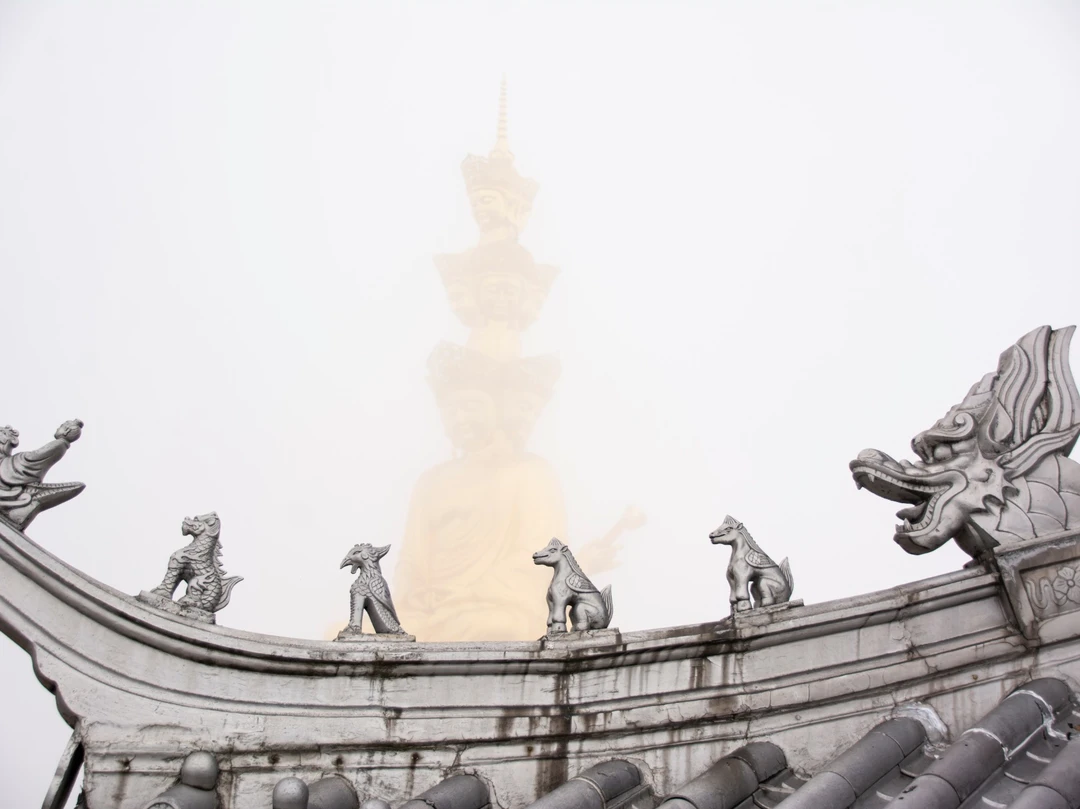
"Dongpo" refers to my friend Su Dongpo (Su Shi), who was from Meishan, not far from Leshan. As a young man, he surely roamed the mountains and rivers with his rowdy friends, carrying wine along the way, which gave rise to Dongpo Tower. Years later, when Dongpo wrote his timeless "Prelude to Water Melody" at Red Cliff, beginning with "The great river flows east, washing away the gallant heroes of a thousand ages," I'm convinced he was recalling his youthful days here, worshipping the Buddha and watching the river's澎湃 surge—how else could he have written of "waves crashing on the shore"?
Leshan cultural sites: Lingyun Temple dates back to the Tang Dynasty and houses ancient Buddhist relics. Dongpo Tower is a tribute to Su Shi, one of China's greatest poets. [Link: Top cultural attractions in Leshan]
Piyuan Temple: A Place of Peace and Cultural Embarrassment
After resting, we ventured further into the mountain complex. Piyuan Temple stood quietly, its courtyards shaded by ancient trees. The atmosphere was serene, a stark contrast to the bustling crowds around the Buddha. But here came my moment of cultural embarrassment: I tried to read an inscription on a stone tablet, only to realize my classical Chinese was woefully inadequate. The characters blurred before my eyes, and I could only guess at their meaning. My wife laughed, and Fatty's wife joined in. "Some scholar you are," she teased.
Fair enough. But isn't that the beauty of travel? You don't need to understand everything to appreciate it. Sometimes, just being there—feeling the cool stone under your fingers, hearing the wind through the pines, smelling the incense from the temple—is enough.
Leshan temple guide: Piyuan Temple is less crowded than Lingyun Temple and offers a more meditative experience. Don't miss the ancient cypress trees and stone carvings. [Link: Lesser-known temples in Leshan]
Leshan Cuisine: Beyond Cold-Braised Skewers
Leshan is a food lover's paradise. While cold-braised skewers stole my heart, the city offers much more:
- Leshan tofu pudding (豆腐脑): Silky, savory, and topped with peanuts, pickled vegetables, and chili oil.
- Biangbiang noodles: Thick, hand-pulled noodles served in a spicy vinegar sauce.
- Sweet water noodles (甜水面): Thick noodles coated in a sweet-savory sauce made from soy sauce, sugar, and chili.
- Leshan-style hotpot: Lighter and more aromatic than Chengdu hotpot, with a focus on fresh local ingredients.
Leshan food tour tip: Head to the Old Town night market for the best street food. Try everything—you won't regret it. [Link: Ultimate Leshan food guide]
Practical Leshan Travel Tips
| Category | Details |
|---|---|
| Best time to visit | Spring (March-May) and autumn (September-November) for mild weather. Avoid summer heat and winter cold. |
| How to get there | High-speed train from Chengdu East Station takes about 1 hour. Buses and taxis are also available. |
| Giant Buddha tickets | ¥80 (about $11) for adults. Boat tour tickets are ¥70 extra. |
| Recommended duration | 1-2 days. One day for the Giant Buddha and temples, another for food and city exploration. |
| Accommodation | Stay near the Old Town for easy access to food and attractions. Mid-range hotels start at ¥200/night. |
Leshan travel planning: Book tickets online in advance during peak season (Chinese holidays). Wear comfortable shoes—you'll be climbing stairs. [Link: Complete Leshan travel itinerary]
FAQ: Everything You Need to Know About Leshan
1. How long does it take to see the Leshan Giant Buddha?
Plan for 2-3 hours if you hike the mountain path and visit the temples. If you take the boat tour, allow 1-1.5 hours. For a full experience, combine both.
2. Is Leshan worth visiting besides the Giant Buddha?
 Absolutely! Leshan offers excellent street food, historic temples like Lingyun and Piyuan, and scenic river views. It's a great day trip from Chengdu or part of a longer Sichuan itinerary.
3. What's the best way to see the Giant Buddha—by boat or on foot?
Both have merits. The boat tour gives you a full view of the Buddha from the river, while hiking allows you to stand at its feet and explore the surrounding temples. Most visitors do both.
4. What should I eat in Leshan?
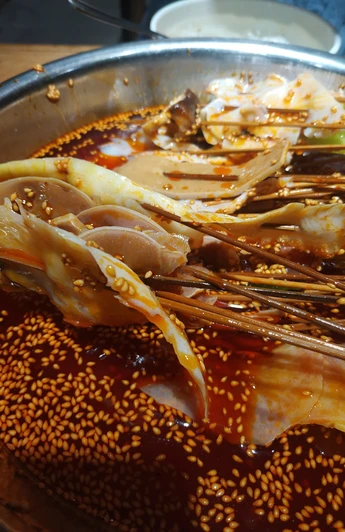 Don't miss cold-braised skewers (boboji), tofu pudding, biangbiang noodles, and sweet water noodles. Leshan is also known for its braised beef and local snacks.
5. Can I visit Leshan in one day from Chengdu?
Yes. The high-speed train takes about 1 hour each way. Start early to see the Buddha, explore temples, and enjoy a meal before returning. For food lovers, consider an overnight stay.
Final Thoughts: Why Leshan Surprised Me
I came to Leshan for the Buddha but left with so much more. The rain, the food, the temples, the river—every element wove together into an unexpected tapestry of joy. The Buddha didn't save me from anything, but standing at his feet, I felt small in the best way possible. And that bowl of cold-braised skewers? It reminded me that sometimes the simplest pleasures are the most profound.
Your turn: Have you visited Leshan? What was your favorite moment? Share your experience in the comments below. And if you're planning a trip, start with our [Leshan travel guide] for everything you need to know.
Don't forget: Book your train tickets early, pack an umbrella (just in case), and leave room in your stomach for skewers. Lots of them.
This article was originally inspired by a personal travelogue from Mafengwo. All experiences and opinions are the author's own.
You may also like