Return to the Center of the Earth: A 48-Hour Cave Adventure in Tianshi Cave, Sichuan
Meta Description: Discover the ultimate caving adventure in Xingwen County, Sichuan. Our 48-hour expedition into Tianshi Cave covers SRT rappelling, underground campsites, and untouched limestone formations. Plan your own spelunking trip today.
Introduction: How a Link Sparked a Life-Changing Expedition
Before June 23, 2020, the words "Tianshi Cave" had never crossed my mind. Then a friend sent me a link—a recruitment post for a cave expedition. Seventy-meter rappelling, fossils, ancient ruins, underground waterfalls, cave campsites—these keywords clung to my attention like magnets.
I'm no stranger to limestone caves. I've visited plenty of tourist caves decked out with colorful lights like fairy-tale wonderlands. But a completely untouched, naturally formed cave—one never altered by human hands—was an entirely different matter. And so, my first real caving adventure began, without any warning at all.
This is the story of a 48-hour cave adventure that pushed physical limits, tested mental endurance, and revealed a hidden world beneath Sichuan's surface.
What Makes Tianshi Cave a Unique Caving Destination?
A Wound in the Earth: The Geography of Tianshi Cave
Tianshi Cave is located in Xingwen County, Yibin City, Sichuan Province, less than a kilometer in a straight line from the famous Xingwen Stone Sea scenic area. In 1992, a joint Sino-British expedition team ventured deep into the cave to survey it, and some corners still bear the markers they left behind.
According to records, Tianshi Cave stretches over nine kilometers in length, and its chambers are staggering in size—the largest of its four halls, the Triangular Hall, covers an area of 31,000 square meters. As for the exact length of its three corridors, no one knows for sure: some say five kilometers, others claim twenty, and a few even insist it leads all the way to Yunnan Province.
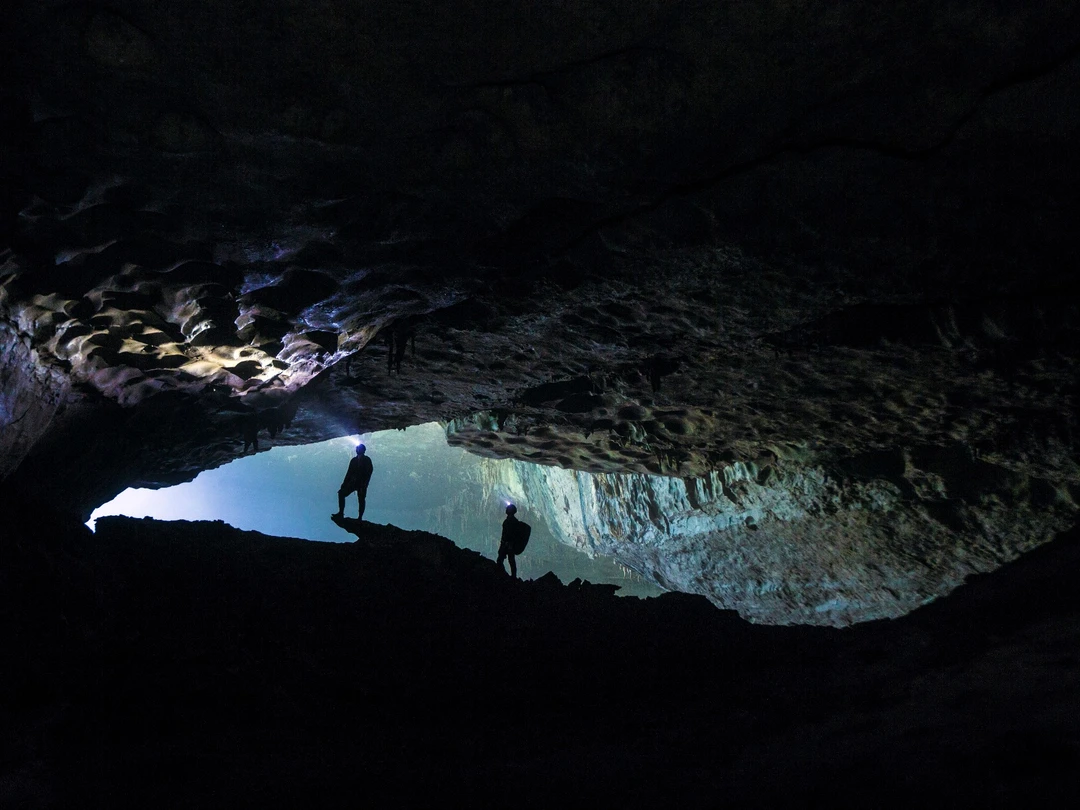
The passages show no signs of collapse; they were entirely carved by flowing water, forming a natural tubular corridor. Even more astonishing, the 1992 expedition discovered thirteen skylights inside the cave and a hundred-meter-long corridor of stone flowers—a rare sight worldwide. Tianshi Cave remains untouched by human destruction, preserved in its most primitive state.
The Entrance: A Vertical Sinkhole Hidden in a Rift Canyon

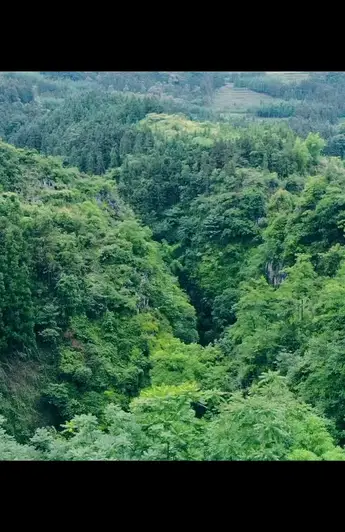
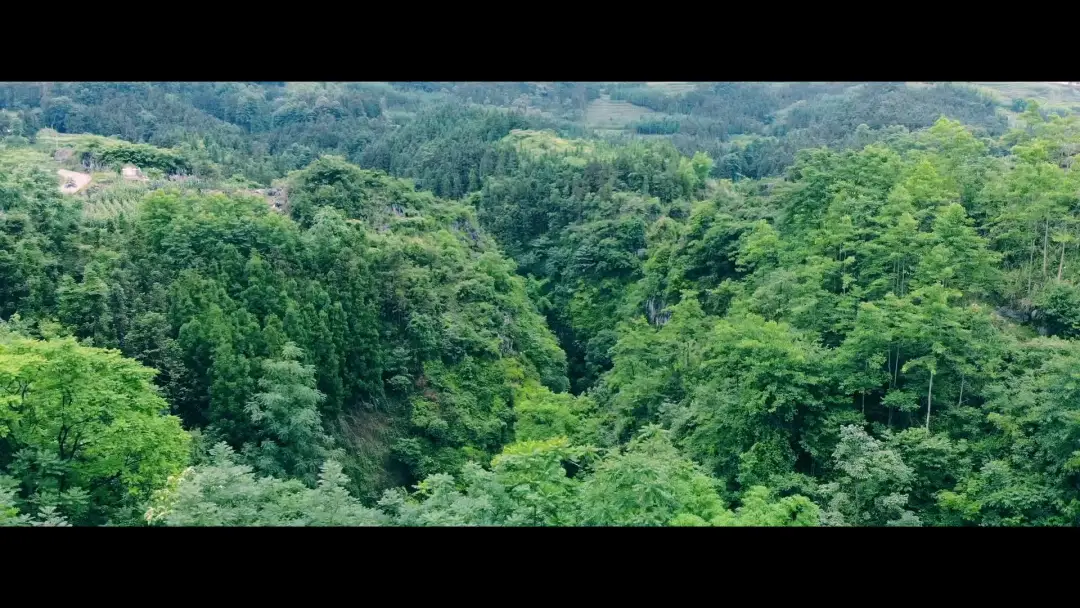
The entrance to Tianshi Cave is a vertical sinkhole hidden deep within a narrow rift canyon. The vertical drop from the canyon rim to the cave mouth is about fifty to sixty meters. To begin our exploration, we had to descend in three stages using ropes pre-rigged by the expedition team, relying on professional gear to reach the canyon floor.
From an aerial view, this canyon looks like a massive gash on the surface of the earth. And there, in the dim depths of the canyon floor, a huge cave mouth waited silently for us.
Preparing for a 48-Hour Cave Adventure: Gear, Safety, and Logistics
Gearing Up: From Chengdu to Xingwen
Early on the morning of June 25, we set off from Chengdu. It was the Dragon Boat Festival holiday, and traffic was a nightmare—the drive from Chengdu to Xingwen County took a full five hours. By nearly three in the afternoon, we finally reached our assembly point for the expedition.
When I stepped out of the car, the first thing I saw was a row of neatly arranged personal gear—the expedition leader had already prepared all the caving tools for everyone. The equipment was laid out with such precision that it was clear the leader was an extremely meticulous person.
There weren't many pieces of gear, but every single one was essential. The most important were the helmet and headlamp—these two items were practically glued to us the entire time. The helmet, in particular, stayed on except when sleeping. The cave was filled with jagged rocks everywhere; a slip and a fall could mean hitting your head, or a falling rock from above could strike you. The helmet was the last line of defense for your skull.
SRT Gear: The Key to Safe Rappelling
Besides the helmet, there was a set of SRT (Single Rope Technique) gear, including a hand ascender, a chest ascender, a descender, and cow's tails. The setup looked simple, but once you broke it down, the number of components was dizzying. Each piece played a critical role in ascending or descending.
To be honest, as a complete novice, I was baffled when I saw this equipment. I couldn't imagine how such a seemingly simple setup could let us rappel down steep cliffs and then climb back up the same way.
Meeting the Expedition Leader: "Uncle Sleepy"
Before we put on the gear, the expedition leader—"Uncle Sleepy," a legendary figure in Sichuan's caving community with over a decade of experience and hundreds of caves under his belt—gave us a detailed briefing on how to use the equipment and what to watch out for during the descent. He was exceptionally thorough in his preparations, and for good reason: rappelling from such heights meant safety measures had to be flawless.
Once we were suited up, we double-checked each other's gear. Then came the task of organizing our belongings—everything had to be lowered one by one using ropes during the descent, which was a hassle. The leader repeatedly stressed that we should pack light and leave behind anything non-essential.
[Link: Best SRT gear for beginners]
The Descent: A Three-Stage Rappelling Challenge
Stage One: The Bamboo Grove to the Canyon Slope
From the assembly base camp, we followed a narrow path through the fields for less than two hundred meters before reaching a bamboo grove. This was our first rappelling point of the day.
The first stage was relatively easy—a gradual descent down a slope of about seventy degrees, which posed no challenge for most people.
Stage Two and Three: The Vertical Heart-Pounder
The real heart-pounder came with the second and third stages. These two were connected, a vertical descent along the canyon wall. Between the second and third stages, we had to hang suspended in mid-air while the leader swapped our ropes for us. There we were, dangling in the void, watching as he switched from one rope to another. Those two or three minutes of rope-changing felt like my heart was about to leap out of my chest—after all, we were hanging in the air, with a twenty-meter drop beneath us.
How SRT Rope Techniques Work
SRT rope techniques are truly magical. A few small devices allow you to move freely up and down a rope while staying safe. With this gear, even an ordinary person can become a "Spider-Man."
The first to descend was "Brother Snail," an experienced caver. The leader sent him down first so he could help with hauling everyone's bags later. Experienced people are something else—he quickly disappeared below the cliff.
While we waited, everyone hurried to send a few last messages to their families—once we went down, there would be basically no signal. We were about to enter a world cut off from everything.
The Painful Pace of Novices
As Brother Snail went first, the rest of us began descending in order. The leader positioned himself at the midpoint to prepare for hauling the luggage.
There were several novices like me in the group, so the descent was painfully slow. With twelve people and all their gear, it took nearly two hours at the first rappelling point just to get everyone and everything safely down to the platform at the second stage.
Looking up from the platform of the second stage, the canyon's topography was already clearly visible. Steep rock walls surrounded us on all sides, leaving only a small patch of sky above. The light here was already quite dim.
Peering down from the starting point of the second stage, there was a vertical rock face with a drop of about twenty to thirty meters. Without ropes, it would have been impossible to go down. The leader had already descended to the junction of the second and third stages, waiting to help us with the mid-air rope change.
The ropes we climbed were anchored to the rock with expansion bolts. The expedition team had used a hammer drill to bore holes into the stone, then driven in expansion bolts and clipped the ropes in. Apparently, these rope systems could bear at least 2.2 tons of weight, so safety was reasonably assured.
After an enormous effort, I finally made it down to the canyon floor. The mid-air rope change was the most terrifying part—but also the most exhilarating.
[Link: How to prepare for your first rappelling descent]
Inside Tianshi Cave: What to Expect During a 48-Hour Expedition
The Underground World: Fossils, Waterfalls, and Stone Flowers

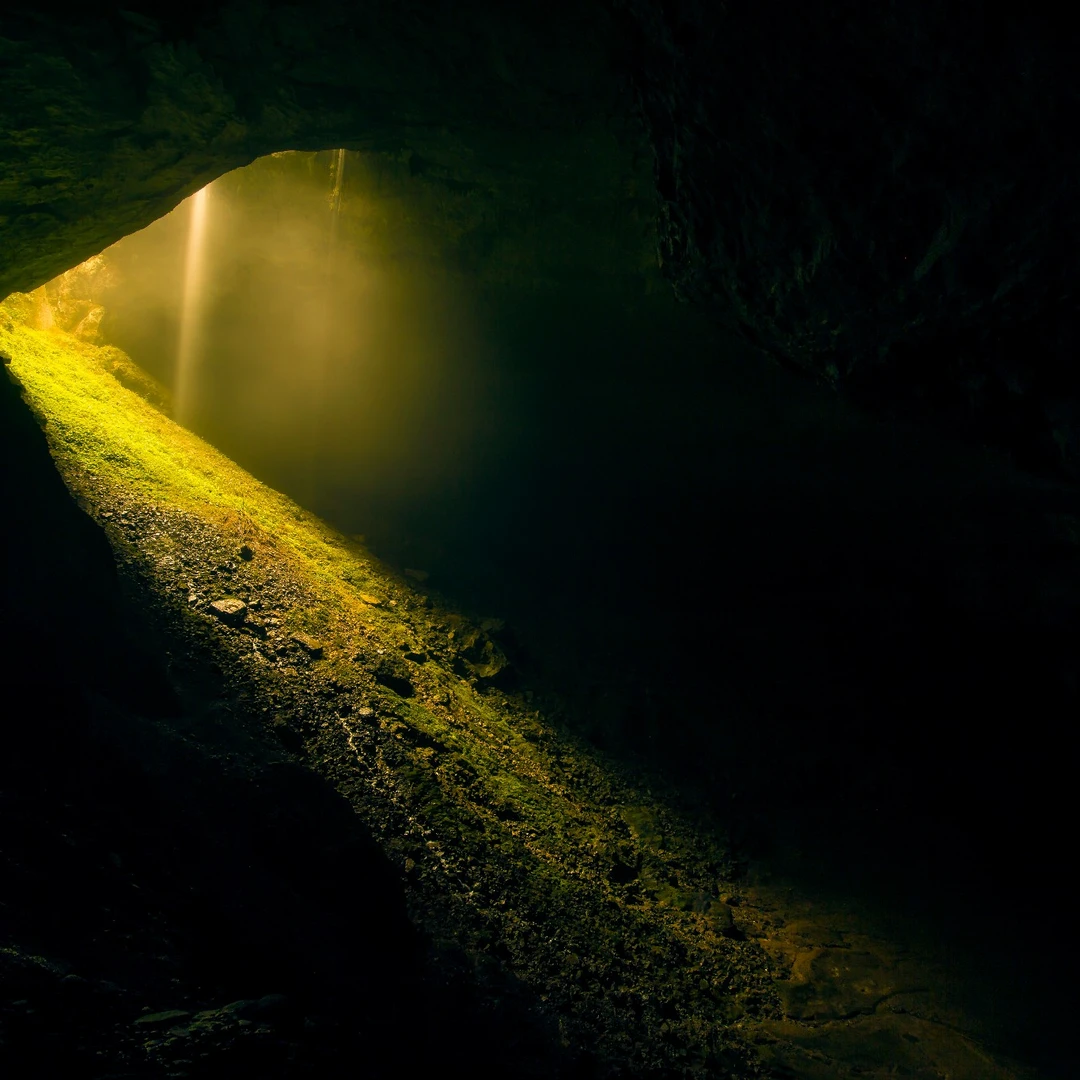
Once inside, the cave revealed its secrets. Fossils embedded in the walls told stories of ancient seas. Underground waterfalls echoed through the chambers, their sound magnified by the enclosed space. And then there were the stone flowers—delicate, crystalline formations that had taken millennia to grow.
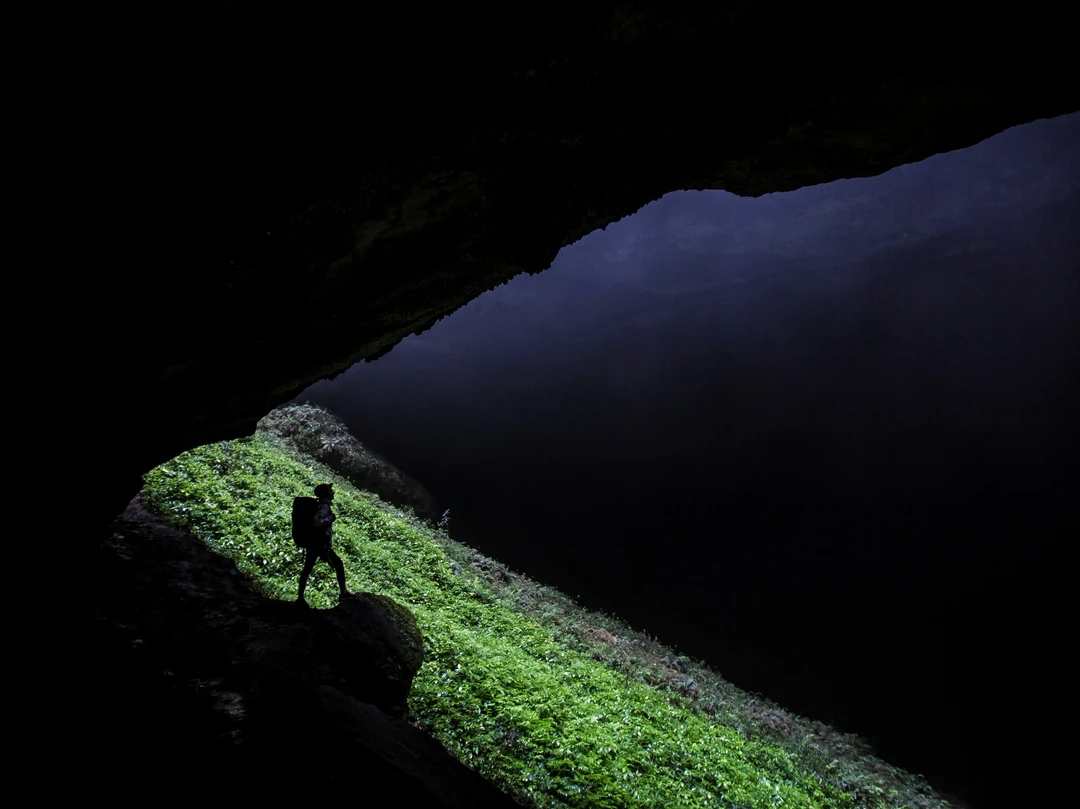
The largest chamber, Triangular Hall, was so vast that our headlamps couldn't illuminate the ceiling. It felt like standing in a cathedral carved by nature itself.
Cave Camping: Sleeping in the Heart of the Earth
One of the most unique aspects of this 48-hour cave adventure was camping inside the cave. We set up camp in a dry, flat section of the corridor, using sleeping mats and bivvy bags. The temperature remained a constant 15-18°C year-round—cool but comfortable with proper gear.
Sleeping underground is an experience like no other. There is absolute silence—no wind, no insects, no distant traffic. The only sound is your own breathing and the occasional drip of water from a stalactite far above.
Navigating Without Light: The Role of Headlamps and Backup Batteries
Inside the cave, darkness is absolute. Without a headlamp, you cannot see your own hand in front of your face. We carried backup batteries and spare headlamps for safety. The expedition leader emphasized that light is life underground—if your primary light fails and you have no backup, you are stranded in complete darkness.
We learned to conserve battery power by using dimmer settings when possible and turning off lights during rest periods.
[Link: Essential gear for multi-day cave camping]
Frequently Asked Questions About Tianshi Cave Expeditions
1. Is Tianshi Cave suitable for beginners?
Yes, but only with proper guidance. Our expedition included several complete novices, including myself. The key is to go with an experienced leader who can teach you SRT techniques and manage safety. You should be reasonably fit and comfortable with heights.
2. What is the best time of year to visit Tianshi Cave?
The cave maintains a constant temperature year-round, so any season works. However, the surface approach can be slippery after rain. Spring and autumn offer the most comfortable conditions for the hike to the entrance.
3. How long does a typical Tianshi Cave expedition take?
Most expeditions are 48 hours (two days and one night). This allows time for the descent, exploration of the main chambers, cave camping, and the ascent back out. Longer trips are possible for experienced cavers.
4. What gear do I need for a Tianshi Cave trip?
Essential gear includes: helmet, headlamp with backup batteries, SRT equipment (hand ascender, chest ascender, descender, cow's tails), sturdy boots with good grip, warm clothing, sleeping bag and mat, food and water for 48 hours, and a first-aid kit. Your expedition leader should provide a detailed packing list.
5. Is there mobile phone reception inside the cave?
No. Once you descend into the canyon, signal is extremely limited. Inside the cave itself, there is no reception at all. This is part of the experience—a chance to disconnect completely from the outside world.
Safety Tips for Your First Caving Adventure
- Never go alone – Always explore caves with an experienced group.
- Check your gear twice – A single faulty carabiner can be life-threatening.
- Tell someone your plan – Inform a friend or family member of your itinerary and expected return time.
- Pack extra light sources – Bring at least two independent light sources with spare batteries.
- Stay hydrated – Caving is physically demanding; carry at least 2-3 liters of water.
- Watch your head – Low ceilings and sharp rocks are common. Your helmet is your best friend.
- Leave no trace – Caves are fragile ecosystems. Take all waste out with you.
Conclusion: Your Own Return to the Center of the Earth
My 48-hour cave adventure in Tianshi Cave was the most challenging and rewarding experience of my life. It pushed me physically, tested my courage, and showed me a world that few people ever see. From the terrifying mid-air rope changes to the silent beauty of the underground chambers, every moment was unforgettable.
If you're looking for an adventure that takes you off the beaten path—literally into the earth—then Tianshi Cave awaits. Whether you're a seasoned caver or a curious beginner, there's a world of discovery beneath Sichuan's surface.
[Link: Top 10 caves to explore in Sichuan Province]
Ready to Plan Your Own Cave Expedition?
Don't let fear hold you back. With the right preparation, gear, and guide, anyone can experience the wonder of caving. Start by researching local caving clubs or expedition groups in your area. Many offer beginner-friendly trips with professional instruction.
The center of the earth is closer than you think—and it's calling your name.
Book your next adventure today. [Link: Find caving expeditions near you]
Note: This article is based on a real expedition to Tianshi Cave in Xingwen County, Sichuan Province, China. All safety practices and gear recommendations are based on the original account and general caving best practices. Always consult with experienced professionals before attempting any caving activity.
You may also like