Leisurely Chengdu: The Ultimate Sichuan Travel Guide for Food, Scenery & Insider Tips
Meta Description: Discover Chengdu's best food, temples, and hidden gems in this detailed Sichuan travelogue. From Wenshu Fang's time-honored eateries to Chongqing hot pot secrets—plan your perfect trip now.
Introduction: Why Chengdu Belongs on Every Traveler's Bucket List
There's a reason Chengdu is called the "Land of Abundance." Long before I ever set foot in Sichuan, I dreamed of its legendary cuisine—the numbing Sichuan peppercorns, the fiery chili oils, the delicate wontons swimming in rich broth. In June 2011, my wife Miaomiao and I finally turned that dream into reality. What we found was more than just food: it was a city that had perfected the art of slowing down, where ancient temples coexist with buzzing food streets, and where every meal feels like a celebration.
This Chengdu travel guide captures our 11-day journey through Sichuan, focusing on the capital's food scene, cultural landmarks, and practical tips. Whether you're a first-time visitor or a seasoned traveler, these firsthand experiences will help you navigate Chengdu like a local.
Itinerary at a Glance: 11 Days Through Sichuan
Travel Dates: June 17–26, 2011
Travel Style: Fully independent, flexible itinerary
Travel Companions: Couple (Zitan & Miaomiao)
Overall Route: Beijing → Chengdu → Mount Emei → Leshan → Chengdu → Beijing
This post covers the Chengdu leg. For Mount Emei and Leshan, see our separate guides.
[Link: Mount Emei Travel Guide] | [Link: Leshan Giant Buddha Tips]
Day 1: Arriving in Chengdu – A Food Lover's Paradise at Wenshu Fang
From Beijing to Chengdu: The Train Journey
Our adventure began on June 17 aboard the D317 train from Beijing. After an overnight ride, we arrived at Chengdu Station at 9:30 a.m. the next morning. The humid air hit us immediately, carrying that unmistakable aroma of Sichuan peppercorns—a welcome sign that we had finally arrived.
We took bus No. 55 to our pre-booked hotel near Wenshu Fang (Wenshu Monastery area). The location proved ideal: convenient transportation, comfortable surroundings, and walking distance to some of Chengdu's best food streets.
Wenshu Fang: Where Time-Honored Brands Meet Modern Appetites
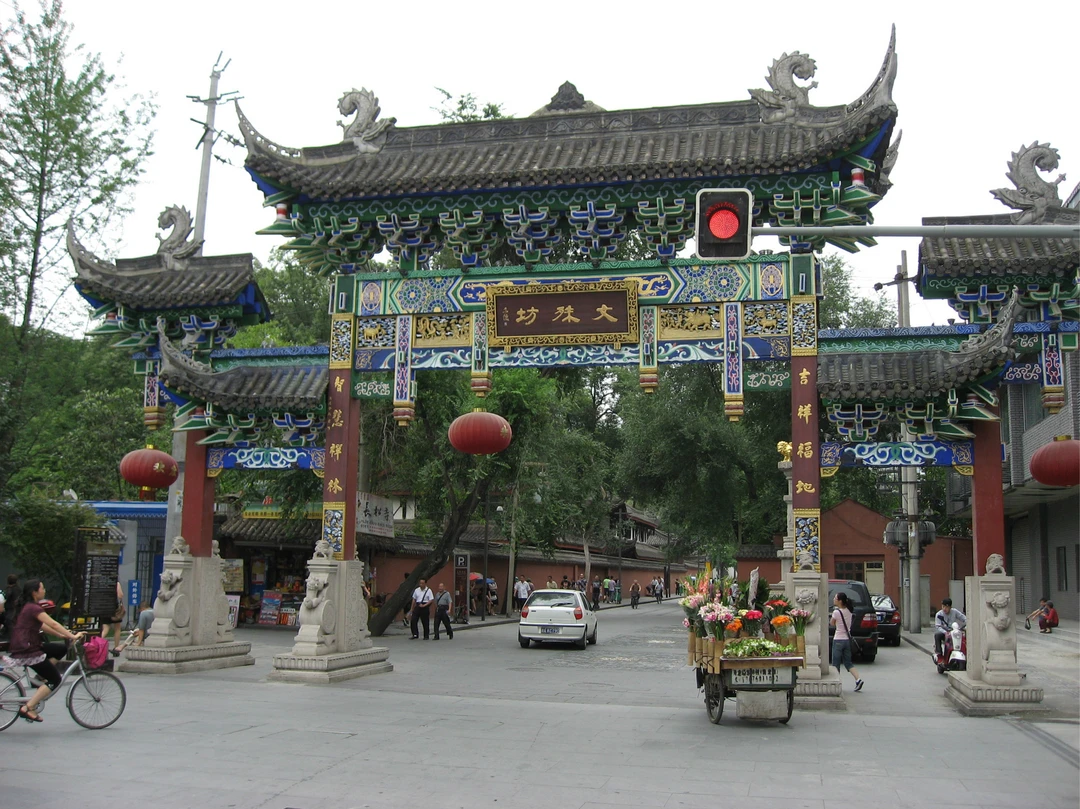
The Wenshu Fang archway is a masterpiece of traditional Chinese architecture, with intricate carvings that set the tone for the area. Beyond it lies a quiet, tree-lined street that leads to the food paradise in front of Wenshu Monastery.
Here, some of Chengdu's most famous culinary institutions have their main branches:
- Long Chao Shou (Long Wonton) – Main branch
- Dongzikou Zhang Erliang Liangfen (Cold Noodles)
- Chen Mapo Tofu
- Zhong Shui Jiao (Zhong's Dumplings)
What We Ate at Wenshu Fang:
Long Chao Shou (9 yuan per serving): These aren't your average wontons. The wrappers are paper-thin, almost translucent, revealing the pinkish meat filling inside. Each bite delivers a plump, tender meatball with remarkable springiness. The real star is the pork bone broth—simmered until thick and milky white, it coats your mouth with rich marrow flavor. We couldn't leave a single drop.
Chuanbei Liangfen (Sichuan-style Cold Noodles, 4 yuan per serving): Miaomiao's absolute favorite. The noodles are smooth and springy, layered with a symphony of seasonings: numbing, spicy, fresh, and aromatic all at once. The heat hits you immediately—a fiery sensation that awakens every taste bud. One bowl left us tearing up, not from emotion but sheer spiciness. Absolutely worth it.
Wenshu Monastery: A Thousand-Year-Old Sanctuary

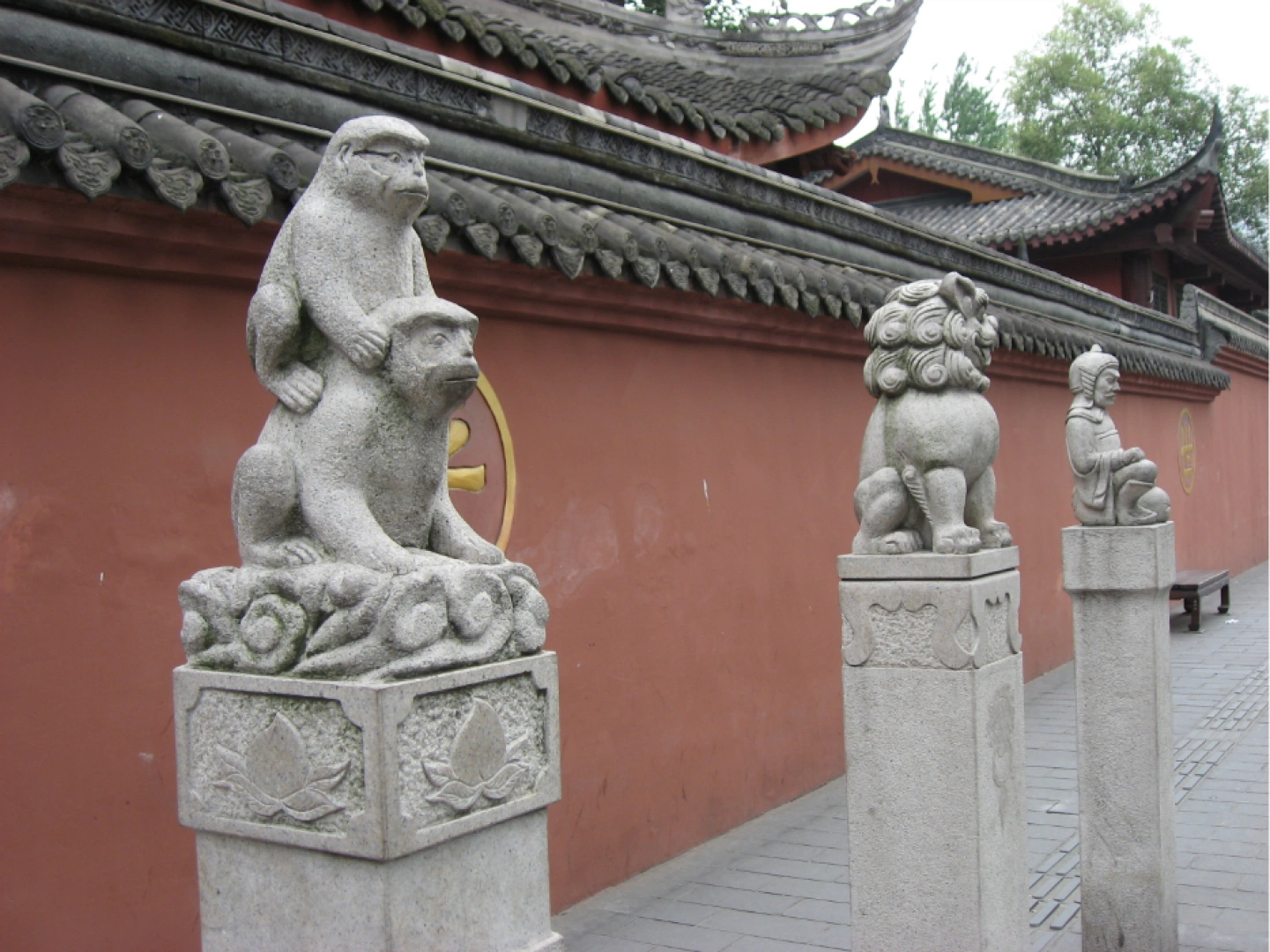
After lunch, we paid 5 yuan each to enter Wenshu Monastery. This ancient temple is a living museum of Buddhist art and architecture. The courtyard walls feature exquisite carvings, and the qilin statue in front of the main hall has been polished to a golden sheen by countless visitors' touches.
Miaomiao couldn't resist the temple cats lounging in the courtyard—they seemed to own the place. The Konglin Calligraphy and Painting Academy in the back courtyard is a hidden gem, with upturned eaves and flying corners peeking through tree shadows, exuding Zen-like tranquility.
Pro Tip: Visit early morning or late afternoon to avoid crowds and capture the best photos of the temple's architecture.
Chunxi Road: Overrated or Worth a Visit?
In the afternoon, we visited Chunxi Road, Chengdu's famous commercial pedestrian street. Honestly? It felt like any other shopping district in China—crowded, commercial, and lacking local character. We walked through quickly and decided to head back to our hotel area for more authentic experiences.
Verdict: Skip Chunxi Road unless you need to shop for international brands. Focus on local food streets instead.
Street-Side Surprises and Regrets
Near our hotel, we discovered a small river—unfortunately murky and smelly. But the surrounding buildings were charming, with delicate wooden carvings and a neighborhood teahouse where residents simply came downstairs for tea. That kind of convenience made us envious.
We stopped in front of an old building with a plaque reading "? Di" (meaning "? Mansion")—the first character was illegible, and it remains a mystery to this day. Inside sat a small wooden sedan chair with incredibly intricate carvings. I tried sitting in it, but the space was cramped—clearly designed for a smaller frame.
Street Food Highlight: A woman selling beef pies for 5 yuan each. The crust was crispy, the filling delicious—one of the best beef pies I've ever had. In contrast, a nearby restaurant serving changfen (intestine noodles) was disappointing: bland taste, shabby tableware, clearly a tourist trap.
First Hot Pot Experience: Surrendering to the Red Broth
No Chengdu trip is complete without hot pot. But finding authentic Chengdu-style hot pot proved challenging—the streets were full of Chongqing-style places. We settled on "Jiangbei Lao Zao" (Old Stove of the River's North), a Chongqing hot pot restaurant.
The Yuanyang Pot Reality Check: Being cautious newcomers, we ordered a yuanyang pot (half spicy, half mild). When it arrived, we understood what "no escape" meant. The red spicy broth occupied 90% of the pot, while the mild white broth was relegated to a tiny corner—an isolated island surrounded by enemies. The red broth looked deceptively appealing when still, but beneath the surface, undercurrents surged.
Ordering Mistakes: We ordered classic ingredients—beef tripe, duck intestines, duck blood, and lamb. But we made a critical error: following Beijing-style lamb hot pot habits, we ordered sesame paste sauce. What arrived was a bowl of dry sesame paste with salt—completely wrong. We quickly ordered an extra serving of sesame oil sauce.
The Boiling Point: When the red broth came to a boil, it was stunning. Waves surged, the spicy aroma was overwhelming, and the rich fragrance filled the air. After the first taste of numbing spiciness, we were hooked. From start to finish, we completely forgot about the white broth. Chili peppers and Sichuan peppercorns took over our taste buds, leaving our mouths burning and lips tingling uncontrollably. Yet we continued sweating and eating without hesitation. Beer came to the rescue—otherwise, the consequences would have been dire.
Final Verdict: "That was truly satisfying!" I said, wiping my sweaty forehead as we stepped into the cool evening breeze.
Day 2: Qingyang Palace and Jinli – Taoist Spirit and Earthly Life
Qingyang Palace: Touching the Sacred Goats for Blessings
On June 19, we visited Qingyang Palace, one of Sichuan's most important Taoist temples. The main gate is impressive, but the real draw is inside.
Must-See at Qingyang Palace: - The Bronze Goats: These sacred animals are believed to bring blessings when touched. Locals rub different parts of the goats for different wishes—health, wealth, or love. - The Eight Trigrams Pavilion: A stunning octagonal structure representing Taoist cosmology. - The Tea House: A peaceful spot to rest and observe daily Taoist life.
Practical Tip: Qingyang Palace is less crowded than Wenshu Monastery, making it ideal for those seeking a quieter spiritual experience.
Jinli Ancient Street: Where History Meets Commerce
After Qingyang Palace, we explored Jinli, a reconstructed ancient street that perfectly blends history with modern commerce. While touristy, it offers a pleasant stroll with traditional architecture, souvenir shops, and street food stalls.
What to Eat at Jinli: - Dan Dan Noodles: Classic Sichuan street food with minced pork, chili oil, and preserved vegetables - Three-Paos: A local snack made from glutinous rice, sesame, and sugar - Bingfen: A refreshing jelly dessert perfect for cooling down
What to Buy: Hand-painted masks, bamboo crafts, and local teas make excellent souvenirs.
Practical Tips for Your Chengdu Trip
Best Time to Visit
- Spring (March-May): Mild temperatures, blooming flowers
- Autumn (September-November): Comfortable weather, fewer crowds
- Avoid: Summer (June-August) is hot and humid; winter (December-February) can be chilly and foggy
Getting Around Chengdu
- Metro: Efficient and affordable, covering major attractions
- Buses: Cheap but can be crowded during peak hours
- Taxis: Readily available, but ensure the meter is running
- Bike-sharing: Great for short distances in central areas
Where to Stay
 - Near Wenshu Fang: Best for food lovers and temple visits - Near Jinli/Wide and Narrow Alleys: Central location, good for sightseeing - Near Chunxi Road: Convenient for shopping but less authentic
Must-Try Foods
- Mapo Tofu – Silken tofu in fiery chili bean sauce
- Kung Pao Chicken – Spicy stir-fry with peanuts
- Fuqi Feipian – Sliced beef and offal in chili oil
- Sichuan Hot Pot – Don't miss the beef tripe and duck blood
- Dan Dan Noodles – The ultimate street food
Money-Saving Tips
- Eat at local food streets rather than tourist restaurants
- Use metro instead of taxis for longer distances
- Visit temples early morning to avoid entrance fees for certain areas
- Buy bottled water from convenience stores, not tourist spots
FAQ: Your Chengdu Questions Answered
Q: Is Chengdu safe for solo travelers?
A: Absolutely. Chengdu is one of China's safest cities, with low crime rates and friendly locals. Standard precautions apply—keep valuables secure and avoid poorly lit areas at night.
Q: How many days should I spend in Chengdu?
A: For a comprehensive experience, 3-4 days is ideal. This allows time for major attractions, food exploration, and a day trip to the Giant Panda Breeding Research Base.
Q: Can I visit Chengdu without speaking Chinese?
A: Yes, but it helps to learn basic phrases. Major attractions and hotels have English signage, and younger locals often speak some English. Download a translation app for menus.
Q: What's the best way to experience Chengdu's food scene?
A: Join a food tour or simply explore food streets like Wenshu Fang, Jinli, and Wide and Narrow Alleys. Don't be afraid to try street food—it's often the most authentic and affordable option.
Q: Is the hot pot really that spicy?
A: Yes, but you can control the heat. Order a yuanyang pot (half spicy, half mild) if you're unsure. Drink plenty of beer or cold tea to cool down.
Internal Linking Suggestions
- [Link: Ultimate Guide to Sichuan Hot Pot: Types, Ingredients & Etiquette]
- [Link: Mount Emei Travel Guide: Hiking Tips & Temple Stays]
- [Link: Leshan Giant Buddha: History, Tickets & Best Photo Spots]
- [Link: Best Time to Visit Chengdu: Month-by-Month Weather Guide]
- [Link: Top 10 Street Foods in Chengdu You Must Try]
Plan Your Chengdu Adventure Today
Chengdu isn't just a city—it's an experience. From the numbing heat of Sichuan hot pot to the serene beauty of ancient temples, every moment here leaves a lasting impression. Whether you're a foodie, a history buff, or simply someone seeking a slower pace of life, Chengdu delivers.
Ready to book your trip? Start with these steps: 1. Book flights to Chengdu Shuangliu International Airport (CTU) 2. Reserve accommodation near Wenshu Fang or Jinli 3. Download food apps like Dianping for local recommendations 4. Pack comfortable walking shoes and an appetite
Have questions about planning your Chengdu trip? Drop them in the comments below—we'd love to help! And don't forget to check out our Mount Emei and Leshan guides for the complete Sichuan experience.
Safe travels, and may your journey be as delicious as ours! 🥟🌶️🏯
You may also like


