Sichuan Travelogue (2) – The Splendid Beauty of Mount Emei: A Complete Guide to Its Cuisine and Scenery
Meta Description: Discover the ultimate Mount Emei travel guide with insider tips on hiking trails, monkey encounters, vegetarian temple cuisine, and scenic highlights. Plan your Sichuan pilgrimage to this sacred Buddhist mountain today.
Introduction: Why Mount Emei Should Be on Your Sichuan Bucket List
Mount Emei, one of China's Four Sacred Buddhist Mountains, offers an unforgettable blend of spiritual heritage, breathtaking natural beauty, and unique wildlife encounters. Located in Sichuan Province, this UNESCO World Heritage Site is revered as the bodhimanda (place of enlightenment) of Samantabhadra (Puxian Bodhisattva). Whether you're a devoted pilgrim, an avid hiker, or a food lover seeking authentic temple cuisine, Mount Emei delivers an experience that lingers long after you descend its ancient stone steps.
In this comprehensive guide, we'll walk you through everything you need to know—from practical travel tips and hiking routes to the best vegetarian meals and how to survive the infamous monkey zone. Let's begin your journey to "the most beautiful mountain under heaven."
Getting to Mount Emei: From Chengdu to the Sacred Mountain
How to Reach Mount Emei from Chengdu
Your adventure starts at Chengdu's Xinnanmen long-distance bus station. Departing around 6:30 AM, you'll purchase tickets to Baoguo Temple (43 yuan per person). Pro tip: Specify "Baoguo Temple" to the ticket seller—otherwise, you might end up at Mount Emei's city center, which is still a considerable distance from the scenic area.
The journey takes approximately 3.5 hours. Upon arrival around 10 AM, you'll step into the misty, atmospheric foothills of one of China's most sacred peaks.
First Impressions: Mount Emei Square
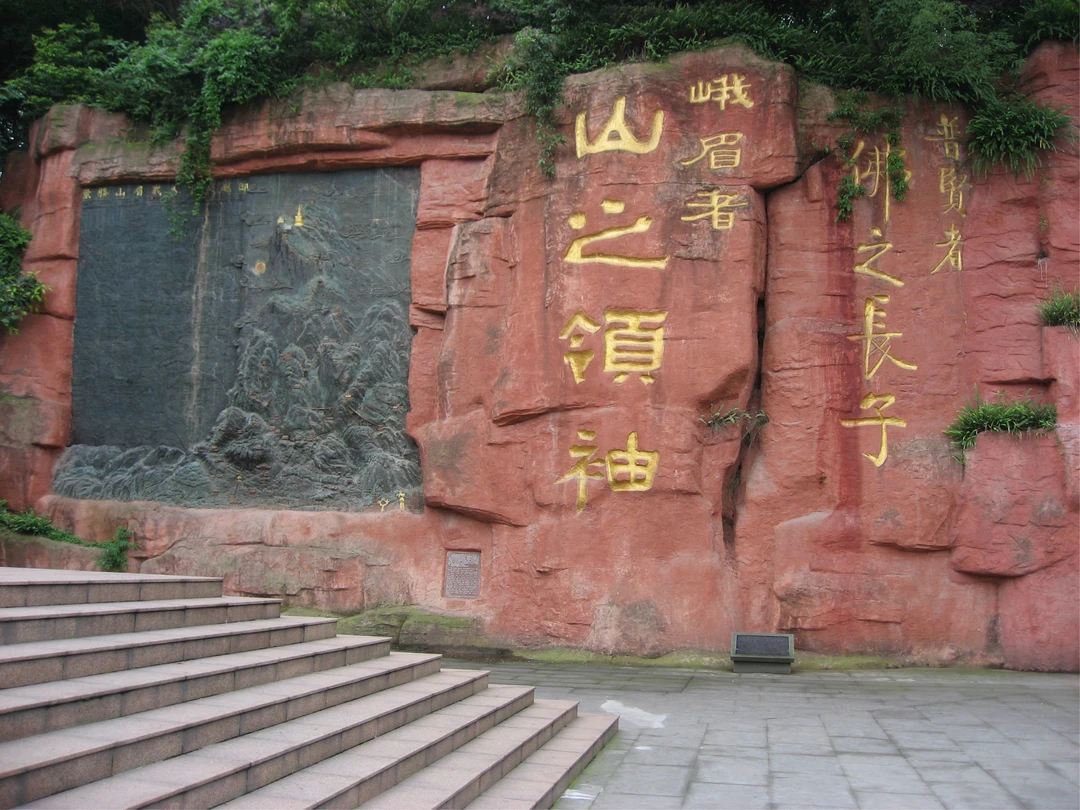
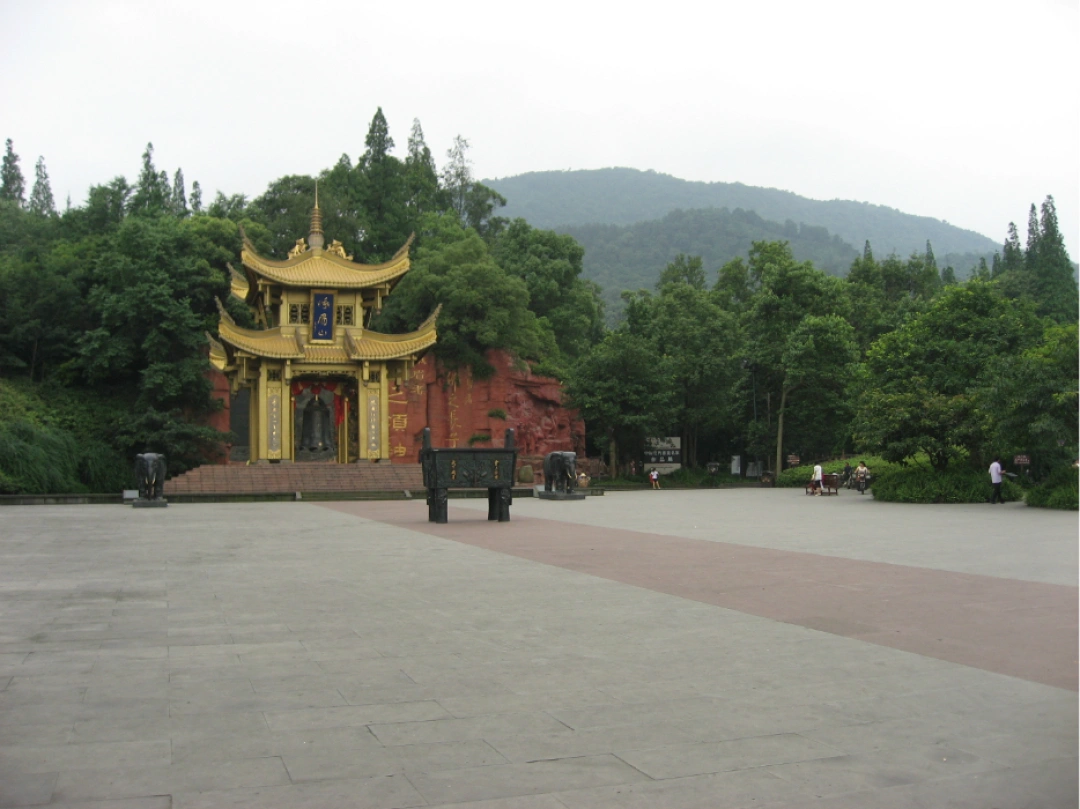
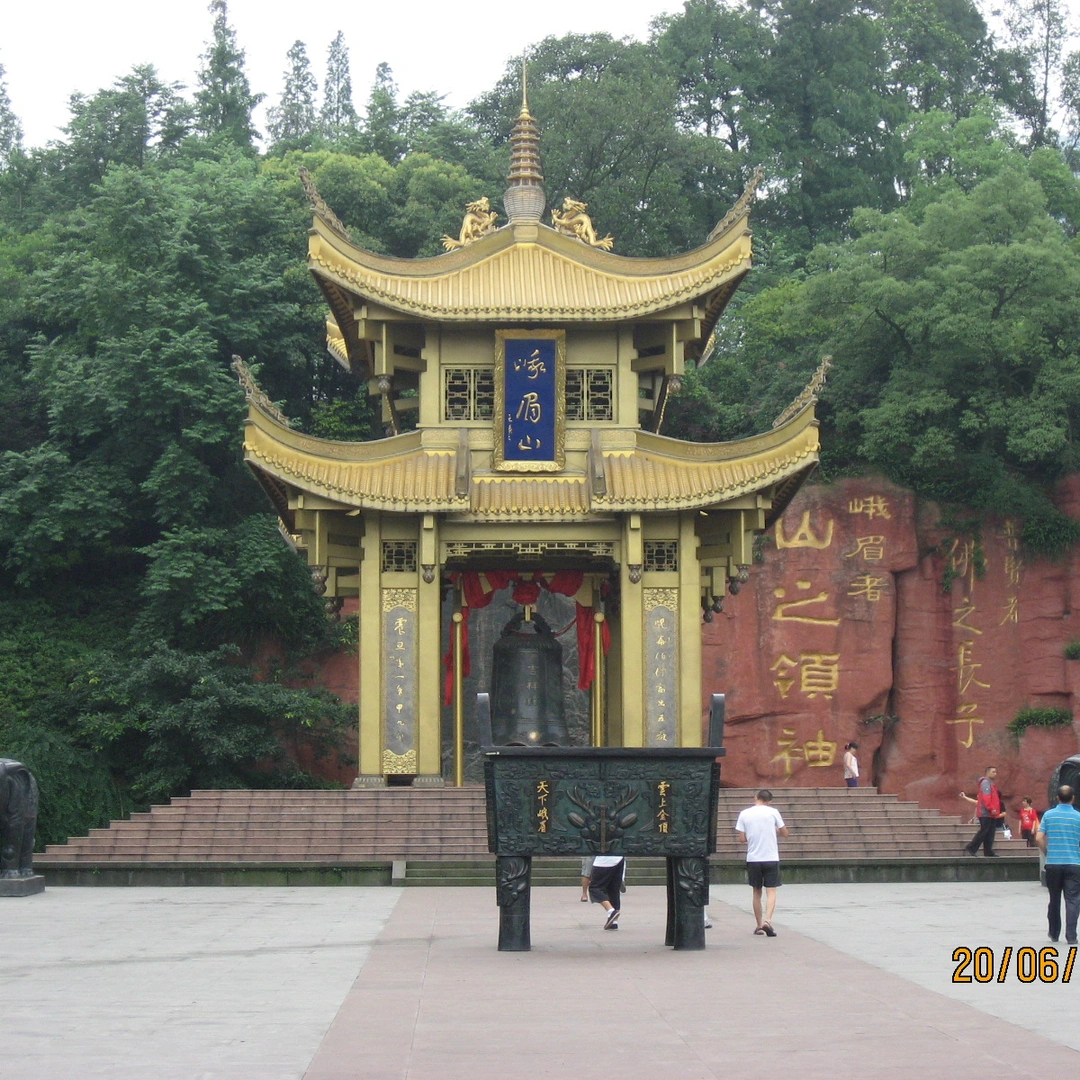
The first landmark to greet you is the stunning Mount Emei Square, dominated by a golden pavilion adorned with centuries of calligraphy from famous historical figures. But the true showstopper is the red stone wall inscribed with fourteen golden characters: "Samantabhadra is the eldest son of the Buddha; Mount Emei is the leader of all mountains." This powerful statement sets the tone for the spiritual journey ahead.
Essential Gear: The Bamboo Walking Stick
Before you start climbing, do yourself a favor: buy a bamboo walking stick from the elderly vendors at the mountain entrance. At just 3 yuan each, it's the best investment of your trip. Not only does it provide crucial support on steep stone steps, but as you'll soon discover, it doubles as an effective deterrent against the mountain's most notorious residents—the rogue monkeys.
[Link: Best hiking gear for China's sacred mountains]
Hiking Mount Emei: A Step-by-Step Trail Guide
Stage 1: Baoguo Temple to Hongchunping (The Gentle Start)

The initial stretch from Baoguo Temple passes through several historic sites: Leiyin Temple, Chunyang Hall, Shengshui Pavilion, Guangfu Temple, and Zhongfeng Temple. The trail is shaded by lush bamboo groves and towering trees, making it a pleasant, leisurely walk. The stone steps are similar to climbing stairs in an office building—except the fresh mountain air and verdant scenery make all the difference.
Pacing tip: Don't sprint ahead like my wife Miaomiao did. She spent her days cooped up in a Beijing high-rise and felt like a bird released from its cage. But conserving energy is key—you have a long climb ahead.
Stage 2: Leiyin Temple – A Vegetarian Feast
By noon, you'll reach Leiyin Temple, where the monastery serves a simple but satisfying lunch. For just 10 yuan per person, you'll receive four vegetable dishes and unlimited rice. The food is intentionally light on oil and salt—typical of Buddhist monastic cuisine—but after a morning of hiking, it tastes like a gourmet meal. Don't be surprised if you eat three bowls of rice (like I did) or double your usual portion (like Miaomiao).
[Link: Best vegetarian restaurants in Sichuan]
Stage 3: Zhongfeng Temple – Getting Lost (and Found)
At Zhongfeng Temple, the path becomes less obvious. We spent a frustrating 20 minutes searching for the trail before a local man—likely returning from gathering firewood—kindly guided us back on track. Lesson learned: Always carry a map or download offline navigation. And if a local offers help, accept it gratefully.
Stage 4: Qingyin Pavilion – The Crown Jewel of Mount Emei
The sound of rushing water and chattering crowds signals your arrival at Qingyin Pavilion, widely considered the most scenic spot on the mountain. The highlight is the Ox Heart Pavilion, built over a stream where a heart-shaped stone splits the water into two currents. Remarkably, the two streams are different colors—one black, one white—giving rise to the poetic name "Black Water and White Water Wash the Ox Heart."
The Monkey Zone: Surviving Mount Emei's Wild Residents
Entering the Ecological Monkey Zone
After Qingyin Pavilion, you'll pass through "A Thread of Sky" and follow the Heilongjiang Plank Road upstream to the Mount Emei Ecological Monkey Zone. This is where the adventure turns wild—literally.
Before you enter: Stash everything valuable deep inside your backpack. Cameras, phones, and plastic bags are irresistible targets for these clever, aggressive macaques. We thought we were prepared. We were wrong.
The "Monkey King Coronation" Incident
As we walked cautiously through the zone, I glanced back at a woman whose plastic bag had just been snatched by a monkey. That's when I felt a warm, furry weight land on my right shoulder—and then on my head. A large wild monkey had perched itself squarely on my scalp.
Miaomiao screamed. I froze. The standoff lasted about ten seconds, but it felt like an eternity. The park rangers gathered around—but instead of helping, one tried to sell us monkey food, another offered to take a photo, and they all insisted that "having a monkey jump on your head is good luck."
Finally, I shouted, "Get it off me now, or you'll be responsible for the consequences!" An older ranger waved his hand and whistled, and the monkey finally hopped off. My forehead was drenched in sweat despite the cool mountain breeze.
Key lesson: Don't rely on rangers for help. Stay calm, but be assertive.
Miaomiao's "Ultimate Weapon"
The real drama came later. As we hurried through the zone, a light rain began to fall, and the rangers disappeared. We joined forces with a lone young hiker and pressed forward. Just as we thought we were safe, we encountered five monkeys blocking the path—two large ones on the railing, three smaller ones on the ground.
We decided to charge through. I made it past safely, but then chaos erupted behind me. The alpha monkey leaped at Miaomiao's feet, baring its teeth and swiping its paws. I turned to help, but another monkey latched onto me.
Just when things seemed dire, Miaomiao let out a piercing, ear-splitting shriek that echoed through the valley. When we looked down, the monkeys were gone—fled in terror from her earth-shattering yell.
Practical tip: If you're in the monkey zone and feel threatened, a loud, sudden noise can be surprisingly effective. But don't provoke them unnecessarily.
[Link: How to stay safe in wildlife encounters while hiking]
Mount Emei Cuisine: What to Eat Beyond Temple Food
While the temple vegetarian meals are a highlight, Mount Emei offers more culinary delights:
- Emei Snow Bean Curd: A local specialty made with mountain spring water and fresh soybeans, often served in a spicy broth.
- Buddhist Vegetarian Banquet: Some temples offer elaborate multi-course vegetarian feasts that mimic meat dishes in appearance and texture.
- Mountain Herbal Tea: Foraged from the slopes, these teas are believed to have medicinal properties.
- Emei Roasted Chestnuts: A popular snack sold by vendors along the trail, especially in autumn.
For a full culinary experience, consider dining at Baoguo Temple's vegetarian restaurant or at one of the guesthouses near Qingyin Pavilion.
Practical Tips for Your Mount Emei Trip
Best Time to Visit
- Spring (March-May): Mild temperatures, blooming rhododendrons
- Summer (June-August): Lush greenery, but frequent rain and crowded trails
- Autumn (September-November): Clear skies, stunning fall foliage—ideal for photography
- Winter (December-February): Snow-capped peaks, fewer crowds, but some trails may be icy
Accommodation Options
- Baoguo Temple Area: Budget guesthouses and hotels near the entrance
- Mid-Mountain (Qingyin Pavilion): Temple lodgings and simple inns
- Summit (Jinding): More expensive hotels with sunrise views
What to Pack
- Sturdy hiking shoes with good grip
- Waterproof jacket (rain is common year-round)
- Bamboo walking stick (buy at the entrance)
- Snacks and water (supplement with temple meals)
- Cash (ATMs are scarce on the mountain)
- Patience and a sense of humor—especially for the monkeys
Frequently Asked Questions About Mount Emei
Q1: How long does it take to hike Mount Emei?
A full ascent from Baoguo Temple to the Golden Summit (Jinding) typically takes 2-3 days, depending on your fitness level. Most hikers break the journey at Qingyin Pavilion or Hongchunping. A quicker option is to take the cable car from Jieyin Hall to the summit.
Q2: Is it safe to hike Mount Emei alone?
Yes, but take precautions. The trails are well-marked and popular with tourists. However, the monkey zone requires extra vigilance—travel in groups if possible, and avoid carrying food or plastic bags visibly.
Q3: What is the best route for first-time visitors?
For a balanced experience, start at Baoguo Temple, hike to Qingyin Pavilion (day 1), continue to Hongchunping or Xixiang Pond (day 2), and take the cable car to Jinding for sunrise (day 3). This allows you to enjoy the scenery without exhausting yourself.
Q4: Can I see the sea of clouds and sunrise at Mount Emei?
Yes! The Golden Summit (Jinding) is famous for its sunrise, sea of clouds, and the "Buddha's Light" (a rare optical phenomenon). The best views are from October to April when skies are clearest. Arrive early—the summit can be crowded.
Q5: What should I do if a monkey attacks me?
Stay calm. Do not run or make sudden movements. If a monkey jumps on you, avoid eye contact and slowly back away. Use your walking stick to create distance. Loud noises (like Miaomiao's shriek) can scare them off. Never feed or tease the monkeys.
Conclusion: Your Mount Emei Adventure Awaits
Mount Emei is more than a hiking destination—it's a journey into China's spiritual heart, a test of endurance, and an encounter with nature at its most raw and beautiful. From the golden pavilions and ancient temples to the mischievous monkeys and soul-stirring vegetarian meals, every step offers something unforgettable.
Whether you're seeking enlightenment, adventure, or simply a break from the city, Mount Emei delivers. Pack your bags, grab a bamboo stick, and prepare for an experience that will stay with you forever.
Ready to plan your trip? Book your bus tickets from Chengdu, reserve a guesthouse near Baoguo Temple, and download a trail map. And remember—when the monkeys come calling, keep your wits about you and your voice ready.
Have you visited Mount Emei? Share your monkey encounter stories in the comments below—we'd love to hear them!
[Link: Complete Sichuan travel itinerary] [Link: Best Buddhist temples in China to visit]
You may also like


