Dreams of Western Sichuan: With You Along the Way, I Found the Courage
Meta Description:
Discover the raw beauty and emotional journey of Western Sichuan travel. From Highway 318 detours to soul-stirring encounters with cyclists and children, this 1500-word SEO-optimized article captures the courage found on the road.
Introduction: The Unfinished Rite of Passage on Highway 318
At 4 a.m. on October 5, 2012, Chengdu lay silent under a starless sky. The key turned in the ignition, and the engine’s low growl broke the pre-dawn stillness. Beside me, she buckled her seatbelt with quiet默契—a practiced rhythm born of shared dreams. In the back, three friends, still groggy but resolute, crammed into a sedan bound for an uncertain destination: Western Sichuan.
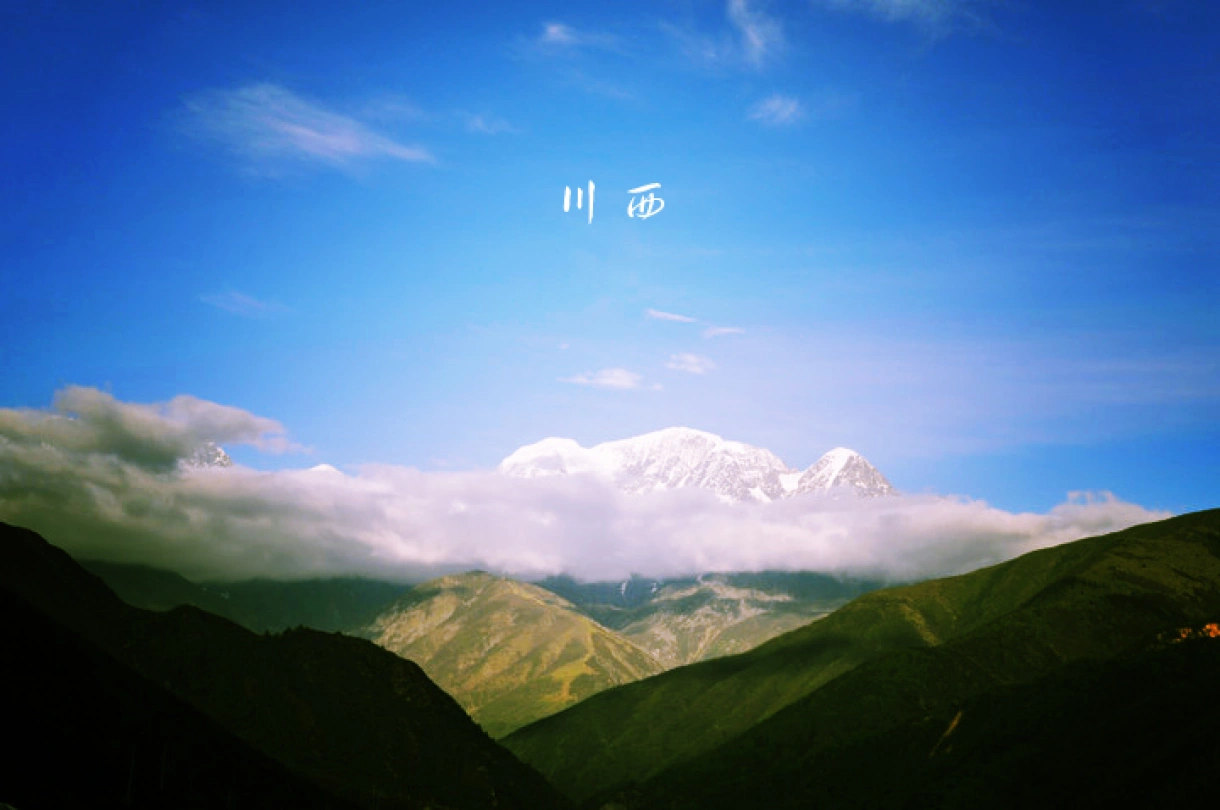
This was my second attempt at National Highway 318. My first, in 2005 as a university student, ended abruptly at the 4,200-meter pass of Zheduo Mountain, where severe altitude sickness forced our retreat. For seven years, that unfinished journey lingered like an unclosed chapter. Now, with the road scarred by the Wenchuan earthquake—landslides, cave-ins, and sunken roadbeds—I was ready to face it again.
The bad news on Weibo was relentless: Zheduo Mountain snowed in, Erlang Mountain Tunnel collapsed, Hailuogou clogged with cars. But once you set out on Highway 318, there’s no turning back. That’s the attitude you need.
H2: The People of the Sichuan-Tibet Road: Souls Behind the Lens
H3: From Landscapes to Faces: A Photographer’s Evolution

At thirteen or fourteen, I began with my family’s Ricoh film camera—no light meter, just a 28-105mm kit lens. Film was precious, so I shot only family. But I was captivated by shallow depth of field and sweeping landscapes. After my first roll came back with no people in any shot, landscape photography became my world.
By 2005, I borrowed a Nikon F80 for a Yunnan trip. The landscapes I shot still hang on my walls. Back then, I believed film was superior—its uncertainty and raw texture felt irreplaceable.
Later, digital SLRs entered my life. Traveling domestically and abroad, my lens turned toward people. Projects like "Iran: People" and "The Children of Mabul Island" revealed the infinite power of human subjects. The theme of "people in their environment" took over. And on the Sichuan-Tibet Highway, its impact peaked.
H3: The Pilgrimage of Cyclists on Western Sichuan Roads
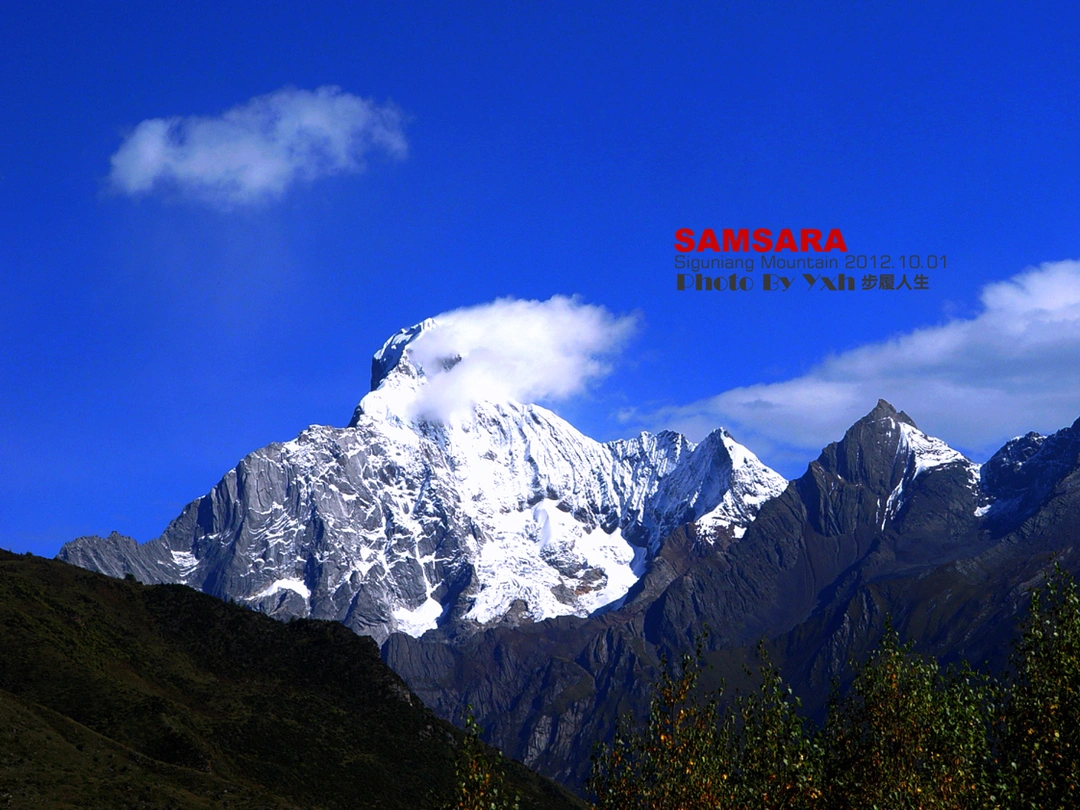
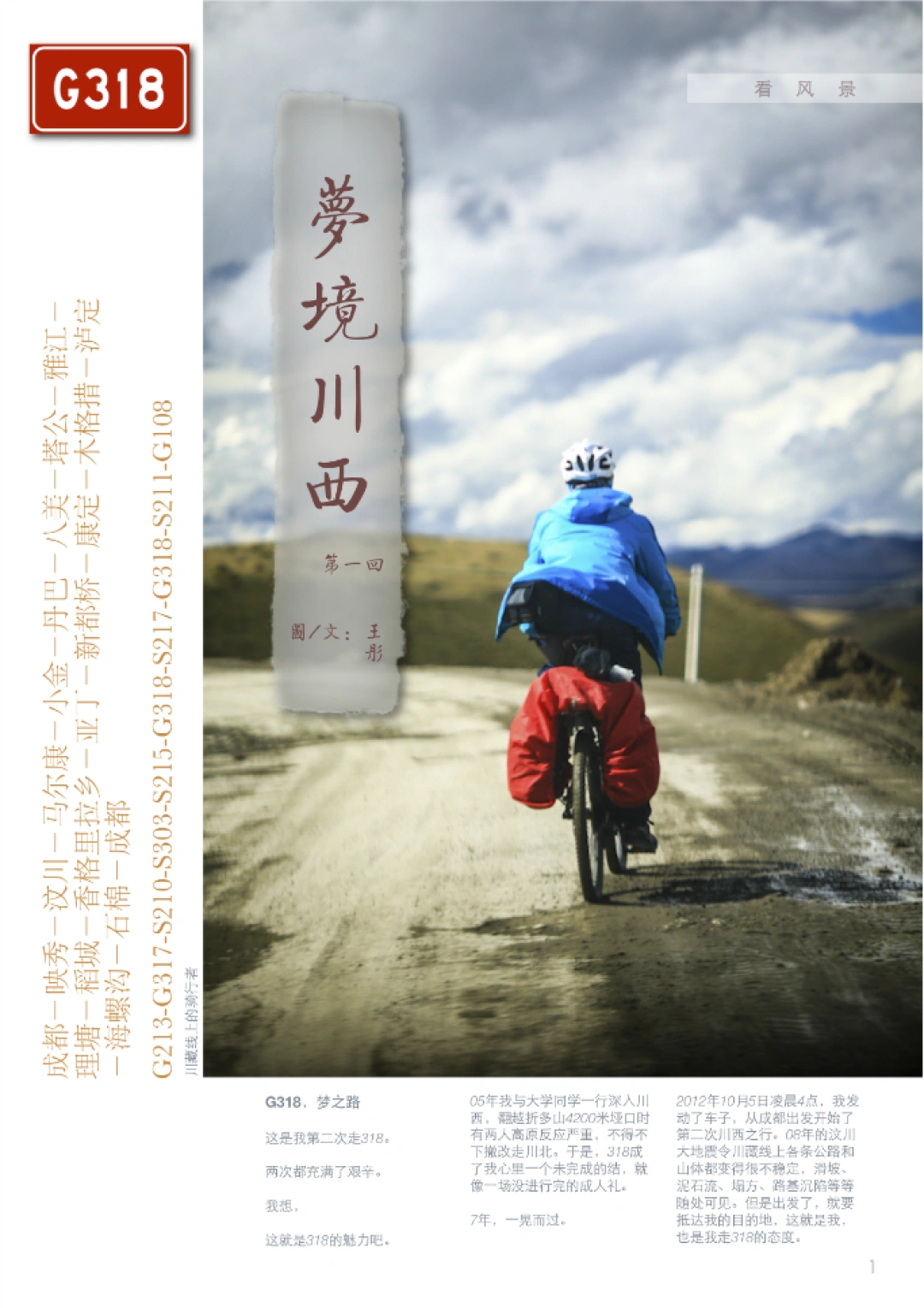
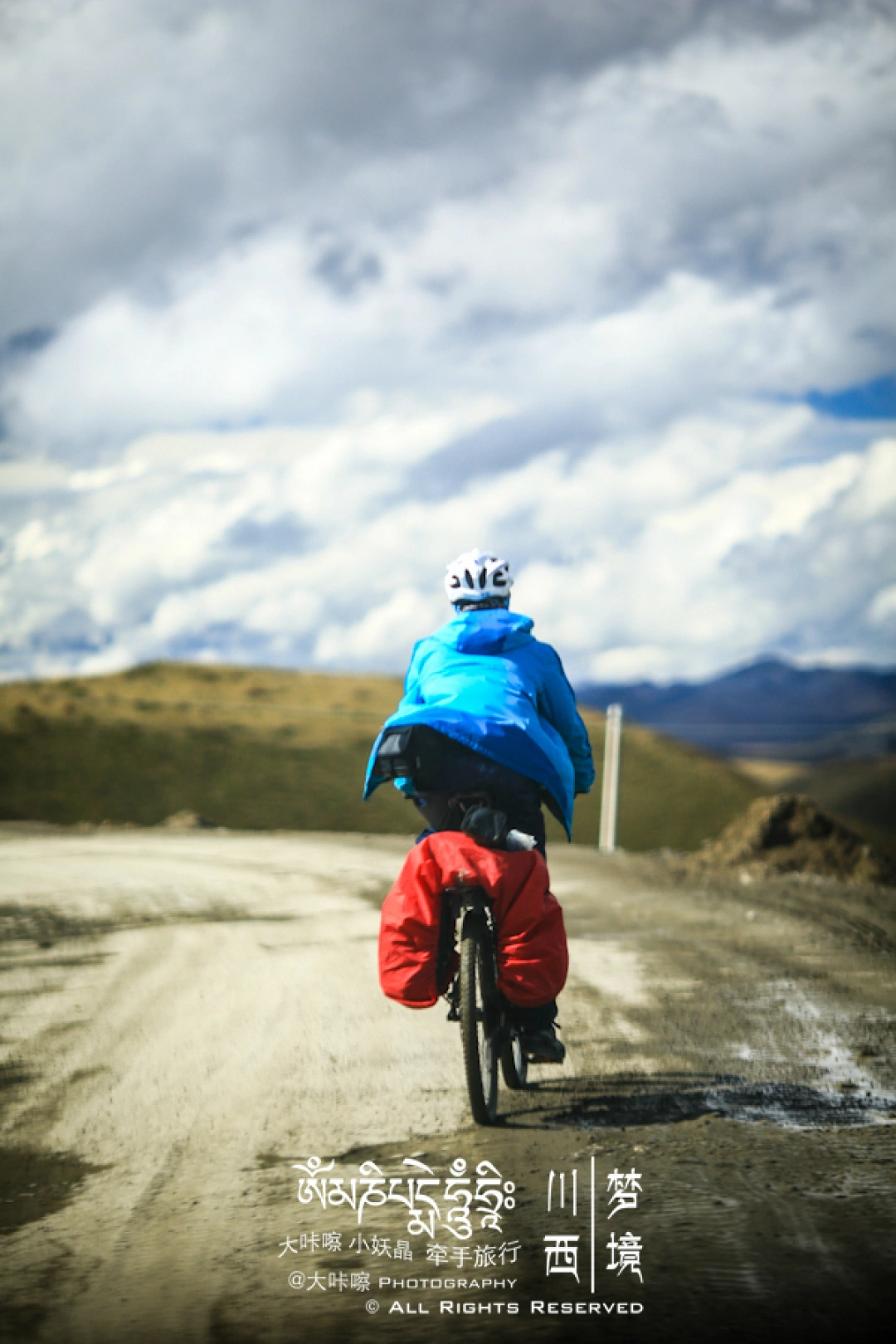
On the road from Daocheng to Yading, just past 5 a.m., we passed a cyclist. At a lookout point, I stopped to photograph Mount Xiannairi and the stars. Golden sunlight spilled over snowy peaks. An altar stood nearby; prayer flags fluttered in the icy wind. Someone burned pine needles as an offering, smoke and murmured sutras dissolving into the valley.
By the time the cyclist reached us, daylight had broken. His name was Yu Zhe. He’d started in Chengdu, aiming for Yunnan. Before quitting his job at a well-known company, he’d lived a stable life. I asked why he’d chosen this “self-torturing” path. He laughed—a shy, boyish grin.
“Some things, if you don’t do them now, you’ll never do them. I’ve been out of college for two years, and life feels stuck in a loop. In another two years, I’ll have to get married. And once you’re married, you’re caged.”
His motivation was simple—an unfulfilled longing deep in his heart. I realized then that everyone who travels alone journeys with both body and soul. Their courage doesn’t need a grand reason.
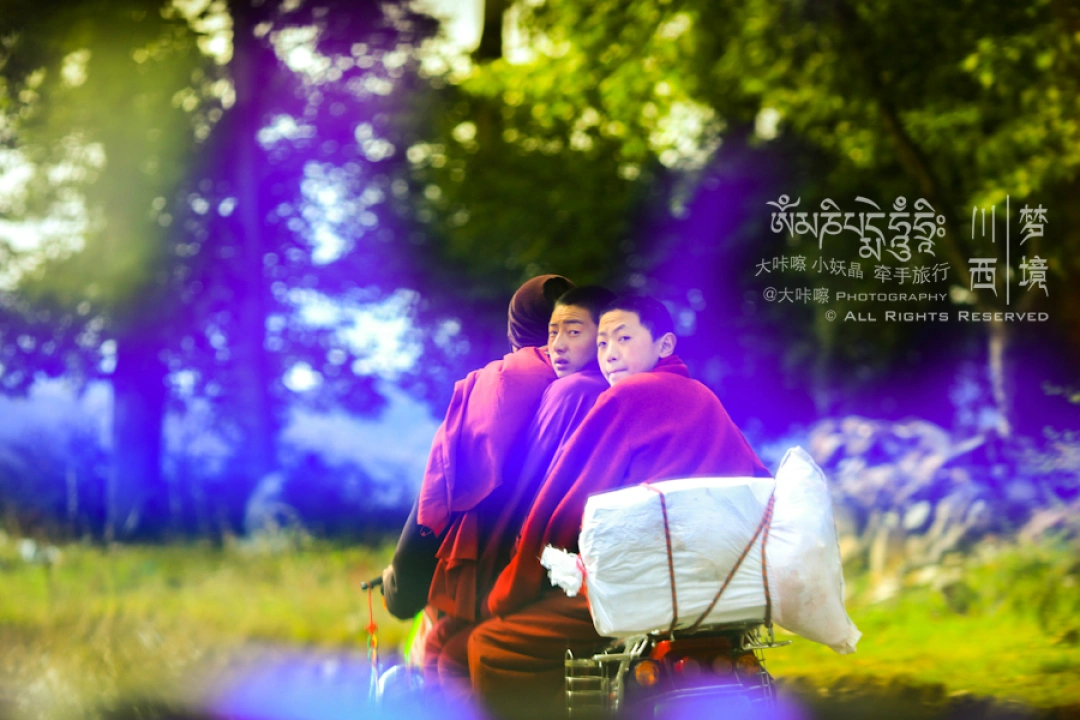
H3: The World Through Children’s Eyes in Western Sichuan
While photographing the red grasslands in Sangdui, a group of children swarmed around, demanding money and candy. If you didn’t give, they’d curse. Six- and seven-year-olds spat words you wouldn’t believe. It reminded me of Tibetan schoolchildren I’d met in Aba Prefecture in 2005. They were volunteer guides at a Red Army monument, saying “explanations are free,” but their families were poor, and they walked miles to school. I gave them all my stationery and mailed photos and encouraging letters. I never heard back.
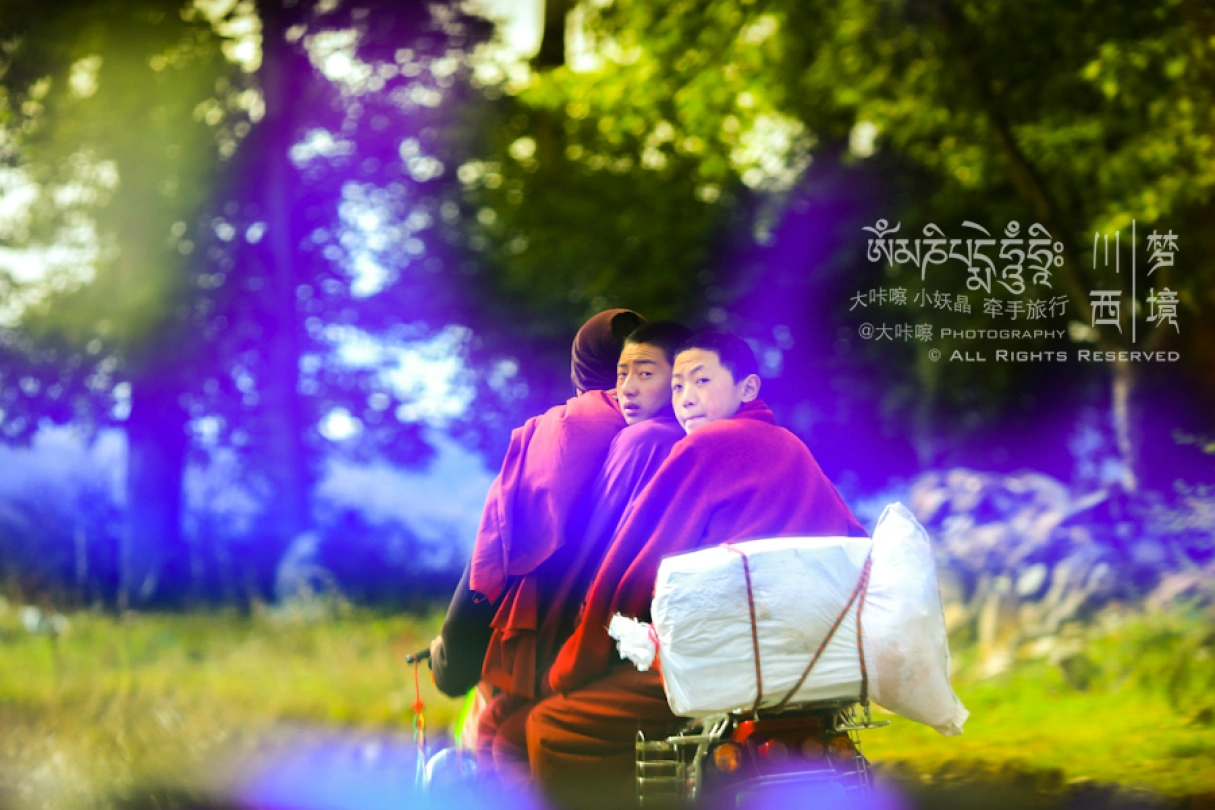
But not all children are like that. In Daocheng, kids coming home from school were full of energy and ease. Near Litang, a little boy was fascinated by my camera and had a great sense of the lens. When I showed him the photo I’d taken, he beamed. We shared snacks from the car, and he ran off to split them with his younger brother.
That simplicity has nothing to do with wealth or poverty, nothing to do with region. It’s just about being human.
H2: Detouring Through the Northern Route: A Gamble on Western Sichuan Travel
H3: A Decision at 4 a.m.
The clock struck midnight, and we had only four and a half hours before our agreed departure time. The five of us sat in silence. I stared at the map, completely stumped. Our original plan—Chengdu to Ya’an, then Highway 318 through the Erlang Mountain Tunnel, over Zheduo Mountain, and into Xinduqiao—was dead. So was our first backup: Chengdu to Shimian, through Hailuogou to Kangding. Reality had crushed both options.
“We’re taking the northern route,” I said. “No one wants to give up, right?”
The northern route meant heading northwest from Chengdu to Yingxiu, then west through Wolong to Xiaojin, and south from there, bypassing both Erlang Mountain and Zheduo Mountain. The mileage would increase significantly, but it was our only choice.
“We leave half an hour earlier. Check out at 3:40. Car starts at 4:00 sharp.”
No one objected. Everyone silently went back to their rooms to prepare. Three hours later, I really did start the engine.
H3: Trapped at the Epicenter of the Wenchuan Earthquake Zone
The holiday wasn’t over yet, and Chengdu was still asleep. My phone’s GPS guided me through Pi County and onto the pitch-black Provincial Road 213. When I saw the sign for Yingxiu, the sky still hadn’t lightened. At the turn toward Wolong, the road condition deteriorated instantly. The tunnel entrance was blocked; a police car sat with its lights flashing. The officer said, “You can get to Wolong, but you can’t reach Xiaojin. There’s a landslide.”
The first checkpoint on our northern detour was already a problem. I unfolded the map and traced a line north from Yingxiu, looking for the next westward route—Wenchuan. National Highway 317 runs through Wenchuan and heads west into Tibet. It was our only remaining option. I couldn’t believe we’d have to detour so far north. Even harder to believe was that we’d be passing through the area that had suffered the worst devastation from the earthquake four years earlier.
Just north of Yingxiu, we hit a traffic jam. A long line of taillights stretched into the darkness, and it wasn’t even 6 a.m. I turned off the engine. “Let’s all get some sleep.”
More than an hour later, the roar of oncoming vehicles woke me up. A heavy truck ahead had been in an accident, and traffic was reduced to one lane. In the daylight, the earthquake ruins beside the road were impossible to ignore—shattered walls, tilting houses, collapsed bridges, massive landslides on the mountainsides. In stark contrast, a newly built expressway ran alongside the old highway. More than four years of post-disaster reconstruction had transformed the landscape, but the scars remained.
H2: Frequently Asked Questions About Western Sichuan Travel
Q1: What is the best time to visit Western Sichuan?
A: The ideal time is from May to October, when the weather is mild and the landscapes are lush. Autumn (September–October) offers stunning golden foliage, while summer provides clear skies for mountain photography. Avoid winter (November–March) due to heavy snow and road closures, especially on high-altitude passes like Zheduo Mountain.
Q2: How do I prepare for altitude sickness on Western Sichuan roads?
 A: Acclimatize gradually by spending a day in Chengdu (500m) before ascending. Carry acetazolamide (Diamox) , stay hydrated, avoid alcohol, and ascend slowly. If symptoms like severe headache or nausea persist, descend immediately. Many travelers use portable oxygen cans or visit local clinics for advice.
Q3: What are the must-see stops on a Western Sichuan road trip?
A: Key highlights include Daocheng Yading Nature Reserve (sacred mountains and lakes), Litang (the world’s highest city at 4,014m), Xinduqiao (photography paradise for grasslands and Tibetan villages), and Kangding (gateway to the Tibetan Plateau). Don’t miss the Tagong Grassland and Yala Snow Mountain for off-the-beaten-path experiences.
Q4: Is it safe to drive the northern route after the Wenchuan earthquake?
A: Yes, but with caution. The northern route via National Highway 317 is generally safe, but road conditions can change rapidly due to landslides or construction. Check real-time traffic updates (e.g., Weibo groups or local apps) and drive a high-clearance vehicle. Avoid night driving in remote areas, and carry emergency supplies like food, water, and a first-aid kit.
Q5: What should I pack for a Western Sichuan road trip?
A: Essentials include warm layers (temperatures can drop below freezing at night), sun protection (sunglasses, sunscreen, lip balm), sturdy hiking boots, reusable water bottles, and snacks. For photography, bring a wide-angle lens for landscapes and a telephoto lens for wildlife or portraits. A power bank and offline maps (e.g., Gaode Maps) are crucial for remote areas.
H2: Internal Linking Suggestions for Your Western Sichuan Content
- [Link: Ultimate Guide to Highway 318 Travel Tips] – Expand on road conditions, fuel stops, and accommodation along the Sichuan-Tibet route.
- [Link: Best Photography Spots in Western Sichuan] – Detail locations like Xinduqiao, Yading, and Tagong for landscape and portrait photographers.
- [Link: How to Plan a Northern Route Detour in Sichuan] – Provide step-by-step itinerary from Chengdu through Yingxiu, Wolong, and Xiaojin.
- [Link: Altitude Sickness Prevention for High-Altitude Travel] – Include medical advice, acclimatization schedules, and emergency contacts.
- [Link: Tibetan Culture and Etiquette for Travelers] – Cover customs like circumambulating monasteries, respecting prayer flags, and interacting with locals.
H2: Conclusion: The Courage to Keep Moving Forward
Seven years after my first failed attempt, I finally completed that unfinished rite of passage on Highway 318. The road was scarred, the detours long, and the challenges relentless. But with her by my side—quiet, steady, and unwavering—I found the courage to keep going.
Western Sichuan taught me that travel is never about the destination. It’s about the people you meet—the cyclist chasing a dream, the children with their unguarded smiles, the locals rebuilding their lives after disaster. It’s about the detours that force you to adapt, the silence that forces you to reflect, and the courage that emerges when you have no choice but to move forward.
So, if you’ve been dreaming of Western Sichuan—if Highway 318 has been calling your name—don’t wait another seven years. Pack your bags, check your map, and start the engine. The road is waiting. And with someone you love beside you, you’ll find the courage you never knew you had.
Ready to plan your own Western Sichuan adventure?
[Start your journey here] with our curated itineraries, packing lists, and real-time road updates. Share your story with us—because every traveler’s path is unique.
“Some things, if you don’t do them now, you’ll never do them.”
— Yu Zhe, cyclist on Highway 318