Self-Driving Adventure Through Western Sichuan: The Ultimate Chengdu to Jiuzhaigou Road Trip Guide

Meta Description: Plan your epic self-driving tour from Chengdu to Jiuzhaigou via Wenchuan, Songpan, and Huanglong. Discover scenic routes, travel tips, and must-see stops on this unforgettable Western Sichuan road trip.
Introduction: Why a Self-Driving Tour Through Western Sichuan is Worth Every Mile
Some destinations captivate you with their name alone. Jiuzhaigou—"paradise on earth"—had been on my travel wishlist for years. When airfare to this magical land skyrocketed to nearly 10,000 yuan for two round-trip tickets, my partner A-Du suggested an alternative: "How about we drive there instead?"
That simple question sparked one of the most unforgettable journeys of our lives. Starting from Chengdu, winding through Wenchuan, Songpan, Chuanzhusi, and Huanglong before reaching Jiuzhaigou, this Western Sichuan self-driving adventure offered endless scenic beauty, cultural discoveries, and spontaneous surprises that no flight could ever deliver.
Whether you're a seasoned road tripper or a first-time explorer of Sichuan's highlands, this guide will help you plan your own epic drive through one of China's most breathtaking regions.
Pre-Trip Planning: Essential Tips for Your Western Sichuan Road Trip
Best Time to Visit Jiuzhaigou and Huanglong
The most spectacular time to visit Jiuzhaigou is mid-October, particularly between the 15th and 22nd. However, snowfall can occur after the 20th, so we moved our schedule forward by one week for safety. For optimal autumn colors and comfortable driving conditions, aim for the first two weeks of October.
Route Strategy: Huanglong First, Then Jiuzhaigou
There's a saying among travelers: "After Jiuzhaigou, no water is worth seeing." To fully appreciate both destinations, visit Huanglong first. The Five-Color Ponds and calcified travertine pools at Huanglong are stunning, but they pale in comparison to Jiuzhaigou's turquoise lakes. By visiting Huanglong first, you'll experience both at their full potential.
Key Stop: Chuanzhusi as Your Transit Hub
Our first overnight stop was Chuanzhusi, a small town 90 kilometers from Jiuzhaigou. This serves as an ideal transit point, offering basic accommodation and proximity to both Huanglong and Jiuzhaigou. [Link: Best places to stay in Chuanzhusi]
Driving Challenges to Anticipate

After the Wenchuan earthquake, the originally 500-kilometer route became more challenging. Expect: - Road construction and repairs - Potential landslides - Severe traffic jams - Minimum 10 hours of driving time
Online resources for self-driving itineraries are scarce, so plan thoroughly before departure.
DAY 1: Chengdu to Chuanzhusi – A Picture-Perfect Journey Through Earthquake Country
Departure from Chengdu's Kuanzhai Alley
At 6:30 a.m., we set off from Kuanzhai Alley in Chengdu, merged onto the Chengdu-Dujiangyan Expressway, passed through Dujiangyan, switched to the Dujiangyan-Wenchuan Expressway, and exited at Yingxiu. The expressway ends here; the remaining road is National Highway G213.
Crossing the Wenchuan Earthquake Zone
Beyond Yingxiu lies Wenchuan. This stretch offers a profound lesson in resilience—the remains of the May 12th earthquake are still visible. On the opposite bank, beneath a massive landslide, the original G213 highway lies completely buried. Bridges crushed by falling debris, new roads rebuilt from rubble, and brand-new buildings at the foot of the mountains all stir complex emotions.
The Min River accompanies you throughout this journey. Watch for leisurely herds of horses crossing the road—a minor diversion during inevitable traffic jams. This area is home to the Qiang ethnic minority, and the river scenery is magnificent. But remain alert: traces of landslides are everywhere—cracks in the earth, torn wire fences, precariously perched boulders.
Midday Break in Songpan
After passing Maoxian, you'll reach Songpan, a typical small Western Sichuan town perfect for a midday stop. We grabbed a bowl of Pengzhou-style wontons (9 yuan—half-filling but satisfying). By now, you're in a predominantly Tibetan area, with streets brimming with rich ethnic culture. [Link: What to eat in Songpan]
Discovering Chuanzhusi's Hidden Gems
Continuing onward, Chuanzhusi appeared before us—unexpectedly small but charming. We hadn't booked accommodation in advance but found a place upon arrival. Conditions were basic but adequate for one night.
Arriving much earlier than expected, we explored Chuanzhusi and stumbled upon a temple absent from any travel guide. Bathed in perfect weather, it was breathtakingly beautiful. By the prayer wheels, devout Tibetan locals turned them with reverence, sparking a longing to visit Tibet someday. Turning around, we spotted snow-capped mountains! At an altitude of about 3,500 meters, A-Du immediately claimed altitude sickness—purely psychological, as he later admitted.
Driving past the Red Army Long March Monument, the view was stunning. Clouds shifted unpredictably; within moments, dark clouds gathered, heavy raindrops pelted down, while on the other side, the sun shone brightly. This bizarre "sunshower" spectacle left us amused. Ten minutes later, the rain cleared, and a rainbow stretched across the sky—surprises came so fast our hearts could barely keep up.
DAY 2: Conquering Huanglong – The Jade Pool on Earth
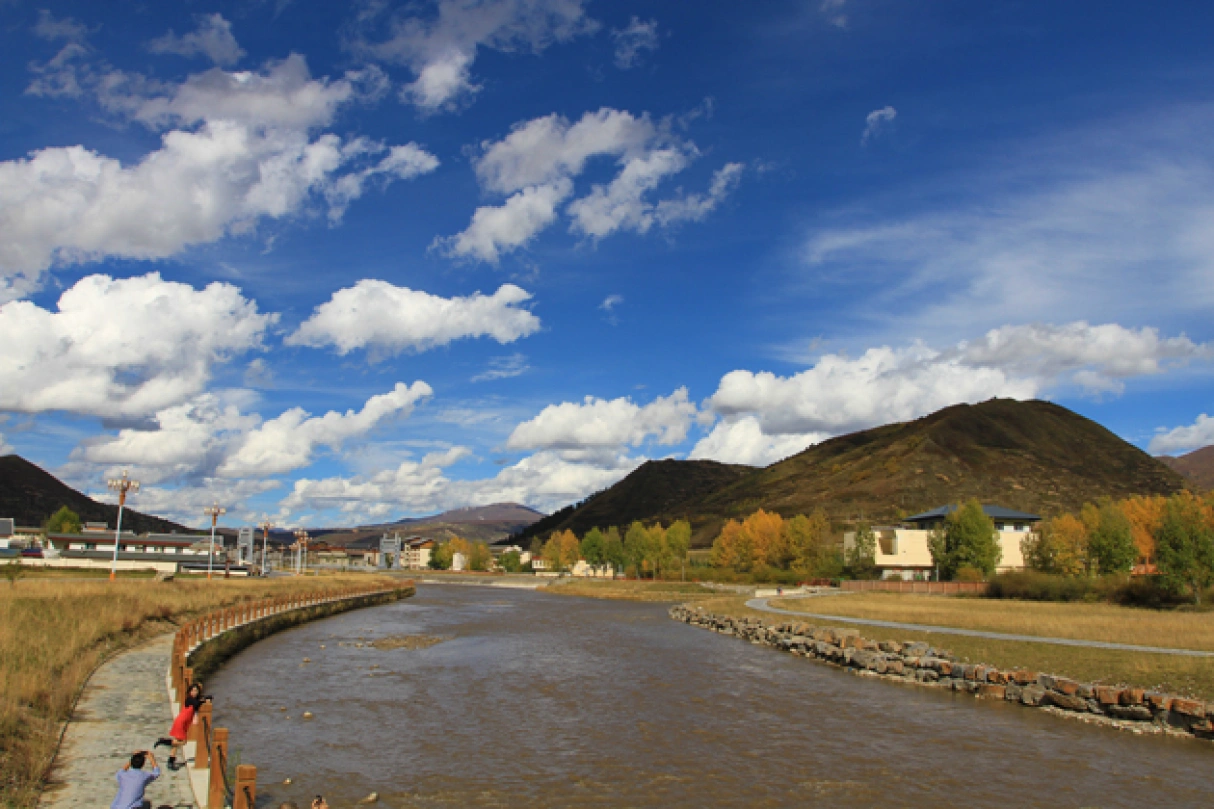
Soaring Above the Clouds on Winding Mountain Roads
The distance from Chuanzhusi to Huanglong is only 40 kilometers, but you must cross a snow-capped mountain over 4,000 meters high via winding roads—about one hour total. First, half an hour uphill, then half an hour downhill.
We set off under gloomy skies with visibility of only 30 to 50 meters. After about 20 minutes, the sky gradually brightened, and sunlight broke through at the summit. After countless twists and turns, a breathtaking sight unfolded—we had soared above the clouds! A sea of clouds churned beneath us, sunlight bathed the peaks, and the beauty was heart-stopping.
Three dark spots in the grass caught my attention. I imitated a cow's call twice, and they shifted formation—they were real yaks! Covered in frost, they stood resilient in the cold wind.
Continuing upward, we reached a dedicated viewing platform. The sun had just peeked over the ridge, and the wooden boardwalk was covered in white frost. Step by step, we made our way to the front of the platform, and the scene before me made me eager to press the shutter. [Link: Huanglong cable car tips]
The Five-Color Ponds: Huanglong's Crown Jewel
Taking the cable car up, we arrived directly on the other side of the mountain. After a few turns, a massive snow-capped peak loomed into view—Baoding Peak, the main summit of the Min Mountains, standing at 5,588 meters, magnificently majestic.
After walking 3 kilometers along the boardwalk, we reached the first attraction: Golden Sand Paving the Ground, the world's best-preserved, largest, and most colorful calcified travertine flow discovered to date. Continuing another kilometer uphill brought us to Huanglong's most famous attraction—the Five-Color Ponds.
Despite being well-prepared, seeing the panoramic view of the Five-Color Ponds left me utterly awestruck. This is the largest group of colored ponds in Huanglong, appearing blue or green under sunlight, combined with autumn's changing foliage, creating a riot of colors. With few tourists around, we could take our time to savor the scene.
Finding a spot to squeeze in for photos among the ponds was no easy feat. Sitting by the edge, gazing at this natural masterpiece, I deliberately included A-Du's foot in the shot to prove it was real. After lingering for an hour, we reluctantly continued downhill.
More Scenic Wonders: Competing Colors Ponds and Bonsai Ponds
The scenery along the way was equally captivating. The Competing Colors Ponds are the world's most spectacular and colorful outdoor calcified travertine pond group. The Bonsai Ponds consist of nearly a hundred pools, with pools within pools and pools encircling pools, resembling natural bonsai.
Hailstorm Strikes: An Unexpected Adventure
Just as I was happily snapping photos, a gust of wind blew my hat into a pond. I "donated" my hat to Huanglong—a small price to pay for such unforgettable memories. Shortly after, a hailstorm struck, forcing us to seek shelter. This unexpected weather added to the adventure, reminding us that Western Sichuan's mountain weather is unpredictable and powerful.
FAQ: Your Western Sichuan Self-Driving Questions Answered
1. How long does it take to drive from Chengdu to Jiuzhaigou?
The journey takes approximately 10-12 hours depending on road conditions, traffic, and stops. Plan for a two-day itinerary with an overnight stay in Chuanzhusi or Songpan.
2. Is it safe to drive to Jiuzhaigou after the Wenchuan earthquake?
Yes, but with caution. The roads have been rebuilt and are generally safe, but expect construction zones, potential landslides, and narrow mountain passes. Drive during daylight hours and check weather conditions before departure.
3. What is the best time of year for a Western Sichuan road trip?
Mid-October offers the most spectacular autumn colors and comfortable temperatures. Avoid November through March due to snow and icy roads. Summer (June-August) is possible but rainy.
4. Do I need a 4WD vehicle for this route?
A standard sedan is sufficient for most of the route, provided roads are dry. However, a vehicle with good ground clearance is recommended for mountain passes and potential construction zones.
5. What should I pack for a self-driving tour of Western Sichuan?
Pack warm layers (temperatures drop significantly at higher altitudes), sunscreen, sunglasses, snacks and water, a first-aid kit, tire chains (for winter), and your camera. Altitude sickness medication is advisable for those prone to elevation issues.
Conclusion: Your Western Sichuan Road Trip Awaits
From the earthquake-scarred landscapes of Wenchuan to the cloud-shrouded peaks of Huanglong, this self-driving adventure through Western Sichuan offers experiences no flight can provide. The journey itself becomes the destination—spontaneous discoveries, breathtaking vistas, and the freedom to stop whenever beauty calls.
Whether you're drawn by Jiuzhaigou's turquoise lakes, Huanglong's rainbow-colored ponds, or the simple joy of driving through some of China's most dramatic scenery, this road trip will leave you with memories that last a lifetime.
Ready to plan your own adventure? Start by booking your accommodation in Chuanzhusi, checking road conditions on the Sichuan Highway Bureau website, and packing your sense of wonder. Western Sichuan is calling—are you ready to answer?
Have you driven through Western Sichuan? Share your tips and experiences in the comments below!
You may also like


