I Came, I Saw, I Was Conquered – A Trekking Journey to Yading, Daocheng: An Epic Highland Adventure

Meta Description: Discover the raw beauty of Daocheng Yading in this first-hand trekking account. From bumpy gravel roads to snow-capped peaks, learn budget tips, altitude survival hacks, and why mid-October is the golden window for this Sichuan paradise.
Introduction: More Than a Travelogue – A Love Letter to Youth
Some journeys are meant to be shared not as a guide, but as a memory. This trekking journey to Yading, Daocheng, written from dusty memories of late September to early October 2010, is one such story. Back then, Daocheng had no airport. The road to Yading was nothing but winding gravel passes and bone-rattling mountain bends. Six years later, an airport serves the region, tourists flood in, and information changes by the season. If you're planning a trip, consult the latest guides. This piece is a love letter to my youth – and a reminder that the best adventures are the ones that conquer you.
Quick answers to your burning questions:
- Cost: Three travelers, less than 3,000 yuan per person (including Beijing–Chengdu train tickets and return flights). Dorm beds averaged 50 yuan/night; one splurge on a standard room in Yading Village cost 200 yuan.
- Camera: Nikon D90 with 18-105 kit lens. Photos adjusted only for curves – no heavy editing.
- Best time to visit: Mid-October, when leaves layer from golden yellow to fiery red.
- That cover photo: A "pagoda reflected in still water" was actually a small puddle in front of a shabby house next to the white pagoda. I flipped the image upside down. Photography, after all, is about finding beauty in the ordinary.
Departure: Three "Ladies" and a Highland Dream
In autumn 2009, I was bundled like a bear wandering Northeast China. When I returned and saw photos of a friend in Xiamen, her dress flowing in the wind, I was green with envy. We made a pact: next time, we'd go somewhere truly "ladylike."
Spring 2010: Xi'an – and we ended up shivering in March snow. Another pact: next time, truly "ladylike."
Autumn 2010: We bought fleece jackets, grabbed train tickets to Chengdu, and set our sights on Daocheng Yading. Ten days wearing the same clothes, pant legs caked in mud, three days without a bath. I couldn't help asking myself: What exactly is "ladylike" about this?
Let it be recorded: next time, we're going somewhere genuinely ladylike.
Day One: Train, Hostel, and First Lessons in the Highlands
Kai Kai and I boarded the T7 express from Beijing – twenty-five hours in a hard sleeper. W was waiting for us in Chengdu. Ten hours sleeping, five hours staring into space, and the rest playing Three Kingdoms Kill. One-on-one battles turned us from novices into players who knew every card by heart.
Chengdu greeted us with pouring rain. We checked into Factory No. 4 Youth Hostel. In our six-bed dorm, a sister from Guangdong who'd just returned from Yading shared altitude sickness medicine and wisdom: the real expenses hit you inside the scenic area. That night, another girl from Beijing checked in, her suitcase stuffed with food – it turned out she had a friend running a guesthouse in Xinduqiao who'd begged her to "support the western front," even suggesting she bring a bucket of fried chicken. A week later, we understood completely.
She warned me: catching a cold on the plateau isn't the real danger – it's bringing a cold from the lowlands up with you, risking pulmonary edema. I already had cold symptoms, so I downed a handful of Yinqiao tablets and Tylenol. Luckily, before we gained altitude, the cold miraculously cleared up.
Key takeaway: Never underestimate altitude sickness. [Link: Altitude sickness prevention tips for first-time trekkers]
Day Two: The Hard Road, Milo-Colored Rivers, and Black Tent
W had bought our bus tickets to Daocheng in advance. Only one bus a day, 237 yuan, departing at 10 a.m., arriving in Kangding at 5 p.m. – accommodation on your own.

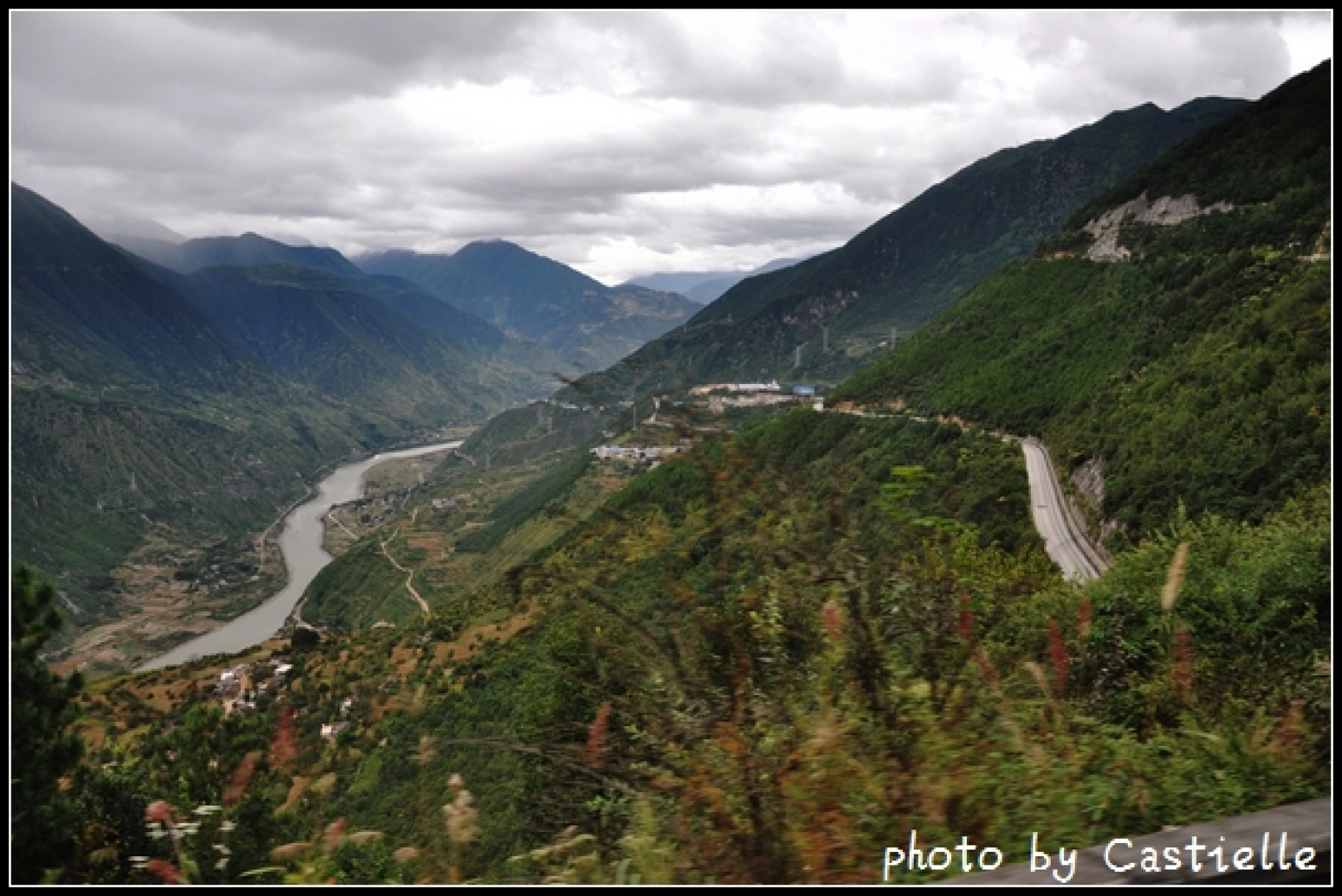
The minibus was so beat-up it looked like a pirate ship, taking hairpin turns at seventy kilometers per hour without slowing down. The road conditions were "good" – if you ignored the constant signs warning of "roadbed collapse," "falling rocks," and "landslide zones." The river alongside us was the color of Milo (chocolate malt drink), and we all agreed it was the perfect comparison.
At 5 p.m., we reached Kangding, a small town nestled among green mountains shrouded in mist. We'd booked Black Tent Guesthouse – Tibetan-style, clean and tidy, run by a friendly Tibetan woman who trusted us enough not to even ask for a deposit upfront. The only downside: it was a half-hour walk from the bus station, and we had to leave by 6 a.m. the next day. Staying closer would have been smarter.
Pro tip: Book accommodation near the bus station if you're catching an early departure. [Link: Best budget guesthouses in Kangding]
Day Three: Twelve Hours of Bouncing and First Glimpse of Daocheng
At 6 a.m., before dawn, the minibus rattled through darkness. Before the sun rose, we'd already crossed the highest mountain pass and spotted snow. But the real test was just beginning – twelve hours of winding mountain roads. Miraculously, none of us got carsick, though a Tibetan lad in the back threw up.
The scenery along the way was spectacular: Xinduqiao, Yajiang, Litang – each place flashed past. Litang claims the title of China's highest county seat, over four thousand meters above sea level. When we stopped to stretch, the lack of oxygen was palpable; some passengers were already suffering severe altitude sickness.
Around 5 p.m., we reached Sangdui Town. The famous red grasslands hadn't turned yet – just scattered patches of red grass. We went out to find dinner, and because we were wearing fleece jackets, drivers kept stopping to offer us rides, handing us business cards that all looked identical.
We stayed at Daocheng Mama's No. 2 Hostel. Our dorm was on the third floor, and those few steps left us gasping for air. That evening, we chatted with a couple just back from Yading about the Rubuchaka hot springs. At 10 p.m., the five of us set off enthusiastically. The facilities were basic – a concrete pool, two pipes, a shower head, and a stool – but soaking in them was pure bliss. Still, I wouldn't recommend showering or washing your hair right after arriving at high altitude.
Warning: Avoid washing your hair on the first day at high altitude. [Link: Highland survival guide for first-time visitors]
Day Four: Morning Light at Banghe and First Encounter with Yading
At 7 a.m., our driver Luorong Ciren picked us up. The agreed price was eighty yuan round trip. This Tibetan driver was straightforward, skilled behind the wheel, and would turn out to be our luckiest encounter of the trip.
Just a few kilometers south, we reached Banghe. We waited for sunrise among the green poplar trees, their leaves already half-turned yellow in September. When the golden morning light hit, every random shutter click produced a postcard-worthy shot.
Near Yading, a small hiccup occurred. The return passengers Luorong had arranged for couldn't wait and took someone else's car. His temper flared, and he stopped a car mid-road for a shouting match. Our fellow traveler Sister Asang sighed and said Luorong was a good man, but like many Tibetans, stubborn and uncompromising. Lesson learned: never back out of an agreement with a Tibetan driver.
About three hours later, we reached Riwa (now called Shangri-La Town). Using our student IDs, we bought tickets for eighty yuan (original price one hundred fifty), then shelled out another one hundred twenty for the sightseeing bus – a real rip-off. The bus wound through the mountains, and gradually, the snow-capped peak of Xiannairi (Goddess of Mercy Mountain) came into view.
We checked into Dengba Hostel in Yading Village. The standard room was bare-bones – the bathroom door was only half a door – but pulling back the curtains, we could see Xiannairi and Xianuoduoji (Vajra Peak). Warm sunlight streamed in, Tibetan children ran and played in the yard, and time seemed to slow down.
Photography tip: Sunrise at Banghe is a must for golden hour shots. [Link: Best photography spots in Yading National Park]
Day Five: Disappointment at Pearl Lake and a Surprise Rainbow
At noon, we set out for Pearl Lake (Zhenzhu Hai). Along the way, we saw many mani stone piles said to be a thousand years old, with signs reading "Do Not Touch." The path was steep, and at high altitude, every step felt like a marathon.
When we finally reached Pearl Lake, the water was murky, and the reflection of the sacred mountain was barely visible. Disappointment crept in. But then, as if on cue, a sudden rain shower passed, and a rainbow arched over the lake. For a few minutes, the sky turned golden, and the lake shimmered with hues of blue and green. It was a reminder: nature doesn't follow your itinerary.
Lesson learned: Sometimes the best moments come when you least expect them. [Link: Hidden gems in Daocheng Yading]
FAQ: Your Daocheng Yading Questions Answered
1. What is the best time to visit Daocheng Yading?
Mid-October is ideal. The autumn colors peak – leaves layer from golden yellow to fiery red, and the weather is generally clear. Late September can still be green, while November brings colder temperatures and possible snow.
2. How do I prevent altitude sickness?
- Ascend gradually. Spend a night in Kangding or Litang before reaching Daocheng.
- Stay hydrated. Drink plenty of water, avoid alcohol.
- Take it easy on the first day. Don't shower or wash your hair.
- Bring altitude sickness medication (Diamox or local remedies like Yinqiao tablets).
- If symptoms worsen, descend immediately.
3. How much does a trip to Daocheng Yading cost?
A budget trip (dorm beds, local transport, basic meals) can cost around 3,000 yuan per person for 7–10 days. This includes train tickets from Beijing to Chengdu, bus fare to Daocheng, park entrance fees (150 yuan), and sightseeing bus (120 yuan). Flights from Chengdu to Daocheng can double the cost.
4. What should I pack for a trekking trip to Yading?
 - Warm layers: fleece jacket, thermal underwear, waterproof outer layer. - Comfortable hiking boots. - Sun protection: hat, sunglasses, sunscreen (high altitude = strong UV). - Altitude sickness medication and basic first aid. - Snacks and water (expensive inside the park). - Camera with extra batteries (cold drains batteries quickly).
5. Is it safe to travel to Daocheng Yading independently?
Yes, but plan carefully. Roads are winding and can be dangerous in bad weather. Hiring a local driver (like our Luorong Ciren) is recommended for flexibility. Always confirm agreements in writing – never back out of a deal with a Tibetan driver. Stay in reputable hostels and carry cash (ATMs are scarce).
Internal Linking Suggestions
- [Link: Best time to visit Daocheng Yading – seasonal guide]
- [Link: How to prevent altitude sickness on a highland trek]
- [Link: Budget travel tips for Sichuan – from Chengdu to Yading]
- [Link: Photography guide for Yading National Park – sunrise spots and hidden gems]
- [Link: Tibetan culture and etiquette – what every traveler should know]
Conclusion: Conquered, Not Conquering
Six years later, I look back at that trip and smile. We didn't conquer Yading – Yading conquered us. The bumpy roads, the altitude headaches, the muddy pants, the three days without a bath – they all fade into the background. What remains is the golden morning light at Banghe, the rainbow over Pearl Lake, and the sense of wonder that only a place like Daocheng Yading can inspire.
So, if you're planning your own trekking journey to Yading, remember: it's not about being "ladylike" or "adventurous." It's about showing up, being humbled, and letting the mountains change you.
Ready to plan your own Yading adventure? Start by booking a bus ticket from Chengdu to Daocheng, pack your warmest fleece, and prepare to be conquered. The mountains are waiting.
Have you trekked to Daocheng Yading? Share your story in the comments below. For more highland travel guides, subscribe to our newsletter.
You may also like


