Beyond the Tourist Trail: Discovering Chengdu's Soul Through a Local's Eyes
Meta Description: Experience authentic Chengdu beyond pandas and Jinli. From People's Park tea houses to Wenshu Monastery serenity, discover the city's soul through a local's perspective.
Word Count: ~1,500 words
I've always believed that the best travel experiences aren't found in guidebooks—they're stumbled upon when you least expect them. Chengdu, a city I'd passed through countless times on my way to the Tibetan plateau, had never really captured my heart. I'd done the obligatory rounds: flashed a peace sign at the pandas, elbowed through crowds in Jinli Ancient Street, and nodded politely at the overpriced tea in Kuanzhai Alley. But truth be told, I understood the city about as well as a tourist understands a menu written entirely in Sichuanese slang.
Then came Zhao Lei's folk song "Chengdu," which seemed to reignite the world's love affair with this sprawling metropolis. But his lyrics painted a picture I couldn't recognize. The "little tavern at the end of Yulin Road" he sang about? It doesn't exist. So I turned to social media with a simple question: "What does Chengdu really mean to you?"
The answers poured in like hot pot broth—spicy, diverse, and impossible to ignore. Hot pot, laid-back vibes, retirement paradise. And that old saying kept echoing in my mind: "Never enter Sichuan when young, never leave when old." The seductive comfort of this place, they warned, could lull ambition to sleep.
This time, however, was different. After finishing another autumn photography trip in western Sichuan, my driver-guide Xiao Zhang—now a close friend—insisted I stay. "Let me show you what Chengdu really is," he said. What followed was not a tourist itinerary, but an immersion into the rhythm of everyday life here.
Part One: Wandering Through Chengdu's Living Rooms
People's Park: Where the City's Heart Beats Loudest
"If you want to capture the real Chengdu," my local friends told me, "go to People's Park." And so I did, camera in hand, on a weekend when the park was bursting with life.
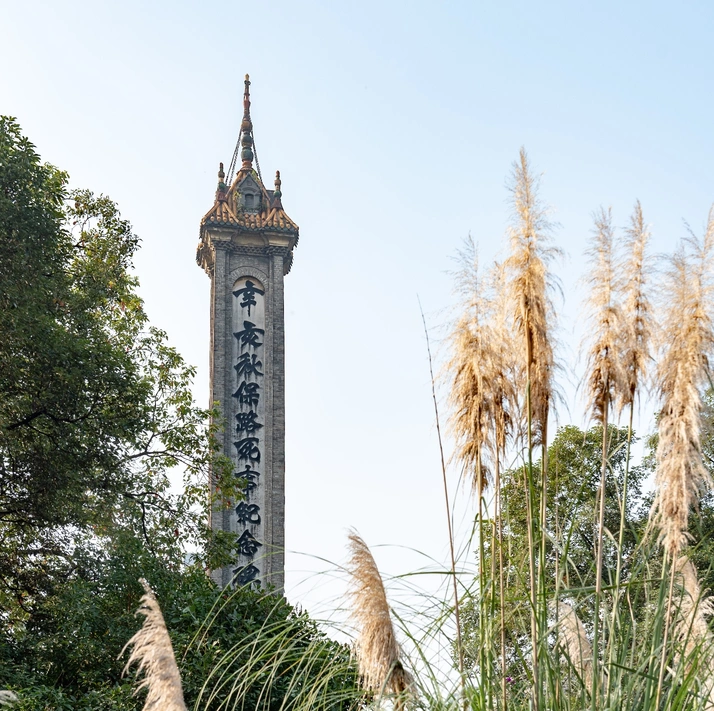
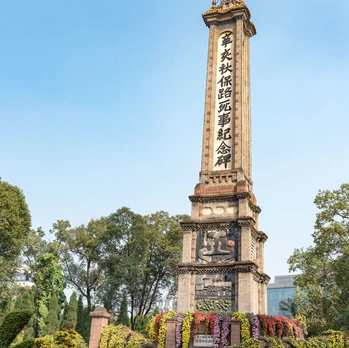
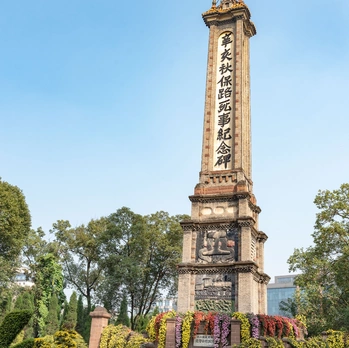
The first thing that catches your eye is the Monument to the Martyrs of the Railway Protection Movement, a towering structure from 1913 that tells a story of rebellion and sacrifice. Its four sides bear the same inscription in four different calligraphy styles—a detail that hints at the city's deep appreciation for art and history.

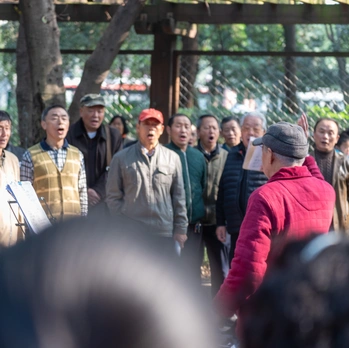
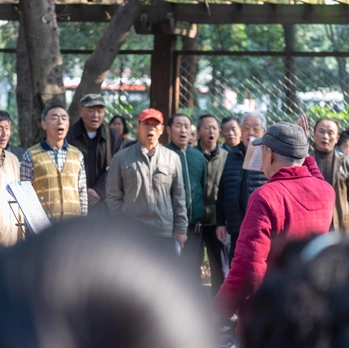
But the real show is the people. A group of seniors belts out revolutionary songs with such vigor that you'd think they were headlining a stadium concert. The conductor, a man in a red shirt, moves with military precision, while the choir—armed with thick songbooks—harmonizes like they've been practicing for decades. Nearby, a lone smoker sits on a bench, exhaling clouds of contemplation, utterly indifferent to the musical fervor around him.
Then there are the tai chi practitioners, some so deeply focused they seem to have entered another dimension. Children tug at their grandparents' hands toward snack stalls selling fried treats that smell like childhood. A couple strolls with their grandson, embodying the simple joy of a weekend outing.
The Tea Culture That Defines Chengdu
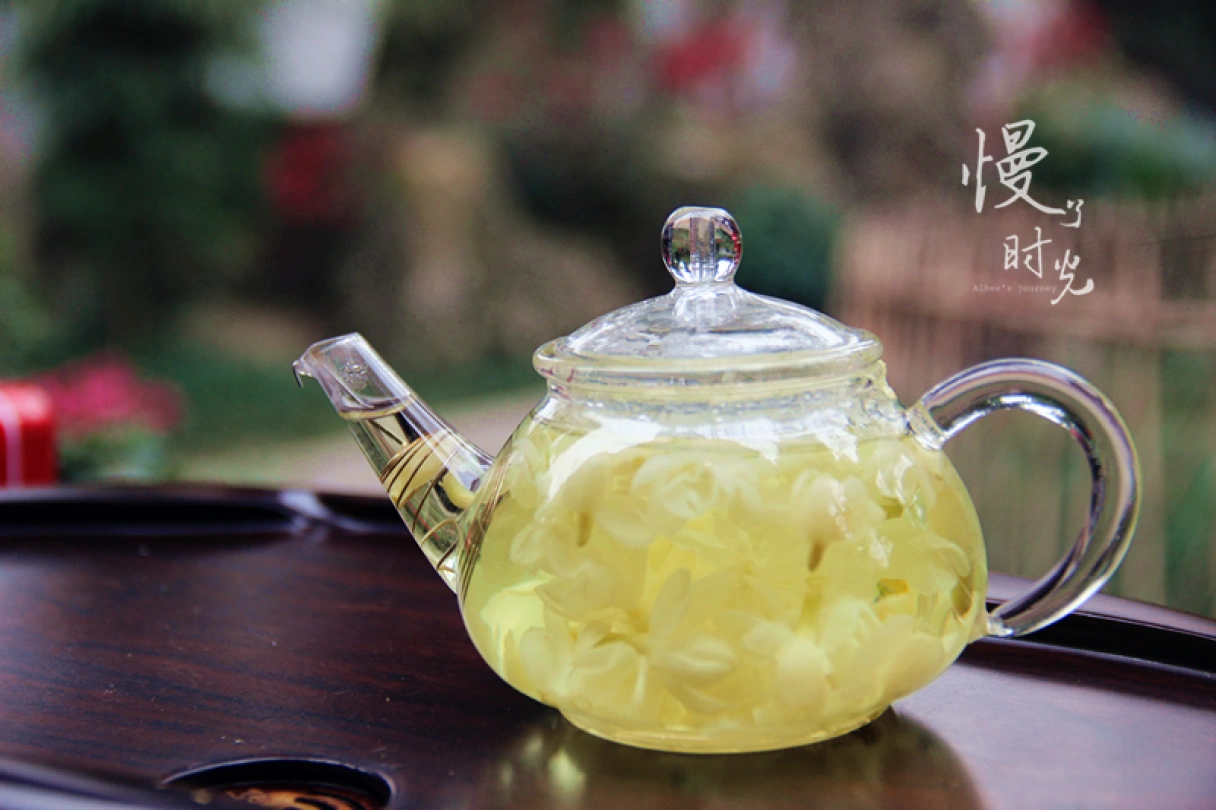
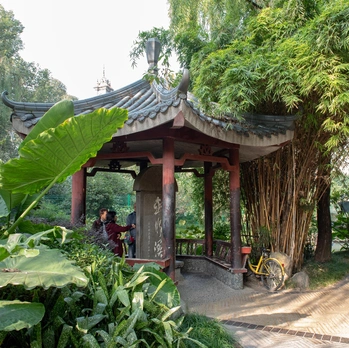
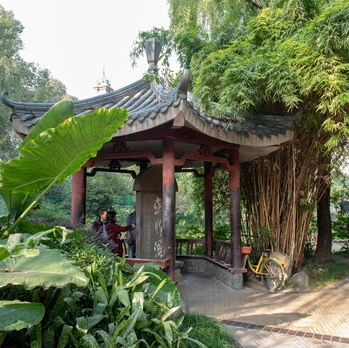
But the true star of People's Park is the tea culture. Nestled among the ancient trees, the park's tea houses are where Chengdu's soul unfolds. We found a corner table, ordered cups of gaiwan tea (the traditional lidded bowl that's become synonymous with Chengdu's leisurely pace), and settled in. A plate of peanuts and sunflower seeds arrived with two bowls: one for snacks, one for shells. A thermos of hot water sat on our table, allowing us to refill at will.
This isn't the elaborate tea ceremony you'd find in Fujian or Guangdong. It's simpler, more democratic. The beauty lies in the freedom to drink at your own pace, to chat or not to chat, to watch the world go by while the tea leaves slowly unfurl.
And then there's the ear cleaning. Yes, you read that correctly. Practitioners wander through the tea houses with small wooden boxes, offering a service that seems to border on the spiritual. I watched as a man, clearly nervous at first, gradually relaxed into a deep sleep while the ear cleaner worked with surgical precision. "Is it really that good?" I wondered aloud. The answer, apparently, is yes.
Eastern Suburb Memory: Where Industrial Grit Meets Creative Spirit
If People's Park belongs to the elderly, the Eastern Suburb Memory—or Dongjiao Memory—is the domain of the young. This sprawling creative park was once the State-Run Hongguang Electron Tube Factory, built in the 1950s. For decades, it hummed with the machinery of China's industrial ambition. Then, in 2009, the city decided to transform it into a music industry base. The result was... underwhelming.
It took a second renovation in 2010, led by renowned architect Liu Jiakun, to breathe life into the old factory buildings. Today, the park is a vibrant mix of art galleries, music venues, photography studios, and Instagram-worthy backdrops. The original brick walls are now canvases for massive murals. Old smokestacks stand like silent sentinels, reminders of a bygone era. A rusted newspaper kiosk sits next to a vintage tram, creating a surreal collision of past and present.
What struck me most wasn't the carefully curated spaces, but the people. Young musicians strum guitars for Douyin live streams, while a group of retirees—perhaps former factory workers—play traditional instruments in the shade. They might have spent their youth building the very machines that once filled these halls. Now, in their golden years, they fill the air with melodies. There's a poetry to that continuity.
Wenshu Monastery: Serenity in the Heart of the City
Wenshu Monastery deserves a special place in any Chengdu itinerary. While tourists flock to Wuhou Shrine and Du Fu's Cottage, this Buddhist temple remains relatively peaceful—and that's precisely its charm.
The history here runs deep. Originally built during the Sui Dynasty (581-618 AD) for a Buddhist nun favored by a prince, it was destroyed by war in the late Ming Dynasty. Only ten iron statues and two ancient cypress trees survived. Then, in 1681, a monk named Cidu arrived at the ruins, meditating between those same trees. Local legend holds that he manifested a fiery aura during meditation, convincing people he was an incarnation of Manjushri—the Bodhisattva of Wisdom. Thus, the temple was renamed Wenshu (Manjushri) Monastery.
Today, the monastery operates with a refreshing lack of commercialism. Visitors receive three free incense sticks upon entry. No one pressures you to buy expensive offerings or consult fortune-tellers. The architecture is pure Qing Dynasty, with wooden structures that have aged gracefully. The red walls, when caught in the afternoon sun, cast shadows of ancient trees that seem to dance across the surface.
The back courtyard is especially tranquil. A library houses thousands of Buddhist scriptures, including a rare palm-leaf manuscript from India and a copy of the Heart Sutra handwritten by Emperor Kangxi himself. In the meditation hall, people sit in silence, their faces peaceful. Outside, birds flit between branches, seemingly unbothered by human presence.
The Tea Garden at Wenshu
Adjacent to the monastery is a tea garden that embodies Chengdu's refined side. For 15 yuan, you get a pot of tea and access to a space where time slows down. Some patrons practice calligraphy. Others learn traditional instruments. A few simply sit and stare at the koi pond. "This is where we come to find ourselves again," a local told me. "It's not about being lazy. It's about being present."
Wuhou Shrine: Red Walls and Bamboo Shadows
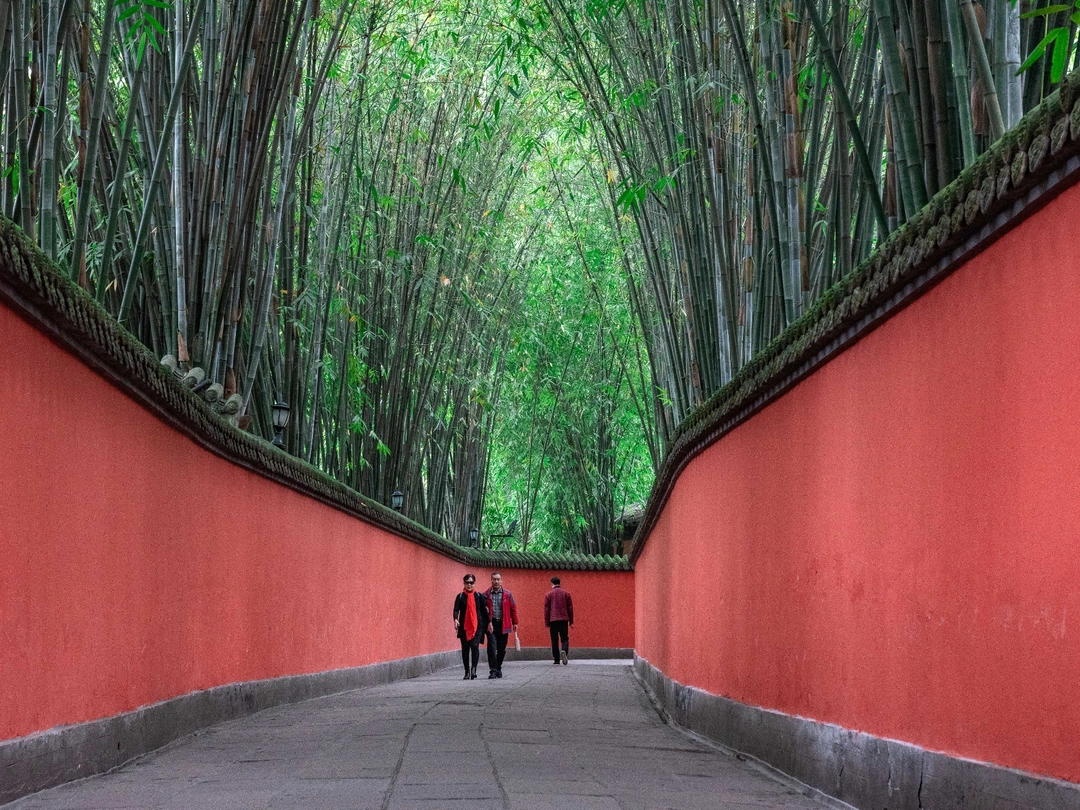
Wuhou Shrine is undeniably famous—and undeniably crowded. As the only temple in China dedicated to both a ruler (Liu Bei) and his minister (Zhuge Liang), it's a pilgrimage site for Three Kingdoms enthusiasts. But I came for one thing: the red wall corridor lined with bamboo.
This iconic pathway has graced countless travel posters, and for good reason. The contrast between the crimson walls and the green bamboo creates a visual harmony that feels almost cinematic. On sunny days, the light filters through the leaves, casting dappled shadows that photographers chase for hours.
Frequently Asked Questions About Chengdu Off the Beaten Path
Q1: What is the best time to visit People's Park for authentic local experiences? A: Early mornings (7:00–9:00 AM) on weekends are ideal. You'll see tai chi groups, traditional dancers, and the most vibrant tea house activity. Weekdays are quieter but still offer a genuine slice of local life.
Q2: Is Wenshu Monastery free to enter? A: Yes, entry is free. Visitors receive three complimentary incense sticks. The adjacent tea garden costs around 15 yuan for a pot of tea, making it one of the most affordable serene spots in the city.
Q3: How do I get to Eastern Suburb Memory (Dongjiao Memory)? A: Take Chengdu Metro Line 8 to Dongjiao Memory Station (Exit B1). The park is a 5-minute walk. Alternatively, taxis from the city center cost about 20–30 yuan.
Q4: What should I order at a Chengdu tea house? A: Order a gaiwan of Sichuan green tea (like Mengding Ganlu or Bamboo Leaf Green). Locals often pair it with sunflower seeds, peanuts, or dried fruit. Don't forget to ask for a thermos of hot water for refills—it's always included.
Q5: Are there any hidden gems near Wuhou Shrine? A: Yes! Just a 10-minute walk away is Jinli Ancient Street (touristy but atmospheric at dusk). For a quieter alternative, visit the Chengdu Museum adjacent to the shrine—it offers excellent exhibits on Three Kingdoms history without the crowds.
Internal Linking Suggestions
- [Link: Best Chengdu tea houses for authentic gaiwan experiences]
- [Link: Complete guide to Wenshu Monastery and nearby vegetarian restaurants]
- [Link: Chengdu photography spots: Red walls, bamboo, and industrial chic]
- [Link: How to spend 3 days in Chengdu like a local]
Final Thoughts: What Chengdu Really Means
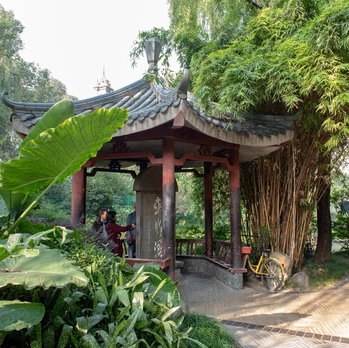
As I sat in People's Park, watching the sun set through the bamboo, I realized that Chengdu's soul isn't found in any single attraction. It's in the way a grandmother teaches her grandson to fold a paper crane. It's in the sound of mahjong tiles clicking in a back alley. It's in the patient hands of an ear cleaner who has been perfecting his craft for three decades.
Chengdu doesn't demand to be conquered. It invites you to sit down, sip tea, and be. The city's greatest secret is that it has no secret—just a rhythm that rewards those who slow down enough to hear it.
So the next time you visit, skip the panda queue for one afternoon. Take a seat at a worn wooden table in People's Park. Order a gaiwan of tea. And let Chengdu show you what it really means to live.
Ready to experience Chengdu like a local? Book your personalized Chengdu tour with a local guide or download our free Chengdu off-the-beaten-path map to start planning your authentic journey today.
You may also like