At the Edge of the Clouds: A Deep Dive into Five Counties of Garzê, Western Sichuan
Meta Description: Discover the hidden gems of Western Sichuan's Garzê Prefecture. Explore Cuoka Lake, Yarchen Gar, Kathok Monastery, Dêgê Printing Academy, and more in this 1500-word travel guide to Xinlong, Baiyü, Dêgê, Batang, and Litang counties.
Introduction: Why Western Sichuan’s Garzê Prefecture Should Be Your Next Destination
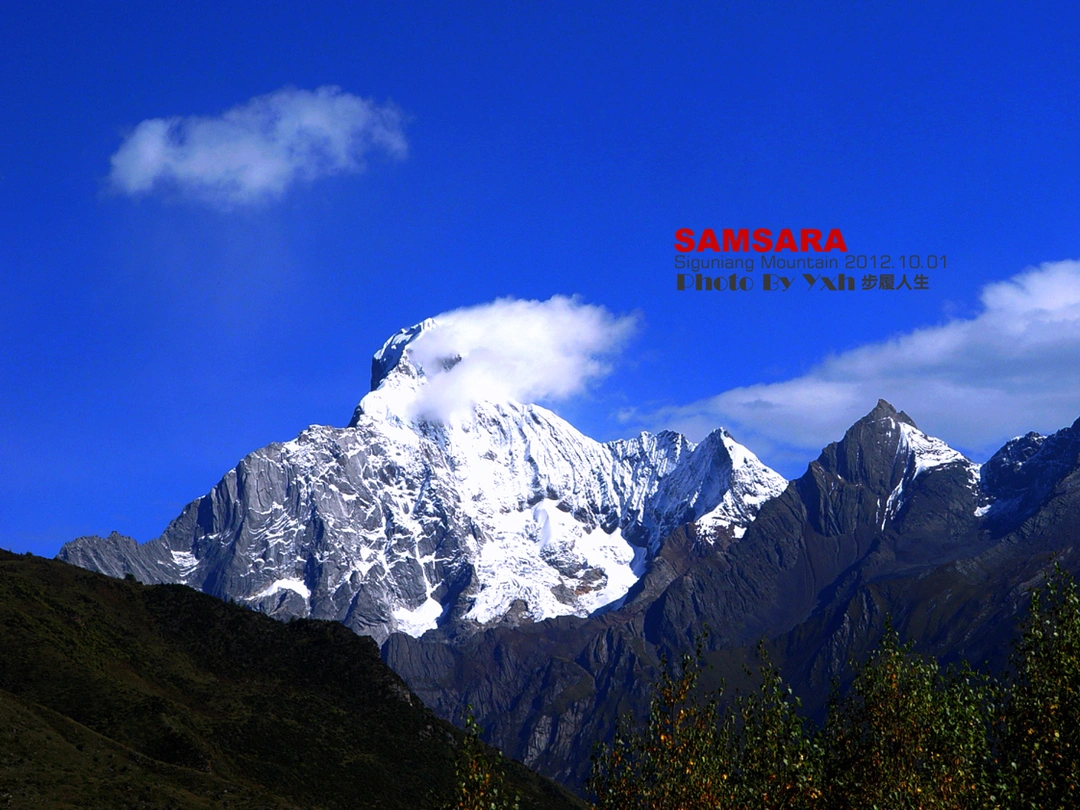
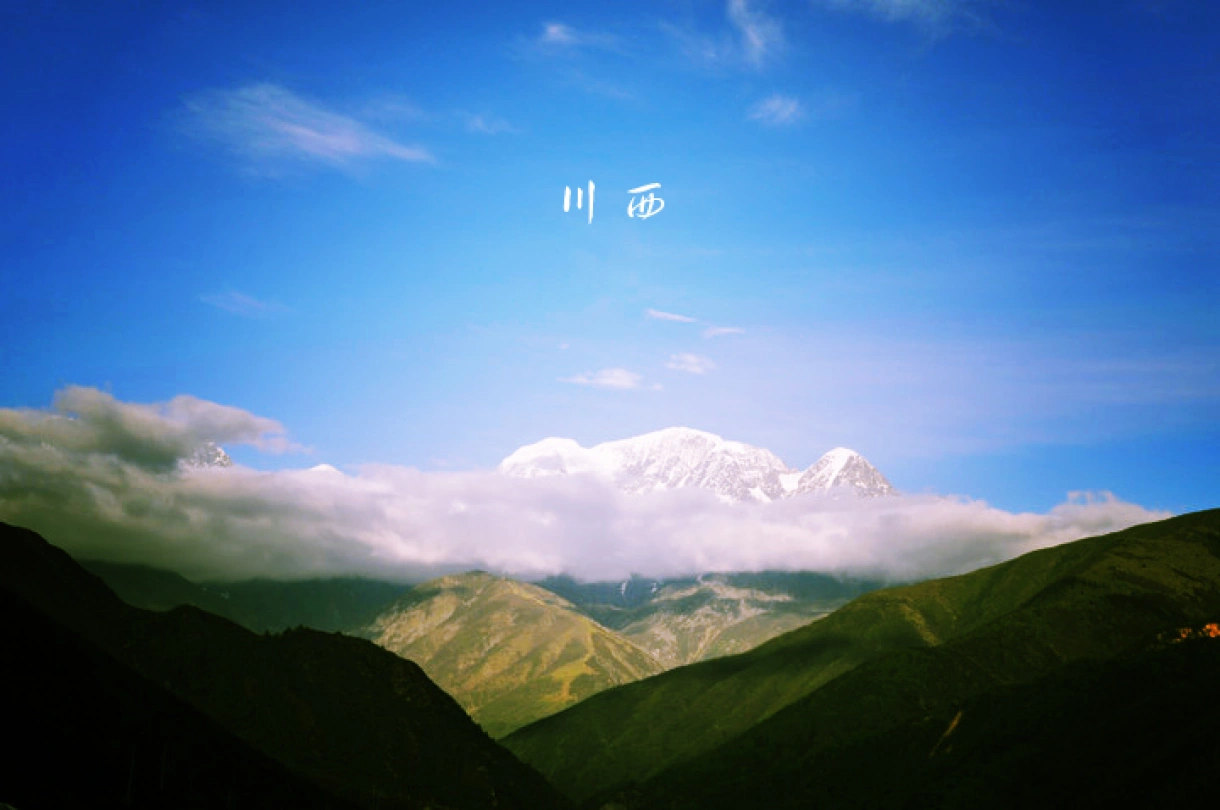
Some say the most beautiful scenery is always on the road—places where snow-capped mountains gleam like silk, alpine lakes shimmer with crystalline clarity, and the wind carries ancient love songs across vast plateaus. For travelers seeking an authentic Tibetan cultural experience paired with breathtaking natural landscapes, Western Sichuan’s Garzê Tibetan Autonomous Prefecture offers an unparalleled journey.
This article takes you on a deep dive into five counties of Garzê—Xinlong, Baiyü, Dêgê, Batang, and Litang—collectively known as "the Land at the Edge of the Clouds." Whether you're a seasoned adventurer or a first-time visitor to the Tibetan Plateau, this guide provides practical tips, cultural insights, and hidden gems to help you plan your own Western Sichuan road trip.
Xinlong County Travel Guide: Cuoka Lake and the Palette of the Gods

Discovering Xinlong: The "Iron Forged" Land
Xinlong County, historically known as "Zhandui" (meaning "iron forged into a lump"), sits in the middle reaches of the Yalong River Valley at an average altitude of 3,200 meters. Writer Alai immortalized this region in his book Zhandui, describing its dramatic topography of towering mountains and deep ravines. For travelers, Xinlong serves as an ideal starting point for exploring Garzê’s lesser-known attractions.
Cuoka Lake: A Hidden Alpine Gem
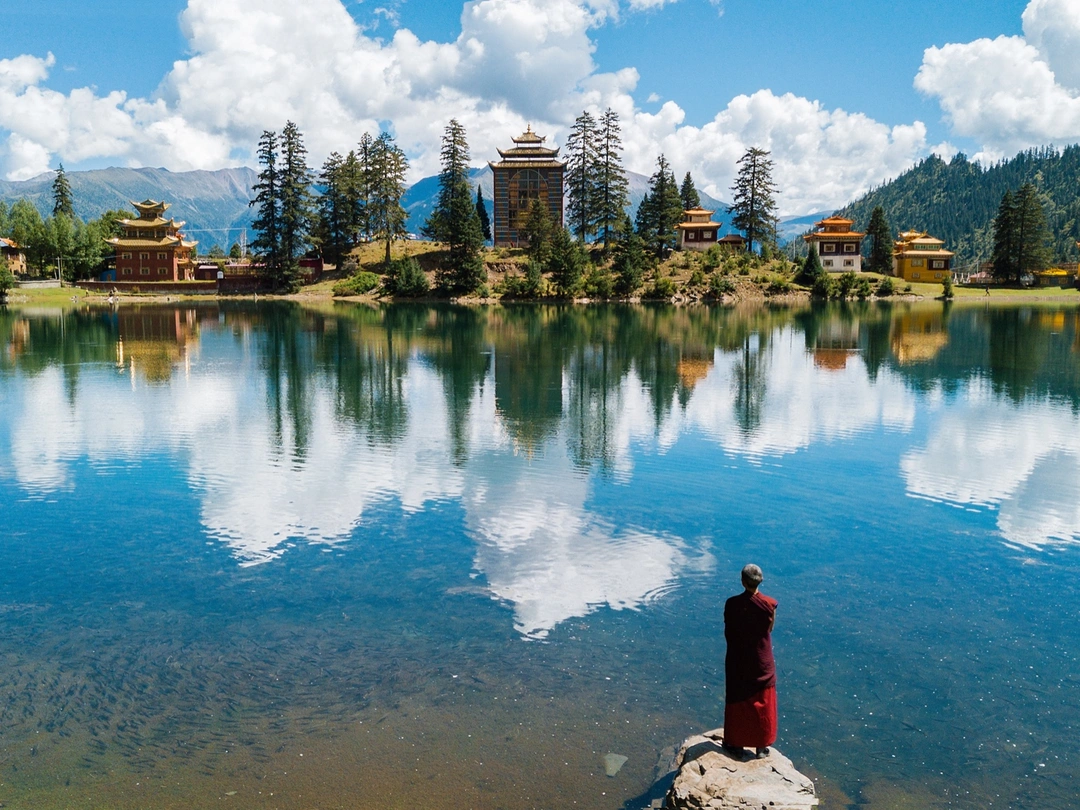
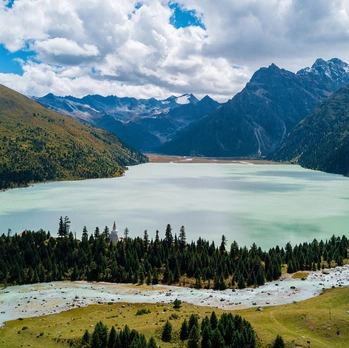
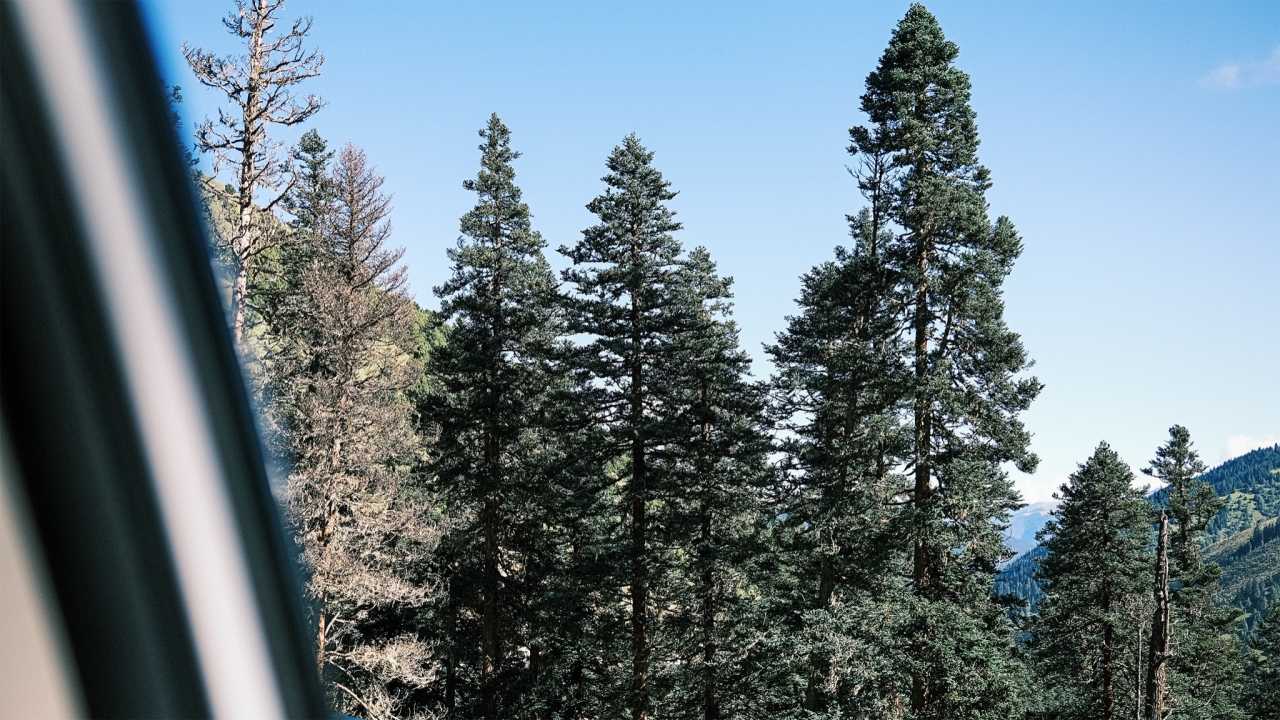
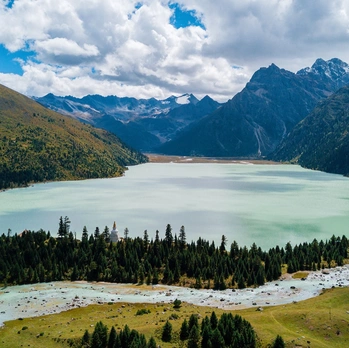
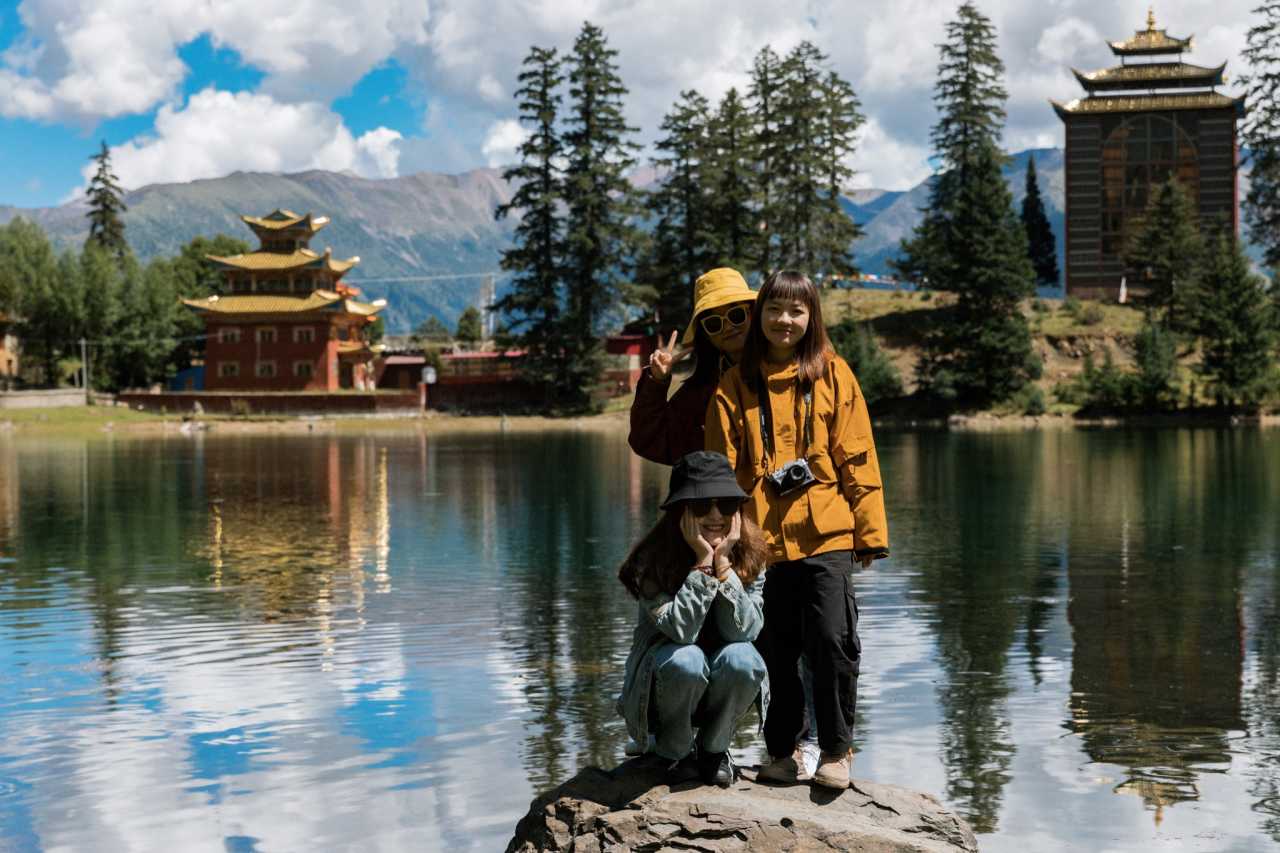
Hidden deep within Xinlong’s mountains lies Cuoka Lake, a small alpine lake that feels like a secret revealed only to those willing to venture off the beaten path. Driving along winding mountain roads flanked by evergreen coniferous forests, you'll catch glimpses of blue sky and white clouds dancing in your rearview mirror. Before arriving, the glittering golden roof of a nearby temple signals your destination.
Why Cuoka Lake Stands Out: - Size: Small but incredibly photogenic - Location: Secluded in deep mountains, offering exclusivity - Best Photo Spot: A flat, large rock by the lake’s edge - Drone Tip: Capture the lake as a mirror reflecting sky, trees, and temples
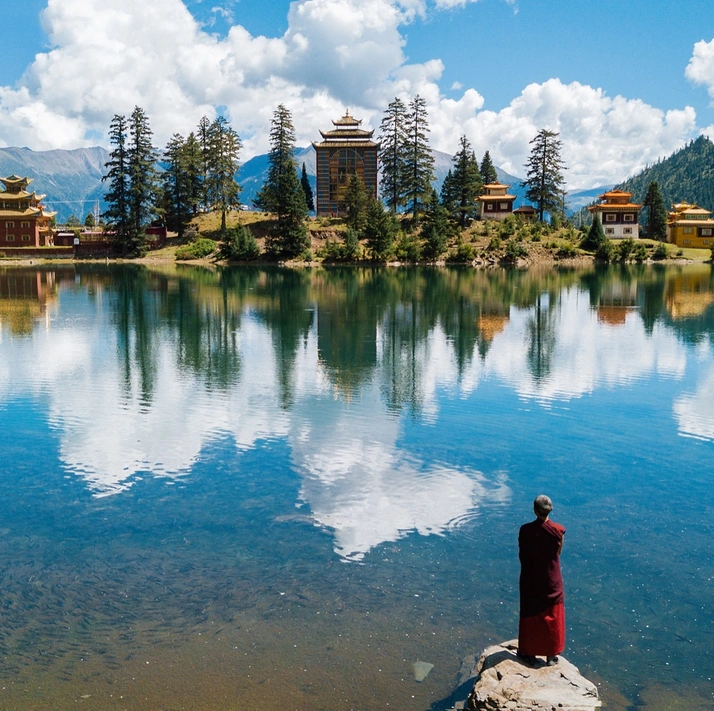
Our team—Jenny (sales expert handling logistics), Ma Yun (former editor with a photographer’s eye), and myself (planner and writer)—found Cuoka Lake to be a photographer’s paradise. A red-robed monk stood in contemplation by the shore, while fish swam curiously toward us. Jenny’s yellow sun hat and deep red denim jacket complemented the Tibetan-style temples perfectly. Ma Yun ran freely by the lake, embodying the joy of discovery.
Practical Tip: A small parking lot with a wall sits near the lake. Entry requires a "sanitation fee" of 20 yuan per vehicle and 10 yuan per person.
[Link: Best Tibetan temples in Western Sichuan]
Baiyü County Attractions: Yarchen Gar and Kathok Monastery
Baiyü County, meaning "auspicious and virtuous" in Tibetan, boasts an average altitude of 3,500 meters, high forest coverage, and numerous lakes. Its two most compelling attractions—Yarchen Gar and Kathok Monastery—offer contrasting faces of Tibetan Buddhist faith.
Yarchen Gar: The Red Robe Buddhist Kingdom
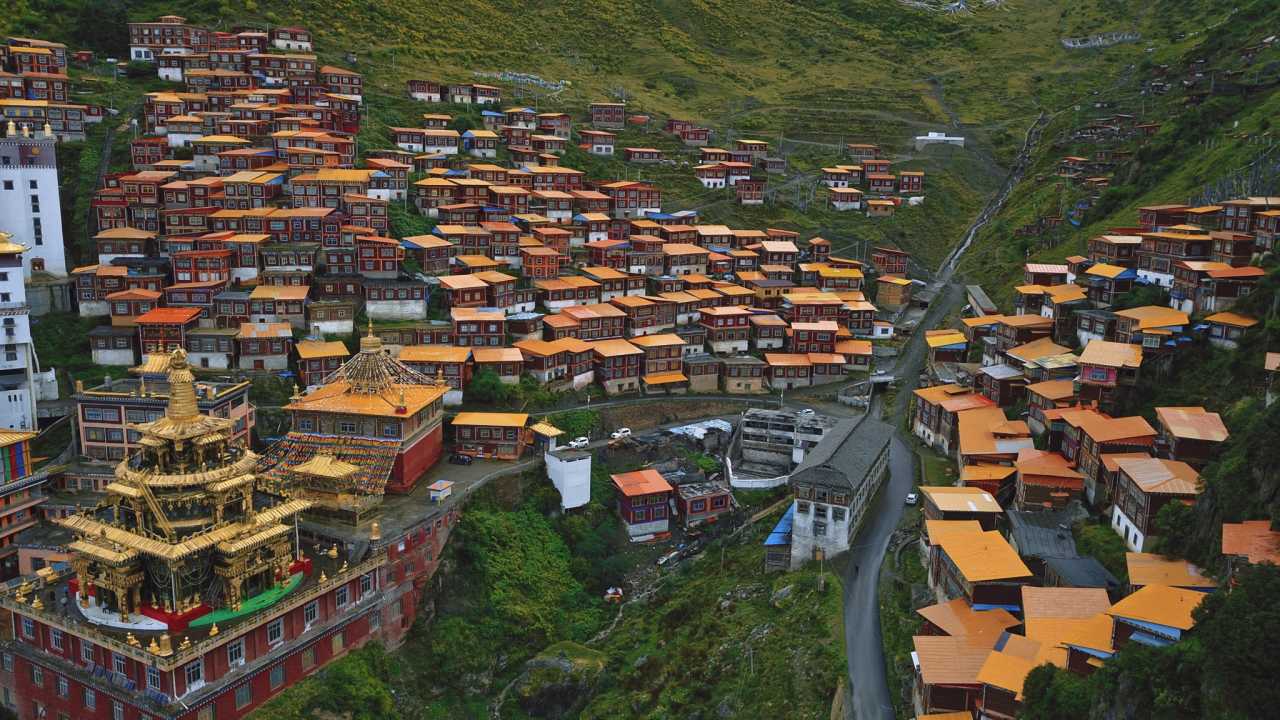
When travelers think of Western Sichuan’s red Buddhist kingdoms, Sertar (Larung Gar) often comes to mind. However, Yarchen Gar in Acha Town, Baiyü County, deserves equal recognition. Founded in 1985, this unique settlement is tightly wrapped by crisscrossing rivers and was once home to over 20,000 chömos (female monastics) living in small houses for practice.
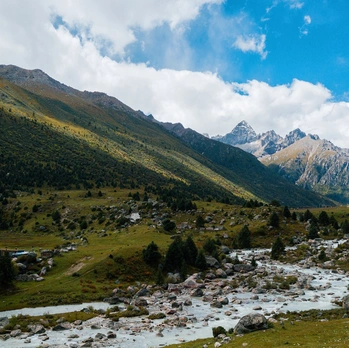
What Makes Yarchen Gar Unique: - Female Monastic City: Entire island inhabited by nuns who handle all daily tasks—fetching water, chopping wood, building houses - Meditation Huts: Simple, matchbox-like structures on the meditation hill across the island - 100-Day Retreat: Only 1% of monastics pass the test to achieve realization - Current Renovation: Half of the island’s houses have been demolished for turf restoration and modernization
Visiting in early morning, we found Yarchen Gar exceptionally quiet. Wisps of incense smoke rose as some monastics performed sang (burning incense). Others basked in the sun and chatted on the hillside. The red hall in the distance served as their classroom and chanting space. The Changqu River flowed slowly by, and a solitary red-robed nun walked alone—a poignant image of devotion and solitude.
Important Note: Yarchen Gar is undergoing renovation with constant machinery noise. Future visitors may find neat dormitory buildings replacing the original scattered houses. Yet the red robe of faith remains a powerful symbol.
Kathok Monastery: A Hidden Ancient Temple with a Vajra Seat
The world recognizes three great Vajra Seats: Bodh Gaya in India, Mount Wutai in China, and Kathok Monastery in Tibet. Located in Bailong Gully, Baiyü County, Kathok Monastery’s full name is "Kathok Dorje Den," meaning "the Vajra Seat built on a rock shaped like the syllable 'Kath.'" It stands as the first Buddhist monastery established in the Kham region, with over 800 years of history.
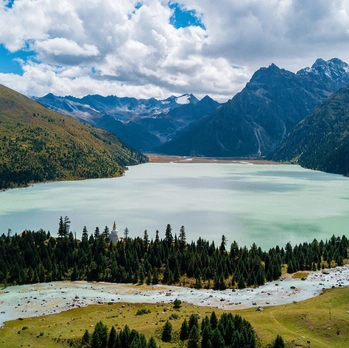
Key Highlights: - Altitude: 4,800 meters - Setting: Perched on a mountainside by the rushing Jinsha River - Consecration: Guru Rinpoche reportedly consecrated the monastery 13 times - Mandala of the Hundred Peaceful and Wrathful Deities: Allows those who see it to recognize these deities and attain liberation - Ten Sciences Buddhist College: Red-and-white building resembling Potala Palace style
The entire monastery complex is built against the mountain, creating a magnificent, pure, and solemn atmosphere. Standing outside with swirling clouds and mist at our feet, we felt transported to a fairyland. The difficult mountain roads and high altitude were instantly forgotten upon seeing this spectacular sight.
[Link: High altitude travel tips for Tibet]
Dêgê County Travel Guide: Printing Academy, Chola Mountain, and Xinluhai Lake
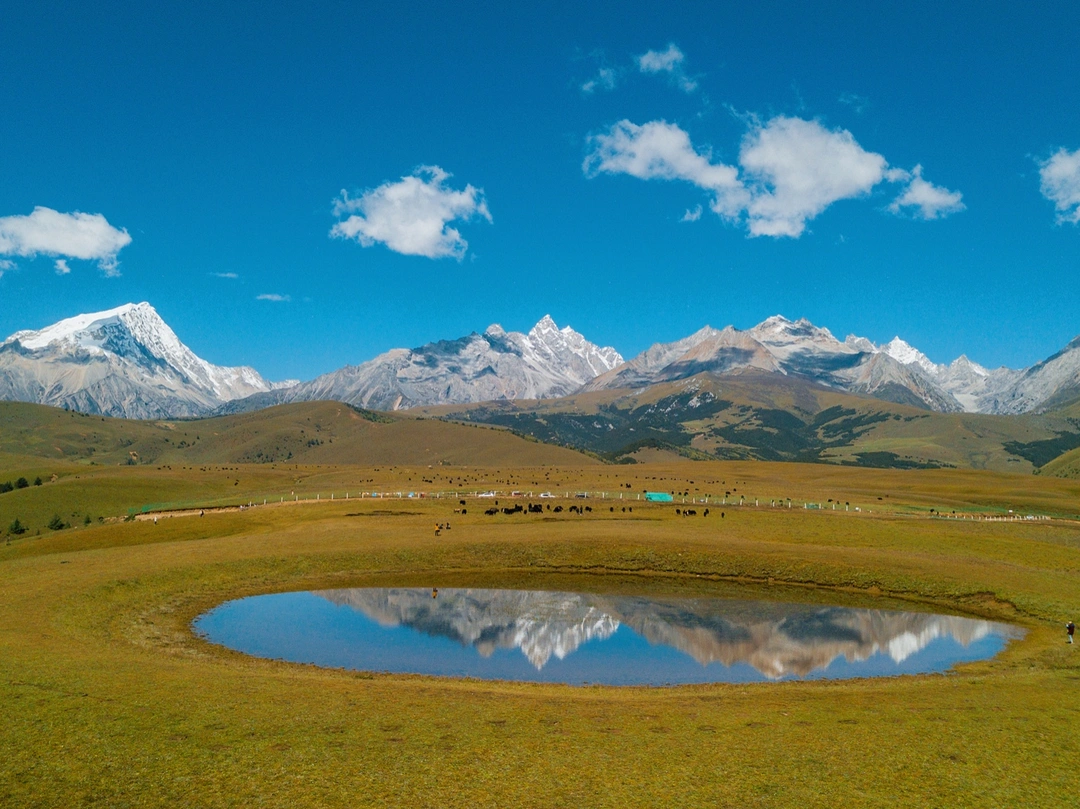
Dêgê County, located in northwestern Garzê Prefecture at an average altitude of 3,188 meters, serves as the cultural center of Kham and the hometown of King Gesar. Its most famous attraction is the Dêgê Printing Academy, a national key cultural relic protection unit and the foremost of the three major printing academies in the Tibetan region.
Dêgê Printing Academy: A Treasure House at the Foot of the Snowy Mountains
Founded in 1729, the Dêgê Printing Academy covers over 9,000 square meters and is known as the "Encyclopedia of Tibetan Culture." Surrounding the academy, small stalls sell Tibetan ornaments, while locals practice the daily ritual of walking clockwise around the academy while turning prayer wheels. For Tibetans, if they cannot make a pilgrimage to Lhasa in this lifetime, worshipping at Dêgê Printing Academy once fulfills a lifelong wish.
Inside the Printing Academy: - Scent: A mixed aroma of butter and ink - Photography: Cameras not allowed inside; mobile phones permitted - Architecture: "回" (hui) shape layout, entirely wooden construction - Lighting: No electric lighting; all work done in natural daylight - Printing Process: 1. First floor: Master craftsmen wash printing blocks in a pool 2. Second floor: Three-person teams—one grinds ink and prints, one takes paper and rolls for printing, one carries blocks and paper
The academy’s preservation of traditional woodblock printing techniques makes it a living museum of Tibetan culture.
[Link: Tibetan Buddhist monasteries to visit in China]
Batang and Litang Counties: Gateway to the Tibetan Plateau
While our deep dive focused on Xinlong, Baiyü, and Dêgê counties, Batang and Litang counties are equally essential stops on any Garzê itinerary.
Batang County: Known as the "Gateway to Tibet," Batang sits at the intersection of Sichuan, Tibet, and Yunnan provinces. Its lower altitude (around 2,500 meters) makes it an excellent acclimatization stop before heading higher.
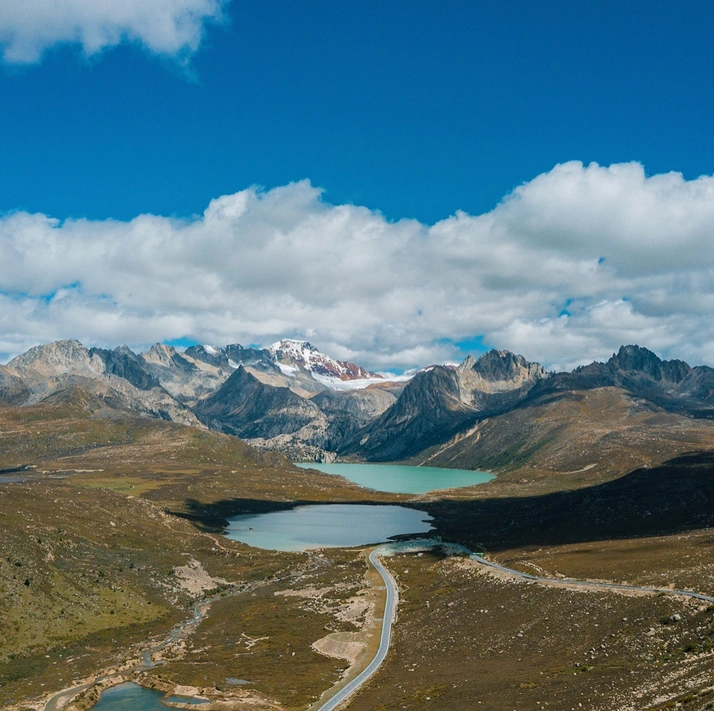
Litang County: At an altitude of 4,014 meters, Litang is one of the highest cities in the world. It’s famous for the Litang Horse Racing Festival and the stunning Qinglong Lake (also known as "Qinglong Lake").
[Link: Sichuan Tibet Highway travel guide]
FAQ: Planning Your Western Sichuan Road Trip
1. What is the best time to visit Garzê Prefecture?
 The best time is May to October, when temperatures are milder and roads are generally passable. July and August offer the best weather but also the most tourists. September and October provide stunning autumn colors.
2. How do I handle altitude sickness in Western Sichuan?
- Acclimatize gradually: Spend 1-2 days in lower-altitude areas like Kangding (2,600m) before heading higher
- Stay hydrated: Drink plenty of water
- Avoid alcohol and strenuous activity during the first 48 hours
- Carry medication: Diamox (acetazolamide) can help prevent symptoms
- Know the symptoms: Headache, nausea, dizziness—descend immediately if severe
3. Do I need a special permit to visit these areas?
 Most of Garzê Prefecture is open to domestic and international tourists. However, some areas near the Tibet border may require a Tibet Travel Permit for foreign nationals. Always check current regulations before traveling.
4. How many days should I spend exploring these five counties?
 A minimum of 5-7 days is recommended to cover the highlights without rushing. Our team spent five days traveling through Xinlong, Baiyü, Dêgê, Batang, and Litang, which allowed for a deep dive into each county’s main attractions.
5. What should I pack for a Western Sichuan road trip?
- Clothing: Layers for temperature changes (from 5°C to 25°C)
- Footwear: Sturdy hiking boots
- Accessories: Sunscreen, sunglasses, hat, lip balm
- Equipment: Drone (for aerial shots), camera with zoom lens, portable charger
- Health: First-aid kit, altitude sickness medication, hand sanitizer
Conclusion: Your Journey to the Edge of the Clouds Awaits
Western Sichuan’s Garzê Prefecture offers more than just beautiful scenery—it provides a profound encounter with Tibetan Buddhist culture, ancient traditions, and breathtaking natural wonders. From the secluded Cuoka Lake in Xinlong to the red-robed devotion of Yarchen Gar in Baiyü, from the ancient Vajra Seat of Kathok Monastery to the living history of Dêgê Printing Academy, each county tells a unique story.
Our "gold medal team" of three—Jenny, Ma Yun, and myself—found that the journey itself became the destination. The winding mountain roads, the conversations with locals, the shared moments of awe at unexpected vistas—these are the memories that last long after the trip ends.
Ready to plan your own Western Sichuan adventure? Start by researching flight options to Chengdu, then arrange a private driver or join a small group tour. Book accommodations in advance during peak season, and always carry cash (ATMs are scarce in remote areas).
Don’t wait for the perfect moment—pack your bags and set foot on the land of Western Sichuan. The clouds, mountains, and strangers are waiting to keep their appointment with you.
Have you visited Garzê Prefecture? Share your experiences or questions in the comments below!