A Sichuan Western Honeymoon Chronicle: Finding a New Height of Love at the Foot of Six Sacred Mountains
Meta Description: Discover a unique Western Sichuan honeymoon itinerary covering 6 sacred mountains, 14 days, and 1,800 km of self-driving adventure. Get tips on routes, mishaps, and hidden gems for an unforgettable plateau romance.
Foreword: Why Western Sichuan for a Honeymoon?
When most couples choose the Maldives, Bali, or a quaint European town as their honeymoon destination, my husband Mr. Lu and I set our sights on Western Sichuan — a land we had never set foot on.
As natives of Fujian Province, the domestic travel map of China had only one blank spot left for us: this southwestern highland. With a 14-day wedding leave, we decided to fill that gap with a self-driving adventure through the Sichuan Tibetan Plateau.
Before departure, I did extensive research and was mentally prepared for the plateau environment. But when we actually set foot on this land, we realized: the beauty of Western Sichuan must be earned with physical effort and willpower. The rhythm of the entire trip can be summed up in one phrase — "Oh how beautiful — oh how exhausting — oh how beautiful — oh how exhausting..." on an endless loop.
If "sunshine, beaches, ocean waves, and cacti" represent the "lie-flat" option for a honeymoon, then our Western Sichuan honeymoon was a "crunch-style" challenge. There was no military-style rushing from place to place, but there was plenty of mutual support like teammates. Even "whispering sweet nothings" took on a new meaning — helping each other along mountain paths at 4,000 meters above sea level, passing oxygen canisters to one another in an oxygen-deprived state.
This journey deserves to be properly recorded.
[Link: Best honeymoon destinations in China for adventure couples]
Trip Overview: 14 Days, 1,800 Kilometers, 6 Sacred Mountains

The Final Route
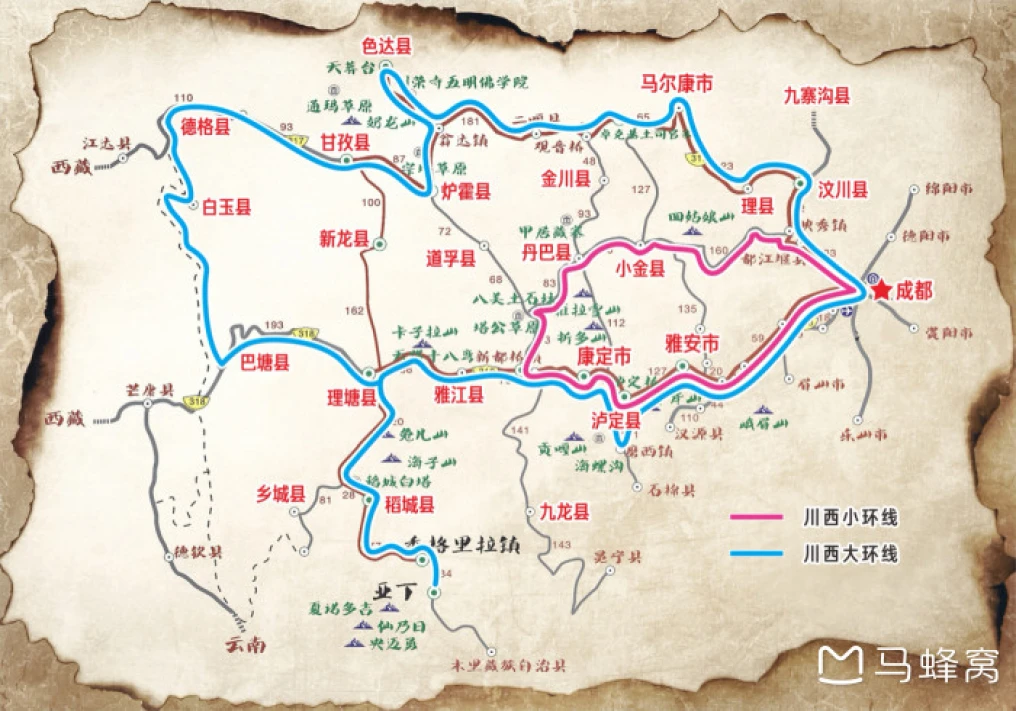
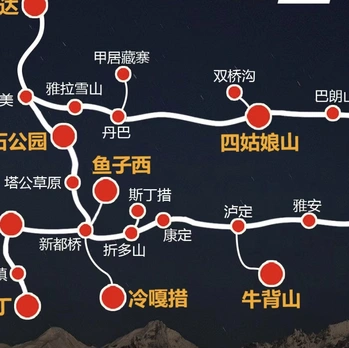
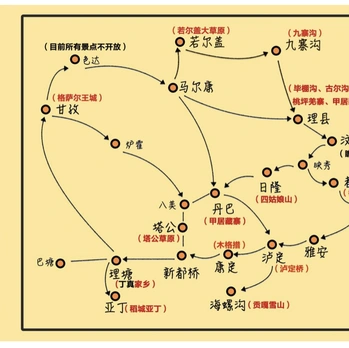
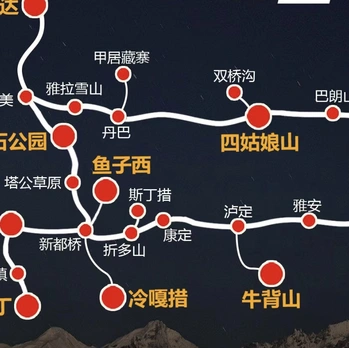
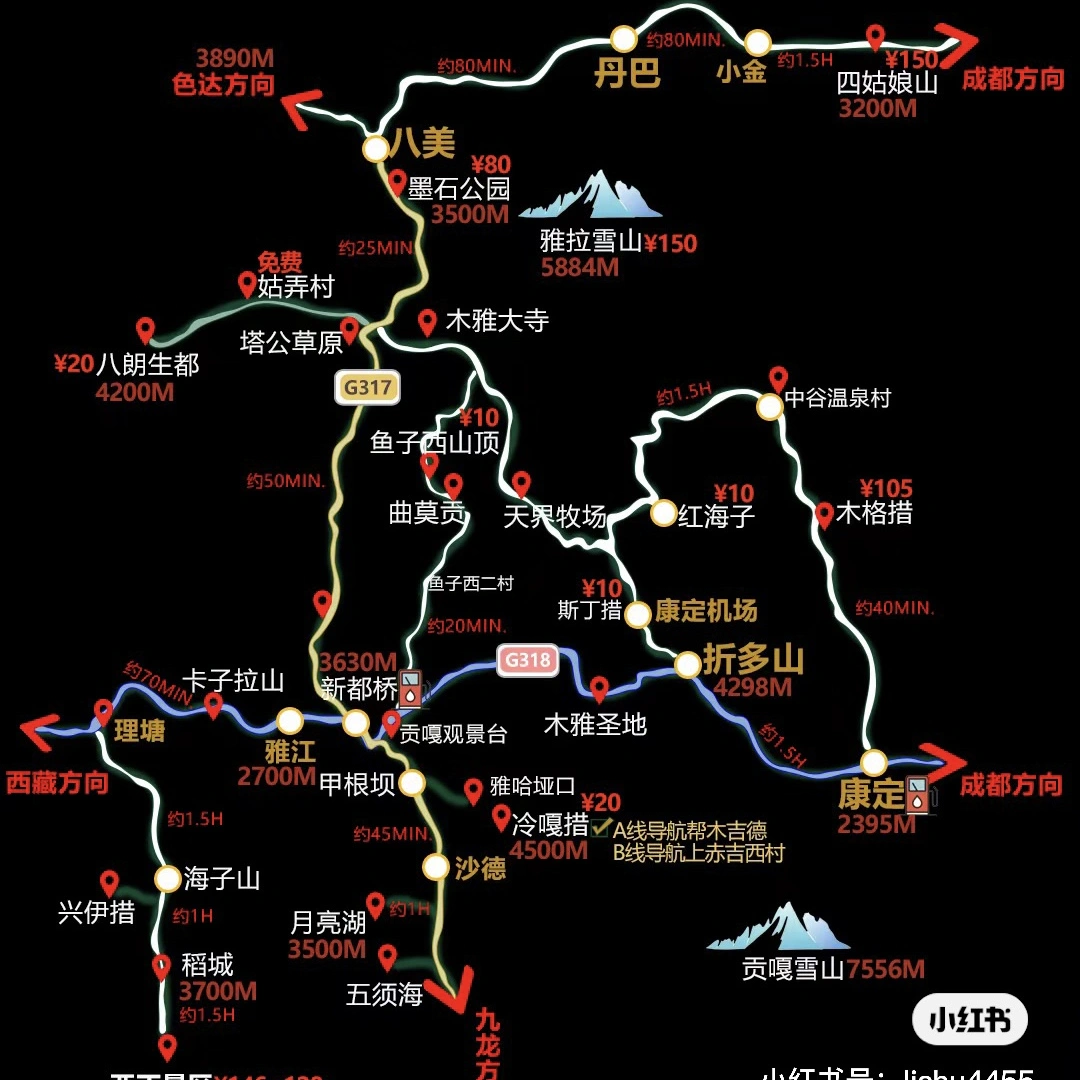
Chengdu → Mount Siguniang → Danba Zhonglu Tibetan Village → Balangshengdu → Litang → Yading → Litang → Luding → Niubei Mountain → Chengdu
This route was carefully selected by me after hours of online research. I eliminated overly Instagram-famous spots and leaned toward lesser-known, off-the-beaten-path destinations. As it turned out, this was a very wise choice for our Sichuan self-driving honeymoon.
The Pre-Departure Dilemmas
To go to Seda or not? The religious atmosphere of the Five-Ming Buddhist Academy fascinated me, but adding Seda would require embarking on the grand Western Sichuan loop. The 14-day self-drive would become extremely tight, with multiple seven-hour-plus drives that felt daunting. Ultimately, we chose the Changqing Chunke Si Monastery in Litang as an alternative — its back hill also features an entire Buddhist academy complex, which served as a small consolation.
Jiaju Tibetan Village or Zhonglu Tibetan Village? Jiaju is more commercialized, larger in scale, and draws more tourists; Zhonglu Tibetan Village is ancient, peaceful, and just beginning to be developed. We chose the latter and were rewarded with unexpected tranquility.
Balangshengdu or Yuzixi? Both are villages offering 360° views of snow-capped mountains. Yuzixi was developed first; Balangshengdu is more obscure. We chose the latter and were rewarded with a breathtaking sunset over the highland meadows.
Changes Along the Way
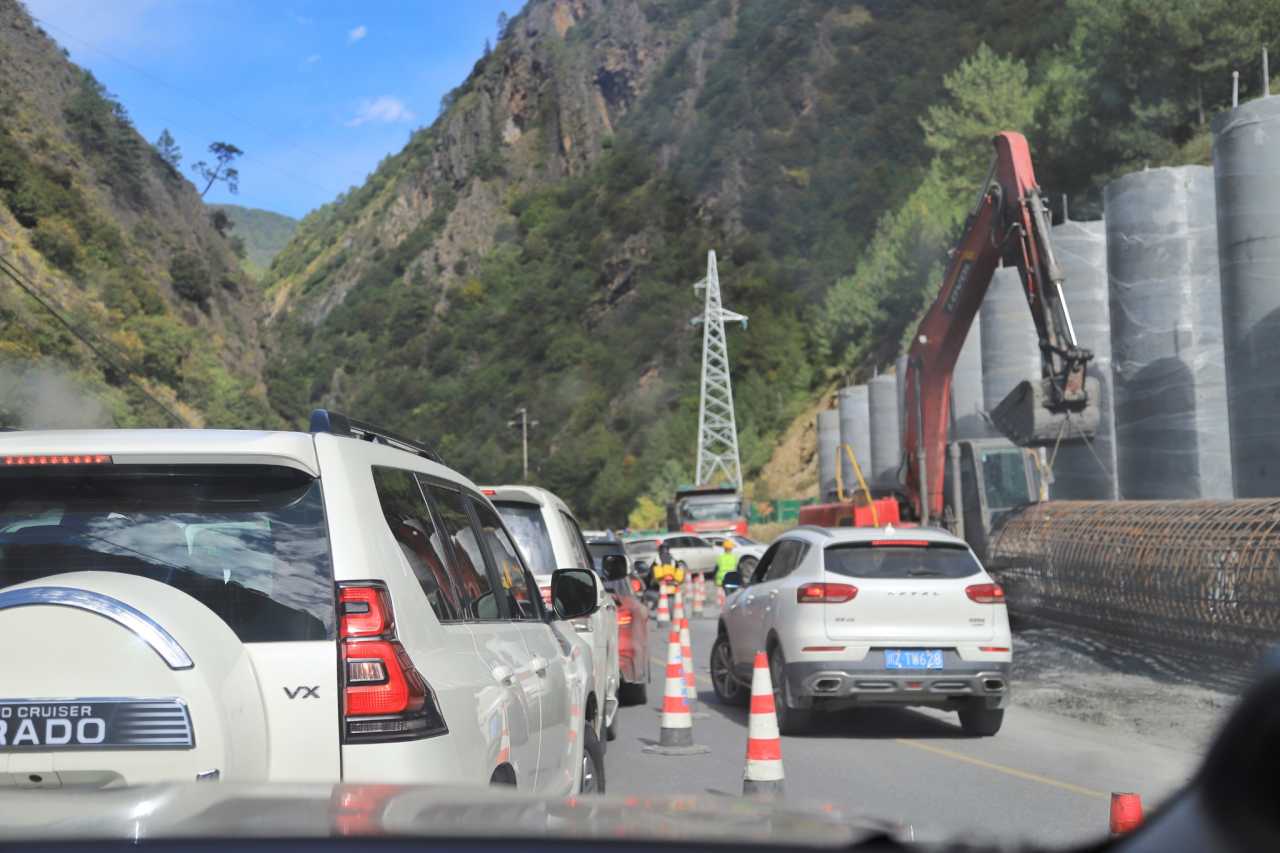
We originally planned to overnight in Xinduqiao to rest, but discovered that with good weather and light traffic, we could drive straight through to Kangding. Xinduqiao itself has few attractions, though the autumn scenery along the way was lovely.
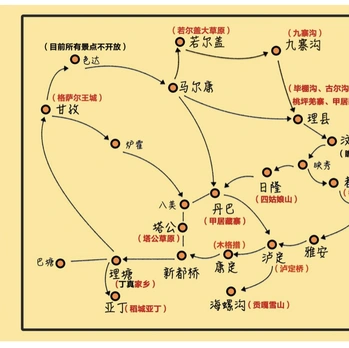
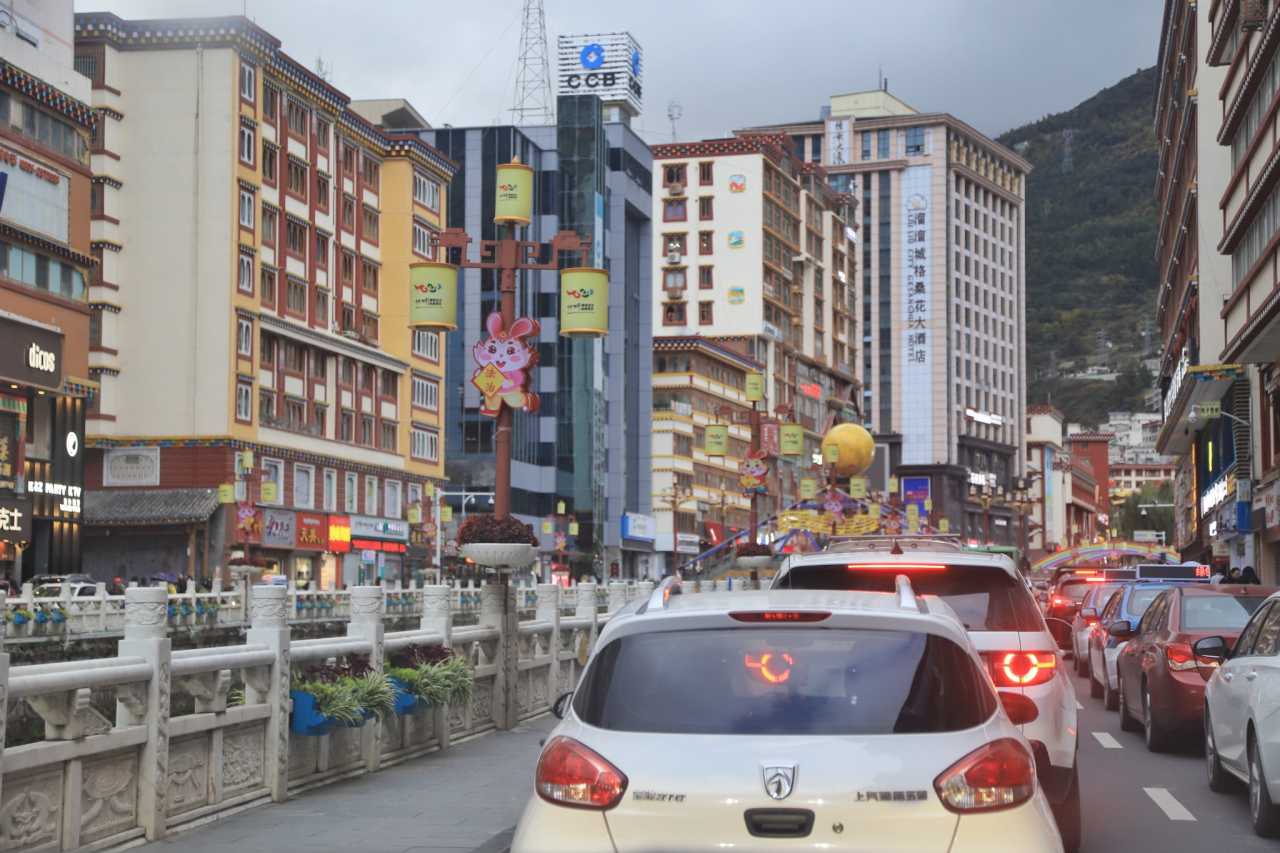
We originally planned to stay overnight in Kangding, but arrived during rush hour. The area around Love Song Square was congested with traffic, parking was difficult, and all the decent hotels were fully booked. We made a snap decision to switch to Luding — and discovered it was a delightful surprise: quiet, clean, and full of unexpected charm.
[Link: Western Sichuan self-driving route planning tips]
Those Hilarious and Frustrating Mishaps
Mishap One: The Suitcase "Wife Swap"
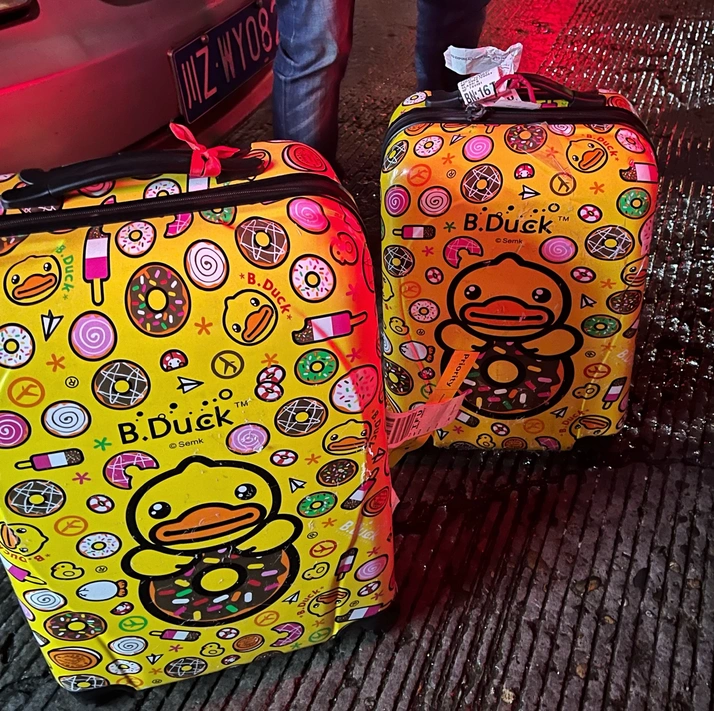
Before departure, Mr. Lu deliberately tied a red string to our little yellow duck suitcase, symbolizing "good fortune." As it turned out, that red string became the culprit.
At Tianfu Airport's baggage carousel, I spotted a little yellow duck suitcase with a red string and grabbed it without a second thought. Along the way, I muttered to myself, "Why are the wheels so stiff?" and "Why is it so heavy?" It wasn't until two hours later, when we opened the suitcase at the hotel, that we both froze — inside were nothing but a stranger's clothes.
Mr. Lu calmly contacted Xiamen Airlines and, using the information on the luggage tag, tracked down the owner. The woman had already driven to Leshan to visit the Giant Buddha and had only just realized she had taken the wrong suitcase. So we arranged to meet halfway — in Meishan, between Chengdu and Leshan.
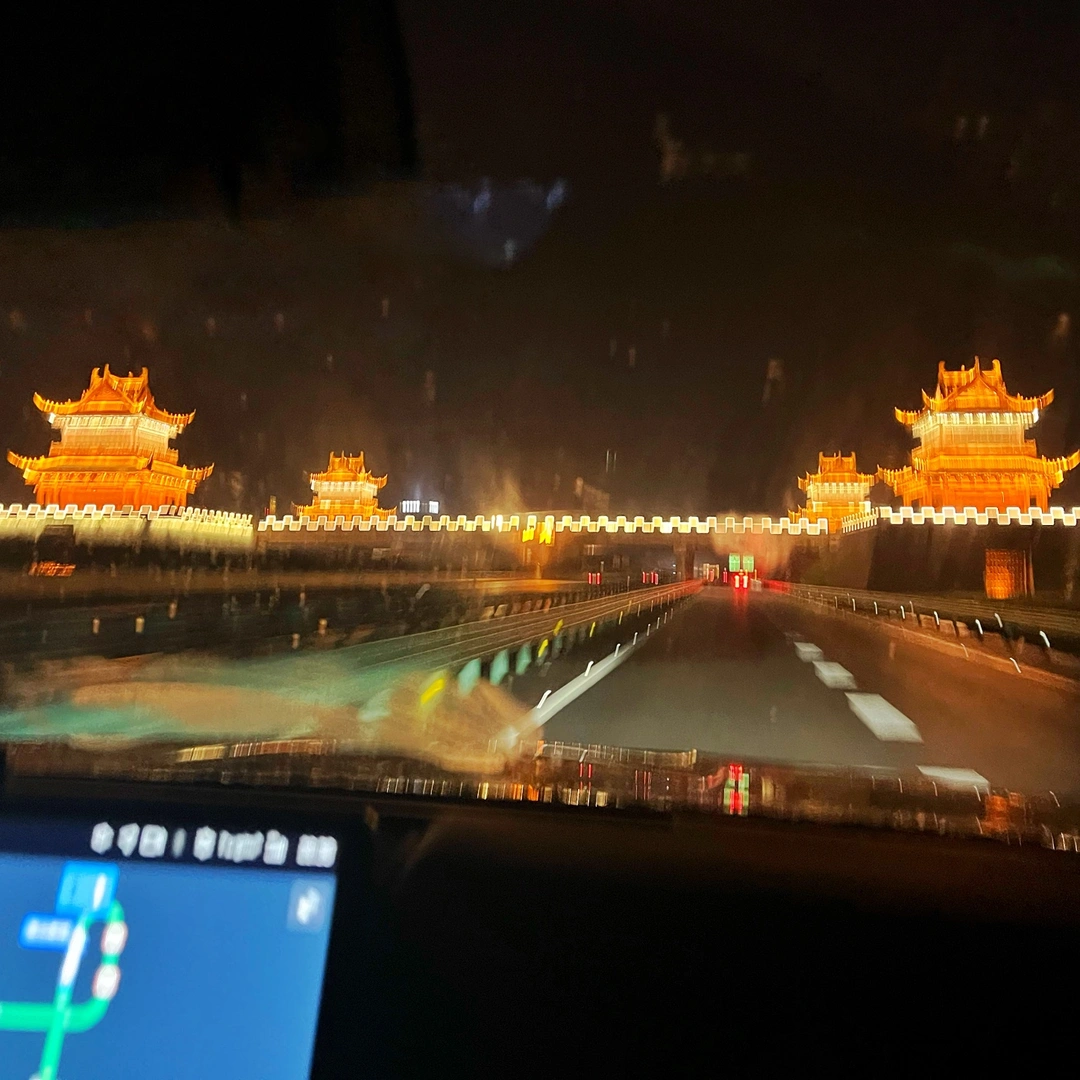
Thus, after a three-hour flight and two-hour airport shuttle, we drove another two hours round trip on a rainy highway at night. Mr. Lu joked, "Think of it as a practice drive before Western Sichuan."
When we arrived at the Meishan highway exit and saw the imitation ancient architecture landmark, we finally relaxed. When we finally got our own suitcase back, we noticed the two were virtually identical — same little yellow duck pattern, same red string. To this day, we can't figure out who grabbed the wrong one first. All we can say is, "It's a story of one scatterbrain meeting another."
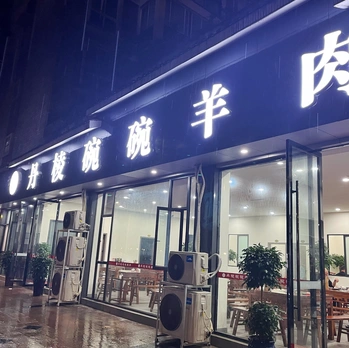
Since we were in Meishan anyway, we decided not to let the trip go to waste. We found a lamb soup restaurant — a bowl of white rice and a bowl of steaming hot lamb soup, and we were filled with satisfaction.
Mishap Two: The DSLR "Wandering"
Another mishap occurred two hours after we left our guesthouse at Mount Siguniang — we had left our DSLR camera behind. Turning back to retrieve it was out of the question. The mountains of Western Sichuan stretch endlessly, and express delivery is not convenient. Even if SF Express shipped it from Xiaojin County, where Mount Siguniang is located, there was no guarantee it would arrive the next day in neighboring Danba County.
In the end, I asked the guesthouse owner to send the camera directly to our next stop, Litang. This meant that a major portion of the trip (including Balangshengdu) would have to be captured with just a phone — the photos came out painfully blurry.
The guesthouse owner was very thoughtful, not only packing the camera carefully but also recording a video to reassure me. For that after-sales service, I give full marks.
Mishap Three: The Lens "Broken Wing"
The most dramatic mishap was the third one. After three days, I finally received the DSLR in Litang. But within twelve hours of having it, I accidentally dropped it — the lens wouldn't focus, rendering it useless for photography. Mr. Lu and I scoured Litang town looking for a camera repair shop, but found nothing.
Finally, we turned to our guesthouse owner for help. He was a photography enthusiast and brought out his own identical DSLR to help troubleshoot, but ultimately told me, "I've done what I can." Knowing that the most anticipated stop — Yading — might also have to go unrecorded by the DSLR, my heart sank.
Then, the owner spontaneously offered to lend me his lens! He said, "The places you're going to next — Yading is beautiful, and Niubei Mountain is beautiful too. They're worth recording properly." At that moment, I almost cried. This kindness from a stranger became one of the warmest memories of our Western Sichuan trip.
[Link: Essential photography gear for plateau travel]
Shuangqiao Valley Can't Show You Mount Siguniang, But Changping Valley Can
Mount Siguniang, legend has it, is the embodiment of four beautiful sisters. The four peaks are called Big Sister Peak, Second Sister Peak, Third Sister Peak, and Yaomei Peak. At 6,250 meters, Yaomei Peak is the second highest peak in Sichuan Province after Gongga Snow Mountain, earning it the title "Queen of the Shu Mountains."
The Mount Siguniang scenic area includes three routes: Shuangqiao Valley, Changping Valley, and Haizi Valley. Shuangqiao Valley is well-developed, while Changping Valley and Haizi Valley are better suited for hiking.
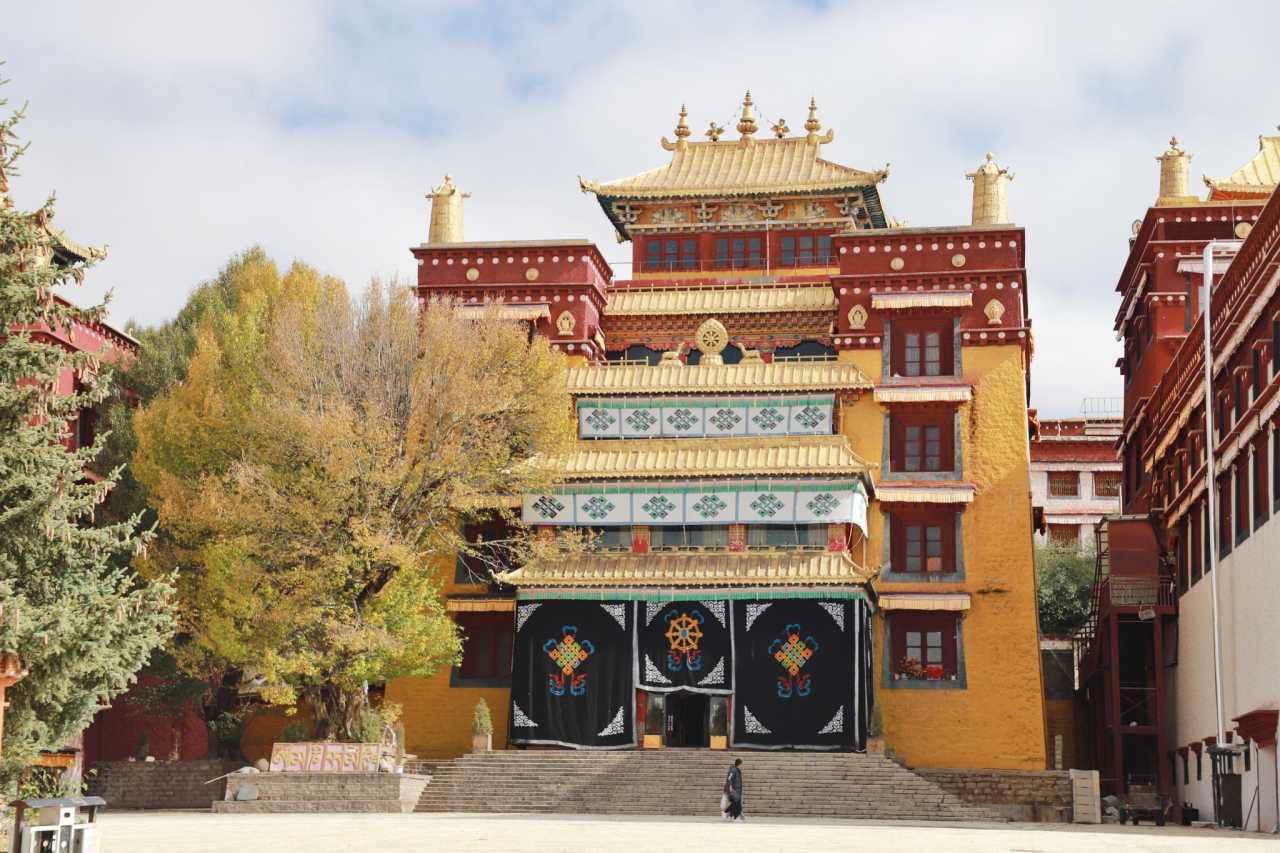
We arrived at Shuangqiao Valley at 2 PM. The park requires visitors to take a unified shuttle bus. A little tip: sit on the right side for a better view. The bus takes you to the top of the valley, and you walk back down. But here's the catch — Shuangqiao Valley offers limited views of the actual peaks. You'll see the valley's beauty, but the four sisters remain mostly hidden.
For a true Mount Siguniang hiking experience, head to Changping Valley. This is where you'll get up close and personal with the peaks. The trail is less crowded, more rugged, and offers panoramic views that Shuangqiao Valley simply cannot match. We spent a full day here, walking through alpine meadows, crossing crystal-clear streams, and feeling the majesty of the "Queen of the Shu Mountains" towering above us.
[Link: Mount Siguniang hiking guide for beginners]
Zhonglu Tibetan Village: An Ancient Peace in the Danba Valley
After the grandeur of Mount Siguniang, we descended into the Danba Tibetan Valley and found our way to Zhonglu Tibetan Village. Unlike its more famous neighbor Jiaju, Zhonglu feels untouched by time. The village is perched on a hillside, with white-walled, flat-roofed houses clinging to the slopes like ancient sentinels.
We arrived in the late afternoon. The golden light of the setting sun painted the village in warm hues. Locals were returning from the fields, carrying baskets of barley and vegetables. Children played in the narrow alleys, their laughter echoing off the stone walls. It was a scene of such simple, profound peace that we felt we had stepped back in time.
Our guesthouse was a traditional Tibetan home, run by a family who welcomed us with bowls of butter tea and stories of the valley. That night, we sat on the rooftop under a sky full of stars, the silence broken only by the distant barking of dogs and the rustle of wind through the barley fields. It was, without question, one of the most romantic nights of our honeymoon.
[Link: Best Tibetan villages to visit in Western Sichuan]
Balangshengdu: The Sunset That Changed Everything
Balangshengdu was the hidden gem of our trip. This obscure village, accessible only by a winding mountain road, offers a 360° view of snow-capped peaks that rivals any more famous viewpoint in the region.
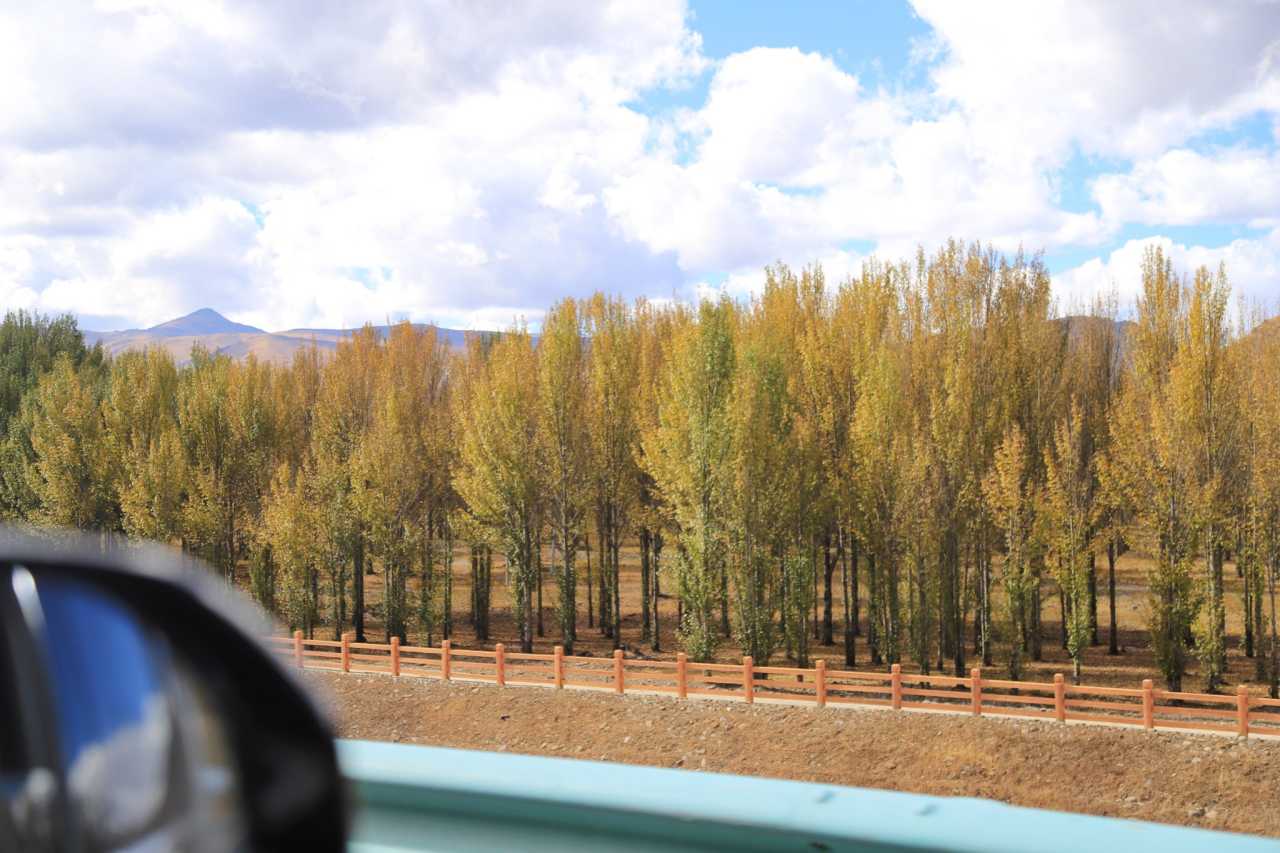
We arrived just before sunset. The highland meadows stretched out before us, dotted with yaks and wildflowers. In the distance, the peaks of the Hengduan Mountains glowed pink and orange as the sun dipped below the horizon. Mr. Lu and I sat on a rock, sharing a thermos of hot tea, watching the light change. It was one of those moments when you realize that the best things in life are not planned — they simply happen.
For couples seeking a romantic sunset spot in Sichuan, Balangshengdu is a must. It's off the beaten path, uncrowded, and utterly breathtaking.
[Link: Hidden gems of Western Sichuan for couples]
Litang: The City of the Sky and the Monastery of Serenity
Litang, often called the "City of the Sky" due to its altitude of 4,014 meters, was our base for several days. The town itself is a mix of Tibetan and Han cultures, with prayer flags fluttering over modern buildings.
Our alternative to Seda, the Changqing Chunke Si Monastery, proved to be a wise choice. The monastery complex on the back hill is smaller than Seda's but equally atmospheric. Monks in maroon robes walked through the courtyards, spinning prayer wheels and chanting sutras. The air was thick with incense and the sound of bells.
We spent a morning here, walking through the halls, observing the intricate thangka paintings, and sitting in the meditation hall. It was a spiritual experience that grounded us before the next leg of our journey.
[Link: Litang travel guide – things to do and see]
Yading: The Sacred Trio of Peaks
Yading Nature Reserve was the crown jewel of our honeymoon. The reserve is home to three sacred peaks — Chenresig (6,032 m), Jambeyang (5,958 m), and Chanadorje (5,958 m) — which are considered the embodiment of Buddhist deities.
We spent two full days here. The first day was a long hike to the Five-Color Lake and Milk Lake, both of which are turquoise jewels set against the stark backdrop of the peaks. The altitude made every step a challenge, but the views were worth every gasp for air.
The second day, we took the easier route to the Chonggu Monastery and the Luorong Pasture. Here, the mountains seemed to wrap around us, their snow-covered peaks reflecting in the still waters of the pasture's lakes. It was here, at the foot of these sacred giants, that we felt the true "height of love" — not in the altitude, but in the shared effort, the mutual encouragement, and the silent understanding that we had found something extraordinary together.
[Link: Yading hiking routes for couples]
Niubei Mountain: The Final Ascent
Our last stop before returning to Chengdu was Niubei Mountain, a lesser-known peak that offers panoramic views of the Gongga Snow Mountain range. The road up was rough — a gravel track that wound through clouds and forest. But at the top, we were rewarded with a view that seemed to stretch to the edge of the world.
We camped overnight on the summit. The temperature dropped below freezing, but we huddled together in our tent, watching the stars wheel overhead. In the morning, we woke to a sea of clouds below us, the peaks of Gongga rising like islands in a white ocean. It was a fitting end to our journey — a reminder that the best views come after the hardest climbs.
[Link: Niubei Mountain camping guide]
FAQ: Planning Your Western Sichuan Honeymoon
1. Is Western Sichuan safe for a honeymoon self-driving trip?
 Yes, but preparation is key. Ensure your vehicle is suitable for high-altitude driving (4WD recommended). Carry oxygen canisters, warm clothing, and a first-aid kit. Check road conditions daily, as landslides and snow can close routes. We drove carefully and had no safety issues.
2. What is the best time of year for a Western Sichuan honeymoon?
 Late spring (May-June) and autumn (September-October) are ideal. Spring offers wildflowers and mild weather; autumn provides golden foliage and clear skies. Avoid July-August (rainy season) and winter (snow closures).
3. How do I handle altitude sickness on a plateau honeymoon?
Acclimatize gradually. Spend a day in Chengdu (500 m) before heading to higher altitudes. Stay hydrated, avoid alcohol, and take it easy on the first day. Carry Diamox (consult your doctor) and portable oxygen canisters. Listen to your body — we took rest days when needed.
4. What should I pack for a Western Sichuan self-driving honeymoon?
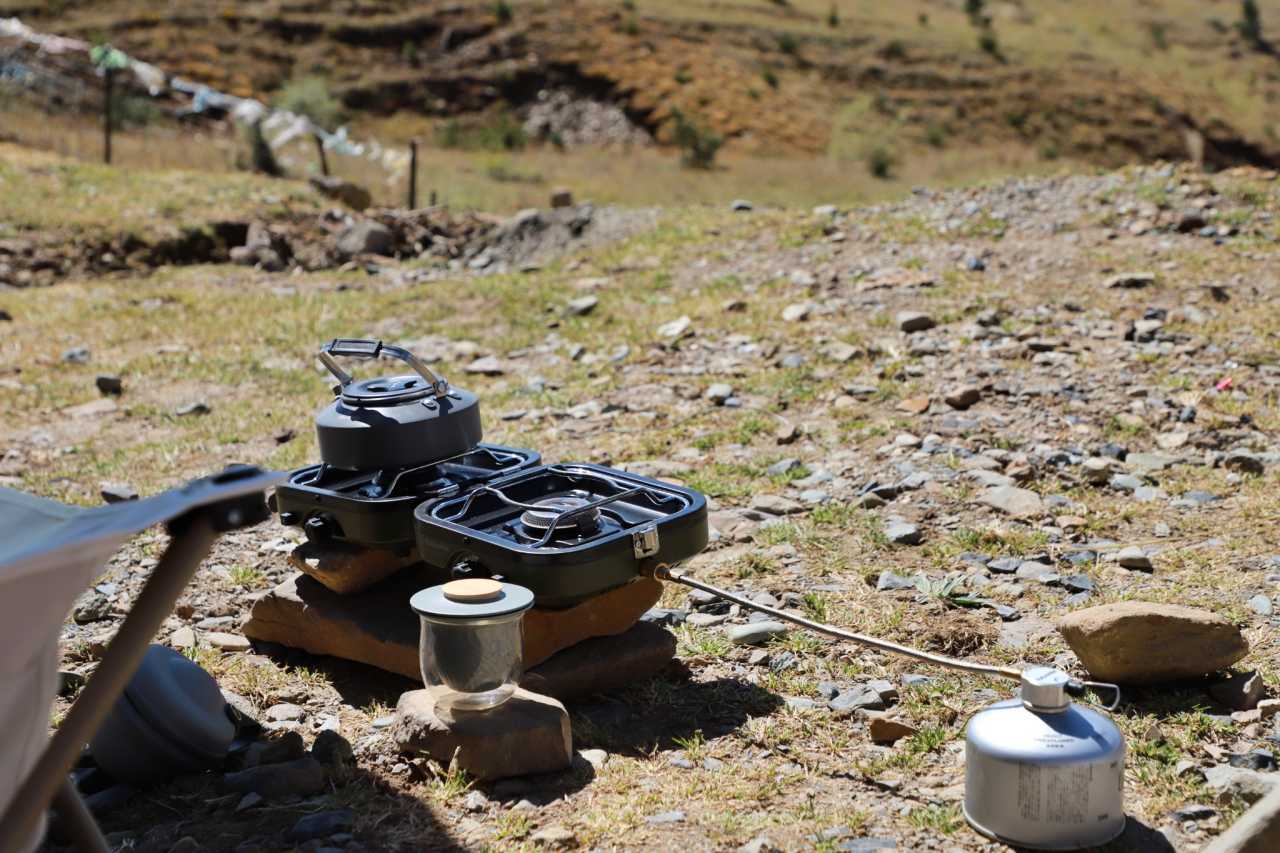
 Pack layers (thermal base, fleece, windproof jacket), sturdy hiking boots, sunscreen, sunglasses, a hat, and a reusable water bottle. Bring a good camera (with backup batteries — cold drains them fast) and a power bank. Don't forget snacks, as remote areas have limited food options.
5. Can I do this trip without a car?
It's possible but challenging. Public buses connect major towns (Chengdu, Kangding, Litang), but reaching villages like Balangshengdu or Zhonglu requires hiring a local driver. For maximum flexibility and romance, self-driving is recommended. [Link: Western Sichuan car rental tips]
Final Thoughts: Why This Honeymoon Changed Us
Our Western Sichuan honeymoon was not the easiest, the most luxurious, or the most Instagrammable. But it was, without question, the most meaningful. We didn't just see beautiful places — we faced challenges together, laughed at our mishaps, and found strength in each other.
If you're considering a honeymoon that goes beyond the typical beach resort, I urge you to look at Western Sichuan. It's a place where love is tested and deepened, where every mountain climbed becomes a shared memory, and where the phrase "finding a new height of love" takes on a literal and metaphorical meaning.
Ready to plan your own Sichuan plateau honeymoon? Start by mapping out your route, booking guesthouses in advance, and packing your sense of adventure. The mountains are waiting.
[Link: Complete Western Sichuan travel guide for first-timers]
Have you experienced a unique honeymoon destination? Share your story in the comments below!
You may also like