A Five-Day Deep Dive into Chengdu: From Wuhou Shrine’s Millennia-Old Loyalty to Sanxingdui’s Ancient Mysteries
Meta Description: Explore Chengdu in 5 days: Visit Wuhou Shrine, Sanxingdui, Dujiangyan, and more. This SEO-optimized itinerary blends history, culture, and modern charm for an unforgettable Sichuan adventure.
Introduction: Why Chengdu Deserves a Spot on Your Travel List
Chengdu is more than just a city of spicy hotpot and giant pandas. It’s a living museum where ancient history meets modern vitality. Whether you’re a history buff drawn to the legendary loyalty of Zhuge Liang at Wuhou Shrine or a mystery lover fascinated by the bronze masks of Sanxingdui, Chengdu offers a five-day journey that’s both culturally rich and effortlessly enjoyable.
In this guide, we’ll walk you through a carefully crafted itinerary that balances iconic landmarks, hidden gems, and local flavors. By the end, you’ll know exactly how to maximize your time in this captivating city.
Trip Overview: Five Days, Four Nights — Stay Near Chunxi Road
Why Chunxi Road Is the Perfect Base
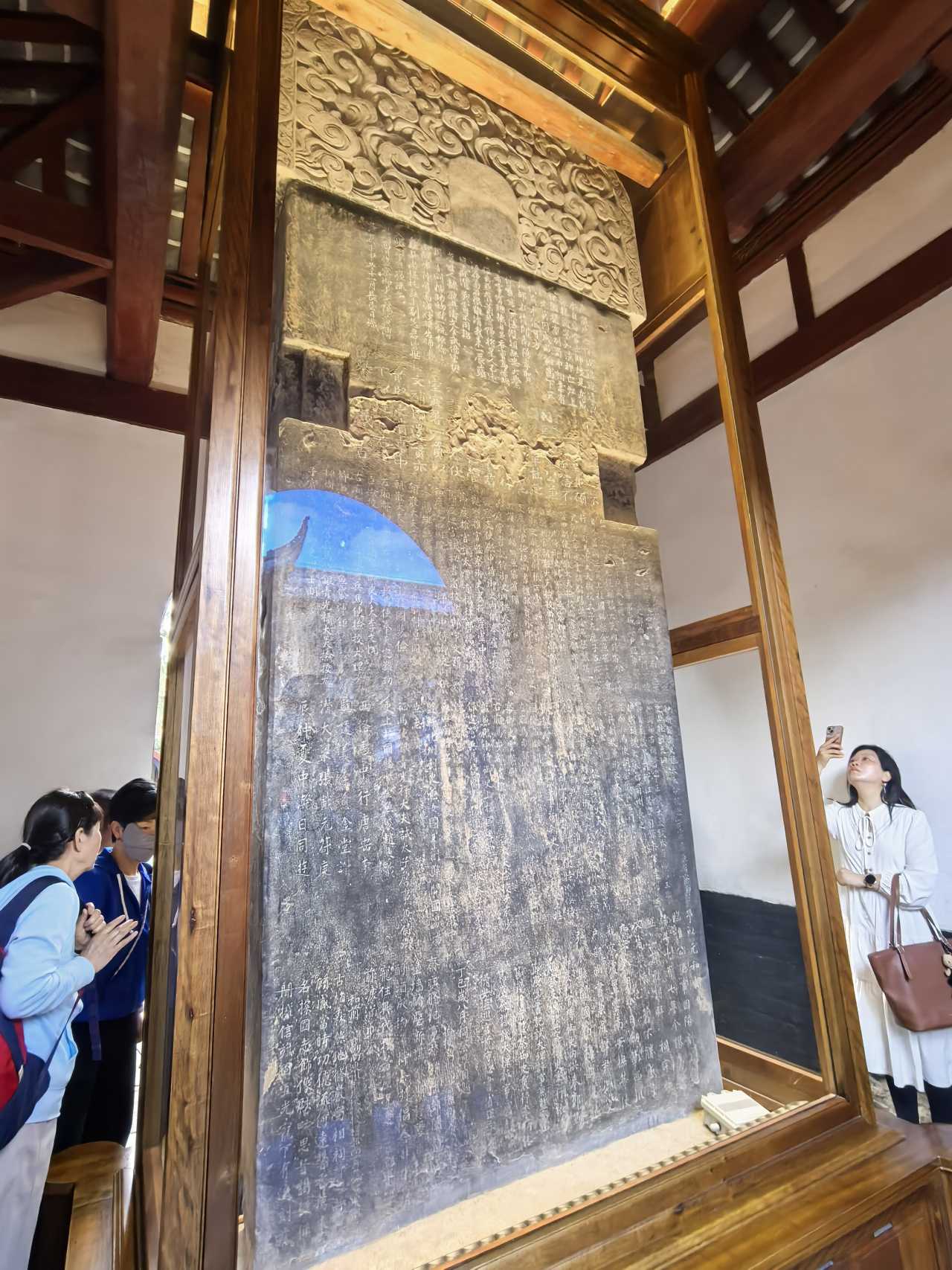
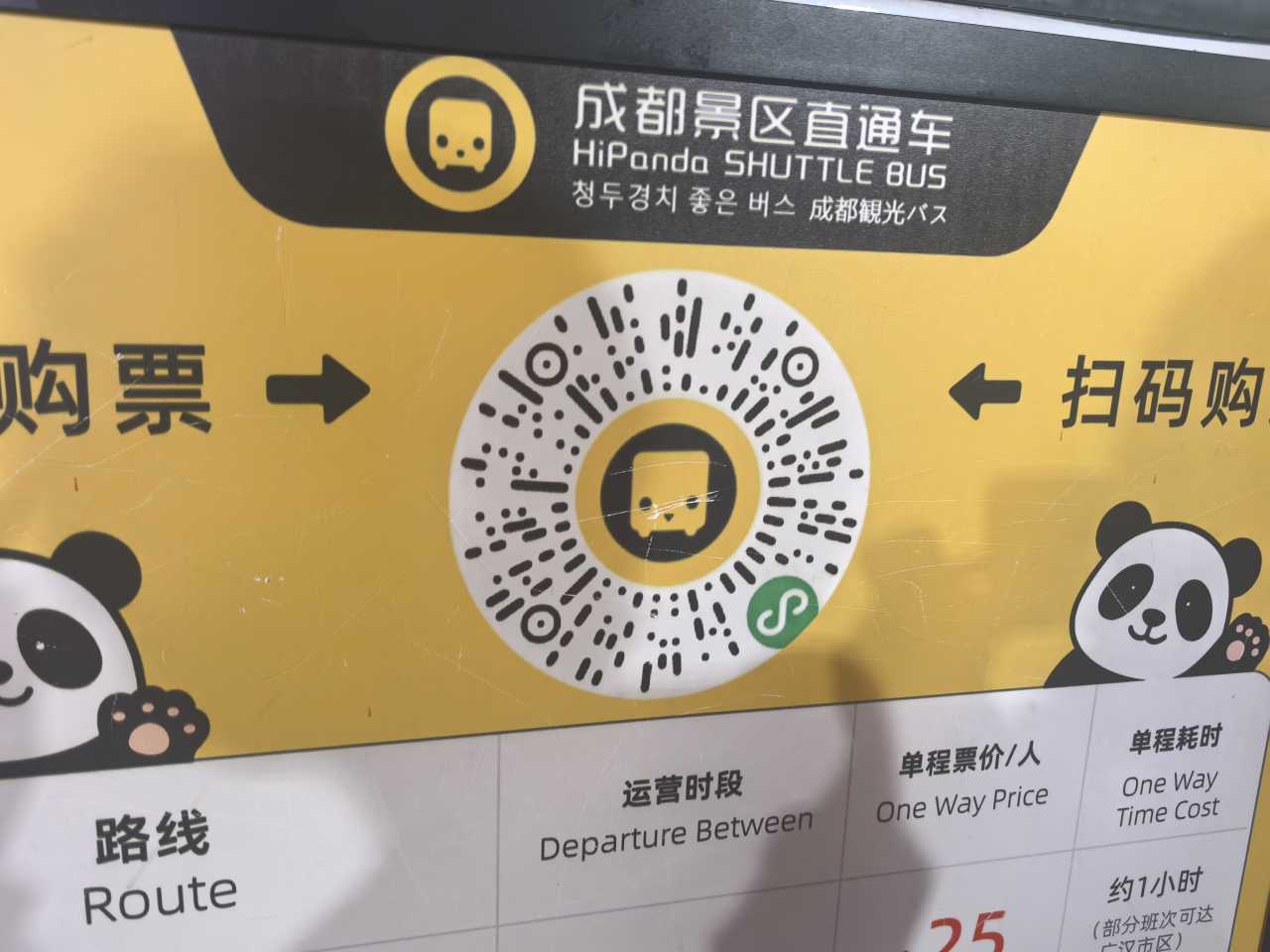
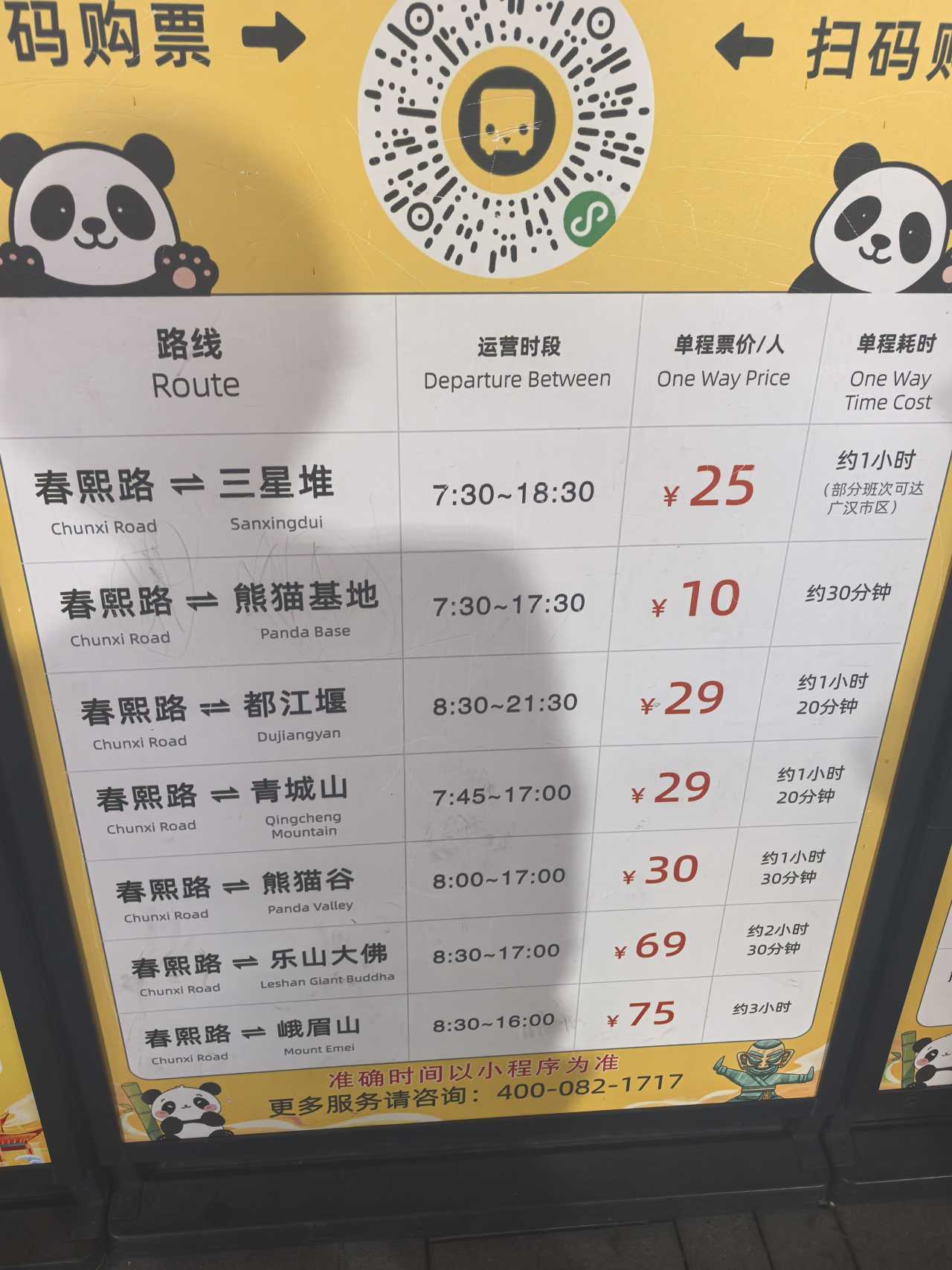
I chose accommodation near Chunxi Road, just a five-to-ten-minute walk from the famous “climbing panda” sculpture. The location couldn’t be more convenient. Not only is everything you need for eating, drinking, and exploring right at your doorstep, but there’s also a Chengdu tourist bus stop next to the climbing panda. While it’s not an official city bus service, the prices are affordable, and I used it for trips to Sanxingdui, Dujiangyan, and Qingcheng Mountain. Best of all, you can change your ticket for free at any time on the same day, with no limit on changes. During the off-season, you can book in advance or scan a QR code on the spot—very flexible.
Sample Itinerary
| Day | Activities |
|---|---|
| Day 1 | Arrive in Chengdu, visit Wuhou Shrine |
| Day 2 | Sanxingdui Museum + Wenshu Monastery |
| Day 3 | Dujiangyan Irrigation System + Du Fu Thatched Cottage |
| Day 4 | Qingcheng Mountain (Front Mountain) + Kuanzhai Alley |
| Day 5 | Daci Temple, fly back to Shanghai |
Day 1: Wuhou Shrine — Where Loyalty Lives Forever
From an Online Novel to a Real Obsession
When people think of the Three Kingdoms period, they often recall heroic tales from Romance of the Three Kingdoms. My own knowledge isn’t deep, but TV series like The Advisors Alliance reignited my interest. I was once drawn to strategists like Guo Jia and Xun Yu, viewing Cao Cao through rose-tinted glasses. But an online novel called The Three Kingdoms Wage Earner in a Bleak World changed everything. It helped me see Liu Bei in a new light—his insistence on never abandoning the common people during chaotic times is truly remarkable.
What sealed my obsession with Wuhou Shrine was a comment left in the novel’s bonus chapter section: “I remember visiting the Wuhou Shrine in Chengdu and seeing a graffiti scrawl on the wall that read: ‘Chancellor, let’s go on the Northern Expedition.’ In that moment, tears welled up in my eyes.”
Why Zhuge Liang “Lives Longer” Than Sima Yi
Many people admire Sima Yi for living longer. But if Sima Yi won through longevity, Zhuge Liang won through the hearts of people across the ages. Consider this: Zhuge Liang captured and released Meng Huo seven times, winning him over through psychological warfare. Sima Yi, on the other hand, massacred all males over fifteen in Liaodong. As the saying goes, “The highest good is like water; the highest form of warfare is to outthink the enemy.” No wonder Chancellor Zhuge wore himself out and died young. But if there’s a world like the one in Coco, I believe Zhuge Liang would live far longer than Sima Yi.
Stories Within Wuhou Shrine
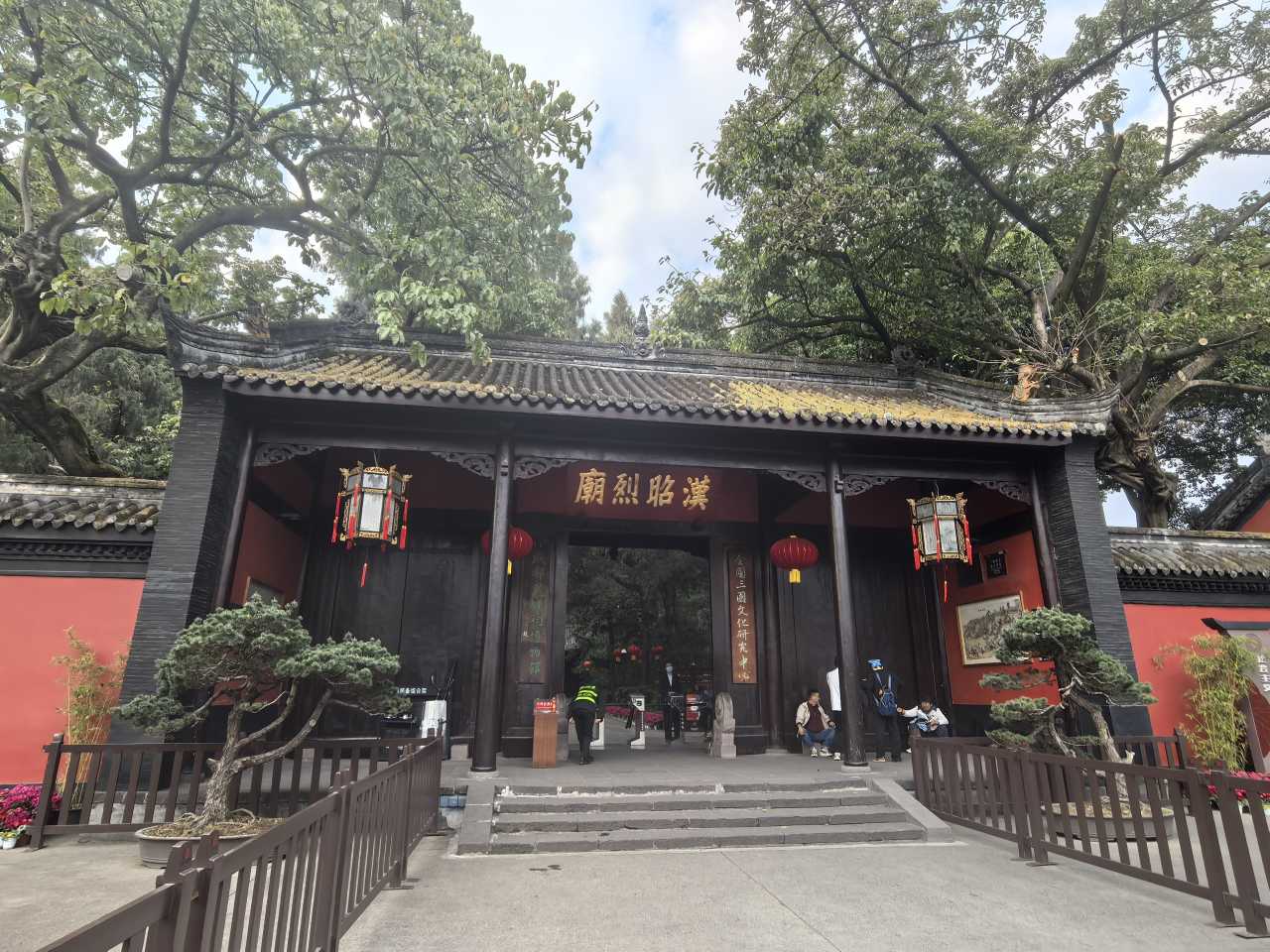
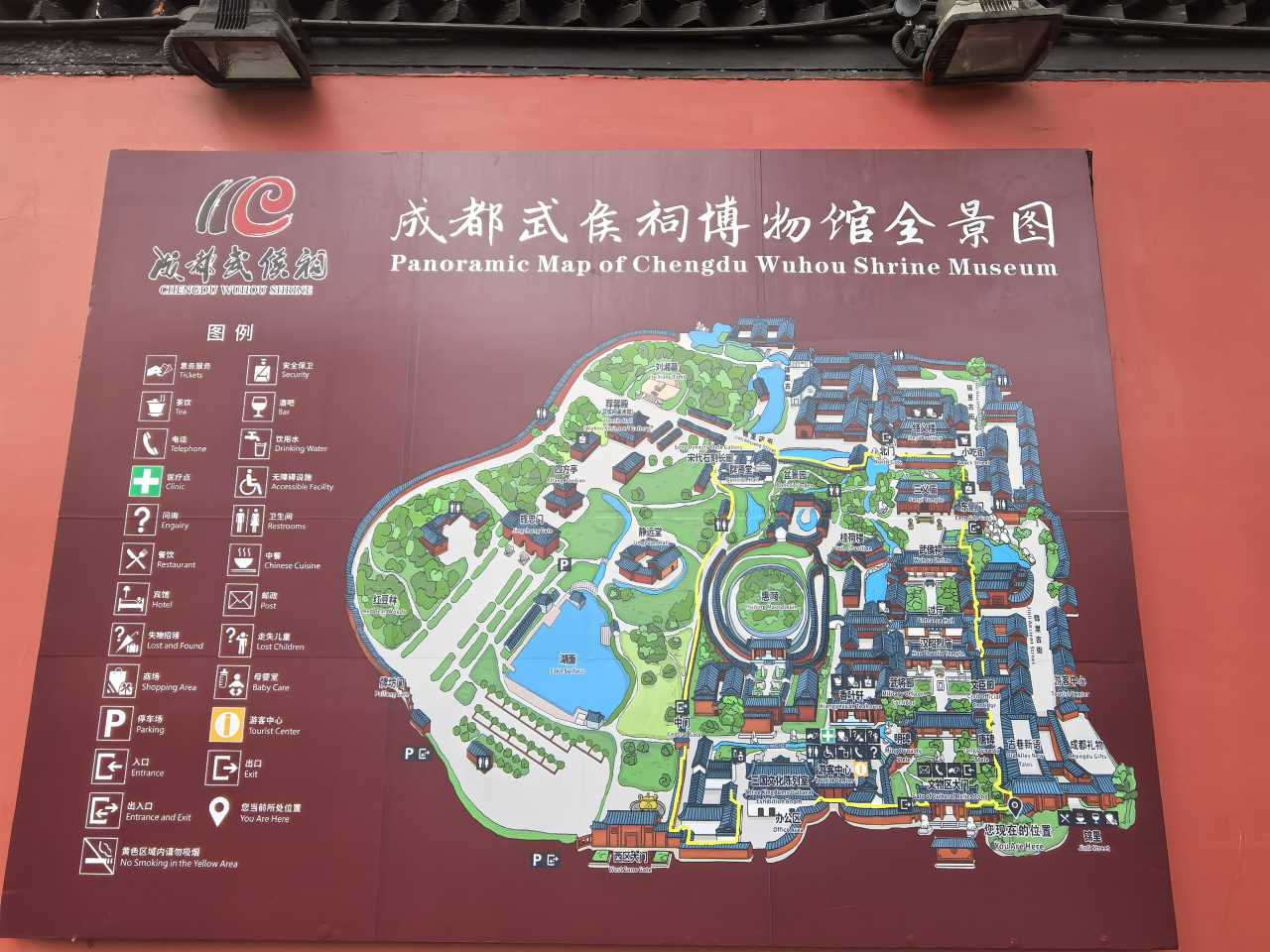
Wuhou Shrine is the only temple in China where a ruler and his ministers are enshrined together. The name “Wuhou” combines “Wuxiang Marquis” and “Loyal and Martial Marquis”—“Loyal” refers to Zhuge Liang’s unwavering dedication, and “Martial” to his ability to secure the nation through military strength.
The Tang Stele and Ming Stele: Witnesses to History
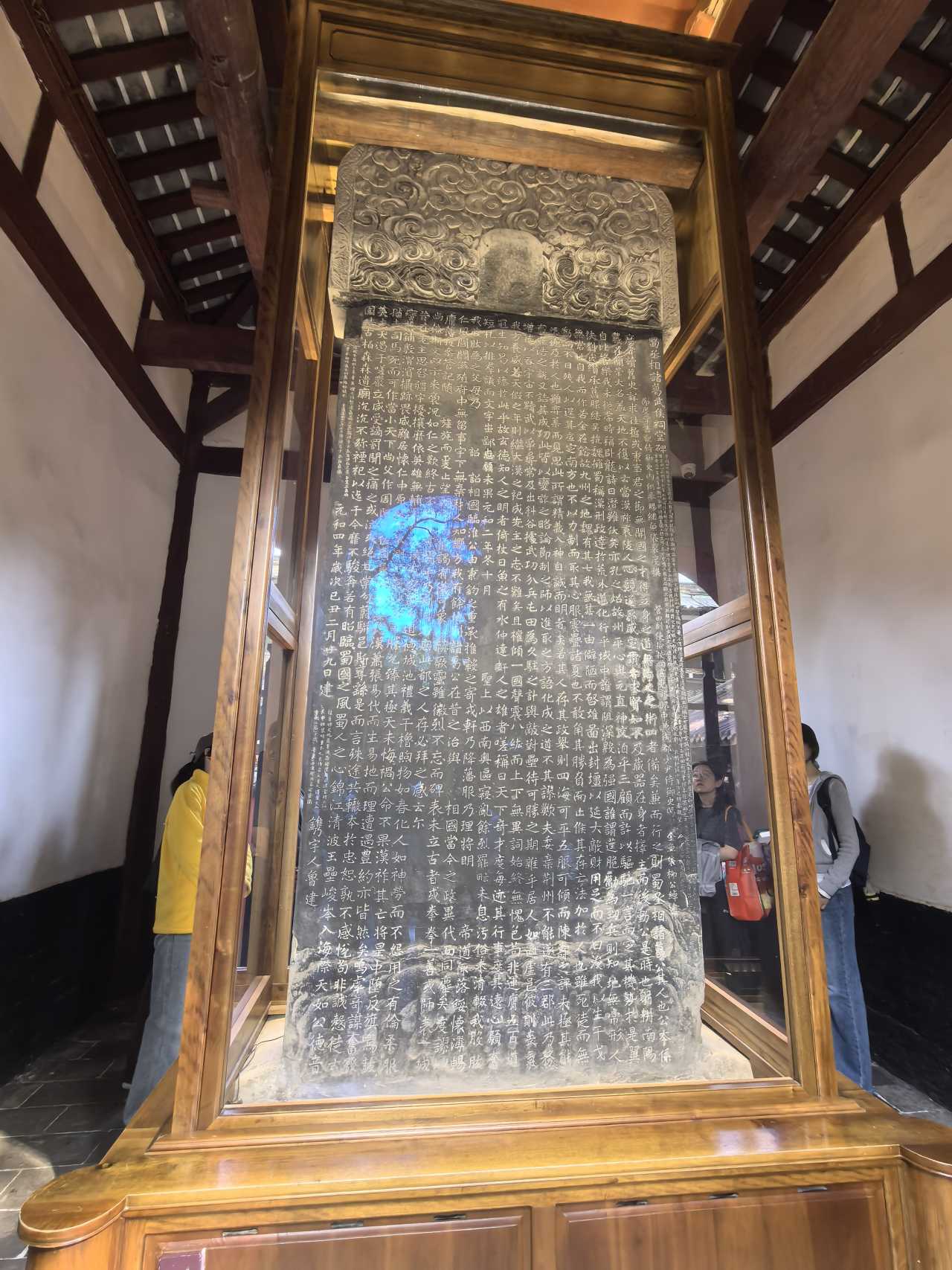
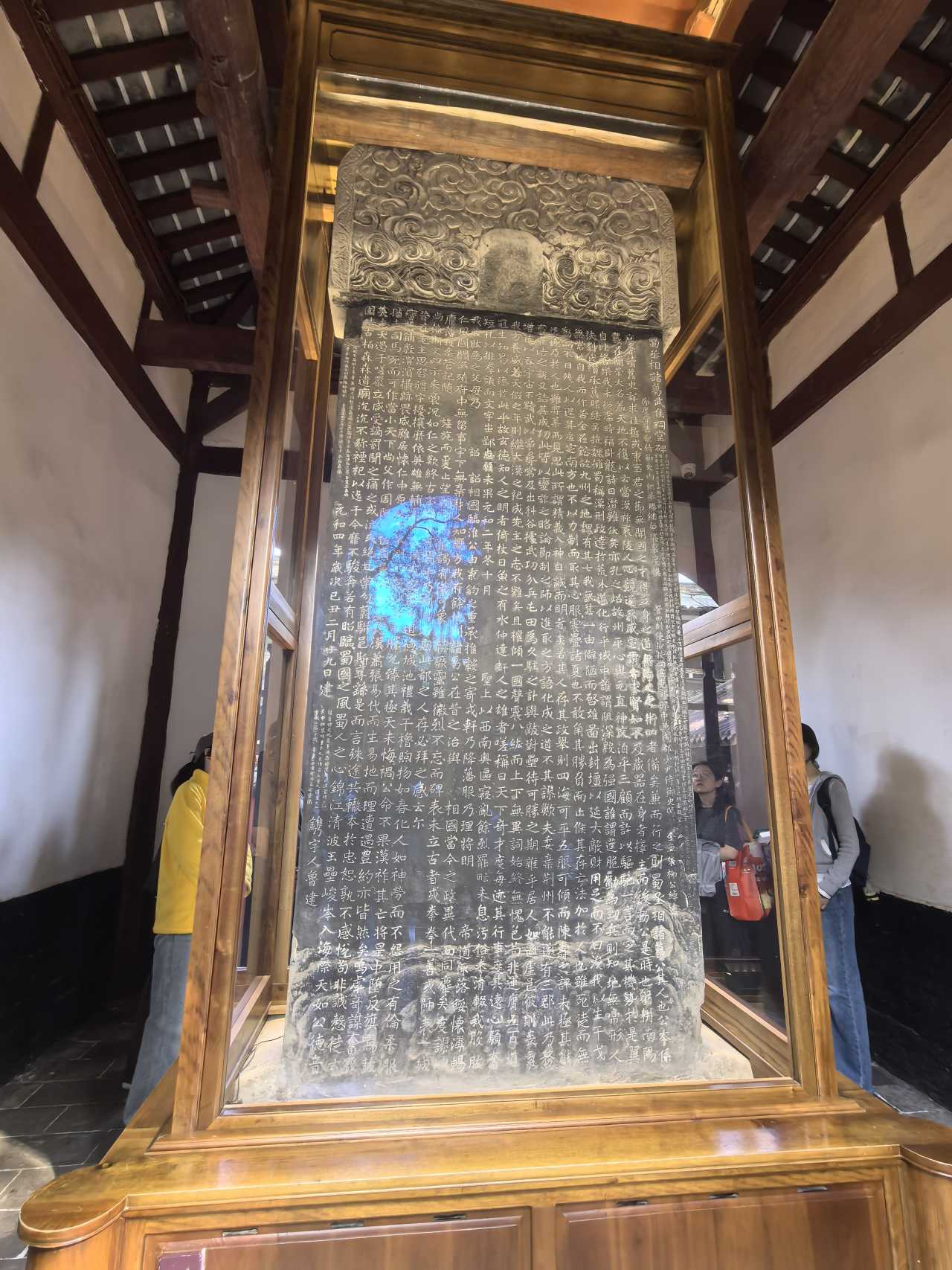
Upon entering the main gate, you’ll see three stele pavilions on each side. The famous Tang Stele, inscribed by Tang dynasty chancellor Pei Du, calligraphed by Liu Gongchuo, and carved by master craftsman Lu Jian, is known as the “Stele of Three Perfections.” Pei Du noted that many ancient sages lacked either the integrity to serve a ruler or the talent to found a state—yet Chancellor Zhuge possessed all four qualities. The stele is covered with inscriptions and poems from officials and scholars dating back to the Song dynasty—sixteen poems in total.
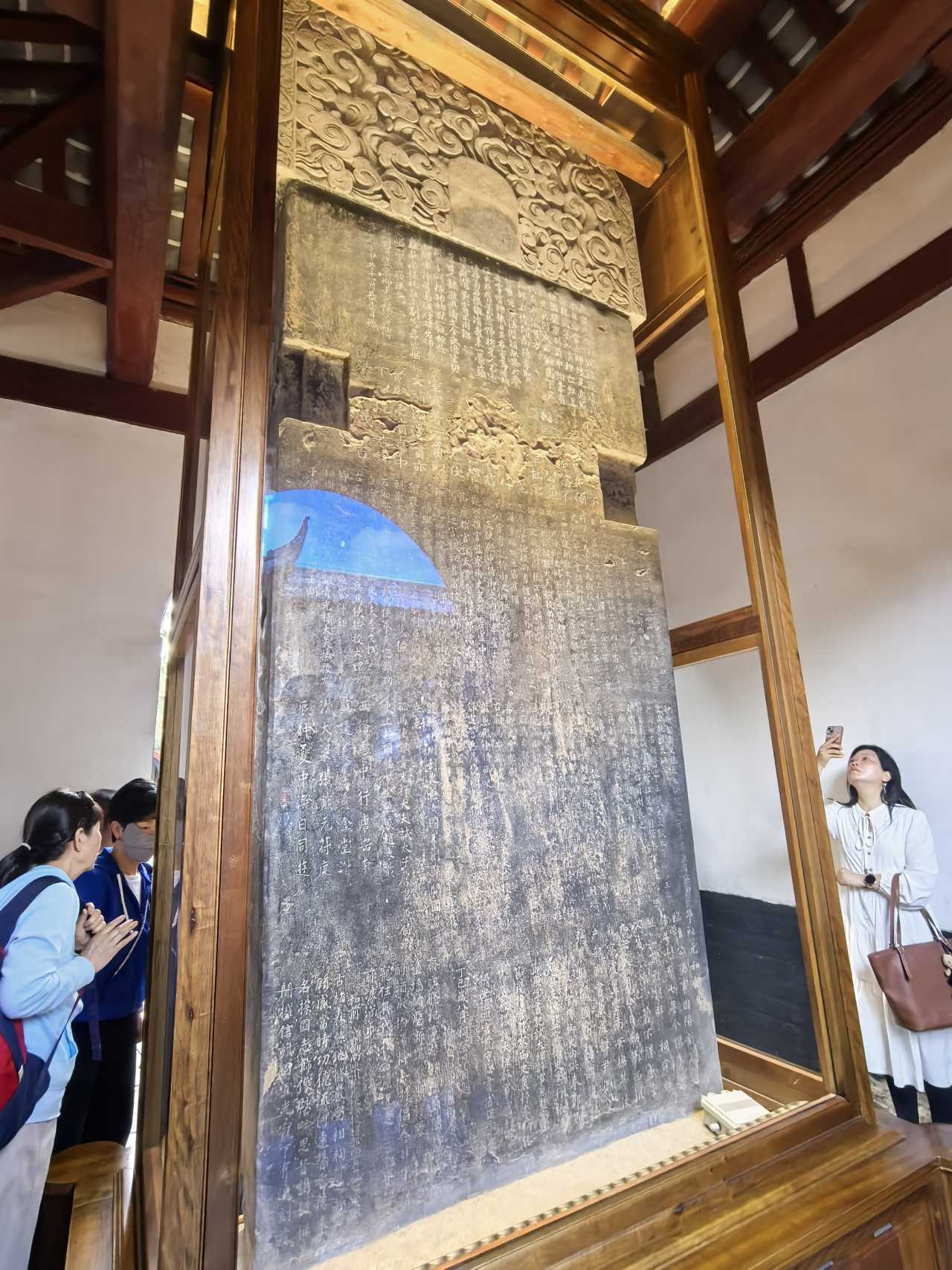
The Ming Stele was erected by Zhang Shiche, the Ming dynasty governor of Sichuan. He mentions that Emperor Zhu Yuanzhang ordered biannual sacrifices, and later the Prince of Shu, Zhu Chun, merged the temples of Liu Bei and Zhuge Liang into one.
“A Brilliant Ruler and Virtuous Ministers for Eternity” and the Hall of Liu Bei
The second gate bears the inscription “明良千古” (Ming Liang Qian Gu)—note that “明” uses the “eye” radical, an ancient variant. “Ming” refers to a wise ruler (Liu Bei), “Liang” to loyal ministers (Zhuge Liang and others), and “Qian Gu” means eternal. Passing through, you’ll find the Hall of Civil Officials and the Hall of Military Officers. The walls are engraved with the First Memorial to the Throne on the Northern Expedition and the Second Memorial to the Throne on the Northern Expedition. The Song dynasty poet Lu You wrote, “The ‘Memorial on the Expedition’ is truly famous across the ages; for a thousand years, who can match it?”
[Link: Explore more about Three Kingdoms history in China]
Day 2: Sanxingdui Museum — The Ancient Mysteries of Shu
Why Sanxingdui Is a Must-Visit

Sanxingdui is one of the most important archaeological discoveries of the 20th century. The bronze masks, gold foils, and ivory artifacts date back over 3,000 years, offering a glimpse into the mysterious ancient Shu civilization. Unlike other Chinese civilizations, Sanxingdui has no written records, leaving scholars puzzled about its origins and sudden disappearance.
What to See at Sanxingdui
- The Bronze Masks: Giant, exaggerated faces with protruding eyes and wide ears—these are unlike anything else in Chinese archaeology.
- The Golden Sun Bird: A delicate gold foil artifact that symbolizes the Shu people’s worship of the sun.
- The Ivory and Jade Collection: Evidence of trade and ritual practices that remain unexplained.
Pro Tip: Book your tickets in advance, as Sanxingdui is extremely popular. The museum is about an hour’s drive from Chengdu.
[Link: Discover more ancient Chinese civilizations]
Day 3: Dujiangyan Irrigation System + Du Fu Thatched Cottage
Dujiangyan: Engineering Genius from 256 BC
The Dujiangyan Irrigation System is a UNESCO World Heritage site and a marvel of ancient engineering. Built over 2,200 years ago, it still irrigates over 5,000 square kilometers of farmland today. Unlike modern dams, Dujiangyan uses a non-damming approach, channeling water naturally through a series of levees and canals.
Key Highlights: - The Fish Mouth Levee: Divides the Min River into inner and outer streams. - The Flying Sand Weir: Controls sediment and floodwaters. - The Bottleneck Channel: Directs water into the irrigation system.
Du Fu Thatched Cottage: A Poet’s Sanctuary
Du Fu, one of China’s greatest poets, lived in Chengdu during the Tang dynasty. His thatched cottage is now a museum dedicated to his life and work. Stroll through the bamboo-lined paths and read his famous poems carved on stone tablets.
[Link: Learn about Tang dynasty poetry and culture]
Day 4: Qingcheng Mountain + Kuanzhai Alley
Qingcheng Mountain: A Taoist Retreat
Qingcheng Mountain is one of the birthplaces of Taoism. The front mountain is easier to hike and offers stunning views of temples, pavilions, and ancient trees. The back mountain is more rugged but rewards you with waterfalls and quieter trails.
What to Do: - Visit the Jianfu Temple, built during the Tang dynasty. - Take the cable car for panoramic views. - Enjoy a vegetarian meal at a Taoist monastery.
Kuanzhai Alley: Chengdu’s Hipster Hub
Kuanzhai Alley is a restored historic district with three parallel lanes: Kuan Alley, Zhai Alley, and Jing Alley. It’s the perfect place to shop for souvenirs, try local snacks, and snap photos of traditional architecture.
Day 5: Daci Temple + Departure

Daci Temple: A Peaceful Goodbye
Daci Temple is one of Chengdu’s oldest Buddhist temples, dating back to the Tang dynasty. It’s less crowded than Wenshu Monastery, making it a serene spot for reflection before your flight.
Don’t Miss: The ancient pagoda and the peaceful courtyard garden.
FAQ Section
1. How many days do I need to explore Chengdu?
Five days is ideal. It gives you enough time to visit major attractions like Wuhou Shrine, Sanxingdui, Dujiangyan, and Qingcheng Mountain without feeling rushed.
2. Is Sanxingdui worth visiting?
Absolutely. Sanxingdui offers a unique glimpse into a mysterious ancient civilization with no written records. The bronze masks and gold artifacts are unlike anything else in China.
3. What is the best time to visit Chengdu?
 Spring (March to May) and autumn (September to November) offer pleasant weather. Avoid summer (June to August) due to heat and humidity.
4. How do I get around Chengdu?
The Chengdu tourist bus is affordable and flexible, with free same-day ticket changes. Taxis and ride-hailing apps like Didi are also convenient.
5. What should I eat in Chengdu?
Don’t miss hotpot, mapo tofu, dan dan noodles, and kung pao chicken. For a real treat, try the local street food at Jinli Ancient Street.
Internal Linking Suggestions
- [Link: How to Plan a Trip to Sichuan Province]
- [Link: Top 10 Things to Do in Chengdu]
- [Link: A Beginner’s Guide to Chinese History]
Call to Action
Ready to dive into Chengdu’s ancient mysteries and modern charm? Start planning your five-day adventure today. Book your flights, reserve your tickets for Wuhou Shrine and Sanxingdui, and pack your bags for an unforgettable journey. Don’t forget to share your favorite moments with us in the comments below!
Have you visited Chengdu? What was your favorite experience? Let us know!
You may also like


