Into the Hidden Village by the Yalong River — Mengdong: A Soulful Journey Through a Primitive Wilderness

Meta Description: Discover Mengdong, a hidden village by the Yalong River in Sichuan. Trek through primeval forests, cross treacherous roads, and experience untouched Tibetan plateau beauty. A soulful adventure awaits.
Deep within the folds of the Sichuan-Tibet Plateau, amid the ceaseless roar of the surging Yalong River, lies a corner nearly forgotten by modern civilization — Mengdong. There is no cell phone signal here, no paved roads, no convenience stores. Yet it possesses a magic that makes people willing to endure a three-day, two-night trek, brave the bites of venomous insects, and weather the onslaught of rain and wind. When your feet finally touch this land, when your eyes meet the eternal snows of Mèdì Gònggá (Medi Gongga Mountain), when you stand on a flower-covered ridge and gaze into the distance, you will understand: some places are worth measuring with your steps; some landscapes are worth trading with your sweat.
This is not just a travelogue—it's a guide for those who seek the raw, untamed beauty of the Yalong River hidden village and the primitive wilderness trek that leads there.
The Spark: How a Photograph of Mèdì Gònggá Became an Obsession
It all started with a photo sent by a fellow trekker named Amin. In the image, Mèdì Gònggá stood majestically, its snow-capped peak towering over a turquoise highland lake — Changhaizi (Long Lake). That particular shade of blue, unique to the high plateaus, that sense of isolated tranquility, struck me straight in the heart. For someone who had trekked the plateaus countless times, this was the ultimate temptation. So I found a like-minded companion, and we set off on the journey to Mengdong village trek.
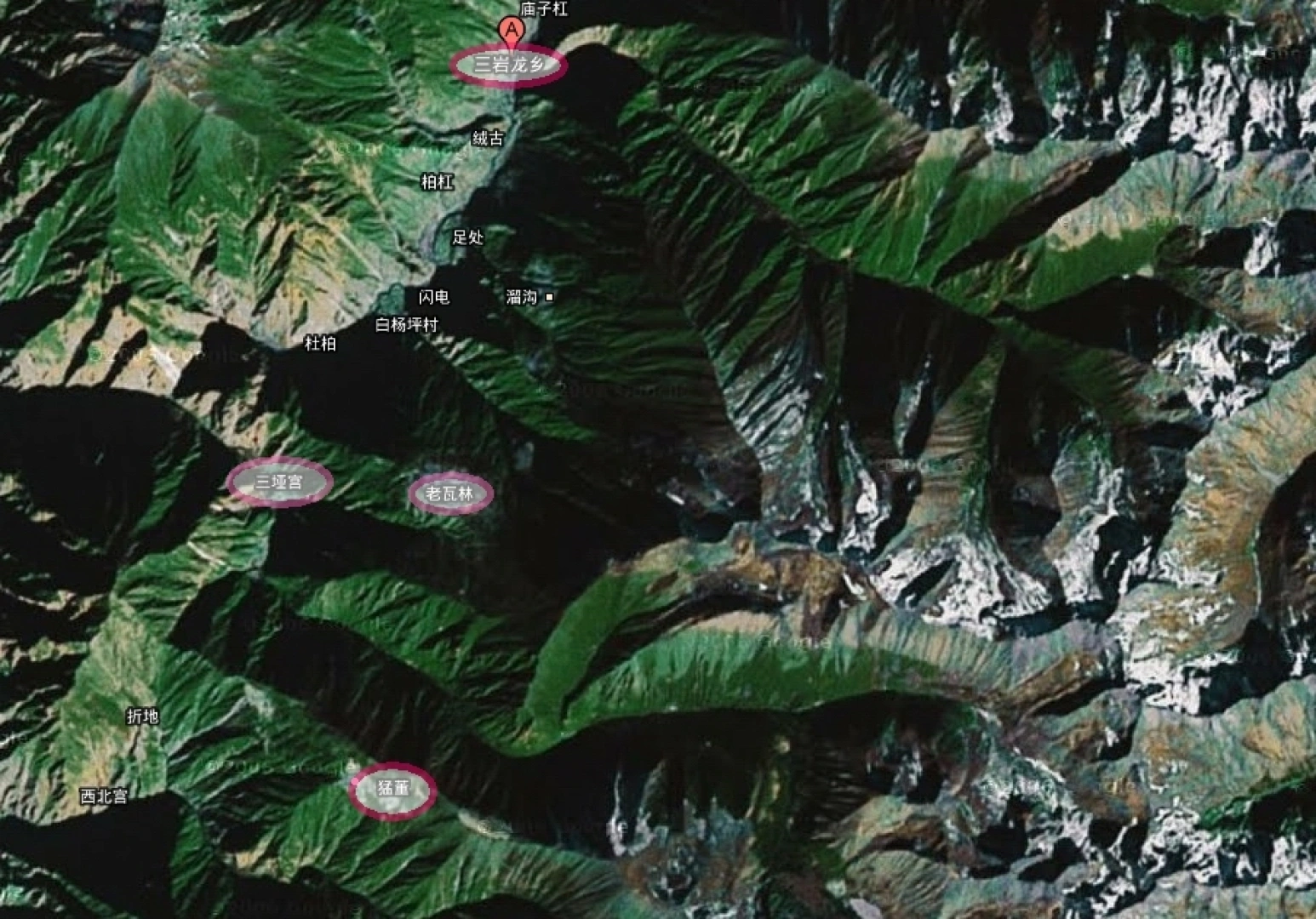
Our trip began in Jiulong County, in the Garzê Tibetan Autonomous Prefecture of Sichuan Province, with our destination being Mengdong Village in Sanyanlong Township. It is a place whose name barely appears on any map, yet it carried my deepest longing for the highlands.
Day One: Jiulong County to Sanyanlong Township — A Bone-Rattling Ride Through the Sichuan-Tibet Plateau
A Stroke of Luck with a Cargo Truck
There is no bus from Jiulong County to Sanyanlong Township, so we had to try our luck across from the county square. Fortunately, a cargo truck happened to be heading that way. What moved us even more was that the locals on board insisted on giving us the cab seats, climbing onto the open cargo bed themselves. We thanked them profusely, tossed our heavy backpacks onto the truck, and settled into the relatively warm cabin.
Roads More Treacherous Than "Tōngmài" — A Dangerous Mountain Road Challenge
The road to Sanyanlong was one of the most dangerous I have ever traveled. Shortly after departure, the truck turned onto a winding dirt road clinging to the cliffside. Days of rain had turned the surface into a muddy, pockmarked mess. In some places, we had to ford streams; in others, fresh landslide scars were clearly visible. At the narrowest points, the wheels nearly grazed the cliff edge. Compared to the famous "Tōngmài Death Road" on the Sichuan-Tibet Highway, this was even more hair-raising. The driver handled the wheel with extreme care, and every turn sent my heart racing.
An Unexpected Surprise: Purple Rhododendrons and a Highland Lake
After nearly two hours of bumpy travel, the truck climbed onto a wide, flat plateau. The sight before me instantly erased all fear — clusters of purple rhododendrons, blooming wildly and passionately. A highland lake lay quietly at the foot of a snow-capped mountain, nestled within a sea of flowers. I was so excited I almost screamed, but the truck didn't stop. The driver was accelerating across this rare stretch of flat road. The plateau wind howled past, rippling the lake's surface, and my eyes were locked onto that long ribbon of color until it faded into the distance.
Poetry in the Valley: Tibetan Plateau Landscapes

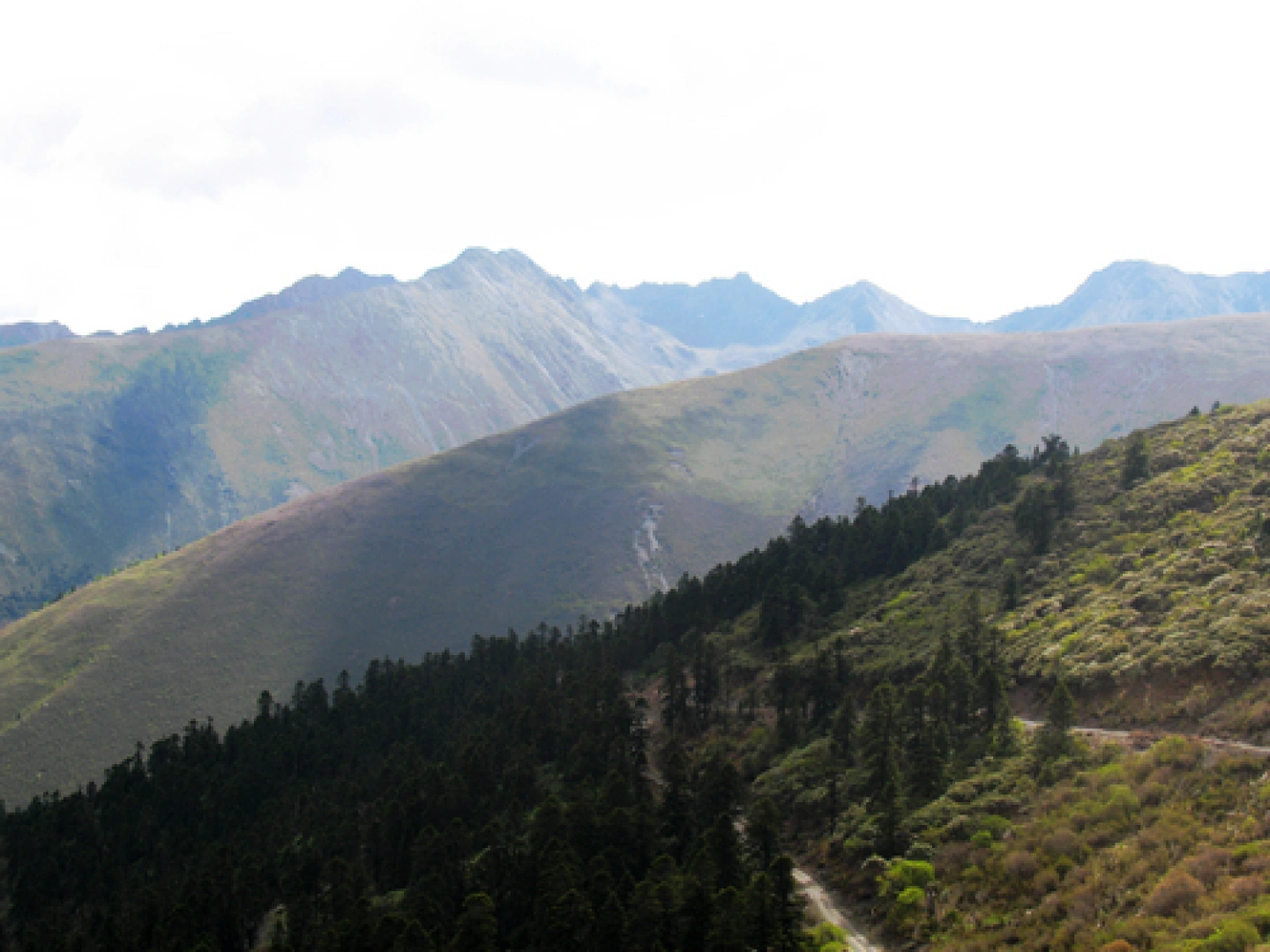
The truck continued through a deep, narrow valley, but my mood was surprisingly wonderful. In the spring highlands, rhododendrons were everywhere. Layers of lush pine and fir forests created a harmonious, beautiful picture. A small stream gurgled happily through the valley, singing as it flowed. Yellow galsang flowers bloomed all around. Occasionally, we passed flat areas with pastures, yaks, cattle, and the laughter of Tibetan villagers. Finally, the truck stopped, allowing us to feel the peace and beauty of this land.
Arriving in Sanyanlong Township — A Remote Tibetan Settlement
The distance from Jiulong County to Sanyanlong Township is only 79 kilometers, but it took us over four hours. At noon, the truck finally rolled into the township. Following the driver's directions, we found the township Party Committee and government office — a small yard with two rows of simple, tidy bungalows. In the yard sat an old satellite dish, seemingly the only link to the outside world.
The Warm-Hearted Party Secretary
That day, Party Secretary Ma was in his office. This young man in his thirties was visibly pleased and enthusiastic when he learned we were tourists collecting information. He invited us into his office, poured tea, and called in a few staff members to chat and introduce the township. Secretary Ma insisted we stay for lunch and ordered the kitchen to kill a chicken for us. Unable to refuse such hospitality, we accepted.
Lunch was held on the porch outside the office — a small table with one soup and four dishes, all generously portioned. The most unforgettable was the local chicken soup: tender meat, rich flavor. Even now, the memory makes my mouth water.
A Town Cut Off from the World — No Cell Signal, No Internet
After lunch, I wandered alone through the township. Sanyanlong is tiny — a narrow dirt road lined with only about 40 houses. There was absolutely no cell phone signal; in fact, it had disappeared the moment we entered the township. The only means of external communication was a single satellite phone at the government office. If the satellite signal was weak, this place was completely isolated. I hadn't anticipated this before departure.
Walnut trees along the road were heavy with green, unripe fruit. Children played in front of their houses. To the south, a swift river cut through the town, crossed by a simple wooden bridge leading to a small water-powered mill. I sat on the gravel by the river, quietly watching the sunset, soaking in the unique tranquility of this land.
Changhai Inn — The Only Guesthouse in Sanyanlong
That night, we checked into the only guesthouse in Sanyanlong — "Changhai Inn." It was a building made entirely of wood, with only five or six rooms. The innkeepers were a simple, honest couple who lit a warm stove for us. During our chat, we learned that we were only the second group of tourists to visit Sanyanlong this year; the first had been two Israelis.
As night fell, the temperature plummeted. The light from the small shop across the street was still on, but there were no customers. No TV, no computer, no cell phone signal. I returned to my room, accompanied only by the warm glow of a lamp. Tomorrow, the real journey would begin.
Day Two: Sanyanlong to Changhaizi — A Pilgrimage Through Primeval Forest
The Guide and the Horses — Preparing for the Mengdong Trek
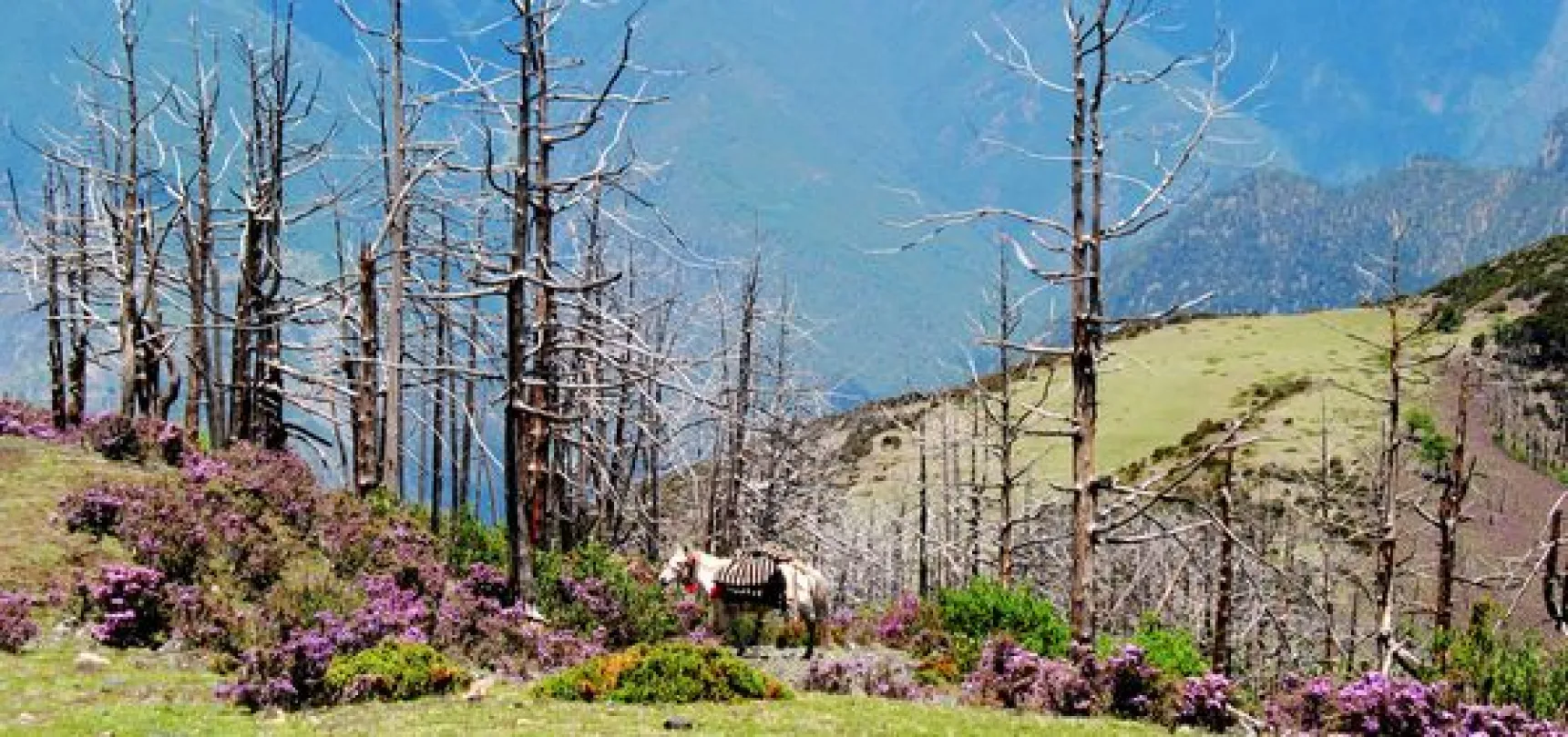
At 8 a.m., our guide Nyima Tsering was already waiting at the inn gate with two horses. Tsering is the village head of Mengdong. He had come to the township on business the day before, and Secretary Ma had arranged for him to be our guide. Wasn't that a stroke of luck?
My companion chose an eight-year-old white horse, while I picked a four-year-old red pony. Considering the weight distribution, the white horse carried no load, while the red pony had to carry both our backpacks.
Departure: The Steep Mountain Path
Leaving the township, we headed south along the river road. The morning sun cast a warm glow over the layered hillsides, making the plants shimmer. The stream beside us sang like a bird as it flowed. Since cars or motorcycles occasionally passed, which could spook the horses, we had to walk.
Soon, we reached the foot of a mountain — the true starting point for the trek to Mengdong. From the very beginning, we had to climb along a nearly 60-degree steep cliff. The narrow trail was sandy and rocky, barely wide enough to be called a "horse track." Though we weren't carrying our packs, the relentless steep slopes left us breathless. But looking back, there were always breathtaking views — in the valley below, the river snaked like a silver ribbon through emerald forests.
Through the Primeval Forest
The trail wound through dense primeval forest—moss-covered trees, fallen logs, and the earthy scent of decaying leaves. Birds called from the canopy, and occasionally we spotted wildflowers blooming in hidden clearings. The red pony followed patiently, its hooves sure-footed on the uneven terrain.
Reaching Changhaizi (Long Lake)
After hours of climbing, we finally emerged from the forest. Before us lay Changhaizi—the Long Lake—its turquoise waters reflecting the snow-capped peak of Mèdì Gònggá. The sight was so stunning that I forgot my exhaustion. We set up camp near the lake, and as the sun set, the sky turned shades of orange and pink, painting the lake in a thousand colors.
Day Three: Changhaizi to Mengdong Village — The Final Push
Descending into the Hidden Village
The next morning, we broke camp and continued our journey. The trail descended into a narrow valley, following a cascading stream. After two more hours of walking, we saw it—Mengdong Village, nestled in a green valley, its white-walled houses with red roofs dotting the landscape. Smoke rose from chimneys, and children waved from a distance.
Life in Mengdong
Mengdong is even more remote than Sanyanlong. There are no roads—only trails. The villagers live a self-sufficient life, growing barley and raising yaks. They welcomed us with warm smiles and offered us butter tea. For a moment, I felt like I had stepped back in time, into a world untouched by modernity.
The Return Journey
Reluctantly, we began our return trek. The walk back was easier, as we knew the path. We reached Sanyanlong by evening, and the next day, we hitched a ride back to Jiulong County. The journey had been grueling, but the memories would last a lifetime.
Frequently Asked Questions (FAQ) About the Mengdong Trek
1. How do I get to Mengdong Village?
Start from Jiulong County in Garzê Tibetan Autonomous Prefecture, Sichuan. There is no public transport to Sanyanlong Township, so you must hitch a ride with a cargo truck. From Sanyanlong, hire a guide and horses to trek to Mengdong.
2. Is there cell phone signal in Mengdong?
 No. There is no cell phone signal in Sanyanlong Township or Mengdong Village. The only communication is via a satellite phone at the township government office.
3. What is the best time to visit?
The best time is late spring to early autumn (May to September) when the weather is mild and rhododendrons are in bloom. Avoid the rainy season (July-August) as trails can become dangerous.
4. How difficult is the trek?
The trek is moderate to challenging. You'll climb steep, rocky trails at high altitude. A guide and horses are recommended for carrying gear.
5. What should I pack?
Bring warm clothing (temperatures drop at night), sturdy hiking boots, a waterproof jacket, sunscreen, insect repellent, a first-aid kit, and plenty of snacks. A sleeping bag is essential if camping.
Internal Linking Suggestions
- [Link: Best Tibetan Plateau treks for beginners]
- [Link: How to prepare for high-altitude hiking in Sichuan]
- [Link: Jiulong County travel guide — Gateway to hidden villages]
- [Link: Essential gear for remote wilderness treks in China]
- [Link: Tibetan culture and hospitality in remote villages]
Conclusion: A Journey Worth Taking
The Mengdong trek is not for everyone. It requires physical endurance, mental resilience, and a willingness to embrace discomfort. But for those who make the journey, the rewards are immeasurable: pristine landscapes, authentic encounters with Tibetan culture, and the profound satisfaction of reaching a place few have seen.
If you're ready to step off the beaten path and into the heart of the Sichuan-Tibet Plateau, start planning your Mengdong adventure today. Pack your bags, find a guide, and let the Yalong River hidden village change your soul.
Are you ready to answer the call of the wild?
[Link: Book a guided trek to Mengdong]
[Link: Join our community of off-the-grid travelers]
You may also like


