Winter Self-Drive in Western Sichuan: A Pilgrimage into Snow Mountains and Faith
Meta Description:
Discover the ultimate winter self-drive in Western Sichuan. From Chengdu to Daocheng Yading, experience snow mountains, sacred lakes, and plateau faith. Your complete road trip guide.
Introduction: Why Western Sichuan Should Be Your Next Winter Road Trip
Western Sichuan, a land forged by the Qinghai-Tibet Plateau, offers some of the most breathtaking landscapes on Earth. Towering snow-capped peaks, crystal-clear sacred lakes, distant chants of Buddhist scriptures, and the raw challenge of altitude sickness—this is a destination that demands both courage and reverence.
For those with an inexplicable pull toward the western wilderness, a winter self-drive in Western Sichuan is more than a vacation. It’s a pilgrimage. If you’ve ever dreamed of hiking at the foot of a snow mountain, breathing thin air, and feeling utterly small yet completely alive, this guide is for you.
Originally planned for Yunnan, the skyrocketing flight and accommodation costs forced a change of plans. So, the Western Sichuan itinerary that had been shelved for two years was resurrected. With a revised route, booked flights, and a trunk full of supplies, a spontaneous winter road trip began.
1. From Qingdao to Chengdu: First Taste of Sichuan’s Hustle and Bustle
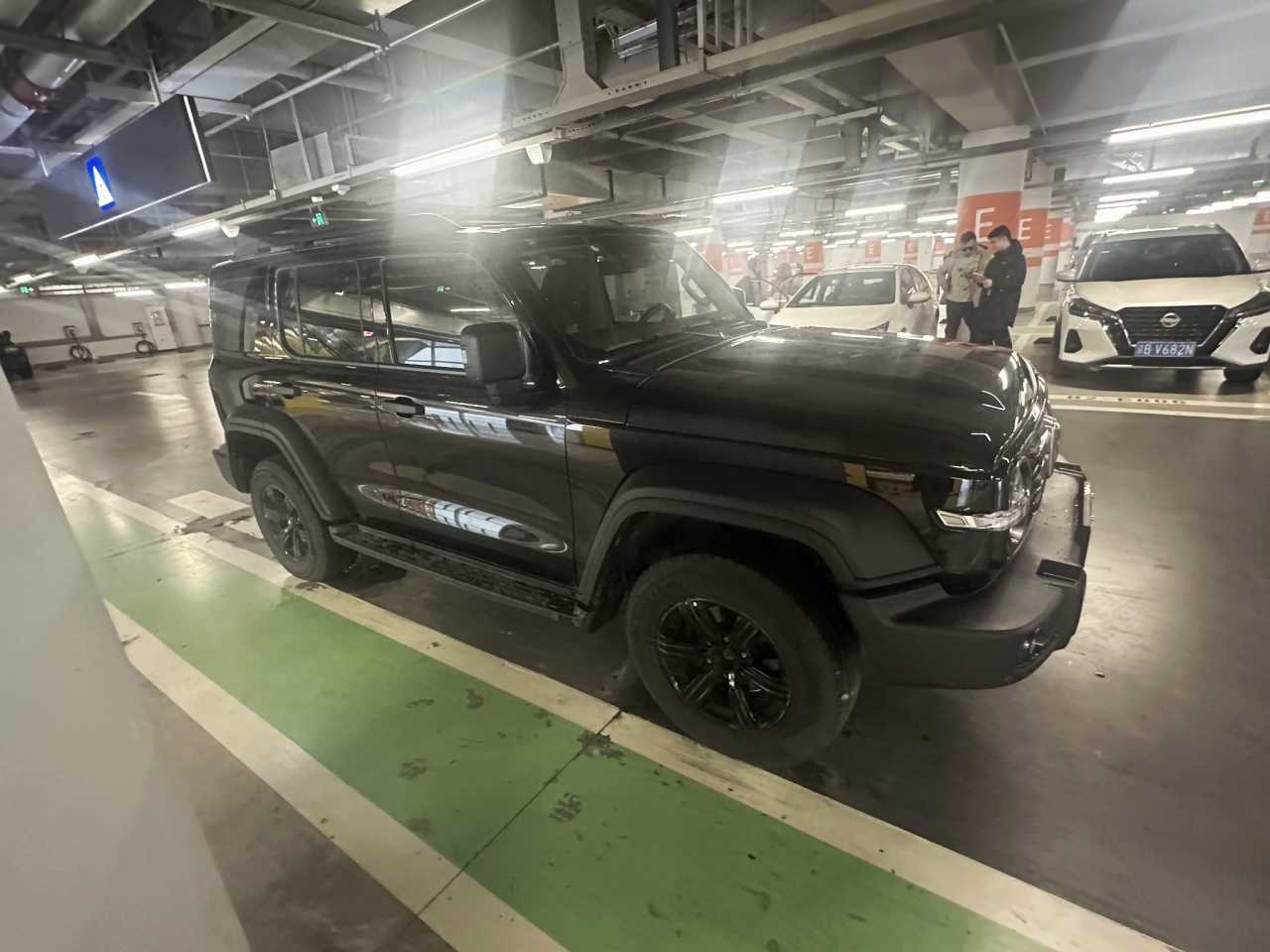
Our 6:00 AM flight touched down at Chengdu Shuangliu Airport around 10:00 AM. After collecting luggage, we met the car rental company to pick up our vehicle. As first-time renters on a winter self-drive trip, we were nervous. After a thorough inspection, we cautiously drove into the city center.
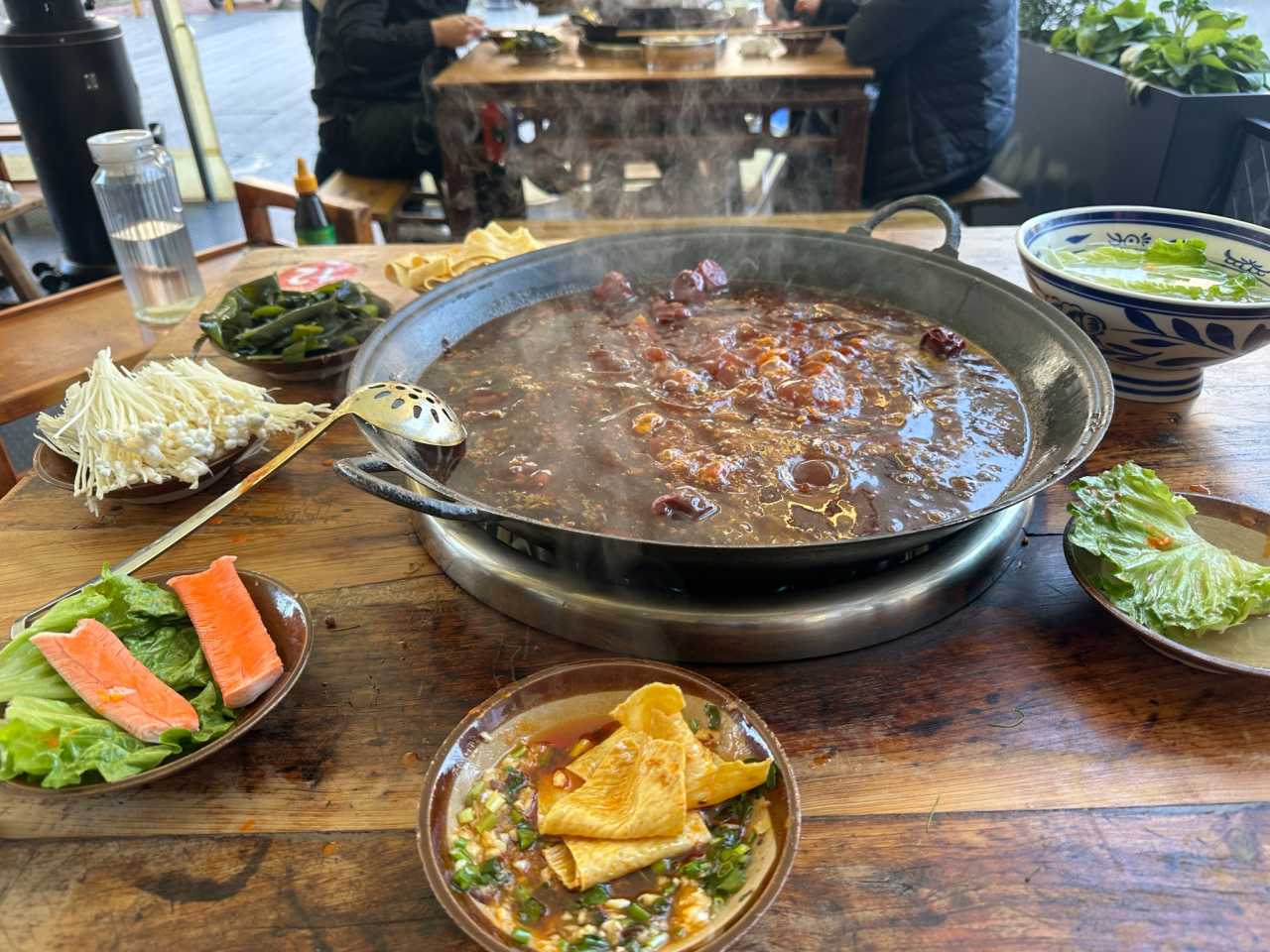
Since hotel check-in wasn’t until later, we found a Chongqing hotpot restaurant nearby. The pot was loaded with beef tallow and chili peppers—just looking at it made us sweat. Sichuan hotpot is genuinely spicy to the bone. We ate while gasping for air, our stomachs aching, but the flavor was unforgettable.
After lunch, we stocked up at the supermarket for the days ahead. We had already purchased oxygen canisters and tire snow chains online, delivered directly to the hotel. If you’re planning a winter self-drive in Western Sichuan, snow chains are absolutely essential—better safe than sorry.
2. Chengdu → Luding → Kangding → Xinduqiao → Yuzixi: First Heart-Pounding Encounter with Snow Mountains
Luding Bridge: Echoes of History on Iron Chains
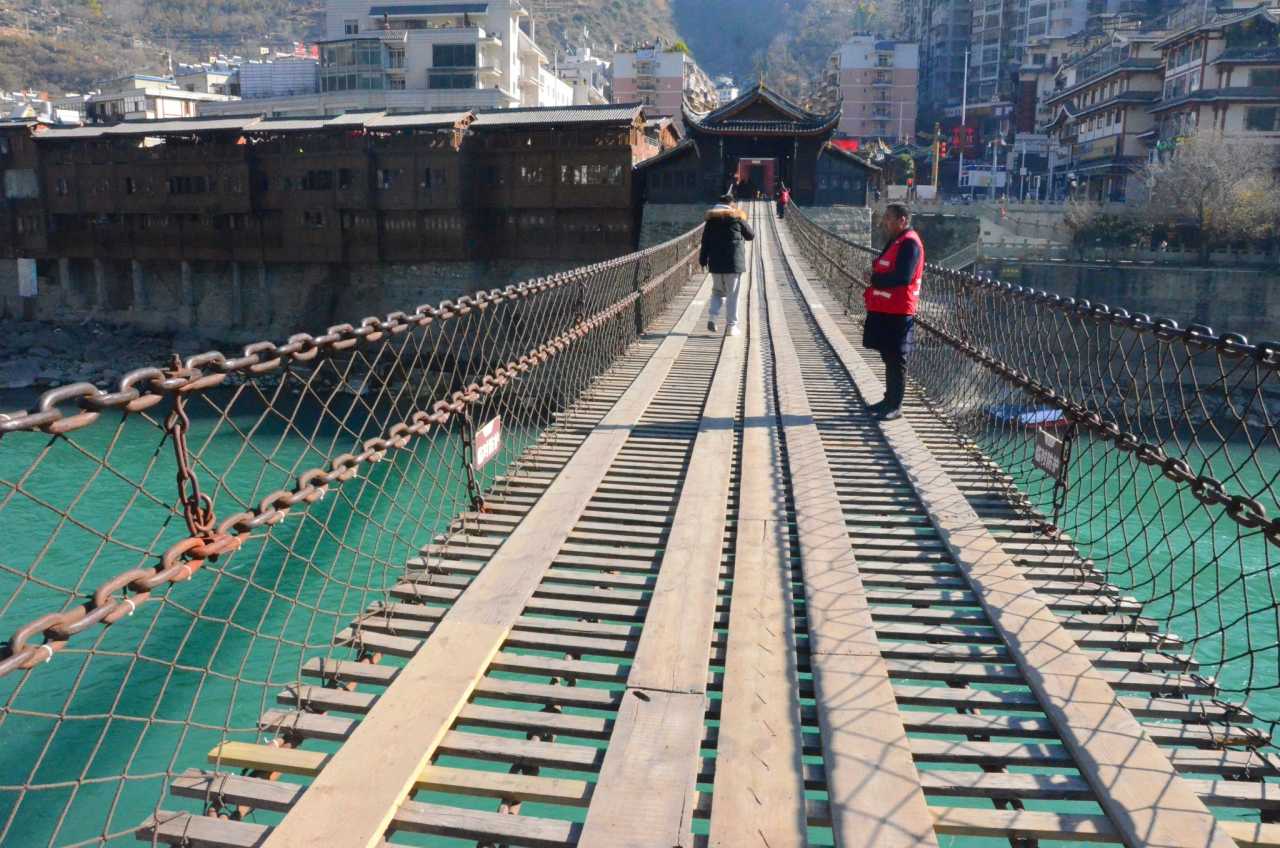
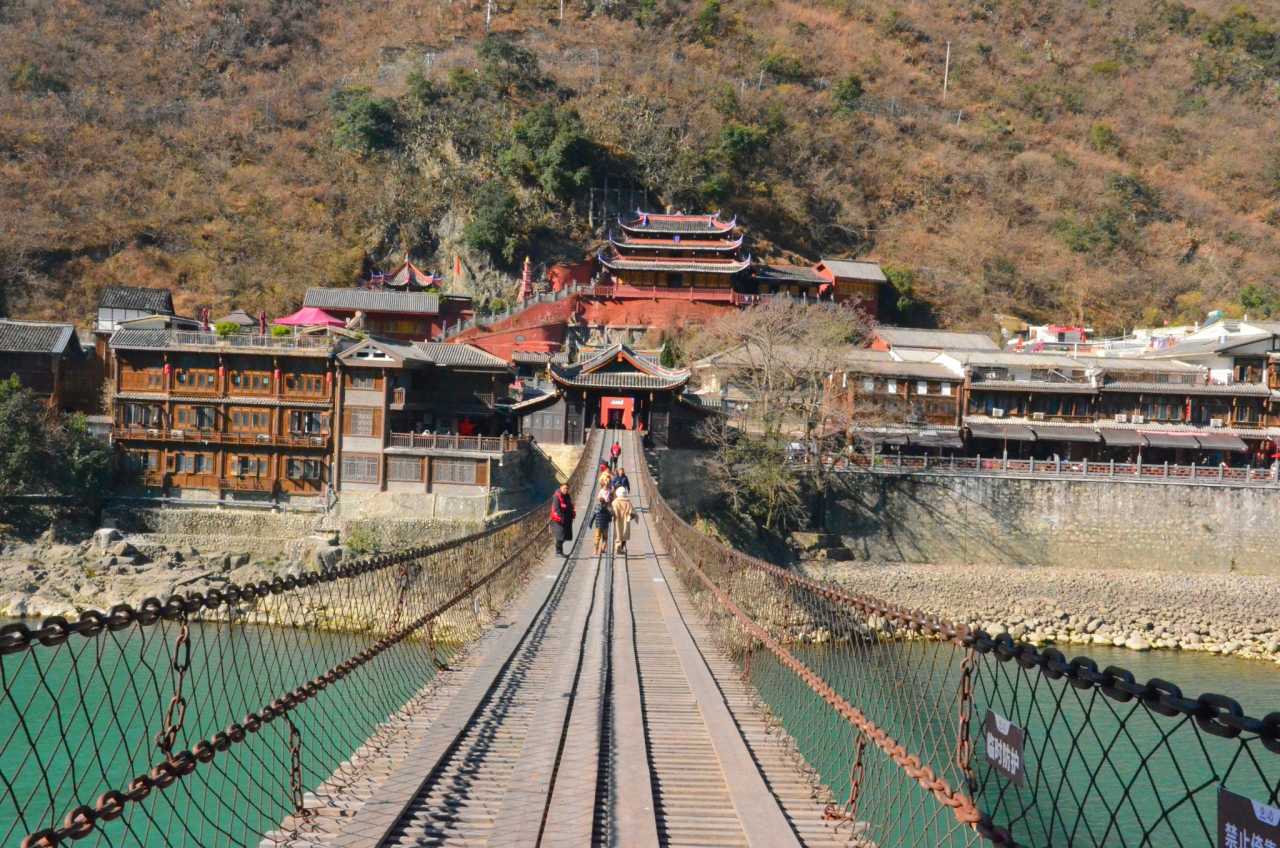
Departing Chengdu, the Western Sichuan loop officially began. Our first stop was Luding County to see the iron chain bridge built in 1706 during the reign of Emperor Kangxi. Over 300 years later, it still spans the Dadu River, its iron chains swaying slightly in the wind.
Standing on the bridge, gripping the heavy chains, with the rushing river below, I couldn’t help but think of the historical event known as the “Flying Capture of Luding Bridge.” Times change, history fades, and all we can do is remember the past and cherish the present.
Crossing Zheduo Mountain: The Test of Highway 318
Kangding, an important town on the ancient Tea Horse Road, had the melody of “Kangding Love Song” playing on a loop in my head the moment we arrived.
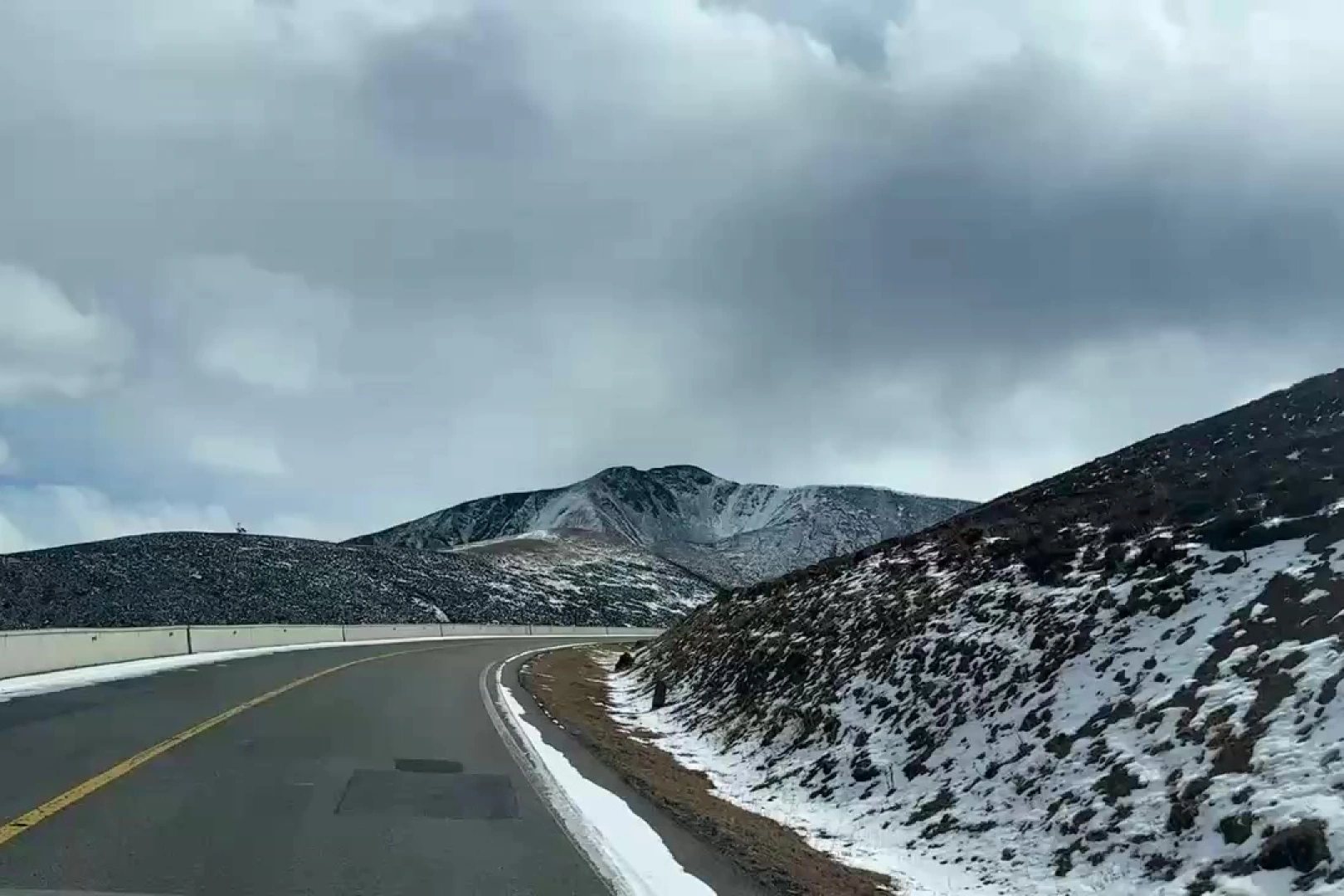
From Kangding, we had to cross Zheduo Mountain. There are so many news stories online about traffic jams and accidents on Zheduo Mountain that we were worried before setting out. And indeed, the winding mountain roads, constantly rising and falling, with patches of black ice appearing without warning, made every step feel like walking on thin ice for a first-time driver on such terrain.
[Link: Tips for driving on black ice in winter]
Yuzixi: First Encounter with Mount Gongga
After crossing Zheduo Mountain along Highway 318 and checking into our accommodation in Xinduqiao, we drove to the Yuzixi Starry Sky Campground. The road was mostly paved, except for the last kilometer of gravel and potholes.

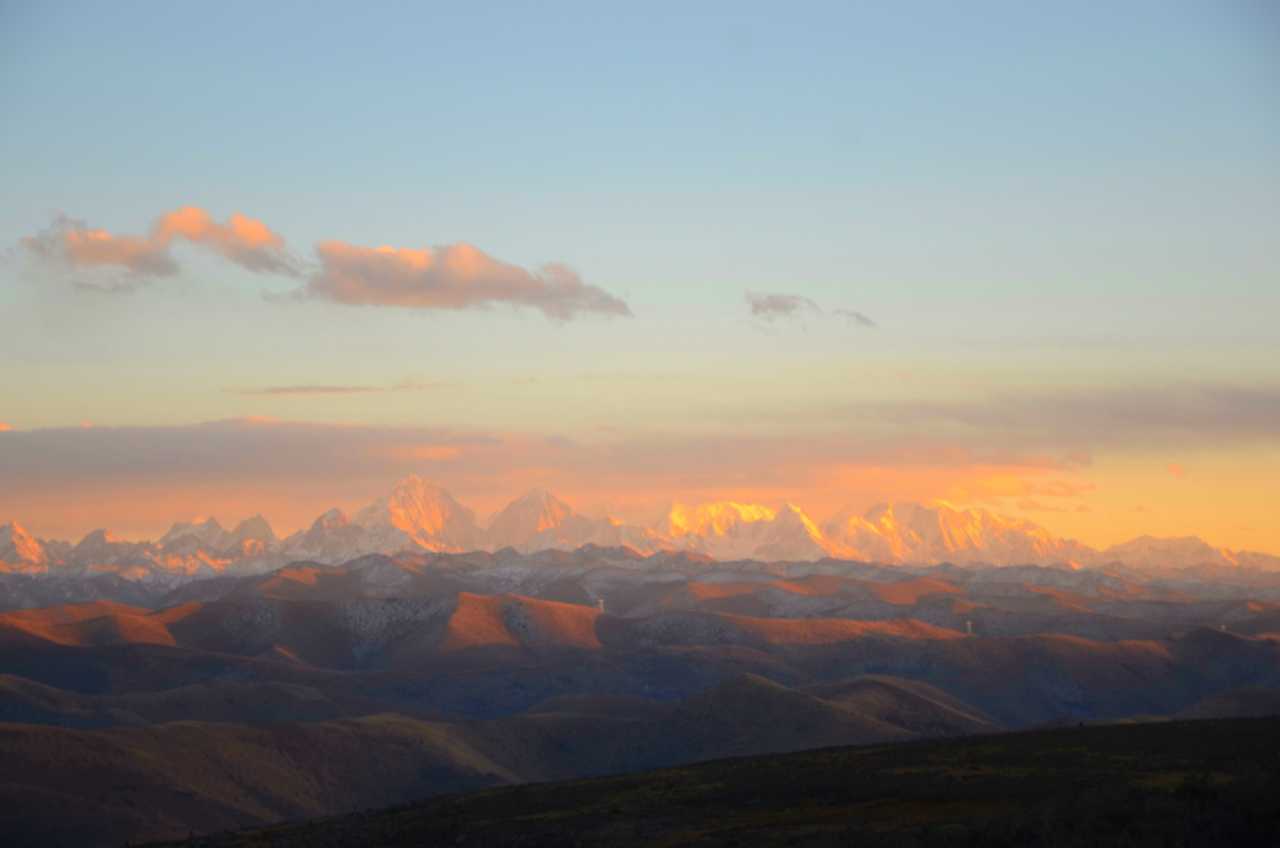
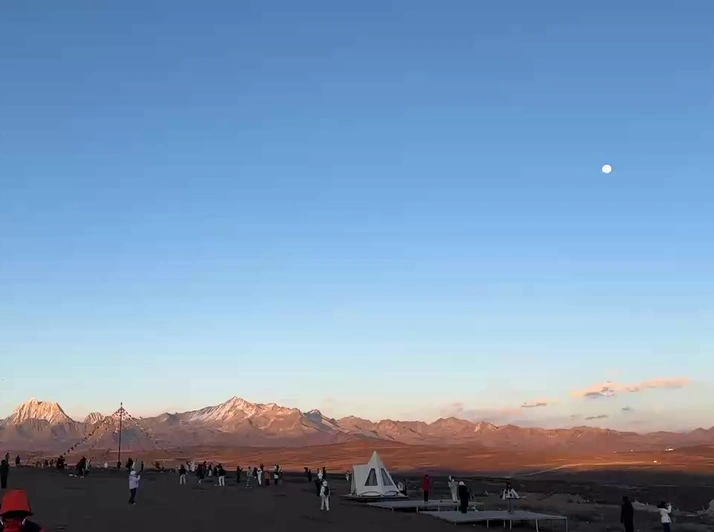
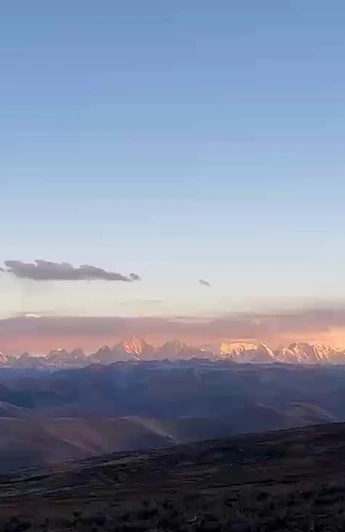
We had originally planned to go to Zimei Pass to see Mount Gongga—only 5 kilometers away in a straight line, offering an incredibly stunning view. But Zimei Pass was closed in December, so we settled for Yuzixi to catch a glimpse of the “King of Sichuan Mountains.”
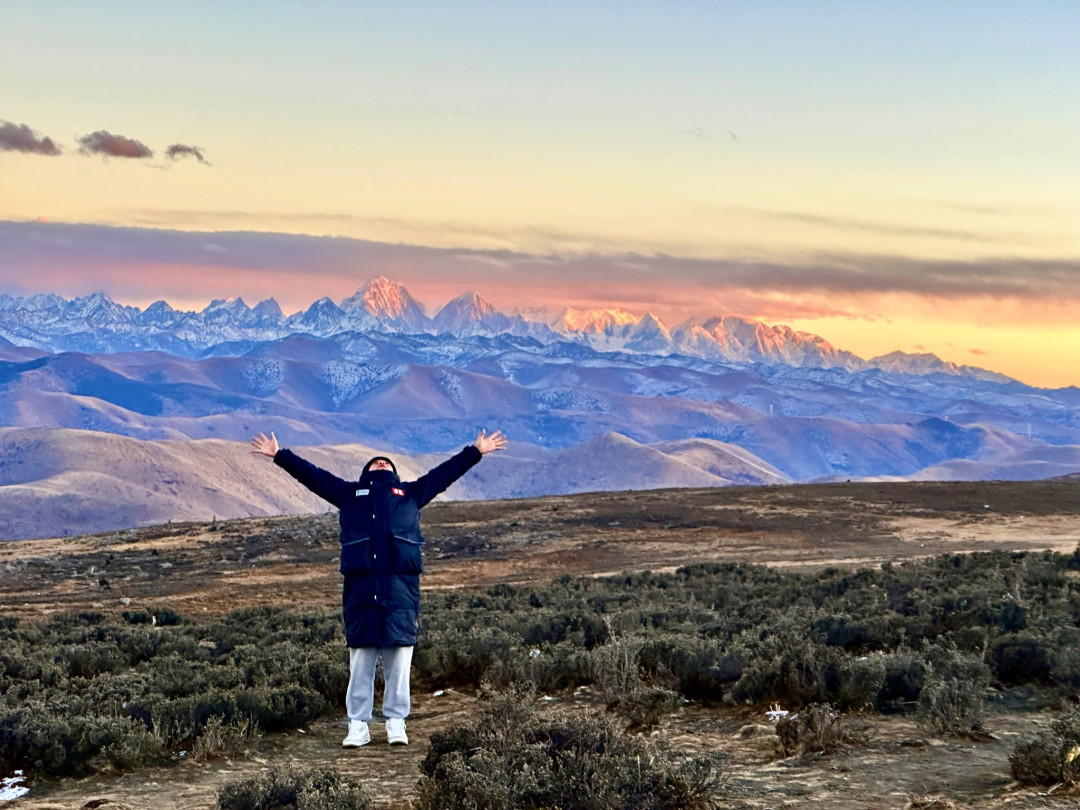
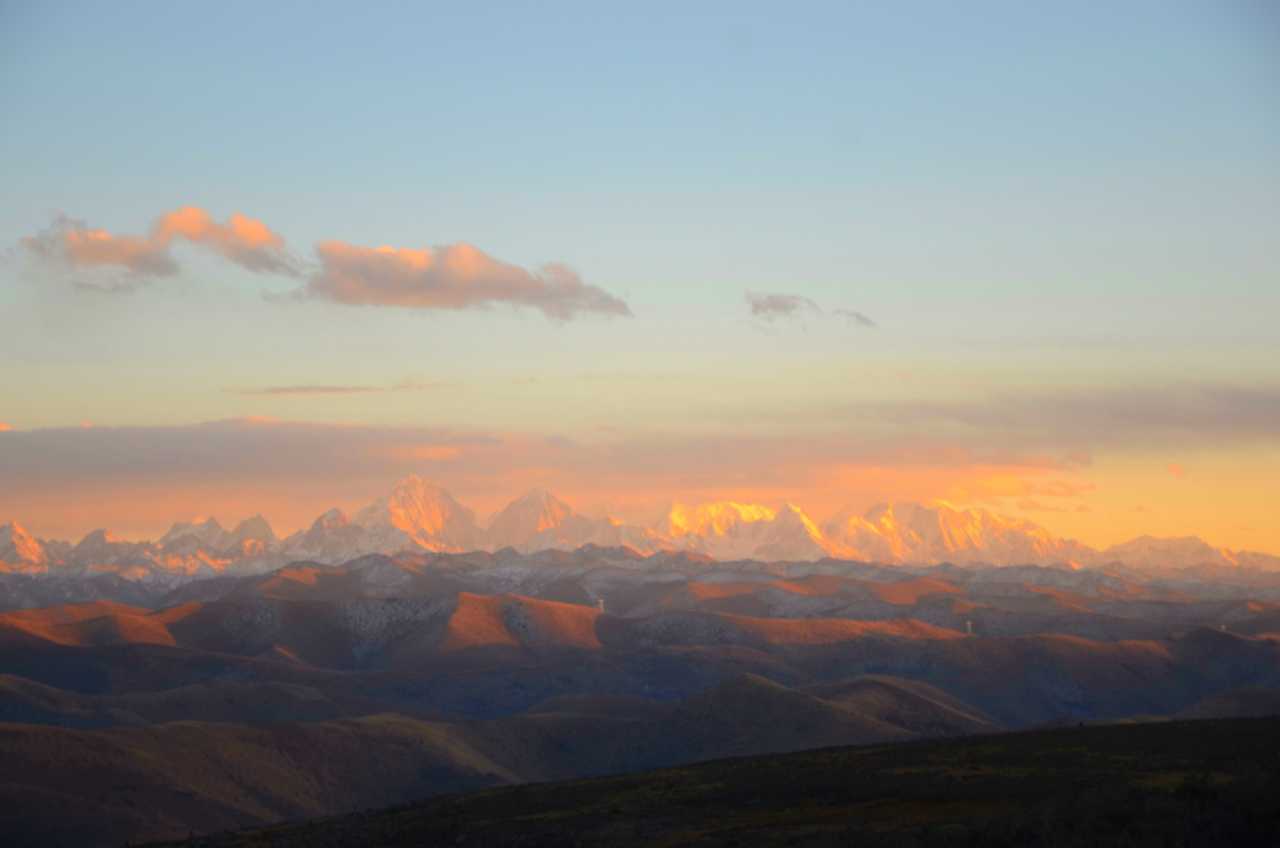
Altitude sickness began to kick in—every few steps left us gasping for breath, with splitting headaches. But miraculously, when the golden rays of sunset fell upon the summit of Mount Gongga, all discomfort vanished.
Facing this majestic snow mountain, I recalled a poem by Tsangyang Gyatso: “How many secrets must a person hide to get through life skillfully? On this Buddha-lit plateau, heaven is just two or three steps away, yet some people cannot move because their hearts are too heavy.” In the face of a snow mountain, humans are so insignificant. I left my zodiac-year lucky bracelet at the foot of Mount Gongga, praying for the safety and happiness of my family and friends.
3. Xinduqiao → Litang → Daocheng Yading: The Agony and Splendor of the Plateau
A Night of Altitude Sickness
Returning to Xinduqiao from Yuzixi, altitude sickness returned with a vengeance. That night, I woke up almost every hour. By the early hours, I felt feverish—the worst thing on the plateau is catching a cold or fever. I quickly took some medicine and dozed off again. When I went out looking for food at seven in the morning, the streets were pitch black, with no shops open. I had to go back to the hotel and eat instant noodles.
The Grandeur and Terror of Highway 318
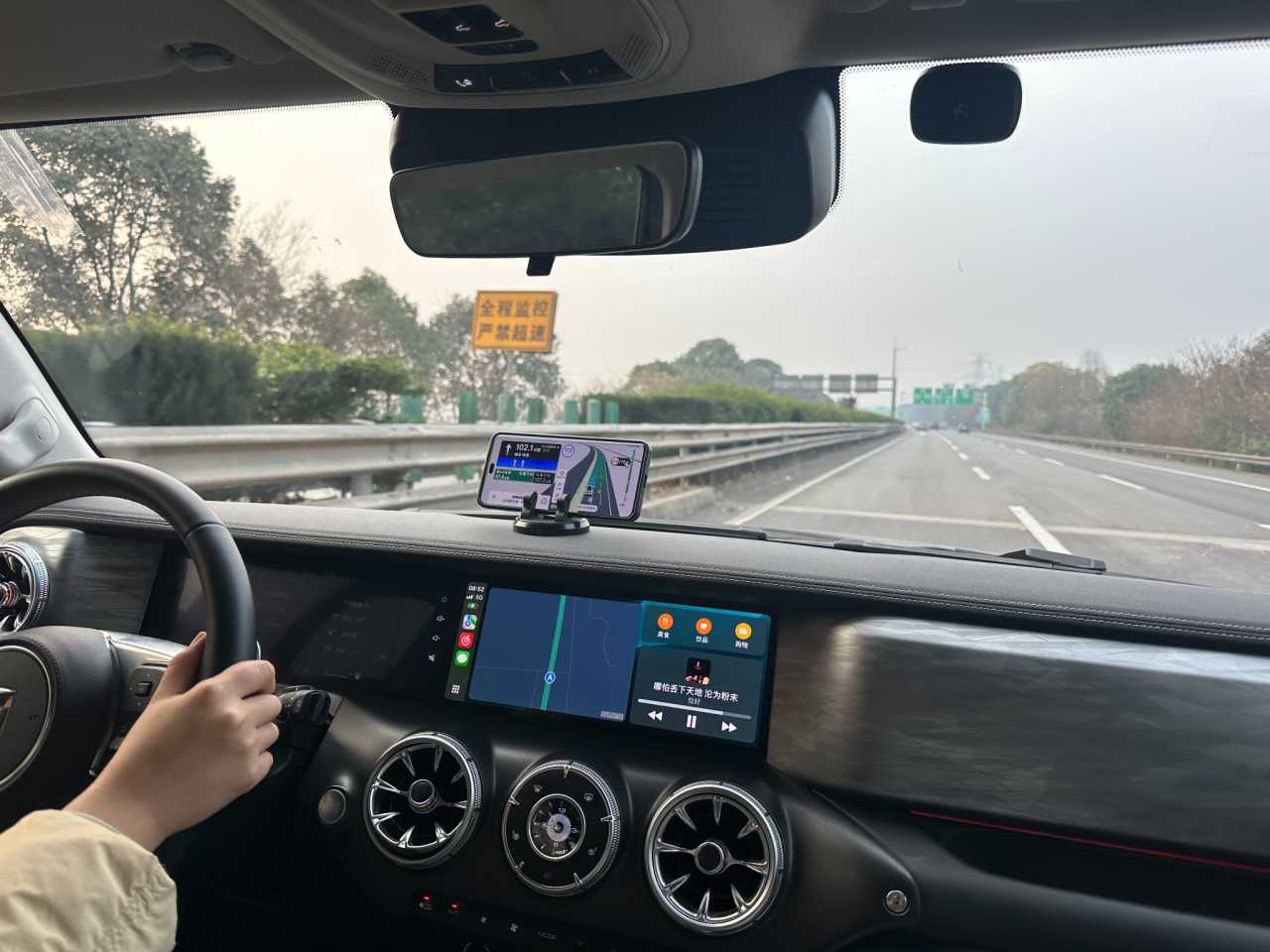
The stretch of Highway 318 from Xinduqiao to Litang was still a nerve-wracking mountain road. Black ice, sharp turns, steep slopes—it felt like we would never escape these mountains. But the scenery along the way was worth the hardship. One moment we were driving with our hearts in our throats, the next we were marveling at the rugged, vast mountain landscapes.
At noon, we arrived at the “Sky City” of Litang. After a quick meal, we continued our journey. We planned to stay here when we visited Seda, so Litang’s Old Town would have to wait for another time. By late afternoon, we finally reached Shangri-La Town. Exhausted, we lay down for a while before regaining some energy. After dinner, we went straight back to the hotel. Whether we could visit Daocheng Yading the next day was completely uncertain.
4. One Day in Daocheng Yading: The Last Pure Land on the Blue Planet
Three Routes, One Regret
Perhaps because we slept well the night before, we woke up feeling fine and decided to go to Daocheng Yading as planned. After buying tickets, we took a bus from the visitor center to Zhaguanbeng—about a 50-minute ride—then walked 500 meters to Chonggu Temple, and finally took a sightseeing car to Luorong Pasture.
Daocheng Yading has three routes: the Guanyin Compassion Route, the Manjushri Wisdom Route, and the Vajrapani Challenge Route. Unfortunately, since July 13, the area from Gongga Lake to Five-Color Lake and Milk Lake had been closed, so we missed the most beautiful parts. But life is never perfect, is it? Leaving some regrets means we’ll come back another time.
[Link: Best time to visit Daocheng Yading]
Creatures Beneath the Snow Mountains
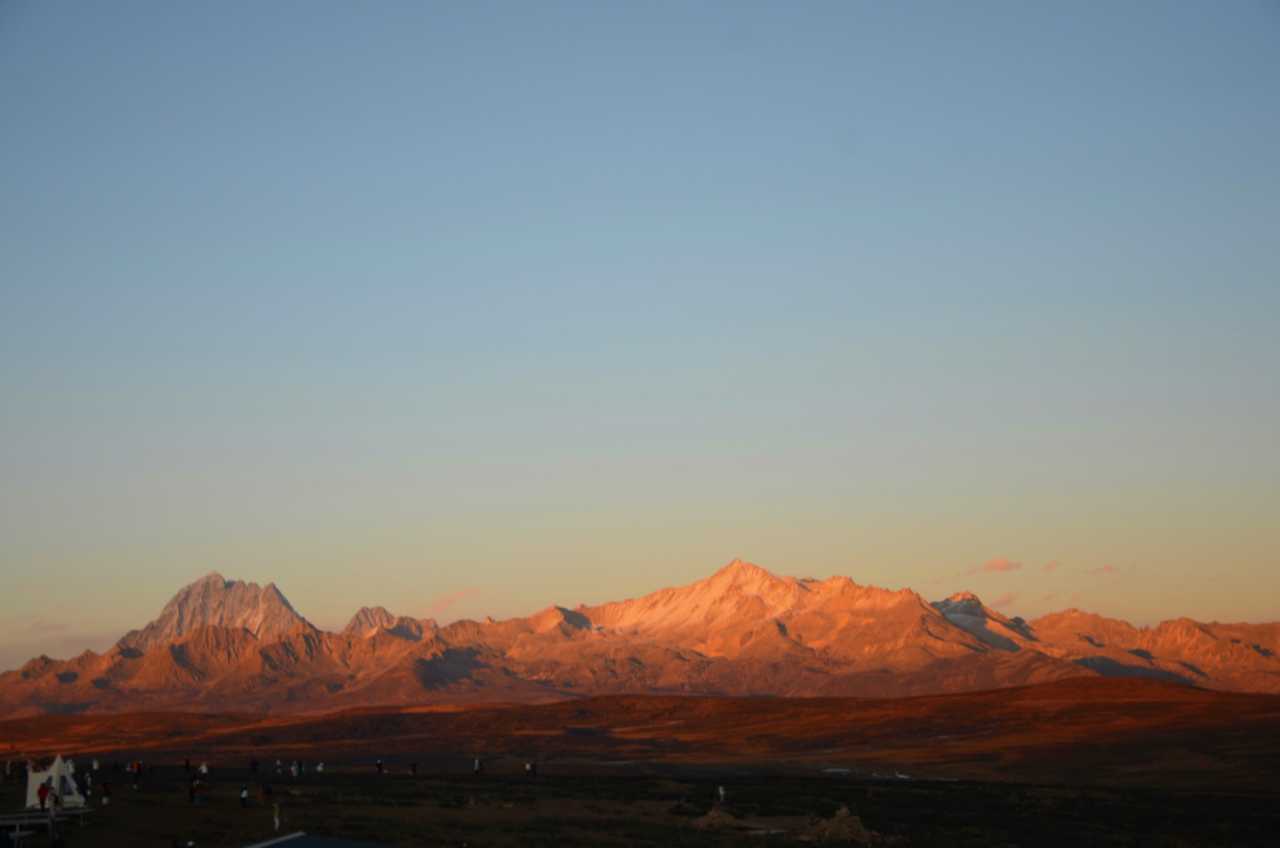
In Tibetan, Yading is called “Nianqing Gongga Risong Gongbu,” meaning “Sacred Land of Three Protector Snow Mountains,” and is known as the “Soul of China’s Shangri-La.” The northern peak, Xiannairi (Guanyin Bodhisattva), stands at 6,032 meters, while the southern peak, Yangmaiyong (Manjushri Bodhisattva), and the eastern peak, Xianuoduoji (Vajrapani), are both 5,958 meters.
The monkeys here are incredibly bold—they snatch food or anything sticking out of backpacks without hesitation. A girl holding several oxygen canisters had them snatched away by a monkey. There was also a mischievous child chasing a monkey, only to have the monkey chase him until he lost his shoe. In contrast, the little squirrels were much cuter.
Standing at the foot of Yangmaiyong Sacred Mountain, I once again felt that rugged, majestic beauty. The sun, mixed with strong ultraviolet rays, shone down on us as snowflakes began to fall.
FAQ: Winter Self-Drive in Western Sichuan
1. Is winter a good time for a self-drive in Western Sichuan?
 Yes, winter offers stunning snow-covered landscapes and fewer crowds. However, roads can be icy, and snow chains are mandatory. Altitude sickness is also more pronounced in cold weather.
2. What should I pack for a winter road trip in Western Sichuan?
 Pack thermal layers, a down jacket, waterproof boots, gloves, a hat, sunglasses, sunscreen, lip balm, oxygen canisters, tire snow chains, and basic medicine for altitude sickness and colds.
3. How do I prevent altitude sickness on the plateau?
Ascend gradually, stay hydrated, avoid alcohol, eat light meals, and use oxygen canisters when needed. If symptoms worsen (fever, confusion, severe headache), descend immediately.
4. Is it safe to drive on Highway 318 in winter?
 Highway 318 is challenging but manageable with proper preparation. Watch for black ice, sharp turns, and steep slopes. Drive slowly, use snow chains, and check road conditions daily.
5. Can I visit Daocheng Yading in winter?
Yes, Daocheng Yading is open in winter, but some high-altitude routes (like Gongga Lake to Five-Color Lake) may be closed. Check with the visitor center before your visit.
Conclusion: Your Winter Pilgrimage Awaits
A winter self-drive in Western Sichuan is not for the faint of heart. It tests your endurance, your driving skills, and your spirit. But in return, it offers moments of pure transcendence—golden light on snow peaks, the silence of sacred lakes, and the feeling of being part of something ancient and vast.
Whether you’re chasing the “King of Sichuan Mountains” at Yuzixi, walking the iron chains of Luding Bridge, or standing beneath the three protector peaks of Daocheng Yading, this journey will change you.
Ready to plan your own pilgrimage?
Book your car rental, pack your snow chains, and set out on the road less traveled. Western Sichuan is calling.
[Link: Complete Western Sichuan self-drive itinerary]
[Link: Best accommodation in Xinduqiao and Shangri-La Town]
[Link: How to prepare for high-altitude travel]
Have you done a winter self-drive in Western Sichuan? Share your experience in the comments below—or ask us any questions about the route. We’d love to hear from you.
You may also like


