Winter in Western Sichuan: A Ganzi Loop Journey Encountering Snow Mountains, Blue Ice, and Purity
Meta Description: Discover the pure beauty of winter in Western Sichuan on a Ganzi Loop journey. See Gongga snow mountains, walk on blue ice at Siding Lake, and experience untouched plateau landscapes. Your ultimate winter travel guide.
Do you remember that travel variety show where guests were left speechless by the majesty of snow mountains at Yaha Pass? The howling wind, the biting cold—but when the setting sun painted Gongga's main peak in gold, slowly softening into pink, everyone fell silent. Words simply fail. That moment, felt through the screen, is exactly why I keep returning to the Western Sichuan Plateau.
Some say once is enough for Western Sichuan. But for me, this land is an endless book—every visit reveals new surprises. Especially in winter, when most imagine a frozen, harsh highland, I discovered its purest side.
Why Choose Winter in Western Sichuan?
Don't let "plateau winter" scare you. Winter sunlight in Western Sichuan is surprisingly generous. The dry, rainless climate offers nearly 100% visibility of snow mountains. Temperatures are low, but with proper wind protection, daytime sun can feel like a pleasant 10–20°C. Compared to southern China's bone-chilling damp cold, the cold here feels refreshingly "crisp."
If I had to describe winter in Western Sichuan in one word, it would be: pure.
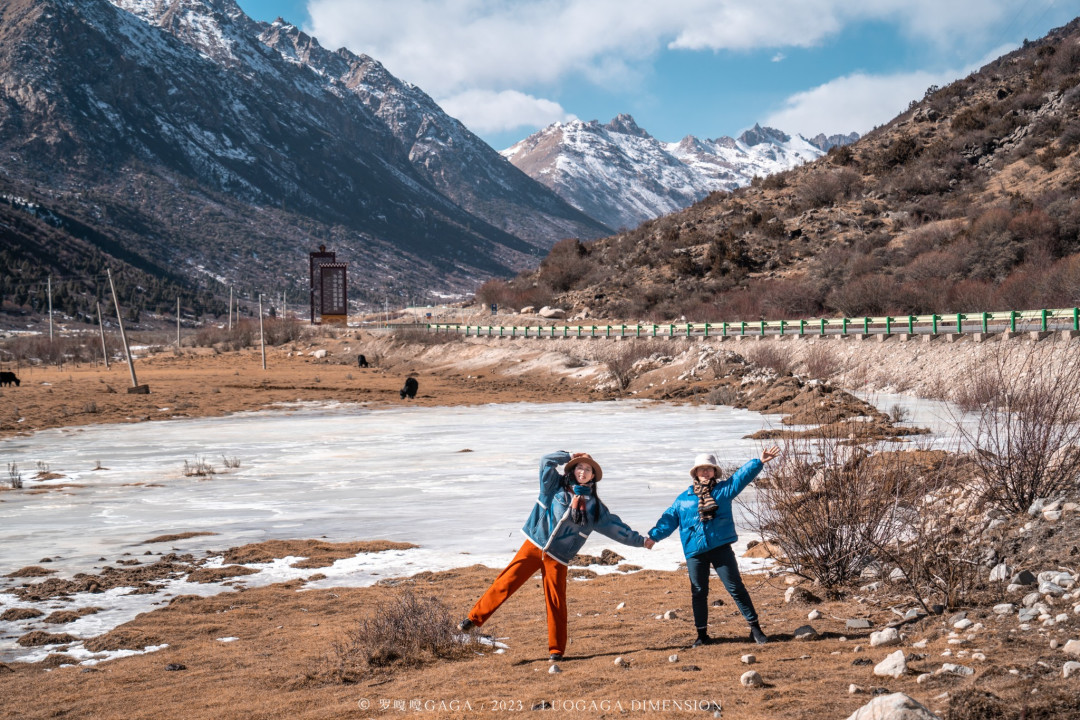
The streets are quiet, as if someone pressed pause. The scenery is clean, without impurity. You can have an entire snow mountain or lake all to yourself. In small towns and monasteries, you easily blend into local life. Outside your car window: mountains, wind, sunlight, snow peaks everywhere, with rare clear blue skies above.
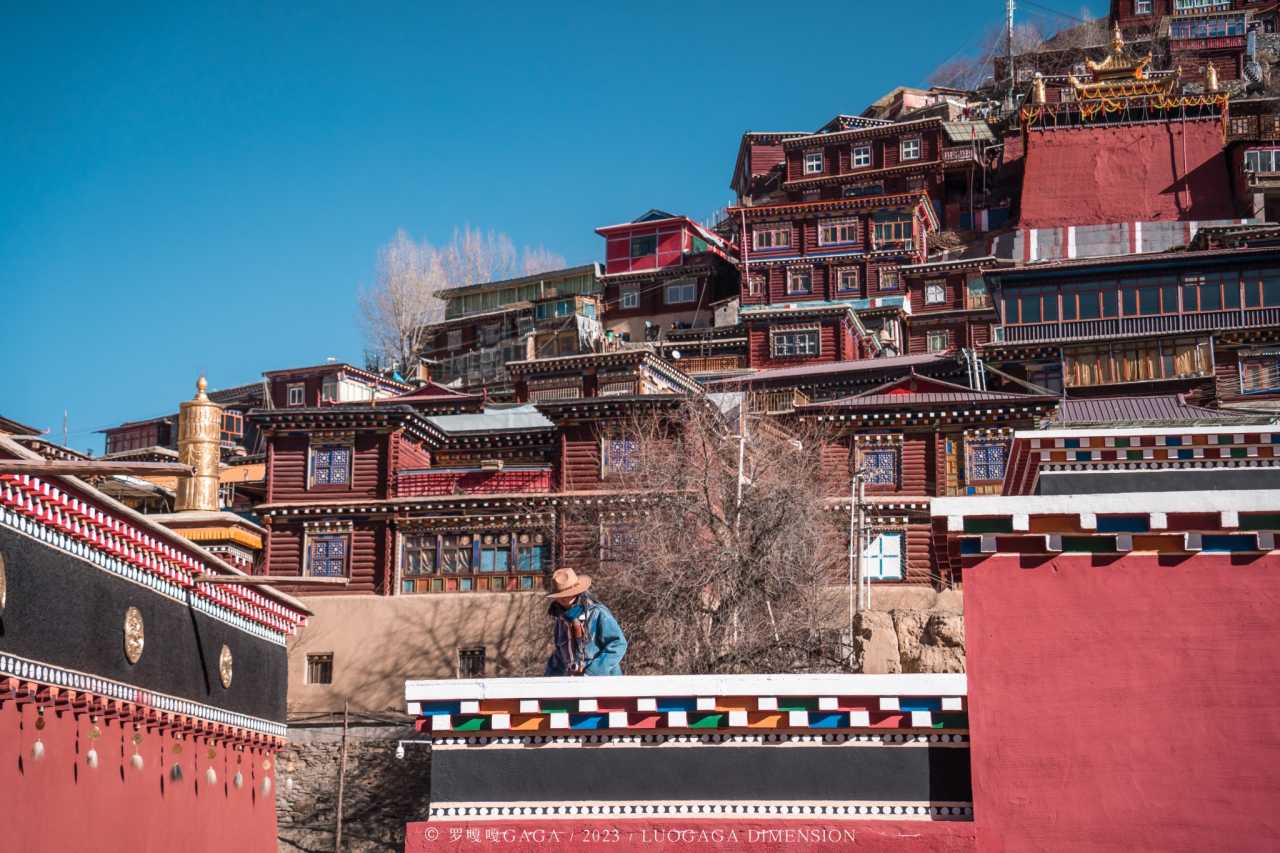
Want to see blue ice? No need for Tibet or Xinjiang. Every lake here has unique beauty. Step onto the ice and hear it expand and crack—nature humming a quiet song. Stroll through monastery halls, immersed in butter tea and Tibetan incense, exchanging warm "Tashi Delek" with locals. On deserted roads, yaks roam freely; you might even encounter a family of monkeys. Passing through places known as the "Kham Alps," the journey itself feels romantic.
Far from the noise, this is winter in Western Sichuan—a long-lost sense of freedom.
This Is the Right Season to See Gongga Snow Mountain
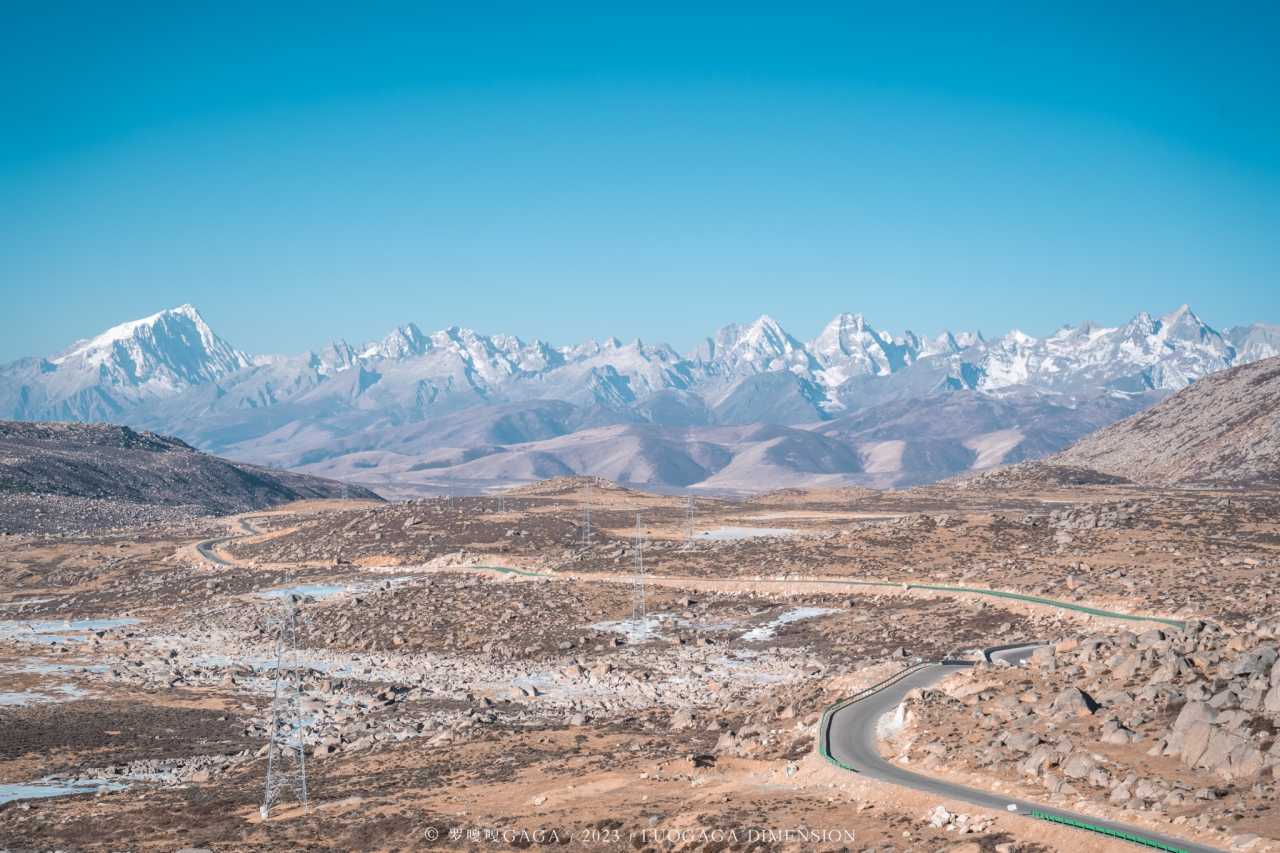
Seeing snow mountains depends on luck and timing. In spring, summer, and autumn, you're at the mercy of weather. But winter is like having a cheat code. With dry, rainless conditions, you can see snow mountains from every angle almost daily. Sometimes, finding a few clouds to frame your shot becomes the real challenge.
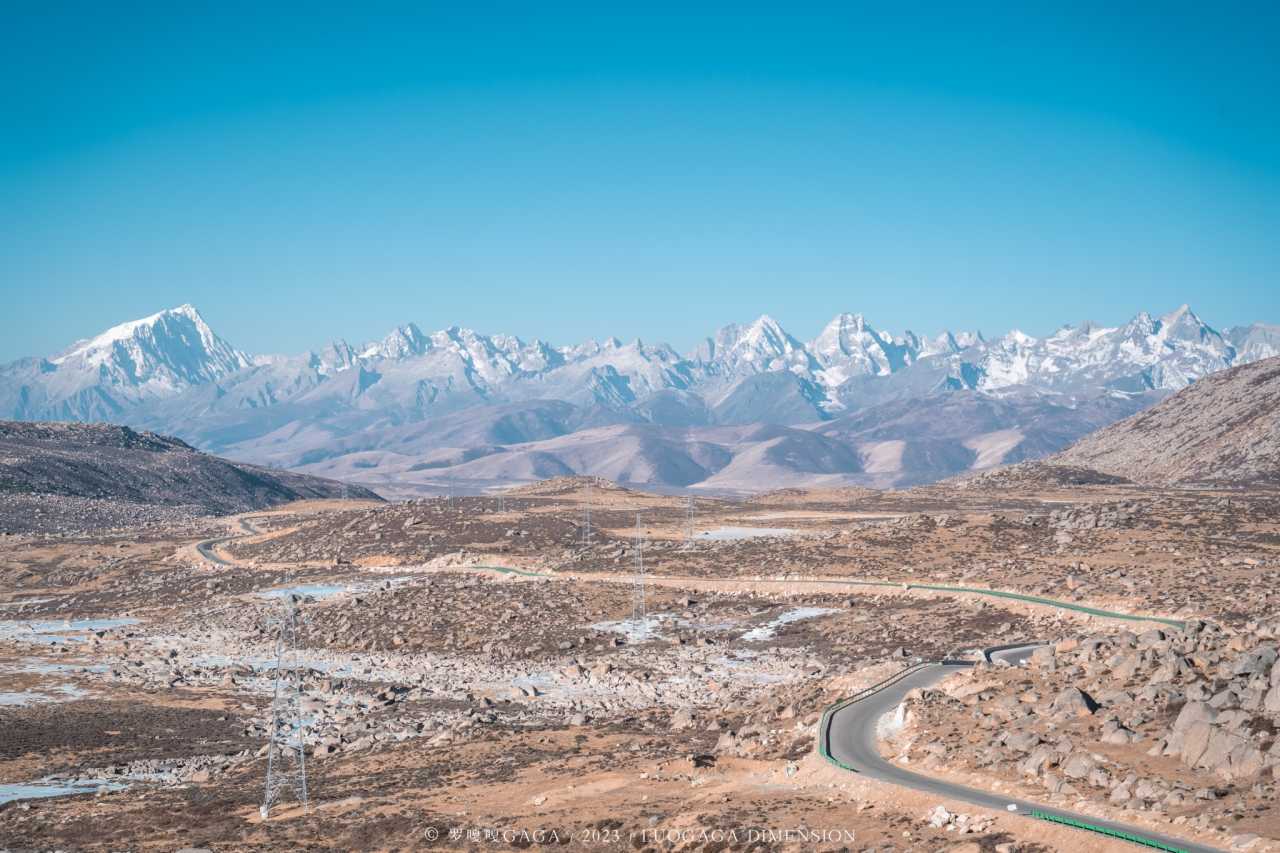
Gongga Mountain (Mount Minya Konka), the King of Sichuan Mountains. From the moment you cross Zheduo Mountain, it accompanies you everywhere. What surprised me most this time: on the road to Litang, I could clearly see the main peak—I'd never noticed it on this route before. Definitely a perk of good winter weather.
Siding Lake: "Binge-Watching" Gongga Up Close

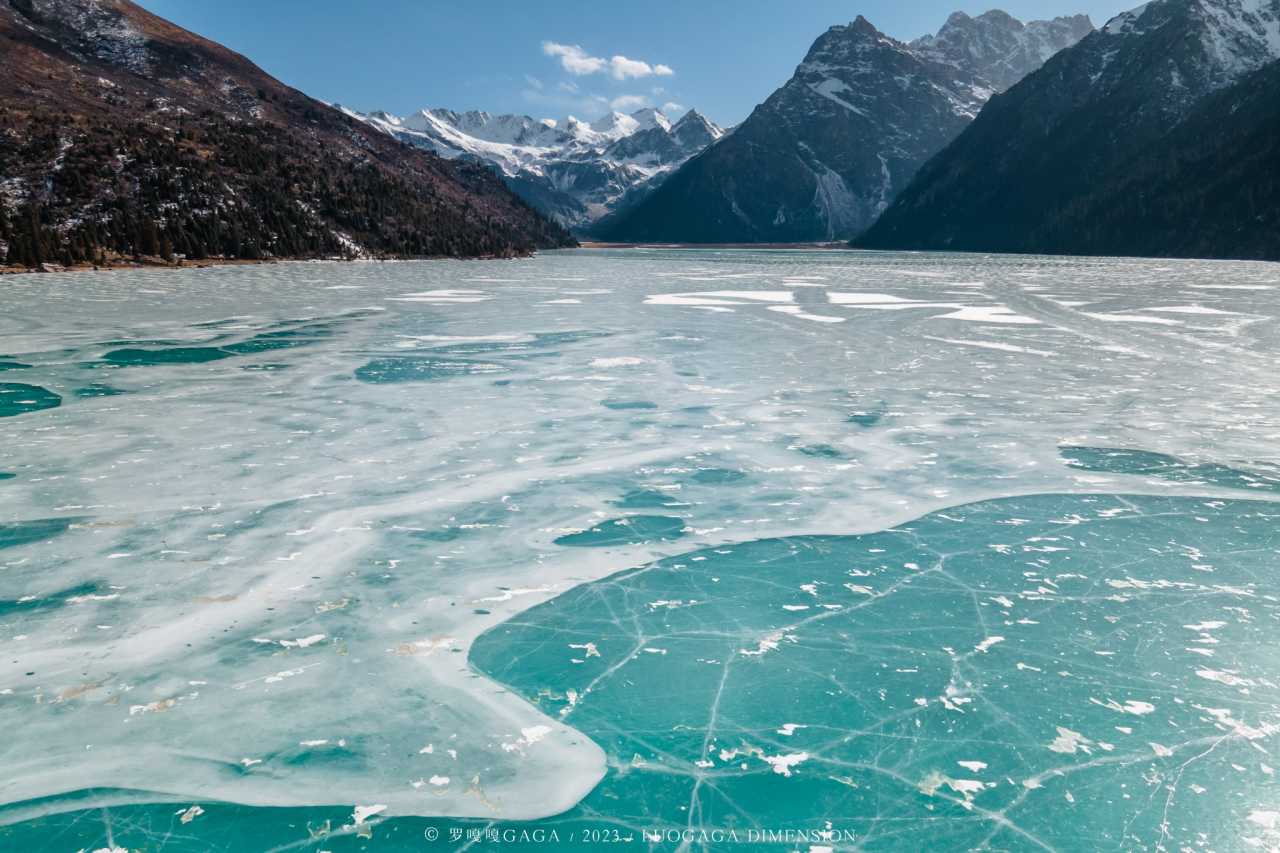
After crossing Zheduo Mountain, we habitually detoured to the Kangding Airport Road for a glimpse of Gongga before heading to Xinduqiao Town. The airport road and nearby Siding Lake are excellent spots for viewing the Gongga range, with wide, open views. This season, Siding Lake is frozen, so you can walk onto the ice and use a telephoto lens for photos that feel inches away from Gongga.
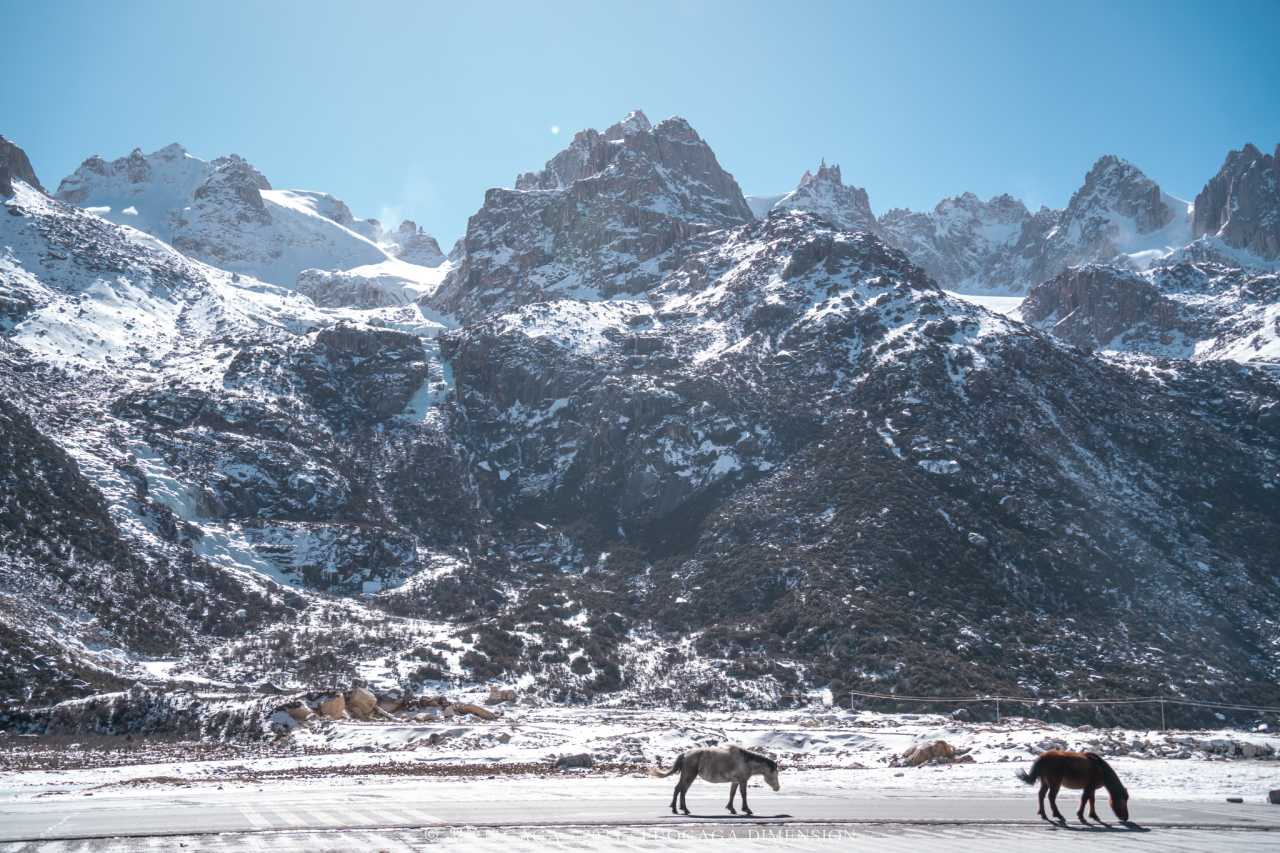
The usually busy airport road was nearly empty. Siding Lake was a no-man's-land. Even the uncle collecting cleaning fees had knocked off by 3 p.m. We parked where we'd waited for clouds to break last time—except this time, we weren't waiting for clouds to clear, but for the sun to shift to a favorable angle. Morning backlight made snow peaks just silhouettes; they only became sharp in the afternoon.
To kill time, we started a "binge-watching session." Two groups came by: a stunning foreign couple who waved warmly, and a family where young parents placed their kids on the car hood for playful photos before leaving.
The best thing I brought this time was crampons. I remembered to buy them last minute after seeing a friend's post about falling on ice—thank you for the "live demonstration." The ice at Siding Lake was pale, not particularly pretty, but under clear skies it had a faint blue tint—I'll count it as blue ice. Standing in the middle of the lake, using a telephoto lens on Gongga gave surprisingly stunning results, though the lens was a bit short, and zooming made quality fuzzy.
By afternoon, Gongga became increasingly clear. We shot a series of "If the mountain won't come to me, I'll go to the mountain" photos—my dad especially loved that one.
Balangshengdu: Sunset Gold in 8-Level Winds
Before the New Year, I attended a Mafengwo gathering and met new friends from Chengdu. When they talked about lesser-known, pristine spots in Western Sichuan, they mentioned Balangshengdu. I'd seen it online and thought it similar to Yuzixi or Gedilamu Sky City. Curious, I added it to the itinerary.
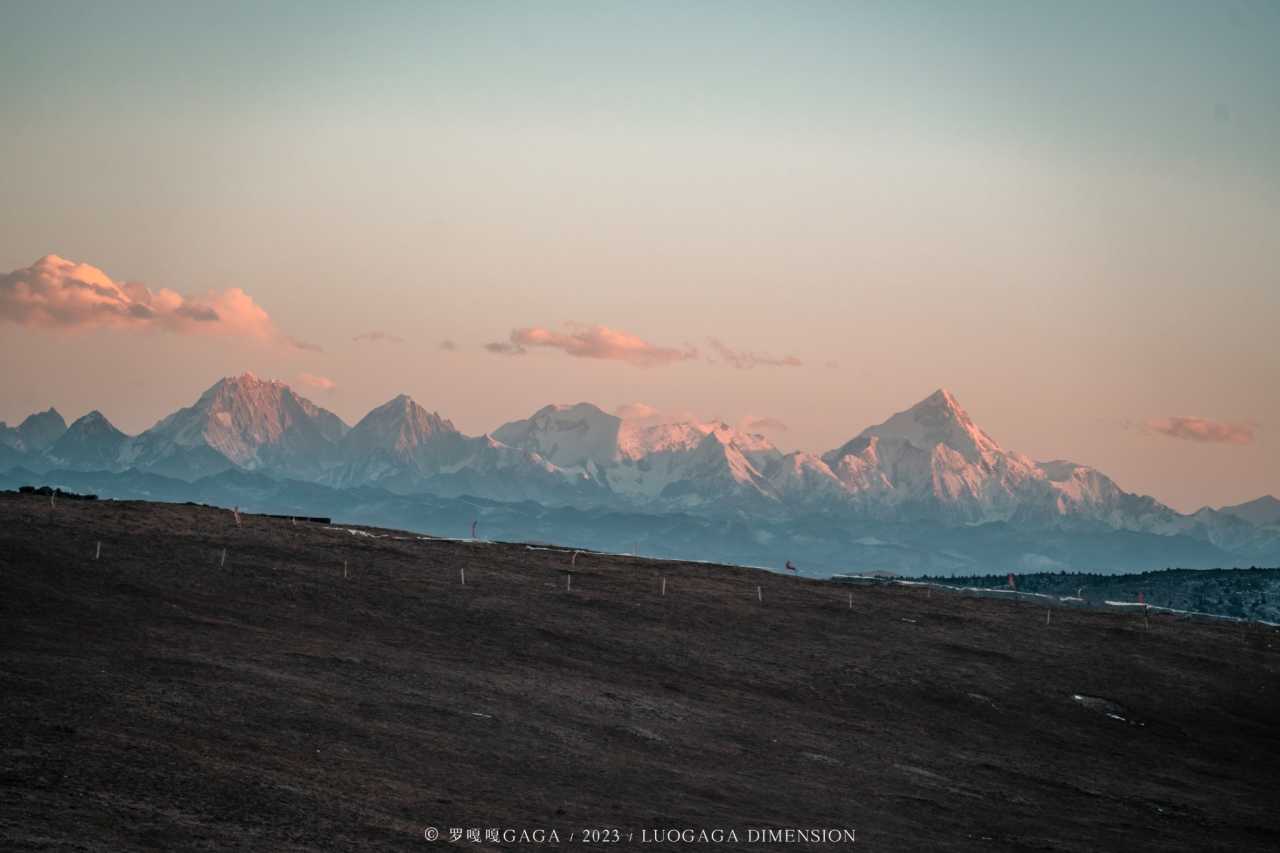
The experience was good, but it's no longer "pristine"—locals now charge a fee and have set up a horse ring, offering rides to the summit. The snow mountain viewing spot at Balangshengdu is on a hill opposite the village. Though it's a dirt road, it's relatively flat and easier to reach than Yuzixi. The village, built facing the mountain and backed by a stream, hides deep in the grassland, giving it a secluded feel.
From here, you can see the snow mountains stretching from Gongga to Yala. Around sunset, some clouds appeared, which actually looked nice. But since there hadn't been much snow lately, Yala Snow Mountain had little snow, and nearby Qingrao Shenshan looked bare. I remembered May 2020, when heavy snowfall turned the entire Yala range pure white—the shock of that sight still lingers.
As sunset approached, I wanted to take photos from a small hill, but the wind was so strong it made me question my life choices—probably 8 levels on the Beaufort scale, nearly blowing me away. I retreated to the car and observed through the windshield. Even the camera mounted outside was shaking—that's how I shot the time-lapse video that day.
The sunset gold over the mountain presented every color change in full. I've seen Yala Snow Mountain's sunset many times, but I always love the final pink hue most. That day happened to be Chinese New Year's Eve, so the sunset felt especially meaningful—a wish for a smooth year ahead. Turning around, I saw a few people standing on a neighboring hill, with the sunset glow beyond. I pressed the shutter and shared the photo on social media, only to have the person in the frame discover it—what a coincidence!
Gaoersi Mountain: The Luxury of Having Gongga All to Yourself
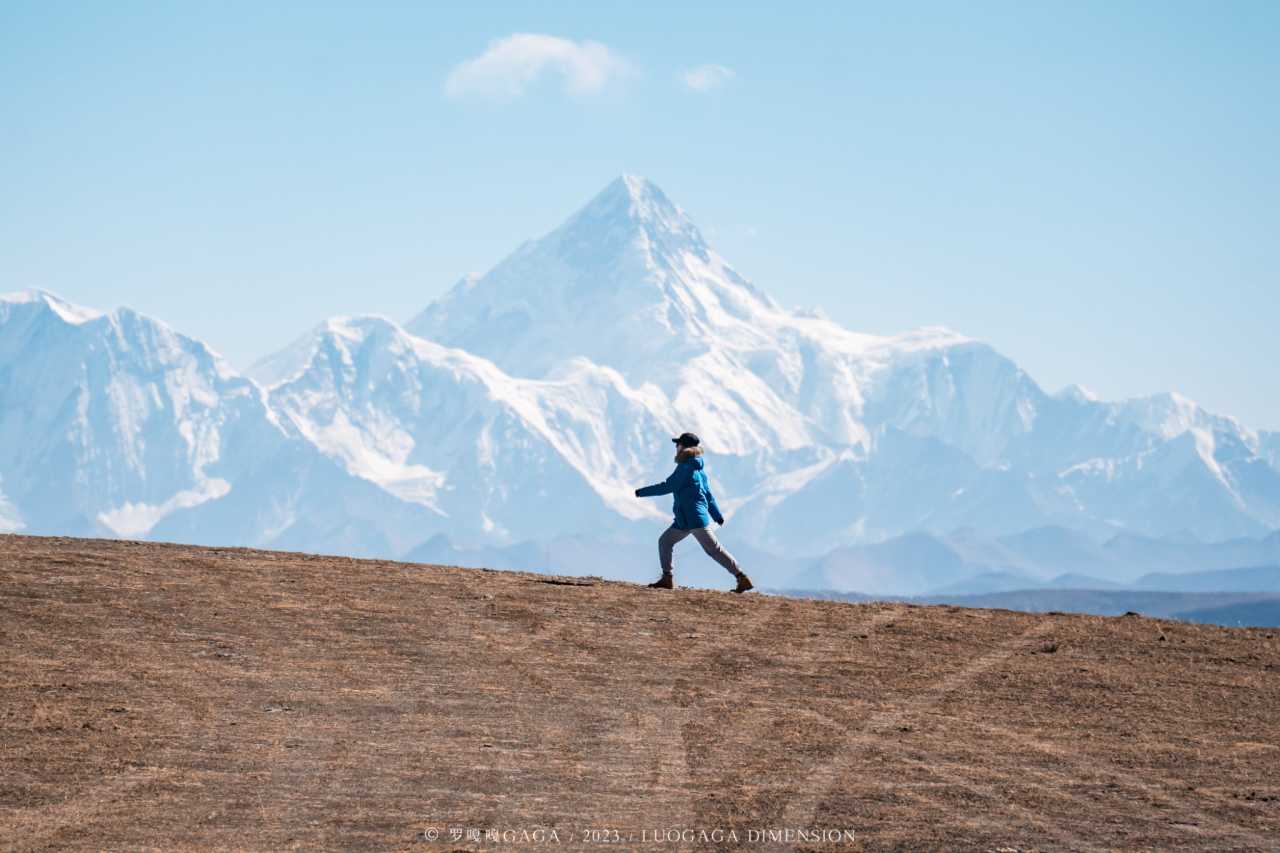
I first learned about Gaoersi Mountain through Heishicheng (Black Rock City). These days, Heishicheng is no longer the hot spot; a new viewing platform called "Zhusang Scenic Area" (also known as the Snow Mountain Dressing Table) has been built. You won't find it on the map, and during the off-season, it's virtually deserted. When we arrived, ours was the only car on the entire mountain.
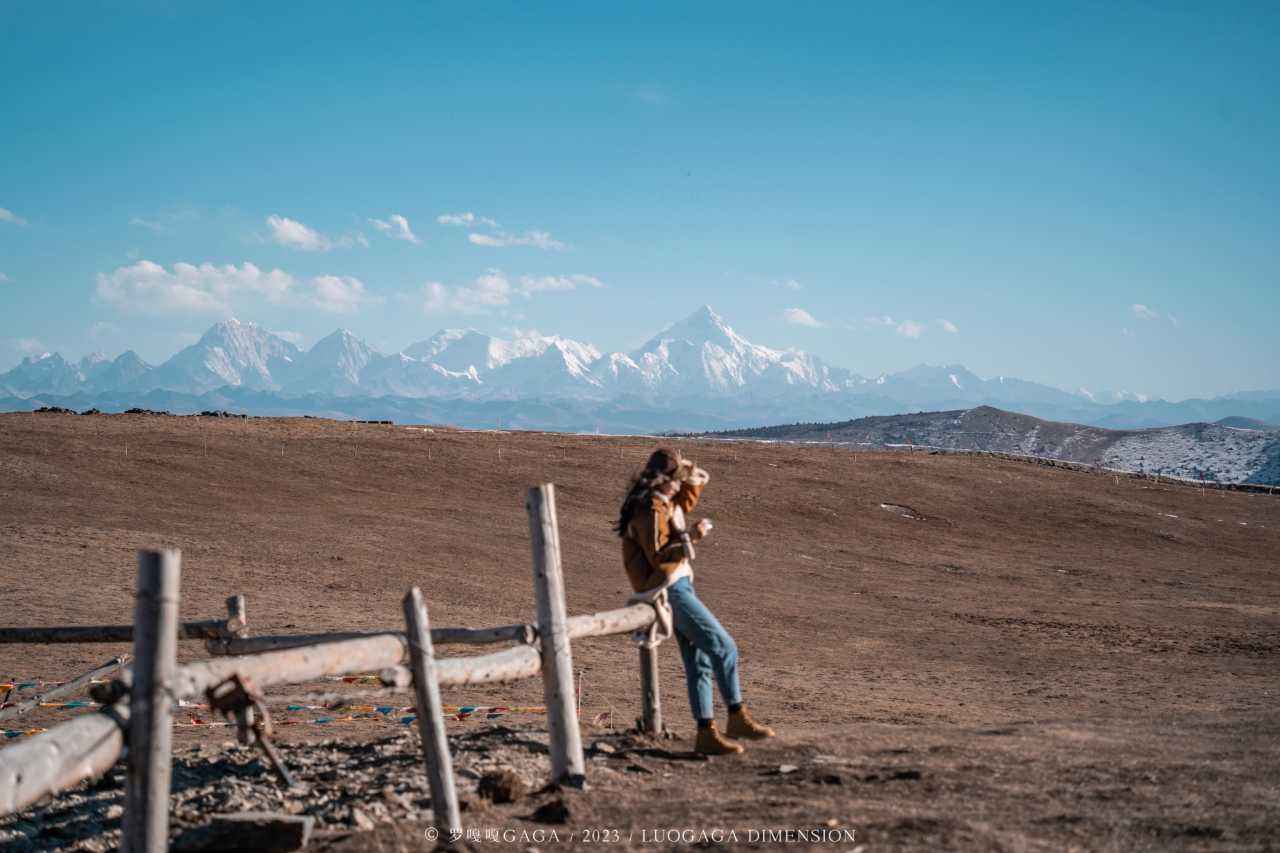
From the platform, you get an unobstructed view of the Gongga range, plus Yala Snow Mountain and Qingrao Shenshan. The platform is built on a flat area of Gaoersi Mountain, likely recently constructed, but prolonged exposure to wind and sun had already given it a somewhat weathered look. Still, the view is fantastic—actually, there's no bad view on Gaoersi Mountain.
Practical Tips for Your Winter Ganzi Loop Journey
Planning a winter trip to Western Sichuan? Here's what you need to know:
- Best time: December to February for clear skies and maximum snow mountain visibility.
- Essential gear: Crampons for icy lakes, windproof jacket, thermal layers, sunglasses (UV is intense), and a good telephoto lens.
- Road conditions: Main roads are generally clear, but check for ice on high passes. A 4WD vehicle is recommended.
- Accommodation: Book ahead in popular towns like Xinduqiao; off-season rates are lower.
- Altitude awareness: Most spots are above 3,500m. Acclimatize in Kangding or Litang before pushing higher.
[Link: Best time to visit Western Sichuan for snow mountain photography] [Link: How to prepare for high-altitude travel in winter]
Frequently Asked Questions
Q: Is winter in Western Sichuan too cold for travel? A: Not at all. Daytime temperatures can reach 10–20°C in the sun. The cold is dry and "crisp," unlike humid winters. Just dress in layers and protect against wind.
Q: Can I see blue ice without going to Tibet? A: Yes! Siding Lake near Kangding Airport offers stunning blue ice in winter. Other frozen lakes in the Ganzi region also display this phenomenon when skies are clear.
Q: Are roads safe for driving in winter? A: Main highways like the G318 and G317 are well-maintained. Some high passes may have ice, but with careful driving and winter tires, it's manageable. Check local conditions before departure.
Q: What's the best way to see Gongga Mountain? A: Winter offers the highest visibility. Top spots include Siding Lake (for close-up views), Gaoersi Mountain (panoramic views), and the Kangding Airport Road. For sunrise/sunset, Balangshengdu is excellent.
Q: Do I need a guide for the Ganzi Loop in winter? A: Not necessarily for the main loop, but for off-the-beaten-path spots like Balangshengdu or Gaoersi Mountain, a local guide can enhance the experience. Most spots are accessible with a map and GPS.
Your Winter Adventure Awaits
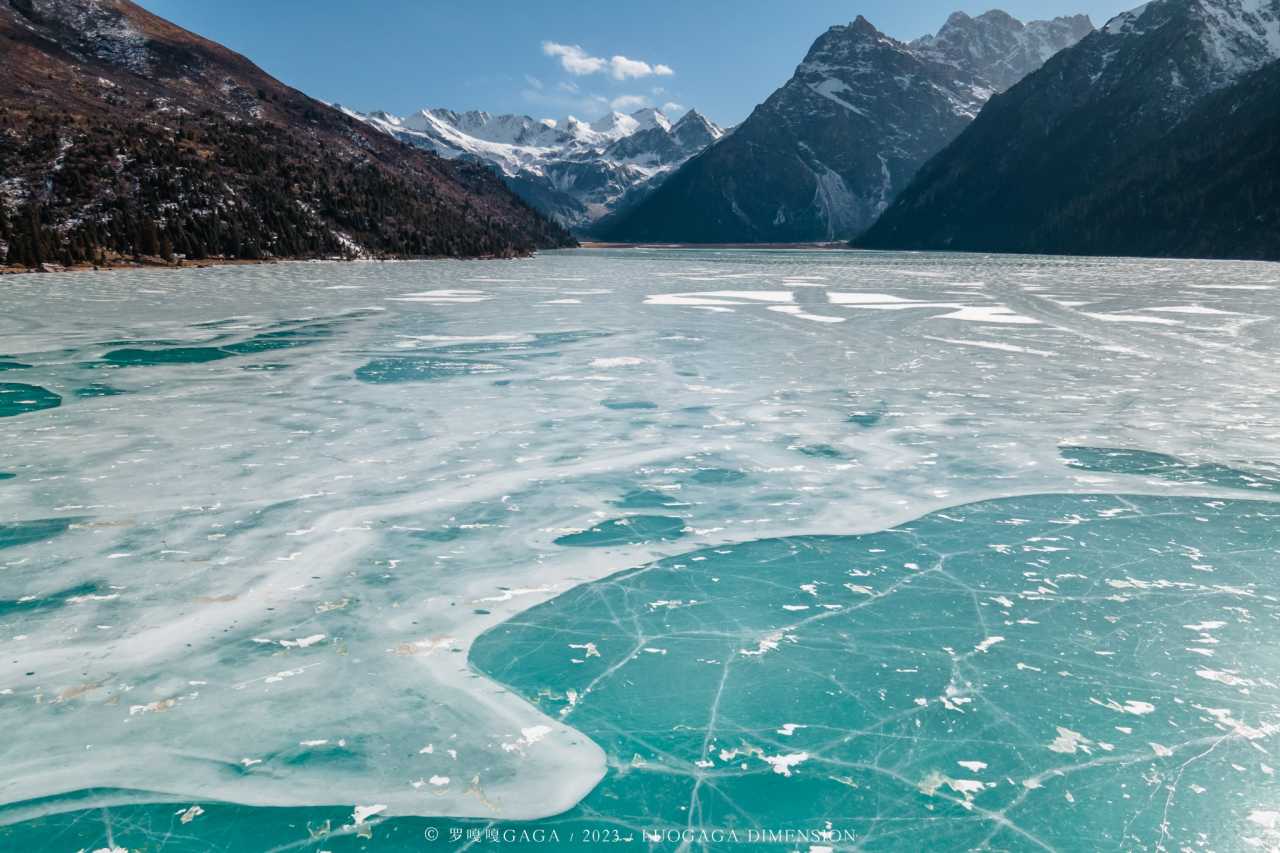
Winter in Western Sichuan isn't just a trip—it's an encounter with purity. The snow mountains stand in silent majesty, the blue ice hums under your feet, and every village greets you with warmth. This is the season when the plateau reveals its most intimate self.
So pack your crampons, charge your camera, and set out on the Ganzi Loop. The mountains are waiting, and they're at their most beautiful right now.
Ready to experience the purest winter of your life? Start planning your Ganzi Loop journey today. Share this guide with a friend who needs a winter escape—and let the snow mountains call you home.
You may also like


