Western Sichuan Small Loop: The Ultimate 3-Day Road Trip Through Snowy Peaks and Tibetan Villages
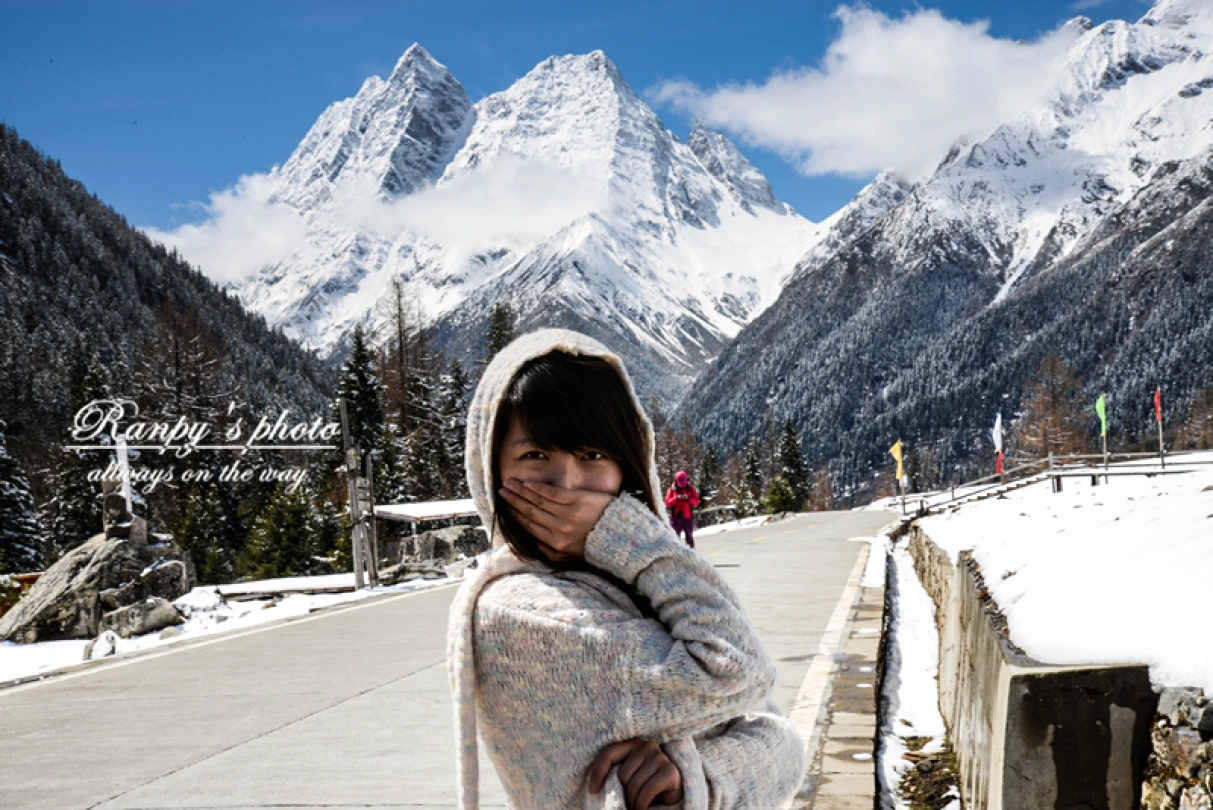
Meta Description: Discover the Western Sichuan Small Loop, a 3-day road trip from Chengdu through snow-capped mountains, Tibetan villages, and grasslands. Experience Jiajin Mountain, Mount Siguniang, Danba, and Tagong—a journey of faith and natural beauty.
Introduction: Why the Western Sichuan Small Loop Is a Bucket-List Journey
The Western Sichuan Small Loop isn't just a road trip—it's a poetic dialogue between your soul and the snow-capped peaks of the Himalayas. Setting out from Chengdu at 500 meters elevation and climbing to 4,400 meters in just three days, you'll experience all four seasons, cross ancient passes, and witness some of China's most breathtaking landscapes.
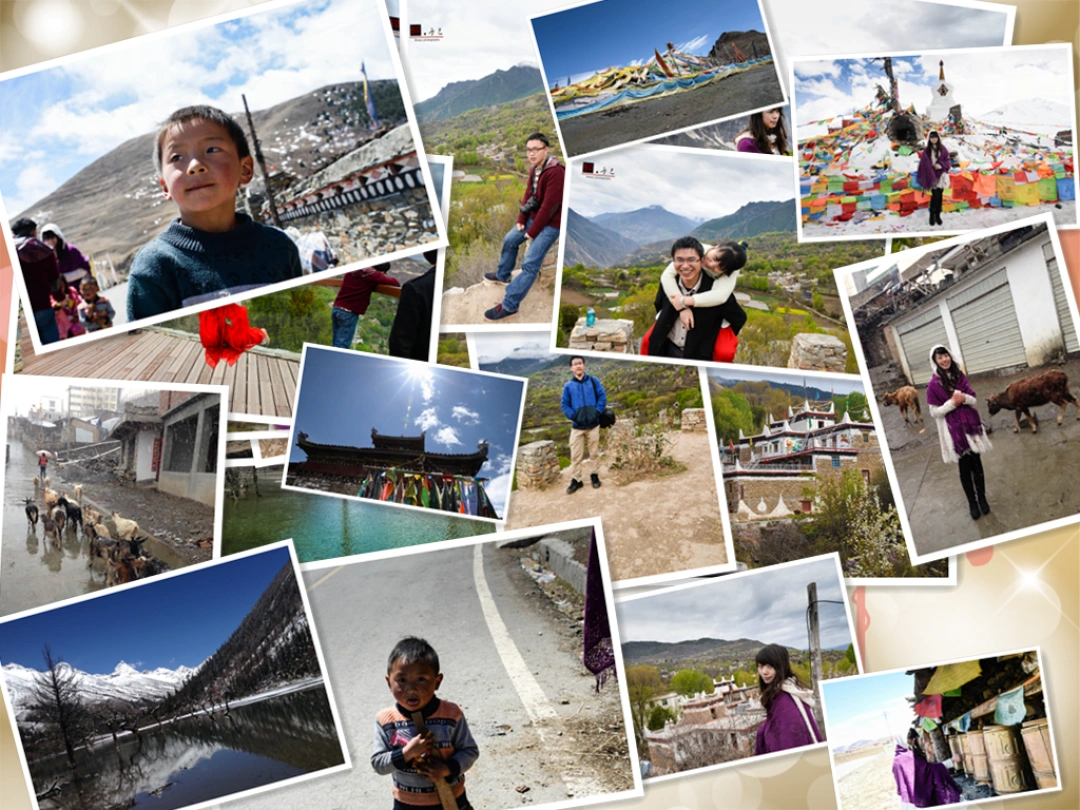
In 2014, during the Qingming Festival, I embarked on this classic route with friends: Chengdu → Ya'an → Jiajin Mountain → Mount Siguniang → Danba → Bamei → Tagong → Kangding → Chengdu. The weather forecast predicted continuous rain, but as we discovered, the charm of Western Sichuan lies in its unpredictability. This article will guide you through every highlight, practical tips, and the spiritual essence of this unforgettable loop.
[Link: Best time to visit Western Sichuan]
Crossing Jiajin Mountain: A Blizzard Adventure on the Red Army Trail
The Road Less Traveled: Why We Chose the Southern Route

Instead of the standard Yingxiu-Wolong road, we opted for the second route: passing through Ya'an, Lushan, and Baoxing, then crossing Jiajin Mountain to reach the town at the foot of Mount Siguniang. The road conditions were significantly better, but the trade-off was over 100 kilometers of winding mountain driving. At speeds of only 40–60 km/h, you quickly learn that travel time estimates don't apply here.
Jiajin Mountain: Where History Meets Hardship
Jiajin Mountain holds a special place in Chinese history—it was the first major snow mountain the Red Army climbed during the Long March. For us, it became a test of patience and preparation. Without snow chains, we encountered small hailstorms and traffic jams at the icy summit. Watching us play obliviously in the snow, our tour leader's mouth twitched with concern.
Pro tip: Always carry snow chains when crossing Jiajin Mountain between November and April. The weather can change from clear skies to blizzard conditions in minutes.
[Link: Essential gear for high-altitude road trips]
Mount Siguniang: The Oriental Alps After a Snowfall
Shuangqiao Valley: China's Snow Mountain Bonsai Park
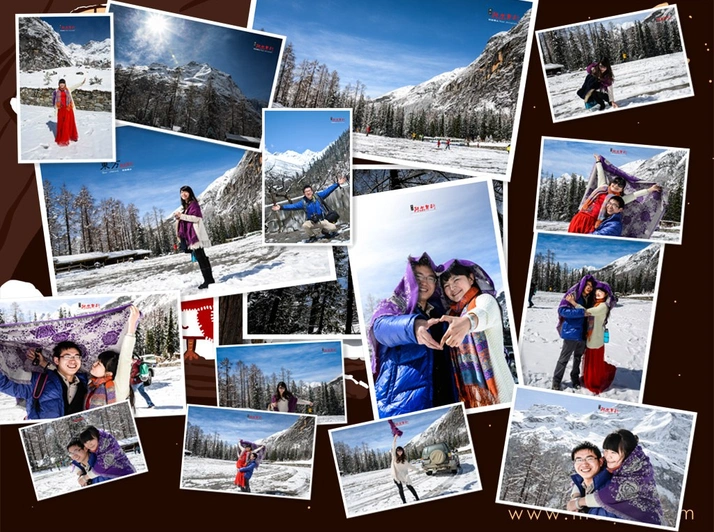
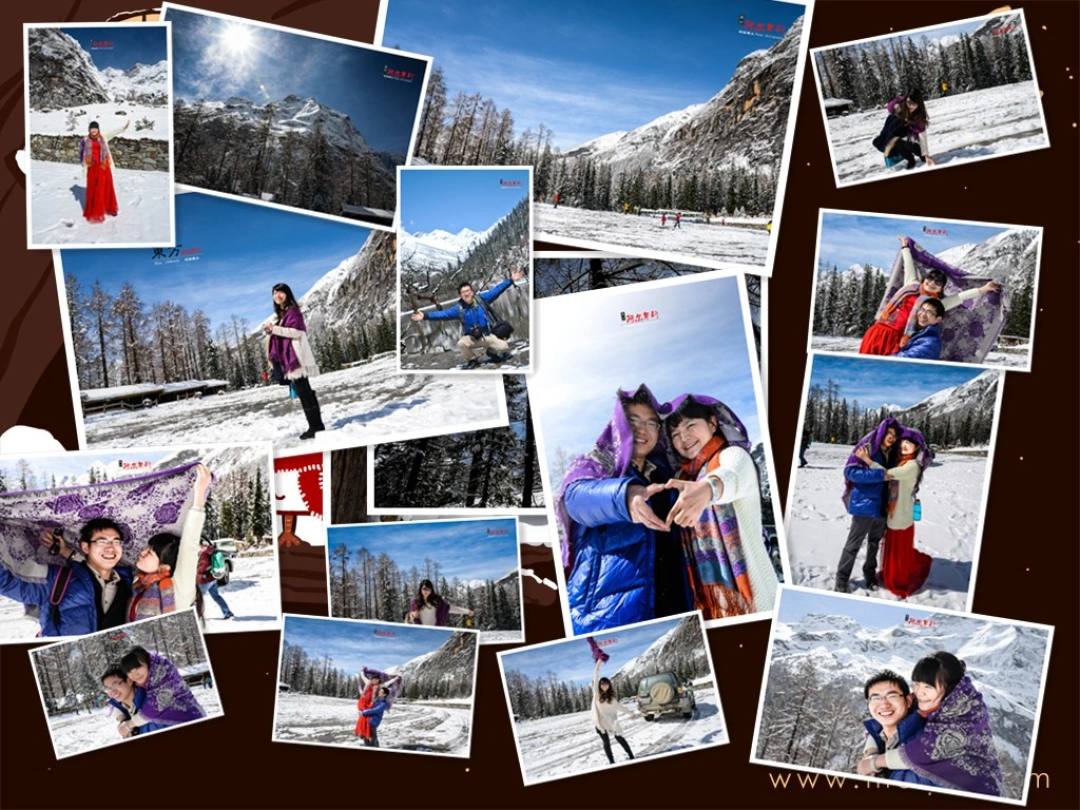
When we arrived at the town near Mount Siguniang, the forecasted rain transformed into a blizzard. As southerners, we immediately rushed into the snow like children. The next morning, the sky miraculously cleared. The post-snow sky was washed pure as a mirror, and everything was covered in a thin layer of white snow.
Our first stop was Cat's Nose Ridge, offering a full view of Mount Siguniang. The clouds hadn't fully dispersed, creating a "half-hidden behind a pipa" effect. We decided to visit Shuangqiao Valley first and return to the viewpoint at noon. Our forgetfulness about the name—calling it "Cat's Ear," "Cat's Eye," or "Cat's Nose"—added plenty of laughter to the journey.
Shuangqiao Valley is the core scenic area of Mount Siguniang. The entrance fee is 80 RMB, plus 70 RMB for the sightseeing bus (total 150 RMB). But once inside, you'll find it's absolutely worth it—over 30 kilometers of mountain roads showcase the essence of three valleys, earning it the reputation of "China's Snow Mountain Bonsai Park."
Highlights of Shuangqiao Valley
| Attraction | Elevation | Description |
|---|---|---|
| Summit Viewpoint | 3,800m | Blue skies, white snow, and a sun halo |
| Primeval Forest | 4,000m | Snow-capped peaks, yaks, and boardwalk trails |
| Potala Peak | Named after Potala Palace | White stupa at base for wish-making |
| Four Sisters Lake | 3,500m | Mirror-clear water reflecting snow peaks |
At the summit, the lush green fir trees sparkled with crystal-clear snow on their branches. The guide told us that thirty years ago, logging had damaged the area, but many fir trees have been replanted since. Plant growth is so slow at high altitudes that time seems to stand still here.
The final stop was a primeval forest at nearly 4,000 meters. Surrounded by snow-capped peaks, with blue skies and white clouds overhead, yaks and goats wandered leisurely. Walking along the boardwalk through the forest, every step brought a new surprise.
Potala Peak, named for its resemblance to the Potala Palace, was captivating, but what drew us even more was the white stupa at its base. Legend has it that circling the stupa three times can fulfill your wishes. We walked along the snow-covered boardwalk with reverence toward the white stupa, brushing past fluttering five-colored prayer flags.
At Four Sisters Lake, the water was so clear it was like a mirror, reflecting snow peaks and strange rocks. Dead trees stood silently, their colors shimmering under the sunlight. Sitting by the lake in a daze, watching the snowy mountains, meadows, and reflections—that alone was happiness.
[Link: Complete guide to Mount Siguniang hiking trails]
Danba: The Paradise of China's Most Beautiful Village
Jiaju Tibetan Village: A Fairyland in the Embrace of Sacred Mountains
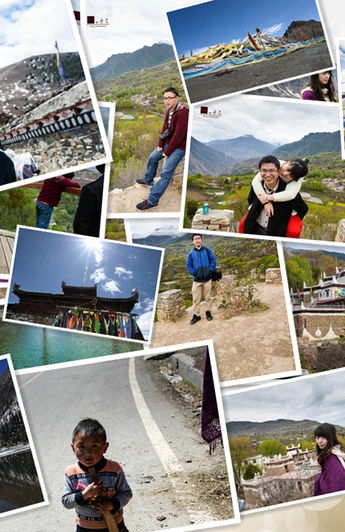
Leaving Mount Siguniang, we rushed to Danba, one of the birthplaces of the Gyalrong Tibetan people. Danba is famous for its most concentrated and beautiful Tibetan villages, hailed by National Geographic as "China's Most Beautiful Village." We visited Jiaju Tibetan Village and Niega Tibetan Village.
Where to stay: Don't stay in Danba county town—you must stay in Jiaju Tibetan Village. For 30 RMB entrance fee and 70 RMB per person covering breakfast and dinner, it's incredibly good value. The accommodation may not have private bathrooms, but the Tibetan beds are so warm that you won't worry about the cold at all. Hot water is also available.
We stayed at the Jiaju Three Sisters Hostel. The rooms were in classic Tibetan style, with bold red and purple colors matching the prayer flags, and patterns full of character. The rooftop was beautifully decorated, and the quilts were cozy. Staying in such a house, facing Mount Muerduo, with fresh air, pear blossoms in full bloom, and the option to eat roast chicken and lamb while sipping some Tibetan wine—life felt utterly delightful.
The Power of Faith: A Dialogue with the Sacred Mountains
Walking through the Tibetan villages of Danba, you forget your own existence. Local Tibetans told us that before making a pilgrimage to the Potala Palace in Lhasa, one must first pay homage to Mount Muerduo. Jiaju and Niega villages are nestled in the embrace of several sacred mountains, the most famous being Mount Muerduo, the Buyi Three Sacred Mountains, and the distant Yala Snow Mountain. Locals take three days to complete a mountain circumambulation—the power of faith and devotion is boundless.
"Jiaju" means "a hundred households" in Tibetan. The entire village stretches along the rolling hills, with Tibetan-style houses scattered among the trees. Smoke from cooking fires rises through the greenery, while distant snow-capped peaks surround the area on all sides. The whole village appeared before us like a work of art.
Night in the village: Spending the night in the village, surrounded by beautiful murals, ethnic-style soft couches, and thick woolen blankets, I felt as if I were thousands of miles away in Tibet, or perhaps transported back a thousand years. The village at night was stunning—moonlight poured down like silver, and countless stars twinkled in the sky. Walking in the silvery moonlight, only one word came to mind: paradise.
[Link: Best Tibetan villages to visit in Danba]
Tagong Grassland: The Place Where Bodhisattvas Dwell
Leaving Danba, we passed through Yak... [Continued below]
Practical Tips for the Western Sichuan Small Loop

Best Time to Visit
The Western Sichuan Small Loop is accessible year-round, but each season offers a different experience: - Spring (March-May): Pear blossoms in Danba, occasional snow at passes - Summer (June-August): Green grasslands, comfortable temperatures - Autumn (September-November): Golden foliage, clearest skies - Winter (December-February): Heavy snow, fewer crowds, challenging roads
Essential Gear Checklist

- Snow chains (mandatory November-April)
- Warm clothing (temperatures can drop below freezing at night)
- Sunscreen and sunglasses (high UV at altitude)
- Altitude sickness medication (Diamox recommended)
- Cash (ATMs are scarce in remote villages)
Altitude Acclimation Tips
- Spend a night at 2,500m (e.g., Kangding) before crossing higher passes
- Avoid alcohol and heavy meals on the first day
- Drink plenty of water (3-4 liters daily)
- Walk slowly and take frequent breaks
FAQ: Western Sichuan Small Loop
1. How many days do I need for the Western Sichuan Small Loop?
The classic route takes 3 days, but we recommend 4-5 days to fully experience each location without rushing. Add an extra day for Mount Siguniang hiking or Danba village exploration.
2. Is the Western Sichuan Small Loop suitable for first-time high-altitude travelers?
Yes, but with precautions. The highest point is 4,400 meters. Spend the first night at lower altitude (Kangding at 2,500m) to acclimatize. If you experience severe altitude sickness, descend immediately.
3. What is the road condition like on the Western Sichuan Small Loop?
Most roads are paved and well-maintained. However, sections crossing Jiajin Mountain and Zheduo Mountain can be icy in winter. Snow chains are essential November-April. Check road conditions before departure.
4. Can I drive the loop in a regular sedan?
Yes, but a SUV or 4WD is recommended, especially in winter. The winding mountain roads and occasional rough patches require a vehicle with good ground clearance.
5. What is the best accommodation option in Danba?
Jiaju Three Sisters Hostel is highly recommended for its authentic Tibetan experience, warm hospitality, and stunning views of Mount Muerduo. Book in advance during peak seasons (May, October).
Conclusion: Your Journey Awaits
The Western Sichuan Small Loop is more than a road trip—it's a pilgrimage through some of China's most sacred landscapes. From the blizzard-covered passes of Jiajin Mountain to the mirror-clear lakes of Shuangqiao Valley, from the prayer-flag-filled villages of Danba to the starry skies of Tagong Grassland, every mile offers a new revelation.
Ready to embark on your own poetic dialogue with the snowy peaks? Start planning your Western Sichuan Small Loop adventure today. [Link: Book guided tours] or [Link: Rent a car for self-drive]. The mountains are calling—answer them.
Have you traveled the Western Sichuan Small Loop? Share your experience in the comments below, or ask questions about specific sections of the route. Your insights could help fellow travelers discover this incredible journey.
You may also like


