Tracing the Shu Road: From Mianyang's Lively Streets to the Sword Gate Pass, and the Ancient Soul of Sanxingdui
Meta Description: Discover the ancient Shu Road itinerary from Mianyang to Sword Gate Pass and Sanxingdui. Explore Three Kingdoms history, Buddhist temples, street food, and UNESCO World Heritage sites in just 3 days.
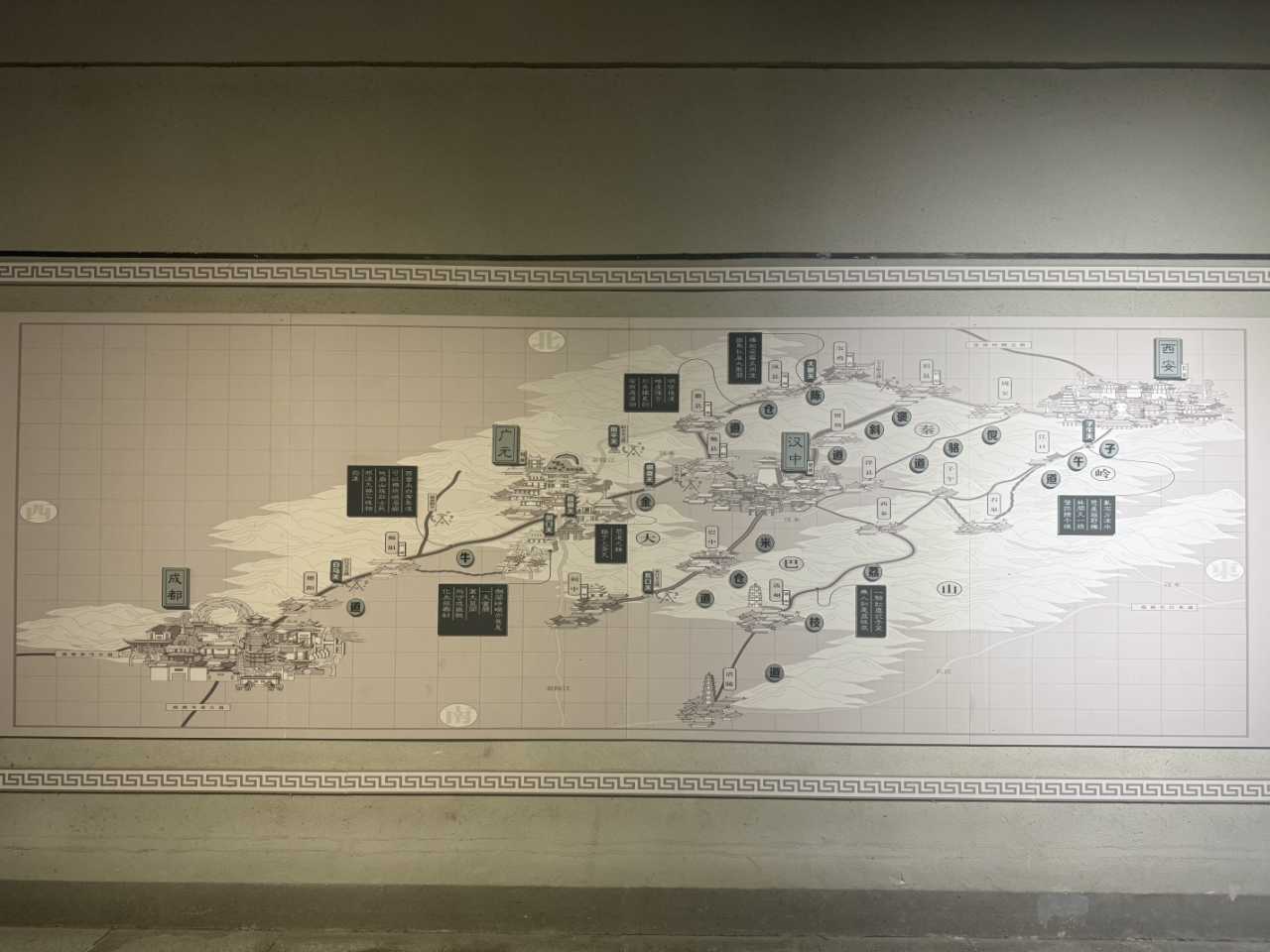
Some journeys aren't about reaching a destination—they're about colliding head-on with history along the way. A year later, our sister group's Sichuan-Chongqing reunion was back on the road. This time, we chose the Shu Road—an ancient transportation artery that cuts through the Qinling Mountains and the Daba Mountains, a route that once moved Li Bai to lament, "Harder than reaching the blue sky." Following the Golden Ox Road (Jinniu Dao) , we journeyed from the bustling streets of Mianyang to the sheer cliffs of Sword Gate Pass (Jianmen Guan) , and finally to the millennia-old echoes of Sanxingdui. In three days, we felt as if we'd traveled across three thousand years.
About the Shu Road: One Route, Half a History of China
The Shu Road isn't a single path—it's an expansive network of ancient highways. Crossing the Qinling and Daba mountain ranges, it connected the Guanzhong Plain with the Sichuan Basin, serving as a strategic corridor for central dynasties to govern the southwest and maintain national unity.
Key routes include: - Golden Ox Road (Guanzhong–Sword Gate Pass–Chengdu) - Rice Granary Road (Mizang Dao, Hanzhong–Bazhong–Nanchong) - Chen Granary Road (Chencang Dao, Baoji–Hanzhong) - Baoxie Road (Mei County–Hanzhong) - Tangluo Road (Zhouzhi–Yang County–Hanzhong) - Ziwu Road (Chang'an–Hanzhong) - Lychee Road (Fuling–Dazhou–Hanzhong) - Yinping Road (Longnan–Mianyang)
Along these routes, the Qin annexed Ba and Shu; Liu Bang seized Hanzhong and rose to rule the realm; the Three Kingdoms saw Wei and Shu battle for supremacy; the Tang Dynasty suppressed rebellions—every major historical turning point was tied to the Shu Road. Poets like Li Bai, Du Fu, and Lu You traveled these paths, leaving behind countless immortal verses. In 2015, the Shu Road was added to UNESCO's Tentative World Heritage List.
The route we chose was the Golden Ox Road—the oldest and most famous of them all.
[Link: UNESCO World Heritage tentative sites in China]
Itinerary Overview: 3-Day Shu Road Travel Guide
| Day | Date | Route | Highlights |
|---|---|---|---|
| Day 1 | Dec 20 | Ningbo → Chengdu → Mianyang → Sword Gate Pass | Ma Family Alley, Arhat Temple, Holy Water Temple, Fule Mountain, Three Kingdoms Nightless City |
| Day 2 | Dec 21 | Sword Gate Pass → Mianyang | Jade Cloud Corridor, Sword Gate Pass, Ma Family Alley, Li Huo Tang bar |
| Day 3 | Dec 22 | Mianyang → Deyang → Guanghan → Chengdu | Sanxingdui Museum, Dragon Dwelling Temple, return flight |
Wandering Mianyang: Half Zen, Half Everyday Life
Mianyang, historically known as "Fu City" (Fucheng) or "Mian Prefecture" (Mianzhou) , takes its name from its location south of Mount Mian. With over 2,200 years of history, it's the hometown of Li Bai, the birthplace of Ouyang Xiu, and a key stronghold during the Three Kingdoms period. Though we only scratched the surface, the city's layered character left a lasting impression.
One Mountain, Two Temples: A Half-Day of Zen
Driven by curiosity about Buddhist culture, we set out to explore Arhat Temple (Luohan Si) and Holy Water Temple (Shengshui Si) .
Arhat Temple: China's Largest Arhat Hall
Arhat Temple was built over more than 20 years by Master Guoqing, who began fundraising after becoming a monk in 1985. We entered through the rear mountain gate and first visited the Arhat Hall—reportedly the largest in China. Inside, 1,250 arhat statues are arranged in a "Nine Palaces and Eight Trigrams" formation, with a 16-meter-tall, four-sided, thousand-armed Guanyin statue at the center.
Walking down the path, we came upon a neat row of white pagodas with a distinctly Southeast Asian feel—a reflection of Master Guoqing's missionary work in Myanmar and beyond. On the cliffside, brightly painted Buddhist statues display varied expressions. A 46-meter-long reclining Buddha, the largest in Asia, lies in serene repose. Arhat Temple feels like a modern Buddhist kingdom with an exotic twist.
[Link: Largest Buddhist statues in China]
Holy Water Temple: Tang Dynasty Heritage with Modern Artistry
Next door, Holy Water Temple traces its history back to the Tang Dynasty, according to Mianyang County records, named after the "sacred water from the dragon's pool" (Longqiu Shengshui). Stepping inside, we entered a tranquil world of ancient monastic charm. The Auspicious Gate (Jixiang Men) features a unique design, with steps flanked by hundreds of lifelike bodhisattva carvings—each one vivid, from the wrinkles on their faces to the curves of their lips, the crowns on their heads, and even the folds of their robes, all rendered with astonishing detail.
These sculptures were created by Li Nengsheng, a local folk artist from Mianyang, and his team, blending traditional clay sculpture techniques with modern cement molding to achieve a texture resembling sandalwood.
One River of Scenery, a Full View of the Three Kingdoms
Leaving Holy Water Temple, we headed straight for Fule Mountain (Fule Shan) . The hill isn't tall, but it gained fame from the "Fu City Meeting" between Liu Bei and Liu Zhang in 211 AD during the Eastern Han Dynasty.
Climbing from the base, we were surrounded by lush greenery. This local leisure park sees few tourists. Following the service road, we quickly reached the main attraction—Fule Pavilion (Fule Ge) . This Han-style tower rises majestically atop the summit. From the top, Mianyang unfolds below: the Fu River winds like a silk ribbon around the city; high-rises stand shoulder to shoulder, complementing the distant green mountains.
For a moment, it felt as if we could hear the drums and war cries of a thousand years ago, see Liu Bei leaning on the railing, gazing at the fertile land below, and exclaiming, "How rich! What joy this day brings." That exclamation became the mountain's name.
[Link: Three Kingdoms historical sites in Sichuan]
One Alley, the Taste of Everyday Life: Mianyang Street Food Guide
Ma Family Alley (Majia Xiang) —Mianyang's ultimate food paradise. This 100-meter-long lane hidden in the city center gathers the city's most distinctive snacks, from traditional favorites to trendy treats.
Over two days, we unlocked 10 culinary delights:
| # | Dish | Where/What | Price |
|---|---|---|---|
| 1 | Mianyang Rice Noodles (Mianyang Mifen) | Yonghua Rice Noodles – 40-year institution. Beef in red broth with bean sprouts | ~10 yuan |
| 2 | Qiutang Rice Shrimp (Qiutang Mi Liang Xia) | #1 dessert in Mianyang. Sticky rice jelly with brown sugar syrup | ~7 yuan |
| 3 | Junkui Pot Helmet (Junkui Guokui) | Stuffed flatbread with minced pork belly – flaky, crispy, fragrant | – |
| 4 | Spring Rolls (Chunjuan) | Shredded potato or radish filling with sweet-and-sour sauce | – |
| 5 | Teaniste (Cha Ni Si Ti) | Local bubble tea – signature milk green tea, refreshing | – |
| 6 | Oil Tea (Youcha) | Sichuan breakfast – rice paste with crispy fried dough twists and chili oil | – |
| 7 | Xiezhi Cold Dip Skewers (Xiezhi Leng Zhan Zhan) | Boiled skewers with spicy, five-spice, or Thai-style sauces | – |
| 8 | Egg Puffs (Danhonggao) | Crispy outside, soft inside – try with sour long beans and minced pork | – |
| 9 | Xichang Snacks (Xichang Xiaochi) | Local specialties from neighboring Xichang | – |
| 10 | Various street eats | Seasonal offerings and rotating vendors | – |
Pro tip: Go hungry and share dishes to sample more.
Sword Gate Pass: The Impassable Fortress of the Shu Road
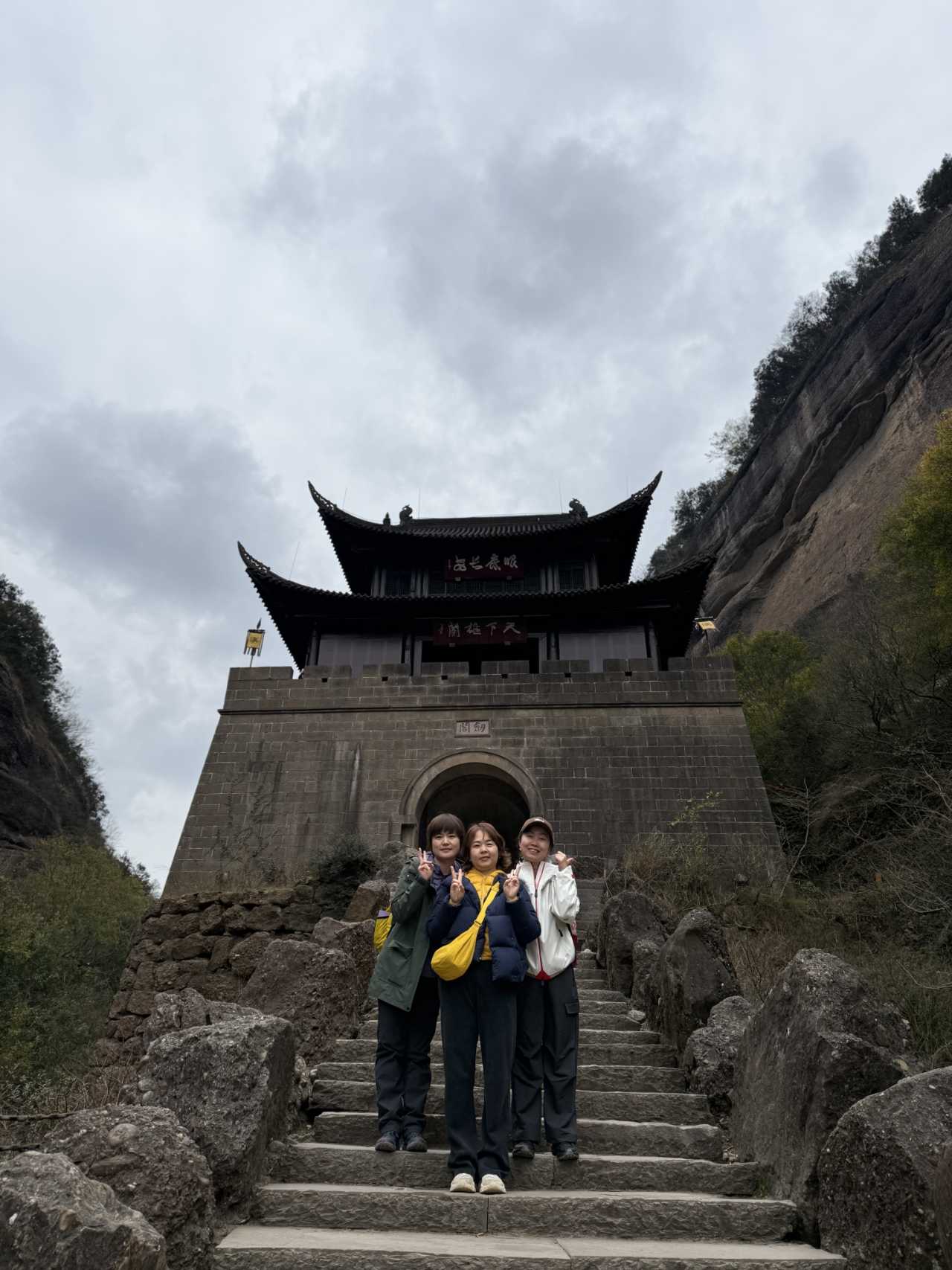
Sword Gate Pass (Jianmen Guan) is one of the most dramatic natural defenses along the Shu Road. Located at the intersection of the Jianmen Mountains and the Jialing River, this strategic pass has witnessed countless battles since the Warring States period.
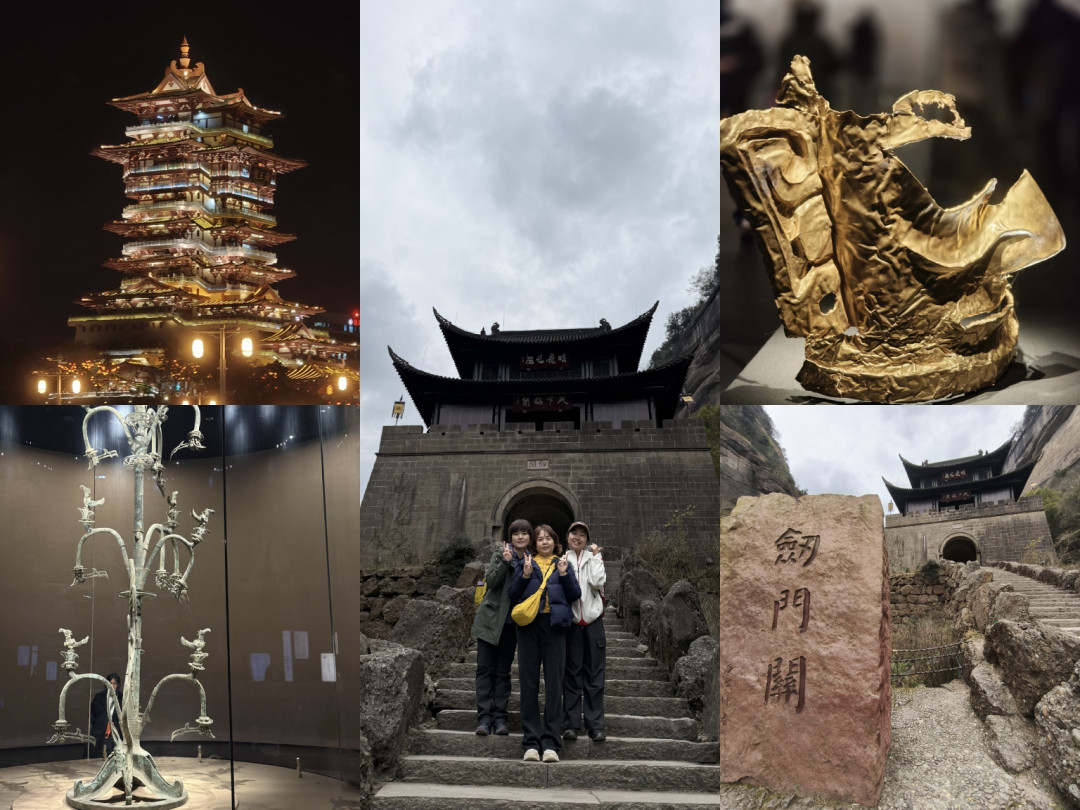
The Jade Cloud Corridor (Yuyun Lang) is a scenic walking path carved into the cliffs, offering breathtaking views of the surrounding peaks. The pass itself—a stone fortress perched between sheer cliffs—feels like stepping into a Three Kingdoms painting.
[Link: Top scenic spots on the Shu Road]
Sanxingdui: The Ancient Soul of Shu Civilization
Our final stop was Sanxingdui Museum in Guanghan, just north of Chengdu. This archaeological site, discovered in 1929, revealed a Bronze Age civilization that flourished around 1200–1000 BCE—contemporary with the Shang Dynasty but completely distinct in artistic style.
Must-see exhibits: - Bronze masks with exaggerated features (protruding eyes, wide ears) - The Bronze Sacred Tree – a 4-meter-tall ritual object - Gold foil artifacts and jade ceremonial pieces - Ivory and shell treasures indicating long-distance trade
Sanxingdui challenges everything we thought we knew about ancient Chinese civilization. It's not just a museum—it's a portal to a lost world.
[Link: Sanxingdui travel tips and ticket information]
FAQ: Planning Your Shu Road Trip
1. What is the best time to visit the Shu Road?
Spring (March–May) and autumn (September–November) offer mild temperatures and clear skies. Summer can be hot and rainy; winter is cold but less crowded.
2. How many days do I need for a Shu Road itinerary?
3–5 days is ideal for the Golden Ox Road route from Mianyang to Sword Gate Pass and Sanxingdui. For a deeper exploration of all routes, allow 7–10 days.
3. Is the Shu Road suitable for family travel?
 Yes, but some sections involve hiking and steep stairs (especially Sword Gate Pass). The Sanxingdui Museum is wheelchair accessible. Mianyang's city attractions are family-friendly.
4. What should I eat along the Shu Road?
Don't miss Mianyang rice noodles, Sword Gate Pass tofu banquet, and Guanghan hotpot. Street food in Mianyang's Ma Family Alley is a must.
5. How do I get to the Shu Road from Chengdu?
Take a high-speed train from Chengdu to Mianyang (about 40 minutes) or to Guanghan North (about 20 minutes). From Mianyang, buses and taxis connect to Sword Gate Pass (about 1.5 hours).
Ready to Trace the Shu Road Yourself?
Three days on the Golden Ox Road took us from the lively streets of Mianyang to the cliff-side fortress of Sword Gate Pass, and finally to the ancient mysteries of Sanxingdui. We walked where poets wrote, where armies clashed, and where a lost civilization left its mark on bronze and gold.
Your journey awaits. Whether you're a history buff, a food lover, or a photographer seeking epic landscapes, the Shu Road offers an unforgettable blend of culture, nature, and adventure.
👉 Book your trip today: Check train schedules from Chengdu to Mianyang, reserve your Sword Gate Pass tickets, and plan your Sanxingdui visit. Don't just read about history—walk through it.
[Link: Chengdu to Mianyang high-speed train guide] [Link: Sword Gate Pass ticket booking] [Link: Sanxingdui Museum official website]
Have you traveled the Shu Road? Share your experience in the comments below!
You may also like