Through Western Sichuan and Southern Qinghai: An Epic 13-Day Pilgrimage Through Tibet's Sacred Landscapes
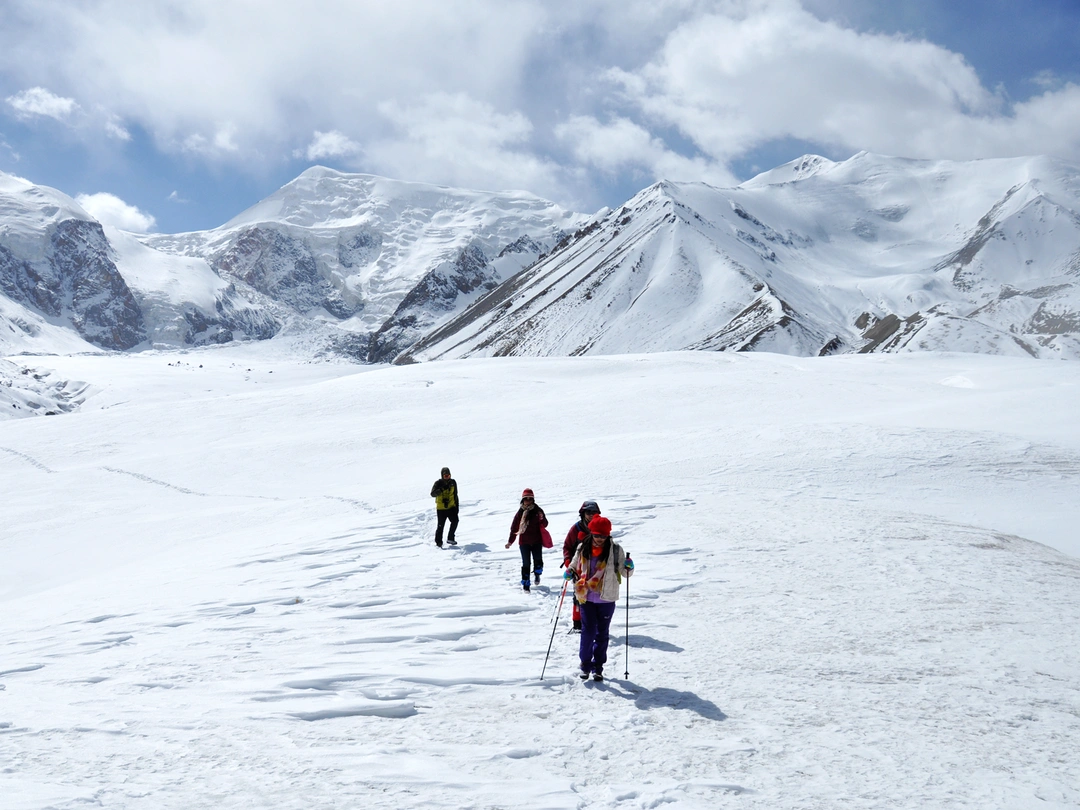
Meta Description: Discover a 3,000-kilometer pilgrimage through Western Sichuan and Southern Qinghai. From Sertar's Red City to Amnye Machen's sacred peaks, experience humanity and landscape intertwined in this off-the-beaten-path Tibetan journey.
Introduction: Why This Tibetan Pilgrimage Will Transform Your Soul
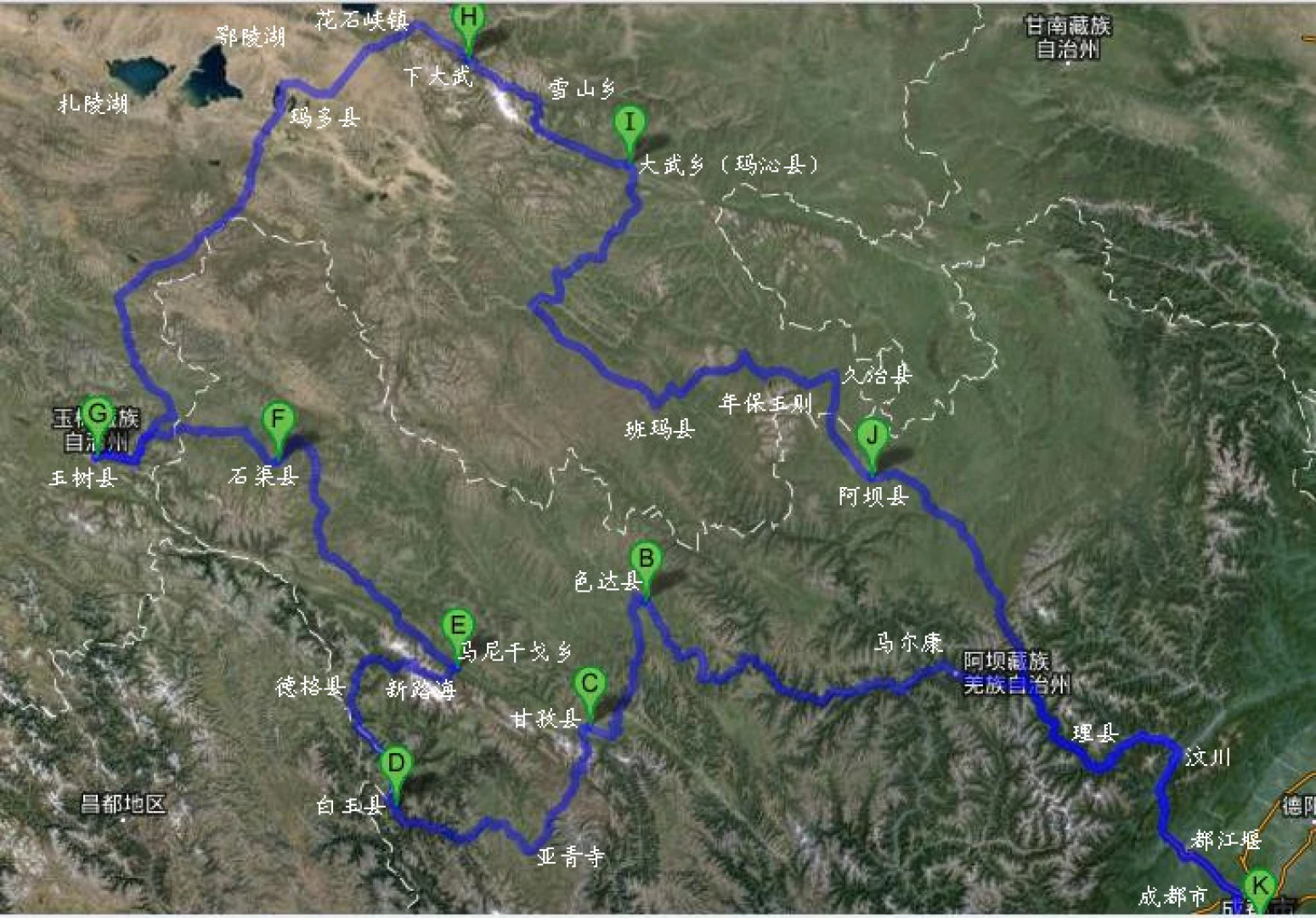
The most unforgettable journeys aren't measured in miles traveled—they're measured in moments that shake your soul. Thirteen days, two vehicles, eight travelers. Setting out from Chengdu, traversing Western Sichuan and Southern Qinghai through Barkam, Sertar, Yarchen Gar, Dêgê, Yushu, Amnye Machen, and Nyainbo Yuzê. This isn't a popular tourist route. It's a pilgrimage path where humanity and landscape intertwine in ways that defy description.
Why do we keep returning to Tibetan lands? The answer lies hidden in magnificent snow-capped mountains, devout prayer wheels spinning in the wind, and sincere smiles that transcend language barriers. Along this journey, we encountered clear skies and blizzards alike. We endured altitude sickness and experienced spiritual cleansing. It all began with a hotpot and ended with a hotpot—yet those landscapes and stories are now etched permanently into memory.
What you'll discover in this guide: - The complete 13-day, 3,000-kilometer Western Sichuan loop itinerary - Insider tips for navigating remote Tibetan regions - Cultural insights into Gyalrong Tibetan architecture and traditions - Practical advice for altitude sickness and road conditions - Hidden gems like Longxi Qiang Valley and the "Leaning Tower of Pisa" of China
Journey Overview: 3,000 Kilometers Through Western Sichuan and Southern Qinghai
The Complete Western Sichuan Loop Itinerary
Our route started from Chengdu, passing through Barkam, Sertar, Garzê, Yarchen Gar, Baiyü, Dêgê, Sêrxü, Yushu, Madoi, and circling back to Ngawa—approximately 3,000 kilometers total. This off-the-beaten-path itinerary encompasses the most exquisite human and natural landscapes of Western Sichuan and Southern Qinghai.
Key Stops at a Glance:

| Day | Route Segment | Distance |
|---|---|---|
| 1 | Chengdu → Barkam | 331 km |
| 2 | Barkam → Sertar Larung Gar | 259 km |
| 3 | Sertar → Garzê | 171 km |
| 4 | Garzê → Yarchen Gar → Baiyü | 234 km (poor roads) |
| 5 | Baiyü → Dêgê Printing Academy → Xinqinghai Lake → Manigango | 211 km |
| 6 | Manigango → Sêrxü | 220 km |
| 7 | Sêrxü → Yushu | 144 km |
| 8 | Yushu → Madoi | 331 km |
| 9 | Madoi → Two Lakes and One Stele → Xia Dawu | 292 km |
| 10 | Xia Dawu → Amnye Machen → Dawu | 134 km |
| 11 | Dawu → Nyainbo Yuzê | 356 km |
| 12 | Nyainbo Yuzê → Ngawa | 125 km |
| 13 | Ngawa → Chengdu | 487 km |
Weather Reality Check: The route delivered unpredictable conditions—overcast skies, rain, and snow. But at every key scenic spot, the heavens were kind: Sertar's evening was clear; Yarchen Gar saw clouds part to reveal the sun; Chola Mountain and Xinqinghai Lake had partly cloudy skies; Yushu's Mani Stone City was completely sunny; Amnye Machen was cloudless. The only regret was overcast weather at the Bago Mañjuśrī Wall—but no journey can be perfect. Leaving a few regrets gives you a reason to return.
[Link: Best time to visit Western Sichuan and Southern Qinghai]
First Stop: Chengdu to Barkam — A Transition from Bustle to Tranquility
A Tribute on the Dujiangyan-Wenchuan Expressway
Departing Chengdu in the morning, we took the Dujiangyan-Wenchuan Expressway. Passing through Wenchuan, the area now looks thriving and vibrant, showing no trace of the 2008 disaster. As we passed the Yingxiu junction, we silently paid our respects to those who endured that tragedy. This expressway serves as a powerful reminder of resilience—both human and natural.
Longxi Qiang Valley: An Unexpected Hidden Gem
Around 11 a.m., we stumbled upon Longxi Qiang Valley—an ethnic-themed resort with no entrance fee. The village was large, yet we saw almost no tourists, and even locals were scarce. Walking up the stone-paved path alone, I discovered a grand stage—likely the village's entertainment center during festivals. The hillside revealed a hidden world: a small body of water teeming with koi fish. Along the winding path, Qiang watchtowers stood silently, as if telling stories spanning a thousand years.
Why this matters: Longxi Qiang Valley represents the authentic, uncommercialized side of Western Sichuan travel that most tourists miss. It's a perfect example of how humanity and landscape intertwine in this region.
Gyalrong Tibetan Villages: The Three Realms of Gods, Humans, and Livestock
The houses along the way were distinctive. Most buildings in the Barkam area were constructed from stacked stone slabs, known as watchtower houses or village houses. The walls were built by layering stone slabs with yellow mud as mortar, straight on the inside and tapered on the outside in a trapezoidal shape, with upturned corners and sharp edges. On the walls, lime was used to paint symbols of heaven, earth, sun, moon, and stars.
Architectural significance: The ground floor served as a livestock pen, the upper floors were living quarters, and the top floor facing the sun was a prayer hall. This architectural style embodies the Gyalrong Tibetan concept of the "three realms" of gods, humans, and livestock, blending seamlessly with the magnificent natural surroundings.
Miyaluo and the Somo River
When we passed through Miyaluo, the leaves hadn't yet turned red. "Miyaluo" means "a fun place to play" in Tibetan, located in the Zagunao River Valley, a tributary of the Min River. When autumn winds blow, maple, ash, and birch trees gradually frost over, turning bright red and golden yellow. Three thousand square kilometers of red leaves bloom like spring flowers—but we arrived too early.
The Somo River Grand Canyon accompanied us along the way. "Somo" in Tibetan means "many watchtowers," stretching 91 kilometers with a vertical drop of 890 meters. On both banks, steep stone cliffs and lush vegetation flanked the surging Somo River. "Spring brings flowers, summer spreads green, autumn dyes the leaves red, winter turns everything to ice and snow"—this is the best summary of the Somo River's four seasons.
[Link: Best autumn foliage spots in Western Sichuan]
Zhuokeji Official Village and Zhibo Watchtowers
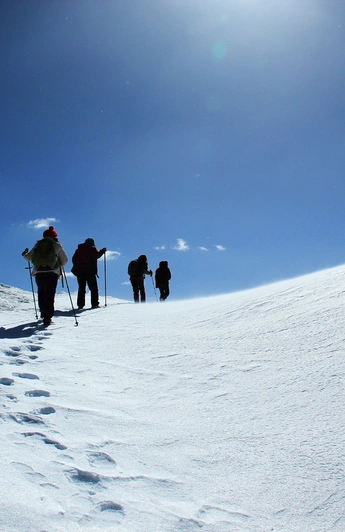
Zhuokeji Official Village is located on the banks of the Somo River east of Barkam County, nestled against mountains and facing water, with beautiful scenery. In Gyalrong Tibetan, "Zhuokeji" means "supreme," and it was originally the residence of a local chieftain.
The Songgang Zhibo Octagonal Watchtowers were even more astonishing. Built during the Qianlong reign of the Qing Dynasty by the Songgang chieftain, they are considered the pinnacle of stone-slab architecture. One 43-meter-tall octagonal watchtower has already tilted 2.3 meters yet remains standing after three major earthquakes—a Chinese version of the "Leaning Tower of Pisa." The two watchtowers face each other, creating an impregnable defensive position, with hidden passages connecting them and a well at the base that could store grain for months without spoiling.
Overnight in Guanyinqiao
Barkam is the capital of Ngawa Prefecture, meaning "the place where butter lamps are lit" in Tibetan. We didn't stop there but drove straight to Guanyinqiao Town. In the evening, our driver Brother Si loved to drink, so throughout our journey, we basically "got tipsy on revolutionary liquor every day," alternating between drunkenness and sobriety, cherishing each moment.
Second Stop: Guanyinqiao Temple — Prayer Wheels in the Morning Mist
The Road Up
At 8:30 the next morning, we set off for Guanyinqiao Temple. At the foot of the mountain, the incense-burning pagodas used by Tibetan villagers were shaped like vases—uniquely styled, the first time I'd seen such a design. Guanyinqiao Town appeared and disappeared in the morning mist, with the legendary largest prayer wheel standing within. Prayer wheels covered the mountainside, glistening in the morning light.
The road up was good but very narrow. A car had broken down, and Brother Si enthusiastically got out to help repair it. We got out and walked. At a turn in the mountain path, we found a pile of mani stones carved with scriptures.
Guanyinqiao Temple
We quickly reached the mountaintop. Below the main hall were the Eight Auspicious Symbols. Following a lama's guidance, we walked to the place for scattering prayer flags. The statue of the golden deer listening to the dharma was incredibly lifelike. At 10:30, we gathered and set off, heading for Sertar.
[Link: Tibetan Buddhist temples worth visiting in Western Sichuan]
Third Stop: Sertar Larung Gar Five Sciences Buddhist Academy — The Red City of Faith
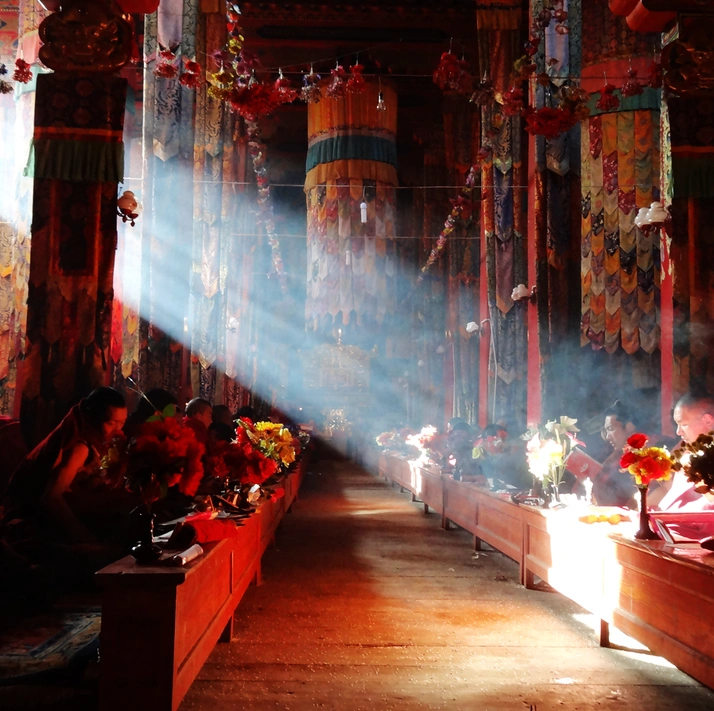
The Shock of Larung Valley
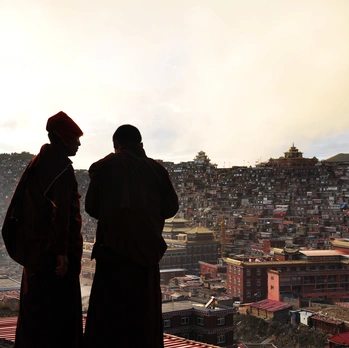
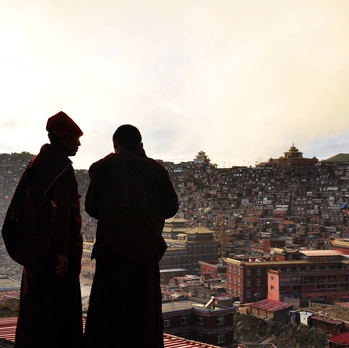
Around 5 p.m., we arrived at Sertar. The Five Sciences Buddhist Academy is located in Larung Valley, about 20 kilometers from Sertar County. As soon as we entered the valley, it was bustling with traffic and noisy crowds. After much maneuvering, we found parking and took the shuttle bus up the mountain.
What makes Sertar unique: Thousands of crimson wooden huts cling to the mountainsides, creating a sea of red that stretches as far as the eye can see. This is home to over 10,000 monks and nuns studying Buddhism. The sight is overwhelming—a physical manifestation of faith that transforms the landscape itself.
Evening at the Academy
The evening light painted the red buildings in golden hues. We walked through the narrow alleyways between huts, listening to the murmur of chanting and the spinning of prayer wheels. At the highest point, the Great Sutra Hall dominates the skyline. From here, the entire valley unfolds like a living mandala.
Pro tip: Visit during the golden hour (just before sunset) for the most dramatic photographs. The interplay of red buildings, golden light, and blue sky creates unforgettable images.
Fourth Stop: Yarchen Gar and Dêgê — Remote Monasteries and Ancient Printing
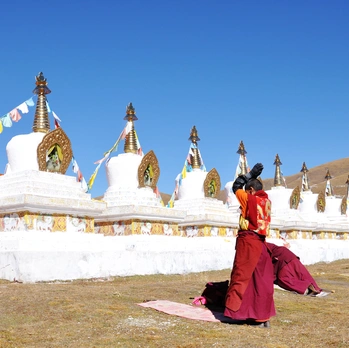
Yarchen Gar: The Hidden Nunnery
Yarchen Gar is less known than Sertar but equally impressive. It's the largest nunnery in the world, with thousands of female practitioners living in simple wooden huts. The road conditions were extremely poor—234 kilometers of rough terrain from Garzê to Baiyü via Yarchen Gar. But the reward was worth it: clouds parted to reveal the sun just as we arrived, illuminating the valley in a golden glow.
Dêgê Printing Academy: Where Scriptures Come to Life
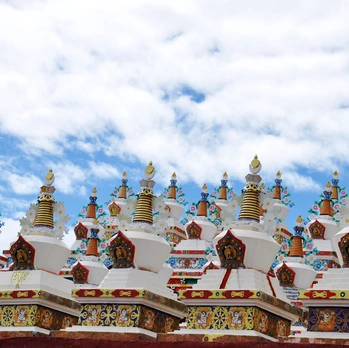
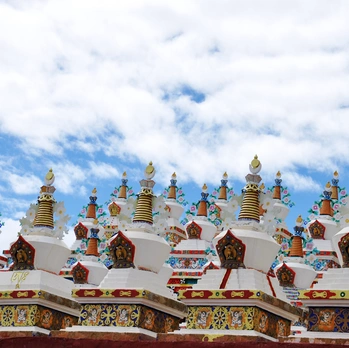
Dêgê Printing Academy is one of the most important cultural treasures in Tibet. Founded in 1729, it houses over 200,000 woodblocks for printing Buddhist scriptures. Walking through the dark, narrow corridors, you can smell the ink and hear the rhythmic thumping of printing presses. This is where ancient knowledge is preserved and reproduced, generation after generation.
What to see: The main printing hall, the woodblock storage rooms, and the courtyard where paper is dried. The entire process—from carving woodblocks to printing on handmade paper—is done on-site.
Fifth Stop: Yushu and the Mani Stone City — A Testament to Devotion
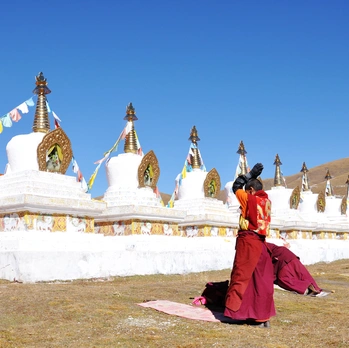
Yushu Mani Stone City
Yushu's Mani Stone City is the largest collection of mani stones in the world—over 2 billion carved stones stacked into walls, pagodas, and mounds. Walking through this labyrinth of faith, you see scriptures, mantras, and Buddhist images carved into every surface. The stones have been accumulating for over 300 years, each one a prayer offered by pilgrims.
The experience: We visited on a completely sunny day, which made the colorful prayer flags and white stones glow. Local pilgrims walked clockwise around the stone city, spinning prayer wheels and murmuring mantras. The atmosphere was peaceful yet powerful—a tangible connection between human devotion and the landscape.
Xinqinghai Lake
On the way from Dêgê to Yushu, we stopped at Xinqinghai Lake. With partly cloudy skies, the lake reflected the changing light in shades of blue and green. Unlike the famous Qinghai Lake, Xinqinghai Lake is relatively unknown, offering solitude and pristine beauty.
Sixth Stop: Amnye Machen — The Sacred Mountain of Eastern Tibet
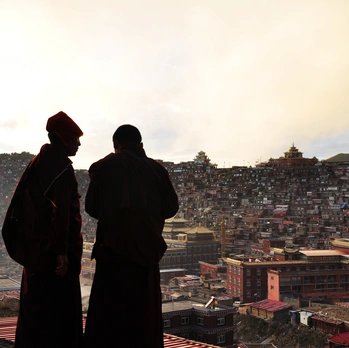
Approaching the Holy Peak
Amnye Machen (6,282 meters) is one of the most sacred mountains in Tibetan Buddhism. It's considered the dwelling place of a powerful deity and is circumambulated by pilgrims in a multi-day kora. We arrived on a cloudless day—a rare blessing that allowed us to see the peak in all its glory.
The landscape: The mountain rises abruptly from the grassland, its glaciers gleaming in the sunlight. Below, nomads' black tents dot the green valleys, and yaks graze peacefully. This is the heart of Tibetan nomadic culture, unchanged for centuries.
The Amnye Machen Kora
While we didn't complete the full kora (which takes 7-10 days), we walked a short section to experience the pilgrimage atmosphere. Pilgrims prostrate themselves full-length on the ground, rising and repeating the motion thousands of times. Their devotion is humbling—a reminder that this landscape is not just beautiful, but sacred.
[Link: How to plan an Amnye Machen kora pilgrimage]
Seventh Stop: Nyainbo Yuzê and the Return to Ngawa
Nyainbo Yuzê: The Last Great Peak
Nyainbo Yuzê (5,368 meters) is the highest peak in the Nyainbo Yuzê mountain range. We arrived in the late afternoon, when the setting sun painted the snow-capped peak in shades of pink and orange. The contrast between the rugged mountain and the green grasslands below was breathtaking.
The Final Stretch to Ngawa
From Nyainbo Yuzê, we drove to Ngawa (125 km), our last stop before returning to Chengdu. Ngawa is a Tibetan town with a beautiful monastery and a relaxed atmosphere. We spent our final evening eating hotpot—just as we had started the journey—reflecting on the landscapes and stories now deeply etched in memory.
Practical Tips for Your Western Sichuan and Southern Qinghai Pilgrimage
Altitude Sickness Preparation
Altitude sickness is a real concern on this route, with elevations ranging from 3,000 to 5,000 meters. Here's what worked for us:
- Acclimatize gradually: Spend a night at moderate altitude (3,000-3,500m) before going higher
- Medication: Bring acetazolamide (Diamox) and consult your doctor
- Hydration: Drink 3-4 liters of water daily
- Avoid alcohol: Despite Brother Si's enthusiasm, alcohol worsens altitude symptoms
- Symptoms to watch: Headache, nausea, dizziness, shortness of breath
Road Conditions and Vehicle Requirements
- Vehicle type: High-clearance 4WD is essential for sections like Garzê to Baiyü
- Fuel stations: Limited in remote areas—fill up whenever possible
- Weather: Be prepared for snow at any time, even in summer
- Navigation: Download offline maps; cell service is unreliable
Cultural Etiquette
- Photography: Always ask permission before photographing people or inside monasteries
- Circumambulation: Walk clockwise around temples, stupas, and mani stones
- Dress code: Cover shoulders and knees; remove shoes before entering temples
- Donations: Bring small bills for offering to monasteries and beggars
Frequently Asked Questions About Western Sichuan and Southern Qinghai Travel
Q1: When is the best time to visit Western Sichuan and Southern Qinghai?
A: The best time is May to October, when temperatures are milder and roads are mostly passable. July and August offer the greenest landscapes and most festivals, but also the most rain. September and October provide clear skies and autumn colors, especially in Miyaluo. Avoid November to April when many roads close due to snow.
Q2: Is this route suitable for first-time visitors to Tibet?
A: This is an advanced route. First-time visitors should start with easier destinations like Shangri-La or Lhasa. The combination of high altitude, poor roads, and remote locations requires experience and preparation. If you're determined to try, join an organized tour with experienced drivers.
Q3: How much does a 13-day Western Sichuan and Southern Qinghai trip cost?
A: Budget approximately 8,000-15,000 RMB per person (1,100-2,100 USD), depending on vehicle rental, accommodation, meals, and entrance fees. Renting a 4WD with driver costs about 1,000-1,500 RMB per day. Budget hotels range from 150-400 RMB per night.
Q4: Do I need special permits to visit these areas?
A: Foreign nationals need a Tibet Travel Permit for Lhasa and Shigatse, but not for Western Sichuan and Southern Qinghai (which are in Sichuan and Qinghai provinces, not Tibet Autonomous Region). However, some areas near the border may have restrictions. Check with local authorities before traveling.
Q5: What should I pack for a Western Sichuan pilgrimage?
A: Essential items include: warm layers (temperatures can drop below freezing even in summer), waterproof jacket and pants, sturdy hiking boots, sun protection (hat, sunglasses, SPF 50+ sunscreen), altitude sickness medication, first-aid kit, power bank, and a reusable water bottle. Don't forget your camera—the landscapes are extraordinary.
Conclusion: Why This Pilgrimage Will Change You
Thirteen days, two vehicles, eight people. Three thousand kilometers through Western Sichuan and Southern Qinghai. We started with hotpot and ended with hotpot, as if we had never left. Yet those landscapes and stories are now deeply etched in memory.
This isn't a journey for everyone. It requires endurance, flexibility, and an open heart. But for those who make the journey, the rewards are immeasurable: the crimson sea of Sertar, the devotion of Yarchen Gar, the ancient wisdom of Dêgê, the sacred peak of Amnye Machen, and the countless smiles of Tibetan people along the way.
Your next step: Start planning your own Western Sichuan and Southern Qinghai pilgrimage. Whether you're drawn by faith, photography, or simply the desire to experience something real, this route offers an encounter with humanity and landscape that will stay with you forever.
Ready to embark? [Link: Book a guided Western Sichuan and Southern Qinghai tour] or [Link: Download our complete packing checklist and itinerary template]
Have you traveled through Western Sichuan or Southern Qinghai? Share your experiences in the comments below—we'd love to hear about your own pilgrimage moments.


