Through Time on a Narrow Gauge: Meeting the Last Steam Locomotive on the Bashi Railway
Meta Description: Discover the magic of the Jiayang Little Train, China's last narrow-gauge steam locomotive. Ride through rapeseed flower fields on the Bashi Railway in Sichuan. A train enthusiast's pilgrimage.
Introduction: A Whistle That Echoes Through a Lifetime
In a lifetime, there are only so many things you can do. But some experiences are worth pouring your heart into. For example, on a spring morning, boarding a narrow-gauge steam train billowing white smoke, gliding through golden rapeseed flower fields, and riding into a forgotten era.

This is the story of the Bashi Railway in Qianwei County, Leshan, Sichuan—home to the Jiayang Little Train, the last operational narrow-gauge steam locomotive in China. For steam train enthusiasts worldwide, this is a holy site. Every March, when the rapeseed flowers bloom, the image of the train crossing the sea of flowers becomes its most dazzling calling card. After years of longing, I finally arrived.
The Beginning: One Whistle, a Lifelong Obsession
I'm a train enthusiast—more precisely, a devoted follower of steam locomotives. This obsession began in childhood. Whenever I wouldn't stop crying, my grandmother or uncle would carry me to the railway tracks not far from home. Those pitch-black steel beasts, spewing thick smoke, with their red driving wheels roaring and spinning, and the deafening noise they made as they thundered past—they could instantly calm me down. I would stare blankly at them until the black smoke disappeared around the distant bend. Watching trains became the most extravagant joy of my childhood.
During my school years, opportunities to travel were rare, but every time I went on a trip, I stubbornly chose the train. After the college entrance exams, even though there were good universities in my hometown, I deliberately filled in my preferences for a neighboring province—just so I could take a few more green trains during winter and summer breaks. Trains were never just a means of transportation; they were the bridge between me and distant places. And this time, because of the steam locomotive, it finally became my travel destination.
In Qianwei County, Leshan, Sichuan, there is a Bashi Railway, where a narrow-gauge steam locomotive has been running for sixty years. Originally used to transport coal, then passengers, and now turned into a sightseeing train, this old-timer named the "Jiayang Little Train" has made three difficult transformations in the tide of the times. It's a holy site for steam enthusiasts worldwide. Every March, when the rapeseed flowers bloom, the image of the train crossing the sea of flowers has become its most dazzling calling card. After years of longing, I finally arrived.
[Link: Best time to visit Leshan for rapeseed flowers]
Shixi Station: The Forgotten Starting Point, Full of Surprises
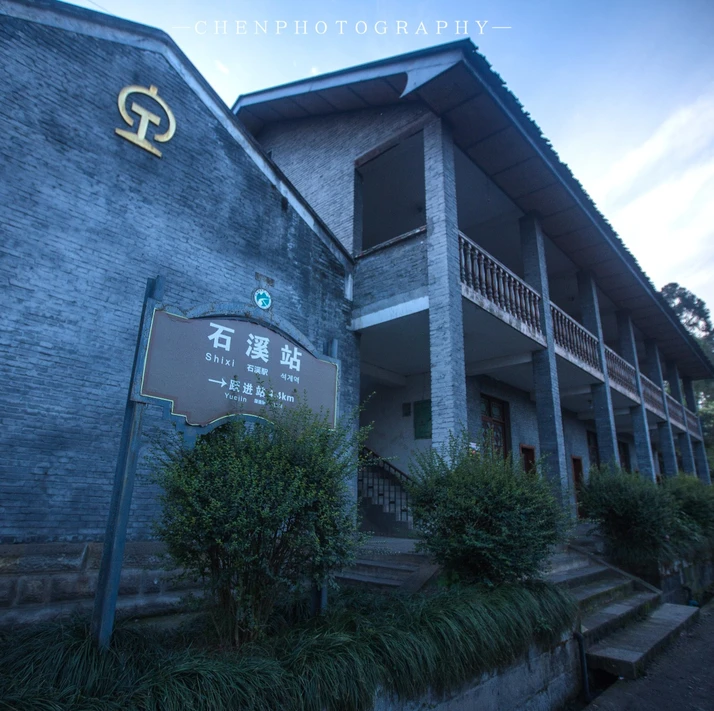
Shixi Station is the starting point of the Bashi Railway, hidden halfway up a hill in Shixi Town along the Min River. It's not within the core scenic area of the Jiayang National Mine Park, nor is it the departure point for the sightseeing train. So for most tourists, it's a hidden gem.
Drive to the town's Red Cross Hospital, go up a big slope next to it, take a couple of steps along the stairs, turn a corner, and the platform appears. The platform is less than thirty meters long, with a dispatch room and a waiting room—each less than ten square meters—and a small restaurant next to it. Except for the office building and signboard on the opposite side of the platform, which are new, everything here has been preserved as it was decades ago. As soon as I arrived, I encountered a returning steam locomotive—no smoke, no steam, no whistle—just silently passing by me, like a silent old man.
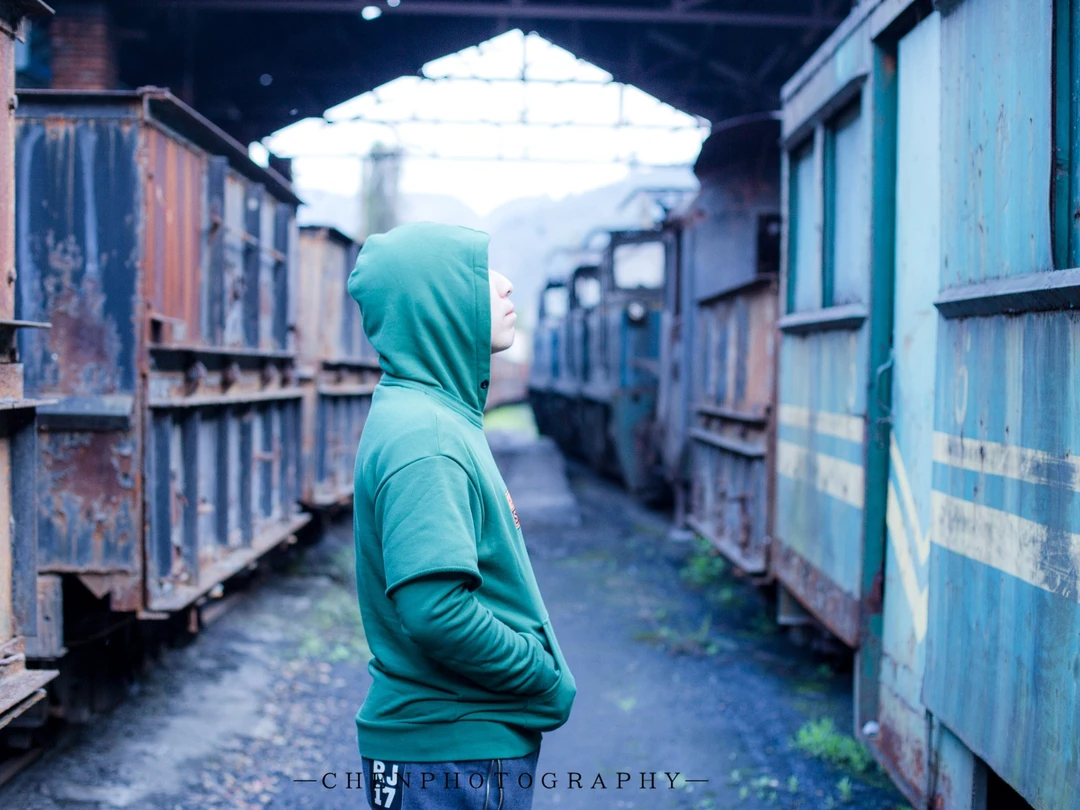
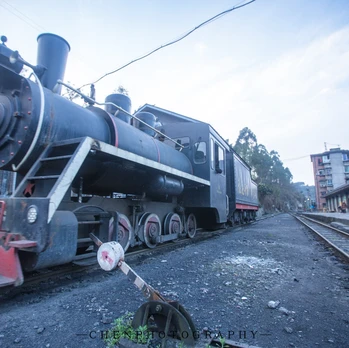
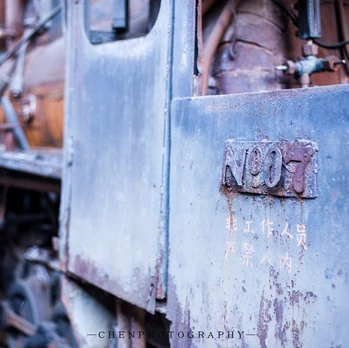
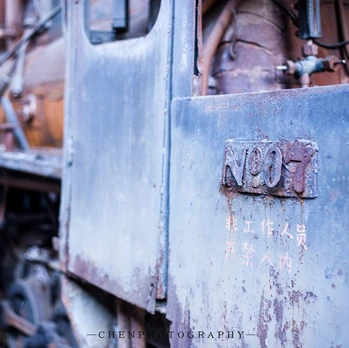
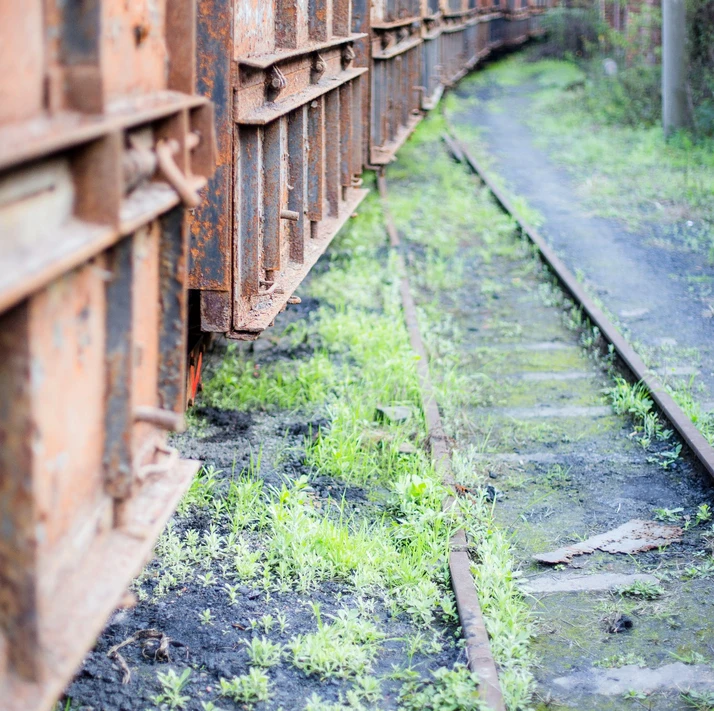
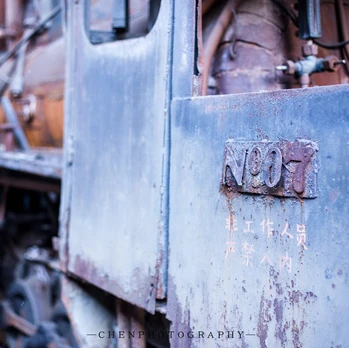
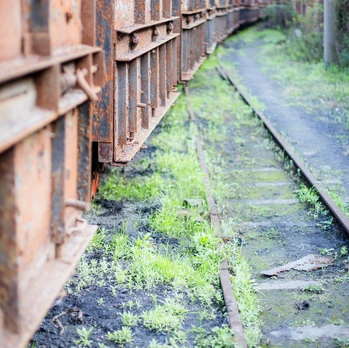
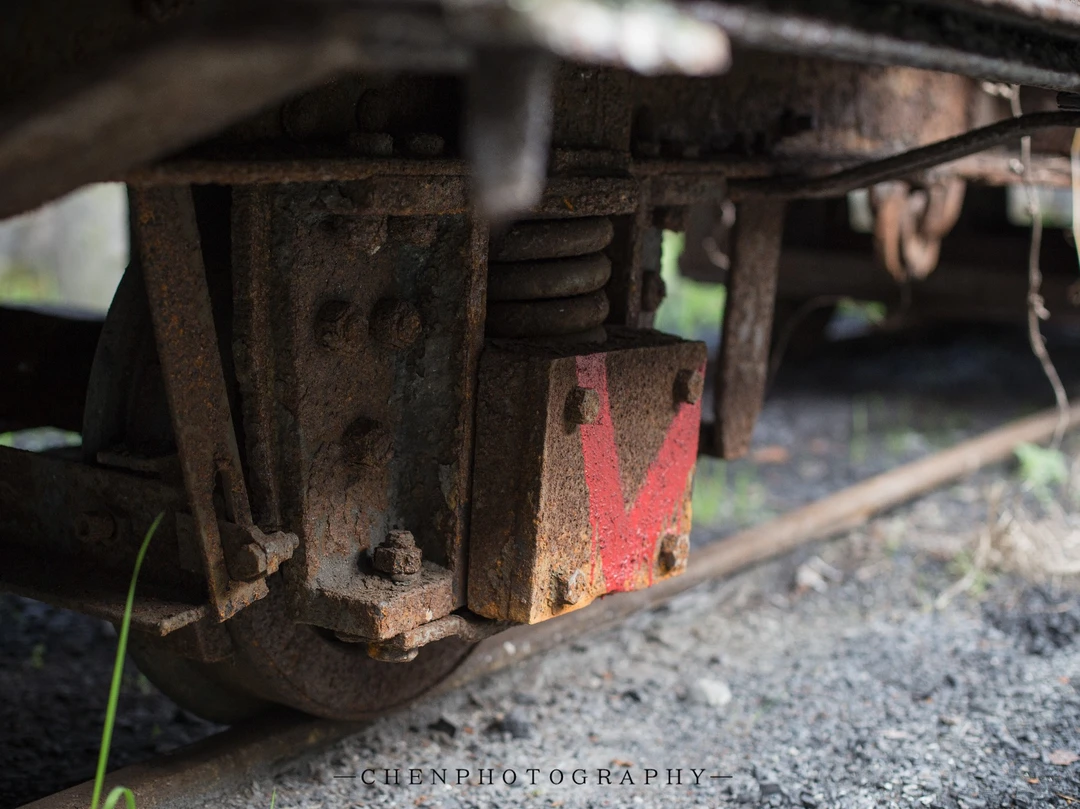
At the end of the platform is the locomotive shed. On two abandoned tracks nearby lay a scrapped steam locomotive, a few discarded carriages, and a string of coal wagons. To others, this is scrap metal; to a train enthusiast like me, it's priceless.
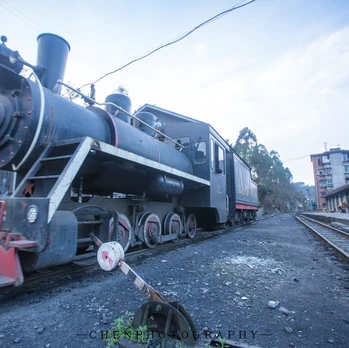
What excited me most was discovering two convex-shaped DC overhead wire electric locomotives among that pile of scrap! It was an unexpected bonus. Before setting out, I had accidentally learned that the Mojiang Coal and Electricity Company in Shawan District, Leshan, also had such narrow-gauge electric locomotives, which used to transport locals. I spent an entire night frantically searching online, only to find information that they had "been decommissioned long ago, even dismantled." The next day, unwilling to give up, I called around to the Mojiang Subdistrict Office and Caoba Community, and heard with my own ears, "They were dismantled in 2016, and not even the tracks remain." I had to give up. But two days later, at Shixi Station, this regret was so luckily compensated.
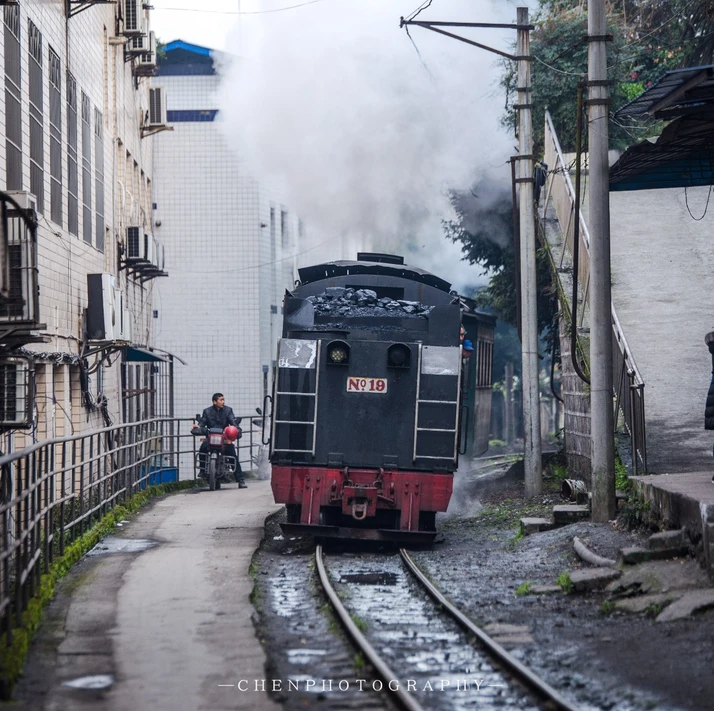
Walking along the tracks toward Yuejin, I saw local villagers everywhere on the railway. For them, walking on the tracks is much more convenient than on the road below. Soon, from around the corner of the hillside, a long-lost whistle suddenly sounded—sharp, bright, yet so pleasant. It was the clearest sound from my childhood memories. In an instant, an old black steam locomotive roared out of the white mist. I was so surprised that I didn't have time to adjust my camera settings; I just raised my camera and fired off a burst of shutter clicks.
As it got dark, I returned to Shixi Station, reluctant to leave. I paced up and down the tracks inside the station, stood silently outside the shed, looking at the steam locomotive still gently panting inside. Goodnight, Shixi. I'll be back tomorrow morning.
[Link: How to get to Shixi Station from Leshan city]
Yuejin Station: The Steam Locomotive's Stage, Busy and Touching
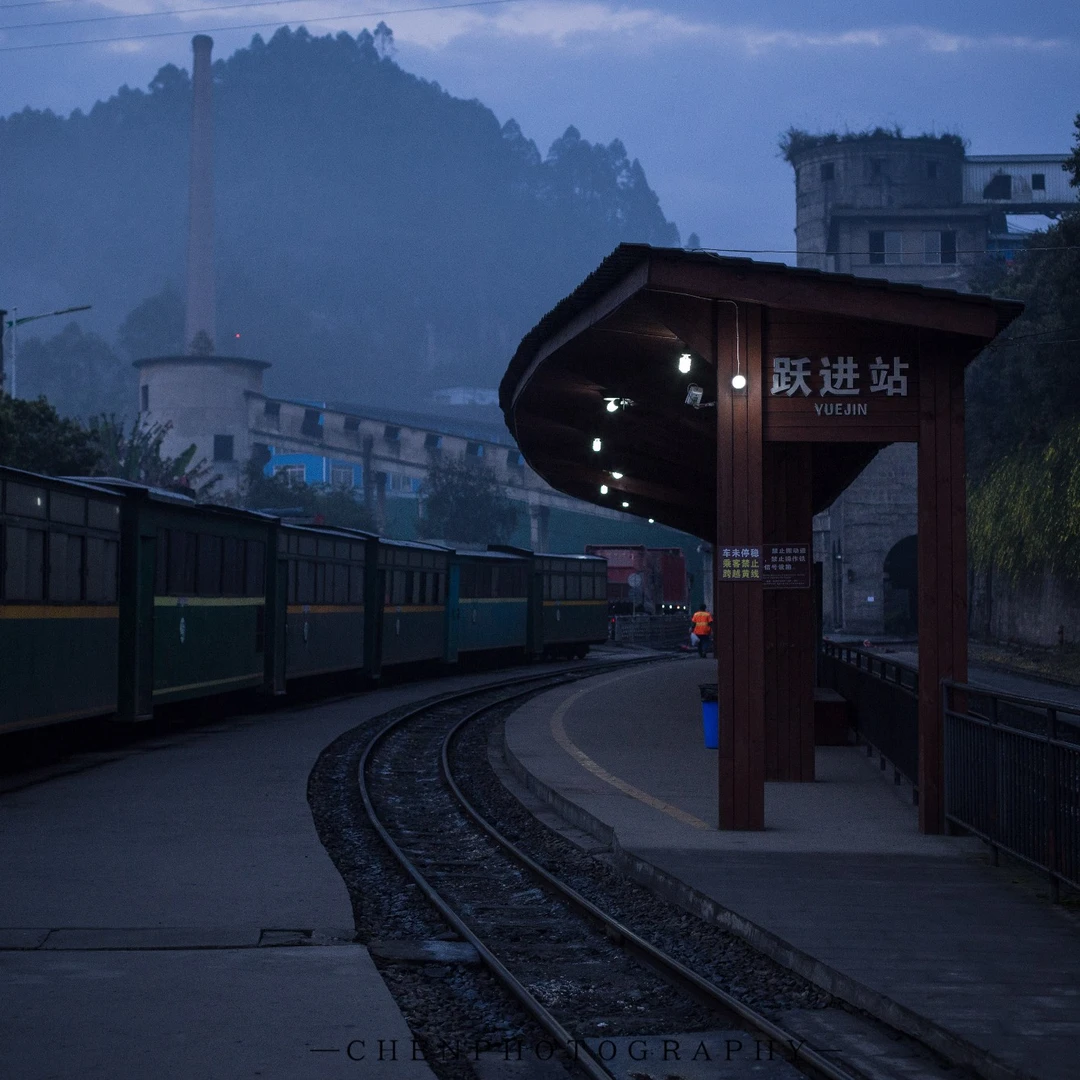
The next morning, with a mix of nervousness and excitement, I rushed to Shixi Station again. Before seven o'clock, the platform was half-dark, with about seven or eight people waiting for the train to Bagou Town. As soon as I reached the platform, the locomotive had already been positioned and coupled to the carriages. No one asked who I was; I stepped up and boarded.
No advance ticket is needed for the regular train; someone collects the fare after boarding. I only rode one stop to Yuejin, costing five yuan. The old ticket seller kindly reminded me: "This train goes all the way to Bagou, no extra charge." Unlike the sightseeing train, the regular train's carriages have iron railings, allowing for separation of people and livestock. Along the sides, there are some bench seats, but space is limited, so most people have to stand. The side windows are open with railings, now fitted with glass panes, so the coal smoke smell isn't as strong.
Opening the window, I stuck my head out to take in the starting scenery of the Bashi Railway. Coal ash scattered along the tracks, occasional dilapidated houses, and sparse rapeseed flower fields on both sides. With the clattering sound of the rails, in less than fifteen minutes, the regular train entered Yuejin Station. As soon as the doors opened, before the passengers inside could get off, the crowd waiting on the platform surged in, instantly filling the entire carriage. We rushed as fast as we could to the tourist service center to buy tickets for the scenic sightseeing train.
We arrived at the tourist service center just as it opened. Even so, there were already fifty or sixty people ahead of us. Unsurprisingly, the eight o'clock tickets sold out instantly, and the nine o'clock ones only had standing tickets left. Looking at the mist spreading through the mountains, we decisively grabbed two ten o'clock one-way tickets. With two and a half hours until departure, we decided to have breakfast in town and take a good look at the steam locomotive.
Behind the tourist service center, there's a row of breakfast shops backed by the railway. We tried douhua fan (tofu pudding rice) and Yibin ranmian (spicy Yibin noodles), both delicious. Most importantly, it's very convenient to photograph the train here—just come out when you hear the whistle, and you're sure to capture some interesting scenes.
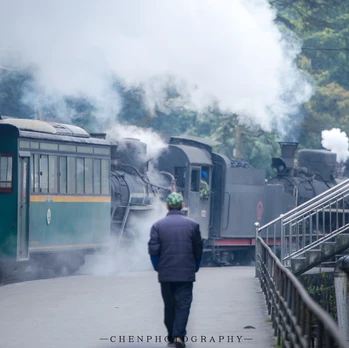
For steam enthusiasts, unless you wait along the railway line, once you board the sightseeing train, the only places to truly appreciate the steam locomotive are Yangjiawan and Liangshuituo. So be sure to spend more time at Yuejin Station. Watching them add coal, dump slag, or check the locomotive's condition is especially fascinating. The drivers shovel coal into the boiler, one shovel at a time, checking every detail meticulously. Since spare parts for domestic steam locomotives stopped production twenty years ago, if an existing locomotive has a problem, either parts are taken from other locomotives, or they are custom-made by hand.
[Link: Top photography spots on the Bashi Railway]
The Sightseeing Train Experience: Riding Through Golden Fields
At precisely ten o'clock, the sightseeing train departed from Yuejin Station. The carriages are more comfortable than the regular train, with glass windows and padded seats. But the real magic happens when the train emerges from the tunnels and enters the rapeseed flower fields.
The Bashi Railway winds through the hills of Qianwei County, passing through several short tunnels and over small bridges. In March, the fields on both sides are a brilliant yellow. The black steam locomotive, with its white plume of smoke, cuts through the golden sea like a time machine. Passengers lean out of the windows, cameras and phones raised, trying to capture the moment.
The train slows down at Yangjiawan, a famous photo spot where the track curves gracefully through the flowers. Here, the driver often gives a long whistle, and the locomotive releases a dramatic burst of steam. It's a photographer's dream.
At Liangshuituo, the train stops for a few minutes. You can get off and walk alongside the locomotive, feeling the heat radiating from the boiler and the coal smoke in the air. The drivers are friendly and often happy to chat with enthusiasts. They know they are keeping a piece of history alive.
The two-hour journey ends at Bagou Town, the terminus of the railway. Here, you can visit the Jiayang National Mine Park and learn about the coal mining history of the region. But for me, the highlight was always the ride itself—the sound of the whistle, the rhythm of the wheels, the smell of coal and flowers mixing in the spring air.
[Link: Jiayang National Mine Park visitor guide]
Practical Tips for Visiting the Bashi Railway
How to Get There
 - By car: Drive to Qianwei County, Leshan, Sichuan. Follow signs to Shixi Town or Yuejin Town. - By public transport: Take a bus from Leshan to Qianwei, then a local bus to Shixi or Yuejin.
Best Time to Visit
 - March to April: Rapeseed flowers in full bloom. This is the most photogenic time. - October to November: Autumn colors, fewer crowds.
Ticket Information
 - Regular train (Shixi to Bagou): No advance ticket needed. Fare collected on board. About 5 yuan per stop. - Sightseeing train (Yuejin to Bagou): Book early, especially during peak season. One-way or round-trip tickets available.
What to Bring
- Camera: You'll want to capture the steam locomotive in action.
- Mask: Coal smoke can be heavy, especially near the locomotive.
- Comfortable shoes: You may walk along the tracks to find the best photo spots.
[Link: Leshan travel itinerary for train enthusiasts]
FAQ: Everything You Need to Know About the Bashi Railway
1. Is the Jiayang Little Train still running in 2025?
 Yes, the Jiayang Little Train is still operational. It runs daily, though schedules may vary by season. It's best to check the latest updates from the Jiayang National Mine Park official website or local tourism boards.
2. Can I ride the regular train instead of the sightseeing train?
 Absolutely. The regular train departs from Shixi Station and is used by locals for daily transport. It's cheaper and more authentic, but less comfortable. You can ride it all the way to Bagou or just one stop to Yuejin.
3. How long is the entire railway line?
 The Bashi Railway is about 19.8 kilometers long. The full journey from Shixi to Bagou takes approximately 1.5 to 2 hours, depending on stops and freight operations.
4. Is the Bashi Railway suitable for families with children?
 Yes, it's a family-friendly attraction. Children love the steam locomotive and the train ride through the countryside. However, be mindful of coal smoke and keep a safe distance from the locomotive when it's moving.
5. Are there any other narrow-gauge steam trains in China?
The Jiayang Little Train is the only narrow-gauge steam locomotive still in regular operation in China. However, there are preserved steam railways in places like Huanan, Heilongjiang and Shizuishan, Ningxia, but they are not as historically continuous as the Bashi Railway.
[Link: Other steam train experiences in China]
Conclusion: A Journey Worth Taking
For me, the Bashi Railway was more than a travel destination. It was a pilgrimage to my childhood memories. The sound of the whistle, the smell of coal, the sight of the black locomotive emerging from the mist—it all came flooding back.
If you are a train enthusiast, a photographer, or simply someone who loves unique travel experiences, put the Jiayang Little Train on your bucket list. It's not just a ride; it's a journey through time. The last steam locomotive on the narrow gauge is still running, but it won't last forever. Spare parts are scarce, and the drivers are aging. Go while you still can.
Plan your trip today. Book your tickets, pack your camera, and get ready to hear that whistle echo through the golden fields of Sichuan. You won't regret it.
[Link: Book your Leshan and Bashi Railway tour package]
Have you visited the Bashi Railway or another steam train attraction? Share your experience in the comments below. And if you found this guide helpful, share it with fellow train enthusiasts!