Three Days in Libo: Exploring Guizhou's Hidden Mountain-and-Water Wonderland from Beijing
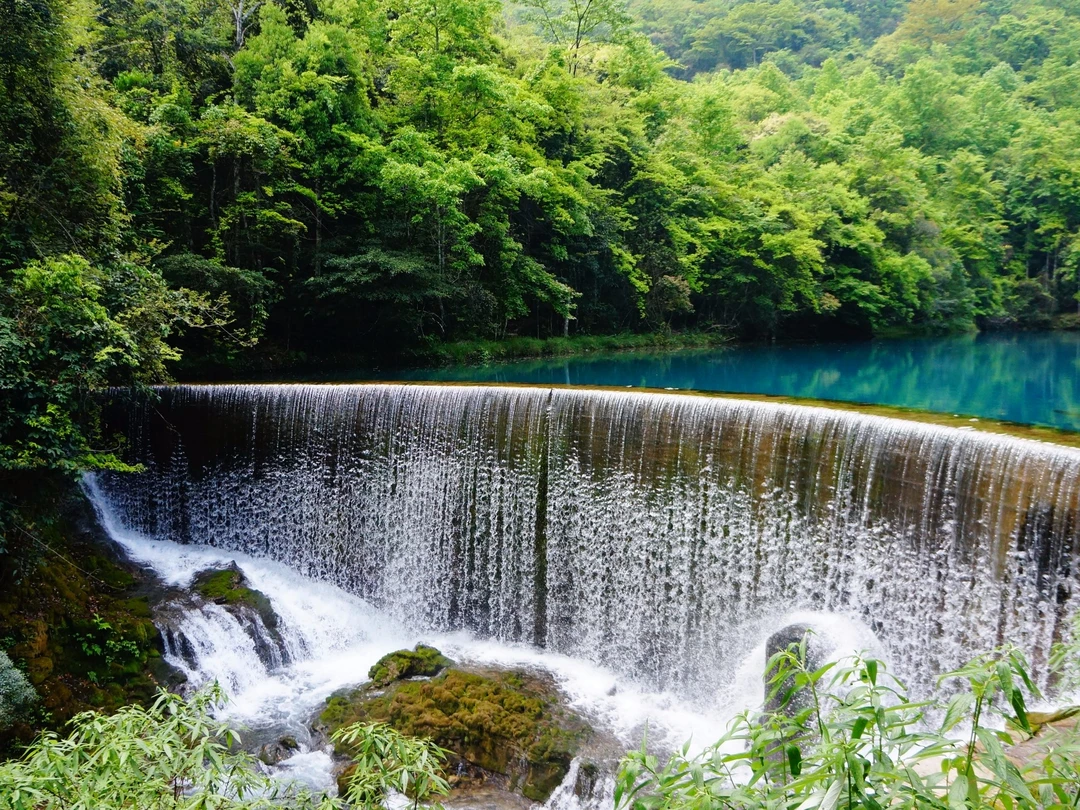
Meta Description: Discover Libo, Guizhou's hidden gem with surreal blue-green waters, karst peaks, and ancient bridges. This 3-day itinerary from Beijing covers Big Seven Arch, Little Seven Arch, and Maolan Nature Reserve—plus insider tips on flights, food, and cash.
Have you ever imagined that deep in the mountains of southwestern China, there's a small town with no railway and an airport barely the size of a postage stamp? A place where the water shimmers in shades of blue and green so vivid they seem unreal, where karst landscapes create fantastical peaks and hidden caves, and where a single bowl of sour fish soup (suān tāng yú) can wash away every ounce of your fatigue. That place is called Libo (荔波), and I've just returned from there.
To be honest, my expectations weren't high before I left. The name sounded unfamiliar, and online travel guides were scarce. But after three days, I was completely won over—it's not overrun with crowds like those viral tourist spots, yet it possesses a breathtaking natural beauty. If you're tired of the city's noise and just want a quiet place to spend a few days, this article is for you.
Why Libo? The Allure of Guizhou's Hidden Karst Wonderland
Libo is a uniquely charming little city. It has an airport, but no railway—the airport sits atop a flattened mountain peak, with a runway so tiny and a staff of just a handful. But don't let its "miniature" scale scare you off. The airport is only about a dozen kilometers from downtown, a half-hour drive. Even better, a flight from Guiyang costs as little as 50 yuan—cheaper than a taxi ride.
The city is bisected by the Zhang River (Zhāng Jiāng), nestled between mountains and water. The surrounding attractions—Big Seven Arch (Dà Qī Kǒng), Little Seven Arch (Xiǎo Qī Kǒng), and Maolan Nature Reserve (Mào Lán Zìrán Bǎohù Qū)—are practically tailor-made for a short getaway. The best time to visit is from April to November, with June through August being peak season. If you can avoid those months, April–May or September–November offer a far more pleasant experience.
[Link: Best time to visit Guizhou]
Essential Travel Tips Before You Go to Libo
Before I dive into the detailed itinerary, here are some practical tips you absolutely need to know:
1. Getting There: Beijing to Libo
 From Beijing, the easiest route is to fly to Guiyang, then catch a connecting flight to Libo. The Guiyang–Libo flight takes just half an hour, and the discounted tickets are only 50 yuan—don't hesitate, just buy it.
2. Getting Around Locally
Didi (ride-hailing) is very reliable in Libo. From the airport to the Big Seven Arch scenic area costs just over 100 yuan, and to downtown it's only a few dozen yuan. Don't bother renting a car; taxis and ride-hailing are far more convenient.
3. Where to Stay
 Don't stay in Libo's Ancient Town. The area around Deng Enming Square (Dèng Ēnmíng Guǎngchǎng) is a much smarter choice. It's close to the night market, a five-minute walk from the city's largest supermarket, and has everything you need for eating, drinking, and entertainment.
4. Food: Must-Try Local Dishes
Libo's beef and fish are cheap and delicious—don't miss them. Also, don't trust the weather forecast too much. Mountain weather changes on a dime.
5. Cash Is King
This is crucial—most scenic areas don't accept WeChat Pay or Alipay. You must bring enough cash.
[Link: Guizhou travel essentials]
Your 4-Day Libo Itinerary (3 Days of Exploration)
Our trip was four days and three nights, arranged as follows:
- April 3: Beijing to Guiyang, stayed at Guiyang Airport Hotel
- April 4: Guiyang to Libo, chartered car to Big Seven Arch, stayed at Big Seven Arch Bamboo Garden Hotel
- April 5: Explored Little Seven Arch, chartered car back to Libo county town, stayed at Yuanshantang Cultural Inn
- April 6: Chartered car to explore Maolan Nature Reserve, stayed at Yuanshantang Cultural Inn
- April 7: Libo to Guiyang, connecting flight back to Beijing
Day 1: First Glimpse of Libo—The Blue-Green Dream of Big Seven Arch
We arrived in Guiyang in the early morning and checked straight into the airport hotel. The next morning, we boarded at 9:00 AM, and half an hour later, the plane was already descending—Guiyang to Libo is only about 300–400 kilometers, barely enough time for a quick nap.
After landing, the Didi driver we'd arranged the day before was already waiting. The drive from the airport to the Big Seven Arch scenic area took about an hour. The driver dropped us at the entrance.
Important Note on Gates
Big Seven Arch has only one gate (the East Gate), but Little Seven Arch has two—East and West. I strongly recommend staying near the East Gate for three reasons: First, it's closer to Libo's city center. Second, the East Gate of Little Seven Arch is also the main entrance to Big Seven Arch. Third, walking from Little Seven Arch's East Gate to its West Gate means going upstream, so the scenery gets progressively more spectacular.
We had booked the Bamboo Garden Hotel, which is actually inside the Big Seven Arch scenic area. The hotel sent someone to pick us up at the entrance. Buying tickets through the hotel gave us a 20% discount, and they were valid for two days with unlimited entry and exit.
Exploring Big Seven Arch
The Big Seven Arch walking route is about 3 kilometers long. You can take a short boat ride (holding about four or five people) and then walk the rest. The entire round trip takes about two hours, with almost no climbing—perfect for a leisurely stroll and plenty of photos.
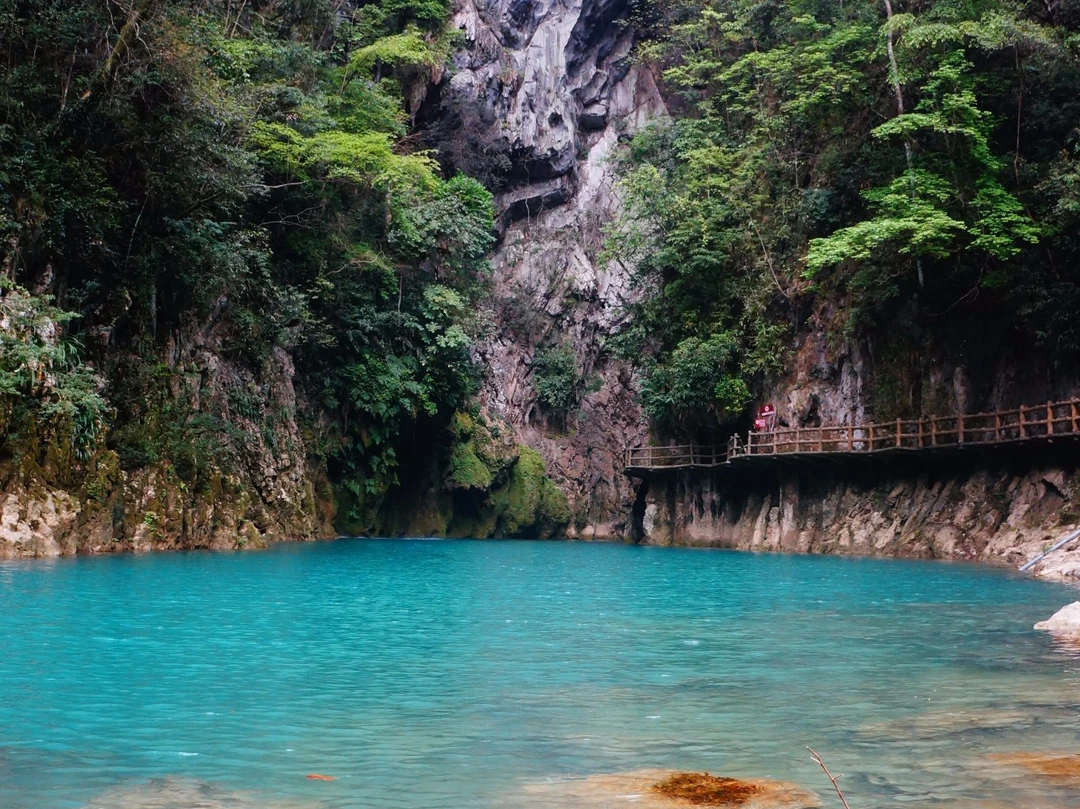
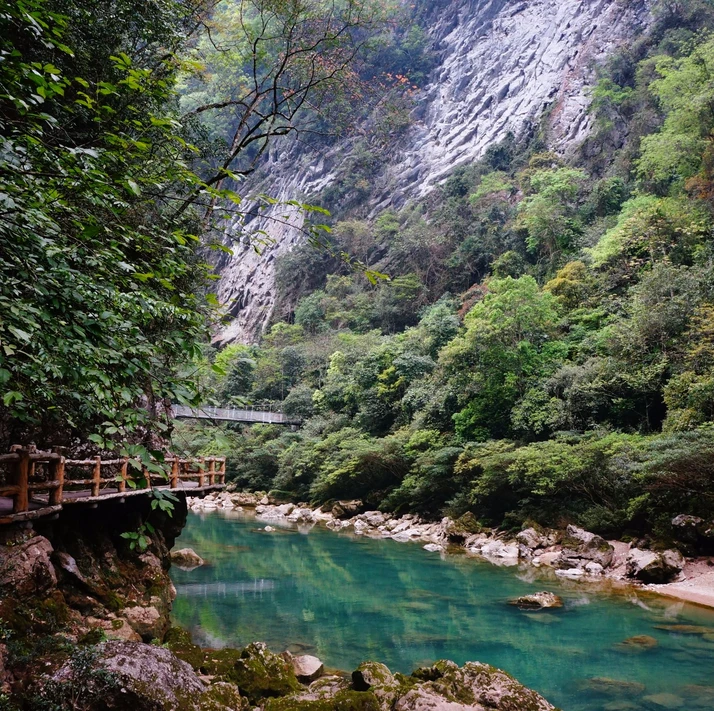
What stunned me most was the color of the water. Because of the karst geology, the water has a high mineral content, appearing in layers of deep and light blue-green. It's as calm as a mirror and crystal clear. Most of the shallow areas are accessible for wading. We took off our shoes and stepped in—cool and refreshing, absolutely delightful.
A Funny Moment
While we were playing in the water, we met a father and his son. The little boy, maybe four or five years old, was adorably curious. Seeing us in the water, he tugged at his dad and asked, "Daddy, Daddy, can I go down and play in the water like those two aunties?" The father glanced at me and said, "No, that auntie is wearing very professional shoes, so she can go in. We can't." The boy looked at my shoes, then at his own, as if he thought his dad had a point. Then he looked at my friend and asked, "Daddy, Daddy, that other auntie went in too—can we go?" His father glanced at my friend again. "No, that auntie's shoes are also very professional." I nearly laughed out loud—being a dad these days is tough.
[Link: Top things to do in Libo]
Day 2: Little Seven Arch—A Step-by-Step Landscape Gallery
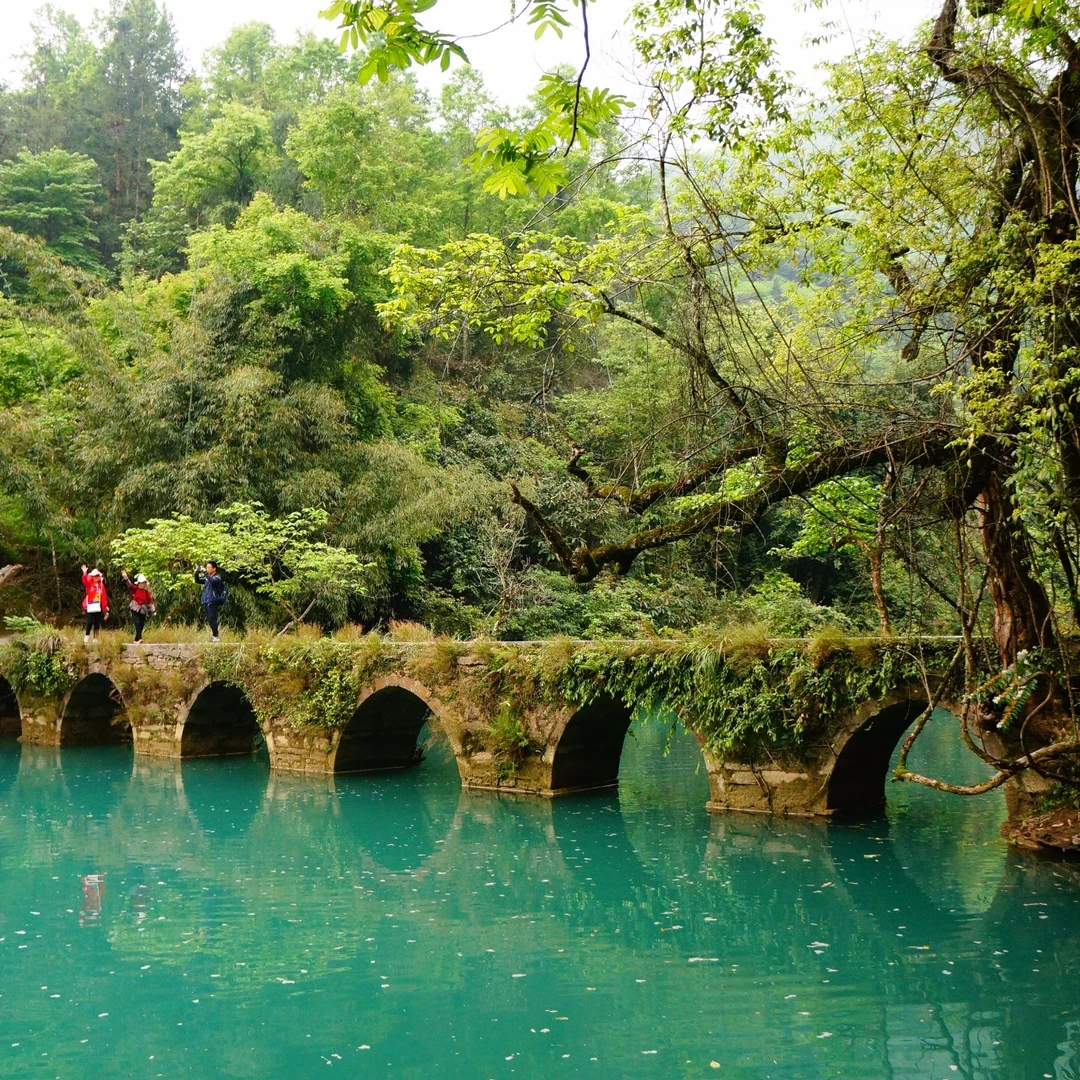
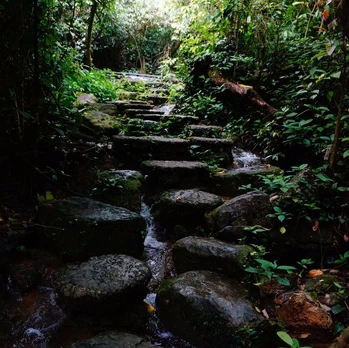
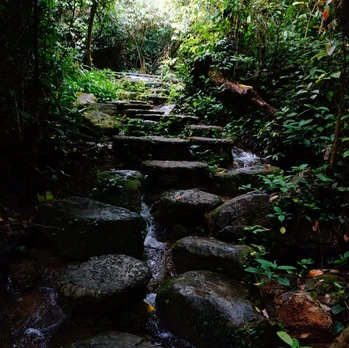
On the second day, we explored Little Seven Arch as planned. All the scenic spots here are strung along a single river. There are two paths: one is a newly built wooden boardwalk close to the vehicle road; the other is an old stone path on the opposite side of the river. The entire scenic area has shuttle buses running all day, with routes from East Gate to West Gate and West Gate to East Gate, stopping at each attraction along the way.
Walking Distance and Time
The full walking distance is about 7 kilometers. Including time for sightseeing, a one-way trip takes roughly four hours. There's almost no climbing, and most sections are shaded by trees, making for a comfortable walk.
Little Seven Arch Bridge
 The shuttle bus first takes visitors to the first attraction—Little Seven Arch Bridge (Xiǎo Qī Kǒng Qiáo) , about 4 kilometers away. This bridge is the namesake of the scenic area. It's 25 meters long, 4 meters wide, and was built in the 15th year of the Daoguang Emperor's reign of the Qing Dynasty (1835 AD) , serving as an important route connecting Libo and Guangxi. Standing on that bridge, thinking about how this ancient structure has stood for nearly 200 years while many modern projects start crumbling after just a few decades—it's a humbling thought.
Other Highlights
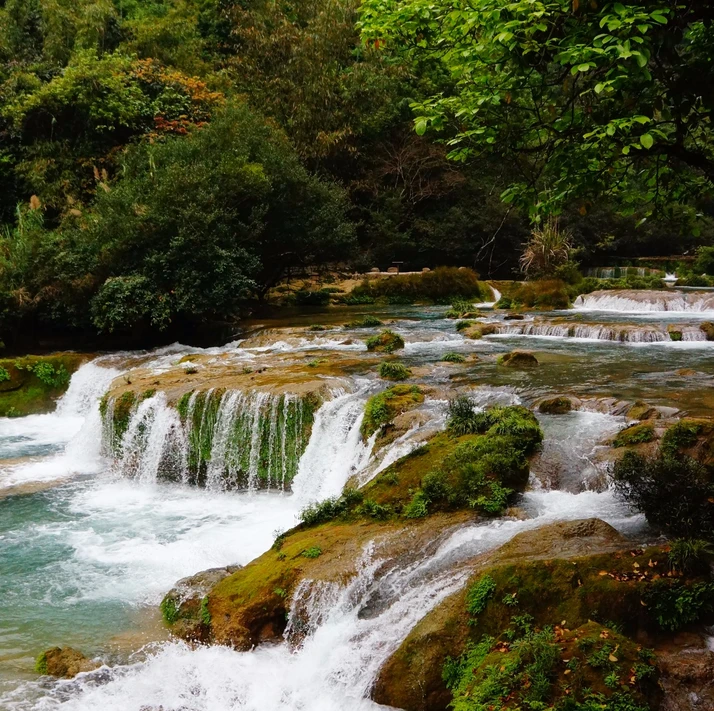
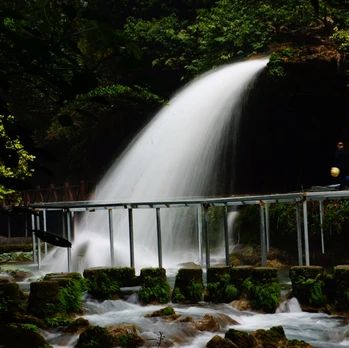
The Wolong Lake (Wò Lóng Tán) is a must-see—its emerald waters reflect the surrounding karst peaks like a mirror. The Flying Waterfall (Fēi Liú Pù Bù) cascades down a 30-meter cliff, creating a misty rainbow on sunny afternoons.
[Link: Little Seven Arch vs Big Seven Arch]
Day 3: Maolan Nature Reserve—Guizhou's Untamed Wilderness
On the third day, we chartered a car to explore Maolan Nature Reserve. This is less developed than the Seven Arch areas, making it perfect for adventurous travelers. The reserve covers over 20,000 hectares of pristine karst forest, with hiking trails ranging from 2 to 8 kilometers.
We chose the 3-kilometer loop trail that passes through a bamboo forest, a limestone cave, and a small waterfall. The trail is well-marked but uneven—wear sturdy shoes. The highlight was the underground river cave, where stalactites and stalagmites create an otherworldly atmosphere. Bring a flashlight; the cave is pitch black beyond the first 50 meters.
Practical Tips for Maolan
- Entry fee: 50 yuan (cash only)
- Guide recommended: For 100 yuan, a local guide can show you hidden spots and explain the ecosystem
- Best time: Early morning (8:00–10:00 AM) to avoid heat and crowds
FAQ: Everything You Need to Know About Libo
1. Is Libo worth visiting from Beijing?
Absolutely. The total travel time (flight + connection) is about 5–6 hours one way, but the scenery is world-class. It's far less crowded than Zhangjiajie or Jiuzhaigou, and costs are significantly lower.
2. How many days do I need in Libo?
 Three full days is ideal: one day for Big Seven Arch, one for Little Seven Arch, and one for Maolan Nature Reserve. If you have only two days, skip Maolan and combine Big and Little Seven Arch.
3. What's the best time to visit Libo?
April–May and September–November offer pleasant weather (15–25°C) and fewer crowds. June–August is peak season with higher prices and more tourists.
4. Do I need to speak Chinese to visit Libo?
 Basic Mandarin helps, especially in rural areas. Most scenic area staff speak limited English. Download a translation app like Google Translate or Pleco.
5. Can I use WeChat Pay or Alipay in Libo?
In the county town, yes—most restaurants and shops accept mobile payments. However, scenic areas and rural villages require cash. Withdraw enough before you go.
Final Thoughts: Why Libo Should Be Your Next Guizhou Adventure
Libo is not just a destination—it's an escape. The blue-green waters of Big Seven Arch, the ancient bridge of Little Seven Arch, and the wild trails of Maolan Nature Reserve offer a perfect blend of relaxation and adventure. The food is cheap and delicious, the locals are friendly, and the crowds are thin.
If you're planning a trip from Beijing, book your flights early, bring cash, and prepare for a few surprises (like that adorable father-son duo). Trust me—you'll leave with a camera full of photos and a heart full of memories.
Ready to explore Libo? Book your flight to Guiyang today, then catch the 50-yuan connection to Libo. Your hidden mountain-and-water wonderland awaits.
[Link: Guizhou travel packages] [Link: Best hotels in Libo]
Have you visited Libo? Share your experience in the comments below!
You may also like


