The Panxi-Yunnan Journey: Discovering Another Side of Sichuan in Its Hidden Corners
Meta Description: Explore the hidden gems of Panxi, from Xichang's aerospace marvels to jacaranda-lined streets. Discover Sichuan beyond pandas and Jiuzhaigou on this unforgettable Panzhihua-Xichang-Lugu Lake itinerary.
Introduction: Beyond Sichuan's Famous Landmarks
When travelers think of Sichuan, images of Jiuzhaigou's turquoise lakes, the Leshan Giant Buddha's serene gaze, or playful pandas in Chengdu typically come to mind. But there's another Sichuan—a wilder, more mysterious landscape stretching southward through the Panxi region. This is the Panxi-Yunnan corridor, where plateaus meet valleys, ethnic cultures thrive, and China's aerospace dreams take flight.
I've visited Sichuan many times, but this eight-day journey through Panzhihua, Xichang, Lugu Lake, and south to Yuanmou in Yunnan revealed an entirely different side of this vast province. Spontaneous and unplanned, this trip became a discovery of hidden corners that most travelers miss.
Day 1: Shanghai to Xichang – Arriving on the Liangshan Plateau
First Impressions of Xichang Qingshan Airport
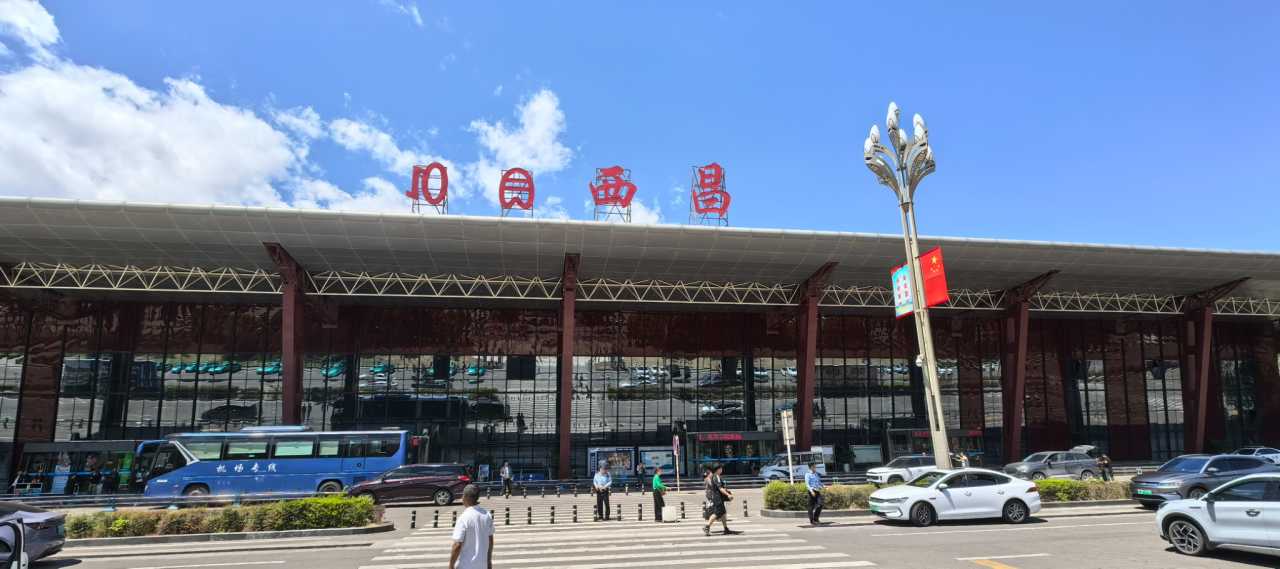
Our journey began at 8:10 AM from Shanghai Pudong Airport. Just over three hours later, we landed at Xichang Qingshan Airport, perched at 1,562 meters (5,125 feet) above sea level.
This 4D-class airport serves as the gateway to Liangshan Prefecture and supports the Xichang Satellite Launch Center. Built in 1967 and opened in 1975, its 3,600-meter runway can accommodate Boeing 747 aircraft. What makes this airport extraordinary is its role in China's space program—rockets carrying Chang'e lunar probes and BeiDou navigation satellites once traveled along this very runway.
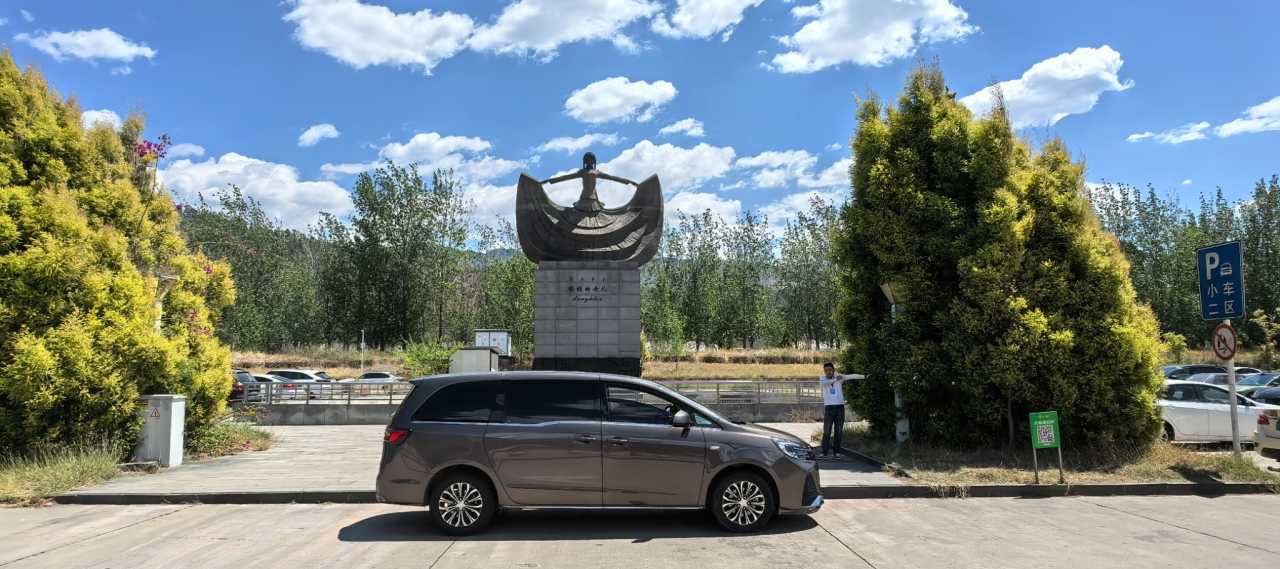
Stepping outside, we were greeted by intense plateau sunlight and crisp mountain air. A stone sculpture of a Yi ethnic girl stood in the square, arms outstretched like a bird welcoming travelers. This was Liangshan's first gift: blue skies, warm sunshine, and the warmth of Yi culture.
Xichang Satellite Launch Center: China's Gateway to the Moon
A Brief History of the Xichang Spaceport

The Xichang Satellite Launch Center lies in Zeyuan Township, Mianning County, about 60 kilometers from Xichang city center. Known as the "Hometown of Chang'e" and "Mother Port of BeiDou," it's China's oldest and most comprehensive launch facility open to the public.
Construction began in 1970, with operations starting in 1984. Its low latitude and high altitude provide natural advantages for satellite launches, saving fuel by leveraging Earth's rotation. Combined with favorable weather and high visibility, Xichang has become the primary site for geosynchronous orbit satellites and lunar missions. In 1984, China's first experimental communications satellite launched here. Since then, most Chang'e lunar probes and BeiDou navigation satellites have followed suit.
Exploring the Science Education Base
While the standard tour doesn't include the core launch tower area, the peripheral science education base—called the "Moon-Chasing Building"—offers fascinating exhibits.
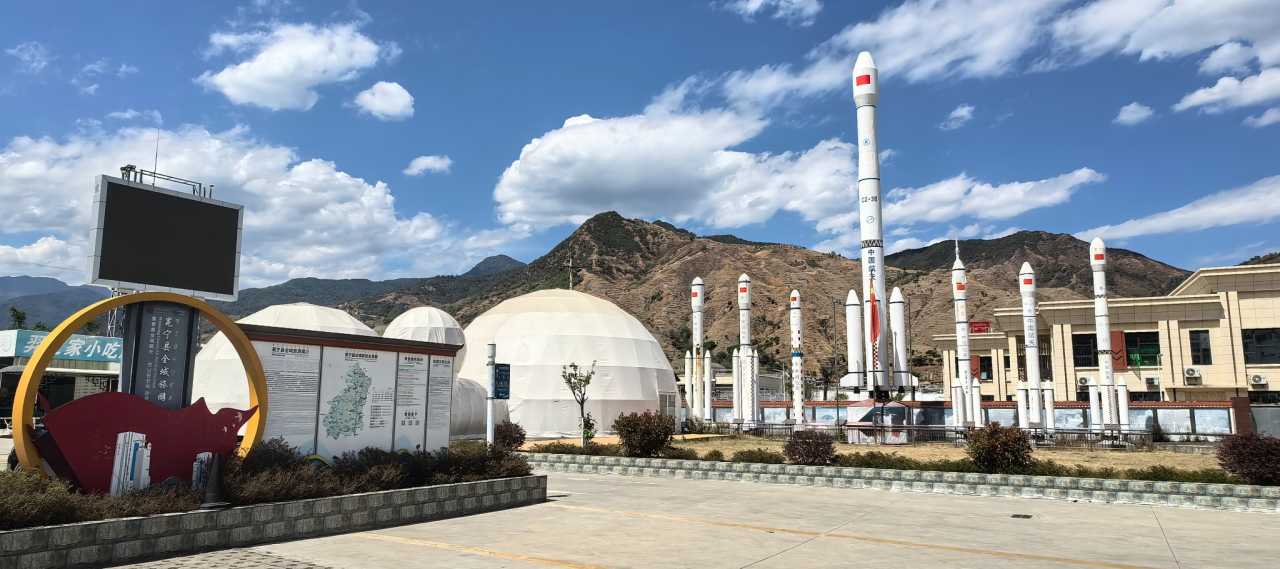
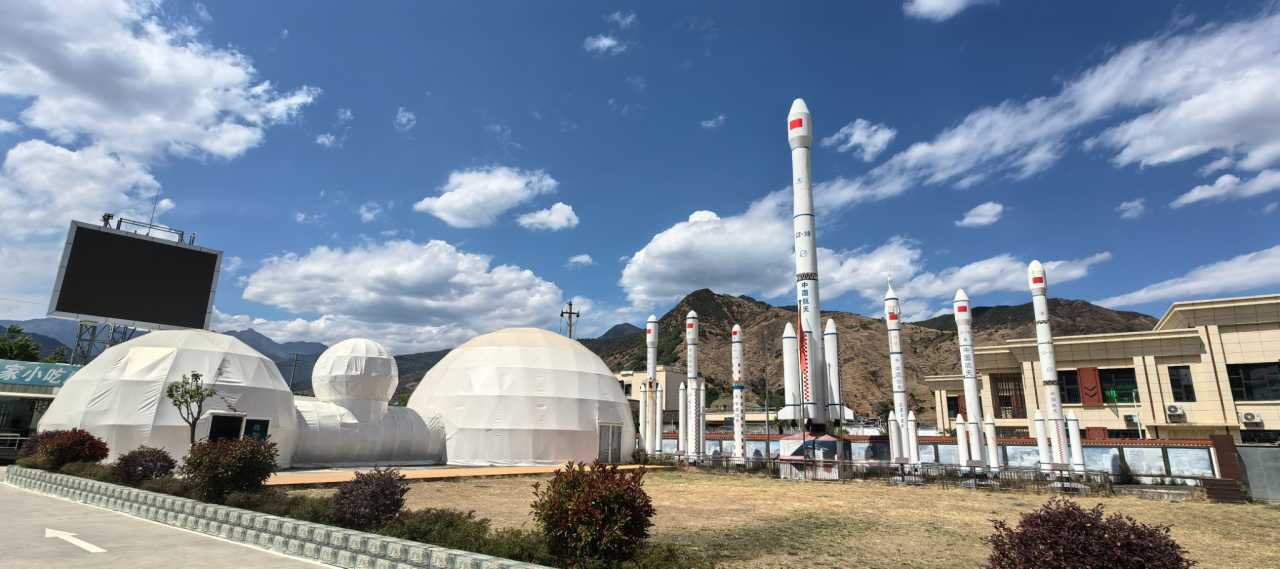
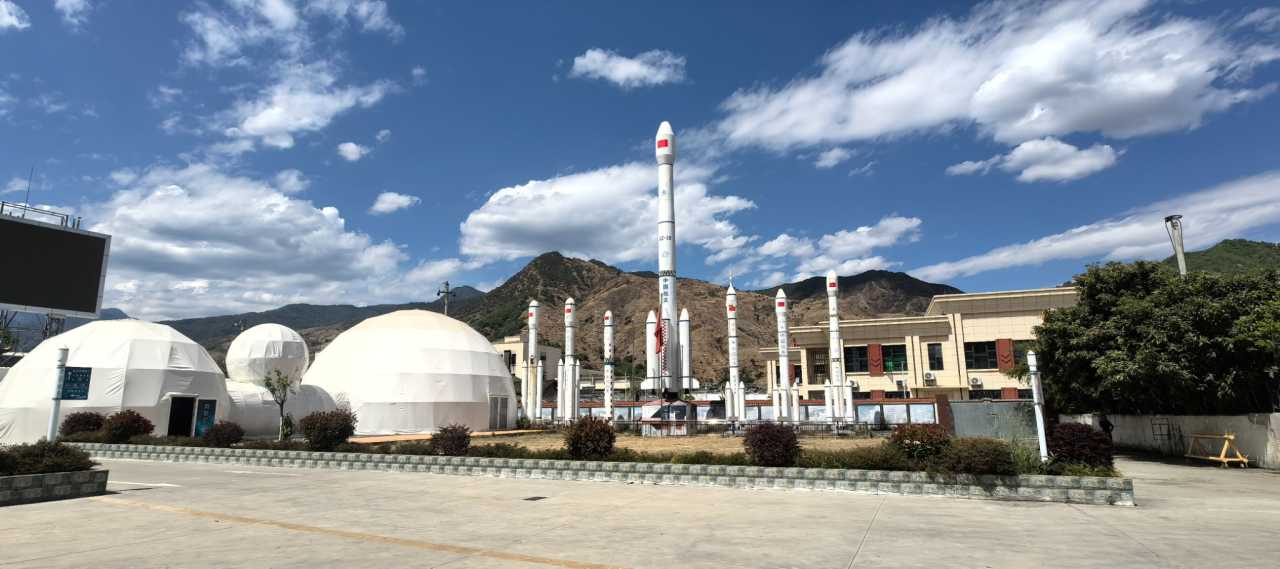
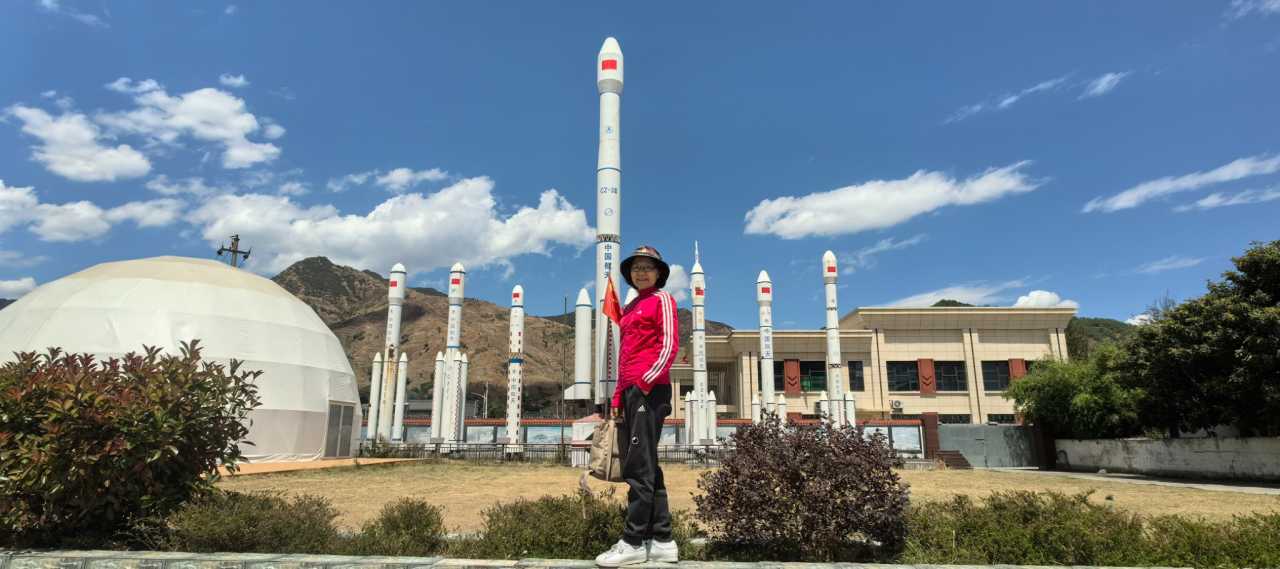
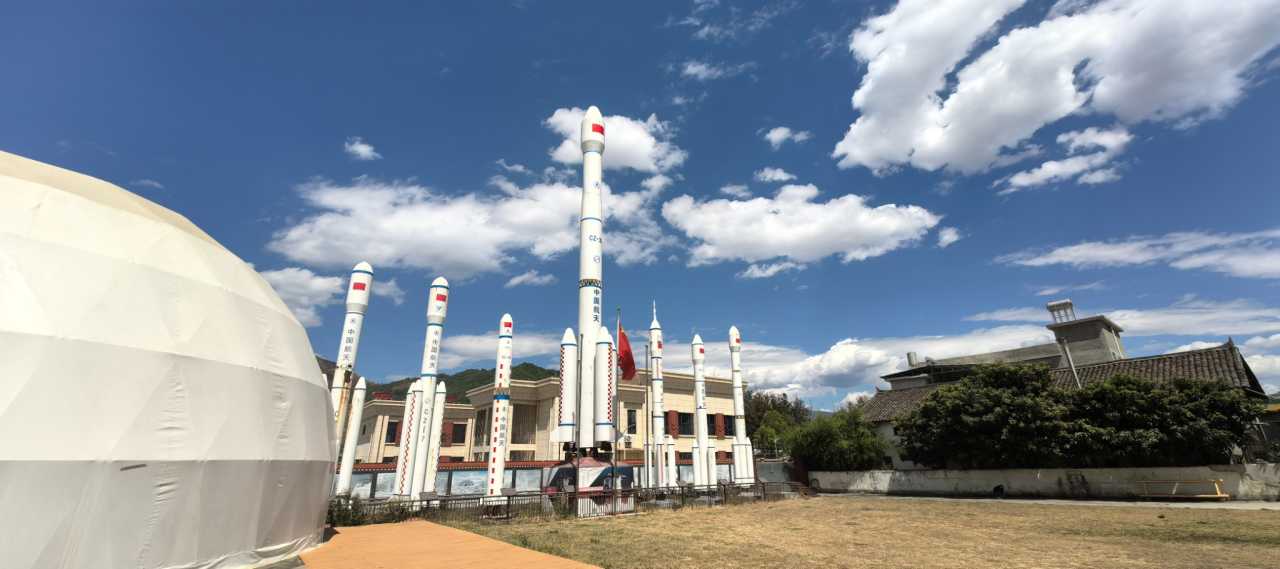
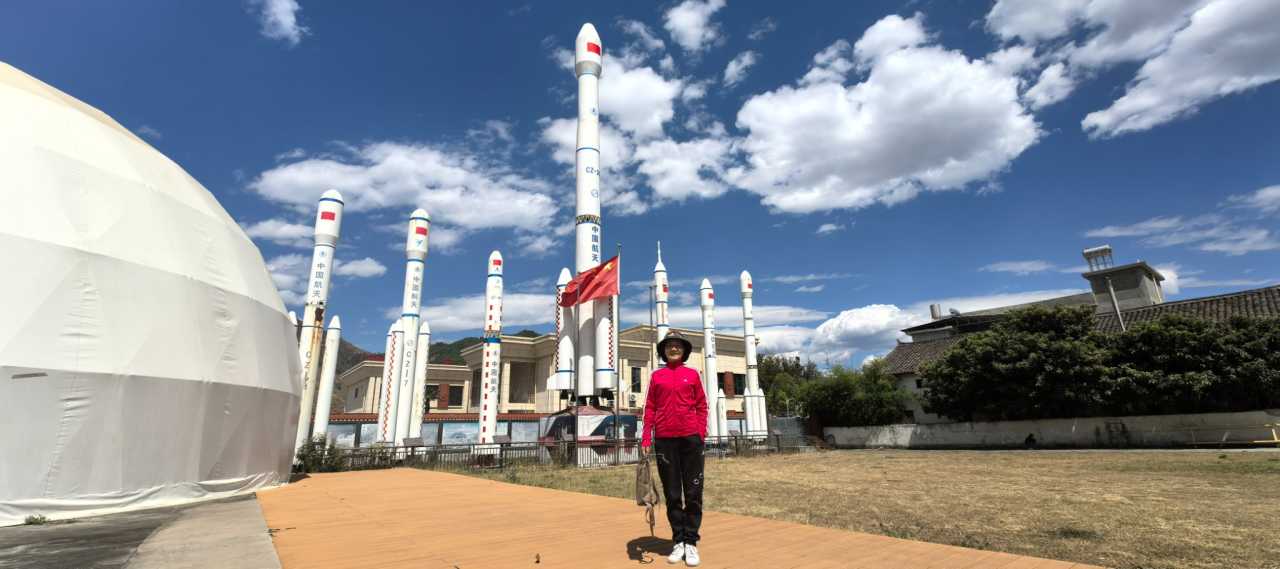
The centerpiece of the square is a 1:2.85 scale model of the Long March 3B carrier rocket, towering against the plateau's crystalline sky. Surrounding it is a "Seven Rockets, Three Satellites" aerospace landscape, featuring models of Long March 2, 3, 3A, 3B, 3C, and 4 rockets alongside satellite and probe replicas representing Earth, lunar, and Mars exploration missions.
Dome-Screen Cinema: A Journey to the Moon
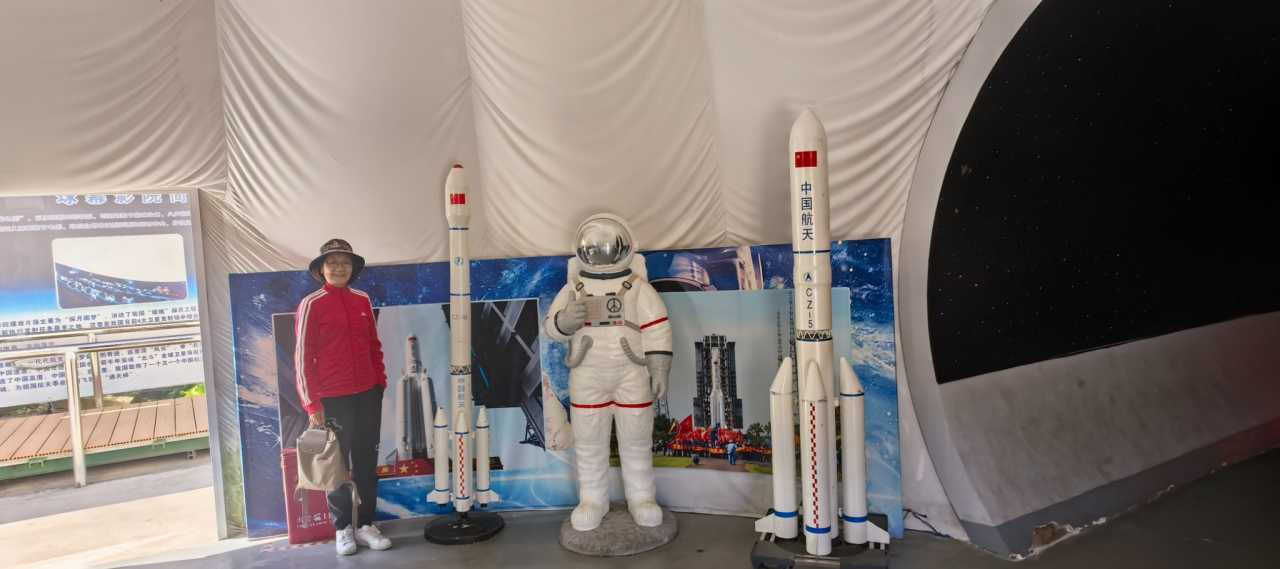
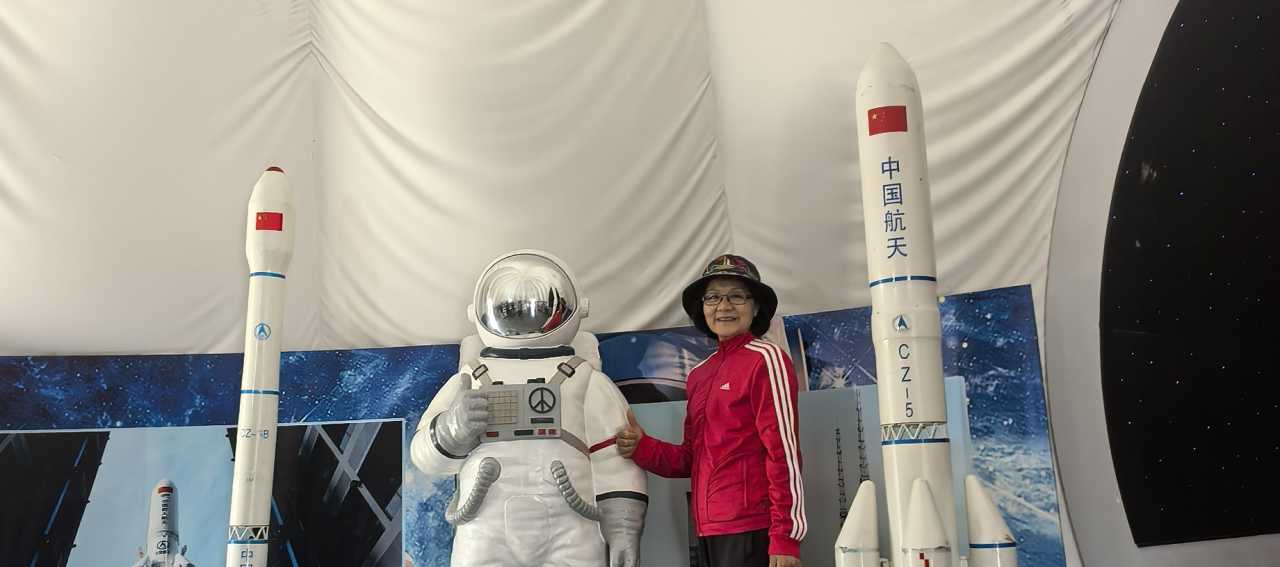
The white hemispherical building on the left houses a dome-screen cinema. Two Long March rocket models and an astronaut figure guard the entrance, setting a high-tech atmosphere. Inside, the 360° panoramic imagery transported us from Xichang's launch site to the lunar surface in minutes. The roar of rocket ignition, the moment of stage separation, the probe's trajectory through nebulae—all unfolded across the dome. Without looking up at the real night sky, we felt the universe's vastness and China's aerospace achievement.
Chang'e Engineering Exhibition Hall: Treasures of Space
The exhibition hall is the science education base's heart, centered on China's lunar exploration program. Two treasures stand out:
- The recovered Chang'e-1 rocket engine – A genuine space artifact from the Long March 3A rocket that launched Chang'e-1 in 2007.
- Rocket fairing debris – Bearing scorched marks from re-entering the atmosphere, like a warrior returning from space.
The hall also features a 1:1 scale model of the Yutu (Jade Rabbit) lunar rover, complete with solar panels, detection instruments, and moving wheels. The Chang'e-1 satellite model—a 1:3 scale replica—shows a cube-shaped main body with large solar panels spanning about 6 meters when fully deployed.
Chang'e-1 was China's first lunar-orbiting satellite, launched from Xichang on October 24, 2007. It operated for 494 days, capturing China's first full three-dimensional lunar image before being deliberately crashed into the moon on March 1, 2009.
Standing in the hall, watching the national flag overlap with images of rocket launches, an indescribable sense of pride welled up inside me. From mythical moon-chasing to real lunar exploration, China's aerospace engineers have turned "reaching for the moon" into reality.
Jacaranda Avenue: Xichang's Purple Romance
The City's Floral Signature
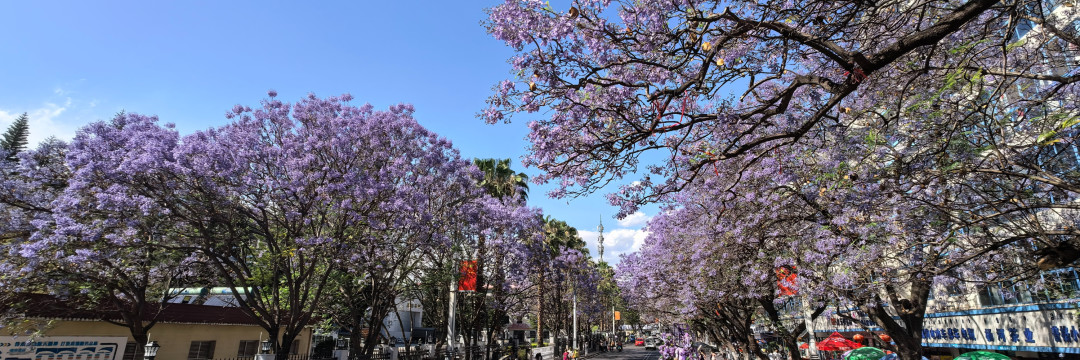
The jacaranda tree is Xichang's official city tree—and its most beautiful calling card. From 600 saplings introduced in 1994, the number has grown to over 50,000, making Xichang home to China's largest and most spectacular jacaranda urban landscape.
The city's constant 18°C (64°F) temperature, strong sunlight, and high-altitude blue skies make the jacarandas bloom more vividly, densely, and for longer. The best viewing period runs from mid-April to early May.
Hangtian North Road: A Purple Tunnel
We headed to Hangtian North Road in the city center, where old trees form a purple tunnel that blocks out the sky. Fallen petals carpeted the ground, and the entire street was enveloped in a gentle purple haze. Sunlight filtered through gaps in the blossoms, creating dappled shadows.
A young woman in ethnic costume stood on a photo platform, framed against the sea of flowers—the most moving scene of spring. April in Xichang belongs to the jacarandas. Rows of these trees paint the streets in dreamy purple, branches reaching toward the blue sky, flower shadows falling on shoulders.
Day 2: Xichang to Lugu Lake – A Journey Through Mountains
The second day took us from Xichang southward toward Lugu Lake, a journey that winds through the mountainous border between Sichuan and Yunnan provinces. The landscape shifts dramatically—from the dry, sun-baked valleys around Xichang to the lush, forested slopes approaching the lake.
[Link: Lugu Lake travel guide and Mosuo culture]
Frequently Asked Questions (FAQ)
1. What is the best time to visit Xichang and see the jacaranda trees?
The best time to visit Xichang for jacaranda viewing is from mid-April to early May. During this period, the trees are in full bloom, creating the iconic purple tunnels along streets like Hangtian North Road. The city's mild 18°C climate makes spring particularly pleasant for outdoor exploration.
2. Can visitors enter the actual launch area at Xichang Satellite Launch Center?
Standard tours do not include entry to the core launch tower area. However, visitors can explore the peripheral science education base, including the Moon-Chasing Building, Chang'e Engineering Exhibition Hall, and dome-screen cinema. These facilities offer excellent exhibits and immersive experiences about China's space program.
3. How do I get from Xichang to Lugu Lake?
The drive from Xichang to Lugu Lake takes approximately 5-6 hours by car or bus, covering about 250 kilometers through mountainous terrain. The route passes through scenic landscapes along the Sichuan-Yunnan border. Public buses and private transfers are available from Xichang's bus stations.
4. Is the Panxi-Yunnan route suitable for first-time visitors to Sichuan?
This route is better suited for repeat visitors or adventurous travelers who have already seen Sichuan's major attractions like Jiuzhaigou and Chengdu. The Panxi region offers unique cultural and aerospace experiences but requires more time and flexibility due to its remote location and limited tourist infrastructure.
5. What should I pack for a trip to Xichang and Lugu Lake?
Pack layers for variable temperatures: lightweight clothing for daytime (18-25°C), a warm jacket for evenings (especially at Lugu Lake's higher elevation), comfortable walking shoes, sunscreen, sunglasses, and a hat for the intense plateau sun. Don't forget a camera for the jacarandas and space exhibits.
Conclusion: Discover Your Own Hidden Sichuan
The Panxi-Yunnan journey revealed a Sichuan I never knew existed—a land of aerospace achievements, purple-flowered streets, and ethnic cultures preserved in mountain valleys. From the recovered Chang'e rocket engine to the jacaranda petals falling like snow, every moment felt like discovering a secret.
This is the Sichuan beyond pandas and Buddha statues. It's a place where China's past and future converge, where ancient Yi traditions meet cutting-edge space exploration. If you're ready to venture off the beaten path, the Panxi region awaits.
Ready to plan your own Panxi-Yunnan adventure? Start by booking flights to Xichang during jacaranda season (April-May) and allow at least 8 days for a complete journey. Don't forget to check the Xichang Satellite Launch Center's visiting hours in advance.
Have you explored Sichuan's hidden corners? Share your experiences in the comments below, or contact us for personalized itinerary planning.
You may also like


