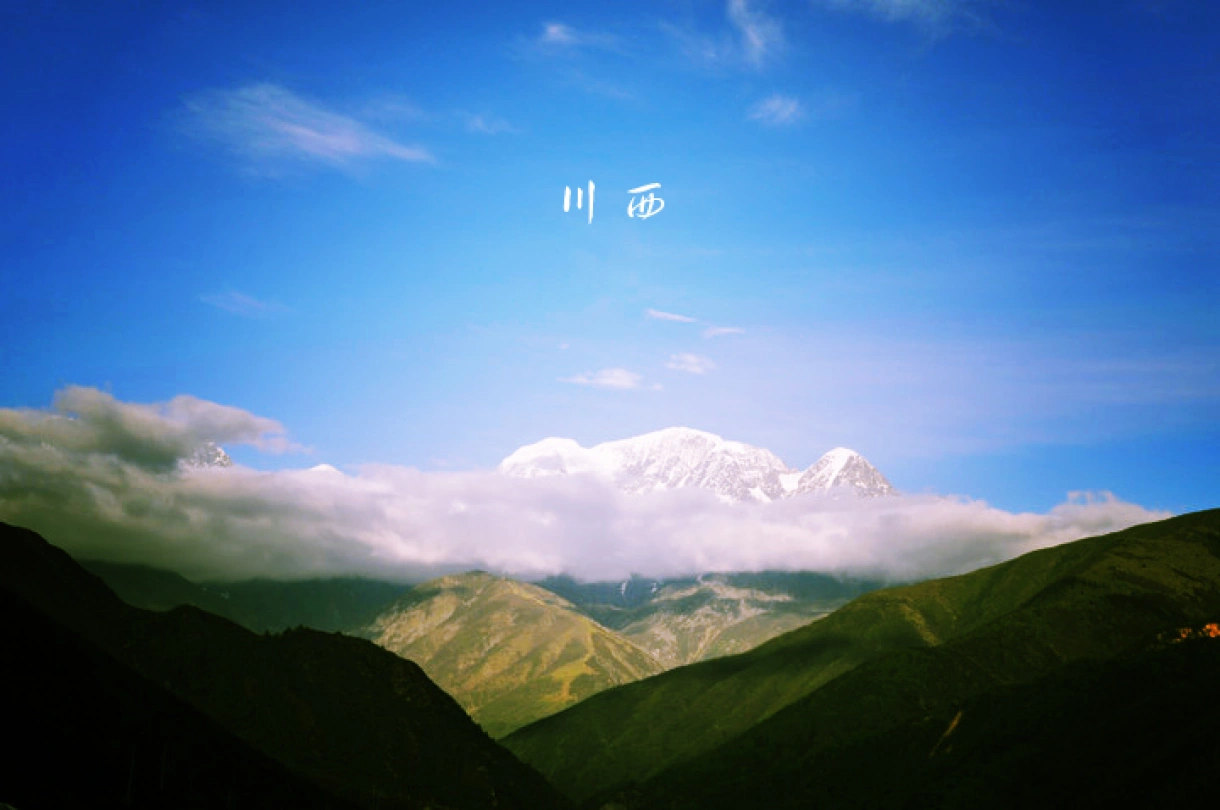
The Magic of Western Sichuan: An Eleventh Visit, Yet Still Discovering New Landscapes
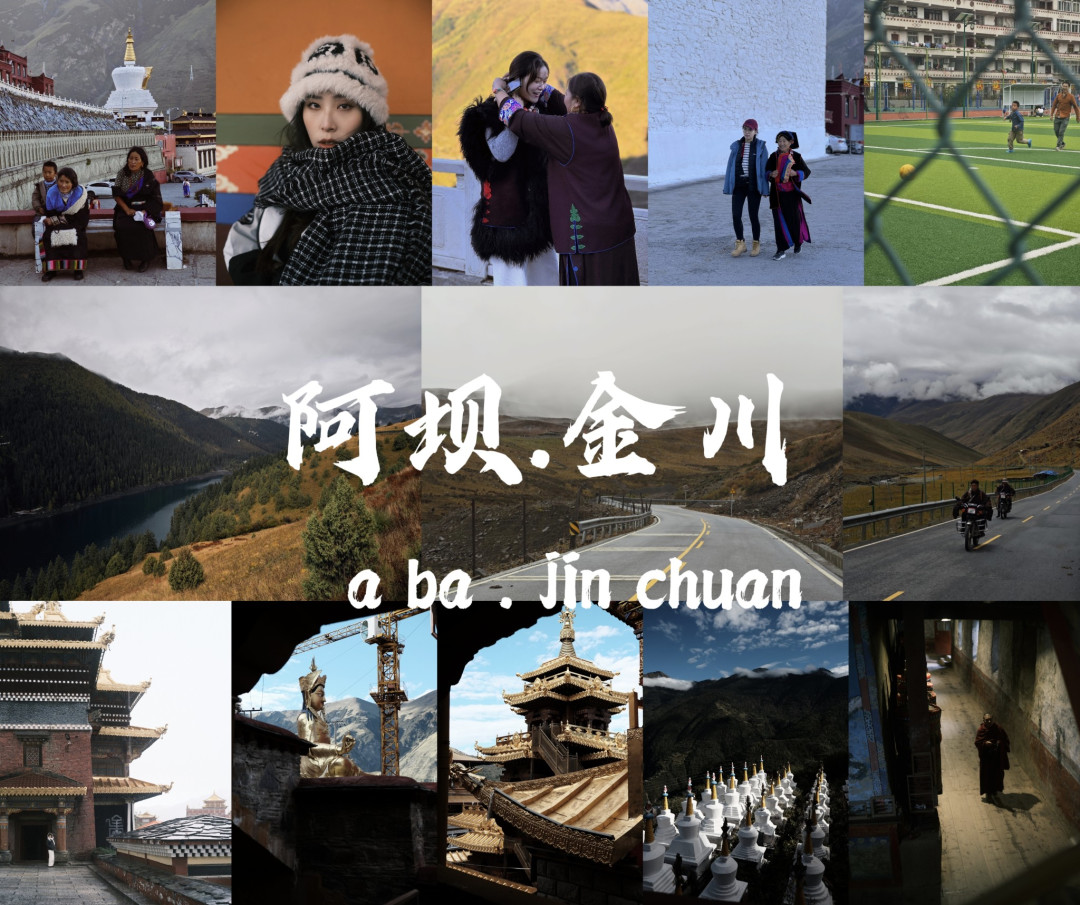
Meta Description: Discover hidden gems in Western Sichuan on an 11th visit. Explore Changlie Monastery, Lover's Lake, and Ngawa Prefecture Museum. A 4-day itinerary with practical tips for first-timers and seasoned travelers alike.
Introduction
Some say that when it comes to Western Sichuan, you either never go, or you go again and again. As a native of Sichuan province, I couldn't agree more. This region, covering nearly half of Sichuan's land area—the Garzê Tibetan Autonomous Prefecture and the Ngawa Tibetan and Qiang Autonomous Prefecture—feels like an endless treasure trove waiting to be explored. Even after setting foot here ten times, my eleventh journey still unlocked brand-new routes and delivered surprises I never saw coming.
On the eve of the 2024 National Day holiday, I hastily planned this trip with three friends. No elaborate itineraries, no stressful checklists—just a desire to find a relaxed, leisurely path through early autumn in Western Sichuan, taking things slow and savoring every moment.
Trip Overview: A 4-Day, 3-Night Slow-Paced Journey
| Day | Route | Distance |
|---|---|---|
| Day 1 | Chengdu → Barkam → Changlie Monastery → Jinchuan County | 319 km expressway + 104 km National Highway 317 |
| Day 2 | Jinchuan County → Akeli Township → Lover's Lake | 77 km paved + 21 km unpaved |
| Day 3 | Lover's Lake → Guanyinqiao Town | 50 km paved |
| Day 4 | Guanyinqiao Town → Chengdu | 69 km National Highway 317 + 319 km expressway |
Travel Companions: Football Whiz Kong Yi·Peng, Cool Model Liu Wen·Xiong, Wild Model Xiao Wen·Qin, Photography Assistant Humble·Shen
Cost Per Person: 930 RMB (approximately $130 USD)
Day One: From Barkam to Jinchuan – Encountering Faith and Everyday Life
Ngawa Prefecture Museum: An Unexpected Cultural Encounter
We left Chengdu at six in the morning and arrived in Barkam, over 300 kilometers away, by ten. The extension of the expressway has shrunk what once took an entire day into just four hours—a testament to what people call "China Speed."

While searching for an early lunch in Barkam, we stumbled upon the Ngawa Prefecture Museum. This museum, blending folk customs with revolutionary history, tells the story of Ngawa from ancient times to the present through two main exhibits: "Ancient Civilizations, A Long-Standing History" and "Ethnic Corridor, Beautiful Homeland." From the origins of the Jianghe civilization to the roots of the ancient Shu people, from the Tea Horse Road to the Tusi chieftain system, and from revolutionary footprints to the harmonious tapestry of ethnic groups—every chapter of history flows quietly within these walls.
Practical Info: Free admission, no reservation needed; open 9:00 AM–5:30 PM in summer, 9:30 AM–5:00 PM in winter, closed on Mondays; parking available at the adjacent Ngawa Prefecture People's Hospital.
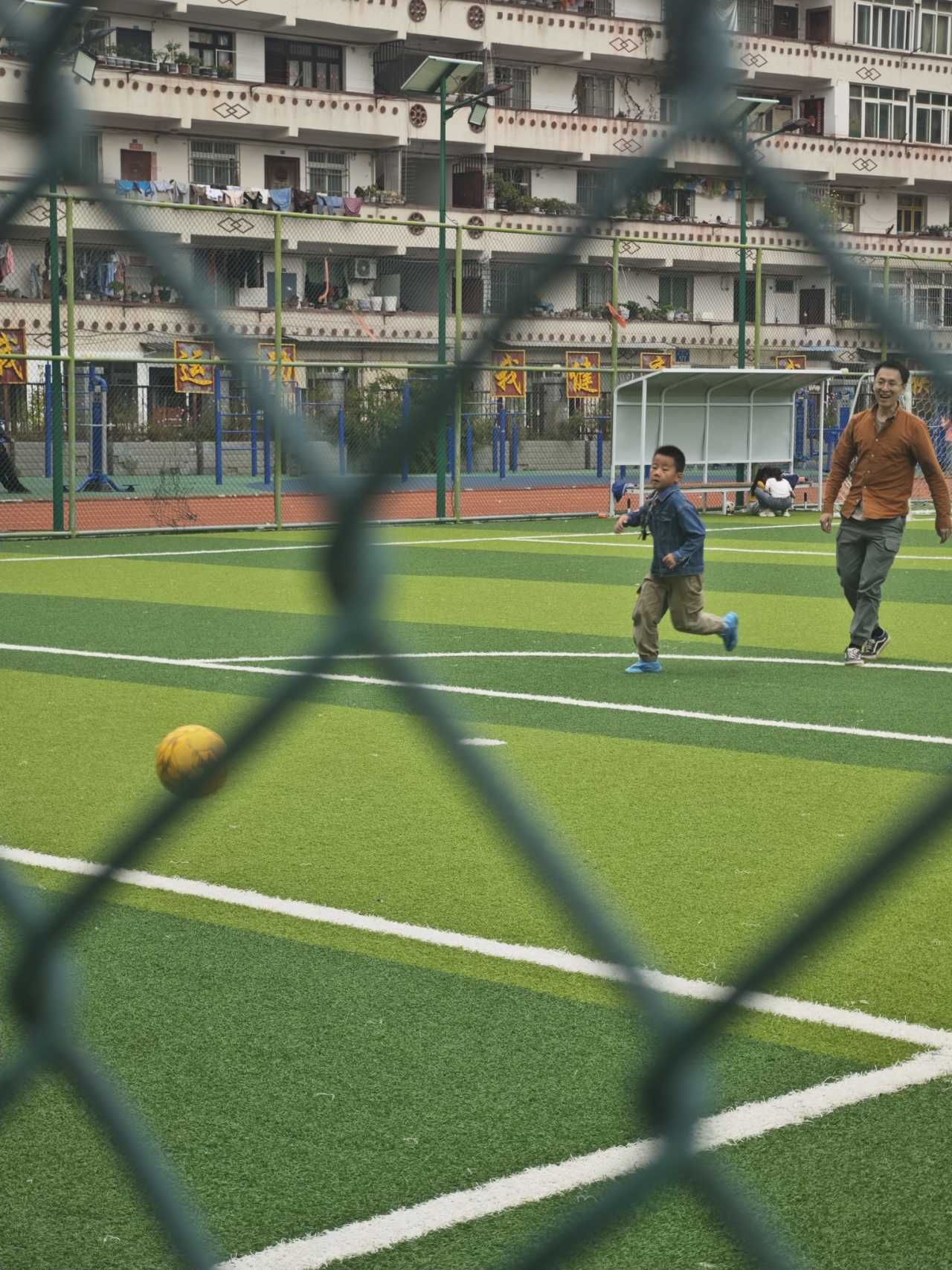
In front of the museum, we stumbled upon a soccer game. A local kid confidently declared, "The four of you can take me on." It turned into a one-on-one showdown between Peng and the boy, while Qin and I messed around, stealing the ball and causing chaos—these unexpected moments of joy are the most precious part of any trip.
[Link: Best museums in Western Sichuan to visit]
Changlie Monastery: A Golden Hall in the Mist
After winding up a mountain road for half an hour, Changlie Monastery came into view. This monastery of the Nyingma school of Tibetan Buddhism was founded in the 1240s by the venerable Sherab Gyeltsen of Kathok Monastery and has historically produced many eminent masters. Severely damaged during the Cultural Revolution, it was rebuilt on its original site in the 1980s.
The main hall is breathtaking in its grandeur—a reinforced concrete structure with granite walls, four intricately carved dragon-wrapped pillars, four massive murals of the Four Heavenly Kings, four 20-meter-high white marble square pillars, and a roof entirely covered in gold leaf. It gleams with an opulence that leaves you speechless.
We followed a route of "library → Buddha statue restoration hall → Shakyamuni Hall → prayer hall → Avalokiteshvara Hall → square," trying to avoid backtracking—wise at an altitude of 3,400 meters, where conserving energy is key.
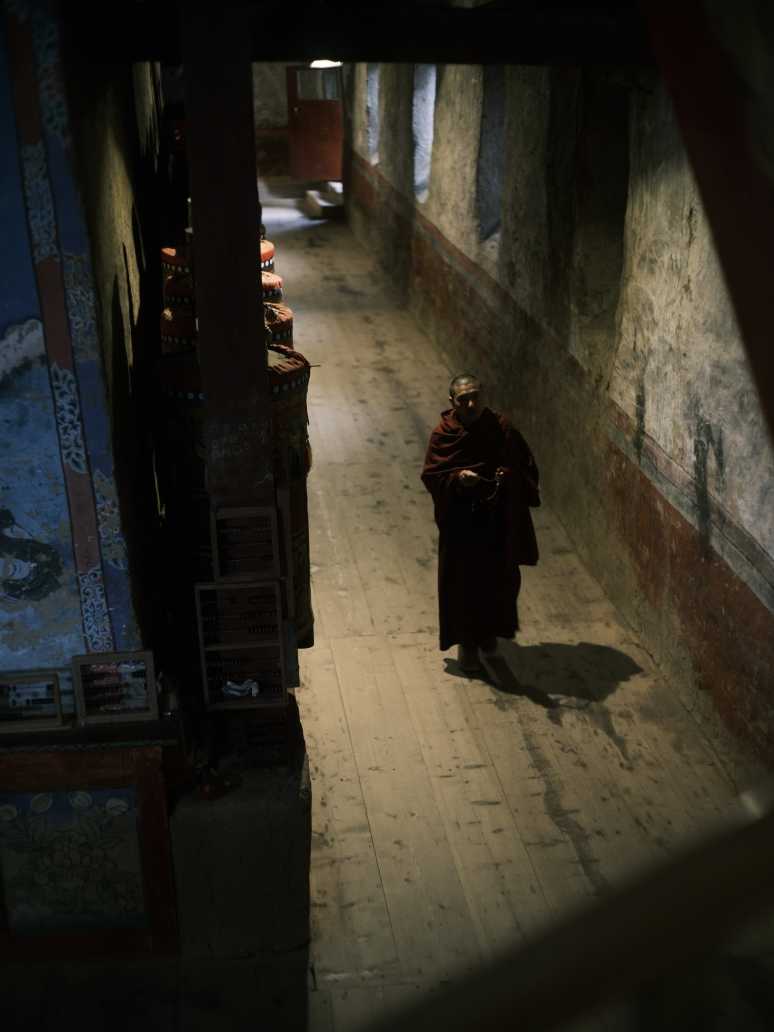
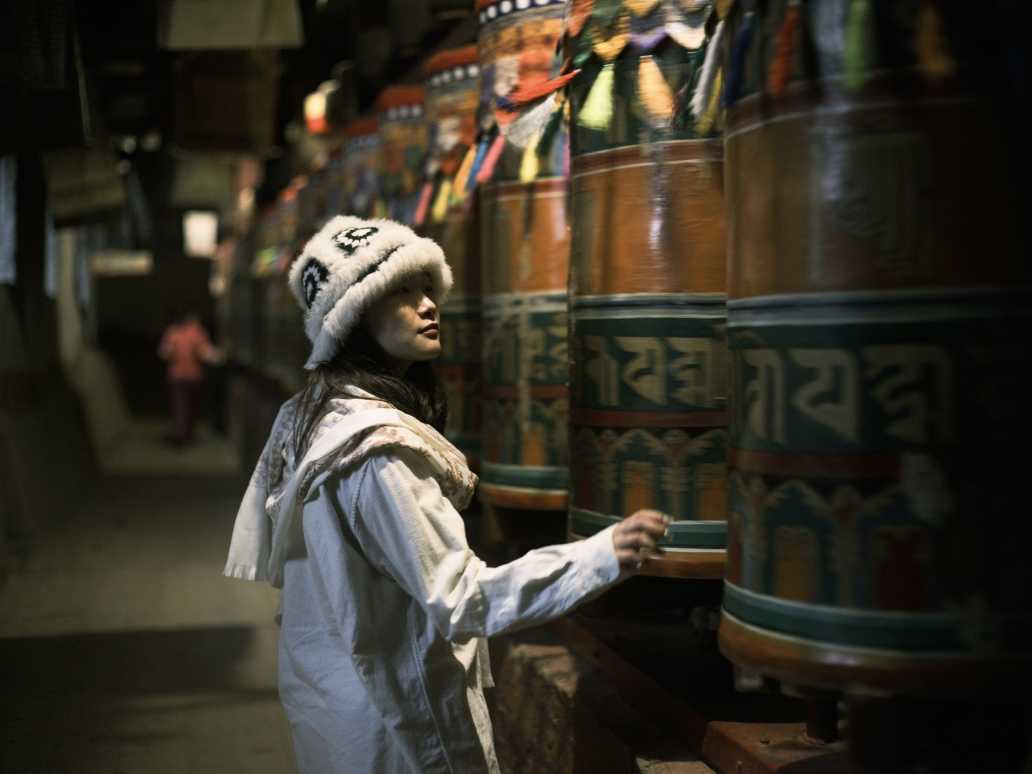
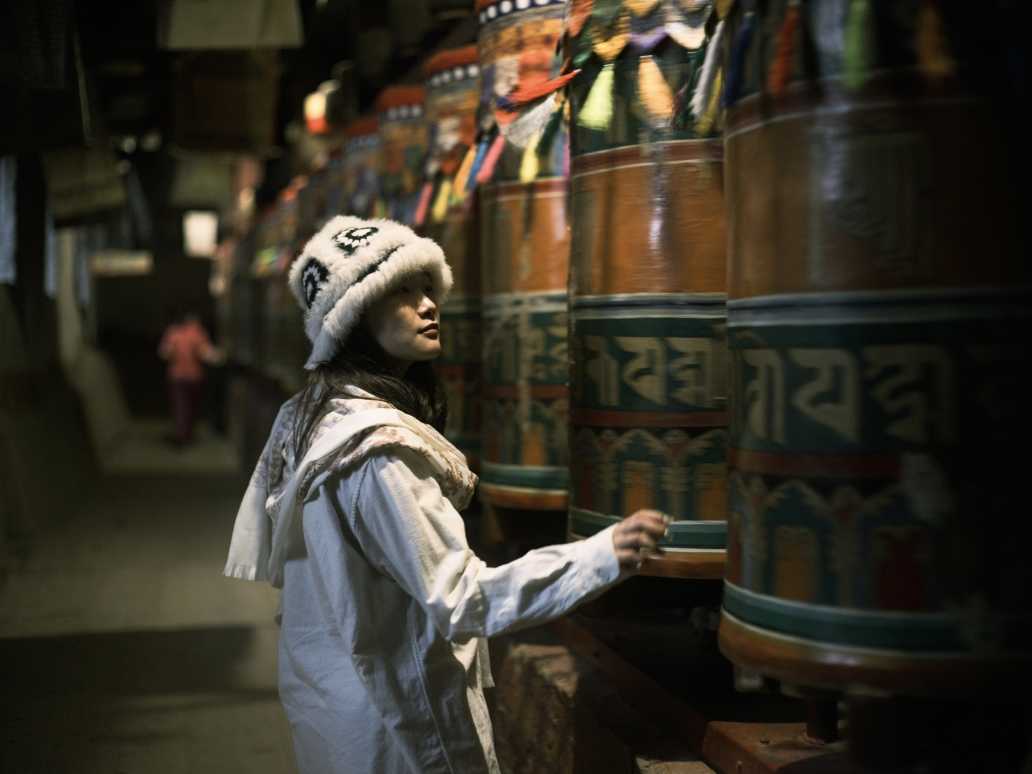
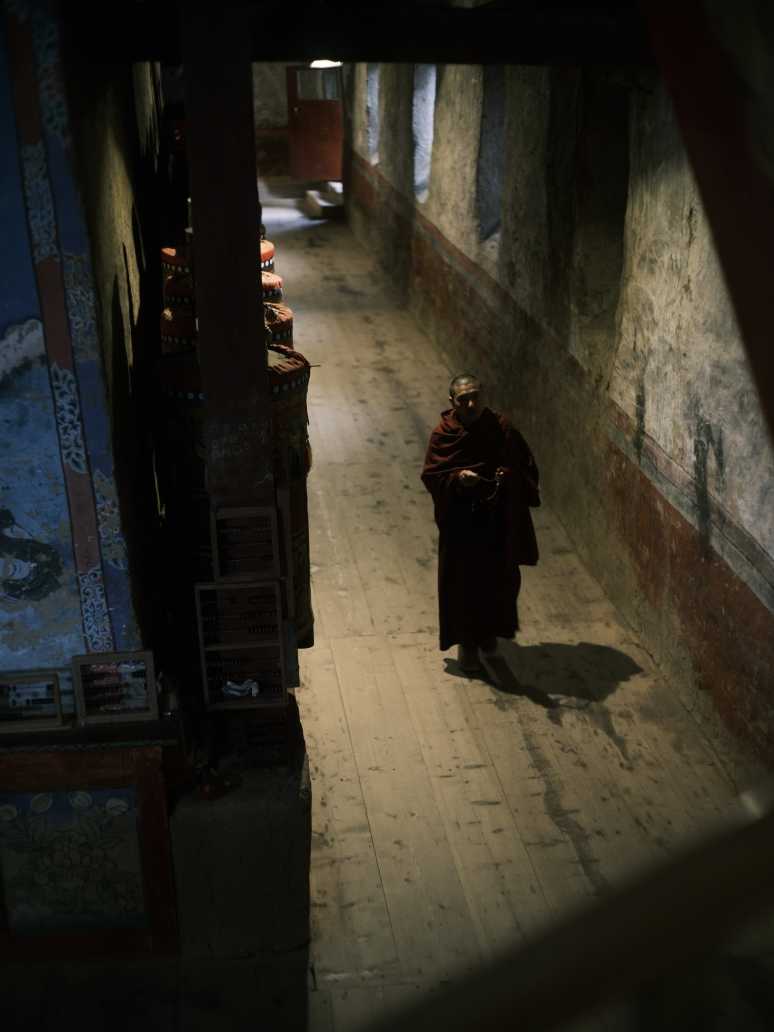
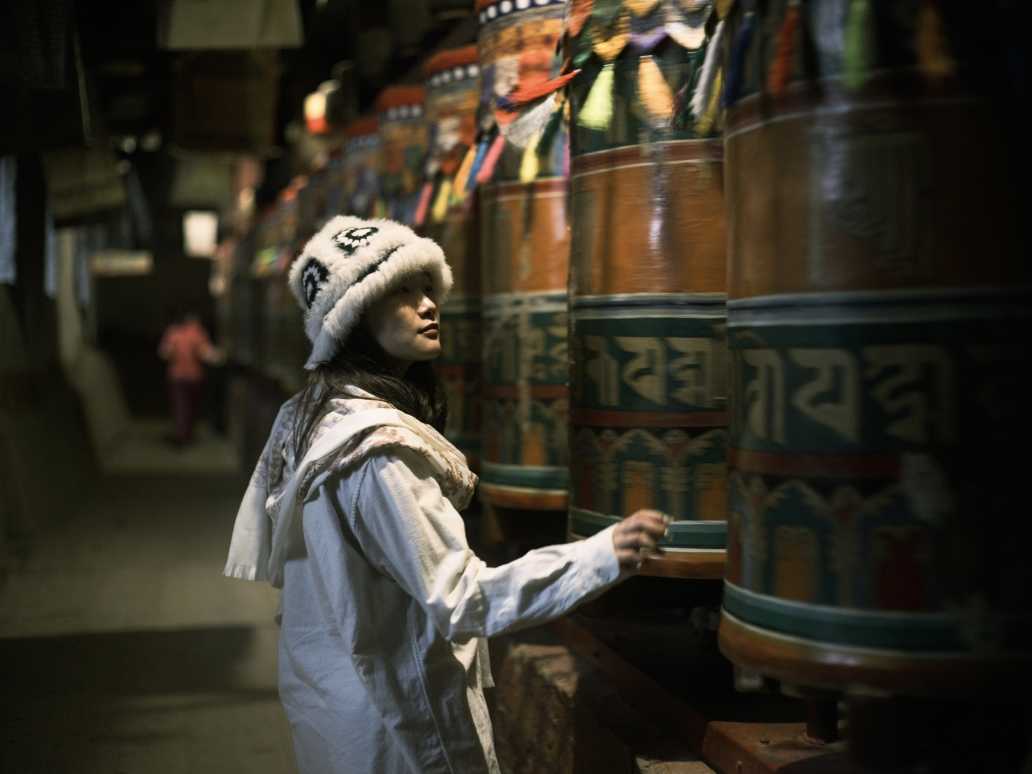
The library's ochre-red walls were incredibly photogenic, with windows reflecting the distant mountains and the monastery's full view. Inside the prayer hall, the deep, resonant chanting of monks filled the space, instantly immersing us in an atmosphere of faith. In the Avalokiteshvara Hall, pilgrims walked circuits around the prayer wheels, each rotation clicking a bead on a special abacus-like counter. Peng captured this scene from upstairs, and it became one of my favorite photos from the trip.
The weather on the plateau is fickle. One moment it was sunny, the next a downpour poured down. Even the monastery dogs ran inside to take shelter. Xiong's ethnic-style hat looked especially striking in close-up shots, perfectly complementing the vibe of Western Sichuan.
After descending the mountain, we headed straight to Jinchuan County. Though we missed the spring spectacle of "thousands of pear trees in bloom," autumn brought its own charm: trees heavy with fruit, and vendors lining the streets selling pears. After dinner, we stumbled upon a local square dance. The ethnic minorities' natural talent for song and dance was infectious, and Teacher Qin's dance moves earned plenty of applause.
[Link: Top Tibetan Buddhist monasteries in Sichuan]
Day Two: From Akeli Township to Lover's Lake – A Hidden Realm in the Mist
Scenery Along the Way: Surprises Around Every Bend
The drive from Jinchuan to Akeli Township started unremarkably, and with a steady drizzle, everyone's spirits were low. But after crossing a small stream, the landscape opened up dramatically.
One thing I love about Western Sichuan is taking curves—because before every turn, there's a sense of anticipation, wondering what scenery lies hidden just ahead. And sure enough, we encountered a troop of wild monkeys and saw a modern twist on herding: a local riding a motorcycle to move his livestock. Mist-shrouded forests and mountains created a scene where everything felt just right.
Road Conditions Note: All paved roads in good condition, passable for sedans.
A Camping Dream by the Riverbank
In the afternoon, the sun occasionally peeked through the clouds. We made our camping dream come true by the riverbank, on the grass, surrounded by cows and horses. The three of us—looking like "masked figures" thanks to the intense plateau UV rays—lounged in chairs, soaking up the rare warmth. Even though our faces were already tanned enough, we couldn't resist craving a little more sunshine.

But good things never last. No sooner had we finished lunch than dark clouds gathered. We had to pack up and "flee." The fog thickened, the rain intensified, and our plan to find a lake was thwarted. Only just before reaching Lover's Lake did we spot a high-altitude lake through the mist on the map.
Road Conditions Note: The road from Akeli to Lover's Lake is unpaved. Drive slowly; sedans can still pass.
[Link: Best camping spots in Western Sichuan]
Day Three: Lover's Lake and Guanyin Temple – The Tenderness of an Ink Wash Painting
Lover's Lake: Misty Elegance on a Gloomy Day
Passing through a village with curling chimney smoke, we arrived at Lover's Lake. The weather wasn't cooperating—a brief sunny morning gave way to more drizzle—but it didn't dampen our spirits at all. Without blue skies and white clouds, the misty Lover's Lake resembled an ink wash painting, unfolding gently before our eyes.
The best vantage point for Lover's Lake isn't from the shore or the watchtowers, but from the observation deck at the highest point on the road. From there, the turquoise-green water and the colorful autumn forests on the mountainsides complemented each other beautifully. Even on a cloudy day, there was a sense of vastness and grandeur.
We circled halfway around the lake to the northern observation deck, hoping to capture a shot of Lover's Village with the lake in the background, but no luck—it seems you'd need a drone for that angle.
The true "bullies" of Lover's Lake are the yaks. One came charging straight toward us, forcing us to retreat. But these encounters are part of the charm—they remind you that you're in a wild, untamed place.
Guanyin Temple: A Spiritual Stopover
From Lover's Lake, we drove to Guanyinqiao Town, where the Guanyin Temple sits atop a hill. The temple is dedicated to the Bodhisattva of Compassion, and the views from the top are spectacular—rolling hills, winding rivers, and patchwork fields stretching to the horizon.
The temple itself is modest compared to Changlie Monastery, but its atmosphere is serene. We spent an hour walking the prayer circuit, spinning the prayer wheels, and watching the sun set behind the mountains. It was a fitting end to a day of misty beauty.
[Link: High-altitude lakes in Sichuan worth visiting]
Day Four: Guanyinqiao Town to Chengdu – The Journey Home

The final day was mostly driving. We left Guanyinqiao Town early, taking National Highway 317 back to the expressway. The road was quiet, and the scenery—though familiar now—still held our attention. We stopped for a quick lunch in Barkam and made it back to Chengdu by late afternoon.
The trip was short, but it reminded me why Western Sichuan never gets old. Every visit reveals something new—a hidden lake, a chance encounter, a moment of unexpected joy. And that's the magic of this place: it keeps giving, no matter how many times you return.
FAQ: Planning Your Western Sichuan Trip
1. What is the best time to visit Western Sichuan?
 The best time is September to October for autumn colors and stable weather. Spring (April-May) offers blooming pear blossoms, while summer (June-August) is lush but rainy. Winter (November-March) is cold but less crowded.
2. How many days do I need for a Western Sichuan road trip?
A 4-5 day itinerary is ideal for a relaxed trip covering Barkam, Jinchuan, and Lover's Lake. For a deeper exploration (e.g., Garzê, Daocheng Yading), plan 7-10 days.
3. Is it safe to drive in Western Sichuan?
 Yes, but be prepared for mountain roads, altitude changes, and unpredictable weather. Use a reliable vehicle (SUV recommended for unpaved sections), drive slowly, and carry chains in winter. Check road conditions before departing.
4. What should I pack for a Western Sichuan trip?
- Clothing: Layered outfits (thermal base, fleece, waterproof jacket), warm hat, gloves, and sturdy hiking boots.
- Gear: Sunscreen (SPF 50+), sunglasses, lip balm, reusable water bottle, snacks, and a first-aid kit.
- Altitude: Consider Diamox for altitude sickness prevention, and avoid strenuous activity on Day 1.
5. Can I visit Western Sichuan on a budget?
Absolutely. Our trip cost 930 RMB per person (including gas, tolls, food, and accommodation). Budget options include guesthouses, local eateries, and free attractions like museums and lakes.
[Link: Budget travel tips for Sichuan]
Conclusion: Why Western Sichuan Keeps Calling You Back
Western Sichuan isn't just a destination—it's a relationship. Each visit deepens your connection to the land, the people, and the stories that unfold along the way. Whether you're a first-timer or a seasoned explorer, there's always a new landscape waiting to be discovered.
So pack your bags, hit the road, and let Western Sichuan surprise you. The magic is real—and it's waiting for you.
Ready to plan your own Western Sichuan adventure?
[Link: Book a guided tour of Western Sichuan]
[Link: Download a free Western Sichuan road trip checklist]
Article originally published on Mafengwo. Optimized for SEO by [Your Name/Company].
You may also like