The Art and Everyday Life of Chengdu: A Local's Guide to Rediscovering the "City of Blossoms"
Meta Description: Discover Chengdu beyond hotpot and pandas. A local's guide to hidden gems—from Sichuan University's century-old architecture to bustling wet markets and spring blossom spots. Your insider's Chengdu travel guide.
If your impression of Chengdu still stops at "hotpot, pandas, and Kuanzhai Alley," this travelogue might make you want to immediately change your flight. As a native Chengdu native who has lived in this city for over thirty years, I've watched it transform from a laid-back southwestern town into today's red-hot influencer destination. Zhao Lei's song "Chengdu" deserves much of the credit—the Chengdu Culture and Tourism Bureau should really give him a lifetime achievement award.
But honestly, Chengdu's charm goes far beyond Yulin Road and small bars. When spring arrives, every corner of the city stages the spectacular scene of "the city of blossoms weighing down the brocade official city." Today, I don't want to take you to those tourist-packed spots. Instead, I want to share some secret places only locals know—from the artistic corners of a century-old campus, to the smoky energy of a wet market, to hidden ancient towns deep in the mountains.
The Sichuan University Complex: My Hundred-Plant Garden and Three-Flavor Study
For me, Sichuan University isn't just a university—it's where I grew up. From birth until now, I've lived almost my entire life on the SCU campus. It holds countless childhood memories, and now many familiar old places have become internet-famous check-in spots.
Mandarin Duck Building: Urban Aesthetics in Decay

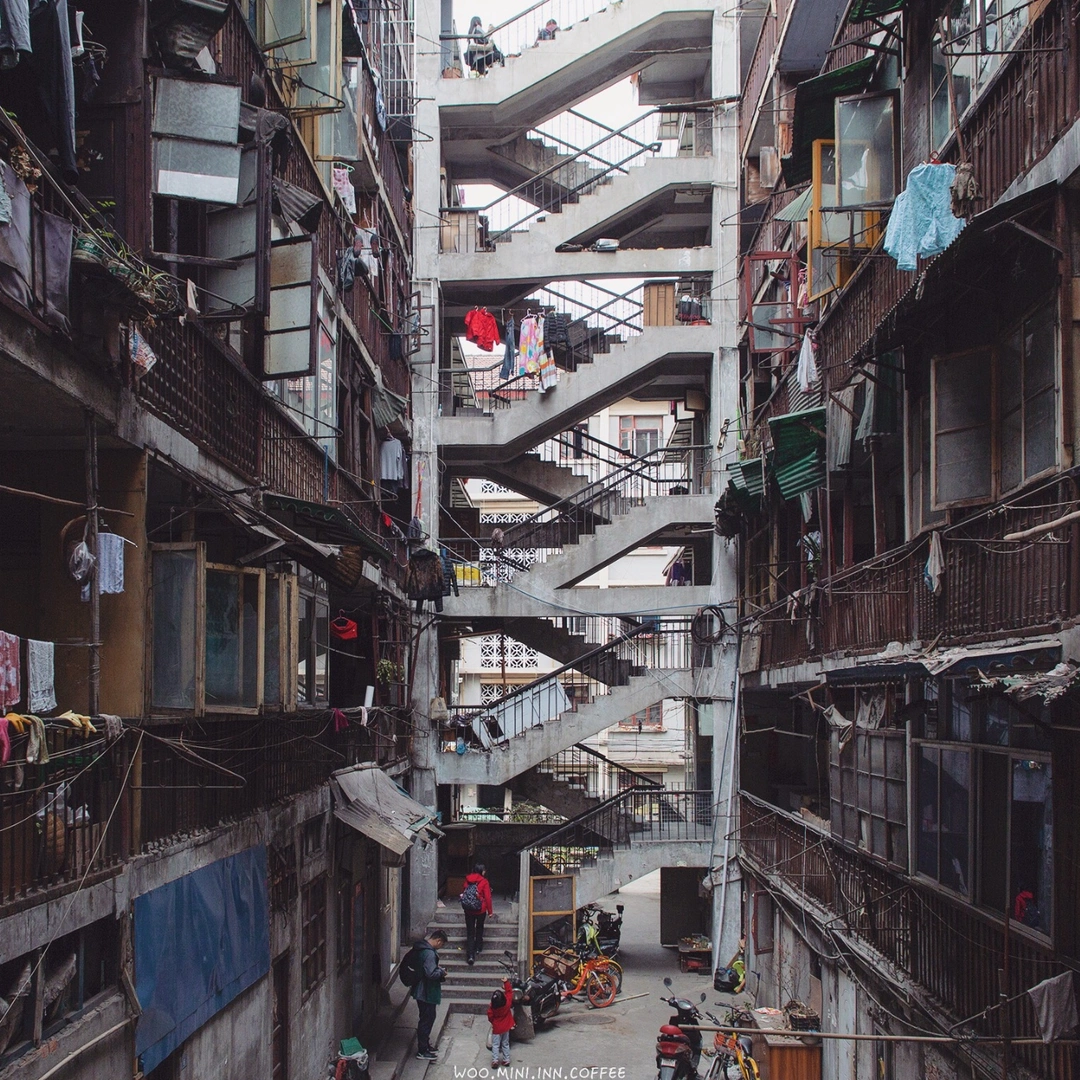
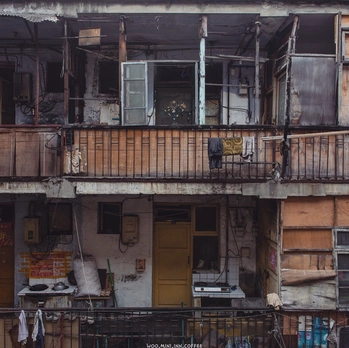
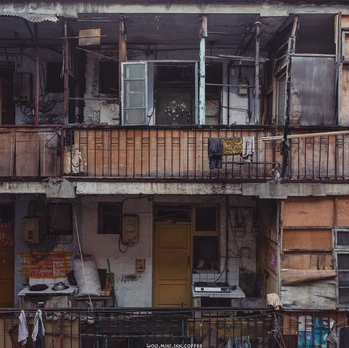
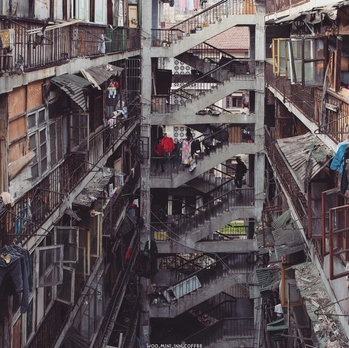
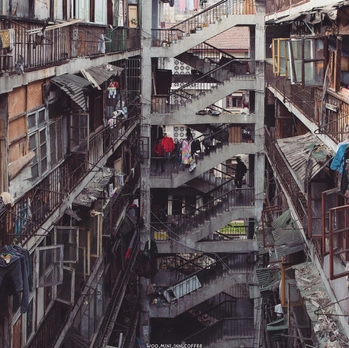
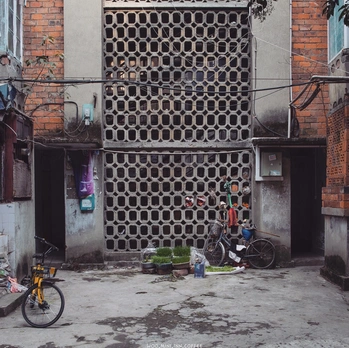
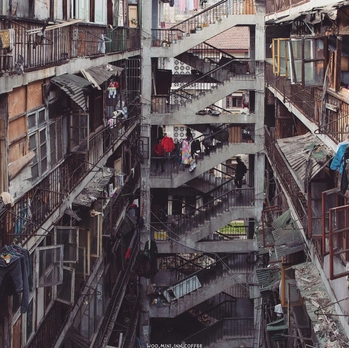
Located near Hongwasi, the Mandarin Duck Building (Yuanyang Lou) was originally faculty housing for the former Chengdu Institute of Technology. My grandfather was a teacher here, and my family lived in this old building before I was born. Later, it gradually rented out to migrant workers, and over time, the structure grew increasingly dilapidated. But it's precisely this "sense of decay," combined with its unique architecture, that has made it a paradise for photography enthusiasts.
The Mandarin Duck Building today is nothing like the one in my memory. Mottled walls, greasy staircases, dim corridors—everything exudes a thick "sang culture" vibe. To be honest, seeing the once clean and tidy dormitories like this leaves a bitter taste in my mouth. But the low rent and prime location still attract many residents. Word has it this building might be demolished within a few years, and thinking about those beautiful childhood moments makes me a little sad.
Practical Tip: It's a short walk from the small north gate of SCU. Please keep quiet while shooting and don't disturb the residents—there have been unpleasant incidents between photographers and tenants before.
The Expert Building: A Real 1980s Time Capsule
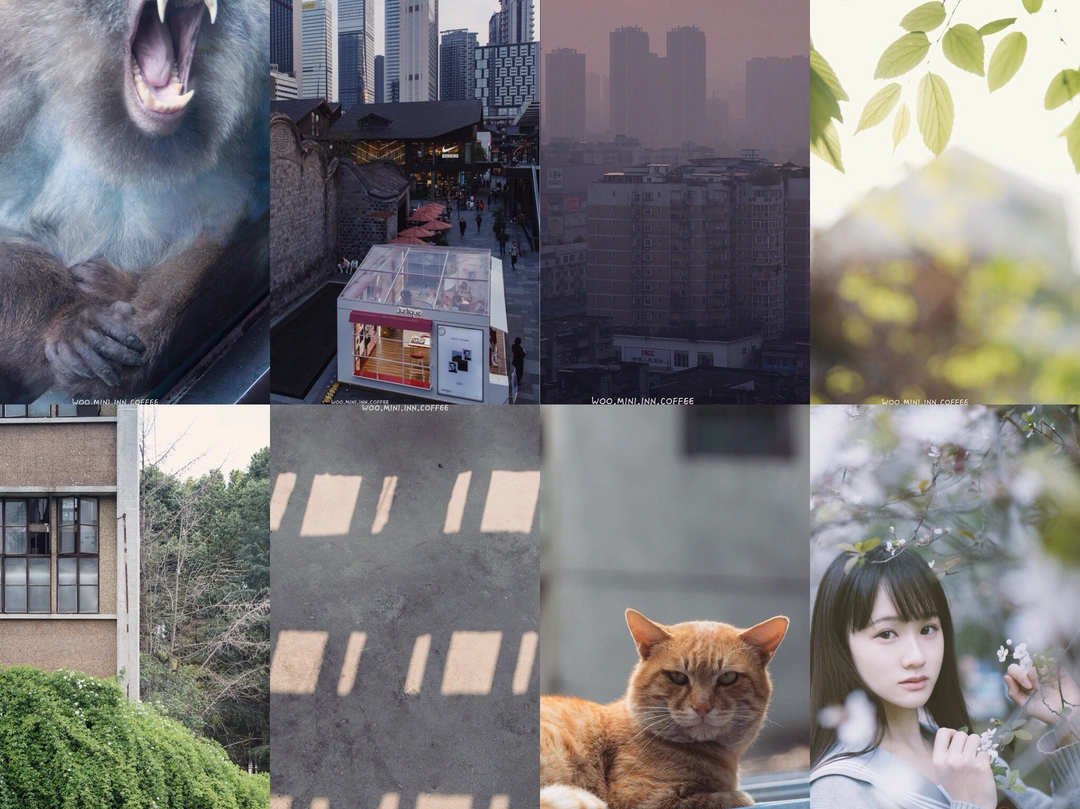
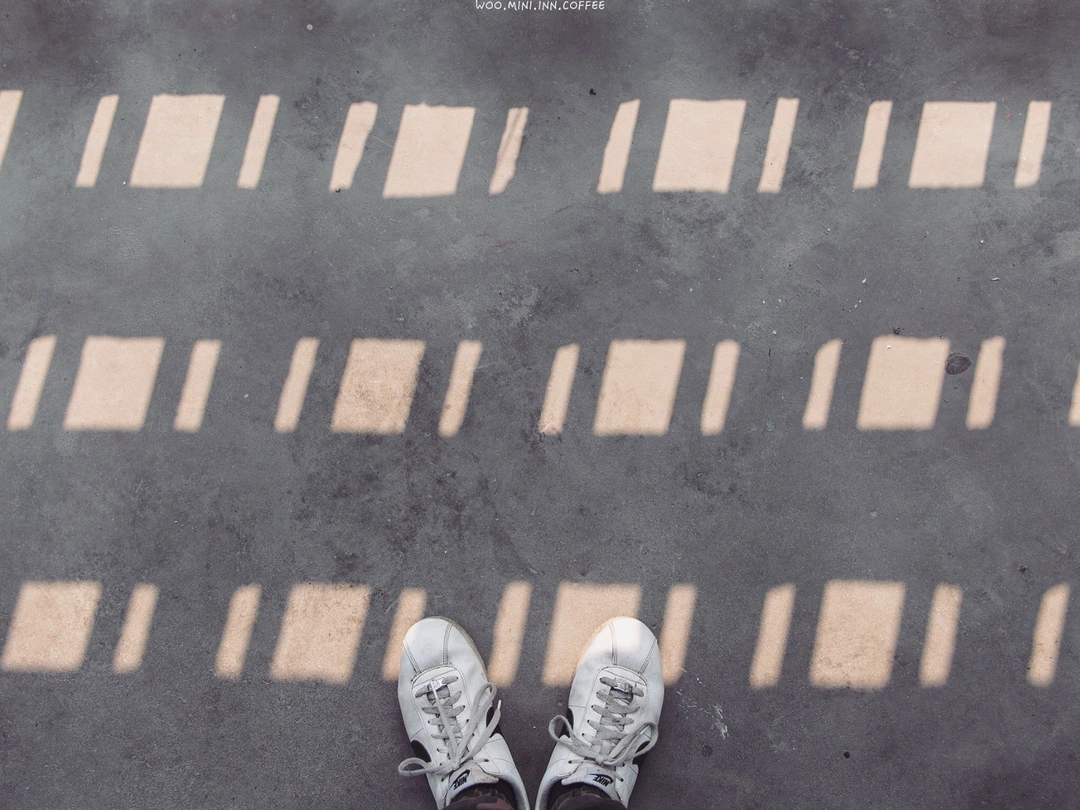
Many people say the Mandarin Duck Building feels like stepping back to the 1980s, but I'd recommend the former Expert Building in SCU's eastern district instead. Though also old, it's clean, tidy, and orderly, with a stronger sense of that era's daily life. There's a cherry tree in the small courtyard that, thanks to ample sunlight, produces big, sweet fruit. Sunlight filters through the gaps in the corridor, casting dappled shadows that look like a movie scene.
Next door is the former SCU Women's College, freshly renovated this year, with cherry blossoms blooming beautifully along the wall. If you bring kids, there's a fish pond in the courtyard stocked with goldfish and turtles—they'll be entertained for hours.
Location: Right side of SCU's east gate.
White Flower Pavilion: Spring's Limited-Edition Romance
Every year from late March to early April, the fifth teaching building in SCU's western district (near the north gate) hosts a "white feast." Large clusters of woodbine flowers climb up from the corridor pavilion, spreading all the way to the teaching building's walls—a scene so spectacular you can't look away. This is absolutely the top spot for portrait photography in Chengdu. You'll see all kinds of "old masters" lugging around long lenses, and cheerful girls posing among the flowers.
Besides woodbine, there are a few roses scattered about. Go in early April when the flowers are at their peak.
Other Campus Treasures
There's so much worth exploring at SCU: the two cherry blossom trees outside the Foreign Languages building are practically "giants" by Chengdu standards; the east district bathhouse—where I went every day as a student, now surprisingly photogenic; the cats on old buildings, their eyes carrying a streetwise air; foreign students sunbathing on the sports field, perfectly embodying "if your heart is the ocean, any place is a beach."
Oh, and the lotus pond outside the north gate—it's practically a scene straight out of Journey to the West.
Portrait Photography Tip: If you want to shoot that college-style, fresh-faced look, come straight to SCU. Convenient transportation, rich scenery—your WeChat Moments will be flooded with likes.
Huaxi Campus: The Century-Old Medical Hall's Ancient Architecture
Although Huaxi Campus is now part of SCU, its history predates the university. Huaxi Hospital originated in 1892 with the Renji and Cunchun hospitals founded by British and American churches, while most of Huaxi Medical School's buildings were constructed before 1930, making it the largest and most complete collection of old architecture in Chengdu.
These buildings were designed by Western architects but incorporate Chinese elements, creating a unique style. The most famous is the bell tower built in 1926, originally Gothic but later remodeled with a Chinese-style flying eave roof. The mythical beasts on the eaves are adorably cartoonish, practically begging to be photographed.
Walking through Huaxi campus truly feels like time travel. The architecture is not only exquisite in design but also exceptionally well-maintained—compared to the demolished old buildings elsewhere in Chengdu, Huaxi's ancient complex is practically a miracle. When the lotuses bloom in summer, the scenery becomes even more beautiful.
Tip: Getting into Huaxi to study requires top-tier academic performance—the admission分数线 (cutoff score) is terrifyingly high. But as a tourist, you can freely wander in and soak up the atmosphere of this century-old institution.
[Link: Best time to visit Chengdu for cherry blossoms]
Hongxing Bridge's Paulownia Flowers: A Spring Limited Edition by the Funan River
Every year from late March to early April, paulownia flowers bloom along the Funan River next to Hongxing Bridge metro station. The paulownia trees are concentrated in a stretch, and when in full bloom, they extend for hundreds of meters. Paired with the nearby 339 TV tower, the scene looks almost unreal.
If the weather cooperates (clear skies in Chengdu are a bit of a luxury), this view can rival some of Japan's cherry blossom avenues. Go from late March to early April for the peak bloom.
[Link: Chengdu spring flower viewing guide]
Ma'an Road Market: 40 Years of Urban Hustle and Bustle
If SCU is my spiritual home, then Ma'an Road Market is the home of my stomach. My grandparents used to live here, and I often came to play as a child. This market is at least 40 years old, and in recent years, it absorbed a nearby demolished street market, becoming enormous—dubbed the "city center market."
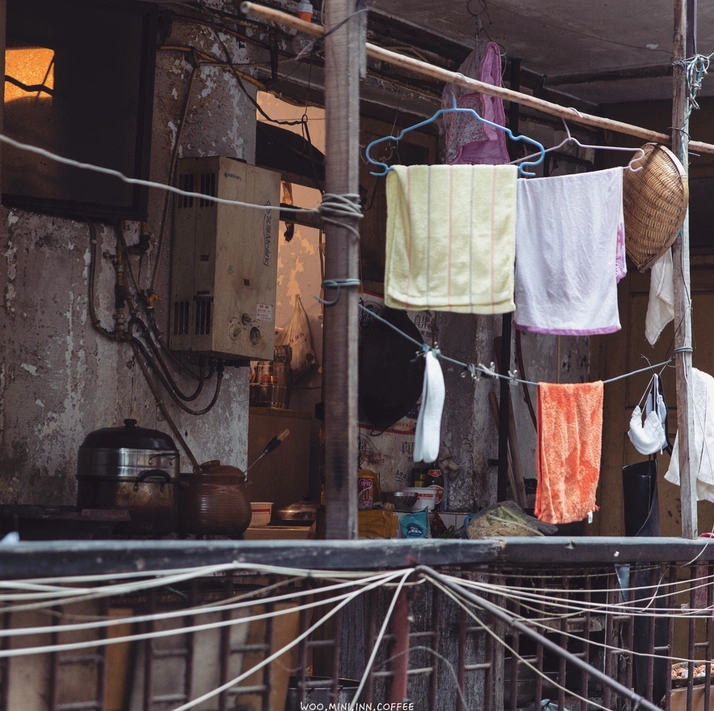
By 7 a.m., the stalls are already set up. Chicken and duck slaughtering, vegetable arranging, roast duck hawking—it's a lively chaos. The "mao kao ya" (a combination of maocai and roast duck) is a Chengdu specialty. The dried goods shops have a surprisingly Instagram-worthy display. The mixed cold spring rolls are a must for picnics, and the meat market is booming.
The funniest part: there's a small courtyard in the center of the market where elderly men and women are playing dou dizhu (a Chinese card game). This kind of street-level atmosphere is getting harder and harder to find in big cities. Go before it gets demolished—the prices are the lowest in all of Chengdu.
[Link: Best street food in Chengdu markets]
Chengdu Zoo: Where You Can Shoot Moody Portraits
If you think zoos are just for kids, think again. At the Chengdu Zoo, you can capture some surprisingly artistic shots. The zoo's older enclosures, with their weathered concrete and iron bars, create a moody, nostalgic aesthetic that's perfect for portrait photography. The animals themselves—especially the red pandas and golden monkeys—are incredibly photogenic. Plus, the zoo is less crowded than the city's other attractions, so you can take your time composing the perfect shot.
Tip: Visit on a weekday morning for the best light and fewest crowds.
Frequently Asked Questions
1. What is the best time to visit Chengdu for spring blossoms?
 Late March to early April is the peak season for cherry blossoms, paulownia flowers, and woodbine flowers at Sichuan University and along the Funan River. The weather is mild, and the city is at its most colorful.
2. Are these hidden spots free to visit?
Yes, all the locations mentioned—Sichuan University campus, Huaxi campus, Hongxing Bridge, and Ma'an Road Market—are free to enter. The Chengdu Zoo charges a small admission fee (around 20 RMB).
3. How do I get to Sichuan University's Mandarin Duck Building?
 Take the metro to Hongwasi Station (Line 3), then walk to the small north gate of Sichuan University. The Mandarin Duck Building is a short walk from the gate. Use a map app for precise directions.
4. Is Ma'an Road Market safe for tourists?
 Absolutely. It's a bustling local market with friendly vendors. Just be mindful of your belongings in crowded areas, and don't be afraid to haggle politely. The prices are the lowest in Chengdu.
5. Can I take professional photos at Huaxi Campus?
Yes, but be respectful. Huaxi is a working medical campus, so avoid disrupting classes or patients. Early mornings and weekends are best for photography.
Your Turn: Rediscover Chengdu Like a Local
Chengdu is a city of layers—beyond the tourist hotspots lies a world of century-old architecture, vibrant street markets, and seasonal blossoms that only locals know. Whether you're a first-time visitor or a long-time resident, these hidden gems offer a fresh perspective on the "City of Blossoms."
Ready to explore? Start with Sichuan University's Mandarin Duck Building, then grab a bowl of mao kao ya at Ma'an Road Market. Share your discoveries with #ChengduLocalGuide and tag us in your photos. The city is waiting to be rediscovered—one hidden corner at a time.
[Link: Book a Chengdu local food tour] | [Link: Chengdu photography tour]
You may also like


