That Is a Mountain, But This Is Not a Travelogue
Here is the SEO-optimized, rewritten article based on the source material. It has been restructured for search intent, readability, and keyword density while preserving the original narrative and factual accuracy.
Title: Mount Chola Expedition: Conquering 6,168m in Western Sichuan (A Story of Dreams, Not Just a Travelogue)
Meta Description: Experience the raw beauty and danger of the Mount Chola expedition in Garzê, Sichuan. This is not a travelogue; it's a story about dreams, friendship, and the reality of high-altitude climbing.
Mount Chola Expedition: Conquering 6,168m in Western Sichuan (A Story of Dreams, Not Just a Travelogue)
Standing atop 6,168-meter Mount Chola, clouds churned beneath my feet, and an endless sea of snow-capped peaks stretched in every direction. I pulled out my camera, only to realize that no photo could truly capture what I felt in that moment. It wasn't because my equipment wasn't good enough—some sensations can never be captured through a lens.
Four years ago, during my first trip through western Sichuan, I caught a distant glimpse of Mount Chola. It stood proudly beside the turquoise waters of Xinluhai Lake, its glaciers cascading like silver waterfalls, glinting coldly in the sunlight. In that instant, a seed was planted in my heart: I would climb that mountain.
Four years later, standing there at last, I found that the urge to "conquer something" had long been worn away by the journey itself. For me, mountaineering was no longer about conquest—it was about enjoyment: the freedom of walking above the clouds, the vastness of overlooking countless mountains, and the warmth of bonding with strangers who became friends.
This is not a travelogue. This is a story about dreams, about the journey, and about growth.
How the Mount Chola Expedition Began: A Promise Among Friends
On September 9, 2014, I set out from Beijing with several teammates, heading to Dege County in the Garzê Tibetan Autonomous Prefecture of Sichuan. Our target was Mount Chola—known in Tibetan as "the peak even eagles cannot fly over." The main summit rises to 6,168 meters, located in the northern section of the Shaluli Mountain Range.
This climb was a commercial expedition. To be honest, I knew my abilities were far from those of independent climbers. The value of commercial mountaineering lies in the fact that the leader and guides carry the group gear, set fixed ropes, and scout the route, while the rest of us only need to carry our personal equipment and food. This setup allowed me to focus on the climb itself and gave me the chance to document the entire process with my camera.
I had met our leader, Brother Li, a few years earlier during an attempted climb of Yuzhu Peak. Although that trip fell through, we stayed in touch. For this Mount Chola expedition, Brother Li needed a team member with high-altitude experience who also loved photography. I, in turn, had been wanting to capture a series of snow mountain climbing photos—it was a perfect match.
Our team consisted of eight people: leader Brother Li, guides Metal and Erwa, and teammates Long Ge, Sister Song, Brother Xu, Xiao Lin, and myself. Over the next seven days, we would start from the shores of Xinluhai Lake and make our way through Base Camp, Camp 1, Camp 2, and Camp 3, all the way to the summit and back down safely.
[Link: Best time to climb Mount Chola in Sichuan]
The Camps: Homes on the Mountain
Xinluhai Base Camp: A Sleepless Night in Thunder and Rain

The night before departure, we set up camp at Xinluhai Base Camp. The sky was still filled with stars when we fell asleep, but in the middle of the night, lightning and thunder struck without warning, followed by a torrential downpour. Thunderclaps exploded right next to my ears—barely a second or two between the flash and the roar—jarring me wide awake.
Fortunately, our campsite was in a valley surrounded by mountains. Though the lightning was close, we weren't at risk of being struck. Still, the thunder was so powerful it felt like the entire valley was trembling.
Camp 1: Moonlight Bright as Day
Camp 1 was set up at the edge of the Chola Glacier's tongue. We rested there for a day, doing preparations and acclimatization training. From Xinluhai Base Camp to Camp 1, the first day was mostly a hike over gravel paths, ascending nearly 900 meters in elevation.
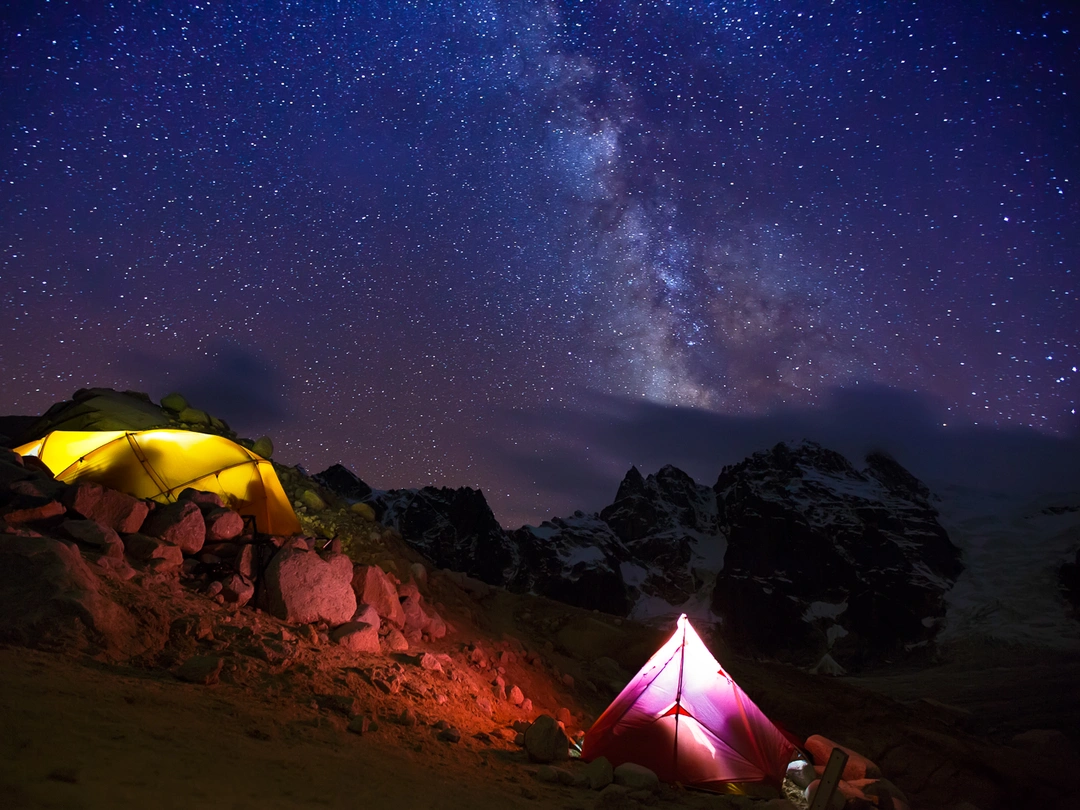
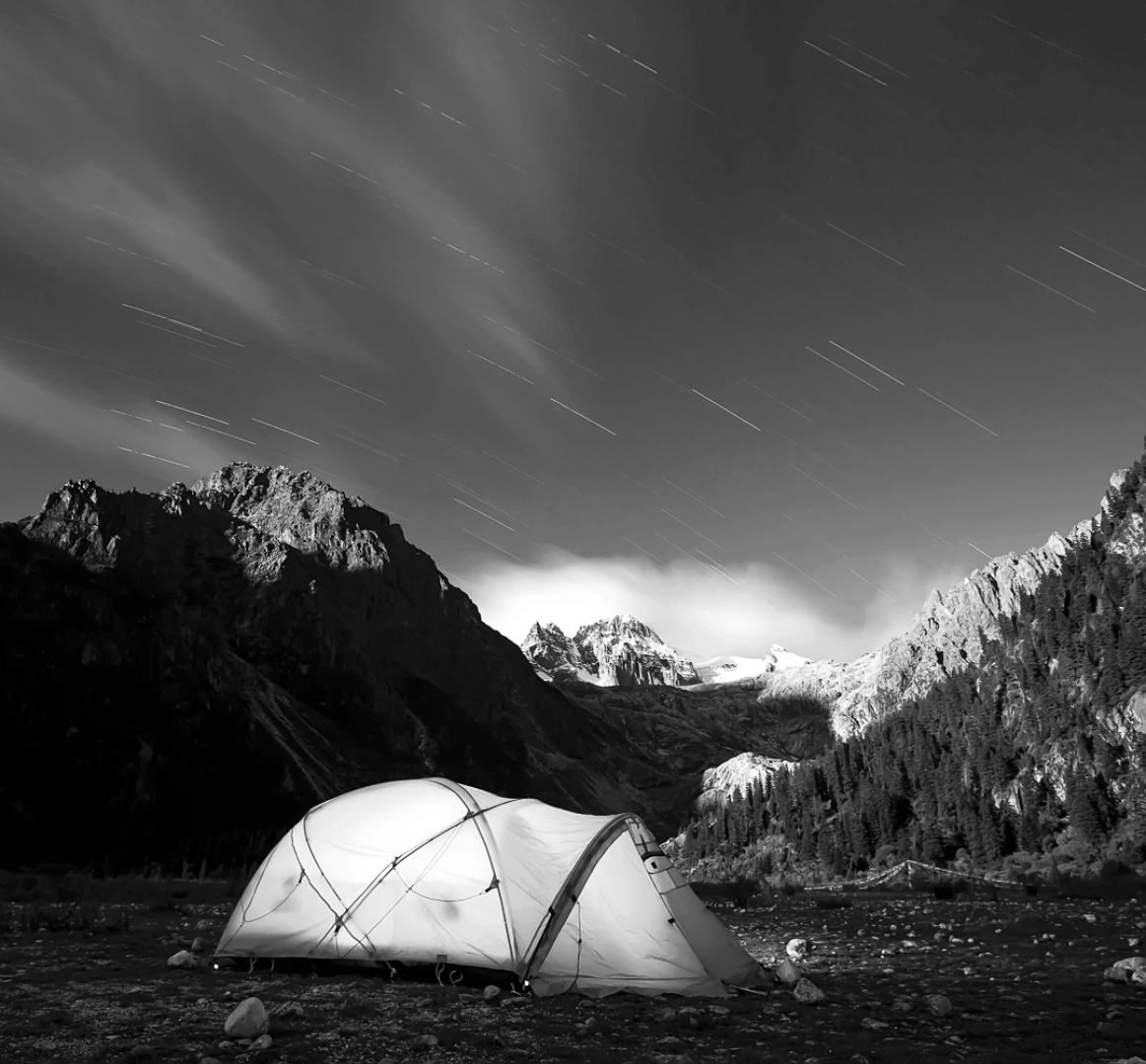
At night, Camp 1 was bathed in moonlight. Aside from the soft glow of our camp lights, the entire Shaluli Mountain Range was illuminated as if it were daytime. I didn't have a tripod, so I built a makeshift one out of rocks and captured a photo of our tents under the stars. Before the moon rose, the sky glittered with stars; after it rose, the earth was as bright as day—dreamlike and surreal.
Camp 2: Happiness at Sunset
It took us seven or eight hours to get from Camp 1 to Camp 2. By the time we arrived, everyone was fairly exhausted. For safety reasons, we had to abandon our original plan to set up camp at High Camp 2.
Once the tents were pitched, we crawled inside, quickly changed into dry thermal underwear, and brewed a cup of strong coffee. Looking out through the tent opening, the sun was setting, casting a golden, soft light over the snowy peaks. In that moment, most of the day's fatigue melted away, replaced by an overwhelming sense of happiness.
Camp 3: Between Heaven and Hell
Camp 3 was situated at an elevation of about 5,800 meters—the last camp before the summit push. On clear, windless days, it felt like heaven: peaceful and serene. In a blizzard, it turned into hell: agonizing and unbearable.
We were lucky. The evening before our summit attempt, we experienced a heavenly sunset. The light shifted rapidly across the sky, golden twilight blanketing the peaks before slowly fading into darkness. On a snowy mountain, you can literally see time passing through the changing light.
But on the night we descended, a fierce windstorm hit. Our tent collapsed under the gale. We ended up sleeping wrapped in our sleeping bags, with the tent fabric draped over us.
[Link: High altitude camping tips for Sichuan mountains]
The Climb: Navigating Glaciers and Crevasses
The Beauty and Danger of Glaciers
The glaciers of Mount Chola are among the most spectacular of any mountain at a similar altitude in China. The stretch from Camp 1 to Camp 2 featured the most stunning glacial scenery—fully developed icefalls that were breathtaking to behold.
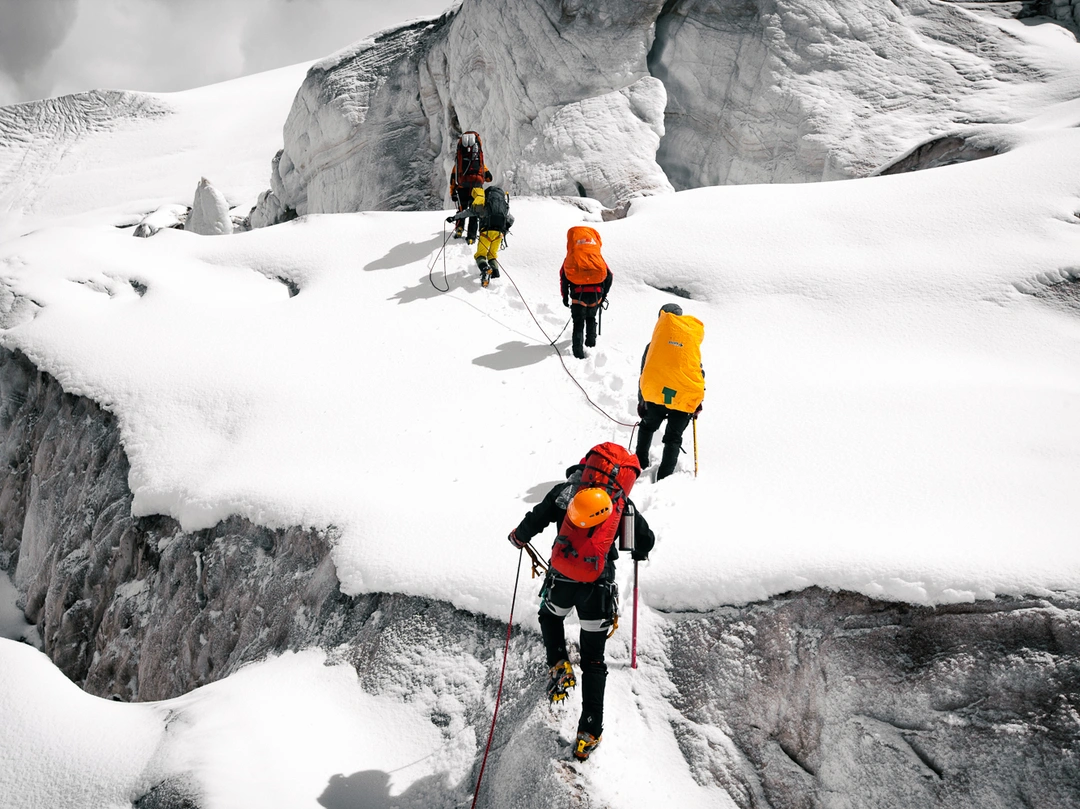
But behind the beauty lay deadly danger. Walking on a snowy mountain, the most thrilling—and terrifying—part was crossing countless crevasses and hidden snow bridges. Walking past bottomless cracks in the ice, I was nervous at first, but over time, I became numb to it. We were roped together, so even if someone accidentally fell into a crevasse, the rope would keep them from dropping into the abyss.
Navigating through the maze of crevasses, a distance of less than 100 meters in a straight line could take us over an hour of winding detours. Adrenaline surged—it was both exhilarating and frustrating.
A Heart-Stopping Moment in a Crevasse
During the climb to Camp 3, our teammate Sister Song fell into a crevasse. It took us nearly 20 minutes to pull her out safely.
Unless you've been trapped in a crevasse, you can't understand the feeling—snow has a way of sucking you in. The more you struggle, the tighter it grips you. That's why so many people suffocate in avalanches, unable to climb out of what looks like soft, fluffy snow.
Brother Li later said that his biggest worry wasn't whether Sister Song could get out, but whether she might thrash so hard that her high-altitude boots would come off inside the crevasse. If that happened, she wouldn't be able to continue climbing, and her chance to summit would be lost.
This experience drove home a crucial lesson: on a snowy mountain, safety comes first. There's no room for carelessness. Every seemingly simple move can be the line between life and death.
The Guides' Dedication
Since no other teams were climbing during our trip, there were no pre-existing routes to follow on the mountain. Our guide, Metal, had to scout the path ahead—a physically and mentally exhausting task. He not only had to find a safe route but also check for hidden crevasses beneath the snow and break trail for the rest of us.
For commercial climbers, following a pre-scouted route is much simpler. Without the dedication of our leader and guides, there was no way we could have reached the summit on our own. Commercial mountaineering and independent climbing are two completely different things—they can't be compared.
[Link: How to choose a commercial climbing expedition in China]
FAQ: Mount Chola Expedition & High-Altitude Climbing
Q: What is the elevation of Mount Chola? A: The main summit of Mount Chola is 6,168 meters (20,236 feet) above sea level. It is located in the Shaluli Mountain Range in Garzê, Sichuan.
Q: Is Mount Chola suitable for beginner climbers? A: While it is considered a "commercial" climb, it requires prior high-altitude experience (usually above 5,000m) and good physical fitness. It is not recommended for absolute beginners without altitude training.
Q: What is the best time of year to climb Mount Chola? A: The most favorable climbing seasons are typically late spring (May-June) and autumn (September-October). These periods offer more stable weather and less risk of heavy snowfall or monsoon rains.
Q: How long does a typical Mount Chola expedition take? A: Most commercial expeditions last between 7 to 10 days, including travel to base camp, acclimatization, summit day, and descent. The climb itself (from base camp to summit and back) usually takes 5-7 days.
Q: What is the biggest danger on Mount Chola? A: The primary dangers are hidden crevasses, rapidly changing weather, and altitude sickness. Proper roping techniques and experienced guides are essential for safe navigation.
Conclusion: The Real Summit is the Journey
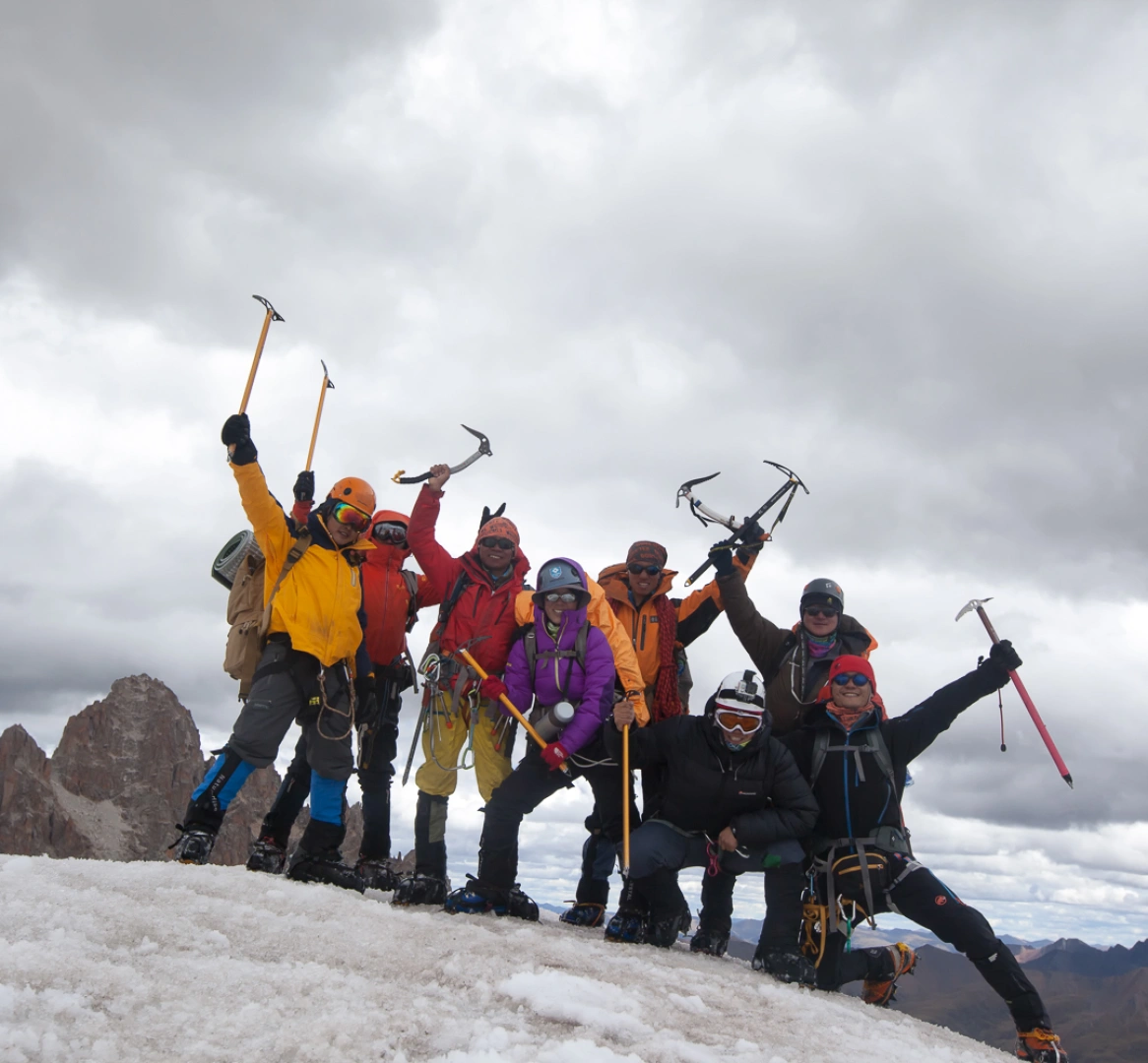
Standing on the summit of Mount Chola was a triumph, but it was never the destination. The real reward was the bond formed with my teammates, the raw beauty of the glaciers, and the lesson that safety and patience always outweigh ego.
If you have a dream of climbing a high-altitude peak in western Sichuan, start preparing now. Find a reputable guide, train your body, and respect the mountain. The journey will change you—not because you conquered a peak, but because you learned to move through fear, fatigue, and doubt.
Are you ready to chase your own summit? Whether it's Mount Chola or another peak, the first step is always the hardest. Start planning your expedition today. Share your questions or experiences in the comments below—we’d love to hear your story.
[Link: Essential gear list for high altitude climbing in Sichuan] [Link: How to train for a 6000m peak in China]
You may also like