Sichuan Quest: Beyond Pandas, This Epic Journey Will Make You Fall in Love with Bashu All Over Again
Meta Description: Discover Sichuan beyond pandas! A 10-day family itinerary covering Mount Emei, Leshan Giant Buddha & Dujiangyan. Insider tips, packing advice, and must-try street food in this SEO-optimized travel guide.
Introduction: Why Sichuan Deserves a Third Visit
In the scorching summer of 2025, our three-generation family set foot on Sichuan soil for the third time. Over ten days, from the misty peaks of Mount Emei to the vibrant streets of Leshan, and then to the millennia-old wisdom of Dujiangyan, every stop felt like opening a box of surprise gifts. We didn't catch the sunrise at the Golden Summit, nor did we get to tease the monkeys of Emei—but isn't that the beauty of travel? Leave a little regret, so there's always a reason to come back.
This Sichuan travel guide goes beyond the typical panda tours. Whether you're planning a Sichuan family trip, a Bashu cultural journey, or simply seeking Sichuan travel tips, this itinerary will help you fall in love with the region all over again.
Pre-Trip Preparation: Don't Let Details Ruin Your Sichuan Adventure
Packing List for Sichuan in Summer: Can You Freeze in July?
If you think summer in Sichuan means shorts and t-shirts all day, think again. Especially if you're planning to hike Mount Emei—the Golden Summit sits at 3,079 meters above sea level, and the temperature up there will make you question your life choices.
Essential packing items: - Thick autumn clothing (jackets, sweaters) - Waterproof jacket and rain gear (non-negotiable) - Comfortable walking shoes with good grip - Sunscreen and sunglasses (UV is strong at altitude) - Reusable water bottle - Snacks for kids and elderly family members
Sichuan's summer rains arrive faster than you can flip a page. A sudden downpour can turn a pleasant hike into a slippery challenge.
Accommodation Tips: Why Guesthouses Beat Hotels for Family Travel
For this trip, we opted for cozy guesthouses (minsu) instead of hotels. Cities like Emeishan, Leshan, and Dujiangyan may not boast five-star hotels, but the value for money at these guesthouses is genuinely impressive.
Benefits for family travel: - Clean and convenient locations - Many rooms sleep four people—perfect for multigenerational groups - Often include kitchenettes for preparing simple meals - Local hosts who share insider tips about nearby attractions
Transportation Tips: Tianfu Airport, You Deserve the Criticism
Chengdu Tianfu Airport offers plenty of flights, but its location in Jianyang is so far from the city center it'll make you weep. After landing, you have to take one stop on the airport metro just to reach baggage claim, then walk a few hundred meters. On the return trip, it gets even more absurd: our gate was number 45, requiring another airport metro ride followed by a 600-meter walk.
Pro tip: Don't cut it close—get to the airport early. The silver lining? You can catch a direct bullet train from Tianfu Airport Station to various cities and counties in Sichuan without transferring into downtown Chengdu. For a family hauling luggage and kids, this was an absolute lifesaver.
[Link: How to get from Tianfu Airport to Mount Emei by bullet train]
Stop One: Mount Emei — The Golden Summit Hid, But the Joy Didn't

Mount Emei: More Than Monkeys, There's Awe
Mount Emei is one of China's four sacred Buddhist mountains and a UNESCO World Heritage site for both culture and nature. It offers far more than its famous monkeys. The Golden Summit, Wannian Temple, and Qingyin Pavilion are highlights. At the summit stands the 48-meter-tall bronze statue of Samantabhadra (Puxian Bodhisattva) with ten faces and four arms—so majestic it makes you want to kneel.
The four great wonders—sunrise, sea of clouds, Buddha's halo, and sacred lamps—any one of them alone would make the trip worthwhile. But with our crew of elderly folks, young children, and women, our motto was: "Look, but don't push it."
Mount Emei hiking tips for families: - Divide the mountain into three zones: low mountain, mid mountain, and high mountain - Climbing it is like scaling multiple Mount Tais and Mount Huashans combined - We decisively stuck to the low mountain area—even the simple city walks later left my back aching - Consider cable cars for elderly or very young family members
Baoguo Temple: The "Light" Secret of the Seven Buddha Hall
Baoguo Temple, the gateway to Mount Emei, was first built during the Wanli era of the Ming Dynasty (1573–1620). Inside the Seven Buddha Hall, seven golden Buddha statues are enshrined. The guide asked visitors to guess their weight—one ton, two tons, five tons came the answers. The reveal? Each statue weighs a mere 20-odd jin (about 10-11 kg).
Ancient artisans used a "hollow lacquer" technique (tuosha suzao), making the statues lightweight, moisture-proof, insect-resistant, and crack-resistant. Standing in the hall, looking up at the seven figures, their eyes are gentle yet powerful—as if they've watched centuries of people come and go, always with compassion. A temple isn't just a building or a relic; it's a vessel holding countless prayers, confusions, and moments of release.
Dafo Chan Yuan (Great Buddha Temple): Asia's Largest Buddhist Complex
Dafo Chan Yuan covers nearly 700 mu (about 115 acres), with a building area of 56,000 square meters—making it the largest Buddhist temple complex in Asia.
Visitor tips: - Scan the QR code at the entrance to follow the official account and claim a free ticket - Pay attention to the couplets on temple pillars—they're beautifully written - The lotus pond is stunning; legend says that when Shakyamuni was born, lotuses as large as carriage canopies suddenly bloomed in the marsh - Photography isn't allowed inside, but the experience is unforgettable
Eating in Emeishan: Street Food Perfection
Emeishan City isn't big, but the food is outstanding. Here are the must-try dishes for any Sichuan food lover:
Breakfast Contenders: - Yuanyang Chaoshou (wontons mixed with vermicelli in chili oil) — the chili is incredibly fragrant - Xiaoze Paper-Thin Siu Mai (shaomai) — both pork and mushroom fillings are explosively delicious - Morning Maoxuewang (pig blood curd in spicy broth) — so tender it makes you gasp - Bingfen (ice jelly) — note: it's topped with fanzha brown sugar (a gritty, caramelized sugar), not sesame paste
Main Course All-Stars: - First meal in Sichuan: Hu Laosan's Beef Soup Pot — pig brain with tofu, an absolutely genius pairing - Two-yuan pickled vegetables that nearly made me lick the plate clean - Sichuan-style stir-fries — unbeatable for a spice-and-numbness addict
[Link: Best street food in Emeishan for families]
Stop Two: Leshan — The Essence of Sichuan, Right Here
Leshan Giant Buddha: Touch the Head, Worry-Free

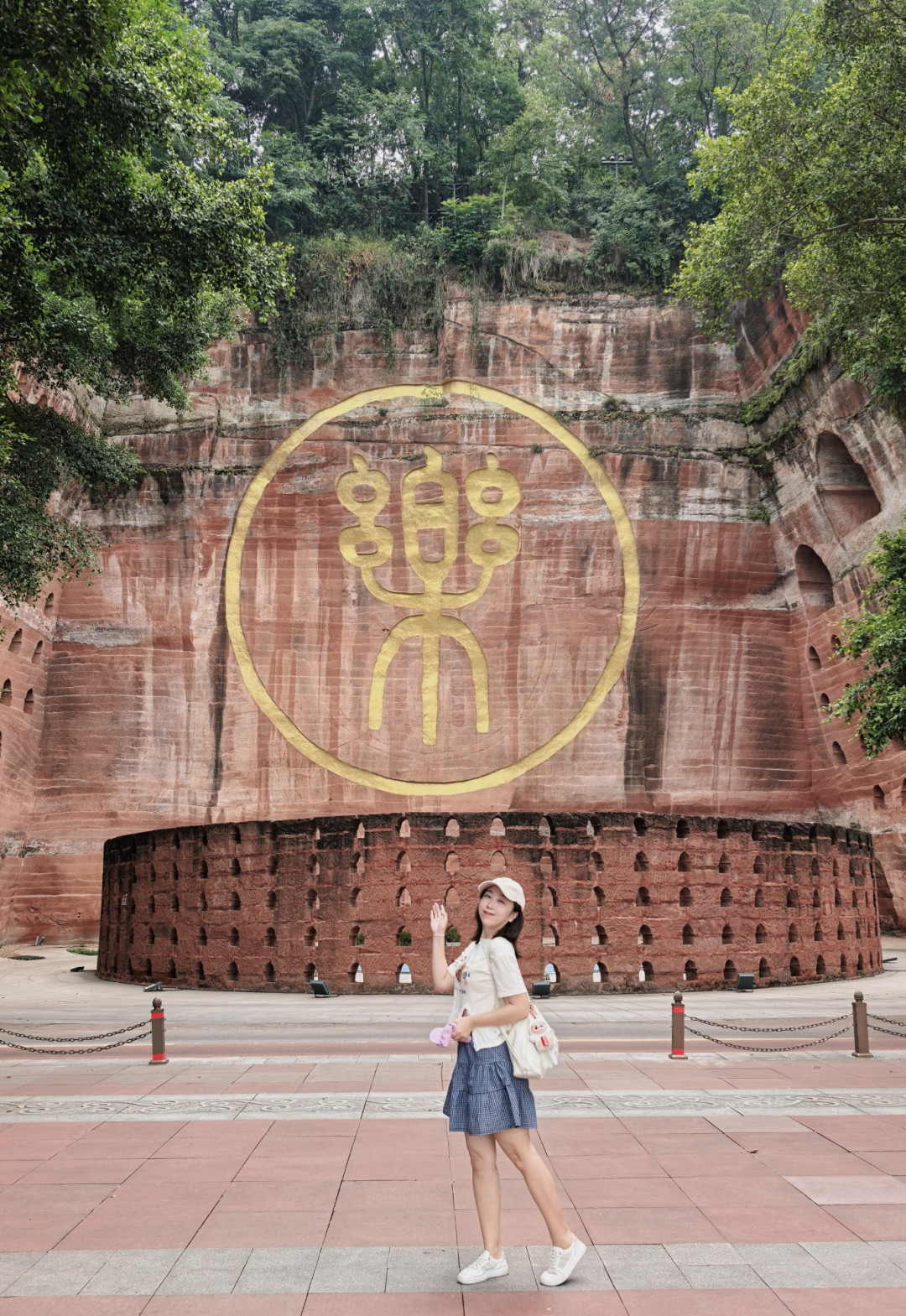
The Leshan Giant Buddha stands 71 meters tall, with a head 14.7 meters high, ears 7 meters long, and feet 8.5 meters wide. There are two ways to see it: a 70-yuan boat tour or an 80-yuan ticket to hike the mountain path. No contest—choose the mountain! You get to touch the Buddha's head and hold its feet.
Recommended route: 1. Enter through the North Gate 2. Buy the 15-yuan unlimited shuttle pass 3. Walk the tree-lined path to the Buddha scenic area 4. Follow the trail to Lingyun Temple 5. Touch the Buddha's head (rub the head, and all worries disappear!) 6. Exit through the East Gate (avoids backtracking)
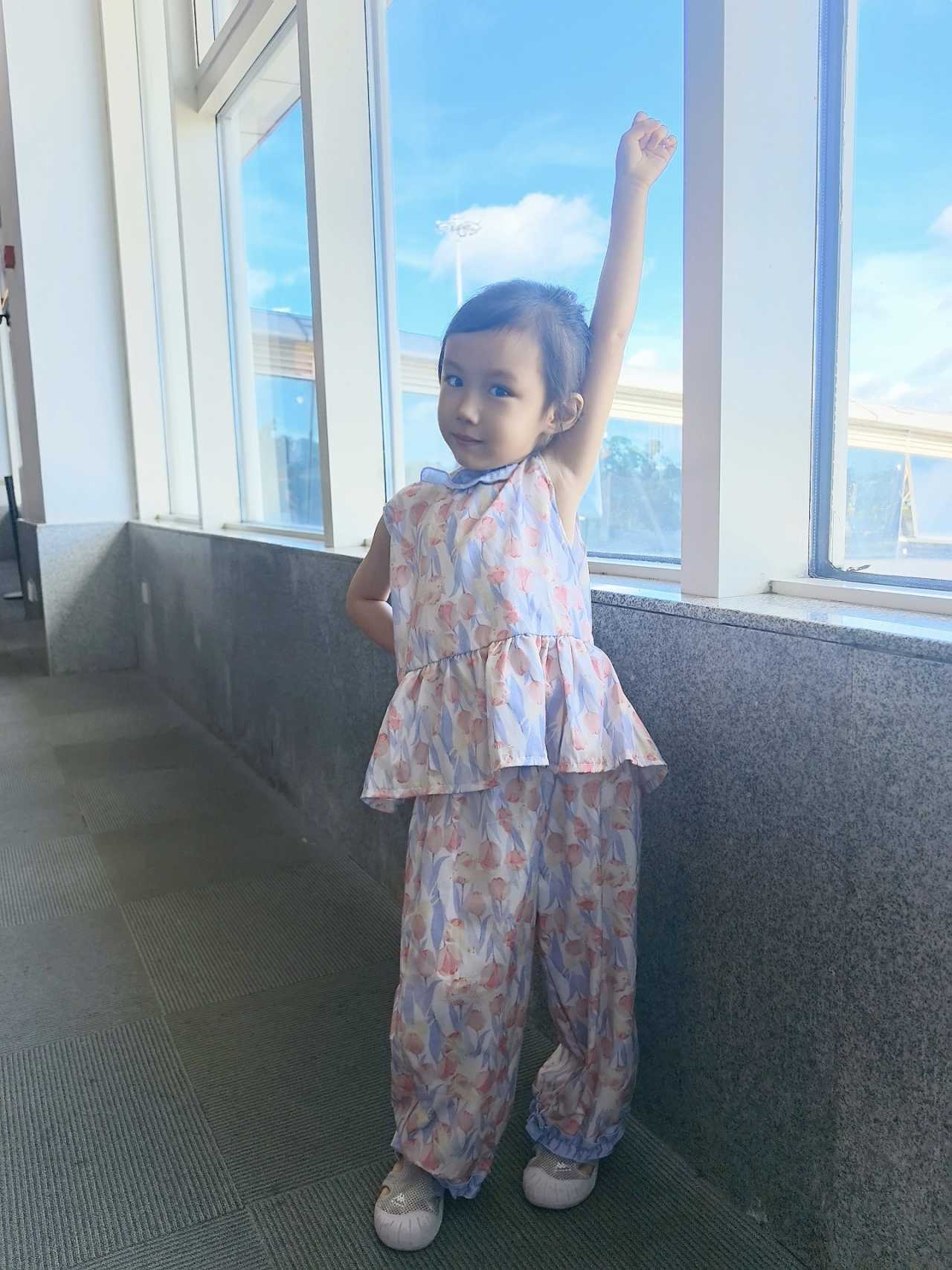
Accessibility note: The path to hold the Buddha's feet is steep and not ideal for seniors or small children. However, our five-and-a-half-year-old Guamei managed the whole way on her own—official kudos to her.
Leshan City Museum: Han and Tang Elegance Under One Roof
Built in 2006, the Leshan City Museum adopts an irregular architectural form with an eco-restoration design philosophy, incorporating elements from Leshan's Han Dynasty cliff tombs. The stone carvings on the gate lintel showcase the two pillars of Leshan's culture—"Han style and Tang charm."
What to see: - Hundreds of precious artifacts - Han Dynasty pottery horses, dancing figurines, and clay houses - Song, Ming, and Qing Dynasty ceramics - Tang Dynasty Buddhist statues - Works by calligraphers and painters: Guo Moruo, Li Jiongqiu, Xu Beihong, Zhang Daqian, Qi Baishi, Wu Guanzhong
Eating in Leshan: You Can't Eat It All
Round One: Snack Paradise

Leshan is a snack lover's dream. Must-try items include: - Wontons - Shaomai - Karbing (stuffed flatbread) - Pork rib noodles - Egg puff cakes - Ye'erba (glutinous rice balls wrapped in leaves) - Xu's Cold Tofu Jelly
[Link: Leshan food guide for first-time visitors]
Stop Three: Dujiangyan — Ancient Wisdom That Still Works Today
Dujiangyan Irrigation System: 2,000 Years of Genius
The Dujiangyan Irrigation System is a UNESCO World Heritage site that has been controlling floods and providing irrigation for over 2,000 years. Built by Li Bing and his son during the Warring States period, it's a masterpiece of ancient engineering that still functions today without dams or gates.
Key features: - Fish Mouth Levee (divides the Min River into inner and outer streams) - Flying Sand Weir (controls silt and floodwater) - Bottleneck Channel (directs water to the Chengdu Plain)
Mount Qingcheng: The Birthplace of Taoism
Just a short drive from Dujiangyan, Mount Qingcheng is one of the most important Taoist sites in China. The front mountain is more tourist-friendly, while the back mountain offers a more rugged hiking experience.
Tips for families: - Take the cable car to save energy - Visit the Tianshi Cave and Shangqing Palace - Enjoy the peaceful bamboo forests and ancient temples
Eating in Dujiangyan: Local Favorites
- Dujiangyan fish (freshwater fish prepared in spicy Sichuan style)
- Mapo tofu (classic Sichuan dish)
- Dan dan noodles (spicy sesame noodles)
- Bamboo shoot dishes (seasonal specialty)
[Link: Dujiangyan travel guide for families]
FAQ: Your Sichuan Travel Questions Answered
1. Is Sichuan safe for family travel with elderly members and children?
Absolutely. Sichuan is very family-friendly, especially in well-developed tourist areas like Mount Emei, Leshan, and Dujiangyan. Public transportation is reliable, and guesthouses are clean and welcoming. Just be mindful of altitude on Mount Emei's higher peaks and plan accordingly.
2. What's the best time to visit Sichuan for good weather?
Spring (March-May) and autumn (September-November) offer the most pleasant weather. Summer can be hot and rainy, while winter is cold but less crowded. For Mount Emei, avoid the rainy season (July-August) if you want clear views from the summit.
3. How many days do I need for this Sichuan itinerary?
We recommend 7-10 days for a comfortable pace covering Mount Emei (2-3 days), Leshan (2-3 days), and Dujiangyan (2-3 days). Add 1-2 days for Chengdu if you want to see pandas.
4. Is it necessary to book guesthouses in advance?
Yes, especially during peak seasons (summer, Chinese holidays, and weekends). Popular guesthouses in Emeishan, Leshan, and Dujiangyan can fill up quickly. Book at least 2-4 weeks ahead.
5. What should I do about the spicy food if I can't handle heat?
Most Sichuan restaurants offer "mild" or "non-spicy" versions of dishes upon request. Look for restaurants that advertise "清汤" (clear broth) options. Street food is generally spicier, so ask for "微辣" (mild spicy) or "不辣" (not spicy).
Conclusion: Your Sichuan Adventure Awaits
From the misty peaks of Mount Emei to the ancient wisdom of Dujiangyan, this Sichuan family itinerary offers something for everyone—history, nature, spirituality, and unforgettable food. Whether you're a first-time visitor or returning for a third time, the Bashu region never fails to captivate.
Ready to plan your trip? Start by booking your flights to Chengdu Tianfu Airport, then reserve your guesthouses in Emeishan, Leshan, and Dujiangyan. Don't forget to pack layers, rain gear, and an appetite for adventure.
Share your experience! Have you visited Sichuan? What was your favorite stop? Leave a comment below or tag us in your travel photos. For more Sichuan travel guides and family vacation tips, subscribe to our newsletter.
[Link: Book your Sichuan guesthouse now] [Link: Download our free Sichuan packing checklist] [Link: Join our Sichuan travel community on Facebook]
Keyword density: Sichuan travel guide, Mount Emei, Leshan Giant Buddha, Dujiangyan, family travel Sichuan, Bashu culture, Sichuan street food, Golden Summit, Baoguo Temple, Tianfu Airport tips
Internal links suggested: - [Link: How to get from Tianfu Airport to Mount Emei by bullet train] - [Link: Best street food in Emeishan for families] - [Link: Leshan food guide for first-time visitors] - [Link: Dujiangyan travel guide for families] - [Link: Book your Sichuan guesthouse now]
External links suggested: - UNESCO page for Mount Emei and Leshan Giant Buddha - Official Dujiangyan Irrigation System website - China Railway booking platform for bullet trains
You may also like


