【Old and New Chengdu】Playing Tourist, Searching for You in Memories – A Local's Guide to Chengdu's Hidden Charms
Meta Description:
Discover Chengdu beyond the tourist traps. From People's Park's century-old teahouse to Kuanzhai Alley's hidden gems, follow a local's journey through old and new Chengdu. Perfect for first-time visitors and returning travelers alike.
Destination: Chengdu, China
Travel Dates: 4 days (August 20–23, 2017)
Travel Companions: With friends
Best For: Culture lovers, foodies, solo travelers, nostalgia seekers
When Zhao Lei's "Chengdu" Became My Story
"What makes me shed tears is not just the wine from last night; what makes me reluctant to leave is not just your tenderness."
Two years ago, I heard this song for the first time, standing at Chengdu Railway Station, about to board a train bound for Shanghai. That day, a light rain was falling—the sky gray and overcast, just like my mood. Zhao Lei sang: "Partings always come in September, memories are the sorrow of longing." And I, in that September, packed all the tenderness of this city into my suitcase.
Some say fate is fair—whatever you lack, it arranges for you to experience. In Shanghai for two years, I was like a sponge thrown into the ocean, desperately absorbing unfamiliar air, rhythms, and human connections. I learned to speak Mandarin with a Shanghai accent, learned to keep a blank expression on the crowded subway, learned to eat a bowl of steaming wontons alone after late-night overtime. But no matter how far I went, I always remembered: I'm a Chengdu girl, with "sharp-tongued," "straightforward," and "bossy" etched into my bones.
This summer, I finally came back.
Over the years, I've traveled to many cities and seen many sights. As a true-blue Chengdu native, I've always wanted to write a travelogue about my hometown. But I don't want to write about Jinli Ancient Street, the Wuhou Shrine, or the museums—those must-visit spots for tourists feel too foreign to me. What I want to write about is the Chengdu I see while wandering through its alleys and streets, the Chengdu that can't be taken away from my memory.
I. Memories of Shaocheng: From People's Park to Kuanzhai Alley

Shaocheng, also known as Mancheng (Manchu City) , is tucked away in the western part of Chengdu's old town. During the Qing Dynasty, this was the "city within a city" for the Eight Banner soldiers and their families. In 1718, the Qing government built this Manchu city on the ruins of the Shaocheng originally constructed by Zhang Yi of the Qin State during the Warring States period. Today, the concept of Shaocheng has expanded to include Kuanzhai Alley (Wide and Narrow Alley) , People's Park, and the area around Wutong Tree Street.
If you want to see the "authentic" old Chengdu, starting from Shaocheng is the right choice.
A Century-Old Crane Calls: A Cup of Covered Tea, Drinking in Chengdu's Slowness
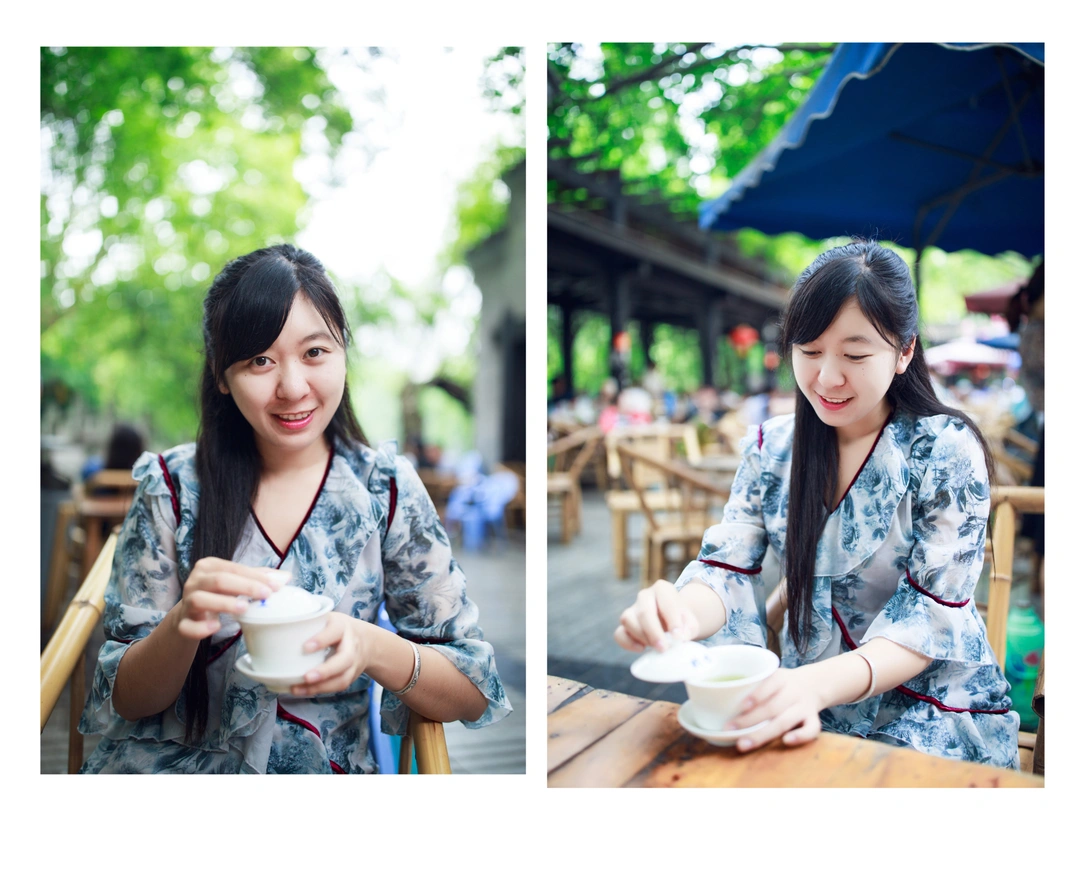
People's Park, built in 1911, covers an area of over 110,000 square meters. It features the Golden Water Stream, Goldfish Island, a Bonsai Garden, and a nationally protected cultural relic. But for me, the most enchanting part of People's Park is the century-old teahouse—Crane Call Teahouse (He Ming Cha She) .
The first time I went to Crane Call, it was a rainy day. As a Chengdu local, I always loved going out and about but had overlooked this gem right on my doorstep. That day, there weren't many people. I sat on a bamboo chair, ordered a bowl of covered tea (gaiwan cha) , listened to the rain, and watched the tea leaves slowly unfurl in the water. At that moment, I truly understood what "pure contentment" meant.
Crane Call Teahouse operates on a one-tea-one-seat basis. It's become quite famous now, and business is booming. I recommend going in the morning or early evening when there are fewer people, so you can truly experience the leisurely vibe of old Chengdu.
Ear cleaning (tao er duo) is also a Chengdu specialty. There are many ear-cleaning masters at Crane Call Teahouse. Since it's not a tourist attraction, the prices are much more reasonable than at Kuanzhai Alley.
After your tea, you can also go boating in the park. Oh, and People's Park has another feature—uncles and aunties come here to arrange marriages for their children. Every city has its matchmaking corner, but in Chengdu, it's right here in People's Park.
Tea Price List: Covered tea (gaiwan) ~¥20–30 | Green tea ~¥15–25 | Flower tea ~¥18–28 | Refills are usually free. Affordable prices—feel free to indulge.
Kuanzhai Alley: Searching for Shaocheng Memories
From People's Park, it's a short walk to Kuanzhai Alley. On the way, you'll pass a restaurant called "Effort Meal (Nu Li Can)" , with a red five-star on its building—it's an old-established restaurant in Chengdu. I haven't eaten there yet, but I'll definitely try it one day.
Kuanzhai Alley is made up of three parallel lanes—Wide Alley (Kuan Xiangzi) , Narrow Alley (Zhai Xiangzi) , and Well Alley (Jing Xiangzi) —all lined with replica traditional courtyard houses made of black bricks and tiles. This is a well-preserved Qing Dynasty street that has survived in Chengdu, and together with Daci Temple and Wenshu Monastery, it's one of the three major historical and cultural preservation districts in Chengdu.
Even though I don't usually like visiting tourist attractions, Kuanzhai Alley is an exception. Every time I return to Chengdu, I have to do a walk-through.
On the way, you'll pass Panda Post Office, where you can buy panda-themed souvenirs or send postcards. There's another one inside Kuanzhai Alley that's even more exquisite and adorable.
Kuanzhai Alley has several entrances and exits. Wide Alley and Narrow Alley are so crowded it feels like "joining a parade"—especially during summer break. Well Alley is relatively quieter.
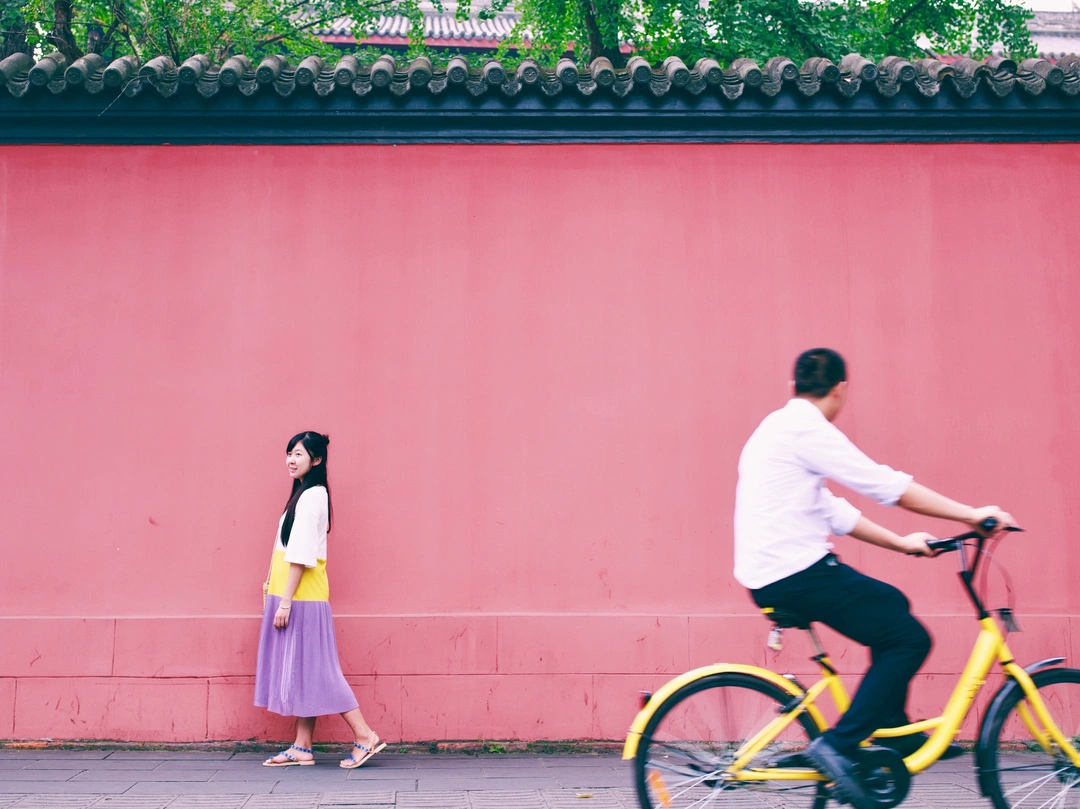
The Century-Old Newspaper Hall is quite interesting. You can buy newspapers from many years ago, even from the day you were born or the day your parents were born. The older the newspaper, the higher the price. Next time, I'm going to buy one and send it by express delivery to my sweetheart—Chengdu girls are just that bold!
That row of characteristic walls was built later but has the flavor of old Chengdu. Taking photos at each spot will take about 20 minutes.
Kuanzhai Alley also has places to drink covered tea, get your ears cleaned, and eat snacks, but the prices at tourist spots are higher, and the flavors aren't as authentic as those outside.
The road behind Starbucks always has photography exhibitions on display. From high school to now, from not knowing how to take photos to wearing out two cameras, every time I walk this road, I feel something different. The Starbucks in Kuanzhai Alley has been open for many years, and I think it's the most beautiful one in Chengdu. Every time I pass by, I pretend to be a tourist and go in for a Frappuccino.
White Night (Bai Ye) , a quiet bar in Kuanzhai Alley, was opened by a local Chengdu writer. Two years ago, I used to go there every week to listen to folk music. My college classmate, Teacher Orange (Cheng Zi), used to sing there part-time, and my favorite was when he sang "Chengdu." Now Teacher Orange has opened his own music school, and we don't get together as often anymore.
"I know those summers, like youth, will never come back." Every time I hear this song, I think of 2015, the year I left Chengdu.
Leaving Kuanzhai Alley, Chengdu Art Academy (Chengdu Painting Academy) is right next door. There's a huge ginkgo tree inside that must be beautiful in autumn. I've missed Chengdu's autumn for several years now, and this year I definitely have to go see it.
II. From Daci Temple to Taikoo Li: The Convergence of Old and New Chengdu

Daci Temple: A Millennium-Old Monastery with Modern Touches
Daci Temple was built between the 3rd and 4th centuries AD and is hailed as the "First Monastery in the East." In 622 AD, the renowned monk Xuanzang was ordained here. Emperor Xuanzong of the Tang Dynasty bestowed the plaque "Imperial Construction of Great Sage Daci Temple." The existing buildings were reconstructed between the Shunzhi and Tongzhi reigns of the Qing Dynasty.
Today, Daci Temple sits in the heart of Chengdu's most modern district—Taikoo Li. The contrast is striking: ancient Buddhist halls surrounded by glass-walled luxury boutiques. It's a perfect metaphor for Chengdu itself—old and new living side by side.
What to do at Daci Temple: - Light incense and make a wish (free incense is provided) - Walk through the serene courtyards and admire the ancient architecture - Visit the small museum inside (free admission) - Take photos of the iconic red walls against the modern skyline
Pro tip: Visit in the early morning before the crowds arrive. The temple opens at 8:00 AM, and the morning light filtering through the ancient trees is magical.
Taikoo Li: Where Tradition Meets Trend
Just steps from Daci Temple, Taikoo Li is Chengdu's premier shopping and lifestyle district. But unlike other commercial centers, Taikoo Li has preserved the traditional Sichuan courtyard-style architecture. It's a place where you can sip a latte in a 100-year-old building or browse designer stores under ancient eaves.
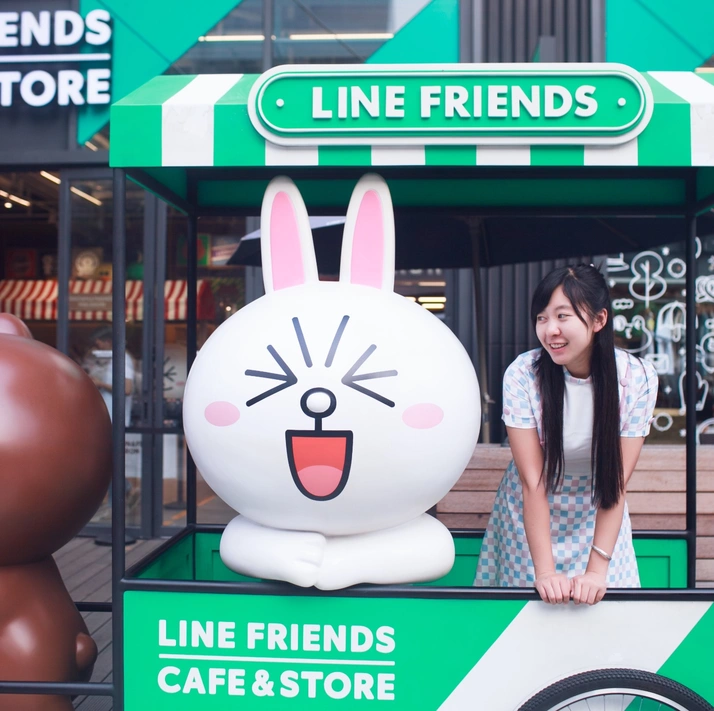
Must-visit spots in Taikoo Li: - The Bookworm – A cozy English-language bookstore and café - Line Friends Café – Instagram-worthy brown bear decorations - Starbucks Reserve – A stunning two-story flagship with local artwork - Various pop-up art exhibitions – Always changing, always free
Food recommendation: Don't leave Taikoo Li without trying Ma Lu Bian (Horse Roadside) Hotpot – a Chengdu institution. The queue can be long, but the spicy broth is worth the wait.
III. Hidden Gems: Off-the-Beaten-Path Chengdu

Wutong Tree Street: A Quiet Corner of Old Chengdu
Tucked away behind People's Park, Wutong Tree Street (Wutong Shu Jie) is a quiet residential area that feels like stepping back in time. The street is lined with old-fashioned shops selling everything from handmade bamboo baskets to traditional Chinese medicine. There's a small temple here that's rarely visited by tourists.
Why go: To see the real Chengdu—the one where locals still hang their laundry on bamboo poles and play mahjong on the sidewalk.
The Matchmaking Corner at People's Park

I mentioned this earlier, but it deserves its own section. Every weekend, parents gather at People's Park's Matchmaking Corner (Xiangqin Jiao) to exchange photos and résumés of their unmarried children. It's a fascinating glimpse into Chinese dating culture. Don't be shy—just observe and take photos (ask permission first).
Best time to visit: Saturday and Sunday mornings, 9:00 AM–12:00 PM
The Century-Old Newspaper Hall

At Kuanzhai Alley, the Century-Old Newspaper Hall is a treasure trove for history buffs. You can buy newspapers from specific dates—including the day you were born. Prices range from ¥20 for recent decades to ¥200+ for early 20th-century editions.
Personal tip: I bought a newspaper from my birthday and framed it. It's now one of my most cherished souvenirs.
IV. Food & Drink: What to Eat in Old Chengdu
Covered Tea (Gaiwan Cha)

The quintessential Chengdu experience. Sit in a bamboo chair, sip tea from a covered ceramic bowl, and watch the world go by. Best places: Crane Call Teahouse (People's Park) or any roadside tea stall.
Ear Cleaning (Tao Er Duo)

A bizarre but relaxing experience. Masters use tiny tools to clean your ears while you sit in a chair. It's surprisingly soothing. Prices: ¥30–50 at People's Park, ¥80–120 at Kuanzhai Alley.
Local Snacks to Try
- Dan Dan Noodles – Spicy, nutty, addictive
- Mapo Tofu – Silky tofu in fiery chili oil
- Fuqi Feipian – Sliced beef and offal in chili sauce
- Sweet Water Noodles (Tian Shui Mian) – Sweet, tangy, and refreshing
Where to eat: Skip the restaurants inside Kuanzhai Alley. Walk 5 minutes to Little Street (Xiao Xiangzi) for authentic, affordable local food.
FAQ: Your Chengdu Questions Answered
Q1: Is Chengdu worth visiting for a first-time traveler to China?
Absolutely. Chengdu is one of China's most livable cities, with a relaxed vibe, incredible food, and easy access to pandas and natural scenery. It's also cheaper than Beijing or Shanghai.
Q2: How many days do you need in Chengdu?
For a thorough visit, 4–5 days is ideal. You can cover the main attractions in 3 days, but add 1–2 days for day trips to Leshan Giant Buddha or Mount Qingcheng.
Q3: What's the best time to visit Chengdu?
Spring (March–May) and autumn (September–November) are best. Summer is hot and humid; winter is cold and gray. Avoid Chinese National Holiday (October 1–7) when crowds are insane.

Q4: Is Chengdu safe for solo female travelers?
Yes. Chengdu is very safe, with low crime rates. Just take normal precautions like keeping your valuables secure and avoiding dark alleys at night.
Q5: How do I get around Chengdu?
The metro is efficient and covers most tourist areas. Taxis and ride-hailing apps (Didi) are cheap. Walking is best for exploring old neighborhoods.
Q6: What should I buy as a souvenir from Chengdu?
Panda-themed items (from Panda Post Office), local tea (covered tea sets), Sichuan embroidery, or a newspaper from your birth date (from Century-Old Newspaper Hall).
Q7: Can I see pandas in Chengdu?
Yes! The Chengdu Research Base of Giant Panda Breeding is about 30 minutes from the city center. Go early (before 9 AM) to see the pandas active. [Link: Giant Panda Breeding Base]
Final Thoughts: Why Chengdu Stays With You
I started this article as a travelogue, but it became a love letter to my hometown. Chengdu is not just a city—it's a feeling. It's the slow drip of tea in a bamboo chair, the laughter of parents at the matchmaking corner, the steam rising from a bowl of dan dan noodles, and the quiet hum of ancient temples surrounded by glass towers.
If you're planning a trip to Chengdu, I hope this guide helps you see beyond the tourist brochures. Walk the alleys, sit in the teahouses, talk to the locals, and let the city's rhythm seep into your bones.
And if you're a Chengdu native who's been away too long—come home. The tea is still warm, and the memories are waiting.
Ready to explore Chengdu?
Book your flight, pack comfortable shoes, and bring an empty stomach. The city of slow living and spicy food is calling your name.
Follow my journey:
Weibo: @小巴黎XIAOYU
WeChat Official Account: Paris809
WeChat: littleparis809
This article will be continuously updated, because my love for this city will never be fully written.
You may also like


