#My2017# West of Western Sichuan: From the Red of Seda to the Blue of Daocheng, a Pilgrimage of the Soul

Here is the SEO-optimized rewrite of your article, designed to rank for keywords related to travel in Western Sichuan, Seda, and Daocheng Yading.
SEO Title: Western Sichuan Travel Guide: From Seda’s Red Monastery to Daocheng’s Blue Sky – A Soul Pilgrimage
Meta Description: Explore the ultimate Western Sichuan itinerary. Journey from the red Buddhist kingdom of Seda to the sacred blue peaks of Daocheng Yading. Tips, packing list, and soul-stirring experiences inside.
Western Sichuan Travel Guide: From Seda’s Red Monastery to Daocheng’s Blue Sky – A Soul Pilgrimage
Prologue: Why Western Sichuan is a Must-Visit Destination
On November 2, 2017, I set out on a journey to Western Sichuan. Seven days later, I returned not just with thousands of photos on my camera, but with a heart renewed by the high-altitude sun, wind, snow, and faith.
Many travelers ask me: Why choose Western Sichuan? Why specifically Seda and Daocheng Yading?
The answer is simple — this is where you will find China’s most extreme landscapes and the closest breath to heaven. From the red Buddhist kingdom to the blue snow-capped mountains, from the sacred Mandala to the grueling high-altitude trek, every kilometer on this route reminds you: the most beautiful scenery is always on the road.
If you have ever scrolled through breathtaking photos late at night but hesitated to book a ticket — this travelogue-style record might just give you the reason. A reason to pack up and go, just like that.
Pre-Departure Prep: Packing for High-Altitude Travel

Packing List: Less is More for Your Sichuan Trip
"Packing is an art form" — I didn't truly understand this until three days before departure. As a first-time solo traveler joining a group, I combed through countless guides and finally concluded: bring enough money, bring your phone, and everything else is optional.
Of course, that doesn’t mean you should set off empty-handed. Here is my no-nonsense packing list for a high-altitude Western Sichuan road trip:
- Daily essentials: Sunscreen (high-altitude UV is intense), lip balm, wet wipes
- Clothing: Thermal underwear, a shell jacket, a down jacket, slip-resistant hiking boots (trust me, you will need these)
- Medication: Rhodiola rosea (start taking it a week in advance), cold medicine, stomach medicine
- Other: Portable charger, thermos, some cash (many areas have no signal)
The Importance of a Reliable Driver and Travel Companion
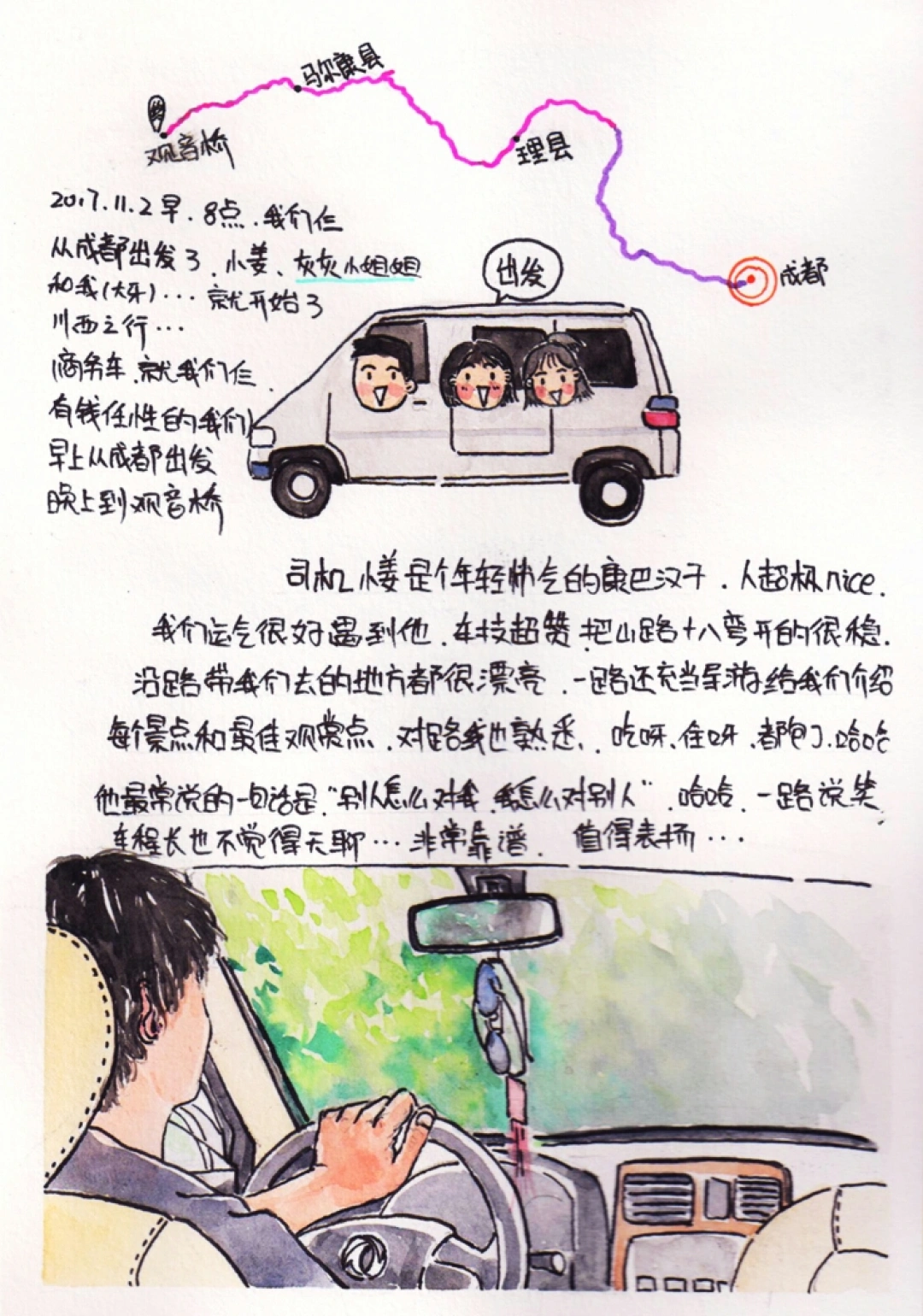
Before leaving, I consulted a friend who had been to Daocheng. Without a second thought, she sent me a WeChat contact: "Get in touch with Xiao Jiang. He is great — you won’t have to worry about a thing."

As it turned out, she wasn’t exaggerating. Xiao Jiang, a true local of Western Sichuan, drove with the steady calm of a veteran and knew every prime photo spot along the way. He would ask, "Want to stop? The view is good here." He would warn, "The altitude is getting higher up ahead — take it slow." He even haggled with locals on your behalf for souvenirs.
My travel companion, a girl named Huihui, was a seasoned traveler. She helped me carry my bags and handed me hot tea when altitude sickness hit. A good travel partner can turn a tough journey into an easy one.
[Link: Best Time to Visit Western Sichuan]
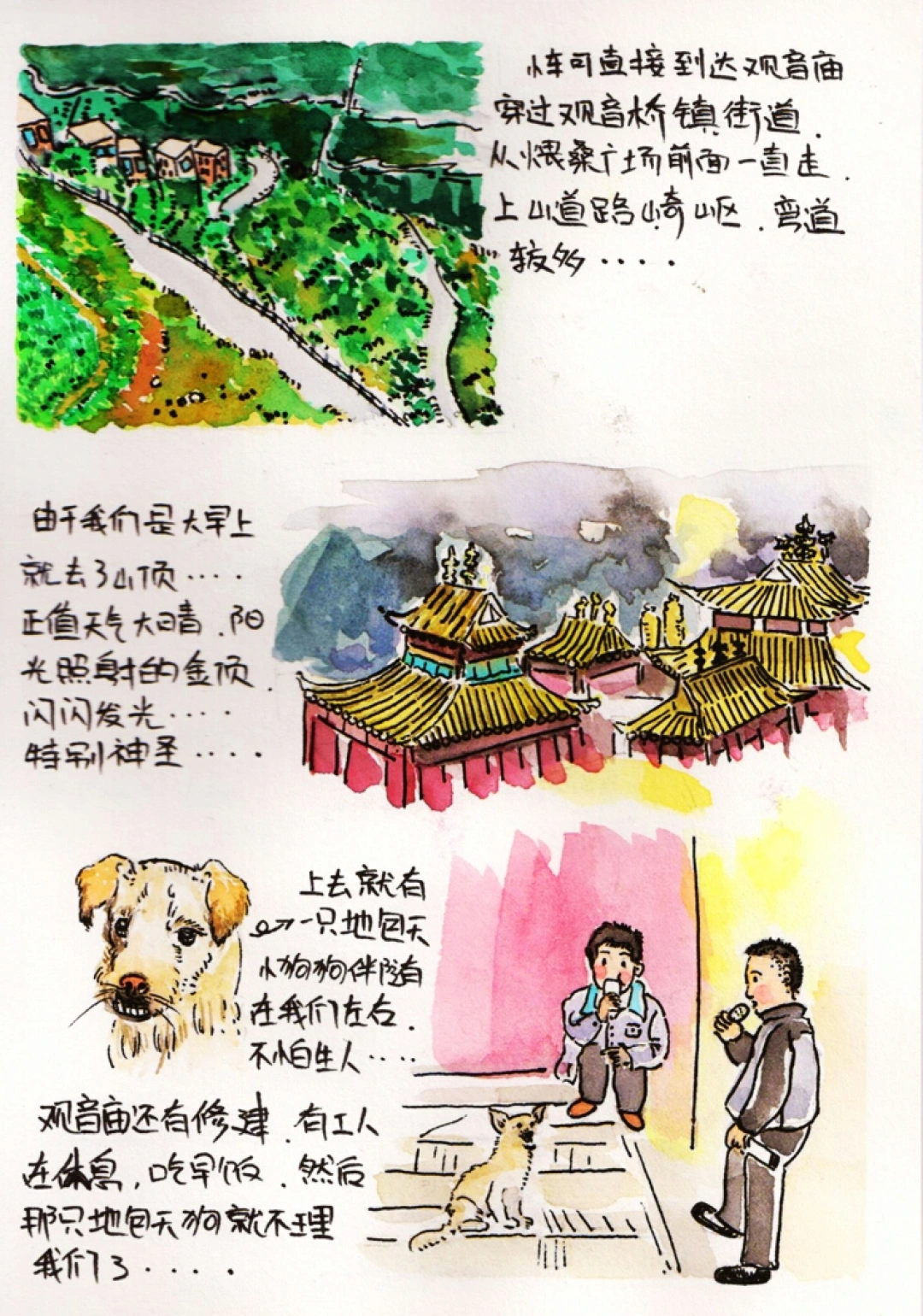
First Stop: Guanyinqiao – A Cultural Surprise
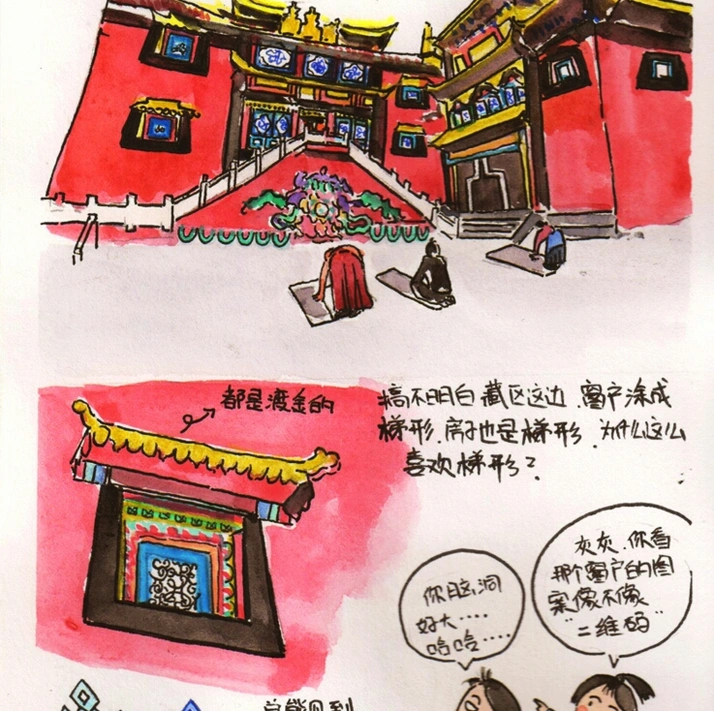
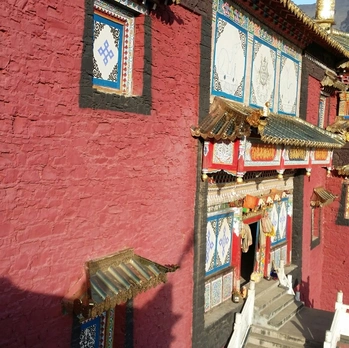
The Guanyin Temple: A Lesson in Tibetan Buddhism
Our first night was in Guanyinqiao, and the next morning we visited the Guanyin Temple. To be honest, my knowledge of Tibetan Buddhism was limited to the phrase "prayer wheel." When the guide started telling stories about the intricate murals and statues, I could only offer an awkward smile and secretly pull out my phone to search Baidu.
Baidu told me: The Guanyin Temple is one of the most famous pilgrimage sites in the Tibetan region, housing a statue of the Four-Armed Avalokiteshvara. Every year, tens of thousands of devotees travel from all over to worship here.
That’s when I realized how shallow I was. But being shallow isn’t shameful — what’s shameful is refusing to learn. From that moment on, I started to listen carefully, to look carefully, to feel carefully.
Wildlife Encounter: Meeting Tibetan Macaques
On the way from Guanyinqiao to Seda, we were lucky enough to encounter Tibetan macaques. These monkeys weren’t afraid of people at all. They crouched by the roadside, waiting for tourists to feed them. Seeing my zodiac animal (I am a Monkey), I felt an inexplicable connection.
Second Stop: Seda – The Red Buddhist Kingdom
Sky Burial: A Public Lesson on Life and Death
Seda’s sky burials take place daily. Before going, I did a lot of mental preparation. But standing in front of the sky burial platform, watching the vultures circle overhead and the prayer flags flutter in the wind — the impact was beyond words.
Important note: When observing a sky burial, you must remain respectful. No photos. No loud talking. This is not a tourist attraction; it is a local religious ritual.
I believe the sky burial is worth witnessing. Not out of morbid curiosity, but because it forces you to rethink life and death. Those questions that have been bothering you for so long might find their answers in that moment.
The Mandala and the Night View: Hell on Earth, Heaven in the Eyes
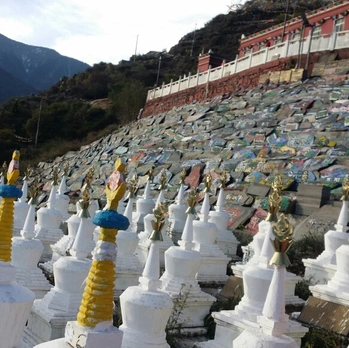
At the Seda Buddhist Academy, I joined the devotees in turning the prayer wheels around the Mandala. One circle, two circles, three circles... The prayer wheels creaked and groaned, like ancient prayers being chanted.
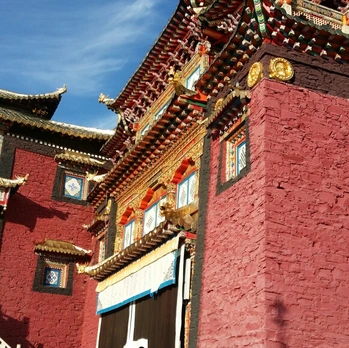
Seda’s night view is beautiful. But beauty comes at a price: darkness falls late, and the wind on the mountain is strong enough to blow you away. If you want to photograph the night scene, dress warmly. I was wearing a down jacket, a hat, and gloves, and I was still shivering. But when you see those red monastic dwellings lighting up in the valley like stars falling to earth — you will feel it was all worth it.
"Hell on earth, heaven in the eyes" — this phrase found its truest expression in Seda.
[Link: Seda Photography Tips]
Third Stop: Daocheng Yading – The Ultimate Destination
On the Road: Scenery is Always on the Way
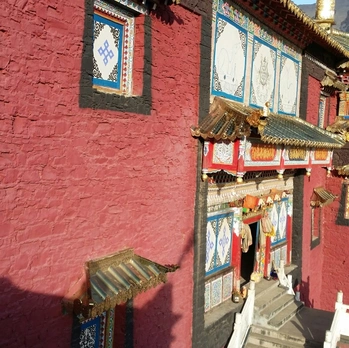
From Seda to Daocheng, the scenery along the way is the real highlight. Xiao Jiang would periodically ask, "Want to take photos?" and then find a safe spot to pull over.
Huihui got so excited at the sight of snow that she acted like a child, building a snowman by the roadside. As for me, I was drawn to the yellow warning signs — the roads of Shu are still treacherous today. The entire route was full of curves, steep slopes, and rockfall zones. I didn’t recognize a single one of those signs, but each one reminded me: this is not the plains.
High-Altitude Hiking: One Step Here Equals Ten on the Plains
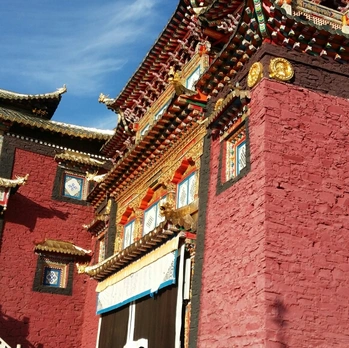
The first day, we took the short route — no problem. The second day, we took the long route, and I was completely disoriented.
Later I learned that taking one step at high altitude is equivalent to taking ten steps on the plains. No wonder we were gasping for air after just three steps.
As someone who has been through it, let me tell you: - Eat enough: You will burn a lot of energy — don’t think about dieting - Dress warmly: It is windy and cold up on the mountain - Your shoes must be slip-resistant: The boardwalks aren’t finished yet; it is all dirt paths, and they get especially slippery in rain or snow - Bring snacks: Chocolate, energy bars, hot water — these are lifesavers
Xiannairi and Yangmaiyong: Pilgrimage Beneath the Snow Mountains
On the first day’s short route, we reached Xiannairi Snow Mountain. The Chonggu Monastery sits right at its base. In the movie From Your Whole World Passing By, the scene where Mao Shiba proposes to Li Zhi takes place at Chonggu Meadow. I crumbled a chocolate wafer and fed it to a little squirrel — it wasn’t afraid at all and jumped right onto my hand to eat.
On the second day’s long route, we trekked around the mountain. Yangmaiyong Snow Mountain is my favorite — it rises like a sword piercing the sky, so pure white it’s almost blinding. The legendary Milk Lake had frozen over by the time I got there, but it was still beautiful.
On the way down, I met a lama. He pointed into the distance and said, "That is Vajrapani." I was exhausted at that point, but I still followed his gaze — a peak appeared and disappeared in the clouds.
[Link: Daocheng Yading Trekking Routes]
FAQ: Planning Your Western Sichuan Pilgrimage
1. What is the best time of year to visit Seda and Daocheng?
The best time is May to October. Summer offers green valleys, while autumn (September-October) provides stunning golden landscapes. Winter is extremely cold and many roads may be closed.
2. How do I prevent altitude sickness in Western Sichuan?
 Start taking Rhodiola rosea one week before your trip. Stay hydrated, avoid alcohol, and walk slowly. Carry portable oxygen cans for emergencies.
3. Is it safe to drive the roads from Seda to Daocheng?
 Yes, but only with an experienced driver. The roads are winding and prone to rockfalls. We highly recommend hiring a local driver like Xiao Jiang who knows the terrain.
4. Can I visit the Seda Buddhist Academy as a foreign tourist?
Yes, but you must show respect. Do not enter private living quarters, do not photograph monks without permission, and absolutely do not take photos during the sky burial.
5. What should I pack specifically for Daocheng Yading hiking?
Prioritize slip-resistant hiking boots, a down jacket, a hat, gloves, and high-calorie snacks. The weather changes rapidly, so layering is essential.
Conclusion: Your Soul Awaits in Western Sichuan
Seven days. Thousands of photos. One renewed heart.
From the red monastic dwellings of Seda to the blue glacial peaks of Daocheng, this journey is more than a vacation — it is a pilgrimage. It challenges your body, expands your mind, and restores your spirit.
If you have been scrolling through travel photos late at night, wondering if you should go — stop wondering. The road is waiting. The vultures are circling. The prayer wheels are turning.
Pack your bag. Book your driver. Go.
The most beautiful scenery is always on the road — and it is calling your name.
Ready to plan your own Western Sichuan adventure? [Link: Book a Custom Western Sichuan Tour] or [Link: Download Our Full Packing Checklist]
You may also like


