Leshan Food Guide: The Ultimate Culinary Pilgrimage in Sichuan's Hidden Gastronomic Capital
Meta Description: Discover why Leshan is called Sichuan's food capital. From Bobo Ji to tofu pudding, this 1500-word guide reveals the best street food, local eats, and dining tips for your Leshan food tour.
Introduction: Why Leshan is Sichuan's Undisputed Food Capital
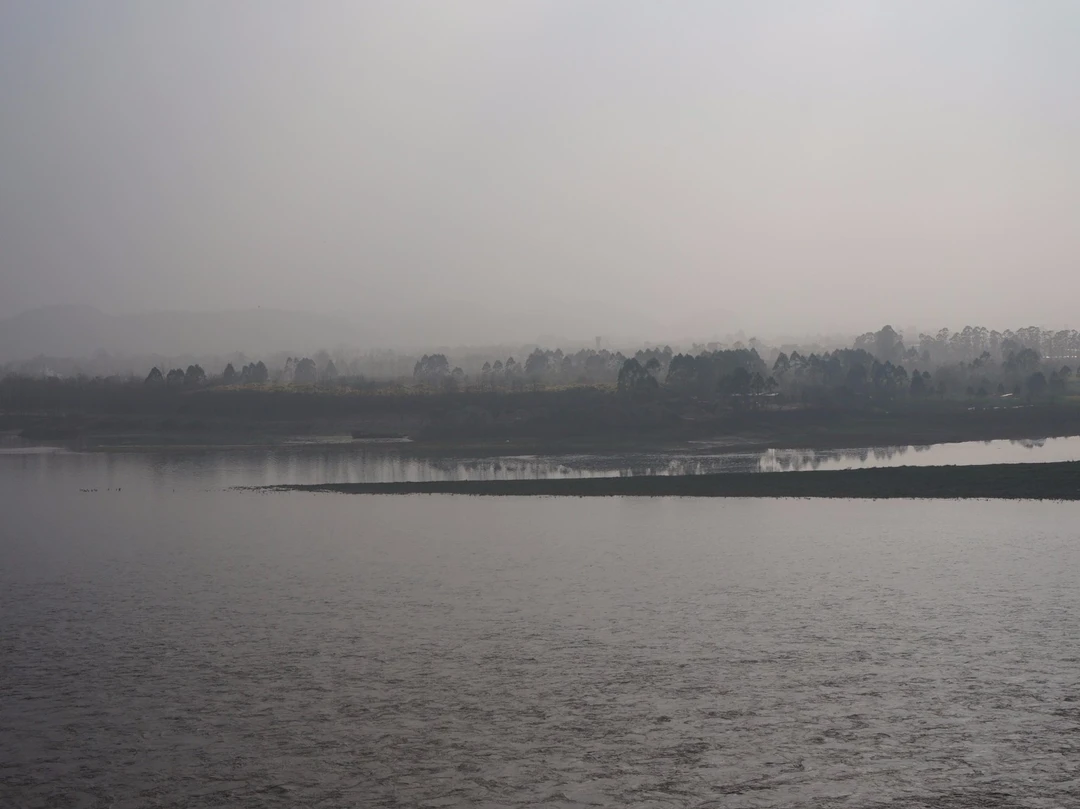
Ask any Sichuan native, "Which city in the province has the best food?" and eight out of ten will answer without hesitation: "Leshan." This small city, cradled by the Min, Qingyi, and Dadu Rivers, is not only home to the world-famous Leshan Giant Buddha but also harbors a culinary universe that haunts the dreams of countless food lovers. At the end of last March, four like-minded "eating buddies" and I embarked on a two-day Leshan food tour pilgrimage. We had originally planned to ride the narrow-gauge train in Jiayang on the second day, but under the irresistible spell of Leshan local cuisine, we decisively ditched the tourist attractions and surrendered every waking hour to our taste buds.
This comprehensive Leshan travel guide covers everything you need to know—from best food in Leshan to practical tips on transportation, accommodation, and must-try dishes. Whether you're planning a Sichuan food trip or a weekend getaway from Chengdu, this article is your roadmap to the Leshan food scene.
Getting There: The One-Hour Food Corridor from Chengdu to Leshan

At nine in the morning, we boarded an intercity high-speed train at Chengdu East Station and arrived at Leshan Station about an hour later. The Chengdu to Leshan high-speed train is the most convenient option for food travelers. The weather in late March was overcast and chilly—I sneezed the moment I stepped off the train. A word of advice for spring travelers: bring a knit cardigan or a light jacket.
Leshan Public Transportation Tips
Leshan's public transport is very convenient. The bus stop is right outside the station, and fares are generally one yuan—just remember to have small change ready. The city is compact; I figured out its traffic network in an afternoon. Every bus stop has a clear map of the main downtown locations, which even our famously directionally challenged teammate could read. However, note that most buses stop running around ten at night. If you want to go out foraging for food after dark, you might need a taxi—though if you don't mind walking, many places in Leshan are within strolling distance.
[Link: Best hotels near Leshan Giant Buddha]
Where to Stay: Riverside Inn with Ancient Charm
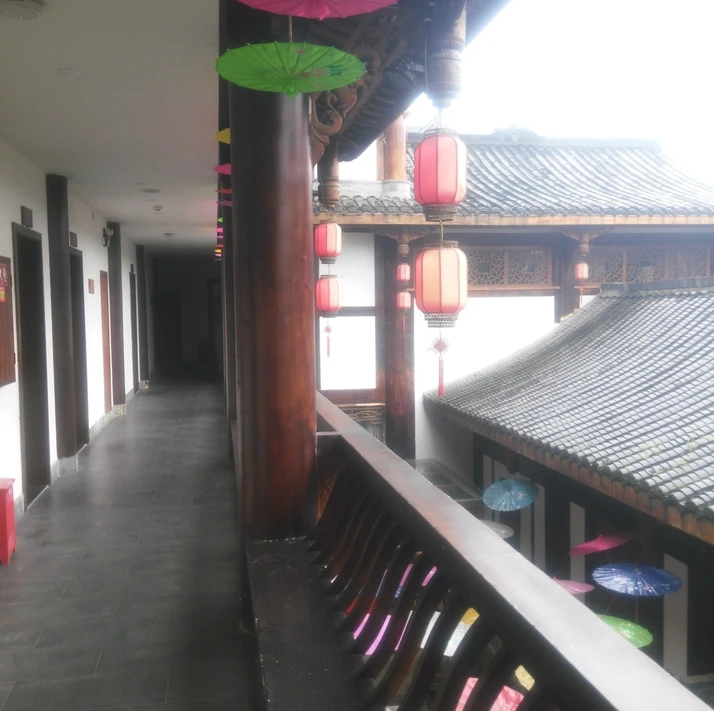
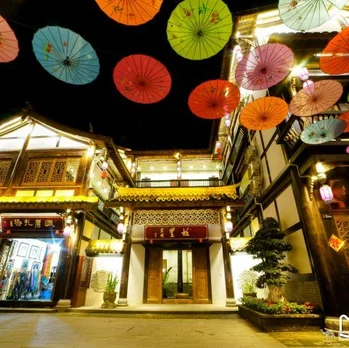
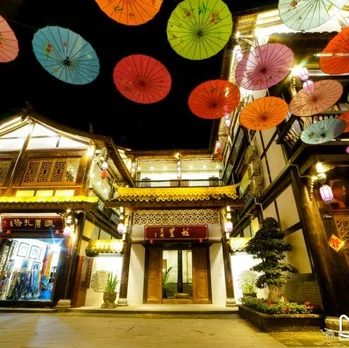
We chose an inn not far from the Leshan Giant Buddha—Leshan Jiazhou Changjuan Guli Inn (Leshan Jiazhou Long Scroll Ancient Home Inn). It sits on "Tian Street," a riverside replica of an ancient commercial street. The atmosphere is classically quaint, and the place is clean and tidy. The inn's interior is a typical Western Sichuan courtyard style; when the lanterns light up at night, it feels almost like a time warp.
To be honest, though, Tian Street is a commercial area that hasn't fully developed yet, so dining options nearby are limited. Fortunately, the inn is only three bus stops away from the main food districts, so it's no problem at all. One thing to note: the bronze statues along that street look a bit eerie under dim lighting at night, so women might want to avoid walking alone after dark.
Leshan Accommodation Tips for Food Travelers
For the best Leshan food tour experience, consider staying near the city government building or Haitang Square, where most famous Leshan snacks are concentrated. This saves you travel time and lets you explore the street food in Leshan late into the night.
Xian Street: The Carnival of Bobo Ji Alley
Almost all of Leshan's famous snacks are concentrated in the small triangular area around the city government building—directly across from the Leshan Giant Buddha. Take the bus to the terminal stop, "Haitang Square," walk a few steps to the roundabout, turn left, and you'll enter the legendary Xian Street, known locally as "Bobo Ji Street." This is the epicenter of Leshan street food and a must-visit for any food lover.
Jiumei Chicken Feet: A Surprise from Sanxian Ice Jelly
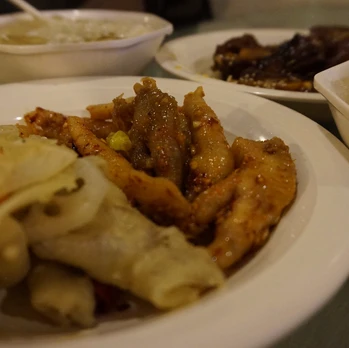
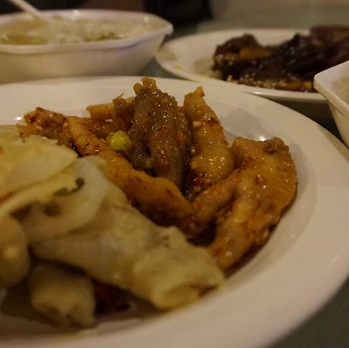
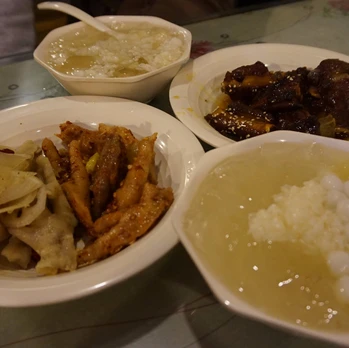
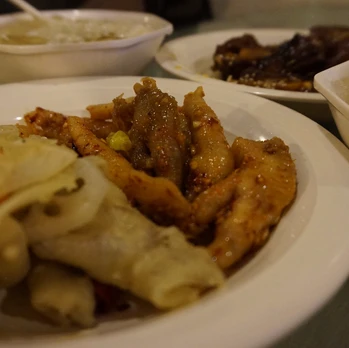
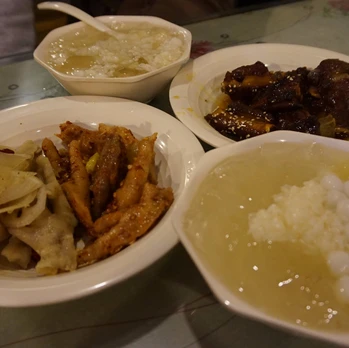
Our first stop was Jiumei Chicken Feet, a small shop with a solid local reputation. They offer two flavors of chicken feet: pickled chili and spicy aromatic. We ordered both, but I personally preferred the spicy aromatic ones—they seemed more deeply flavored. One friend insisted on adding sweet-and-sour spare ribs. As it turned out, these are definitely not a Leshan specialty; the ribs were tough and the flavor was mediocre. I'd recommend skipping them.
What really left a lasting impression on us at this shop, though, was a dessert called Sanxian Ice Jelly (Three-Fresh Ice Jelly). When I heard the name, I pictured a dark concoction with ham sausage and shrimp—I almost didn't order it. But when it arrived, it was nothing like that! The "three fresh" ingredients turned out to be fermented glutinous rice (laozao), small glutinous rice balls (xiaoyuanxiao), and white fungus (yiner). The ice jelly was silky smooth, paired with the subtle tang of the fermented rice, the chewy little rice balls, and the crisp texture of the white fungus. One spoonful was refreshingly sweet and palate-cleansing—the perfect companion for Bobo Ji. Highly recommended!
The Main Event: Understanding Bobo Ji
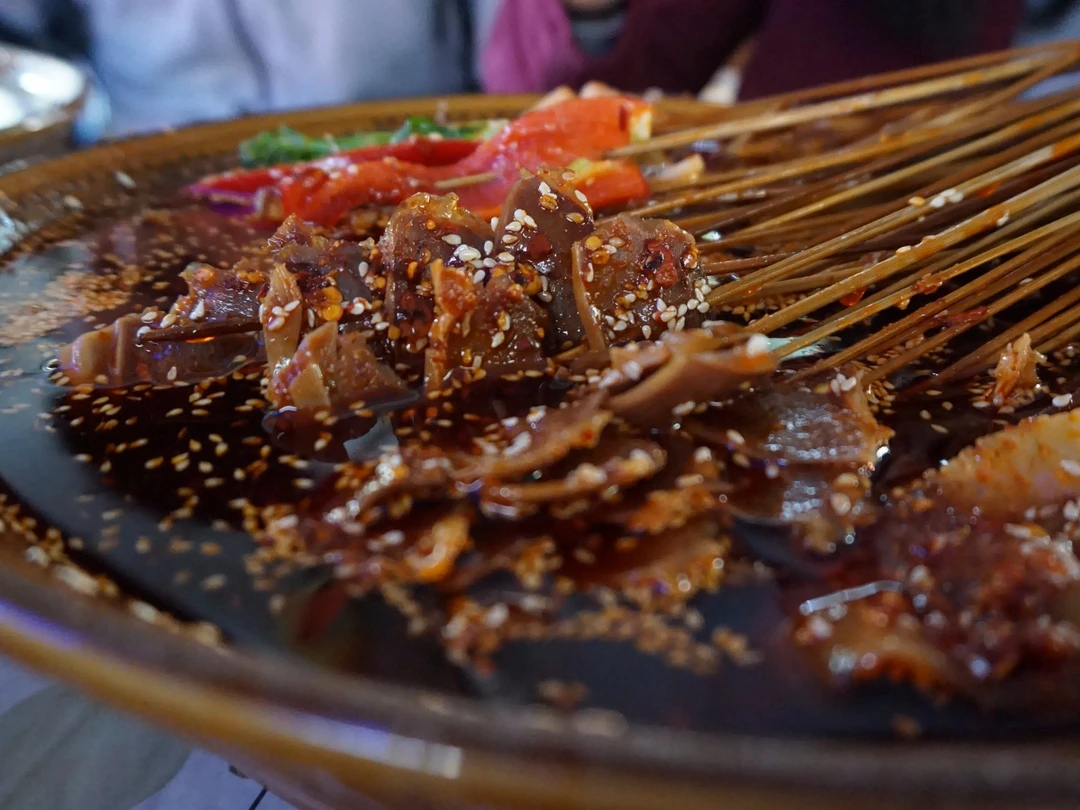
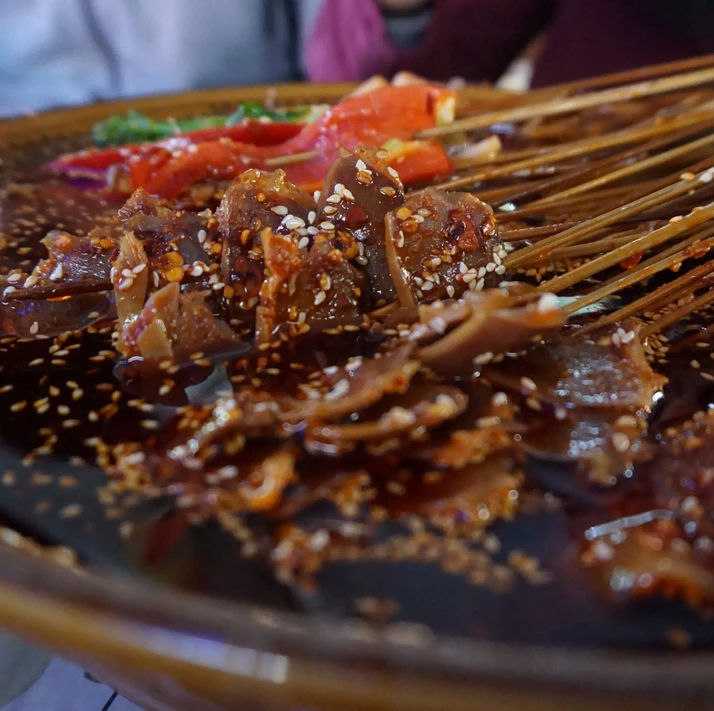
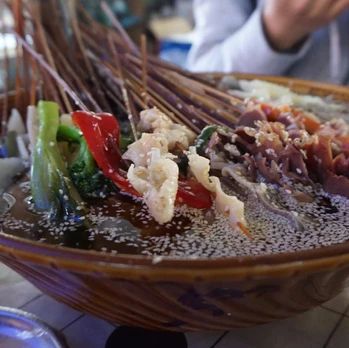
Many non-locals confuse chuan chuan (skewers), mao cai (boiled ingredients in broth), hotpot, and Bobo Ji. Simply put, Bobo Ji involves cooking skewers plain, then soaking them in a seasoned broth until they absorb the flavor—similar to cold-pot skewers, but the key difference is that Bobo Ji skewers are unseasoned during cooking and rely entirely on the soaking process for taste.
On Xian Street, Bobo Ji is sold at roadside stalls lined up one after another. We asked the owner of Jiumei Chicken Feet which stall was best. She pointed to the one at the street corner: "That one—it's the most authentic." So we headed straight there.
Like the chicken feet, Bobo Ji comes in two flavors: pickled chili and spicy aromatic. Both broths were generously sprinkled with sesame seeds, filling the air with an irresistible aroma. The skewers offered a wide variety—besides the usual beef, chicken gizzards, and tripe, there was something more unusual: pig scalp. As a self-proclaimed "tomboy," I was inwardly reluctant, but the men in our group tried it and said, "Not bad at all." My personal favorites were gizzards, sea cabbage (seaweed), bamboo shoots, and cauliflower—they had great texture and absorbed the broth beautifully.
Bobo Ji Price Warning: Always Ask First
But here's a hard-learned lesson: Always ask the price before eating Bobo Ji! We dug in with abandon, only to discover afterward that meat skewers cost one yuan each! Vegetable skewers were three mao (0.3 yuan) each! That was actually the cheapest price on the street. The four of us spent over a hundred yuan and still weren't full... So, be cautious with the meat skewers, and keep an eye on your wallet.
Egg Puffs: Treading the Line of Culinary Darkness
Walking from Xian Street to the intersection with Jinhua Alley, we spotted a stall selling Egg Puffs (Dan Hong Gao) . These are a classic Sichuan snack—like mini pancakes, crispy on the outside and soft inside. The sign said you could combine two different fillings. That's when two of the guys in our group went wild: one ordered chocolate plus pork floss (still reasonable), and the other actually asked for cream plus beef! A million "what-the-heck" thoughts raced through my mind. Fortunately, the vendor probably found the combination too bizarre and flatly refused him. He ended up with cream and pork floss instead—tasty enough, but nothing special. The cream was house-made, though, which gave it a unique texture.
Shredded Chicken Tofu Pudding: A Surprise in the Noodles
When another friend joined us in the afternoon, we headed back to Xian Street to "make it up to him." This time, we chose a famous shop serving Shredded Chicken Tofu Pudding (Jisi Doufunao) and ordered their signature chicken version and a beef version. To our surprise, the beef one was better—probably because it was spicier and more flavorful. Leshan's tofu pudding is unique: it contains vermicelli noodles, which add a satisfying chewiness, and the broth is thick and starchy, completely different from the clear broth versions you find elsewhere. A bowl costs about ten yuan—great value.
Leshan Giant Buddha: A "Walk It Off" Detour
To be honest, we only went to see the Leshan Giant Buddha because we'd eaten so much that we needed to burn off some calories. But since we were there, it was worth a visit.
At the Lingyun Temple on the mountaintop, you can get three free incense sticks. We made a show of bowing to the Buddha—one of the guys even prayed specifically for love. May his wish come true. In the innermost chanting hall, many monks (and nuns—I noticed Lingyun Temple is co-ed) were reciting sutras.
Leshan Giant Buddha Travel Tips
- Best time to visit: Early morning to avoid crowds and heat
- Entrance fee: 80 yuan (check for updates)
- Time needed: 2-3 hours for the full experience
- Combine with food tour: Visit in the morning, then head to Xian Street for lunch
[Link: Leshan Giant Buddha history and visiting guide]
Leshan Food FAQ
1. What is the most famous food in Leshan?
 The most famous Leshan specialty is Bobo Ji (chicken in chili oil skewers), but the city is also renowned for Shredded Chicken Tofu Pudding, Sanxian Ice Jelly, and Egg Puffs. The Leshan food scene is incredibly diverse.
2. How many days do I need for a Leshan food tour?
 Two days is ideal. Day one can focus on street food in Leshan at Xian Street, while day two can include the Leshan Giant Buddha and more local cuisine exploration. If you're serious about food, even three days wouldn't be wasted.
3. Is Leshan food spicy?
 Yes, most Leshan local cuisine is spicy, characteristic of Sichuan food. However, many dishes offer non-spicy alternatives or mild versions. The Sanxian Ice Jelly is a refreshing, non-spicy dessert that balances the heat.
4. How do I get from Chengdu to Leshan for a food trip?
Take the Chengdu to Leshan high-speed train from Chengdu East Station. The journey takes about one hour, making it perfect for a weekend Sichuan food trip. Tickets cost around 50-60 yuan.
5. What should I avoid eating in Leshan?
Avoid non-local specialties like sweet-and-sour spare ribs at chicken feet shops—they're not authentic. Also, be cautious with Bobo Ji meat skewers as they can quickly add up in price. Always ask for prices before ordering.
Conclusion: Your Leshan Food Adventure Awaits
Leshan is more than just the home of the Giant Buddha—it's a culinary capital that deserves a spot on every food lover's bucket list. From the fiery Bobo Ji to the surprising Sanxian Ice Jelly, every bite tells a story of tradition, innovation, and pure passion for flavor.
Whether you're a seasoned Sichuan food enthusiast or a curious traveler, Leshan offers an unforgettable food tour experience. The best part? You don't need a guidebook—just follow your nose and your appetite.
Ready to Plan Your Leshan Food Tour?
Book your high-speed train tickets from Chengdu to Leshan today! Pack comfortable shoes, bring your appetite, and prepare for a culinary carnival that will haunt your dreams for years to come.
Share your Leshan food discoveries with us! Tag us in your photos and tell us which dish stole your heart. Your next great meal is just one train ride away.
[Link: Sichuan food guide for beginners] [Link: Top 10 street foods in China] [Link: Weekend trips from Chengdu]
Disclaimer: Prices and availability mentioned in this article are based on personal experience in March of the publication year. Always check current prices and opening hours before your visit.
You may also like


