Joy in Shu, Unforgettable for Nine: A 2024 National Day Journey Through Leshan and Jiuzhaigou's Cuisine and Scenery
Meta Description: Discover the ultimate Sichuan travel guide for 2024 National Day. From Leshan's legendary street food to Jiuzhaigou's crystal-clear waters, this 7-day itinerary covers everything. Includes food maps, budget tips, and must-see attractions.
Introduction: Why Leshan and Jiuzhaigou Should Be Your Next Sichuan Destination
Some trips are spontaneous impulses; others are obsessions brewed over time. For the 2024 National Day holiday, I finally made up my mind to set my sights on that land known as the "Land of Abundance" — Sichuan. With a month of advance planning and five effective days of travel, facing Sichuan's dazzling array of tourist resources, making choices became a challenge. In the end, I settled on two destinations: Leshan and Jiuzhaigou. One was for a狂欢 of the taste buds, the other for a pilgrimage of the eyes. As it turned out, this choice made the trip far exceed expectations.
This comprehensive guide covers everything you need to know about planning a Sichuan National Day trip, including Leshan food recommendations, Jiuzhaigou travel tips, and a complete 7-day Sichuan itinerary that balances culinary exploration with natural wonders.
Why Leshan and Jiuzhaigou? The Perfect Sichuan Travel Combination
Leshan: An Obsession from Comics to Reality
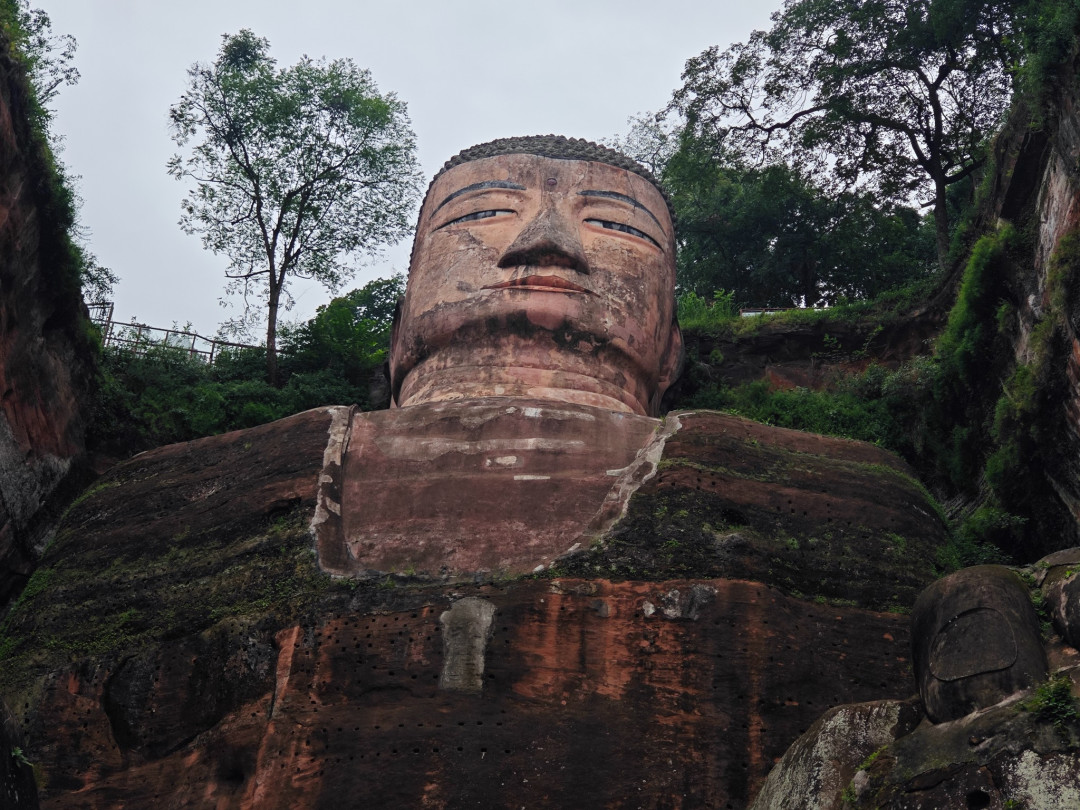
Speaking of Leshan, my memory traces back to around 2000. Back then, I read a Hong Kong comic — Ma Wing-shing's "The Storm Riders," and later the film adaptation starring Aaron Kwok and Ekin Cheng left an even deeper impression. That prophecy from the film, "Fire burns the Lingyun Cave, water floods the Buddha's knees," has lingered in my ears for decades. What exactly is the Leshan Giant Buddha? Does the Lingyun Cave really exist? These questions were like seeds buried in my heart.
In recent years, Leshan's reputation as "Sichuan's Food Capital" has spread far and wide. As a foodie with a particular passion for Sichuan cuisine, the temptation of Leshan's delicacies was irresistible. So, the first stop on my Sichuan trip had to be Leshan — two days to experience the charm of Jiazhou (the ancient name for Leshan).
[Link: Best time to visit Leshan Giant Buddha]
Jiuzhaigou: The Legend of "No Need to See Water Elsewhere"
"After visiting Huangshan, no need to see other mountains; after visiting Jiuzhaigou, no need to see other waters." I've been to Huangshan, and it truly lives up to its reputation. So Jiuzhaigou National Park naturally became a long-cherished desire. Coincidentally, the Chengdu to Jiuzhaigou high-speed rail opened at the end of August, greatly shortening travel time and making it possible to arrange two days in Jiuzhaigou and one day in Huanglong.
As for Chengdu, it unfortunately had to be relegated to a transit point this time — we stayed two nights, hurriedly strolled through Chunxi Road, met an old friend, ate two hotpot meals (at the same restaurant), ran five kilometers in the morning for a check-in, and didn't even have time for breakfast.
Pre-Trip Preparation: Independent Travel by Public Transport in Sichuan
Since I started truly long-distance travel ten years ago, averaging two places per year, I've gradually developed a method that suits me — independent travel primarily by public transport. The pros and cons of this approach are obvious, but for me, it's just right. The most headache-inducing part is the upfront work: reading大量 travel notes and guides, filtering information, and creating a detailed itinerary (transport, accommodation, attractions, dining, transfers, etc.). It's a "painful pleasure."
Budget Breakdown for 7 Days in Sichuan

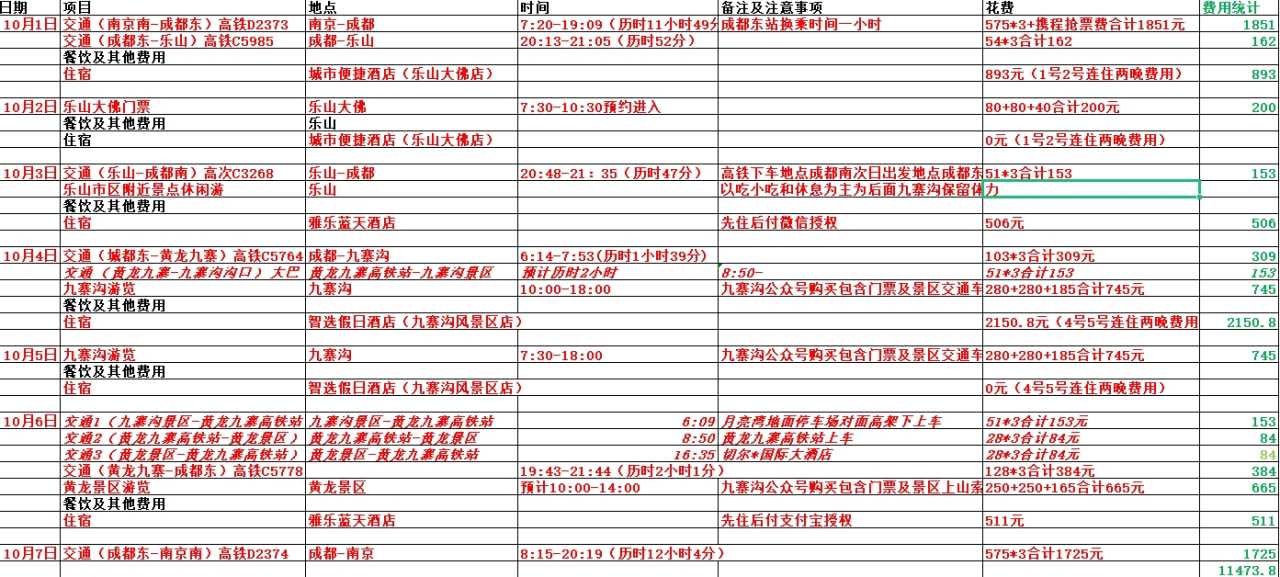
In the end, for three people over seven days, the total cost was kept within 15,000 RMB (including transport, accommodation, and tickets, excluding on-the-go meals and other incidentals). This makes it an affordable Sichuan travel budget option for mid-range travelers.
[Link: How to travel Sichuan on a budget]
Leshan Food Map: A Gourmand's Private Collection
Before departing, I spent considerable effort gathering information on Leshan's food scene. Below are some recommendations after filtering — I found that virtually none of them were duds when I visited them in person. This Leshan food guide will help you navigate the city's incredible culinary landscape.
Must-Eat Leshan Street Food List
| Dish | Recommended Shop | Notes |
|---|---|---|
| Sweet Glazed Duck (甜皮鸭) | Wang Hao'er Ji Liu Niang | Eat it while hot — go buy it early in the morning |
| Qiaojiao Beef (跷脚牛肉) | Ma Sanmei in Suji Ancient Town, Xixi Qiaojiao Beef | Avoid the queue at Gu Shi Xiang |
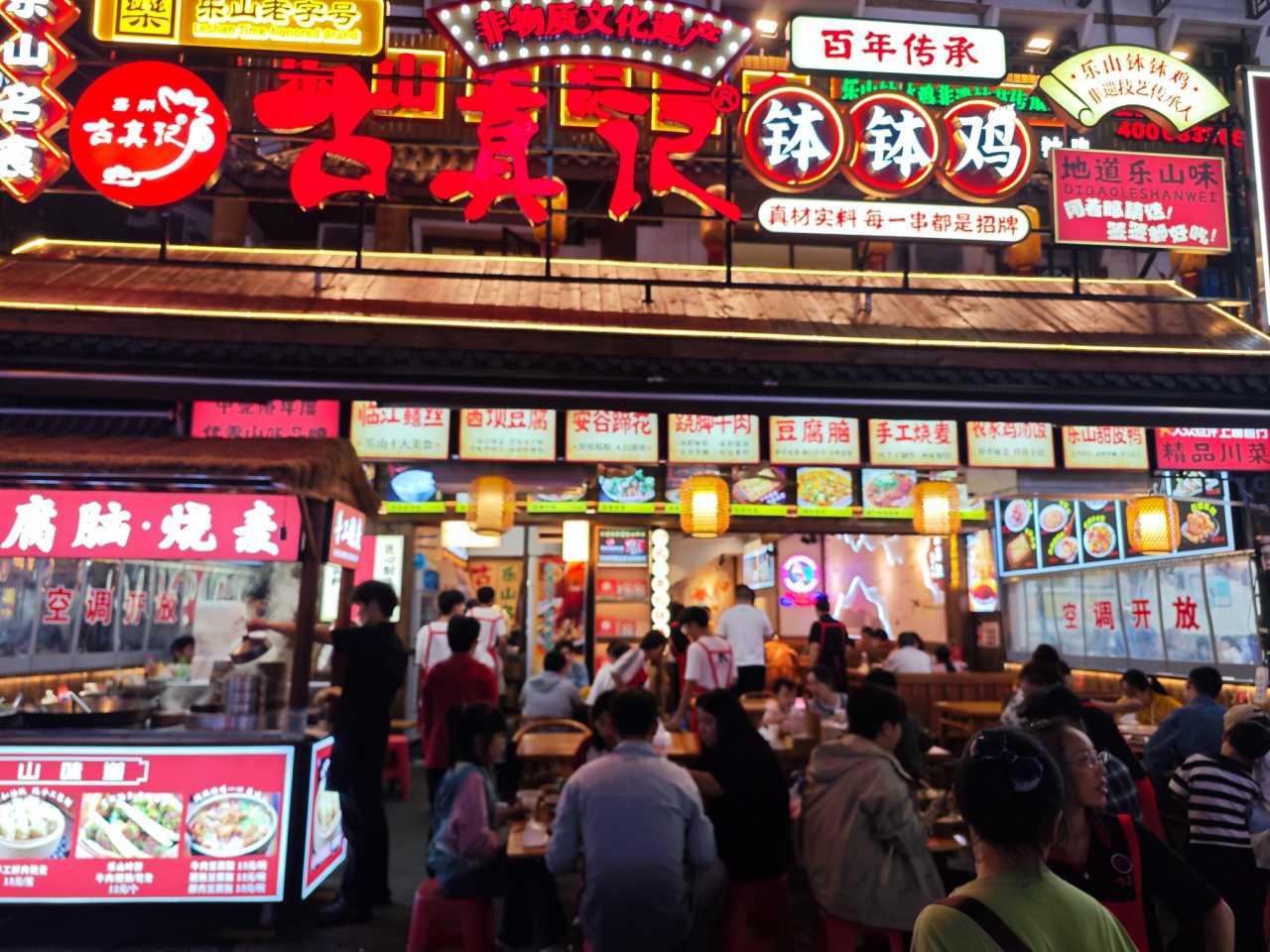
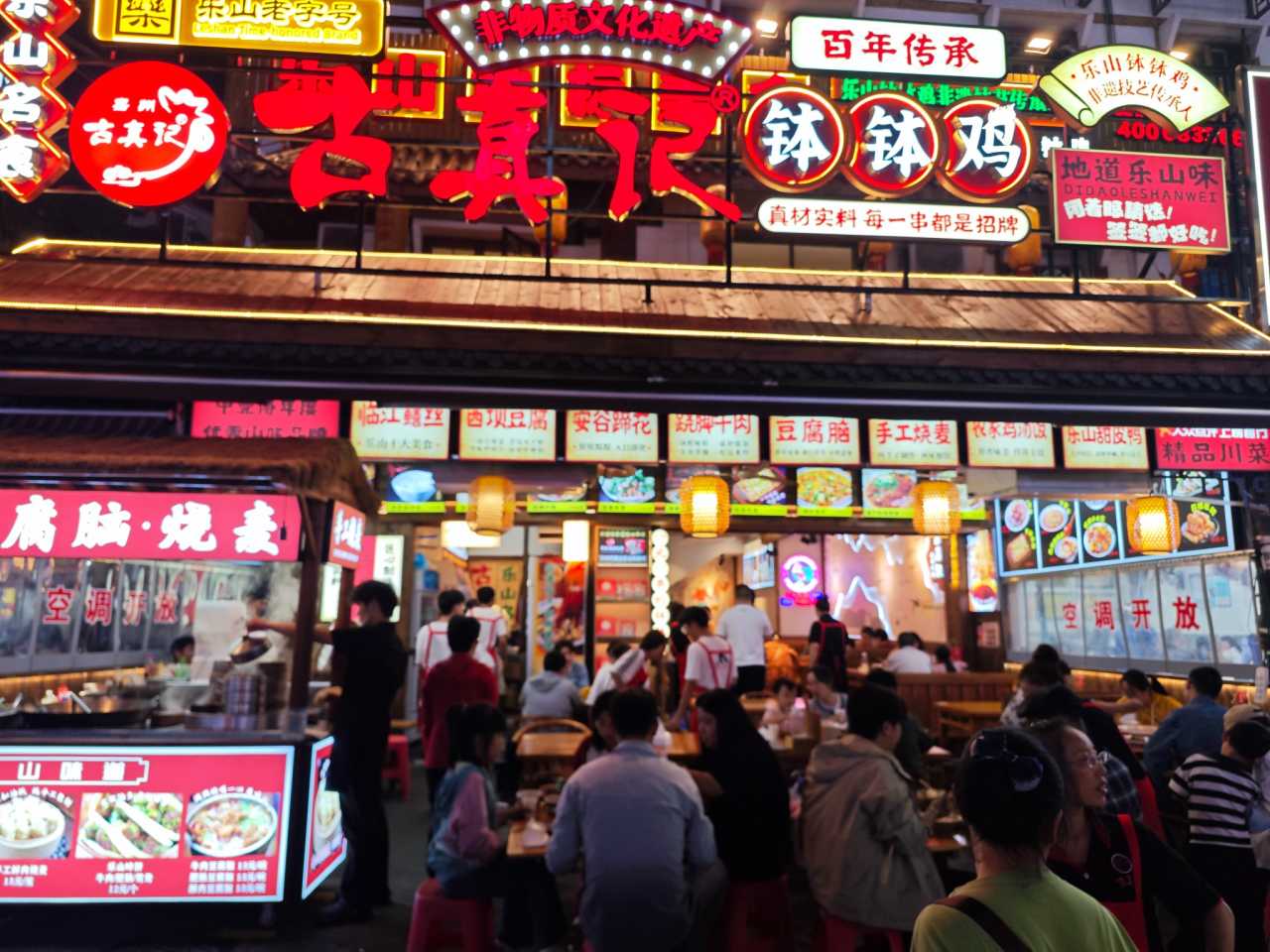
| Bo Bo Chicken (钵钵鸡) | Gu Zhen Ji, Ji Laosi, Wen Ji Rou, Yi Popo | Skip the tourist-packed Ye Popo |
| Tofu Pudding (豆腐脑) | Jiu Jiu Tofu Pudding, Dai Si Niang Niuhua Tofu Pudding | Try both savory and sweet versions |
| Ka Bing (咔饼) | Xincun Mao Si Niang | Strongly recommend the shredded pork cake |
| Spare Rib Noodles (排骨面) | Pan Liu Niang Spare Rib Noodles | Perfect for breakfast |
| Shao Mai (烧麦) | Hai Hui Yuan Old Shao Mai Shop, Liu Qimei Shao Mai | Steamed to perfection |
| Fried Skewers (炸串) | Ying Zi Fried Skewers, Li Laosan Fried Skewers | Great for late-night snacks |
| Ice Jelly (冰粉) | Zhao Ji Original Three-Fresh Ice Jelly, Chuan Mei Hua-style Ice Jelly | Refreshing dessert |
| Chicken Feet (凤爪) | Jiu Mei Chicken Feet | Spicy and addictive |
Special Reminder: Zhanggongqiao Food Street Not Recommended
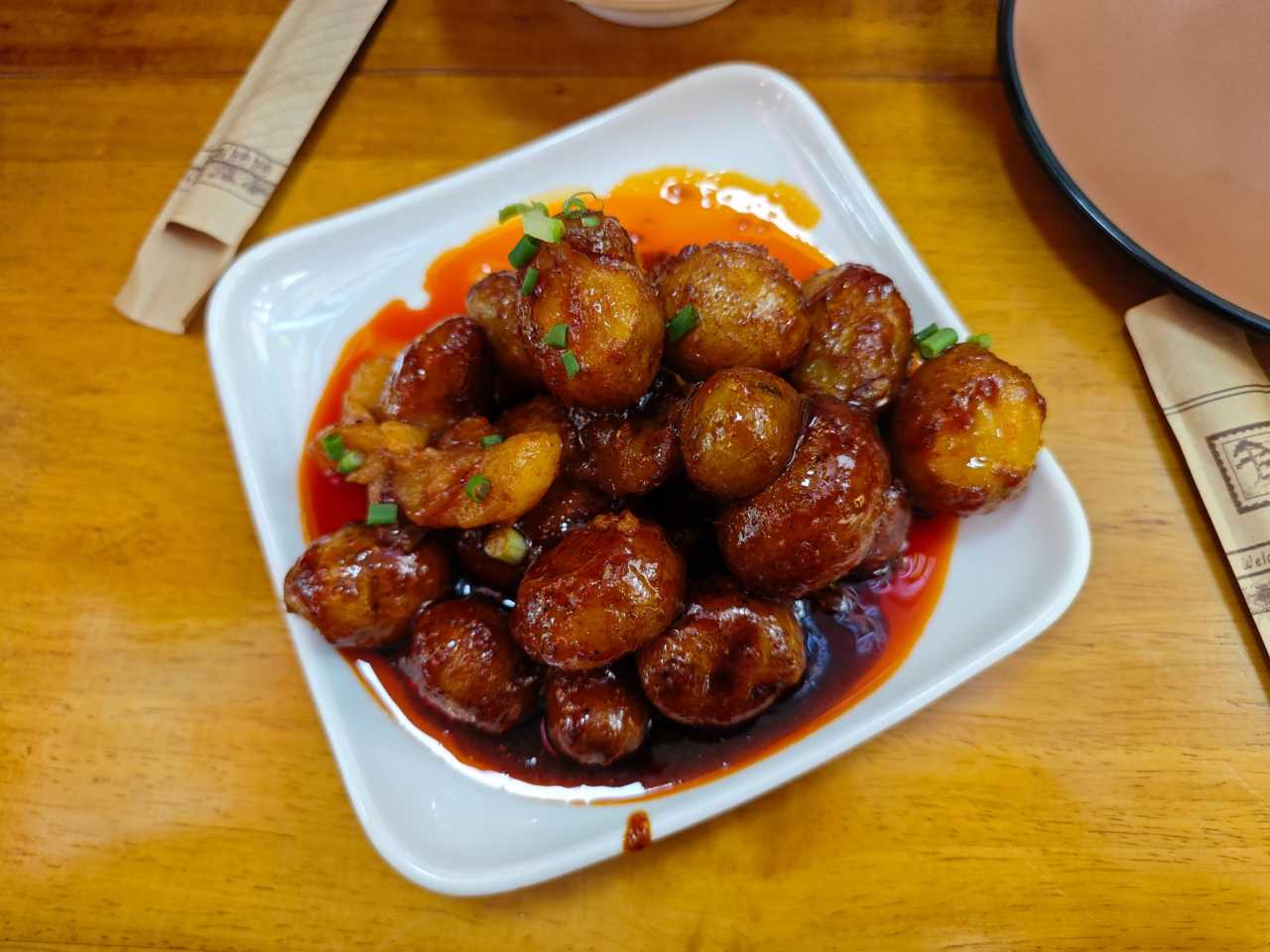
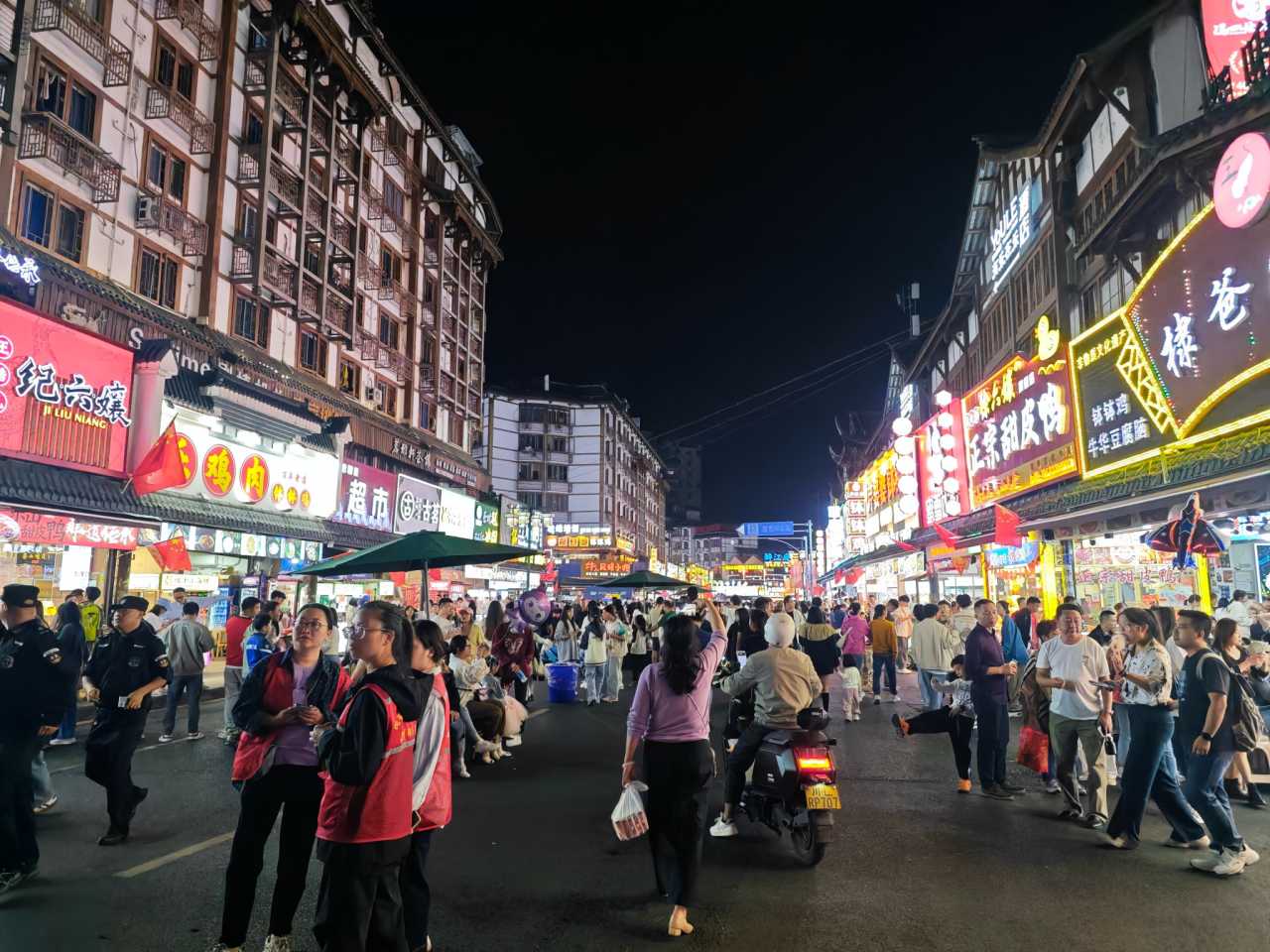
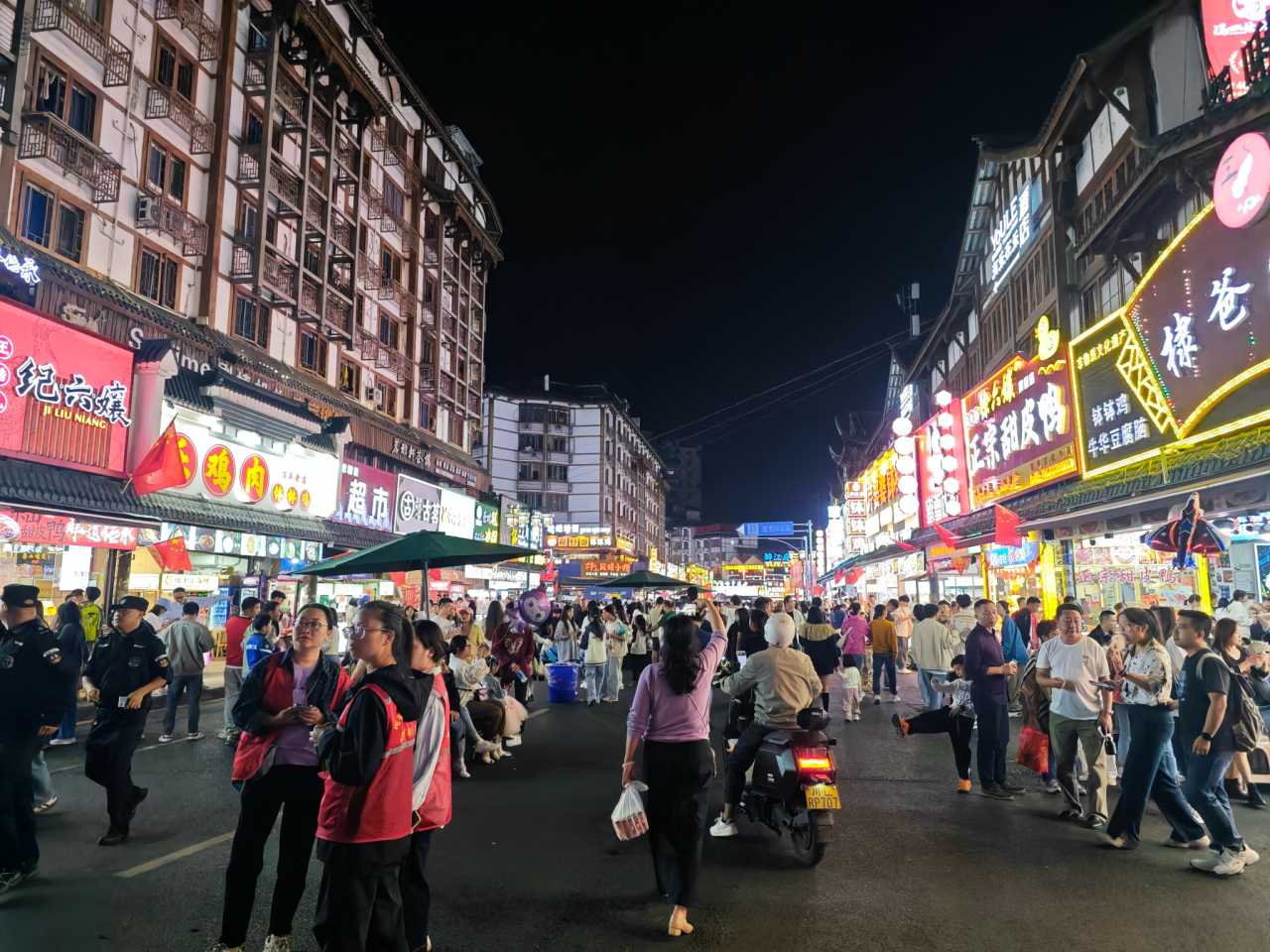
Zhanggongqiao is Leshan's most famous food street, but after walking through it, I can only say — it's better suited for tourists who haven't done their homework. Prices are on the high side, the taste is average, and while the variety is broad, the gap compared to the old shops scattered in the alleys is significant. Locals basically don't eat here. For authentic Leshan food recommendations, stick to the hidden gems listed above.
Day 1: Arrival in Leshan, First Taste of Zhanggongqiao
On October 1st, we departed from Nanjing South Station, took a 12-hour high-speed train to Chengdu East Station, transferred on-site, and arrived in Leshan an hour later. At 9 PM, we finally reached our first stop.
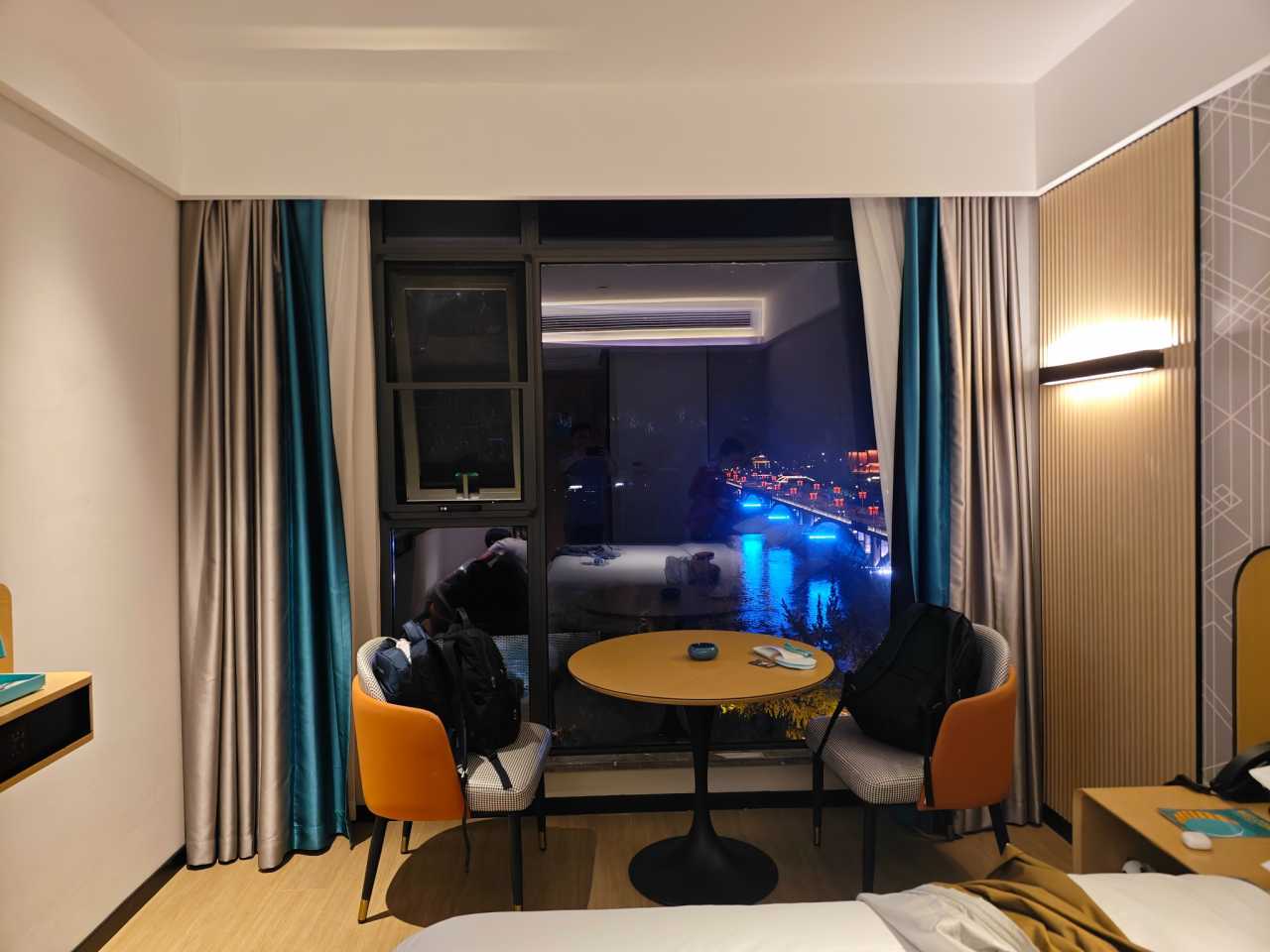
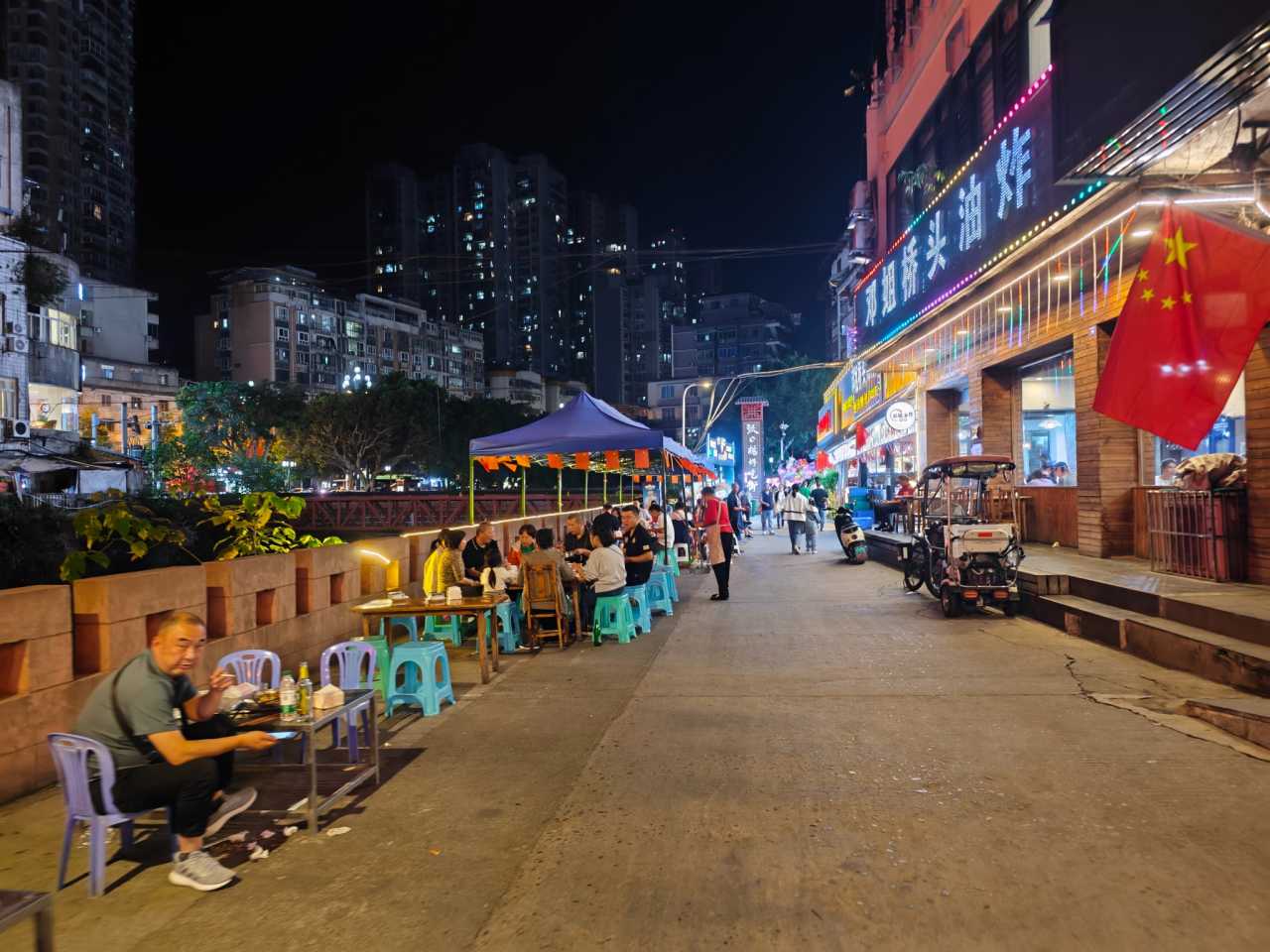
We chose a hotel near the Zhanggongqiao Food Street, close to the Giant Buddha. This turned out to be a good choice — across the bridge is the entrance to the Leshan Giant Buddha. After settling in, it was nearly 10 PM, and Zhanggongqiao Food Street was just a few hundred meters away, so we hurried out to find food.
At this hour, most of the scattered old shops were already closed, but Zhanggongqiao was still brightly lit and bustling with crowds. We picked the trendy Gu Zhen Ji Bo Bo Chicken. Overall, it was okay but not impressive — spicy and numbing, and the set meal deal wasn't too expensive. The Bo Bo Chicken was too spicy, so we went next door to Uncle's Tofu Pudding (Jiujiu Tofu Pudding) and ordered a bowl of shredded chicken tofu pudding. I found it completely different from northern-style tofu pudding and wasn't a fan. Later, after trying other places, I realized this one was indeed average.
The Mian Mian Bing (a type of shaved ice dessert) looked beautiful but tasted average. We also bought two Egg-Huajuan (egg cakes) — also just average.
Summary of Zhanggongqiao: No major disasters, but low marks. Compared to the dining experiences elsewhere over the next two days, the contrast was stark.
Day 2: Leshan Giant Buddha and Suji Ancient Town
Early Morning: Measuring Leshan on Foot
On October 2nd, I woke up at 5 AM — old habit — and went out for a run and walk, using my feet to measure the city. During the run, I stopped by Que Ji Ba Shop to buy breakfast, but a food delivery app said it opened at 6 AM, and I found the door locked. Across the street, there was a tofu pudding shop. I went in and ordered beef tofu pudding and steamed dumplings, waiting half an hour to get them. Just then, Que Ji Ba Shop opened, so I bought sesame and red bean flavored ba (rice cakes) — they were cold, probably leftovers from yesterday — and heated them up in the microwave to take away.
Back at the hotel, the tofu pudding was much better than the one at Zhanggongqiao.
Leshan Giant Buddha: Awe and the Reward of Early Rising
During the National Day holiday, tickets needed to be booked online in advance. From the main gate to the scenic area, it's about 2 kilometers. The scenic area offers free shuttle buses, but we chose to walk. At the ticket checkpoint, we hired a guide and entered the mountain.
The rock of Lingyun Mountain is soft, and you can see small holes everywhere made by tourists' hands. The Buddha statues are prone to damage and falling off, and some niches have turned black from incense smoke. Leshan was originally called Lingyun Mountain, and the temple is Lingyun Temple. The guide said that the Buddha enshrined inside Lingyun Temple is a consecrated true Buddha, while the famous seated Buddha has not been consecrated and is only for tourists to view — you are not allowed to take photos of the enshrined Buddha.
Pro tip: Arrive before 8 AM to avoid the crowds and have the best photo opportunities at the Leshan Giant Buddha viewing platform.
[Link: Leshan Giant Buddha ticket prices and hours]
Day 3-4: Jiuzhaigou's Crystal Waters and Autumn Colors
Taking the New High-Speed Rail to Jiuzhaigou
The newly opened Chengdu to Jiuzhaigou high-speed rail is a game-changer. What used to be a 7-hour drive is now just over 2 hours. We took the early morning train and arrived at Jiuzhaigou station by noon. From there, a shuttle bus took us directly to the park entrance.
Jiuzhaigou National Park: A Photographer's Paradise
Jiuzhaigou in autumn is nothing short of magical. The park is divided into three main valleys: Rize Valley, Zechawa Valley, and Shuzheng Valley. Each offers unique landscapes of turquoise lakes, multi-tiered waterfalls, and snow-capped peaks.
Must-see spots: - Five Flower Lake (Wuhua Hai) – The most colorful lake in the park - Nuorilang Waterfall – China's widest travertine waterfall - Long Lake (Chang Hai) – The highest and deepest lake - Panda Lake (Xiongmao Hai) – Crystal clear with underwater tree trunks visible
Tip for National Day: The park can get crowded, so use the shuttle bus system strategically. Start at the highest point (Primeval Forest or Long Lake) and work your way down.
[Link: Jiuzhaigou travel tips for autumn]
Huanglong: The "Yellow Dragon" Scenic Area
On Day 4, we visited Huanglong, known for its colorful travertine pools. While it's less famous than Jiuzhaigou, it's equally stunning. The 3.6-kilometer walking trail takes you past pools of every shade of blue, green, and yellow.
Day 5-6: Return to Chengdu and Last-Minute Eats
Chengdu Transit: Hotpot and Old Friends
We returned to Chengdu on Day 5 and spent the remaining time catching up with an old friend. We ate hotpot twice at the same restaurant — it was that good. For early risers, a morning run through Chunxi Road is a great way to see the city before the crowds arrive.
Must-Try Chengdu Dishes (If You Have Time)
- Mapo Tofu – The original version from Chen Mapo Tofu
- Dan Dan Noodles – Spicy and addictive
- Kung Pao Chicken – Authentic version with Sichuan peppercorns
- Hotpot – Go local, not touristy
FAQ: Planning Your Sichuan National Day Trip
Q1: Is National Day a good time to visit Leshan and Jiuzhaigou?
A: National Day (October 1-7) is China's peak travel season, so expect crowds everywhere. However, the autumn colors in Jiuzhaigou are spectacular during this time. Book tickets and accommodation at least 2-3 weeks in advance. For Leshan, the weather is pleasant, and the food scene is lively.
Q2: How many days do I need for Leshan and Jiuzhaigou?
A: A minimum of 5-6 days is recommended: 2 days for Leshan (including the Giant Buddha and food exploration), 2-3 days for Jiuzhaigou (including Huanglong if possible), and 1-2 days for transit through Chengdu. This 7-day Sichuan itinerary works perfectly for a balanced trip.
Q3: What's the best way to get from Leshan to Jiuzhaigou?
A: The most efficient route is to take a high-speed train from Leshan to Chengdu (about 1 hour), then transfer to the new Chengdu to Jiuzhaigou high-speed rail (about 2.5 hours). Total travel time including transfers is approximately 4-5 hours.
Q4: Are Leshan's food streets safe to eat at?
A: Yes, Leshan's food scene is generally very safe. However, avoid tourist-heavy streets like Zhanggongqiao for the best quality. Stick to local favorites listed in this Leshan food guide for authentic and hygienic options.
Q5: What should I pack for a Sichuan trip in October?
A: October in Sichuan can be variable. For Leshan, light layers and comfortable walking shoes. For Jiuzhaigou, bring a warm jacket (temperatures can drop to 5°C/41°F at higher elevations), rain gear, and sturdy hiking shoes. Sunscreen and sunglasses are essential due to high UV levels at altitude.
Conclusion: Your Sichuan Adventure Awaits
From the Leshan Giant Buddha's ancient majesty to Jiuzhaigou's crystal-clear waters, from the sizzling Qiaojiao Beef to the refreshing Ice Jelly, this journey through Sichuan's cuisine and scenery is one you'll never forget. The combination of cultural heritage, natural beauty, and world-class food makes it a destination that satisfies every traveler's cravings.
Ready to plan your own Sichuan adventure? Start by booking your high-speed rail tickets and Leshan Giant Buddha tickets online at least 3 weeks in advance. Use the food map above to create your personal Leshan food tour, and don't forget to leave room in your luggage for sweet glazed duck to take home.
Share your experience: Have you visited Leshan or Jiuzhaigou? What was your favorite dish or view? Leave a comment below — I'd love to hear your stories and tips for future travelers!
Planning a trip to Sichuan? Bookmark this guide and share it with fellow travelers. For more detailed itineraries and food maps, check out our [Link: Complete Sichuan Travel Guide] and [Link: Best Sichuan Street Food by City].
You may also like


