Impressions of Chengdu: Half Poetry, Half Everyday Life – A Traveler’s Guide to Sichuan’s Timeless Charm
Meta Description: Discover why Chengdu is called a city you never want to leave. From ancient temples and spicy street food to hidden food alleys, explore the perfect blend of poetry and everyday life in Sichuan’s capital. Plan your trip now.
Introduction: The Lingering Charm of Chengdu
Some cities impress you instantly. Others, like Chengdu, reveal their beauty slowly—like a poem unwritten, waiting to be savored. Strolling through the streets of Chengdu, you can touch the serene Zen-like stillness of ancient temples, and in the depths of its alleyways, you’ll find the mouth-numbing, tongue-tingling spicy flavors that keep you coming back for more. This is a city where half is poetry, half is everyday life—and both halves are unforgettable.

The Millennium-Old Brocade City: Where History Meets Modern Life

Chengdu—the name itself carries the warmth of history. According to the Taiping Huanyu Ji (Universal Geography of the Taiping Era), “In one year, a settlement formed; in two years, a town; in three years, a capital.” The city’s name traces back to the founding of a capital during the Western Zhou dynasty. During the Qin and Han dynasties, Chengdu was known as the “City of Brocade Officials” due to its thriving brocade industry. Back then, Shu brocade traveled along the Silk Road all the way to the world.
By the Tang dynasty, Chengdu had become a gathering place for poets and scholars. Li Bai, Du Fu, Wang Bo, Lu Zhaolin, Li Shangyin—these luminaries of literary history all left their footprints here. They composed poems and wrote verses, and they also absorbed the unique leisure and inclusiveness that Chengdu offered. The flourishing of Buddhism added another layer of Zen-like tranquility to the city, giving Chengdu a character that balances worldly bustle with transcendent peace.
Today, everyone has something to say about Chengdu. Party-goers think of Wuhou Shrine, Chunxi Road, and Kuanzhai Alley; the artsy crowd recalls Sichuan opera face-changing and the covered-bowl tea served in teahouses; and food lovers already have the aroma of hotpot, chuan chuan (skewered meats and vegetables), and braised pork wafting through their minds. Chengdu’s charm lies precisely in its blend of historical depth and the smoky, lively energy of everyday life.
[Link: Best time to visit Chengdu for festivals and food]
Wenshu Monastery: A Sanctuary of Peace Amid the Bustle
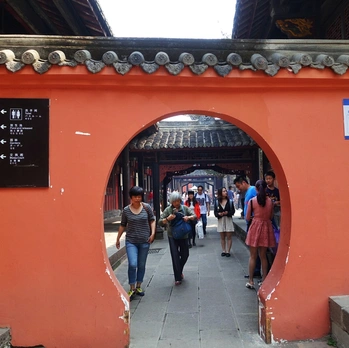
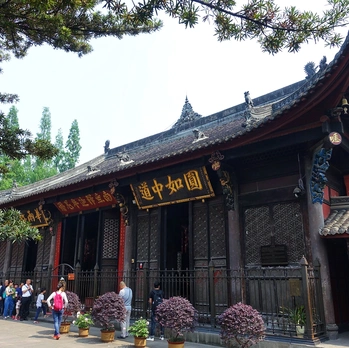
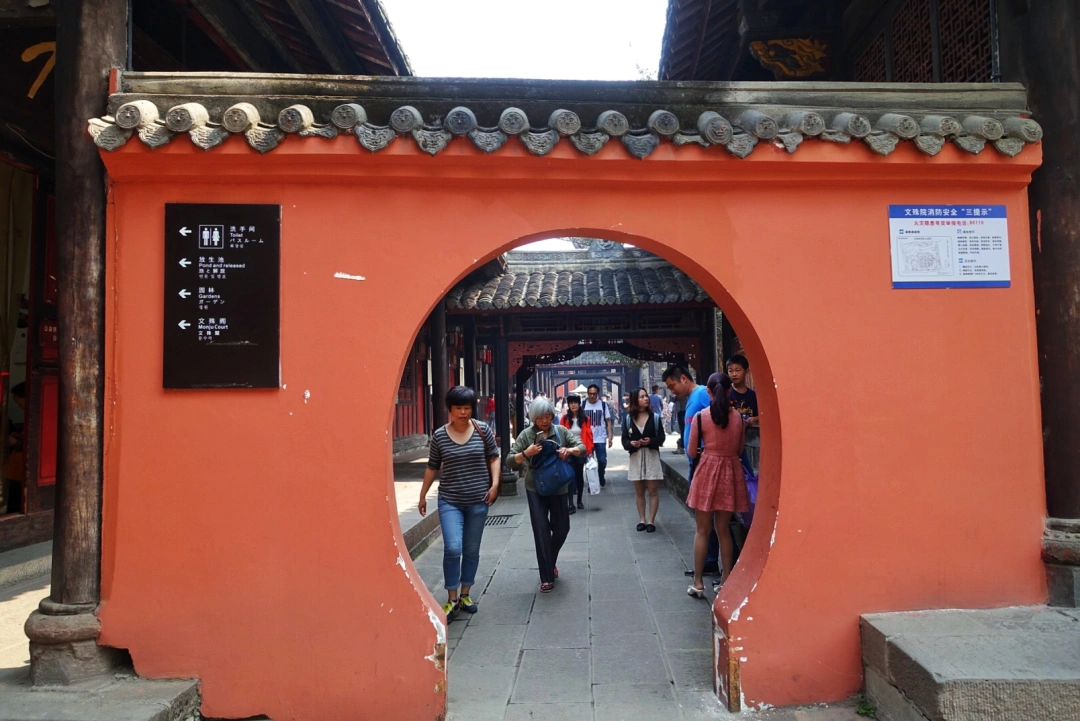
Chengdu has three major historical and cultural preservation districts: Daci Temple, Wenshu Monastery, and Kuanzhai Alley. Among them, Wenshu Monastery is a Buddhist sacred site that combines Zen forest relics, ancient gardens and architecture, and pilgrimage tourism.
History and Legend of Wenshu Monastery
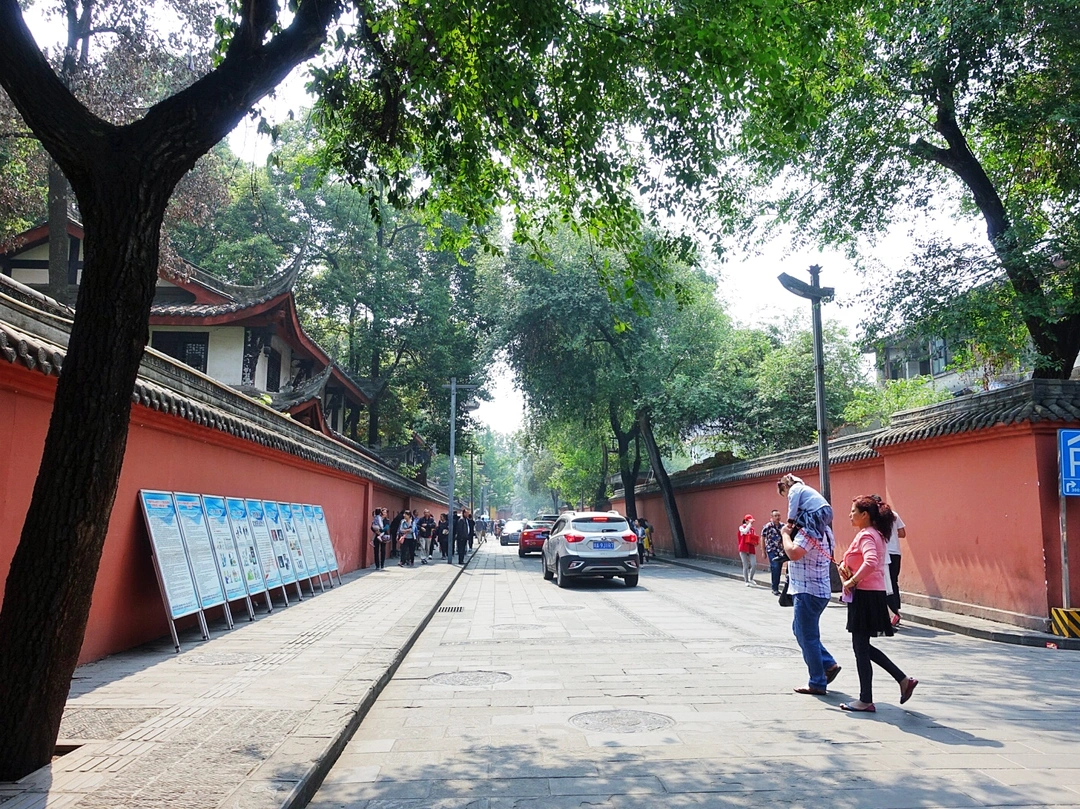
The predecessor of Wenshu Monastery was the Miaoyuan Pagoda Temple from the Tang dynasty, renamed “Xinxiang Temple” in the Song dynasty, before being destroyed in war. Legend has it that during the Qing dynasty, someone saw a red light at night, within which the image of Manjushri Bodhisattva appeared. The community then raised funds to rebuild and renamed it Wenshu Monastery. The halls, towers, and pavilions inside are ancient, spacious, and majestic, with flying eaves and upturned corners. The monastery has gardens within the temple, courtyards within the gardens, and scenery within the courtyards—all arranged in a layered, harmonious layout. The environment is serene and elegant. Facing Wenshu Monastery Street at the front and backed by Wanfu Bridge, it has long been described as “The temple hall connects to the thoroughfare, while the Zen chamber stays far from the clamor.”
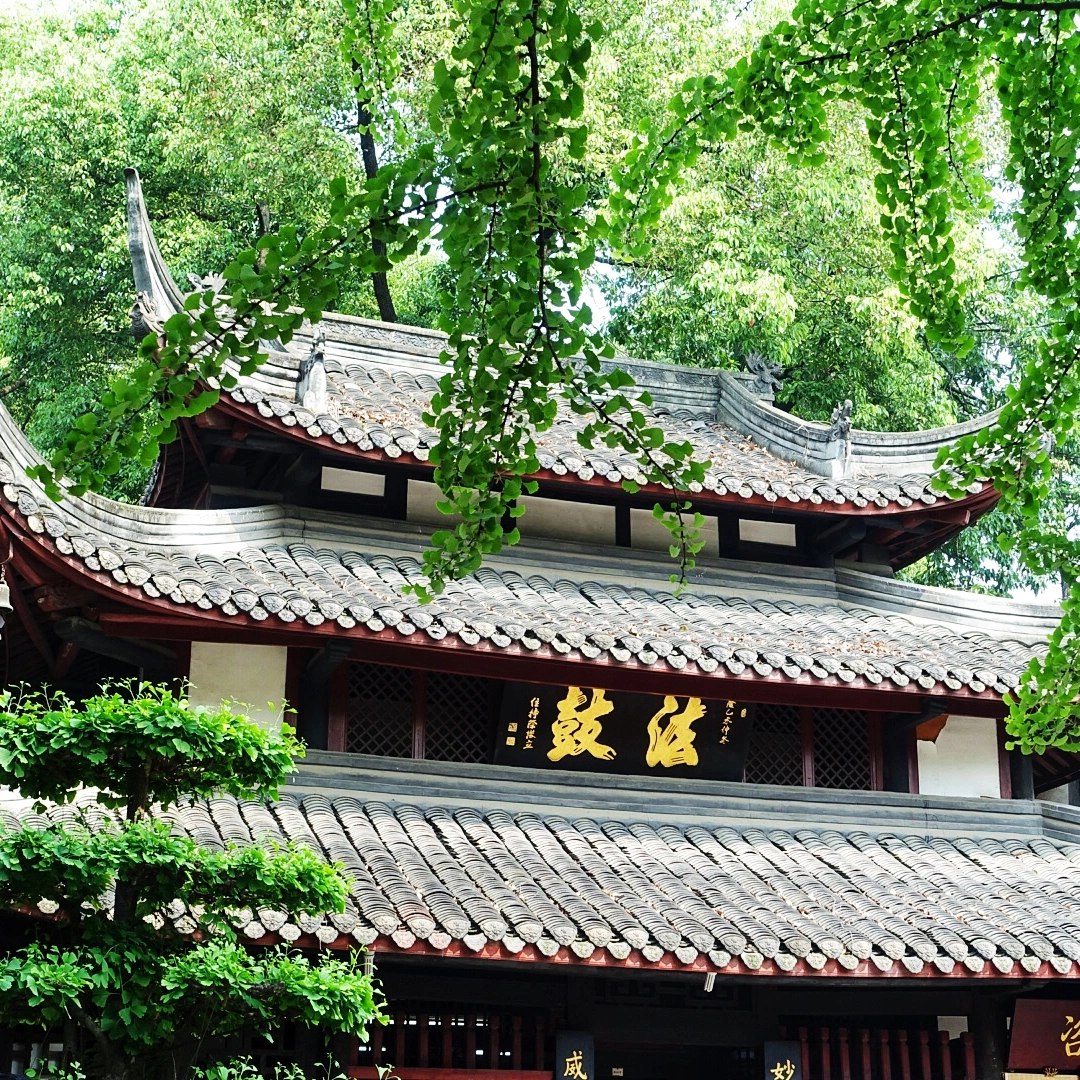
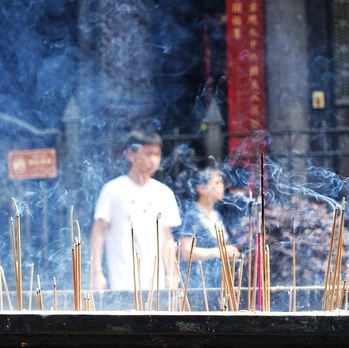
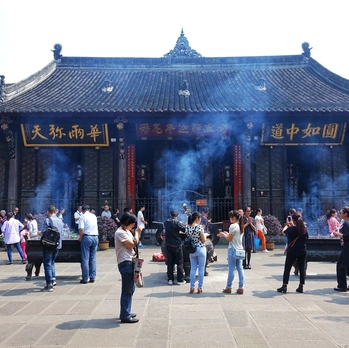
In the hearts of Chengdu locals, Wenshu Monastery has always been a sacred place. Manjushri Bodhisattva symbolizes wisdom, and many people come here to pray for enlightenment, so the incense smoke is thick year-round. Tourists from other cities also make pilgrimages here.
The Thousand-Buddha Peace Iron Pagoda
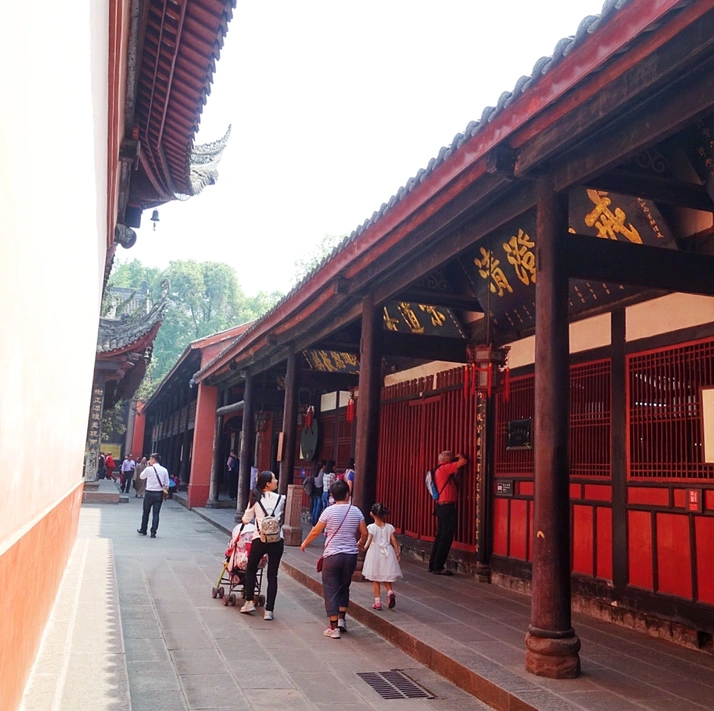
To the east of the monastery stands a Thousand-Buddha Peace Iron Pagoda. The pagoda is hexagonal, with 11 stories. The pagoda walls are cast with 999 embossed Buddha figures, and together with the bronze statue of Shakyamuni Buddha at the center of the base, it totals exactly one thousand Buddhas—hence the name “Thousand-Buddha Pagoda.” The flying eaves and upturned corners are decorated with 66 small green dragons, each hanging with wind chimes that ring crisp and clear in a gentle breeze. Beneath the pagoda base lies an underground palace containing precious relics. Zhao Puchu, then president of the Buddhist Association of China, wrote a couplet for the pagoda: “Solemnly, a thousand Buddhas appear layer upon layer; peacefully, a million years of protection endure.”
Wenshu Fang: Zen Culture Meets Modern Shopping
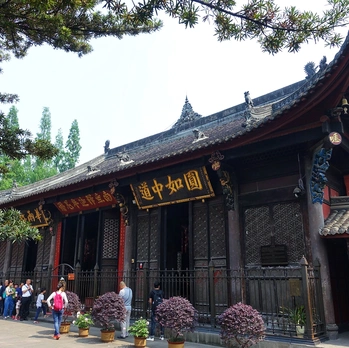
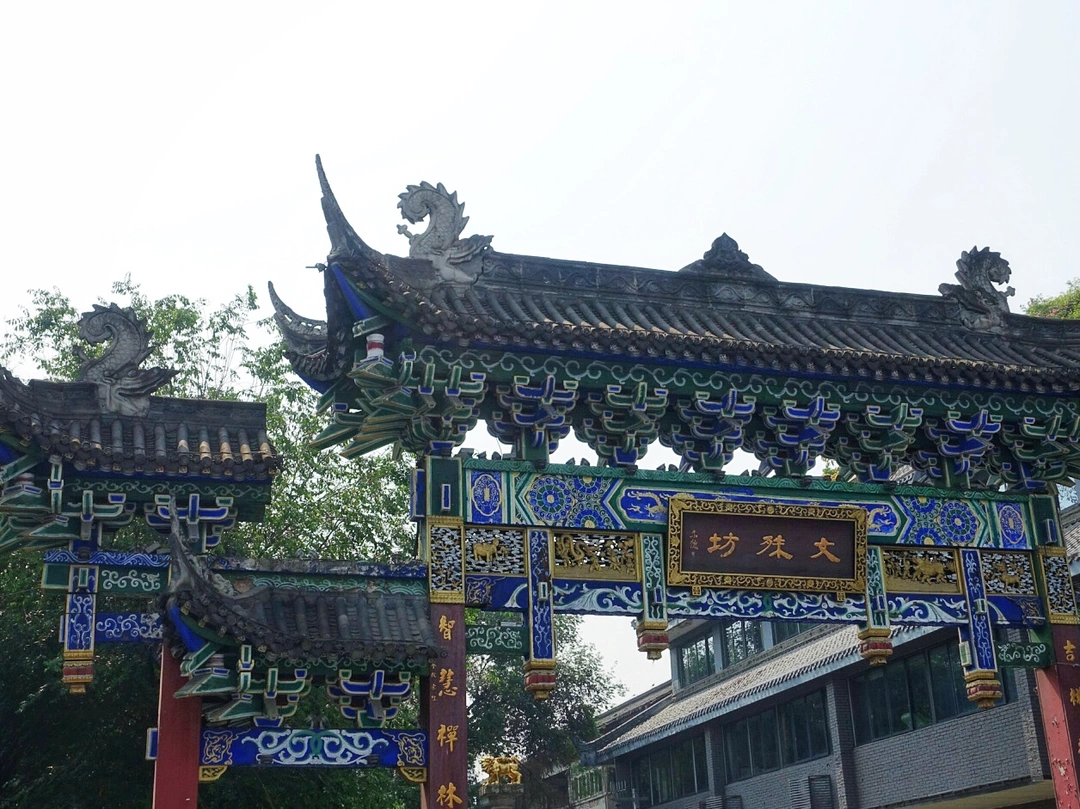
Today, the area around Wenshu Monastery has also developed a folk-style old street with Sichuan-style residential architecture—Wenshu Fang. Zen meaning, Zen atmosphere, and Zen culture permeate the area, and you can find all kinds of Zen-related items. Sugar figurines and clay dolls from childhood memories also reappear here, making you feel as if you’ve traveled back to your youth.
[Link: Top 10 Buddhist temples in China to visit]
Kuanzhai Alley: A Slice of Old Chengdu Time
The three Qing-dynasty old streets of Kuanzhai Alley record the vicissitudes of old Chengdu. With their gray bricks, black tiles, courtyard houses, tall gate towers, and floral wall skirts, they embody both the characteristics of Sichuan-style residential architecture and the essence of northern folk culture. This is the last remnant of old Chengdu’s “Thousand-Year Young City” urban layout and its century-old original architecture, as well as a rare “orphan” of northern hutong (alley) culture in the south.
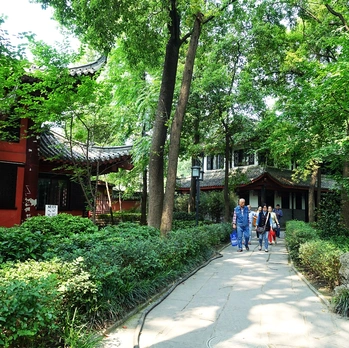
Kuanzhai Alley is a microcosm of Chengdu’s past—an ancient yet young city. Stepping into the alley, walking on the worn gray bricks, it feels like breaking through a barrier and entering another world. In this season, the roses on the walls are in full bloom, with flowers of various colors swaying gently in the breeze. In the early morning, dewdrops cling to the petals, and a casual snap can produce a “flower fairy” masterpiece.
But if you just follow the crowd and skim the surface, you’ll miss the real magic of Kuanzhai Alley. Just like a great movie has Easter eggs, beyond these bustling main arteries, if you leave the crowd and take a different path, you might add a splash of unique color to your trip.
[Link: Hidden gems in Chengdu’s old streets]
Kuixinglou Street: Chengdu Locals’ Secret Food Map
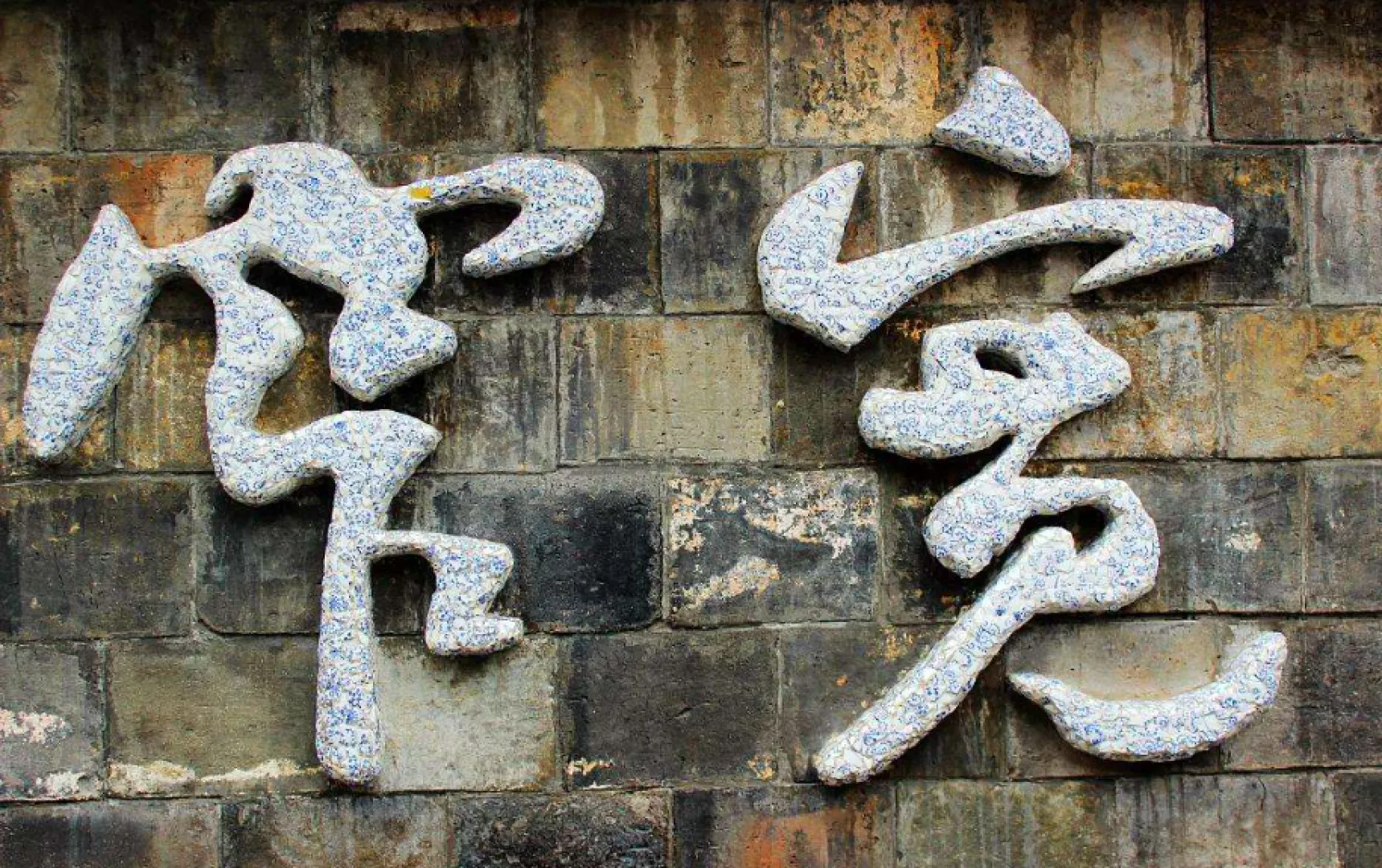
“Food in China, flavor in Sichuan.” Many tourists come to Chengdu for the food. But the local restaurants and street stalls scattered throughout the city’s alleys are too hard for visitors to find. Many people settle for eating at Kuanzhai Alley or Jinli, only to be disappointed by food tailored to tourist palates.
In fact, just a ten-minute walk from Kuanzhai Alley lies Kuixinglou Street. In the old days, this was a famous street of mansions in Chengdu. Today, it has become a food complex treasured by locals. Graffiti walls, ginkgo trees, dessert shops, chuan chuan (skewered meats and vegetables)... one small street can keep you entertained all day long.
Chengdu Foodie: Where Creativity Meets Tradition
They say Chengdu people know how to eat, and that’s absolutely true. Chengdu locals have an innate talent for both eating and cooking. Chengdu Foodie is exactly that kind of restaurant—it brings together the best of many styles while adding creative twists that surprise and delight.
The shop is small, but business is incredibly hot. If you arrive late, you’ll have to wait in line. Most of the diners here are young people who love spicy food, and there are many repeat customers.
One of the signature dishes is grilled fish fillets. The fish meat is sliced into pieces, threaded onto bamboo skewers, seasoned, grilled, and then topped with a secret spicy sauce and fresh, crispy pineapple. One bite—sweet, sour, and spicy flavors hit your taste buds. It feels a bit strange at first, but you can’t stop eating. The leftover fish bones aren’t wasted either; they’re made into a soup with pickled vegetables and vermicelli. One fish, two dishes—awesome!
The “Jueqing Frog” (绝情蛙) dish brings its passion to the table as soon as it’s served. Beneath a blanket of fiery red chilies, the frog meat is as white and tender as fat, served in a flat-lying wine bottle like a work of art. Every bite is an explosion of Sichuan heat and umami.
[Link: Best Sichuan street food you must try]
FAQ: Your Chengdu Travel Questions Answered
1. What is the best time to visit Chengdu? Spring (March to May) and autumn (September to November) offer mild weather, blooming flowers, and fewer crowds. Avoid summer if you dislike humidity and heat.
2. Is Chengdu safe for solo travelers? Yes, Chengdu is very safe. The locals are friendly, and the city has a low crime rate. Just practice common sense, especially at night.
3. How many days do I need in Chengdu? A minimum of 3 days is recommended: one for temples and culture, one for food and alley exploration, and one for a day trip to the Giant Panda Breeding Base.
4. What are the must-try dishes in Chengdu? Don’t miss hotpot, dan dan noodles, mapo tofu, chuan chuan (skewers), and rabbit head (a local favorite). For a unique experience, try the grilled fish fillets at Chengdu Foodie.
5. How do I get around Chengdu? The metro system is efficient and covers most tourist spots. Taxis and ride-hailing apps like Didi are also affordable. For a local experience, rent a bike or walk through the alleys.
Conclusion: Your Chengdu Adventure Awaits
Chengdu is not just a city—it’s a feeling. It’s the poetry of ancient temples whispering centuries of wisdom, and the everyday rhythm of spicy food, laughter, and slow living. Whether you’re wandering through Wenshu Monastery, getting lost in Kuanzhai Alley, or discovering hidden food gems on Kuixinglou Street, every moment here leaves a mark on your soul.
Don’t just read about it. Come taste it, walk it, and live it. Plan your Chengdu trip today and discover why this city is half poetry, half everyday life—and 100% unforgettable.
[Link: Book your Chengdu tour package now] [Link: Find the best hotels near Kuanzhai Alley]
You may also like


