Early Summer in Mianzhu: A Two-Day Guide to Western Sichuan’s New Year Paintings, Wine Culture, and Rose Gardens
Meta Description: Escape to Mianzhu this early summer—just 1 hour from Chengdu. Discover ancient New Year painting villages, sip Jiannanchun wine on Jiannan Old Street, and wander 10,000 acres of rose valleys. Your perfect Western Sichuan weekend awaits.
Introduction: Why Mianzhu Deserves a Spot on Your Summer Bucket List
When the early summer breeze sweeps across the Western Sichuan Plain—warm, slightly humid, carrying the scent of earth and blossoms—it’s a signal to leave the city behind. If you’re craving a short escape that blends intangible cultural heritage, centuries-old winemaking traditions, and romantic flower seas, look no further than Mianzhu.
Known as one of the “Seventy-Two Cave Heavens and Blessed Lands” in Taoist tradition, Mianzhu is far more than a pit stop for Jiannanchun liquor. It’s the birthplace of one of China’s four great New Year painting schools, a living museum of Western Sichuan residential architecture, and home to one of the largest rose valleys in the region. In this 1500-word guide, we’ll take you through a two-day, one-night itinerary that captures the gentle charm of early summer in Mianzhu—where tradition meets modernity, and every corner tells a story.
[Link: Best weekend getaways from Chengdu]
H2: Getting to Mianzhu – A Quick Escape from Chengdu
Mianzhu is located on the western edge of the Chengdu Plain, about 80 kilometers from downtown Chengdu. By car, the journey takes just over an hour via the Chengdu–Mianyang Expressway. Public buses and high-speed rail options are also available, making it an accessible destination for a spontaneous weekend trip.
The city’s strategic location—nestled between the Longmen Mountains and the fertile plain—gives it a unique microclimate. Early summer here is neither too hot nor too humid, with daytime temperatures hovering around 25–28°C. It’s the perfect season for outdoor exploration.
[Link: How to travel from Chengdu to Mianzhu by train]
H2: New Year Painting Village – Where Intangible Heritage Meets Rural Beauty
H3: The Art of Mianzhu New Year Paintings
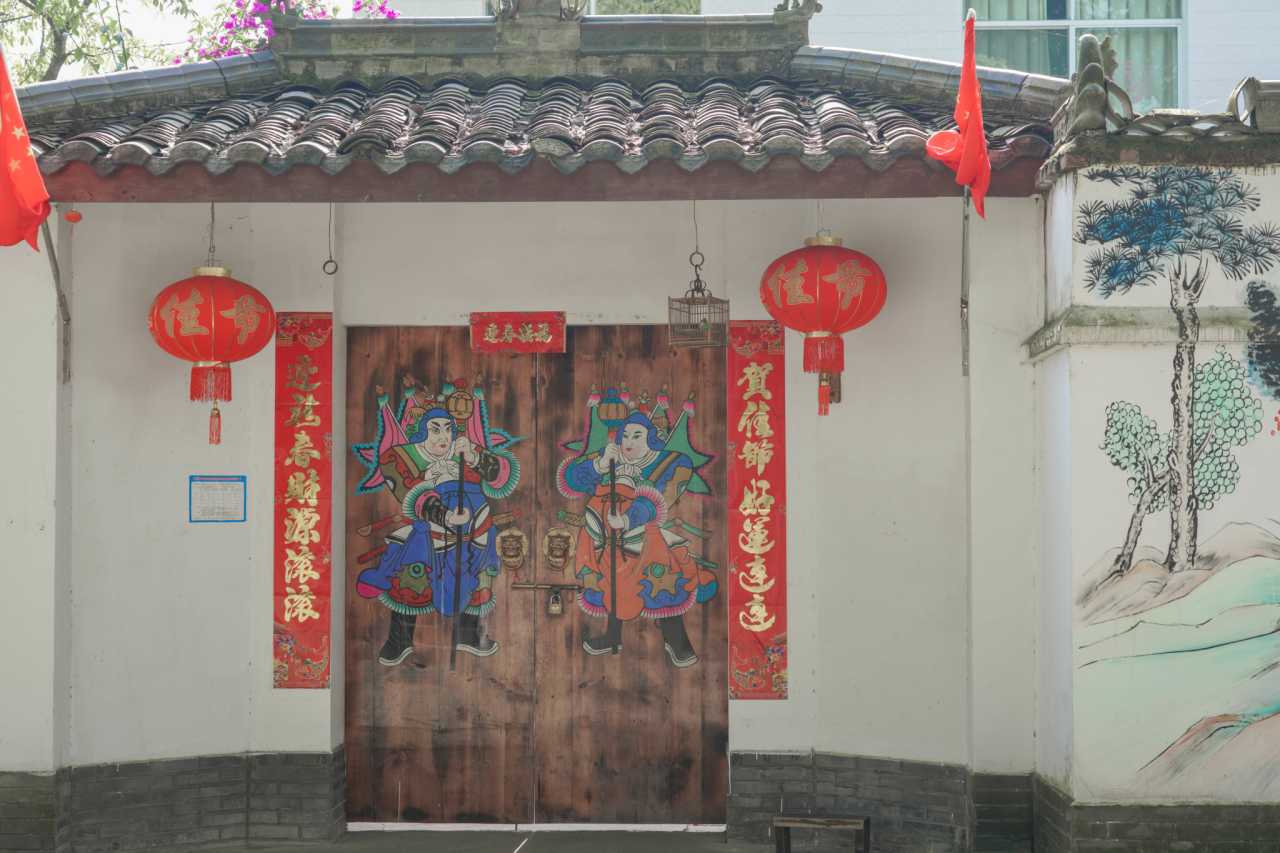
China’s New Year painting (年画) tradition is represented by four major schools: Yangliuqing in Tianjin, Yangjiabu in Weifang, Taohuawu in Suzhou, and Mianzhu in Sichuan. What sets Mianzhu apart is its distinctive Bashu (Sichuan-Chongqing) flavor—bold colors, exaggerated expressions, and a sense of optimism that reflects the local character.
These paintings are not just decorative. They are visual prayers for good fortune, protection, and happiness. From door gods with fierce eyes to chubby babies holding lotus flowers, each image carries symbolic meaning passed down through generations.
H3: Exploring the New Year Painting Village in Xiaode Town
The New Year Painting Village (年画村) is located in Xiaode Town, just 5 kilometers from Mianzhu city center. It’s a national AAAA-level scenic area, and entry is free.
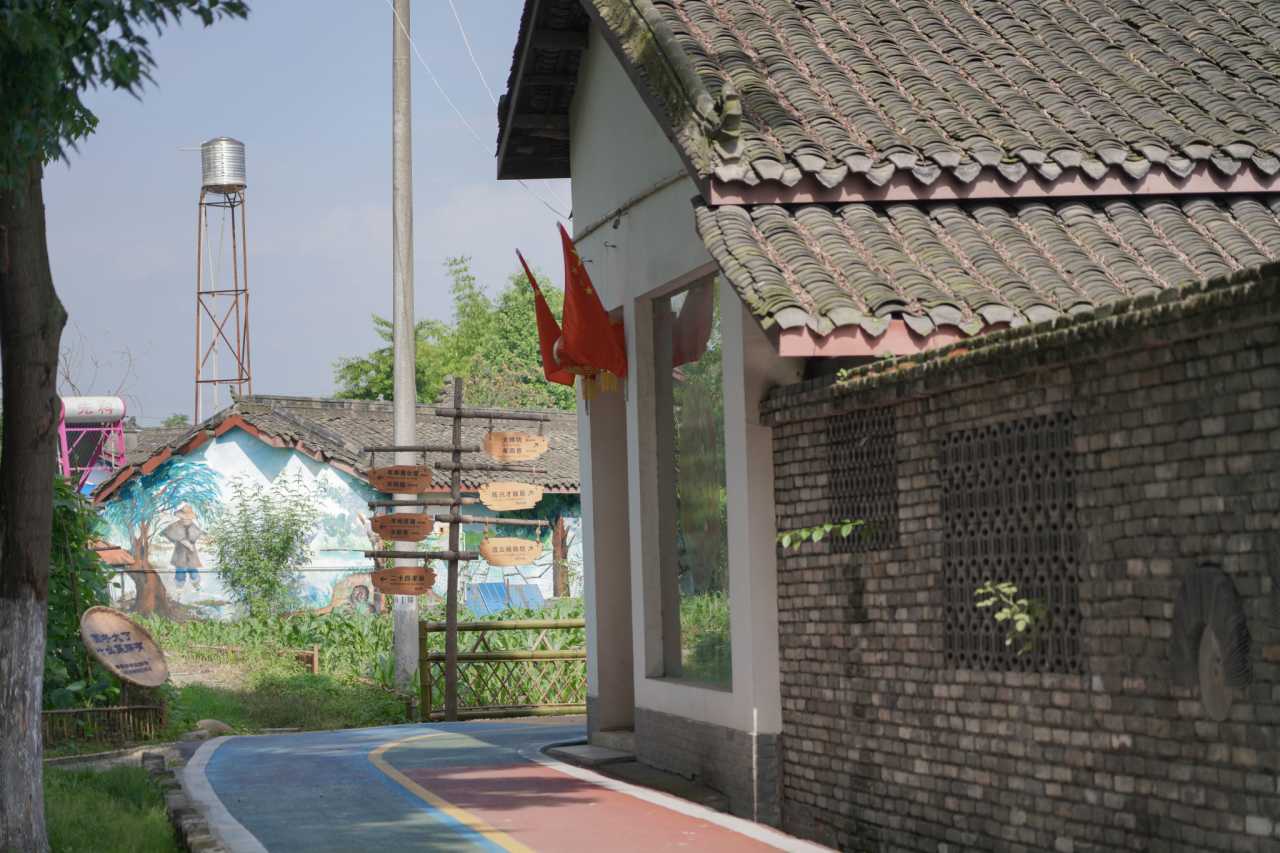
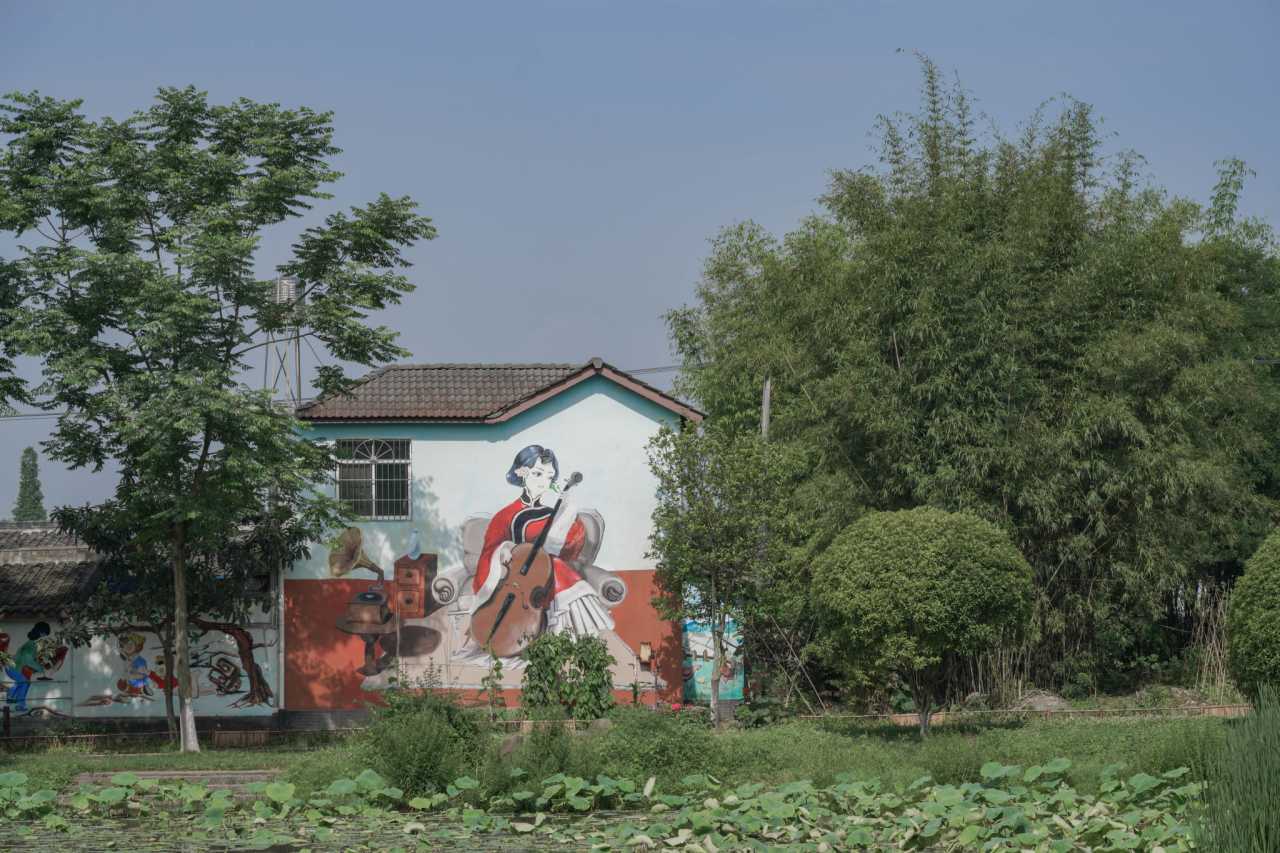
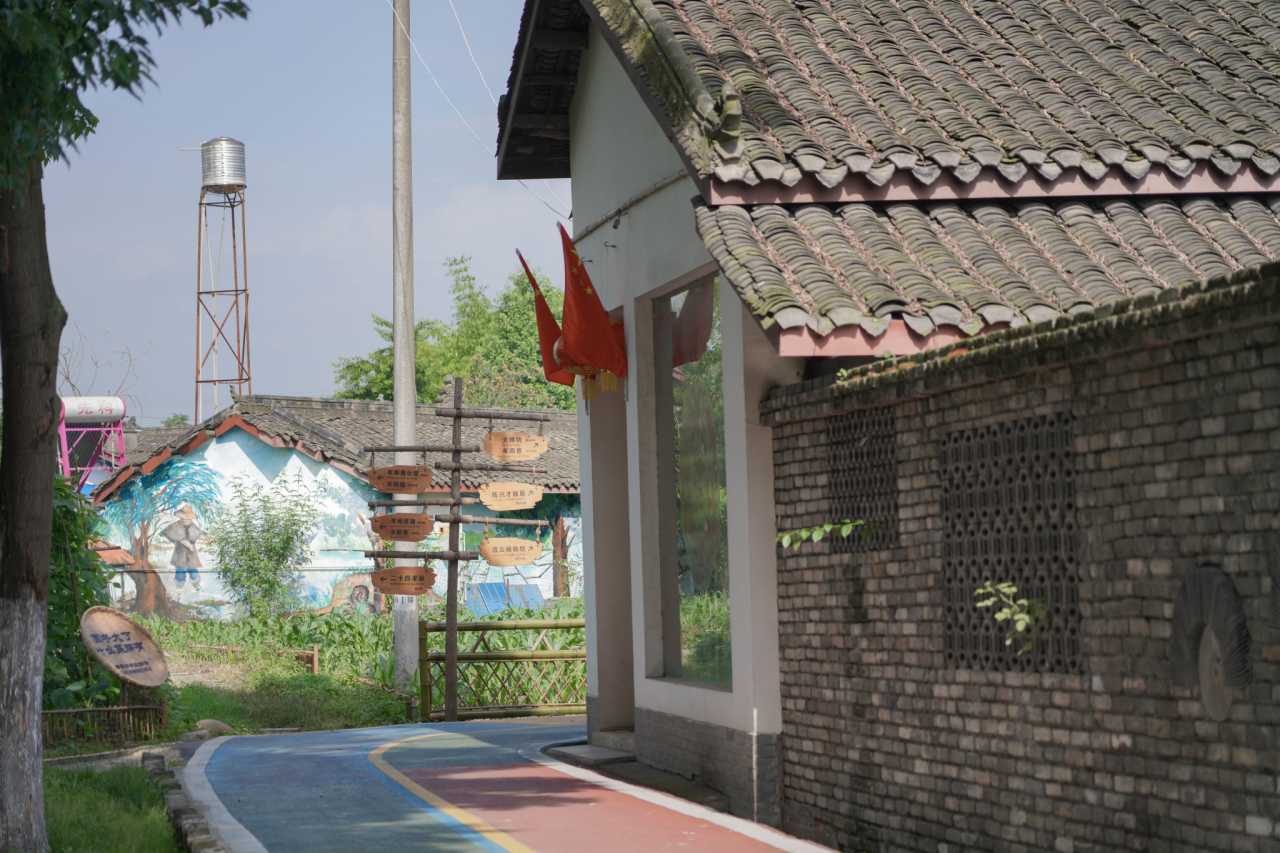
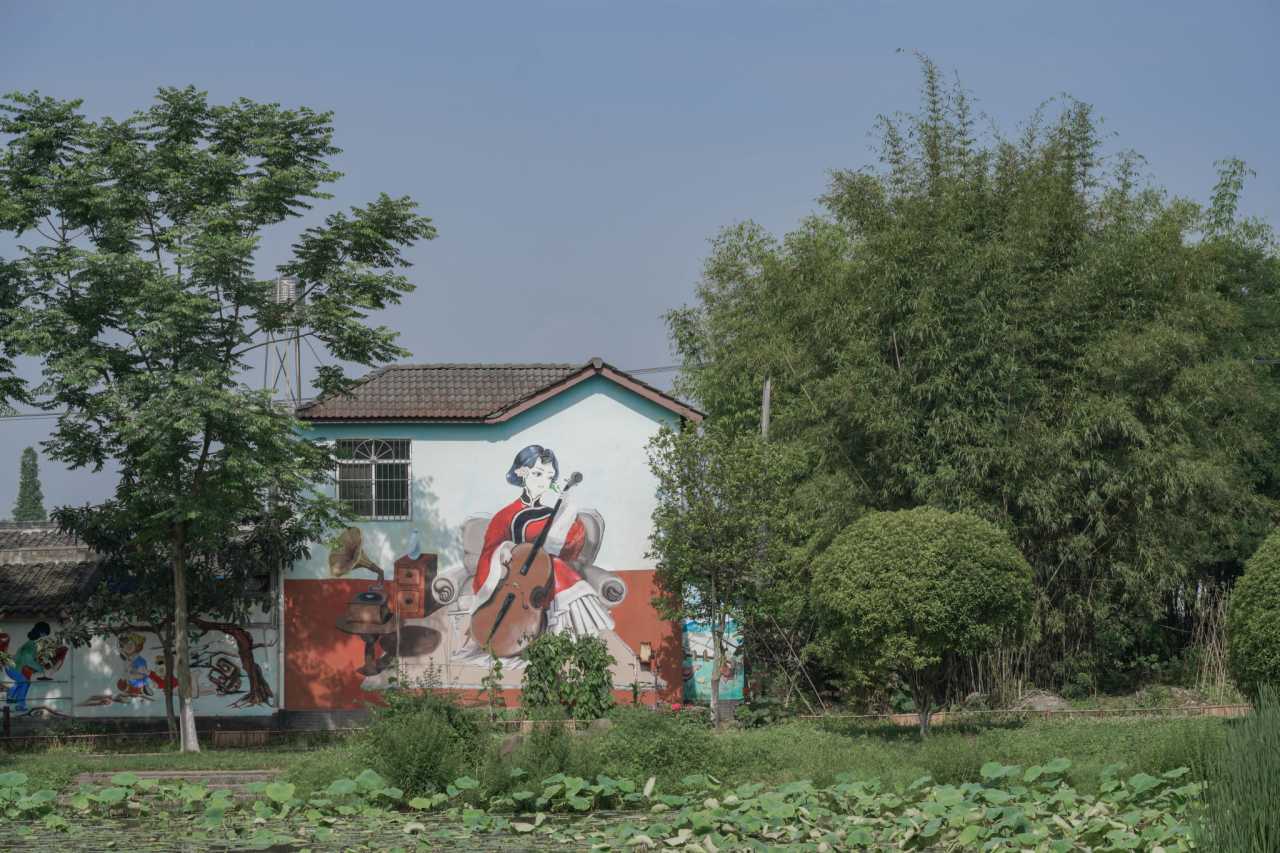
As you step into the village, you’re greeted by rows of white-walled, black-tiled Western Sichuan-style houses. Nearly every wall and door is adorned with vibrant New Year paintings. The effect is mesmerizing—a seamless blend of folk art and everyday life.
Rainbow Greenway runs through the entire village, its bright path cutting through the traditional landscape. Walking along it, you’ll pass manicured hedges, blooming flower beds, and quiet alleys like New Year Painting Alley, where murals leap from one whitewashed wall to the next.
H3: The Three-Color Painting Studio and New Year Painting Exhibition Hall
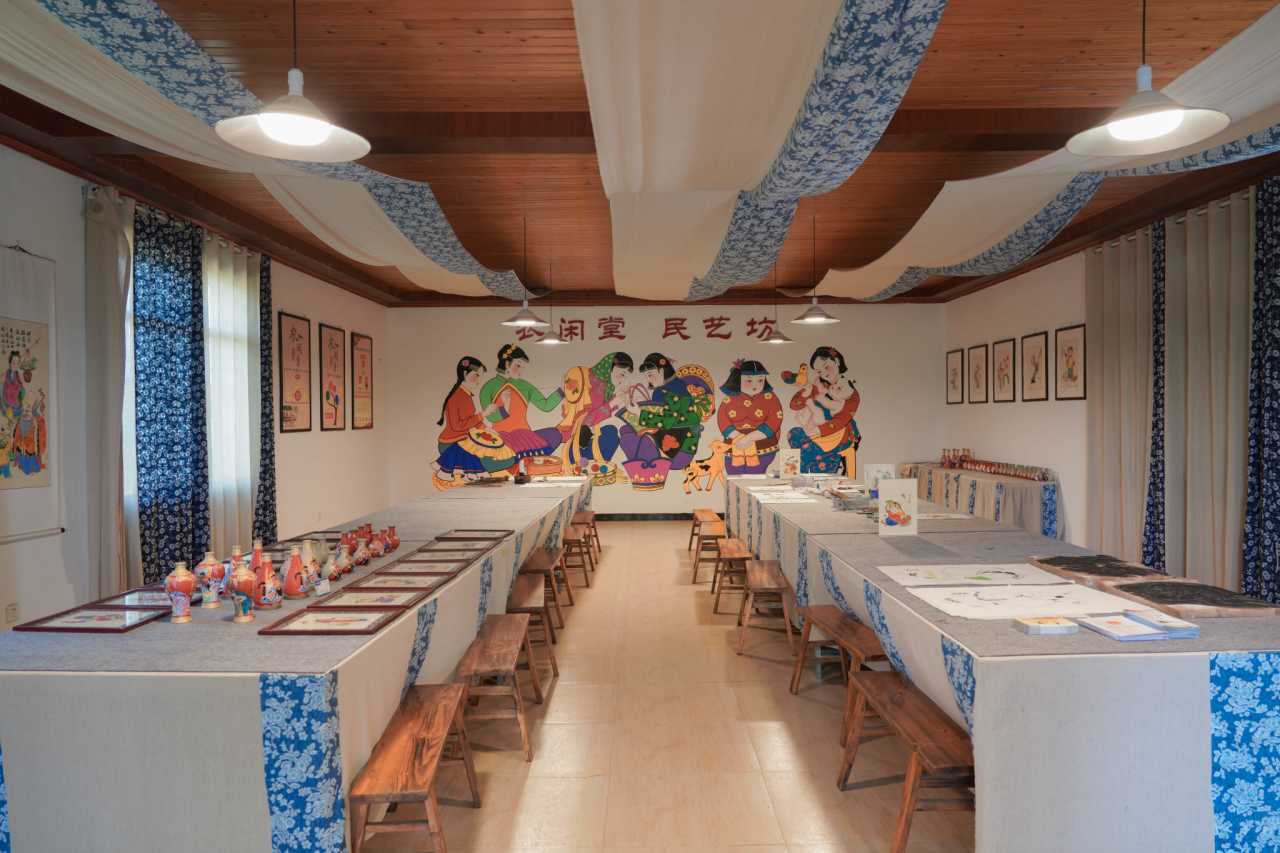
Don’t miss the Three-Color Painting Studio (三彩画坊)—a professional training center for Mianzhu New Year painting heritage. It’s also a provincial-level demonstration base for flexible women’s employment. During our visit, two teachers were working on embroidery and painting projects. The backyard, filled with hydrangeas and tie-dyed cloth strips fluttering in the breeze, felt like a hidden oasis.
Just a short walk away is the New Year Painting Exhibition Hall. The ground floor sells creative cultural products inspired by traditional designs. Upstairs, you’ll find exquisite works, including the masterpiece “Mianzhu Welcoming Spring” (绵竹迎春图)—a long scroll manuscript often called the “New Year painting version of Along the River During the Qingming Festival.” It’s an invaluable resource for studying history, art, and folk customs.
[Link: Top intangible cultural heritage sites in Sichuan]
H2: Chinese New Year Customs Village – A Poetic New Countryside
Adjacent to the New Year Painting Village lies the Chinese New Year Customs Village (中国年俗村). This is a beautifully planned new rural community built on the foundation of traditional Chinese New Year culture. Located along the Sheshui River in Xiaode Town, it feels like stepping into a living painting.
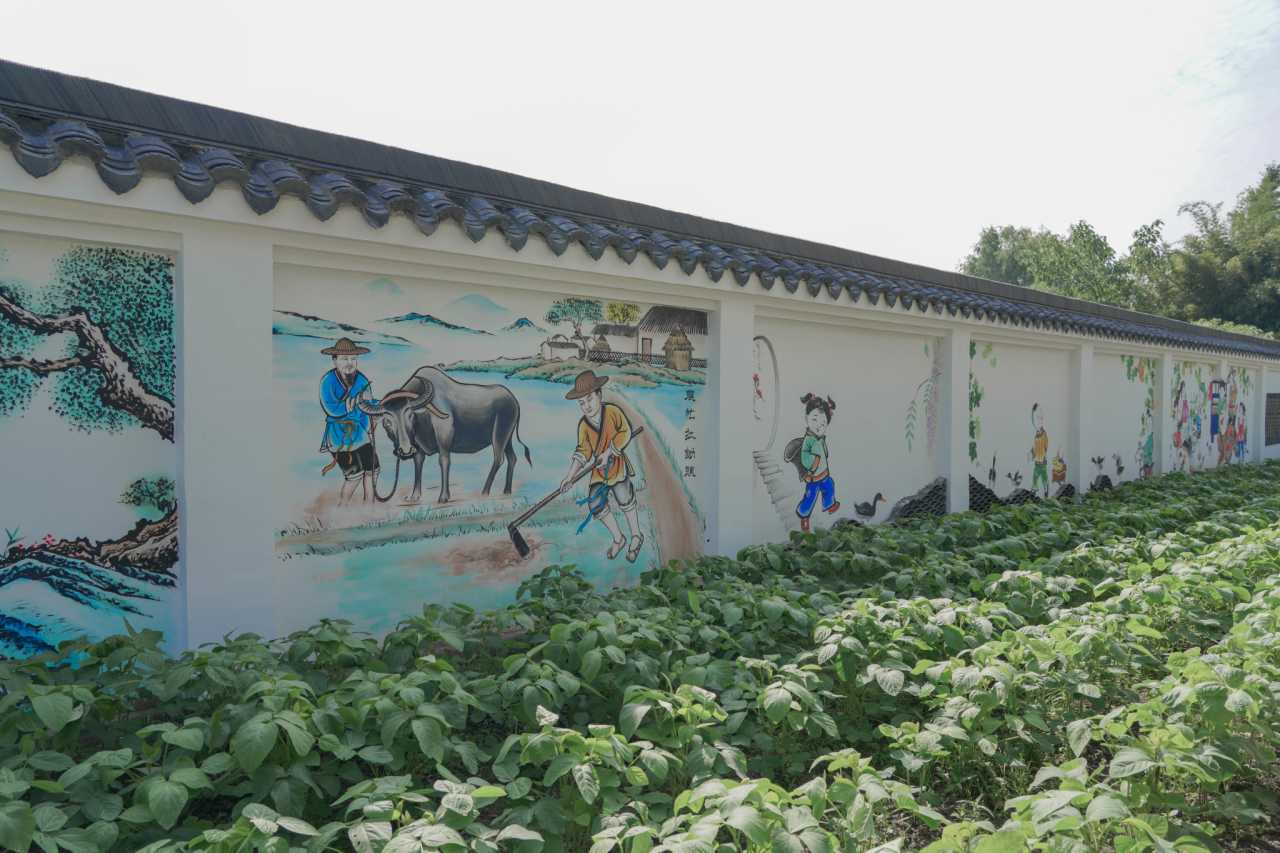
Rows of small villas, each with a front and back yard, are arranged in a pleasing disorder. New Year paintings adorn the walls, while small bridges, flowing water, and lush greenery weave through the landscape. Key spots include the Water Moon Lotus Pond, the Ruyi Canal, the Welcoming Spring landscape wall, and an ancient stage.
Time seems to slow down here. You’ll find yourself wanting to sit by the pond, sip tea, and simply watch the clouds drift by. The village also offers distinctive guesthouses and restaurants, many of which incorporate New Year painting motifs into their decor. It’s the perfect place to unwind after a day of exploration.
[Link: Best rural tourism destinations in Sichuan]
H2: Jiannan Old Street – A Time Tunnel Filled with Wine Aroma

H3: The Legacy of Jiannanchun Liquor
Mianzhu’s winemaking history dates back over a thousand years. During the Tang Dynasty, “Jiannan Shaochun” was listed as a royal tribute. Today, Jiannanchun (剑南春) remains one of China’s most famous liquor brands, and its heritage is on full display at Jiannan Old Street.
H3: Walking Through Ming-Qing Architecture and Ancient Cellars
A 15-minute drive from the New Year Painting Village brings you to Jiannan Old Street. The street is designed entirely in Ming and Qing dynasty style, stretching 500 meters. The centerpiece is the Tianyi Old Cellar (天益老号) winery site—ancient fermentation pits that are the soul of Jiannanchun’s flavor.
Walking on the bluestone pavement, the air is thick with the aroma of fermenting grains. Inside the workshop, you can observe the entire winemaking process, from raw material preparation to distillation. Every step reflects the craftsmanship that has made Jiannanchun famous worldwide.
H3: Ancient Stage and Cultural Fusion
At the other end of the street stands an ancient stage built during the Ming Dynasty. Though performances are not held daily, the stage still hosts benefit shows during holidays. Imagine sitting beneath the stage, sipping tea, and watching Sichuan opera—it’s a scene straight out of a bygone era.
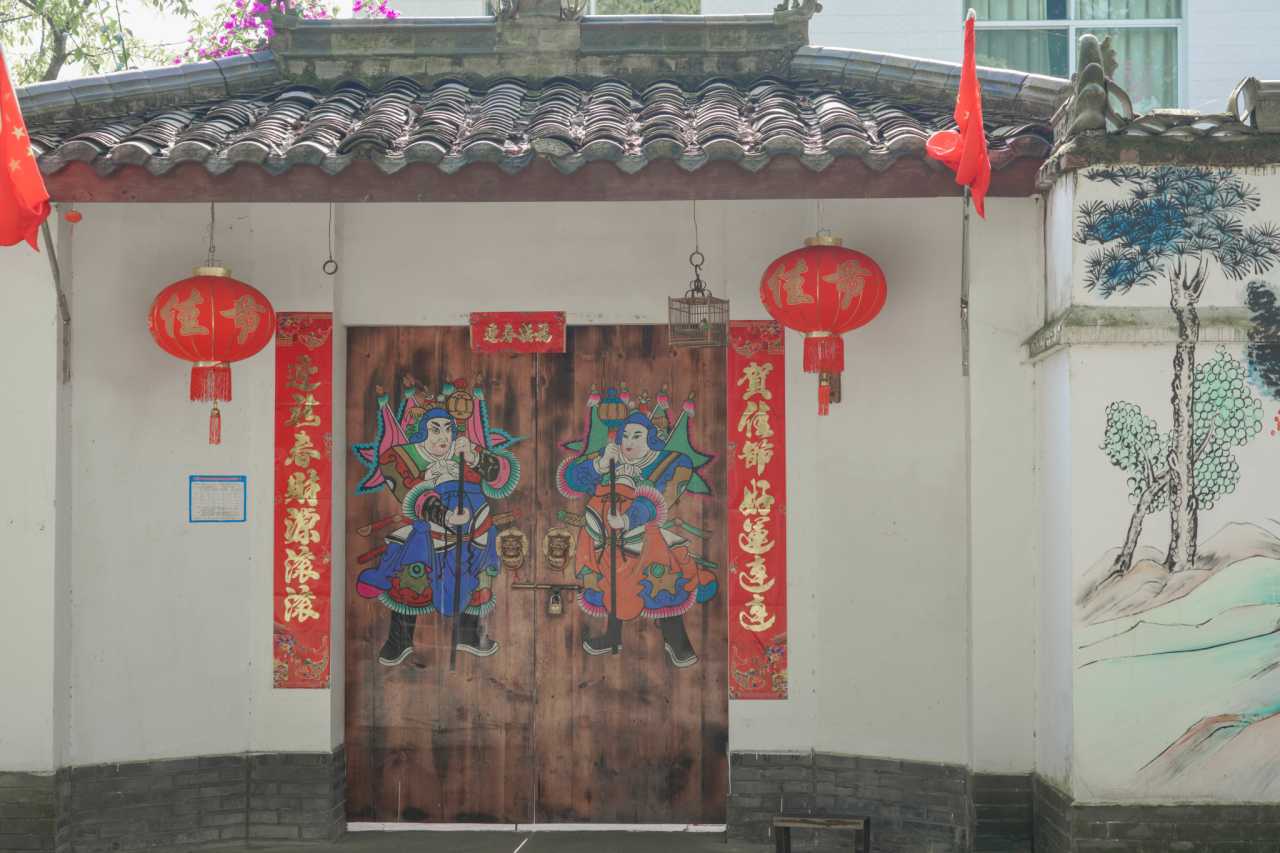
Beyond wine and opera, the street also integrates elements of Three Kingdoms culture and New Year painting culture. Strolling through it is like flipping through a thick history book.
[Link: Jiannanchun distillery tour guide]
H2: China Rose Valley – Immersed in a Sea of Blooms
H3: A 10,000-Acre Rose Paradise
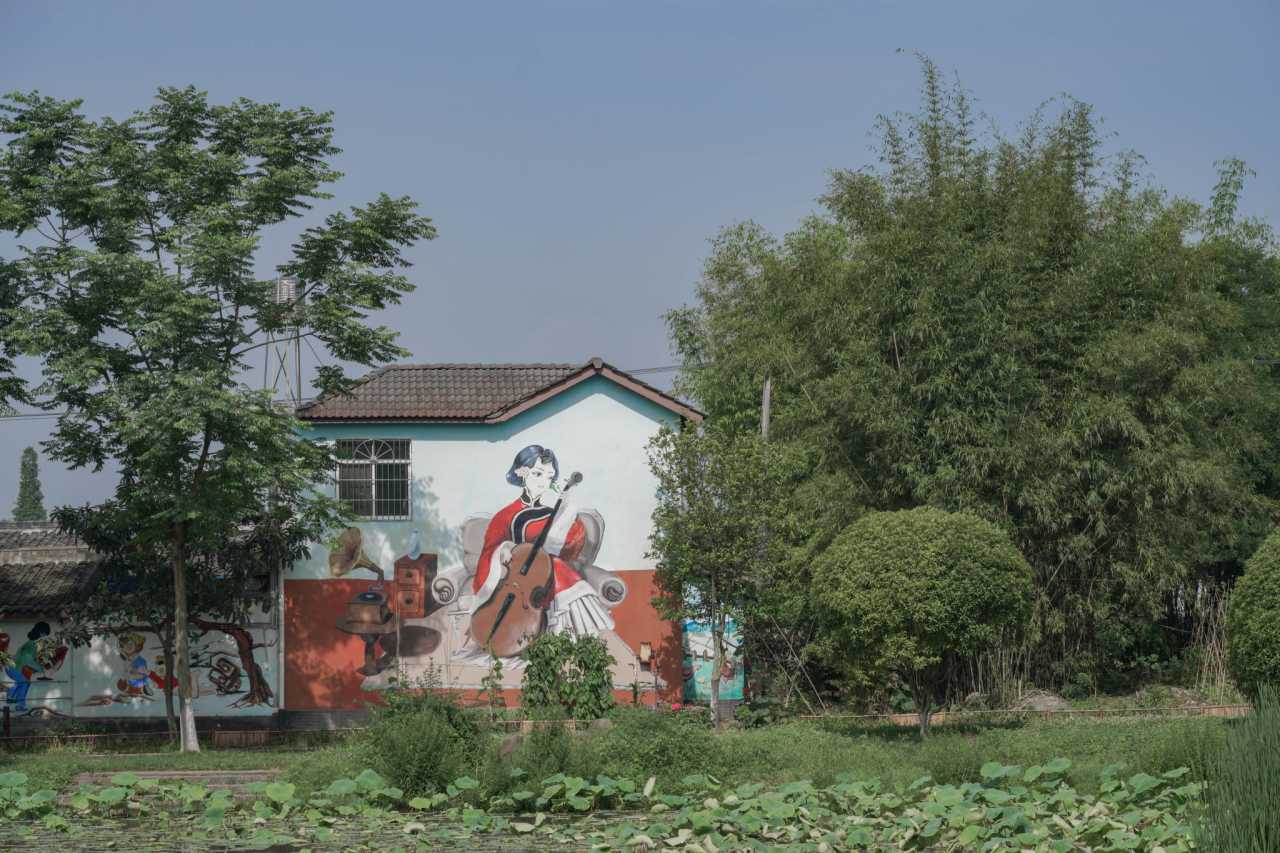
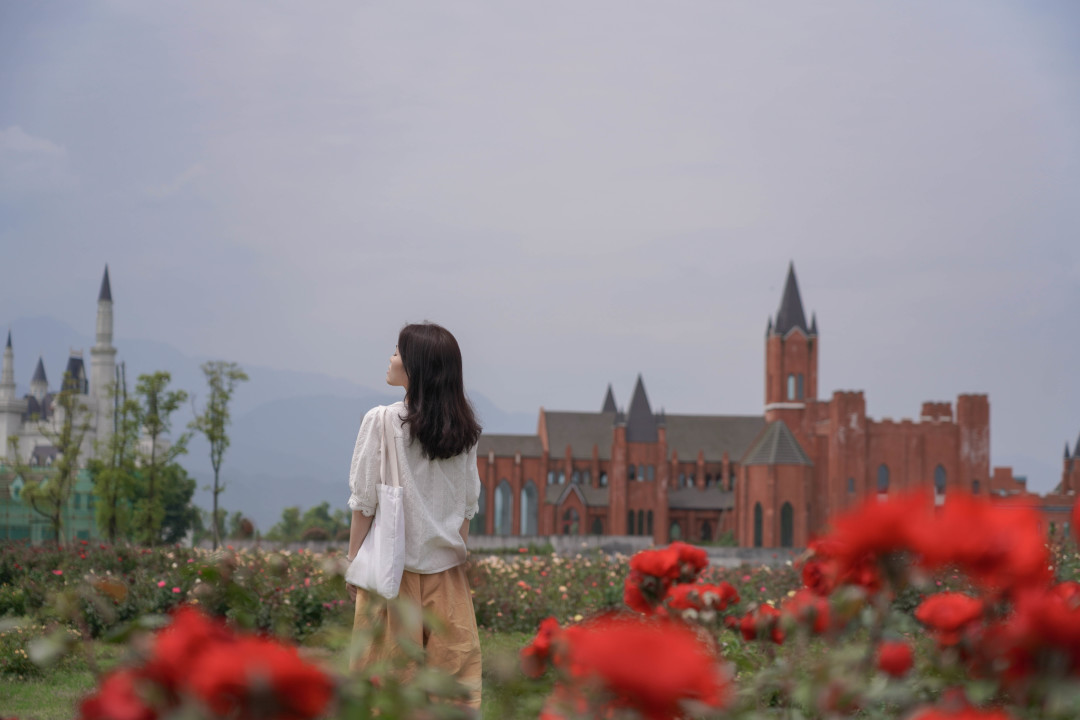
My love for flowers probably began in spring, but early summer in Mianzhu’s China Rose Valley (中国玫瑰谷) gave me a huge surprise. Located at the foot of Longmen Mountain and backed by Jiuding Mountain, the valley boasts over 10,000 acres of organic rose fields. While it’s called “Rose Valley,” the star of early summer is the Chinese rose (月季)—over 400,000 rose plants are in full bloom, with red, yellow, pink, and white flowers interweaving into an endless sea of blossoms.
H3: Castles, Lakes, and Fairy-Tale Scenery
The park’s design is thoughtful. Paths wind through the flowers, allowing you to immerse yourself without damaging the plants. In the distance, red and white castles rise against the mountain backdrop, evoking a European estate. A calm lake reflects the sky and blossoms, creating perfect photo opportunities.
The valley is ideal for families, couples, and solo travelers. You can spend hours wandering the paths, breathing in the floral fragrance, and feeling the stress of city life melt away.
[Link: Best flower-viewing destinations in Sichuan]
H2: Practical Tips for Your Mianzhu Weekend
- Best time to visit: Late April to early June for roses and mild weather.
- How to get there: Drive from Chengdu (1 hour) or take a high-speed train to Mianzhu station.
- Where to stay: Choose a guesthouse in the Chinese New Year Customs Village for an immersive experience.
- What to eat: Try local specialties like Mianzhu tofu pudding and Jiannanchun-infused dishes.
- Duration: Two days and one night is sufficient for the main attractions.
[Link: Sichuan weekend trip packing list]
H2: FAQ – Your Mianzhu Questions Answered
Q1: Is Mianzhu suitable for a family trip with children?
Absolutely. The New Year Painting Village offers interactive workshops, and the Rose Valley has plenty of open space for kids to run around. The Chinese New Year Customs Village is also stroller-friendly.
Q2: Do I need to book tickets in advance for the Rose Valley?
It’s recommended to purchase tickets online during peak season (May–June) to avoid queues. Off-peak visits are more relaxed.
Q3: Can I buy authentic Mianzhu New Year paintings on-site?
Yes. The New Year Painting Exhibition Hall and the Three-Color Painting Studio sell original artworks and creative souvenirs. You can also watch artisans at work.
Q4: Is Jiannan Old Street open year-round?
Yes, the street is open daily. The Tianyi Old Cellar workshop is accessible during business hours, usually 9:00 AM to 5:00 PM.
Q5: What’s the best way to combine all these attractions in two days?
Day 1: Arrive in Mianzhu, visit New Year Painting Village and Chinese New Year Customs Village. Stay overnight in the customs village. Day 2: Head to Jiannan Old Street in the morning, then spend the afternoon at China Rose Valley before returning to Chengdu.
Conclusion: Your Early Summer Escape Awaits
Mianzhu is more than a destination—it’s a feeling. It’s the warmth of traditional art on a whitewashed wall, the heady aroma of a thousand-year-old wine cellar, and the quiet joy of walking through a sea of roses. In early summer, when the world is green and the air is sweet, Mianzhu offers a gentle charm that lingers long after you’ve returned home.
So why wait? Pack your weekend bag, leave the city behind, and let Mianzhu’s New Year paintings, wine aromas, and flower seas write your next travel story.
Ready to explore? [Book your Mianzhu trip now] or [share this guide with a friend who loves cultural travel].
You may also like


