Carefree and Spontaneous: An October Journey to Xinjiang – A Beautiful Encounter with the Unknown
Meta Description: Discover why October is the perfect time for a Xinjiang travel adventure. Explore Sayram Lake, golden poplar forests, and local culture in this SEO-optimized guide to Northern Xinjiang. Plan your spontaneous trip today!
Introduction: Why Xinjiang Should Be Your Next Travel Destination
Before setting foot on Xinjiang's soil, the voices swirling around me were mostly about doubts concerning "safety." Some said it was too far away; others claimed it wasn't peaceful enough. These words hung like a thin mist, shrouding the courage I had mustered for my travel plans. Yet, when I stumbled upon photos online of azure lakes, golden poplar forests, and shepherds heading home beneath snow-capped mountains, the longing within me could no longer be suppressed – wasn't this exactly the scenery I had been searching for?
So, I gathered my courage, rounded up a few close friends, and divided the tasks clearly: booking the car, reserving hotels, planning the route – all done in one smooth motion. We quietly waited for departure, but hidden in our hearts was a small hope: perhaps those rumors about "unsafety" were nothing more than the imaginations of those who had never been.
As it turned out, we were right. Xinjiang might be the safest place I've ever visited – there's a police booth roughly every 100 meters, with armed officers visible everywhere; every hotel entrance has a security scanner; gas stations and rest stops are built like fortresses, allowing only the driver to enter, and even then, requiring an ID card swipe; high-definition cameras line the streets, making you feel so secure it's almost flattering. So, if you're still hesitating, please set aside those unnecessary worries.
[Link: Xinjiang travel safety tips]
Route Overview: Classic Northern Xinjiang, Avoiding the Crowds
Our itinerary followed the classic Northern Xinjiang route: entering through Yining and departing from Urumqi. Most tourists choose to enter and exit via Urumqi, but we deliberately did the opposite, successfully dodging the bulk of the crowd during the National Day holiday.

Our destinations included: Sayram Lake, the Ten-Thousand-Mu Poplar Forest, the Colorful Beach, Hemu Village, Kanas Lake, and the Anjihai Grand Canyon. With limited vacation time but boundless enthusiasm, we aimed to see and experience as much as possible, making every minute count.
[Link: Northern Xinjiang itinerary planning]
First Encounter in Yining: An Unexpected Wedding
Departing from Beijing, we arrived in Yining at around 3 PM. The sun was shining brightly here, and with a two-hour time difference, it felt like just past noon locally. After checking in and grabbing a quick bite, we picked up the car and met up with our travel companions. By then, it was already past 7 PM Beijing time, but the sun in Yining was still hanging high in the sky, as if to say, "Don't rush, there's plenty of time."
We drove aimlessly through the streets when suddenly a lively procession of cars caught our attention – it was a local wedding party. They were singing at the top of their lungs, laughter and joy spilling out, making us curious: what exactly is a Xinjiang wedding like?
We followed the procession to the entrance of a small park, where they had gathered to sing and dance, the atmosphere electric. At first, we didn't dare get too close, afraid of offending local customs. After watching from a distance for a while, a young Xinjiang guy carrying a camera noticed me. I thought he'd tell me to stop filming, but instead, he walked over and pulled me, saying, "Go up to the front and shoot!" I was stunned: "Really, it's okay?" He smiled and said, "Of course it is! Come on!" In that moment, my affection for this place skyrocketed.
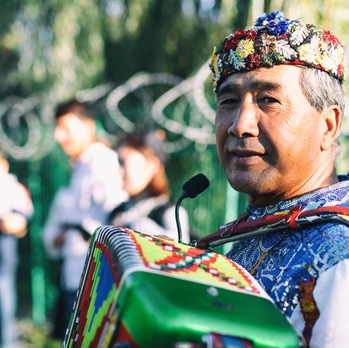
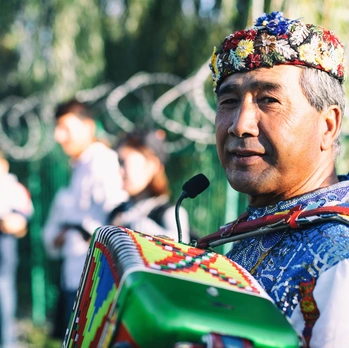
Once up close, I carefully angled myself, worried about disturbing them. But they completely ignored me – haha, that feeling of being "overlooked" only made me bolder. I approached a musician who was playing; he noticed my lens and even smiled at me. Embarrassed, I muttered a "thank you," and he nodded, returning to his music.
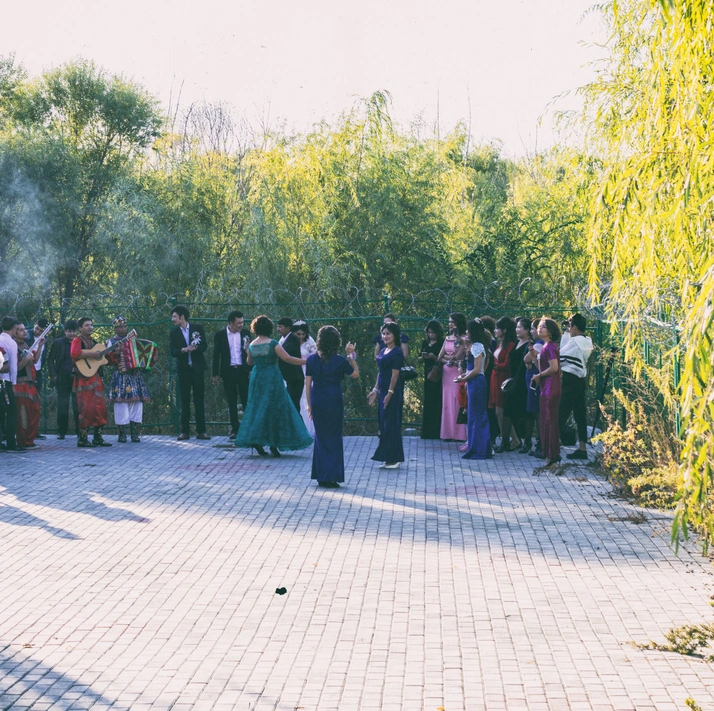
Among the wedding party, a little girl in a blue dress caught my eye. I later learned that those in blue weren't hired dancers but the bride's bridesmaids and friends. Xinjiang people truly live up to their reputation for being gifted in song and dance – the melodies were melodious, the movements graceful, utterly captivating.
The weather that day also surprised us. Beijing was already deep in autumn, but Yining was still sweltering. The singer, clad in a heavy costume and carrying a cumbersome instrument, showed no sign of fatigue, his gaze focused and profound.
As the wedding wound down, I found the little girl and her mother. With their permission, I took a few photos of her. The girl had delicate features, distinctly Xinjiang in character, and her mother was also a strikingly beautiful woman. This was undoubtedly a family to envy.
To have such a wonderful start on the very first day in Xinjiang – everything felt so serendipitous, as if it had been arranged just for us. These unexpected encounters are the truest treasures of travel.
[Link: Yining travel guide]
Sayram Lake: The Last Tear of the Atlantic
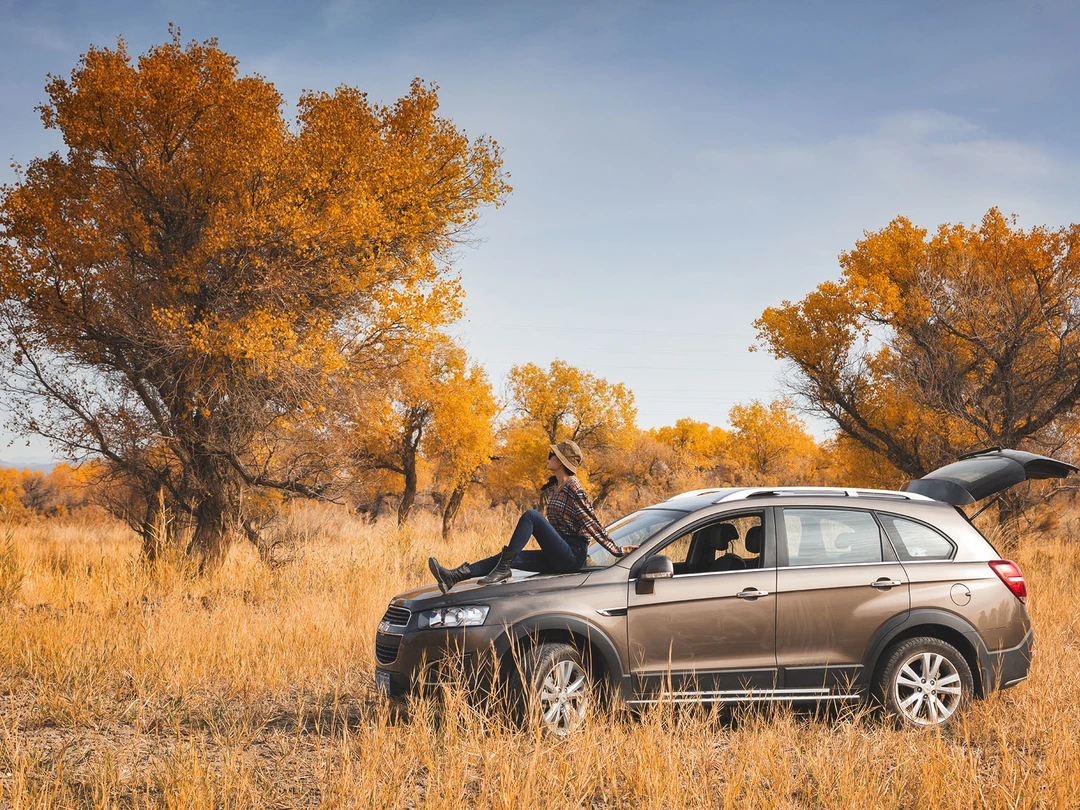
The next day, we officially set off for Sayram Lake. We had debated transportation options: hiring a private driver cost 1,200 yuan per day, plus covering the driver's meals and accommodation, totaling over 10,000 yuan for seven days – far beyond our budget. In the end, we chose to rent a car and drive ourselves. Although returning the car at a different location incurred an extra fee, it was still cheaper overall than hiring a driver. As for the vehicle, we conservatively rented a four-wheel-drive SUV, but after driving the entire route, we found that a regular sedan would have been sufficient for Northern Xinjiang's roads. For more comfort, I'd recommend a minivan – on long trips, both driver and passengers being comfortable is key.
Sayram Lake is known as "the last tear of the Atlantic." It lies on the northern slope of the Tianshan Mountains, adjacent to the Ili River Valley, situated on the windward side of the westerlies. Moisture from the Atlantic Ocean, after a long journey, is lifted by the terrain here, resulting in abundant precipitation and forming this freshwater lake. The Atlantic's water vapor can only reach this far.
Sayram Lake is backed by snow-capped mountains, surrounded by vast grasslands, with crystal-clear, azure waters. We arrived around noon, but the number of tourists was so low it hardly felt like National Day. Private vehicles aren't allowed inside the scenic area; you have to take a shuttle bus. The shuttle has northern, eastern, and grand loop routes; we focused on the eastern route – that's where the best views of Sayram Lake are.

Drones are now a travel essential. From above, the blue of Sayram Lake was even purer, the snow-capped mountains reflected in the water, so beautiful it left us speechless. We also captured five unidentified birds circling the lake, as if chasing the reflection of the sun on the water. My little drone (affectionately named "Xiao Yu") flew off on its own to play with the bigger birds – we were so into our own drama that even the machine couldn't stand it.
Using a telephoto lens with the snowy mountains as a backdrop, the photos had a unique sense of spatial compression. After the serious shots, we started fooling around: pulling out our Minion poses! Left, right, left! Close-ups, wide shots, jumping in the air – laughter echoed across the lakeshore.
Before we knew it, we had spent over two hours at Sayram Lake. Time in travel always feels both slow and fast. We still had a four-hour drive to Karamay, so we packed up our gear and reluctantly left. Before departing, we took a group photo as a memento.
[Link: Sayram Lake photography tips]
The Ten-Thousand-Mu Poplar Forest: Untouched Primitive Beauty
Day three was set for visiting the poplar forest and the Colorful Beach. Karamay's most famous attraction is the World Devil City, but we skipped it – I've seen similar landscapes before and wanted to see the primitive poplar forest instead.

Karamay's poplar forests are mainly distributed in Baikouquan, Urho, and the Xiaoguai area, about 30 kilometers from the city center. Xiaoguai? You won't even find it on most maps – it's an untouched, wild landscape that feels like stepping into a forgotten world. The golden leaves of the poplar trees glowed under the October sun, creating a stark contrast against the blue sky and white clouds. We walked among the trees, the crunch of fallen leaves underfoot, the air crisp and clean. It was a photographer's paradise.
After the poplar forest, we headed to the Colorful Beach – a stunning geological formation along the Irtysh River. The colorful layers of rock, shaped by wind and water over millennia, looked like a painter's palette. The sunset here was magnificent, painting the sky in shades of orange, pink, and purple.
[Link: Karamay attractions guide]
Hemu Village and Kanas Lake: Autumn's Masterpiece
The next few days took us deeper into Northern Xinjiang. Hemu Village is a small Tuvan settlement nestled in the mountains, known for its traditional wooden houses and stunning autumn scenery. We arrived in the late afternoon, just as the golden light of the setting sun illuminated the village. Smoke curled from chimneys, horses grazed in the meadows, and the surrounding birch forests were ablaze with color. It felt like stepping into a fairy tale.

Kanas Lake is the crown jewel of Northern Xinjiang. The lake's water changes color with the seasons – in October, it's a deep, mysterious blue-green. We took a boat ride across the lake, the cool wind in our faces, the surrounding mountains reflected in the water. The highlight was the Guanyin Platform viewpoint, offering a panoramic view of the lake and the surrounding forest. We spent hours here, just soaking in the beauty.
[Link: Kanas Lake travel tips]
Anjihai Grand Canyon: A Hidden Gem
Our final destination was the Anjihai Grand Canyon, a lesser-known but equally breathtaking site. Located about 200 kilometers from Urumqi, this canyon is carved by the Anjihai River, with steep cliffs and colorful rock formations. Unlike the more famous Grand Canyon in Arizona, this one is still relatively untouched, with few tourists. We hiked along the rim, the wind howling through the canyon, the scale of the landscape humbling us. It was the perfect end to our journey.
[Link: Anjihai Grand Canyon hiking guide]
Frequently Asked Questions (FAQ)

1. Is Xinjiang safe for tourists, especially solo female travelers?
 Absolutely. Xinjiang is one of the safest places in China for tourists. There are police booths every 100 meters, 24/7 surveillance, and security checks at all hotels and public spaces. The local people are incredibly friendly and welcoming. As with any travel destination, use common sense, but you have nothing to fear.
2. What is the best time to visit Northern Xinjiang?
 October is ideal for autumn foliage, especially poplar forests and golden birch trees. September offers pleasant weather and fewer crowds. Summer (June-August) is great for grasslands and lakes, while winter (December-February) is perfect for snow sports. For October, pack layers – temperatures can range from 5°C to 20°C.
3. How do I get around Northern Xinjiang without a tour group?
 Renting a car is the most flexible option. A regular sedan is sufficient for most roads, but a 4WD or minivan offers more comfort. Alternatively, you can hire a private driver (around 1,200 yuan/day plus meals and accommodation). Public buses connect major towns, but they are less frequent.
4. What should I pack for an October trip to Xinjiang?
 Key items include: warm layers (fleece, down jacket), waterproof shoes, a hat and gloves, sunscreen, sunglasses, a reusable water bottle, snacks for long drives, a camera/drone, and a power bank. Also bring your passport and copies of travel insurance.
5. Can I visit Xinjiang on a budget?
Yes! Budget options include: staying in hostels or guesthouses (200-400 yuan/night), eating at local noodle shops (20-30 yuan/meal), and using public transport. Renting a car with friends splits costs significantly. Entry fees for scenic spots range from 50-200 yuan.
Conclusion: Your Xinjiang Adventure Awaits
Our October journey to Xinjiang was a beautiful encounter with the unknown – from spontaneous weddings in Yining to the serene beauty of Sayram Lake, from golden poplar forests to the majestic Kanas Lake. Every moment was a reminder that the best travel experiences often come from embracing the unexpected.
If you've been hesitating about visiting Xinjiang, let this be your sign. The myths about safety are just that – myths. The reality is a land of breathtaking landscapes, warm-hearted people, and unforgettable memories.
Ready to plan your own Xinjiang adventure? Start by booking your flights to Urumqi or Yining, and don't forget to check the latest travel advisories. Pack your bags, bring your camera, and prepare for a journey that will change the way you see the world.
[Link: Book Xinjiang tours] [Link: Xinjiang travel insurance] [Link: Xinjiang packing checklist]
Safe travels, and may your journey be as carefree and spontaneous as ours!
You may also like


