Anren Ancient Town: Soaking an Entire Era of Republican China in a Covered Tea Bowl
Meta Description: Discover Anren Ancient Town, China's only Museum Town, where 27 Republican-era mansions tell tales of warlords, heroes, and Sino-Western architecture. Plan your Chengdu day trip with our complete guide. (158 characters)
In May, the Chengdu sun already carries the sharpness of early summer. I sat on the bus heading to Dayi County, the song "Su Zhong Qing" from the TV drama The Disguiser playing through my earphones. Outside the window, the scenery gradually shifted from towering skyscrapers to fields and distant mountains. This trip had one purpose only—to keep a date with the era of Republican China. Anren Ancient Town, a name that already holds warmth and tranquility.
As it happens, earlier this year, my company held an event in Dayi called "Following the Movie to the Big Market," which first drew my attention to this small city. Unfortunately, I couldn't make it due to limited spots. So, on the last two days of the May Day holiday, I grabbed my backpack without hesitation and set off alone. Sometimes, regret is just another form of fulfillment.
How to Get to Anren Ancient Town from Chengdu: Transportation Options
Getting to Anren Ancient Town offers more options than you'd expect.
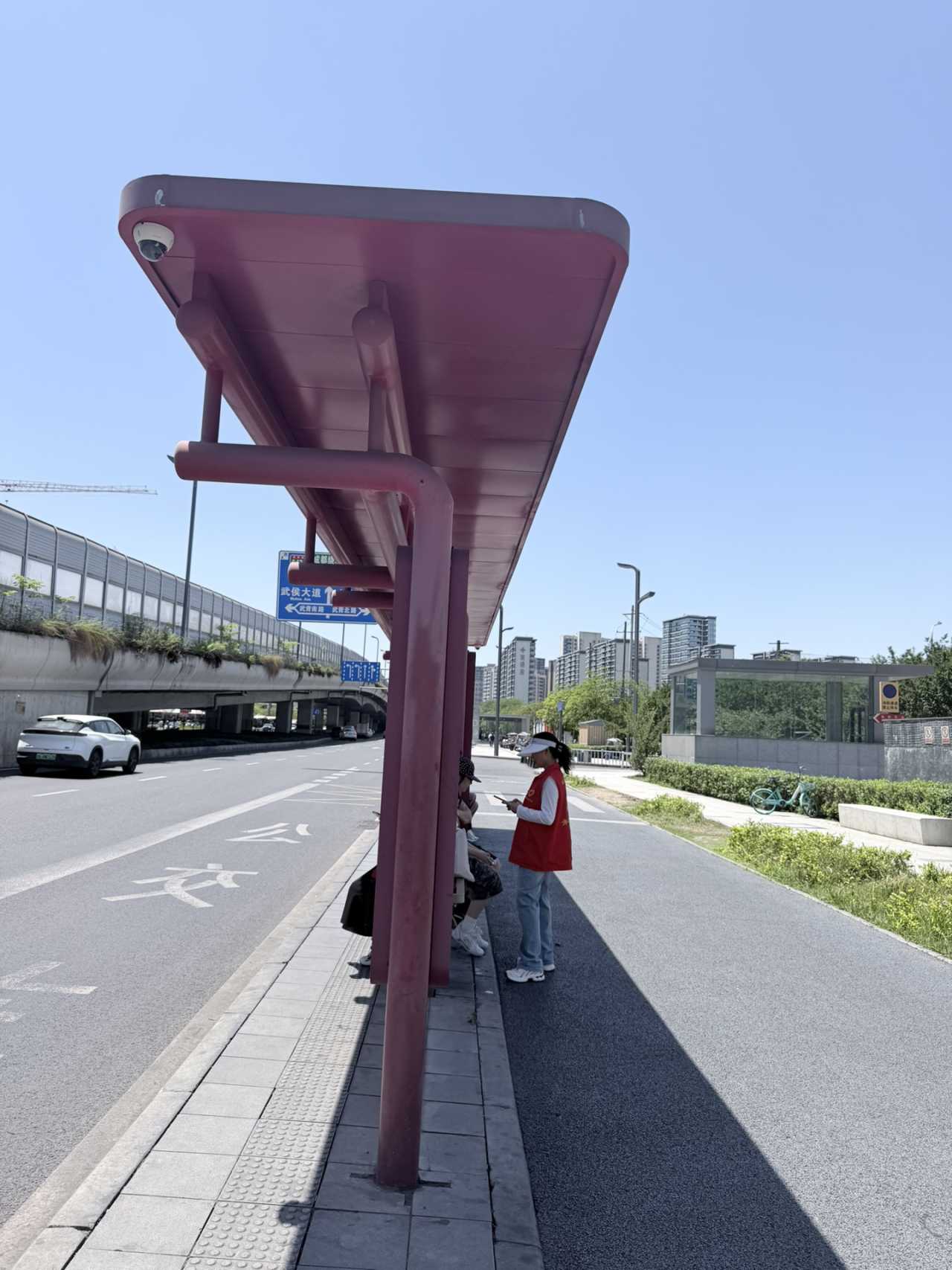
Driving yourself is, of course, the freest choice. Parking around the ancient town isn't too difficult, as long as you don't drive into the old streets. Taking the train to Dayi Station and then catching a taxi or bus is also convenient. The option I chose was a tourist shuttle under the Chengdu Public Transport Group—exit the metro at "Touji Bridge" Station, Gate D, and you'll find a direct bus to the Anren Visitor Center. But note: this line only runs on weekends and holidays.
I originally planned to catch the 1:00 PM bus, but I dawdled and arrived at the stop at 1:05 PM. Just as I was fretting about waiting for the next one, I spotted a staff member in a red vest. I hurried over to ask—the bus hadn't left yet! After a ten-minute wait, the bus slowly pulled up. At that moment, I felt that all the good luck for this trip had been used up that afternoon.
[Link: How to plan a weekend trip from Chengdu to Dayi County]
First Impressions of Anren: A Breathing Museum of Republican China
Anren Ancient Town, just 39 kilometers from downtown Chengdu, hides over 1,400 years of historical depth. Its name comes from the Confucian Analects phrase "The benevolent find peace in benevolence." It's a nationally recognized historical and cultural town and Sichuan's first National 5A-level ancient town scenic area. But what truly put it on the map is its identity as "China's Museum Town"—the only museum-themed town in the country certified by the China Museum Association.
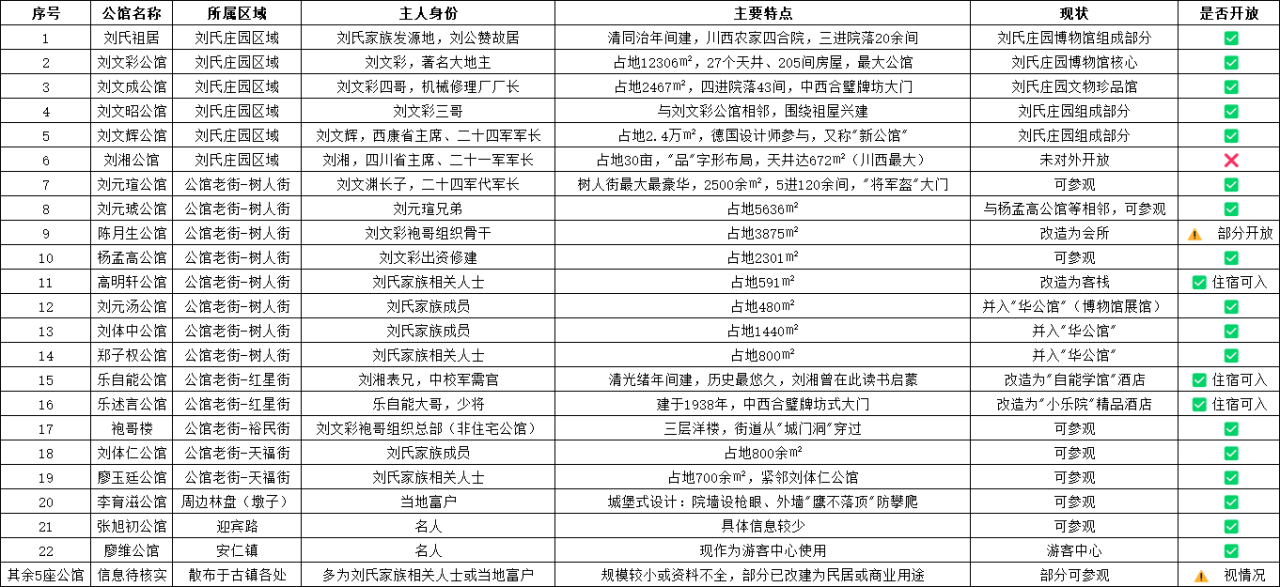
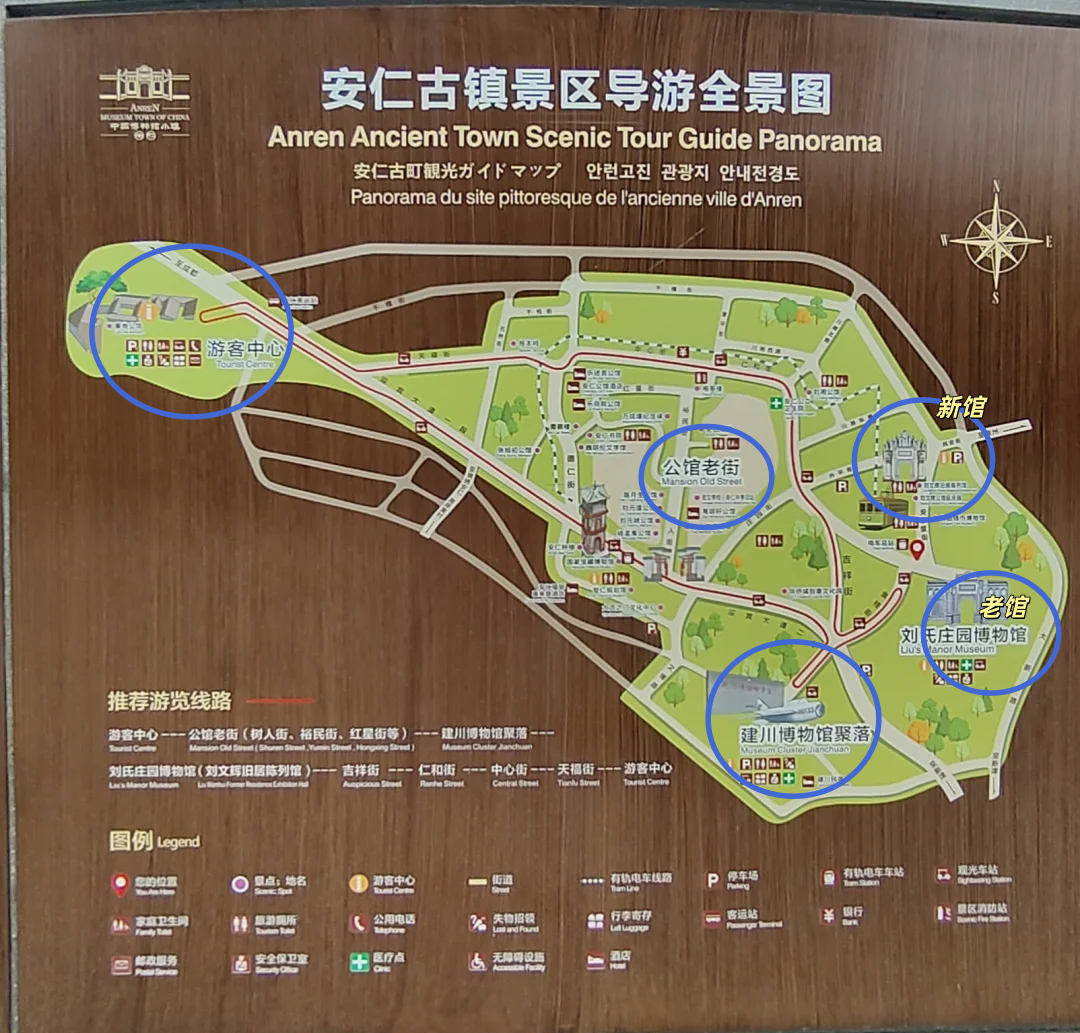
Here, 27 mansion-style buildings from the Republican era survive (historically, there were as many as 56), each a living fossil of Sino-Western architectural fusion. Three core attractions—the Liu Family Manor Museum, the Jianchuan Museum Cluster, and the Mansion Old Street—form the soul and skeleton of Anren.
The ancient town itself doesn't charge an entry fee, but the Liu Family Manor and Jianchuan Museum require separate tickets. The former costs 40 yuan for the old hall and 40 yuan for the new hall, with a combined ticket at 70 yuan; the latter is 60 yuan. The prices aren't high, but the content is absolutely worth it.
[Link: Top 10 museums to visit in Sichuan Province]
Liu Family Manor Museum: The Rise and Fall of a Clan, a Microcosm of an Era
The Three Lius: Warlord, Landlord, and Anti-Japanese General
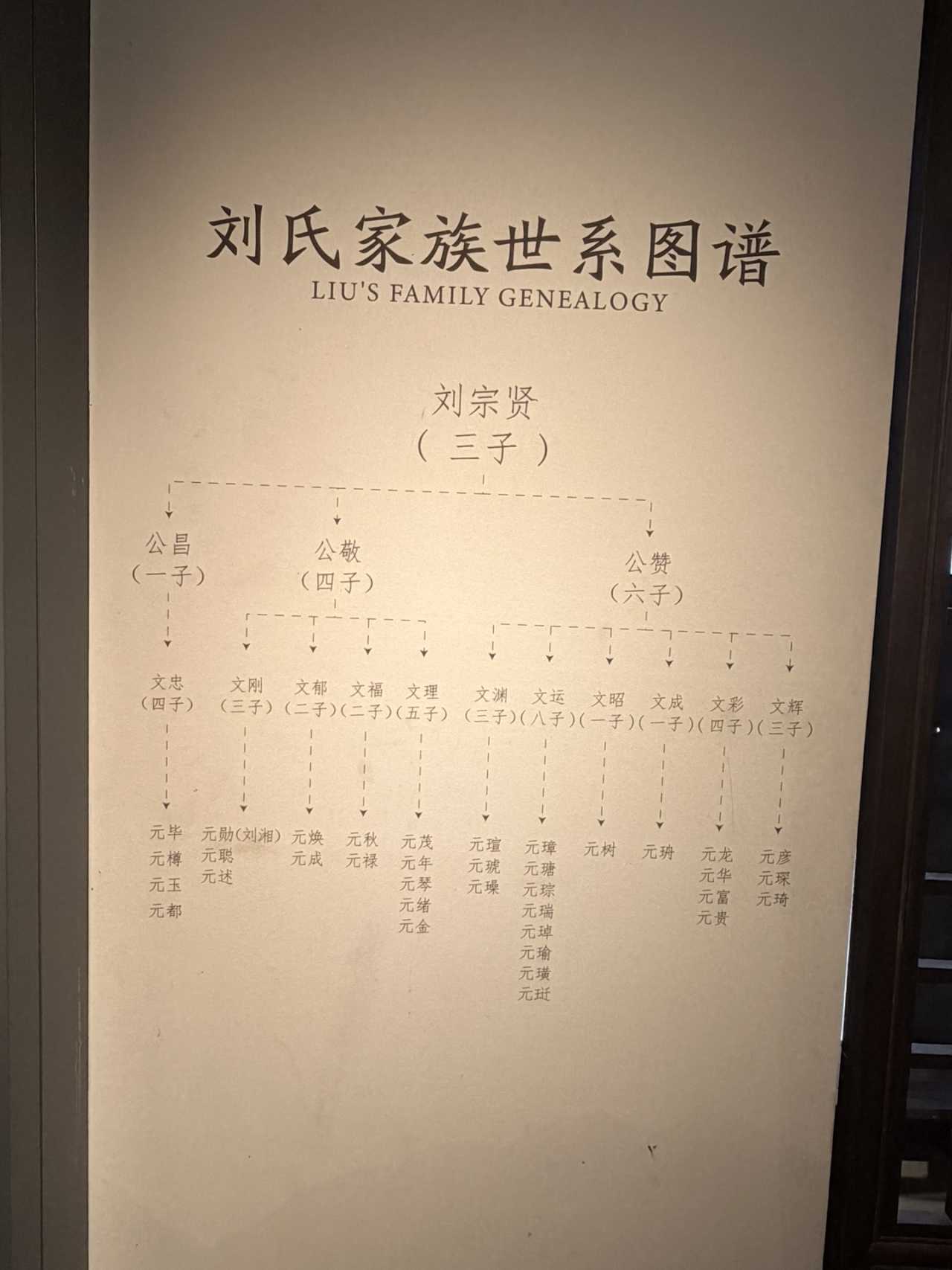
Before stepping into the Liu Family Manor, it's essential to sort out the Liu family's "domestic affairs." Liu Wencai, Liu Wenhui, and Liu Xiang—these three names are thunderous in modern Sichuan history. They were family, and quite closely related.
Liu Wencai was the fifth son of Liu Gongzan. Originally, his family owned just over 30 mu (about 5 acres) of land and a small distillery—at best, a "wealthy household," far from being a "landlord." His rise to power relied entirely on his full-blooded younger brother, Liu Wenhui. Liu Wenhui was exceptionally intelligent from a young age. At 13, he falsified his age to enter the Chengdu Army Primary School, later received a full scholarship to the Baoding Military Academy, and after graduation, rapidly rose under the patronage of Liu Xiang. In the 1920s, Liu Wencai was appointed by his brother as the General Director of the Southern Sichuan Tax Bureau, governing 81 counties. Over a decade, he concocted over 150 types of exorbitant taxes and levies, including absurd ones like "toilet tax" and "hoe tax," and even pre-collected land taxes up to 1957. He also forced farmers to grow opium poppies, monopolized opium tax revenue, and raked in an annual income of 8 million silver dollars.
In 1933, Liu Wenhui was defeated by Liu Xiang in the "Battle of the Two Lius." Liu Wencai fled back to Anren Town with 4,500 boxes of gold and silver treasures, frantically annexing land until he owned over 12,000 mu (about 2,000 acres) of fertile fields and 29 mansions. But people are always complex. He also did good deeds—spending 350 million French francs to build the Wencai Middle School, the largest and most well-equipped in western Sichuan, offering tuition waivers, room, and board to poor students. He also funded the construction of the road from Dayi County town to Anren Town. To this day, that school continues to nurture talent.
As for Liu Xiang, this "King of Sichuan" lived an even more legendary life. Born into poverty, he worked as a tailor's apprentice before secretly enrolling in military school against his family's wishes, embarking on a military career. He was taciturn and steady, brave in battle, and lived frugally—no womanizing, gambling, or opium. He rose quickly through the ranks. After unifying all of Sichuan in 1933, he became the undisputed "King of Sichuan." But his greatest achievement was leading the Sichuan Army in the War of Resistance against Japan. After the Marco Polo Bridge Incident in 1937, he volunteered his services, pledging at a national defense meeting: "Sichuan can send 300,000 troops to fight, supply 5 million conscripts, and provide several million dan (a unit of grain) of food." Despite being ill, he went to the front lines, leaving behind his famous last words: "Fight to the end, never waver; until the enemy withdraws from the national borders, the Sichuan Army will never return home." In 1938, Liu Xiang died of illness in Hankou at just 48 years old. Both the Nationalist and Communist parties held him in extremely high regard.
The Old Hall: From "Negative Textbook" of Class Education to Historical Site
The visitor center is right next to a Liao Wei Mansion, which you can visit along the way. Then take the scenic area shuttle (5 yuan per ride) and tell the driver to drop you at the Liu Family Manor.
The Liu Family Manor is divided into the old hall and the new hall. The old hall includes the Liu Wencai Mansion, the Cultural Relics and Treasures Hall (which houses the Liu Wenzhao and Liu Wencheng Mansions), and the Liu Family Ancestral Home. The new hall consists of the Liu Wenhui Mansion (Yanqing Garden) and the Liu Wenhui Former Residence Exhibition Hall. The layouts of the two are essentially the same—they were built by Liu Wencai for his brother Liu Wenhui, but Liu Wenhui never moved in due to the impending Communist takeover, and later donated them to the state.
The old hall's navigation map is clearly designed and logically laid out, with a one-way visitor route that avoids backtracking—a commendable feature. The opulence of the Liu Wencai Mansion is staggering—a grand hall, Western-style reception room, Chinese-style reception room, garden, inner courtyard, ancestral hall, Buddhist shrine, study, porcelain room, bedroom, concubine's bathroom, summer smoking room, osmanthus pavilion, feng shui mound, coffin room, rear garden, moon-viewing terrace, maiden's tower, pleasure palace—it has everything. The most jaw-dropping piece is Liu Wencai's "Nine-Dragon Embracing Pillar Bed," covering 9 square meters. The six pillars outside the bed are inlaid with large golden dragons made of gold leaf—in ancient times, only the emperor could enjoy such treatment.
[Link: The best preserved Republican-era mansions in China]
Jianchuan Museum Cluster: A Deeper Dive into Modern Chinese History
While the Liu Family Manor focuses on one family's story, the Jianchuan Museum Cluster offers a broader perspective on 20th-century China. Founded by collector Fan Jianchuan, this sprawling complex includes multiple themed museums covering the War of Resistance, the Red Army's Long March, folk artifacts, and earthquake relief. It's a must-visit for history buffs and a perfect complement to the manor tour.
Tip: Allocate at least 2–3 hours for the Jianchuan Museum Cluster. The "War of Resistance" hall alone contains over 10,000 artifacts, including letters, weapons, and personal belongings of soldiers.
Mansion Old Street: Strolling Through Time
After the museums, wander into the Mansion Old Street. This is where the "living museum" concept truly shines. The street is lined with restored Republican-era buildings housing cafes, souvenir shops, and local snack stalls. Don't miss:
- Liu's Tofu Pudding – a silky, savory local specialty
- Hand-pulled sugar figures – traditional folk art
- Vintage photography studios – dress in Republican-era costumes for a portrait
The street is especially atmospheric in the late afternoon, when golden light filters through the carved wooden windows and the crowds thin out.
FAQ: Anren Ancient Town Travel Tips
Q: Is Anren Ancient Town suitable for a day trip from Chengdu? A: Absolutely. It's only 39 km from downtown Chengdu, and with direct shuttle buses on weekends, you can easily visit the Liu Family Manor, Jianchuan Museum, and Old Street in one day. For a more relaxed experience, consider an overnight stay.
Q: What is the best time of year to visit Anren? A: Spring (March–May) and autumn (September–November) offer mild weather and clear skies. Summer can be hot and humid, while winter is chilly but less crowded. The May Day and National Day holidays are peak seasons, so book accommodation early.
Q: Are there entry fees for Anren Ancient Town? A: The ancient town itself is free to enter. The Liu Family Manor charges 40 yuan per hall (70 yuan for a combined ticket), and the Jianchuan Museum charges 60 yuan. Discounts are available for students and seniors.
Q: How long should I spend at the Liu Family Manor? A: Plan for 2–3 hours to thoroughly explore both the old and new halls, including the Liu Wencai Mansion, the Cultural Relics and Treasures Hall, and the Liu Wenhui Former Residence. The "Nine-Dragon Embracing Pillar Bed" alone is worth 20 minutes of awe.
Q: What should I wear and bring? A: Comfortable walking shoes are essential—the manor grounds are large and involve stairs. Bring a water bottle and sun protection in summer. A light jacket is useful in air-conditioned museum halls. Don't forget your camera; the architecture is incredibly photogenic.
Your Turn: Step into the Era of Republican China
Anren Ancient Town is more than a tourist attraction—it's a time capsule that preserves the complexity of an entire era. From the extravagant "Nine-Dragon Embracing Pillar Bed" of a landlord-warlord to the humble last words of a dying general, every corner tells a story of ambition, greed, sacrifice, and resilience.
Whether you're a history enthusiast, an architecture lover, or simply someone seeking a quiet escape from Chengdu's urban bustle, Anren offers an experience that lingers long after you leave. The covered tea bowl of time is still warm—all you have to do is take a sip.
Plan your visit today. Check the Chengdu Public Transport Group's weekend shuttle schedule, pack your backpack, and keep your date with history. Anren is waiting to pour you a cup of the past.
[Link: Sichuan tourism packages with Anren Ancient Town itinerary]