A Southern Sichuan May Chronicle: From the Leshan Giant Buddha to the Luojishan Hot Springs — A Hardcore Traveler’s Romantic Expedition
Meta Description: Discover a 5-day Southern Sichuan itinerary from Leshan Giant Buddha to Luojishan hot springs. Expert tips for May Day crowds, no-queue strategies, and hidden gems for hardcore travelers.
Introduction: Why Southern Sichuan Demands Your Footsteps
The world is vast, and we must measure it with our own footsteps. In May, southern Sichuan offers a 71-meter-tall Buddha’s toe to gaze up at, a 40-story-high hot spring waterfall to climb, golden summit light to illuminate your morning, and a Qionghai sunset to spread out before you. This five-day, four-night hardcore journey began in Chengdu’s fiery culinary scene, heading south to turn distant horizons into stories.
Whether you're a seasoned traveler seeking the Leshan Giant Buddha no-queue strategy or a first-timer dreaming of Emei Golden Summit at dawn, this guide delivers actionable intel—not fluff. Let’s dive into the Southern Sichuan travel guide that balances adrenaline with awe.
Pre-Departure: Chengdu’s Spicy Overture
As Beijing’s willow catkins still swirled in the air, we landed in the twilight at Shuangliu Airport. The flight was delayed by 40 minutes—but so what? The neon lights of Chunxi Road were already ablaze, and the spicy aroma of 鸡毛菜 (chicken feather greens) wafted through several streets. The first lesson of this trip: turn waiting into anticipation.
Transport Tip: From Shuangliu Airport to Chunxi Road, the subway is much faster than a taxi. Don’t hesitate.
We arrived in Chengdu just after 9 PM, dragging our suitcases to 将军府壹号鸡毛菜 (General’s Mansion No. 1 Chicken Feather Greens) before 10 PM. We ordered the 🌶🌶🌶 spicy chicken and cold-pot rabbit, naively thinking we could get it mild—only to end up dipping it in tea and eating it with plain rice. My inability to handle spice is my own problem, but the flavor was genuinely incredible. The large bowl of chicken cold noodles was the best dish of the meal—highly recommended.
Accommodation Recommendation: Four Points by Sheraton Chengdu, Chunxi Road. Located in the core commercial district with convenient transport, it’s ideal as a transit hub. [Link: Best hotels near Chunxi Road Chengdu]
Day 1: Leshan Giant Buddha—A Millennium of Vigilance
Paying Homage to the World’s Largest Cliff Buddha
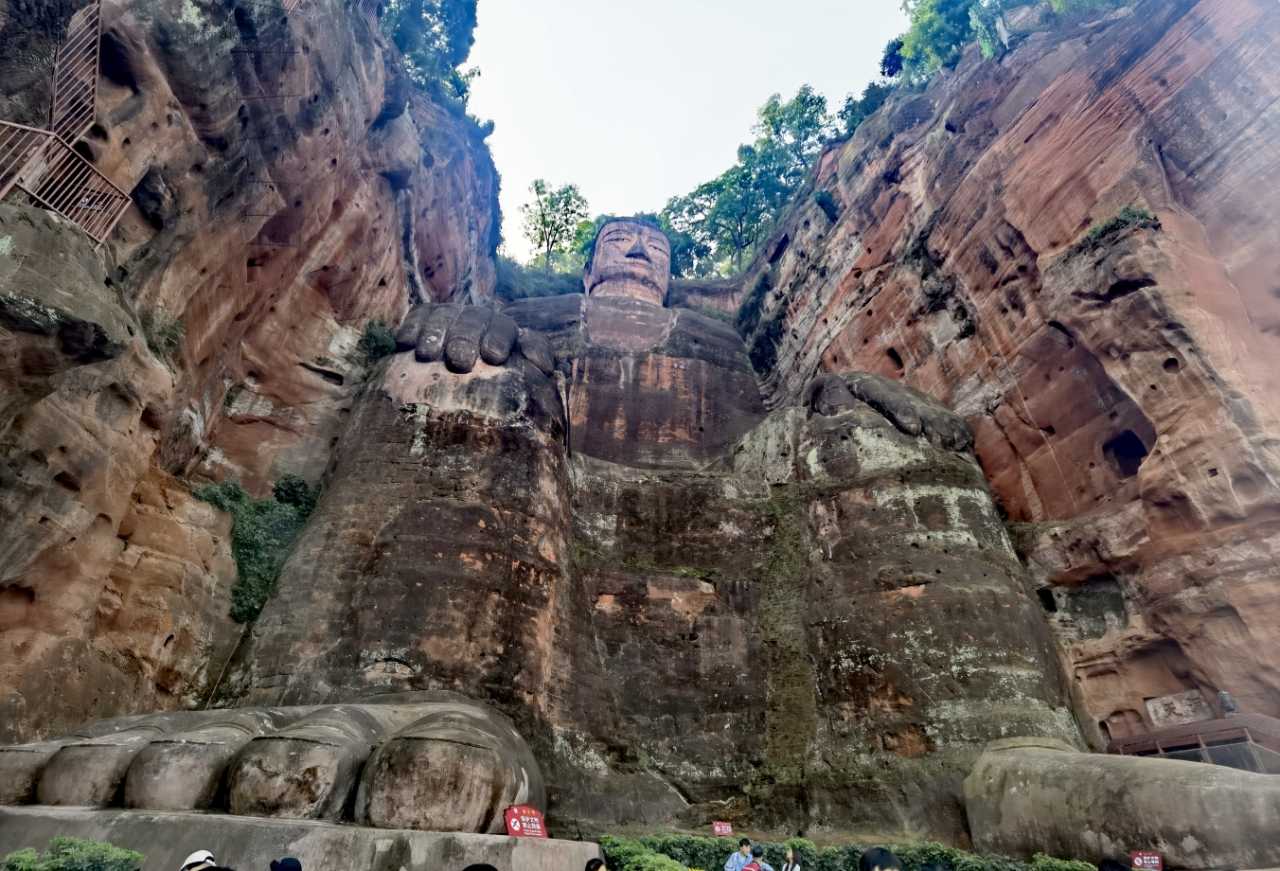
The Leshan Giant Buddha, the world’s largest现存露天摩崖石刻坐佛 (existing露天 cliff-carved seated Buddha), stands 71 meters tall, built against the mountain and overlooking the confluence of the Min, Qingyi, and Dadu Rivers. Tang Dynasty craftsmen spent 90 years (713–803 AD) carving it. Inside the Buddha’s body, a hidden drainage system channels rainwater through its hair buns—after a thousand years of wind and rain, it remains steadfast.
May Day No-Queue Strategy: The 6:30 AM Hack
To avoid the crowds, we left Chengdu at 6:30 AM, eating breakfast on the high-speed train. During holidays, you must snap up tickets at the exact release time!
- 07:35 Arrived at Leshan Station. Right in front of the exit, find the bus terminal, enter the main gate, turn right to the storage lockers—free luggage storage.
- Took a taxi to Leshan Giant Buddha Parking Lot 6, Entrance 2. Weaved through alleys and a restaurant kitchen to reach the North Gate. Ticket price: 70 RMB. At just past 8 AM, no queue—smooth entry.
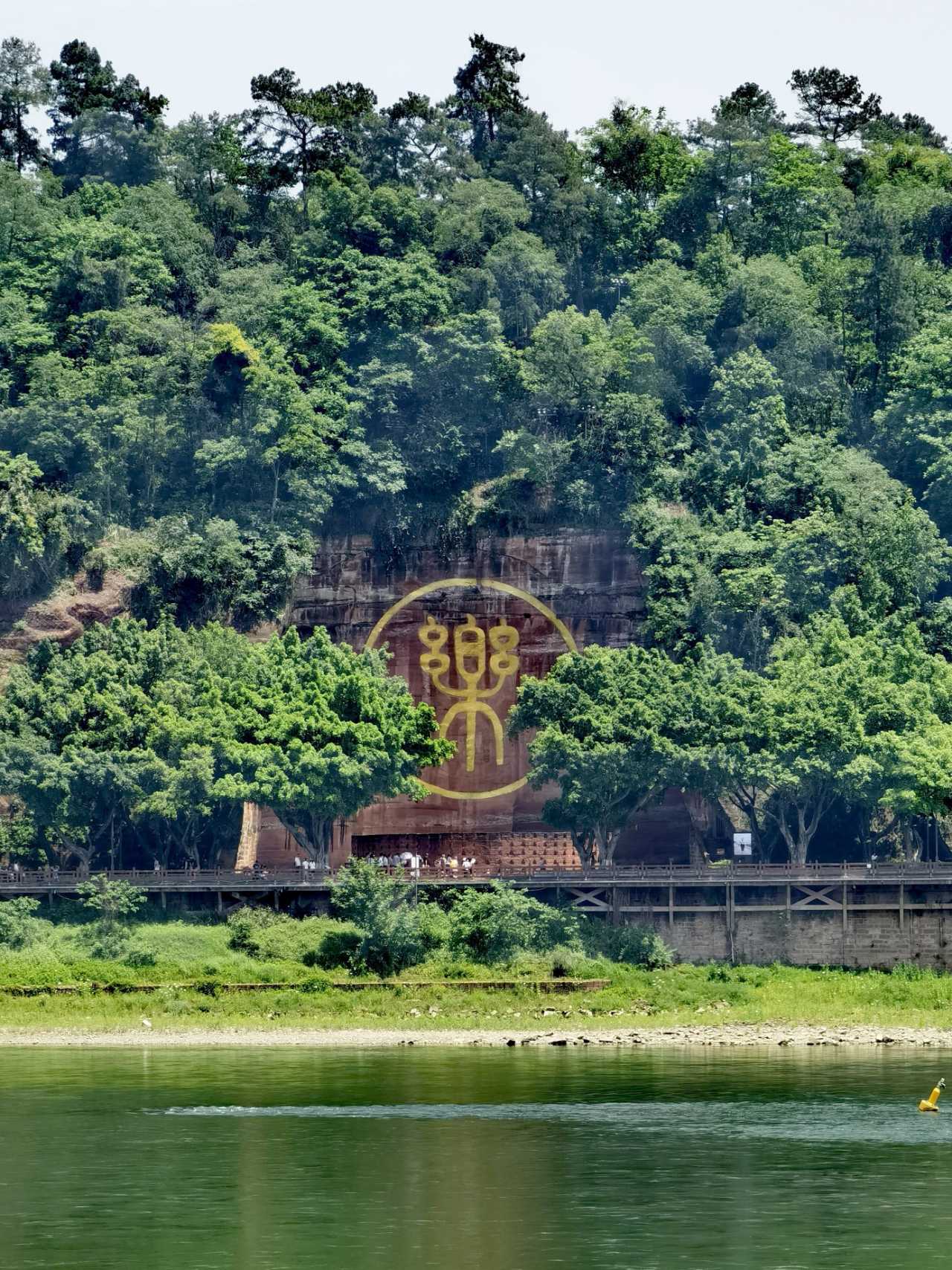
- Tip: Once at the North Gate, don’t enter immediately. Continue walking to snap a photo of the giant “乐” (Le, meaning “happiness”) character—it’s incredibly photogenic!
- Inside the park, climbed stairs, passing Su Shi’s inscribed characters “佛” (Buddha), “回头是岸” (turn back is the shore), and “龙湫虎穴” (dragon pool, tiger cave).
- 08:23 Arrived at Guo Moruo’s inscribed “乐山大佛” (Leshan Giant Buddha), with the couplet “大江东去,佛法西来” (The great river flows east, the Buddha’s law comes west). Finally saw the Buddha’s head! Filmed a blessing video, hoping everything goes smoothly.
- 08:30 From the head to the feet, entered the descending passage. Not too crowded, but the path narrowed, causing minor congestion.
- 08:58 Returned from the feet. Found it was a one-way route, unable to go back the same way. Exited via the “Leshan Main Gate South Gate” direction.
- 10:00 Boarded the sightseeing boat with no queue—super fast. Recommended: second deck, right side. The boat stopped for several minutes by the Buddha. Morning photos are backlit; afternoon is better, but with queue risk.
- After disembarking, activated walking mode: Leshan Giant Buddha Visitor Center → Minjiang First Bridge → shared e-scooter → Shangzhongshun Special Street for lunch.
Boat Ticket Purchase Guide: Beat the Sold-Out Panic
Tickets go on sale at midnight the day before. During May Day, tickets were sold out by 00:02. Backup plan: Go to Wuyou Pier to buy tickets on-site—short queue, very fast. Or buy a combo ticket via the WeChat mini-program: boat + root carving museum for 99.9 RMB, or boat + AR glasses for 120 RMB.
Food Recommendations: 清真海氏跷脚牛肉 (Halal Hai’s Crossed-Leg Beef), 甜皮鸭 (sweet-skin duck), 钵钵鸡 (bobo chicken). At Emeishan, 老格篼土菜馆 (Old Ge’s Local Cuisine)—the临江鳝鱼丝 (riverfront eel shreds) and 土船鱼 (local boat fish) are exceptional. [Link: Leshan food guide must-try dishes]
Day 2: Emei Golden Summit—Dawn Expedition
Ascending Emei Mountain: A Sacred Pilgrimage
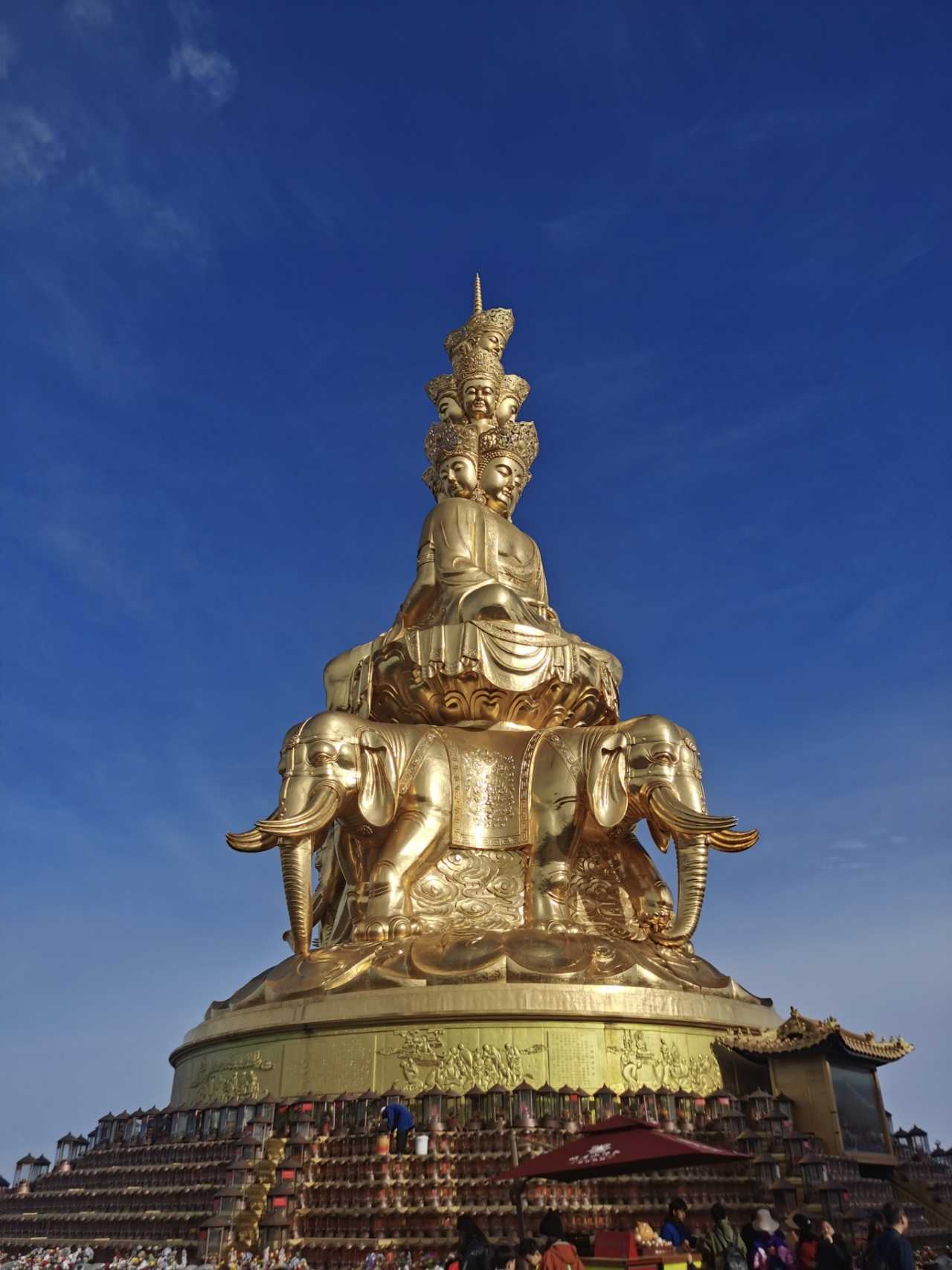
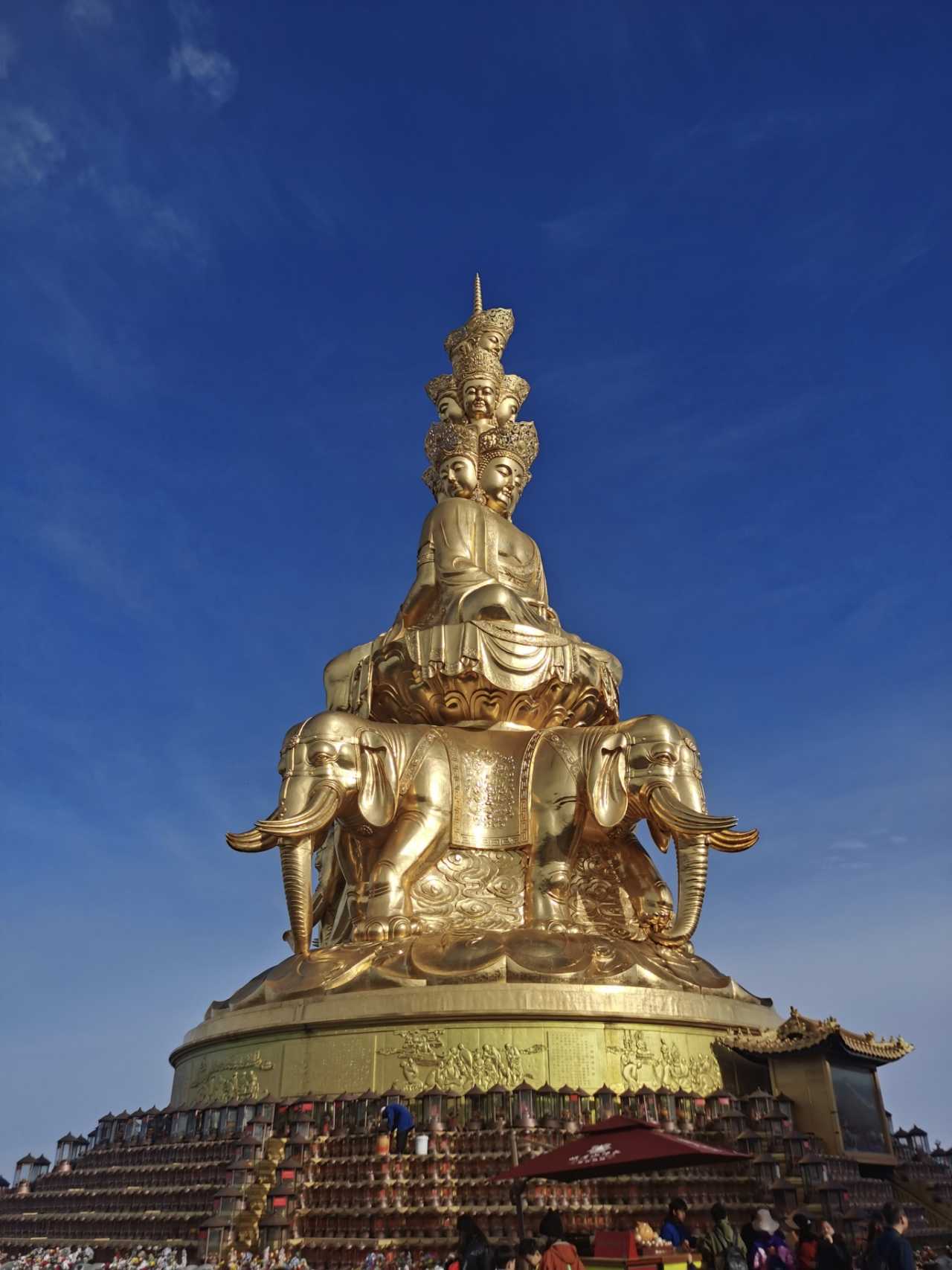
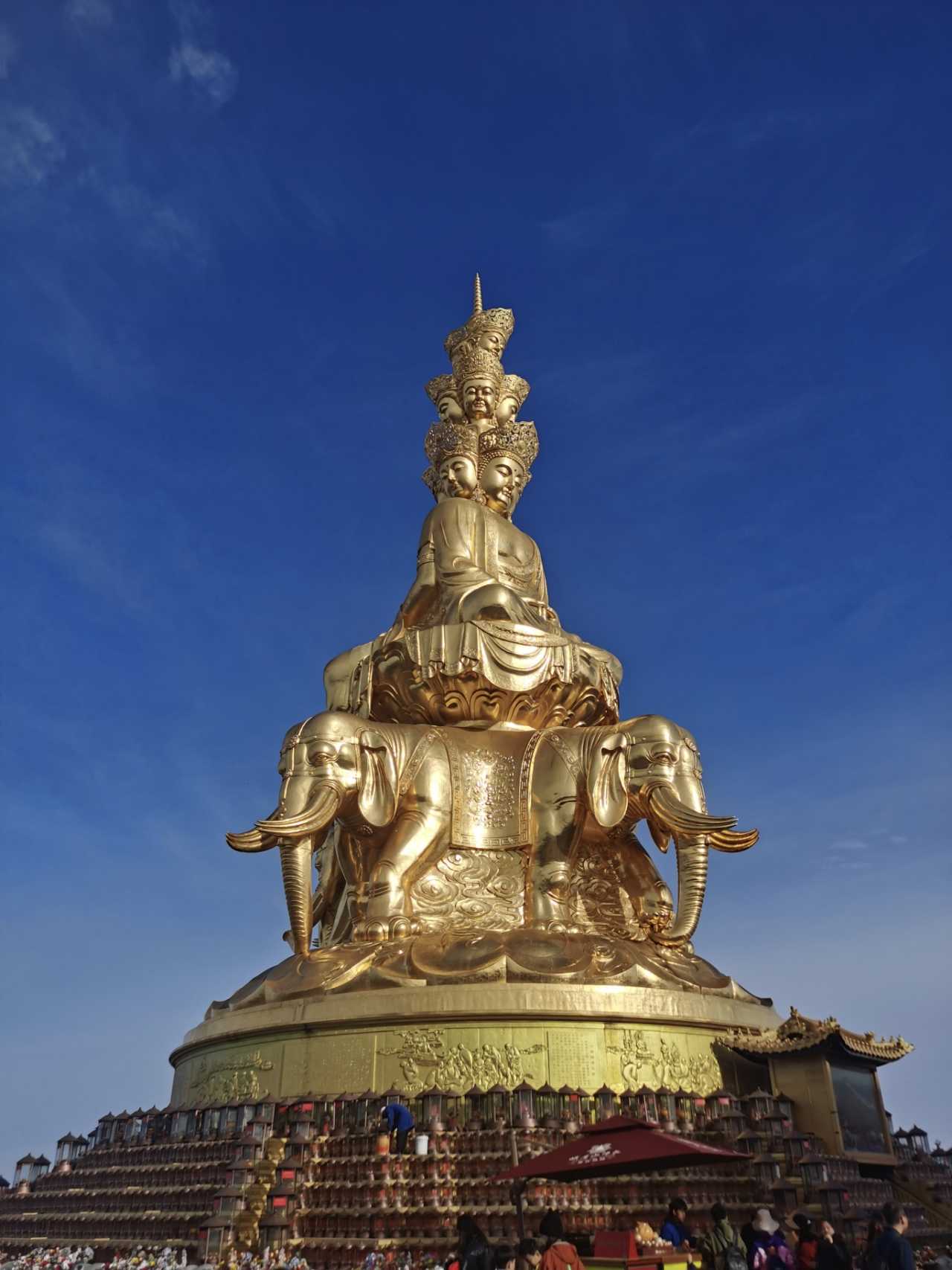
Emei Mountain, one of China’s four sacred Buddhist mountains, has its main peak, Wanfoding, at 3,099 meters. The Golden Summit’s Ten Directions Samantabhadra statue stands 48 meters tall, appearing and disappearing in the sea of clouds—on clear days, a “Buddha’s halo” surrounds it; on rainy days, “sacred lanterns” flicker.
Tickets and Transport: Entrance 160 RMB + bus 90 RMB + upward cable car 65 RMB + downward cable car 55 RMB = 370 RMB/person. During peak season, purchase tickets in advance!
May Day No-Queue Chronicle: The 4:40 AM Wake-Up
- 04:40 Alarm rang, kicking off the walking marathon.
- 05:05 Departed from Emeishan Grand Hotel, walked 3 minutes to the bus terminal. Scanned ID card—almost no queue. The secret during holidays is only getting up early—no exceptions.
- 05:11 Bus departed for Leidongping, among the first batch.
- 07:00 Arrived at Leidongping, began walking uphill. A bit cold on the mountain; a light down jacket was perfect.
- 07:30 Arrived at Jieyin Temple, took the cable car uphill, queued about 10 minutes.
- 07:50 Climbed to the incense offering area, finally saw the Ten-Faced Samantabhadra! The 48-meter golden statue shimmered in the dawn light, its ten faces gazing in all directions, seated on a six-tusked white elephant stepping on lotus flowers—the awe instantly surged our blood, sweeping away fatigue.
- Took photos, prayed, bought fridge magnets and postcards, collected the Da’e Mountain Summit Certificate, stamped the Buddha character seal, received lucky money candy and cards, and even saw a circular halo (solar halo).
- 09:35 Began descending. The uphill crowd had already arrived, shoulder-to-shoulder on the stairs. The downward cable car queue was short, but the uphill queue snaked endlessly—we felt smug.
- 10:25 The downhill bus queue at Leidongping was a long dragon, about 30 minutes to board. Given the massive crowds, we skipped intermediate attractions and returned directly.
- 12:35 Arrived at Baoguo Temple, took a quick look, and returned to the hotel at 13:05.
Food Recommendations: 大众翘脚牛肉馆 (Popular Crossed-Leg Beef Restaurant)—tender beef crossed-leg beef, steak pot, beef pie. Also, 正宗乐山王鸭子 (Authentic Leshan Wang’s Duck) for sweet-skin duck. [Link: Emei Mountain accommodation near Baoguo Temple]
Day 3: Xichang’s Jacaranda—A Purple Fairy Tale
Flower-Chasing Chronicle: When Jacaranda Takes Over the City
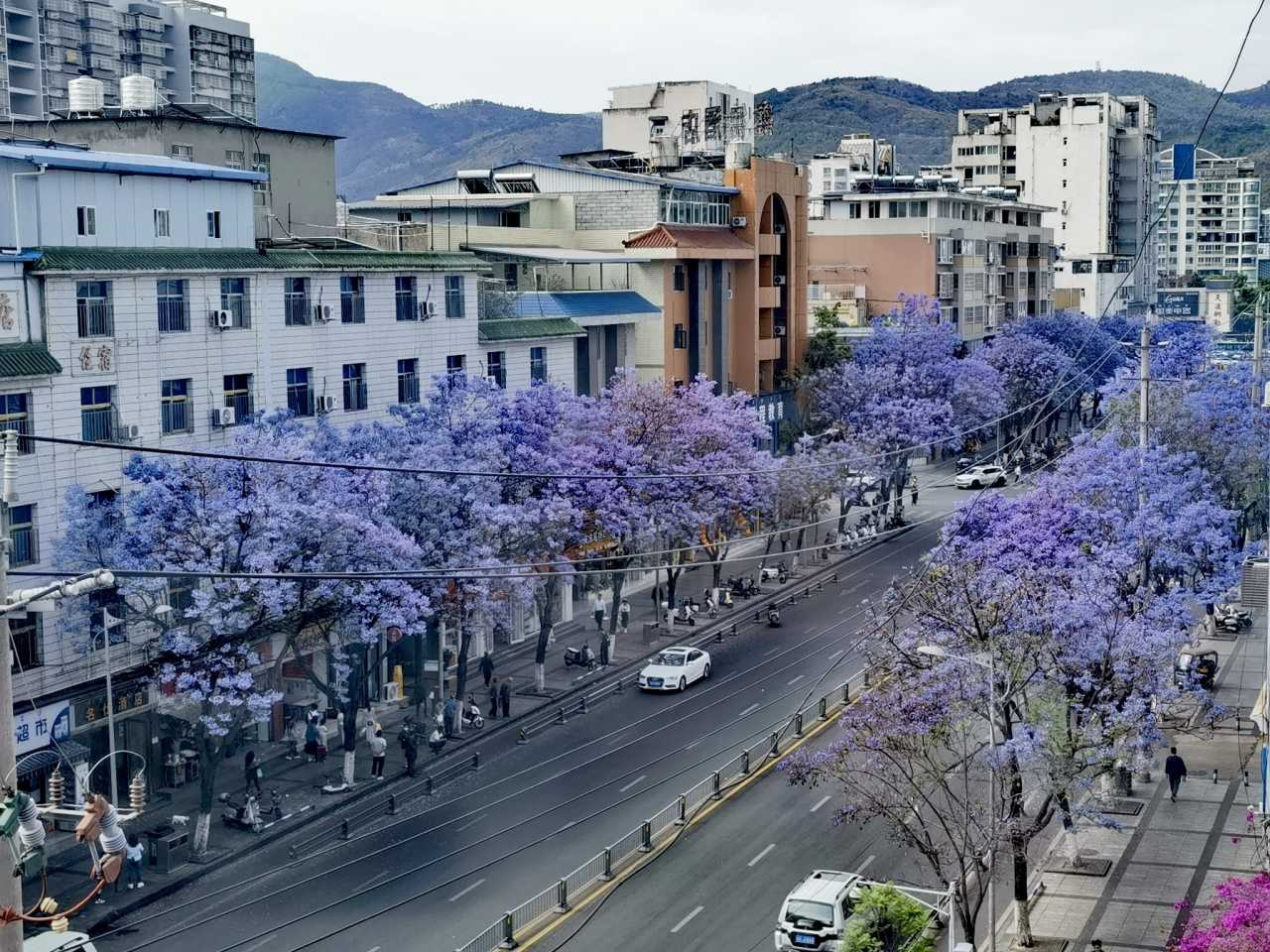
Xichang, known as the “Moon City” for its 240 days of annual sunshine, transforms into a purple ocean from April to May along streets like Hangtian North Road and Jianchangfang. Jacaranda trees bloom like clouds and mist, stretching for kilometers.
- Took a taxi to Hangtian North Road (set destination to “Xichang Tengyun Building Hotel”)—the most famous photo spot, with roads specially closed for tourists. Unfortunately, we arrived close to 9 AM, and it was packed.
- Switched to the Xichang Qionghai Zhixuan Holiday Inn, where jacaranda trees and an overpass created a layered composition.
- Jianchang Road’s jacaranda had a shy, delicate charm, petals falling like snow and covering car roofs.
- Tangyuan’s ancient-style buildings looked stunning against the blue sky and blossoms.
- Lunch at 桑记凉粉 (Sang’s Cold Noodles)—a local favorite.
Pro Tip: For the best Xichang jacaranda photography spots, arrive by 7 AM or visit on a weekday. The purple haze is worth the early alarm. [Link: Xichang travel itinerary 3 days]
Day 4: Luojishan Hot Springs—A Geothermal Reward
The 40-Story Waterfall Climb
After three days of hardcore trekking, the Luojishan Hot Springs offered the ultimate reward. Nestled in the mountains near Xichang, this natural hot spring features a 40-story-high waterfall cascading into thermal pools. The climb to the top is steep but manageable, and the view from the summit pool—steam rising against pine forests—is pure magic.

What to Expect: - Temperature: Pools range from 38°C to 42°C, perfect for soaking sore muscles. - Best Time: Late afternoon for golden hour light on the waterfall. - Cost: 120 RMB per person, including access to all pools and changing facilities.
Packing Tip: Bring a waterproof phone pouch; the steam and spray are relentless.
Day 5: Qionghai Sunset—The Grand Finale
A Lake to End All Lakes
Qionghai, Xichang’s shimmering freshwater lake, is best experienced at sunset. We rented e-bikes and cycled the 30-kilometer perimeter, stopping at fishing villages and pagodas. The sky turned peach, then violet, then deep indigo—a fitting end to a Southern Sichuan road trip that balanced grit and grace.
Dinner Recommendation: 彝族火盆烧烤 (Yi-style Firepit BBQ) near the lake—grilled pork ribs with chili powder and a side of cold beer. Unforgettable.
Frequently Asked Questions (FAQ)
1. Is the Leshan Giant Buddha worth visiting during May Day?
Absolutely—if you follow the no-queue strategy. Arrive at North Gate by 8 AM, and you’ll beat 90% of the crowd. The sightseeing boat is a must for the full perspective.
2. How do I get from Leshan to Emei Mountain?
 Take the high-speed train from Leshan Station to Emeishan Station (15 minutes, 11 RMB). Then take bus 5A or a taxi (20 minutes) to Baoguo Temple, the mountain’s base.
3. What’s the best time to see jacaranda in Xichang?
Late April to mid-May. Hangtian North Road and Jianchang Road are the top spots. Go on a weekday before 8 AM for crowd-free photos.
4. Are the Luojishan hot springs family-friendly?
Yes. There are shallow pools for children and deeper ones for adults. The waterfall climb is optional—you can enjoy the lower pools without it.
5. Can I do this itinerary without a car?
Yes. Trains and buses connect Chengdu, Leshan, Emei, and Xichang. Within cities, use taxis, e-scooters, and public buses. We did it car-free.
Internal Linking Suggestions
- [Link: Best time to visit Leshan Giant Buddha]
- [Link: Chengdu to Leshan high-speed train guide]
- [Link: Emei Mountain hiking tips for beginners]
- [Link: Xichang accommodation near Qionghai Lake]
- [Link: Sichuan hot springs guide for travelers]
Your Turn: Turn This Guide Into Your Story
The world is vast, and we must measure it with our own footsteps. This Southern Sichuan travel itinerary is not a checklist—it’s an invitation. From the Leshan Giant Buddha no-queue strategy to the Luojishan hot springs waterfall climb, every detail here was tested, timed, and true.
Ready to book? Start with these three steps: 1. Snap up Leshan tickets at midnight before your visit. 2. Set your 4:40 AM alarm for Emei Golden Summit. 3. Pack a light down jacket and a waterproof phone pouch.
The golden summit light won’t wait. The jacaranda petals will fall. But your story—your hardcore, romantic, unforgettable story—is waiting to be written.
Share your Southern Sichuan adventure in the comments below! What’s the one thing you’d add to this itinerary? Let’s inspire each other.
You may also like


