A New Year's Journey Under the Winter Sun: The Ultimate Guide to a Spring Festival Road Trip from Chongqing to the "Western Sunshine Route"
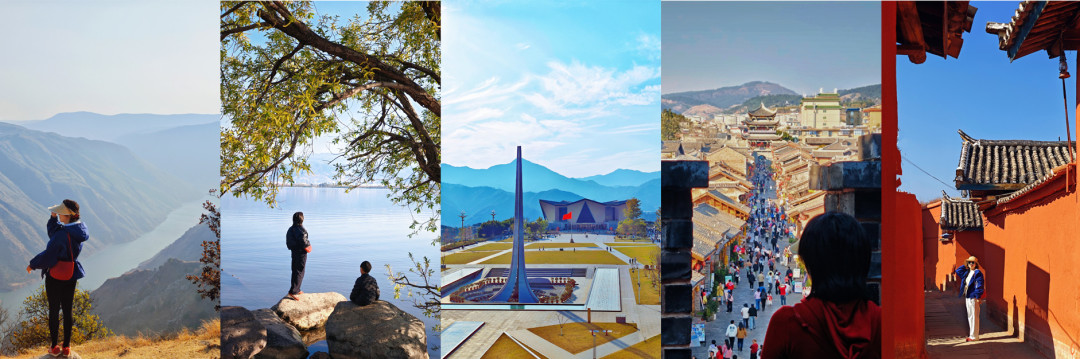
Meta Description: Escape Chongqing's winter chill! Discover the 11-day Western Sunshine Route from Chongqing to Panzhihua & Xichang. Free Anyue grottoes, Qionghai Lake views, and warm 20°C days await. Your ultimate Spring Festival road trip guide.
Introduction: Why Trade Fog for Sunshine This Spring Festival?
When winter in Chongqing wraps itself in damp, chilly fog and the cold wind finds its way into every corner, don't you also long for an escape toward the sun? For many Chongqing locals, the ritual of Spring Festival has long since evolved beyond simply staying home for a reunion dinner. It has become a spontaneous "warm-winter migration."
Heading south to Sanya, Beihai, or Huizhou is certainly tempting, but there's another destination—with an average annual temperature of 20.7°C, a winter average above 14.8°C, over 2,700 hours of sunshine per year, daytime highs often soaring past 20°C, dry and rainless air, and crystal-clear skies where you can lazily daydream in a single layer—that place is the "Western Sunshine Route" formed by Panzhihua and Xichang.
From the mountain city to the sunshine city, this is more than just a trip. It's a two-way journey toward warmth, festive spirit, and beauty. Today, let me guide you through this self-drive route that never feels rushed and is full of surprises at every stop—so you can spend the 2026 Spring Festival measuring the warm sun with your wheels and tasting the New Year with your taste buds.
[Link: Best Spring Festival road trips from Chongqing]
What Makes the Western Sunshine Route a Winter Escape Miracle?
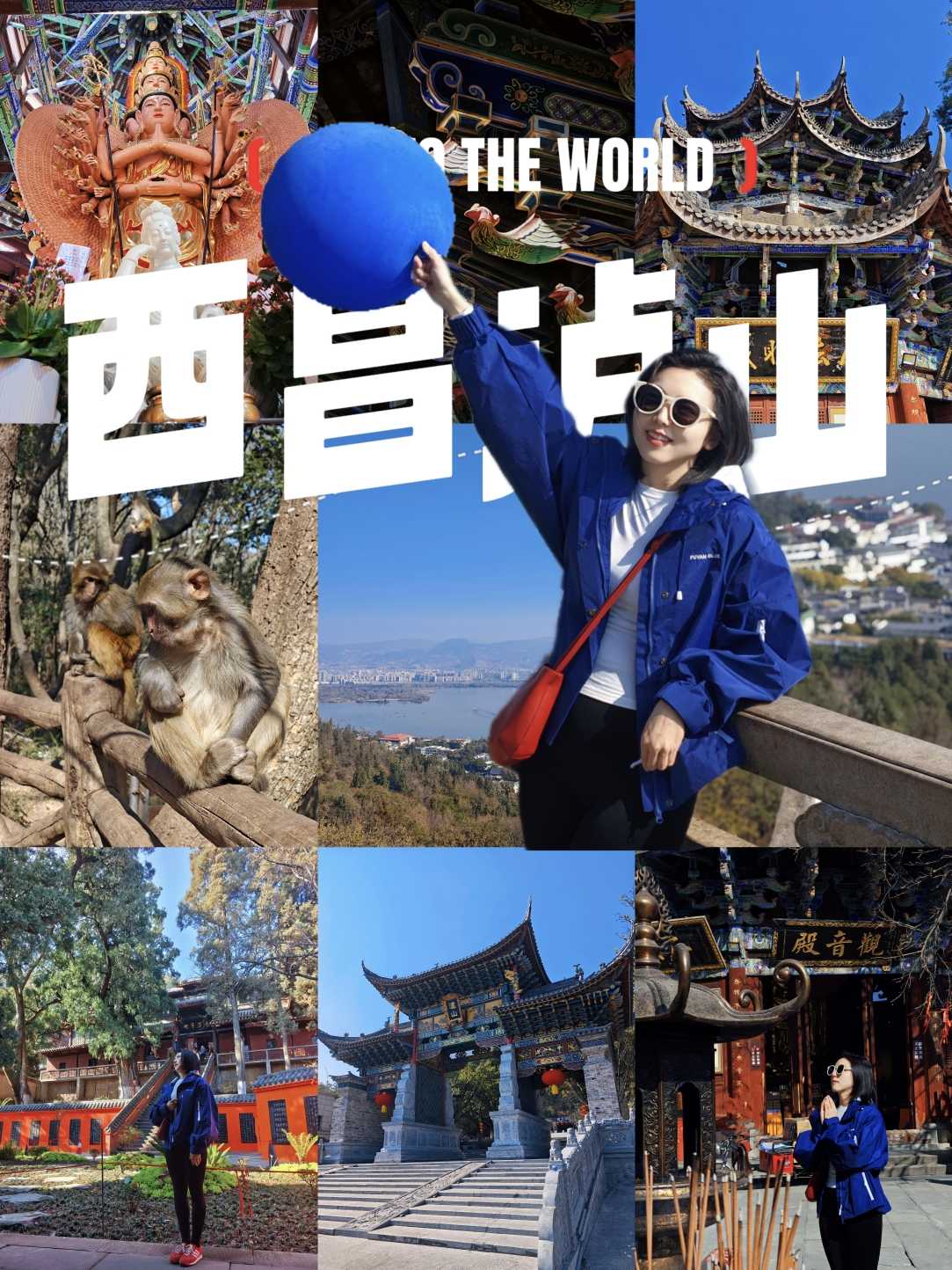
The "Western Sunshine Route" is a signature winter health and wellness travel itinerary promoted by Sichuan's cultural and tourism authorities, centered around Xichang, Panzhihua, and Miyi. The climate here is practically a "winter cold-escape miracle": generous sunshine, fragrant fruits and flowers, hot springs scattered everywhere, and a rich, smoky festive atmosphere. For Chongqing locals trapped by the damp cold, this place is the ultimate "happy homeland" for Spring Festival.
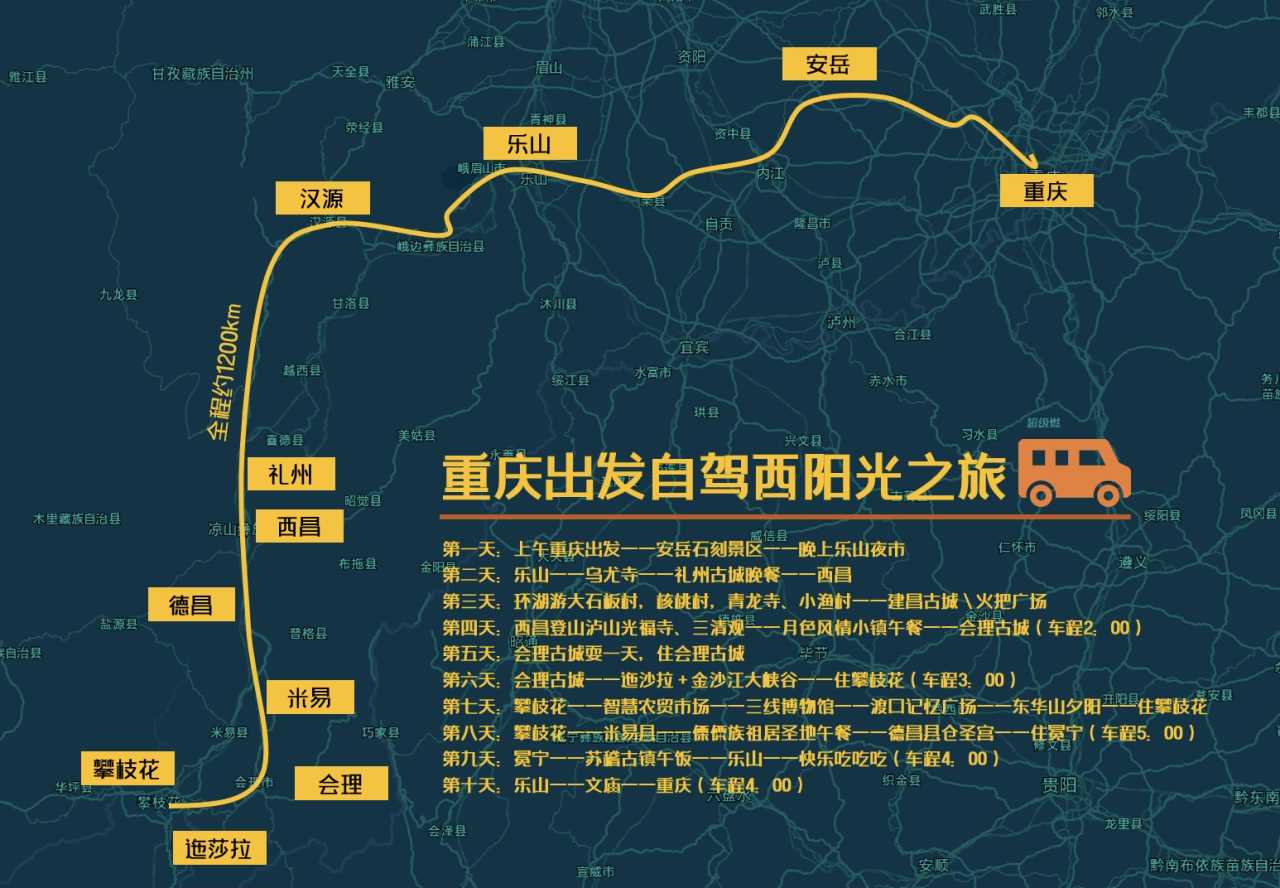
This route takes about 11 days in total, starting from Chongqing and passing through Anyue, Leshan, Xichang, Huili, Panzhihua, Miyi, and other places before returning to Chongqing. The itinerary is well-planned, with daily driving time kept to around 4–5 hours. It features culturally rich historical sites, stunning natural lakes, and irresistible local cuisine. Most importantly, there's no need to rush—every stop deserves to be savored slowly.
11-Day Itinerary: No Backtracking, Maximum Sunshine
Day 1: Chongqing → Anyue Stone Carvings → Leshan Night Market (Approx. 5 Hours Driving)
First Stop: Anyue Grottoes – Free Admission During Spring Festival 2026
Why choose Anyue as the first stop? Because from February 10 to March 11, 2026, the "Three Caves and One Temple" (Yuanjue Cave, Pilu Cave, Huayan Cave, and Wofo Temple) at the Anyue Stone Carvings are completely free of charge! This is an absolute jackpot for Spring Festival travel.
The Anyue Stone Carvings aren't a single attraction—they are a sprawling collection of over 100,000 statues spread across 46 townships in the county, truly an "open-air museum of stone carving art." The sites are divided into the county-town cluster (Yuanjue Cave, Qianfo Village), the northern route (Wofo Temple, Mumen Temple), and the southern Shiyang area (Pilu Cave, Huayan Cave, Mingshan Temple). The average distance between sites is about 23 kilometers, mostly connected by rural roads—self-driving is highly recommended.
Huayan Cave: The "Celestial Goddess Troupe" of the Northern Song Dynasty
Located at Xianggai Mountain in Shiyang Town, Huayan Cave was carved in the first year of the Northern Song Dynasty's Jianlong era. It is the largest and best-preserved cave in Anyue. Inside, a 5.2-meter-tall main Buddha sits with solemn dignity, its crown adorned with a statue of Liu Benzun. Ten bodhisattvas, with delicate faces and flowing robes, have been playfully nicknamed the "Song Dynasty Celestial Goddess Troupe" by netizens. The most astonishing feature is the "Sudhana's Fifty-Three Visits" relief, presented in a comic-strip style with vividly detailed pavilions and towers. The layout of "Three Teachings in One Cave" is a rare testament to the unity of Buddhism, Taoism, and Confucianism.

Pilu Cave: The Millennial Smile of the Eastern Venus
If you can only visit one cave in Anyue, make it Pilu Cave. The Purple Bamboo Guanyin (Avalokitesvara) here is hailed as the "Eastern Venus." Standing about 3 meters tall, she sits sideways on a lotus throne, one leg curled and the other naturally hanging down, exuding a relaxed and graceful posture. Her robes are light and flowing, with lines as smooth as water. The millennial techniques of hollow carving and suspended carving make the entire statue seem to sway gently in the breeze. Most moving is her expression—a slight, lowered smile, gentle eyes, carrying a faint compassion and warmth. There's no sense of distance, only a timeless tenderness.
The "Liu Benzun's Ten Austerities" tableau inside the cave is equally stunning. The niche is 6.6 meters high, 14 meters wide, and 4.5 meters deep—a nationally top-tier illustrated Esoteric Buddhist historical record, predating the similar tableau at Dazu Baoding Mountain and classified as a key national cultural relic. The so-called "Ten Austerities" include burning fingers, standing in snow, burning ankles, gouging eyes, cutting off ears, and other extreme ascetic practices—every detail tells a story of faith's power.
Overnight in Leshan: The Lively Charm of a Food Capital
Arriving in Leshan by evening, head straight to the Shangzhongshun Characteristic Street. This area isn't overly commercialized or chaotic. Winding bluestone paths, old buildings blending with trendy new shops—every step reveals the authentic face of old Leshan. Take a stroll along the riverside Binjiang Road. At Xiaogongzui Pier or Hengdu Pier, you can catch a distant view of the Leshan Giant Buddha's solemn silhouette without spending a cent. The magnificent confluence of three rivers unfolds before your eyes. With a gentle river breeze on your face, every snapshot looks like a masterpiece.
[Link: Best things to do in Leshan at night]
Day 2: Leshan → Wuyou Temple → Lizhou Ancient City → Xichang (Approx. 4.5 Hours Driving)
Wuyou Temple: A Peaceful Sanctuary Missed by 99% of Tourists
Most people visiting Leshan only head for the Giant Buddha, unaware that on Qingyi Islet across the river, a thousand-year-old temple from the Tang Dynasty stands in quiet solitude—Wuyou Temple. Surrounded on three sides by the Min, Qingyi, and Dadu Rivers, with ancient trees reaching the sky and red walls reflecting the river, it is Leshan's true "peaceful sanctuary."
The Hao Shang Bridge at the entrance is considered one of China's most beautiful covered bridges. Spanning 98 meters long and 5.9 meters wide, its "three arches, four pavilions, and two corridors" design is elegant, with vermilion pillars and green-tiled flying eaves. Beneath the corridor, "beauty rests" (meiren kao) benches offer a spot for visitors to sit and relax. Crossing the bridge leads to Wuyou Temple itself, where halls are built into the hillside—the Heavenly King Hall, Amitabha Hall, Mahavira Hall, Guanyin Hall, and Arhat Hall unfold in succession. The most awe-inspiring is the Five Hundred Arhat Hall, where painted clay arhats each have unique expressions; walking through them feels like entering a meditative realm.
Lizhou Ancient Town: A Time-Stamped Mark on the Tea Horse Road
Leaving Leshan, drive toward Xichang and make a brief stop at Lizhou Ancient Town. This historic town was an important post station on the ancient Tea Horse Road. Bluestone paths, old wooden doors, mottled walls—every corner bears the traces of time. You can have dinner here, sampling authentic southwestern Sichuan flavors.
[Link: Tea Horse Road historical sites in Sichuan]
Day 3: Xichang's Qionghai Lake Circumnavigation
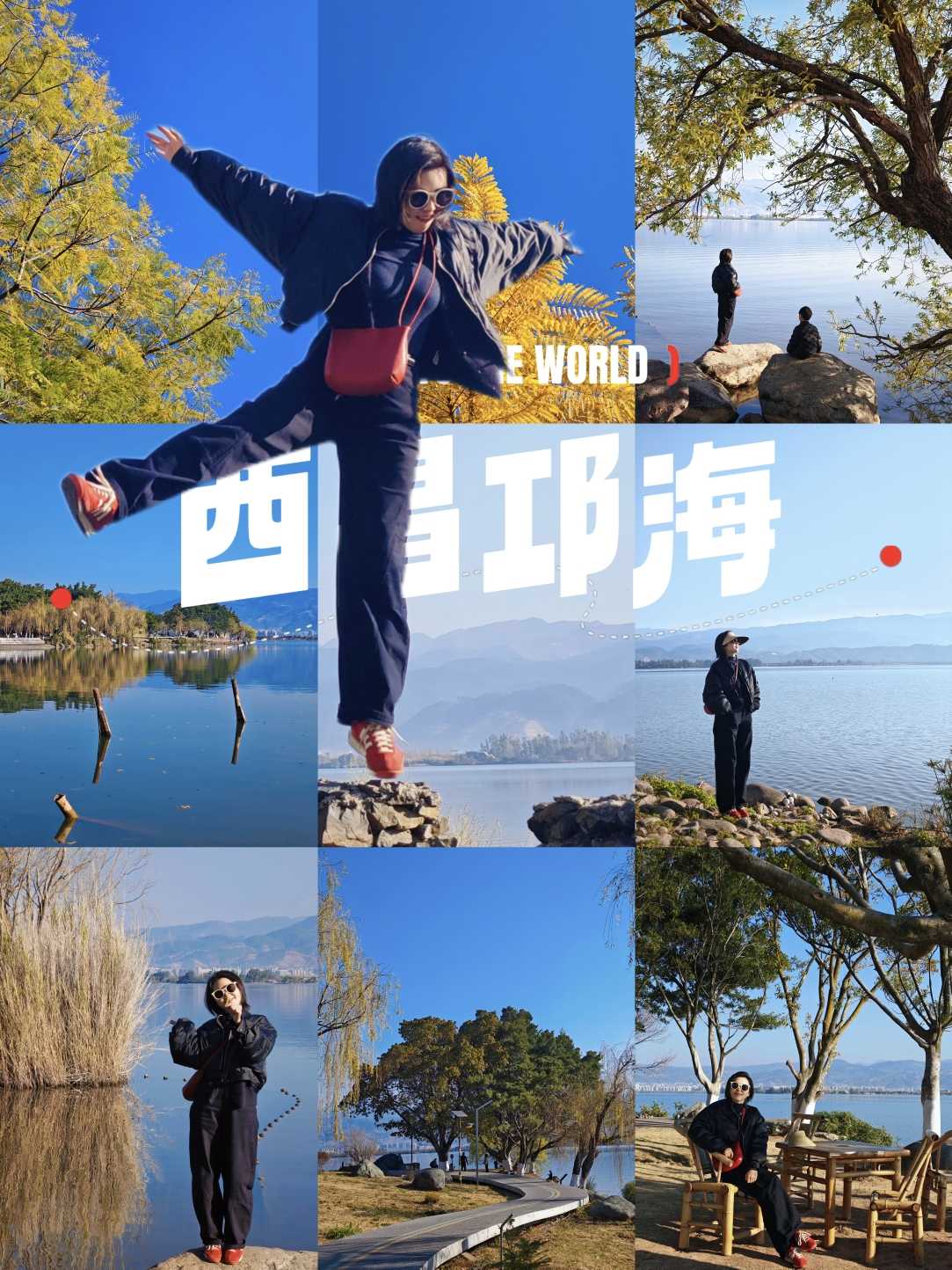
Qionghai Lake: Half City, Half Lake
Qionghai isn't the kind of lake you just glance at and move on. It's half city, half lake—every stretch offers a different view. There are three ways to circle the lake: cycling is the most recommended, with flat, easy paths; electric scooters are good for families; and driving allows you to stop at scenic overlooks. The 37-kilometer lakeside path passes through wetlands, fishing villages, and parks. Winter is the best season to visit—migratory birds gather here, and the sunlight dances on the water like scattered diamonds.
Frequently Asked Questions (FAQ)
1. Is the Western Sunshine Route suitable for families with children?
 Absolutely. The route features flat cycling paths around Qionghai Lake, easy-to-walk historical sites, and plenty of open spaces. The warm winter climate (daytime highs above 20°C) means kids can play outdoors comfortably. Many stops, like the Anyue grottoes, offer educational value as well.
2. What is the best time to take this road trip?
 The ideal window is February 10 to March 11, 2026, when the Anyue Stone Carvings are free. This period also coincides with the Spring Festival holiday, offering festive atmosphere, mild temperatures, and clear skies along the entire route.
3. Do I need a 4x4 vehicle for this route?
No. All roads on this itinerary are well-maintained highways and rural paved roads. A standard sedan or SUV is perfectly adequate. The longest daily drive is about 5 hours, making it comfortable for most drivers.
4. What should I pack for a winter road trip to the Western Sunshine Route?
 Pack layers: daytime temperatures can reach 20–25°C, but evenings can be cool (10–15°C). Bring sunscreen, sunglasses, a reusable water bottle, comfortable walking shoes, and a light jacket. Don't forget your camera for the stunning lake and mountain views.
5. Are there vegetarian or special dietary options along the route?
Yes. Leshan and Xichang offer diverse food options, including Buddhist vegetarian cuisine at temples like Wuyou Temple. Local markets in Panzhihua and Miyi have fresh fruits and vegetables year-round. Most restaurants can accommodate basic dietary requests.
Why This Route Is Perfect for Your 2026 Spring Festival
The Western Sunshine Route isn't just a road trip—it's a winter wellness escape that combines cultural depth, natural beauty, and culinary adventure. From the free Anyue grottoes to the serene Qionghai Lake, every stop offers something unique. The 11-day itinerary is designed to be relaxed, with no more than 5 hours of driving per day, giving you plenty of time to explore, eat, and soak in the sun.
Imagine spending your Spring Festival mornings sipping coffee by a lakeside café in Xichang, afternoons wandering through thousand-year-old caves, and evenings enjoying hot pot under starry skies. This is the kind of New Year that creates lasting memories.
Ready to Escape the Fog? Start Planning Your Western Sunshine Route Today
Don't let another winter pass you by in damp, gray Chongqing. The Western Sunshine Route is calling with its 20°C days, 2,700 hours of annual sunshine, and a treasure trove of cultural wonders. Whether you're a history buff, a food lover, or simply someone craving warmth, this 11-day road trip delivers.
Book your accommodation in advance—Spring Festival is peak season, and popular spots like Xichang's lakeside hotels fill up quickly. Pack your bags, fuel up the car, and set out on a journey that will warm your body and soul.
The sun is waiting. Are you ready to chase it?
[Link: Spring Festival travel tips for Sichuan road trips] [Link: Best hotels near Qionghai Lake, Xichang] [Link: Chongqing to Panzhihua driving route planner]
Note: All factual information, including dates, temperatures, and free admission periods, is sourced from official tourism authorities and verified as accurate for the 2026 Spring Festival season.
You may also like


