A Local's Guide to Chengdu: Hidden Gems and Authentic Eats You Won't Find on Tourist Maps
Meta Description: Discover Chengdu beyond the pandas and hotpot. This local's guide reveals hidden gems, authentic eats, and insider tips for experiencing the city's famous "slowness" like a true Chengdu resident.
If you ask me which city in China is worth visiting again and again, my answer will always be Chengdu. Not because of the pandas. Not because of the hotpot. But because this city has an addictive kind of "slowness"—slow enough to sit in a teahouse and daydream for an entire day, slow enough to cross half the city just for a bowl of dandan mian (Sichuan-style spicy sesame noodles), slow enough to make you forget time exists.
As a self-styled travel enthusiast who has lived in Chengdu for years, I've watched too many tourists pour into Kuanzhai Alley during holidays, swept along by the crowd, snapping a few photos before rushing off. What they take away is exhaustion, not the city's true flavor. So I'm writing this guide not to help you "check in" at famous spots, but to help you truly understand this city.
Before You Go: Essential Chengdu Travel Tips
How to Get to Chengdu

By Air: Chengdu Shuangliu International Airport is just 16 kilometers from the city center. You have five options to get downtown:
- Metro Line 10: Runs from 6:00 AM to 11:00 PM. Best for light-packers and solo travelers, though you'll need to transfer 2-3 times to reach the center.
- Airport Bus: Line 1 runs until the last flight lands, so late arrivals are covered. But routes are fixed—best if your hotel is along the line.
- Didi/Taxi: Most cost-effective for groups of 3-4.
- Ctrip "Super Bus": Bookable 24/7, drops you at your exact destination. Great for 1-2 people.
- Scenic Area Shuttle: Direct buses from the airport to Kuanzhai Alley, Wuhou Shrine, and other major spots.
By Train: Chengdu has three train stations—Chengdu Station (North), Chengdu East Station, and Chengdu South Station—all connected to the metro. From Shuangliu Airport Station, you can also take intercity trains to Leshan (for the Giant Buddha) or Mount Emei, or high-speed trains to Chongqing or Guiyang.
Getting Around Chengdu: Metro, Buses, and Bikes
Chengdu's metro currently has Lines 1, 2, 3, 4, 7, and 10, reaching most major attractions. Buses have dedicated lanes and can be faster than cars. Bike-sharing services (Mobike, Qingju) are everywhere, and the flat terrain makes cycling far more pleasant than in a city like Chongqing. Scenic area shuttles depart from Kuanzhai Alley or Wuhou Shrine and are convenient for independent travelers, though schedules are fixed.
Best Time to Visit Chengdu
Chengdu is lovely year-round, but I most recommend March-April and October-November. In spring, flowers bloom in waves and fruit ripens; in autumn, ginkgo trees turn gold and the foliage becomes spectacular. Best of all—it's neither too hot nor too cold, just comfortable enough to make you want to cry with joy.
Where to Stay in Chengdu: The Smart Choice
My advice: Stay near Kuanzhai Alley, Tianfu Square, or Chunxi Road. These three areas have excellent metro connections, are surrounded by great food, and put you within 20 minutes of any attraction. Personally, I prefer guesthouses—especially ones where the owner will tell you "where the locals really eat." A reliable host is worth more than any guidebook.
[Link: Best budget hotels in Chengdu near metro stations]
Kuanzhai Alley: More Than Just a Tourist Street
Address: 127 Changshun Upper Street, Qingyang District
Getting There: Metro Line 2 to Tonghuimen Station or Line 4 to Kuanzhai Alley Station
Admission: Free
Hours: Open all day (shops open around 9-10 AM)
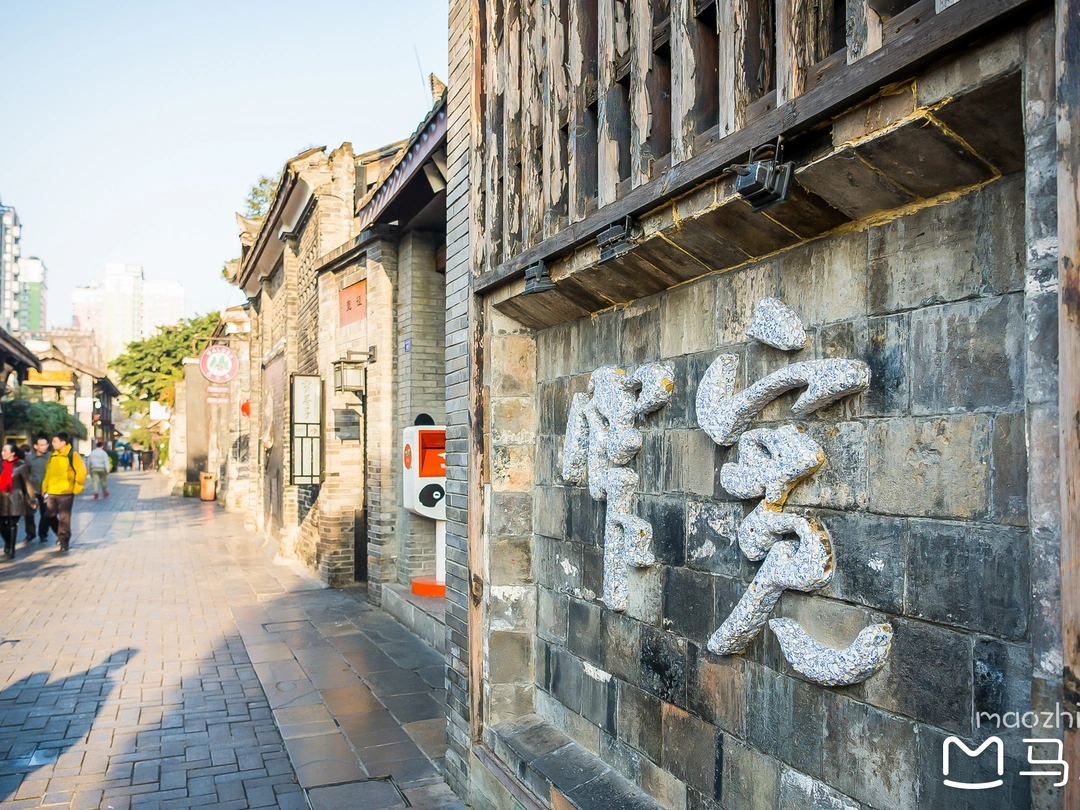
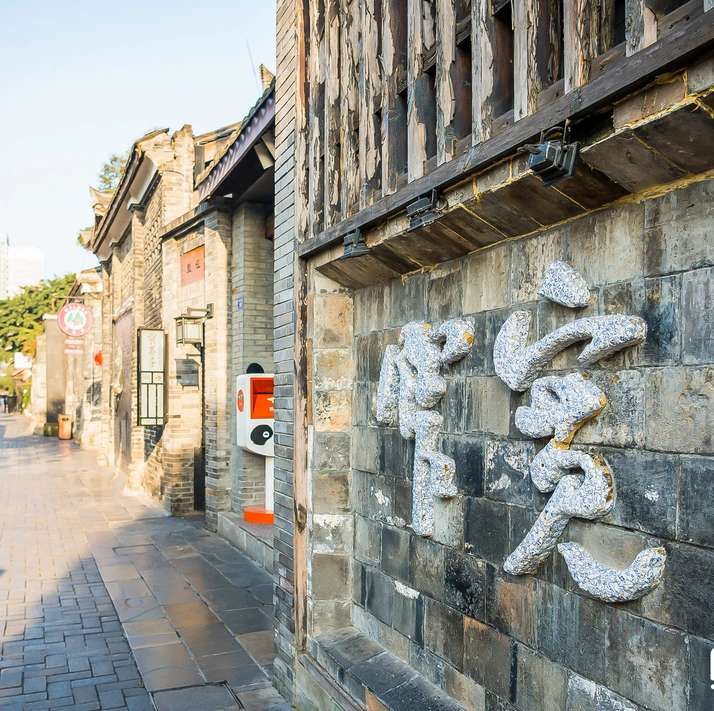
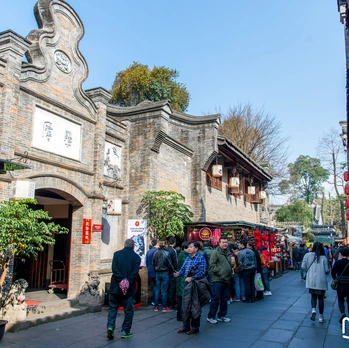
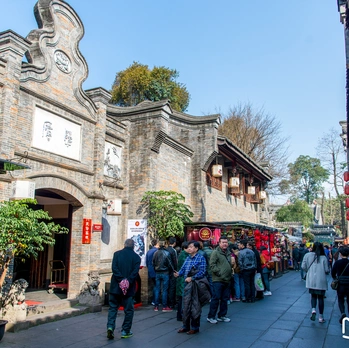
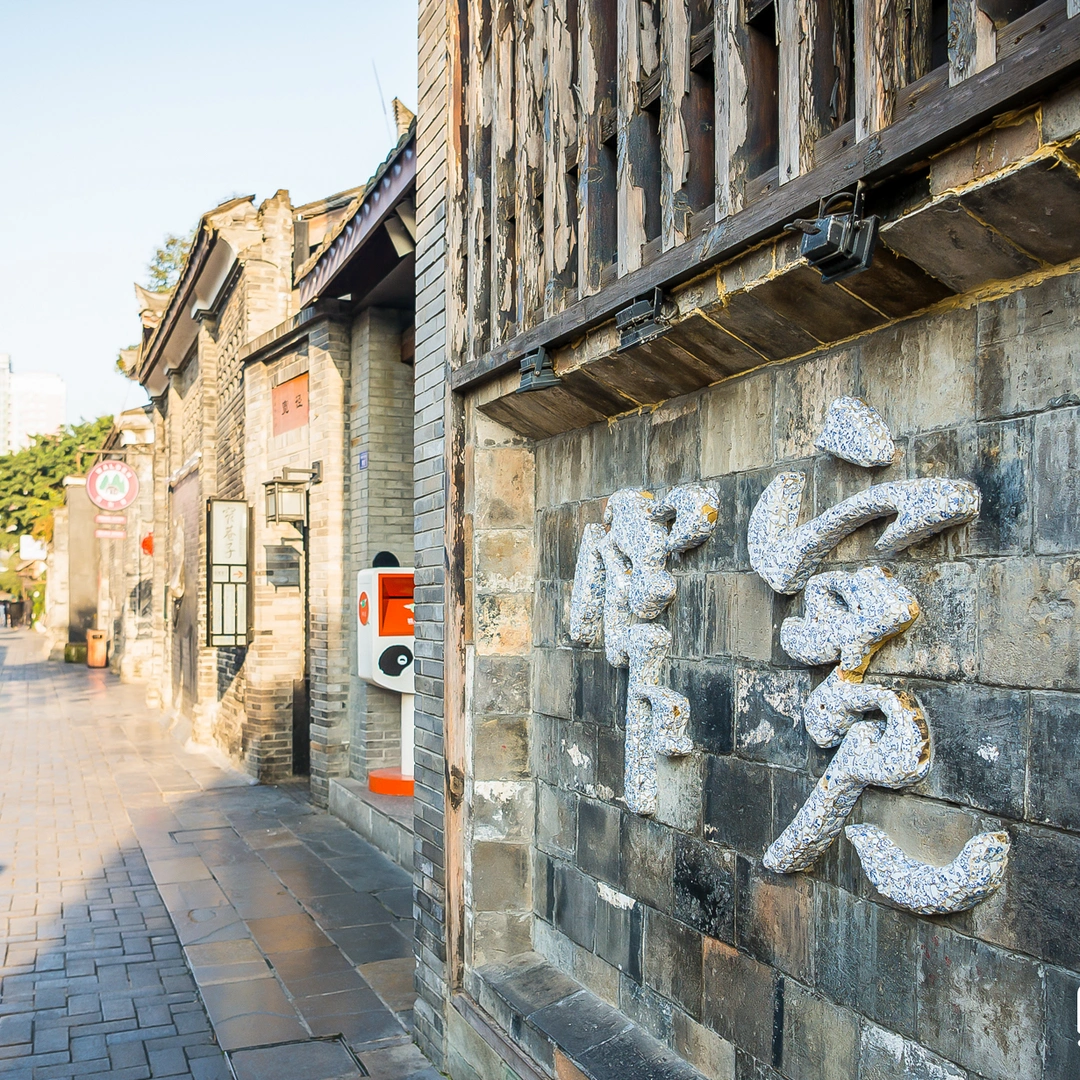
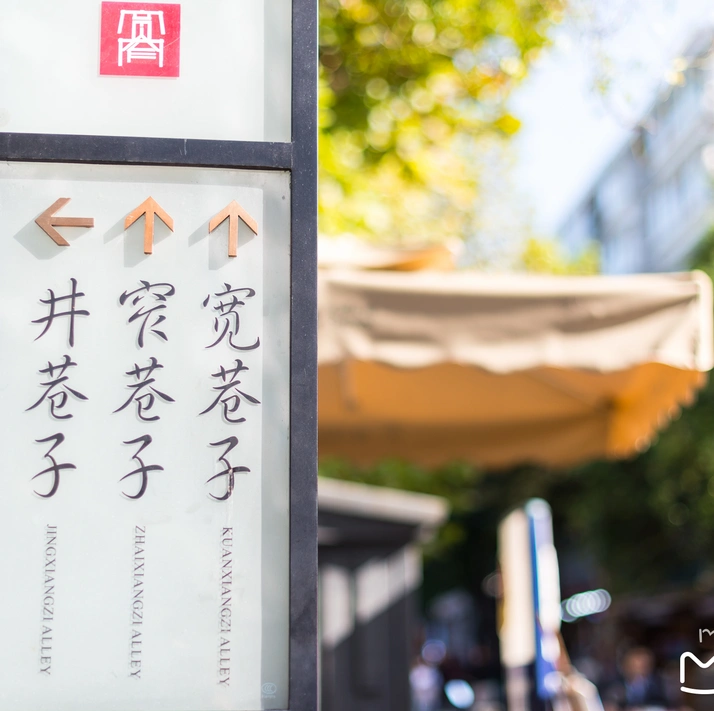
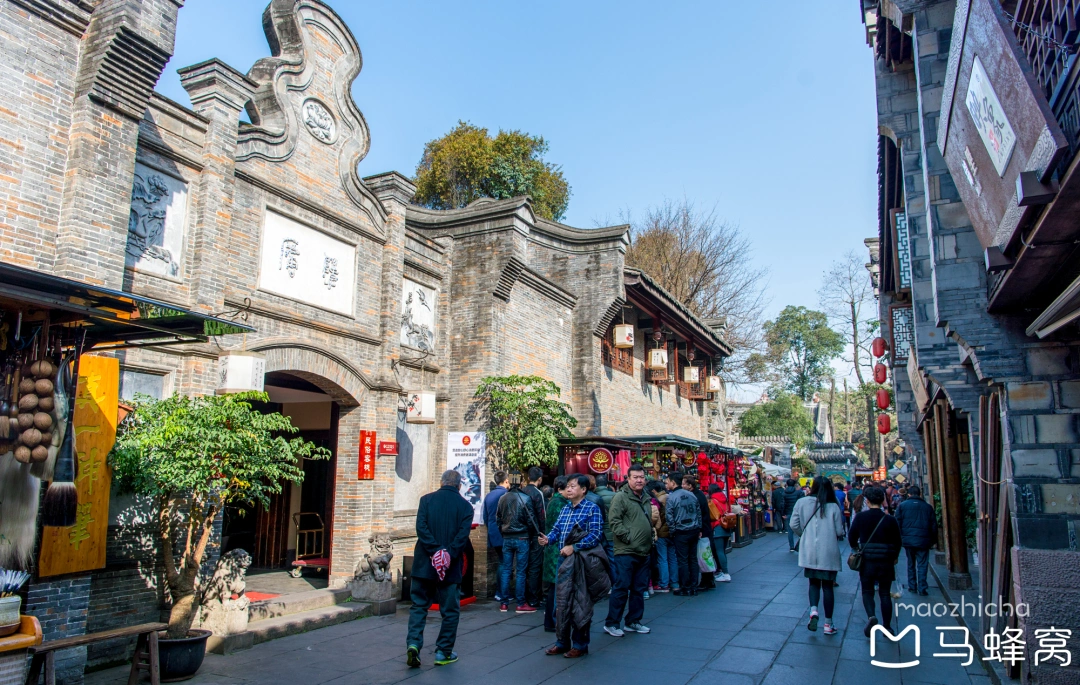
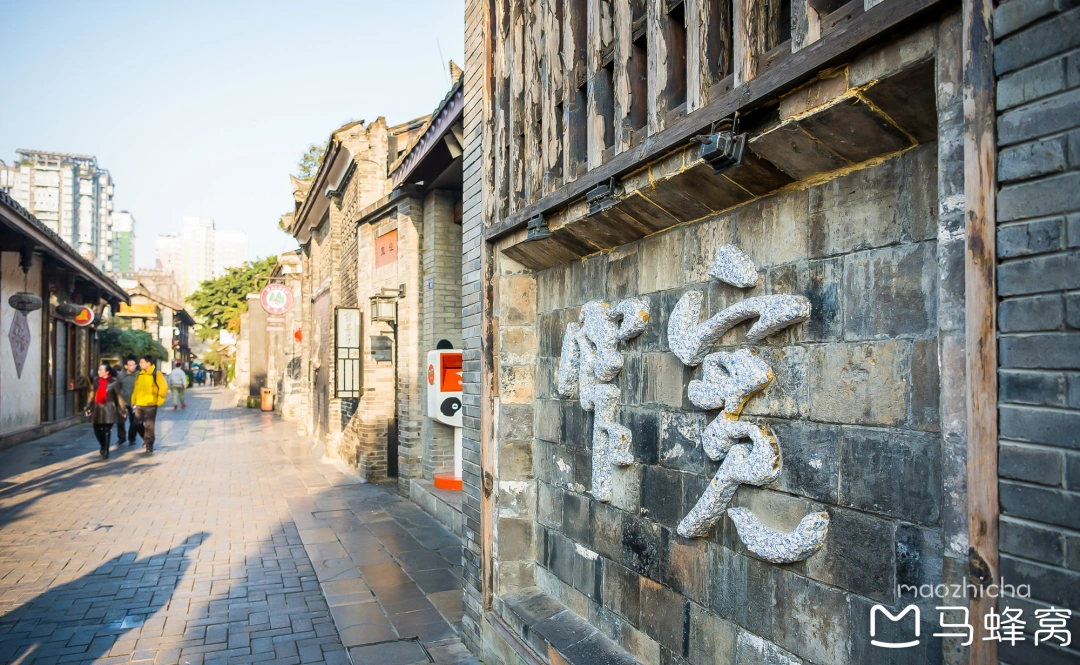
Many people say Kuanzhai Alley is "the kind of place every city has." That's both true and not. Kuanzhai Alley actually consists of three lanes—Wide Lane, Narrow Lane, and Well Lane—and is a remnant of the "Manchu City" where the Eight Banner troops of the Manchu and Mongol armies were stationed during the Kangxi era of the Qing Dynasty. It blends the architectural styles of western Sichuan folk houses with northern Chinese courtyard homes, making it the only surviving example of northern hutong (alleyway) culture in all of southern China.
How to visit without wasting your time? My secret: arrive at 9 AM sharp. The shops aren't open yet, and the streets are empty. You can slowly take in the blue bricks, black tiles, and carved window frames, imagining what life was like for the Manchu banner families a century ago. By the time the crowds show up, you'll have already finished your tour.
What to eat? Don't buy snacks inside the alley itself! They're overpriced and mediocre. The real food is hidden in the small lanes nearby—I'll cover that later.
What to see? The architecture, sugar-painting artists, and ear-cleaning services. Especially the ear-cleaning: find an old master, lie back in a bamboo chair, and listen to the gentle scraping sound of the ear pick. That's the real Chengdu "slowness."
[Link: Hidden food stalls near Kuanzhai Alley]
People's Park: The Spiritual Home of Chengdu Residents
Address: 12 Shaocheng Road, Qingyang District
Getting There: Metro Line 2 to People's Park Station
Admission: Free
Hours: Summer 6:00 AM–10:30 PM, Winter 6:30 AM–10:00 PM
Originally called Shaocheng Park and built in 1911, People's Park was China's first public space to be officially called a "park." But its significance goes far beyond that—it's a microcosm of everyday life in Chengdu.
He Ming Tea House: Where Time Stands Still
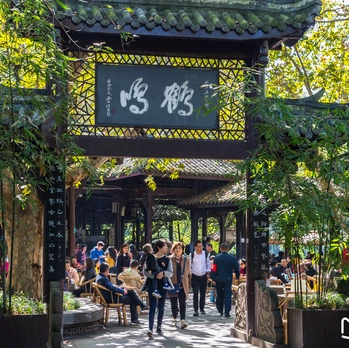
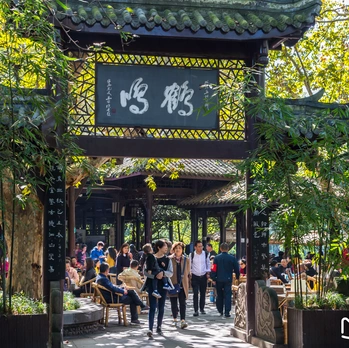
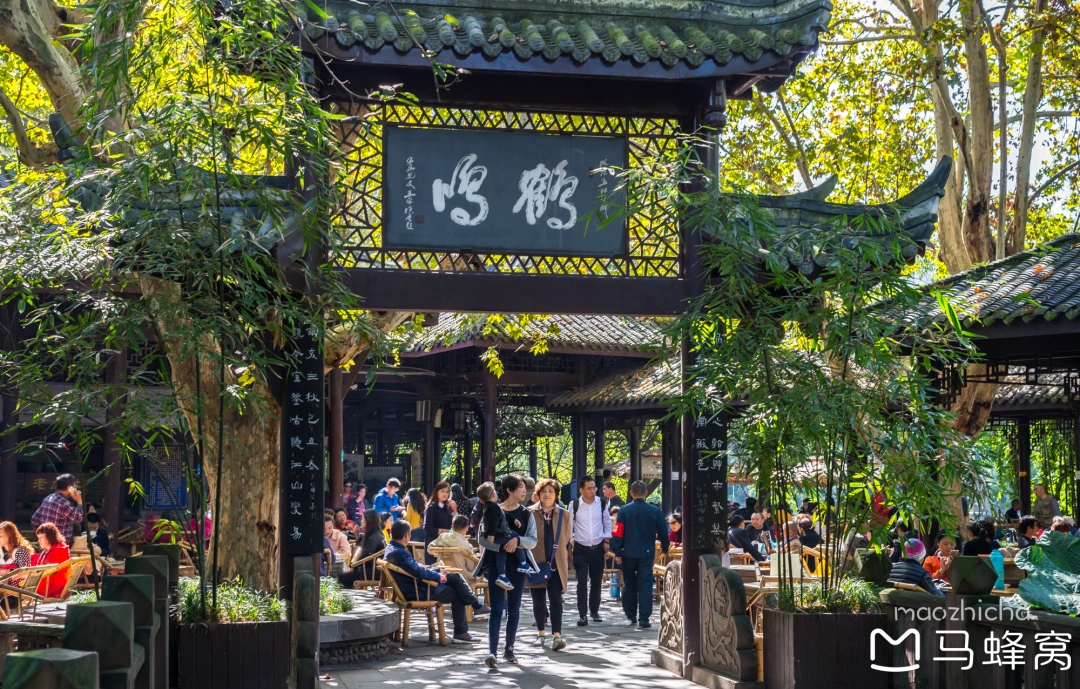
He Ming Tea House is an absolute must. Whenever the sun comes out, every seat is taken. High-backed bamboo chairs, covered-bowl tea, a few close friends—and suddenly an entire afternoon is gone. This teahouse was built in the 1920s and was once the most famous of the six major teahouses in Shaocheng Park during the Republican era. During the War of Resistance against Japan, cultural luminaries often gathered here over tea. When you sit here, you're not just drinking tea—you're drinking history.
Railway Protection Movement Monument: A Glimpse of History
The Railway Protection Movement Monument is also worth a look. Built in 1913 to commemorate those who died in the Sichuan Railway Protection Movement, this event is even believed by some to have hastened the fall of the Qing Dynasty. There's a free museum next to it as well.
The Matchmaking Corner: A Unique Spectacle
The Matchmaking Corner is People's Park's most entertaining feature. Started in 2005, it's now a unique spectacle. A4 sheets of paper list ages, occupations, and incomes—some laid on the ground, others hung from umbrellas. The main participants are from the post-70s and post-80s generations, with occasional post-95s entries—though those are almost always posted by parents. Watching those anxious, hopeful faces, you realize that even Chengdu's "slowness" has its own kind of urgency.
[Link: Other free things to do in Chengdu]
Wuhou Shrine and Jinli: Three Kingdoms Dreams and Everyday Bustle
Wuhou Shrine Address: 231 Wuhou Shrine Street, Wuhou District
Getting There: Metro Line 3 to Gaoshengqiao Station, Exit D, then a 10-minute walk
Admission: 60 RMB/person
Hours: Peak season 8:00 AM–9:00 PM, Off-peak 8:00 AM–6:00 PM
Jinli: Free, adjacent to Wuhou Shrine
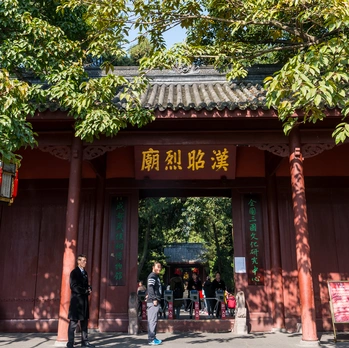
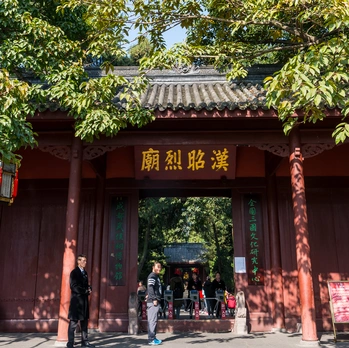
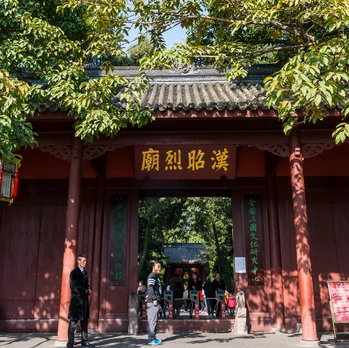
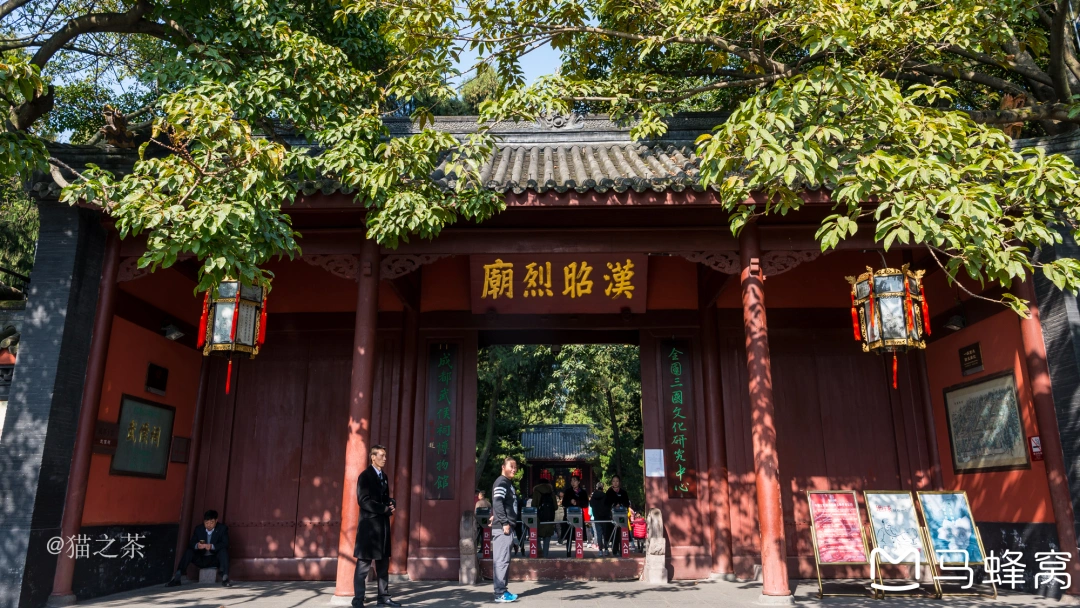
Wuhou Shrine is the only temple in China where both a ruler and his minister are enshrined together. The main gate clearly reads "Temple of Han Zhaolie" (referring to Liu Bei, Emperor of Shu Han), yet everyone calls it "Wuhou Shrine" (after Zhuge Liang, his prime minister). A Republican-era poet named Zou Lu summed it up: "The gate proclaims Zhaolie Temple, yet all the world calls it Wuhou Shrine. Rank and title yield to merit—the Chancellor's fame spans a hundred generations." In other words, Zhuge Liang's reputation outshone Liu Bei's.
Must-See Highlights at Wuhou Shrine
- Calligraphy by Prince Guo of the Qing Dynasty: The four characters "Ming Chui Yu Zhou" (Fame Echoes Through the Universe) were written by the very prince who became the romantic hero of the popular TV drama Empresses in the Palace.
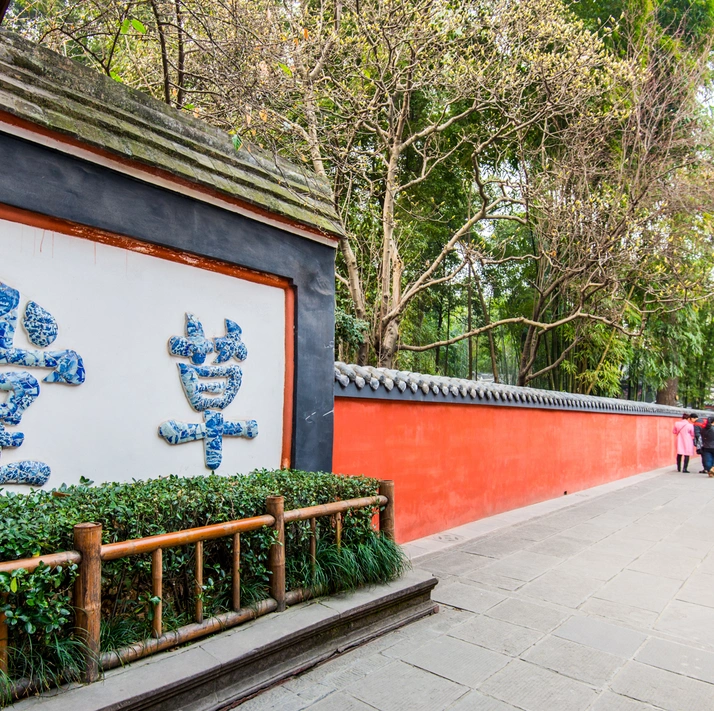
- The Red Wall Corridor: Bamboo shadows dance on the red walls, swaying in the breeze—so beautiful it takes your breath away. Director Zhang Yimou filmed here in 2003 for his promotional video of Chengdu.
- Hui Ling (Liu Bei's Tomb): A peaceful mound surrounded by ancient cypress trees, offering a quiet moment of reflection.
Jinli: The Perfect Evening Stroll
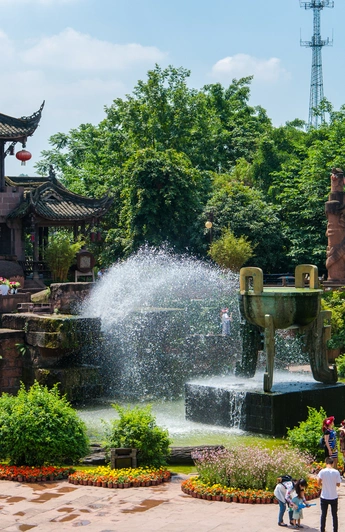
Adjacent to Wuhou Shrine, Jinli Ancient Street is free to enter and comes alive in the evening. While it's touristy, it's also a great place to sample street food and buy souvenirs without the daytime crowds. The red lanterns and traditional architecture make for beautiful photos after dark.
[Link: Best Sichuan hotpot restaurants near Wuhou Shrine]
Hidden Gems: Where Locals Really Eat
The Real Food Streets
Skip the overpriced snacks inside Kuanzhai Alley. Instead, head to:
- Kuixinglou Street: Just a 5-minute walk from Kuanzhai Alley, this street is lined with small restaurants serving authentic dandan mian, zhong shui jiao (Sichuan dumplings), and fuqi feipian (beef offal salad). Prices are half of what you'd pay in the tourist zone.
- Xiangxiang Alley: A narrow lane off Qintai Road, known for its mapo tofu and twice-cooked pork. The hole-in-the-wall shops here have been serving locals for decades.
The Best Teahouse Experience (Without the Crowds)
While He Ming Tea House is iconic, locals often go to Shunxing Old Teahouse in the eastern suburbs. Built during the Qing Dynasty, it's less polished but more authentic. The tea is cheaper, the conversations are louder, and the mahjong tiles never stop clacking.
A Late-Night Food Secret
For a true Chengdu late-night experience, visit Jiefangbei Night Market after 10 PM. You'll find chuan chuan xiang (skewers boiled in spicy broth), kao leng mian (grilled cold noodles), and bing fen (ice jelly dessert). This is where locals go after work, and the energy is electric.
[Link: Ultimate Chengdu street food guide]
FAQ: Your Chengdu Travel Questions Answered
1. Is Chengdu safe for solo travelers?
Absolutely. Chengdu is one of China's safest cities, even for solo female travelers. The metro is well-lit and monitored, and locals are generally helpful. Just use common sense—keep your valuables secure and avoid poorly lit alleys late at night.
2. Do I need to speak Mandarin to get around?
Not necessarily. Major attractions, hotels, and some restaurants have English signage and staff. However, learning a few basic phrases like "xiè xiè" (thank you) and "duō shǎo qián" (how much) will go a long way, especially in local eateries and markets.
3. What's the best way to experience Chengdu's "slowness" without being a tourist?
Start your day at a local teahouse (not the one in People's Park—try Shunxing Old Teahouse). Spend the morning sipping tea and people-watching. Then wander into a small neighborhood lane for lunch. In the afternoon, visit a park where locals practice tai chi or play mahjong. End the evening with a hotpot dinner at a restaurant where no one speaks English. That's the real Chengdu.
4. How many days do I need in Chengdu?
I recommend at least 3-4 days. Day 1: Kuanzhai Alley and People's Park. Day 2: Wuhou Shrine and Jinli. Day 3: A day trip to the Leshan Giant Buddha or Mount Qingcheng. Day 4: Explore hidden food streets and relax in a teahouse.
5. What's the best way to handle the spice in Sichuan food?
Start with milder dishes like gong bao ji ding (kung pao chicken) or yu xiang qie zi (fish-fragrant eggplant). Drink soy milk or yogurt to cool your mouth—water actually spreads the capsaicin. And remember: the spice is part of the experience. Embrace it!
Ready to Experience the Real Chengdu?
Chengdu isn't a city you visit—it's a city you feel. The slow afternoons in teahouses, the spicy steam rising from hotpot, the laughter of locals playing mahjong in the park. This is the Chengdu that never makes it onto tourist maps.
So pack light, bring an empty stomach, and leave your itinerary at home. The best discoveries happen when you get lost in the narrow lanes, follow the smell of sizzling chili oil, and let the city's rhythm carry you away.
Start planning your authentic Chengdu adventure today. Book your flight, find a guesthouse with a local host, and prepare to fall in love with China's most laid-back city.
[Link: Book Chengdu guesthouses with local hosts]
[Link: Chengdu food tour packages]
[Link: Sichuan province travel guide]
You may also like


