A Late Autumn Memory from Four Years Ago: The First Snow Turned Jiuzhaigou and Huanglong into a World of Unearthly Beauty
Meta Description: Discover why November is the secret season for Jiuzhaigou and Huanglong. Experience the breathtaking beauty of first snow transforming these UNESCO wonders into a pristine winter fairyland.
Introduction: Why November Is the True Golden Season for Jiuzhaigou
Every autumn, social media floods with Jiuzhaigou's "golden hour"—October's colorful forests reflected in turquoise lakes, looking like God's own palette. Almost every travel guide tells you: autumn is Jiuzhaigou's peak season.
But here's the truth most travelers miss: November is the treasure season most people overlook.
In late autumn 2022, I set out from Neijiang, Sichuan, heading north with my wife, our four-year-old son, and my mother, who was over sixty. Originally, I just wanted to take the family to see the western Sichuan autumn colors before winter arrived. But then, an unexpected first snow completely transformed the trip—Huanglong and Jiuzhaigou, blanketed in white, revealed a beauty more breathtaking than golden autumn.
That stillness, that purity, that layered depth carved by the snow—no filter could ever replicate it.
In this article, I'll take you back to that early winter journey and share why a Jiuzhaigou November trip might be the most magical travel decision you'll ever make.
Day 1: From Neijiang to Songpinggou – The First Snow Was the Biggest Surprise
Setting Out at Dawn, Heading North
At six in the morning, darkness still enveloped us as we packed our bags. My wife handled navigation, my mother sat in the passenger seat watching our son, and I gripped the steering wheel steadily, my heart full of anticipation.
The total distance from Neijiang to Jiuzhaigou was about 600 kilometers. With rest stops and meals, we expected eight to nine hours of driving. We crossed the Chengdu Plain, drove north along the Dujiangyan-Wenchuan Expressway, and watched the scenery transform from bustling city to rolling mountains.
When passing Wenchuan, I deliberately slowed down. This city, once devastated by the 2008 earthquake, had been completely rebuilt—neat streets, lively shops, every corner radiating resilience. I talked with my mother about that historic disaster. She was silent for a moment, then said softly, "In this life, safety is the most important thing."
Yes—traveling with family, isn't that exactly what this is about? Safety and togetherness.
Songpinggou: A Spontaneous Decision That Became the Trip's First Highlight
Our original plan was to head straight to Jiuzhaigou, but as we passed Mao County, a roadside sign caught our attention—Songpinggou National Nature Reserve.
"It's still early; let's check it out," my wife suggested.
That spontaneous decision became the first highlight of the entire journey.
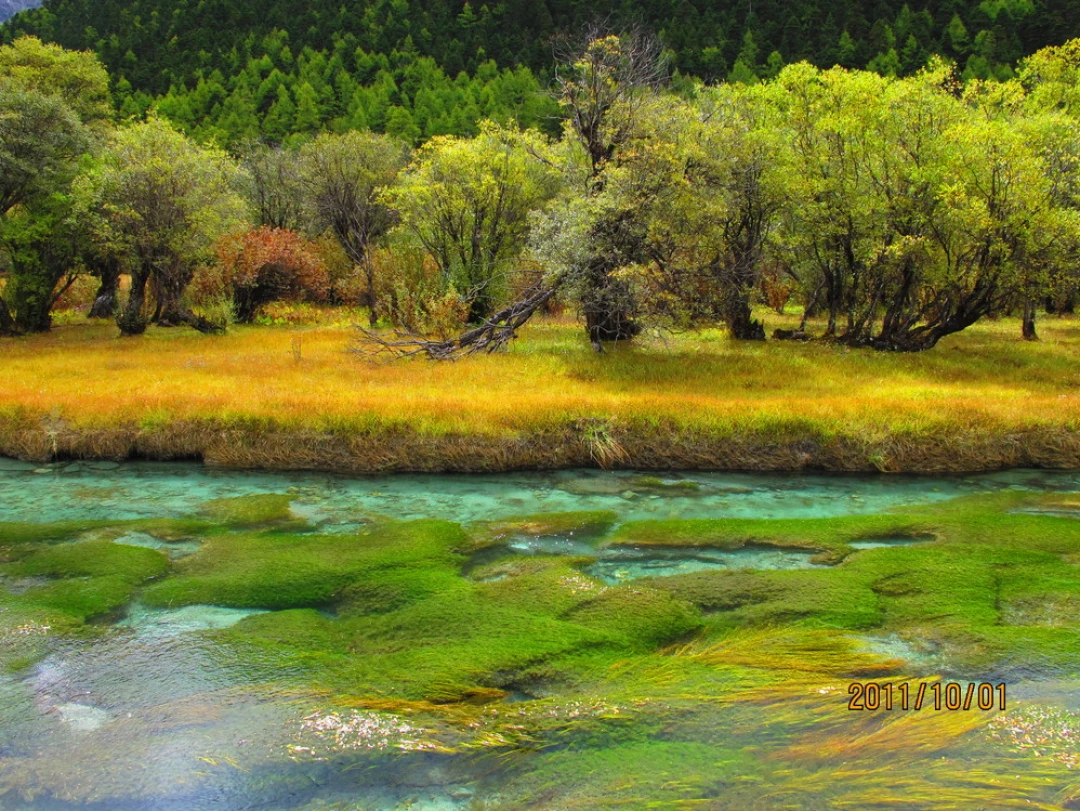
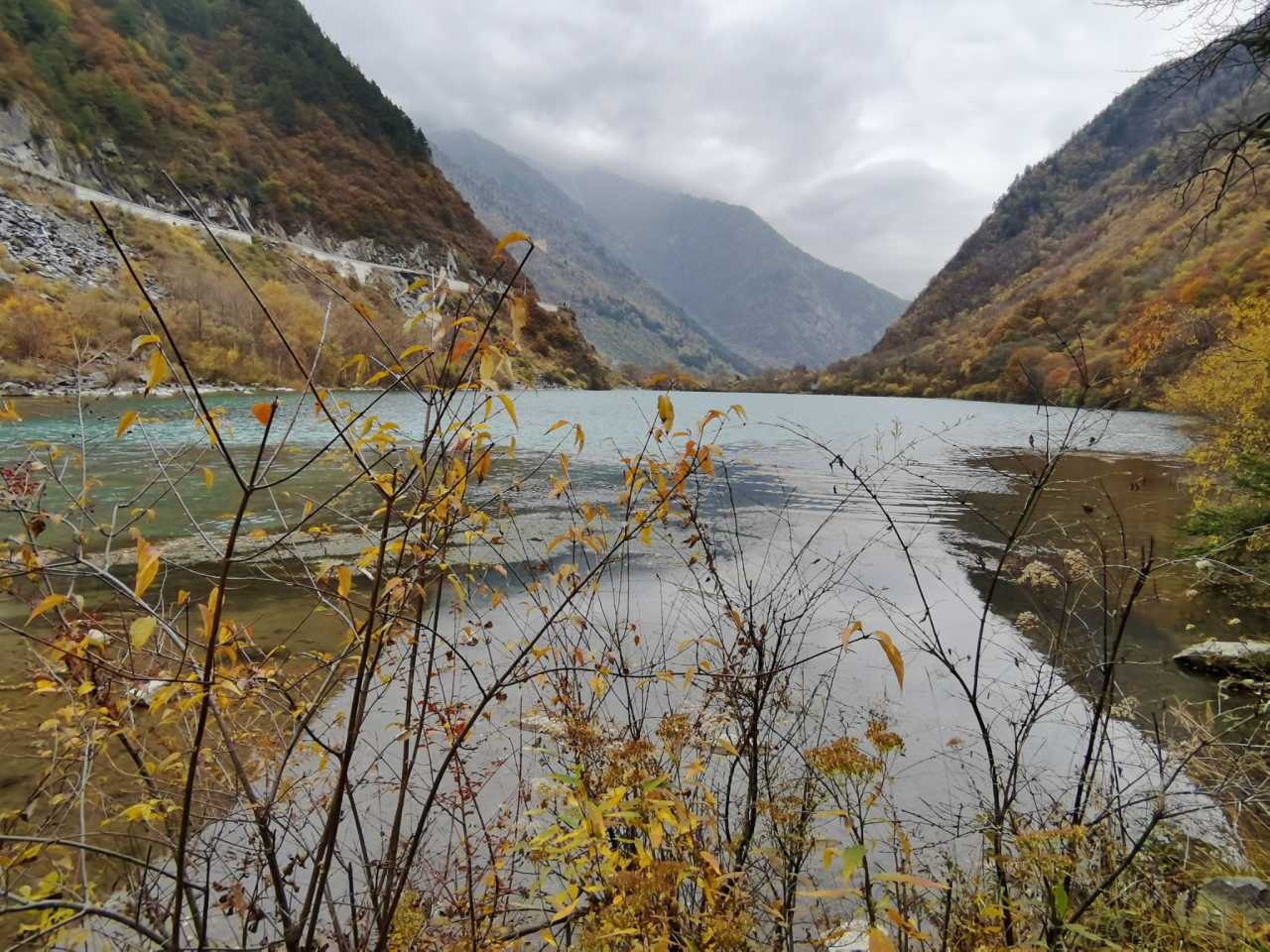
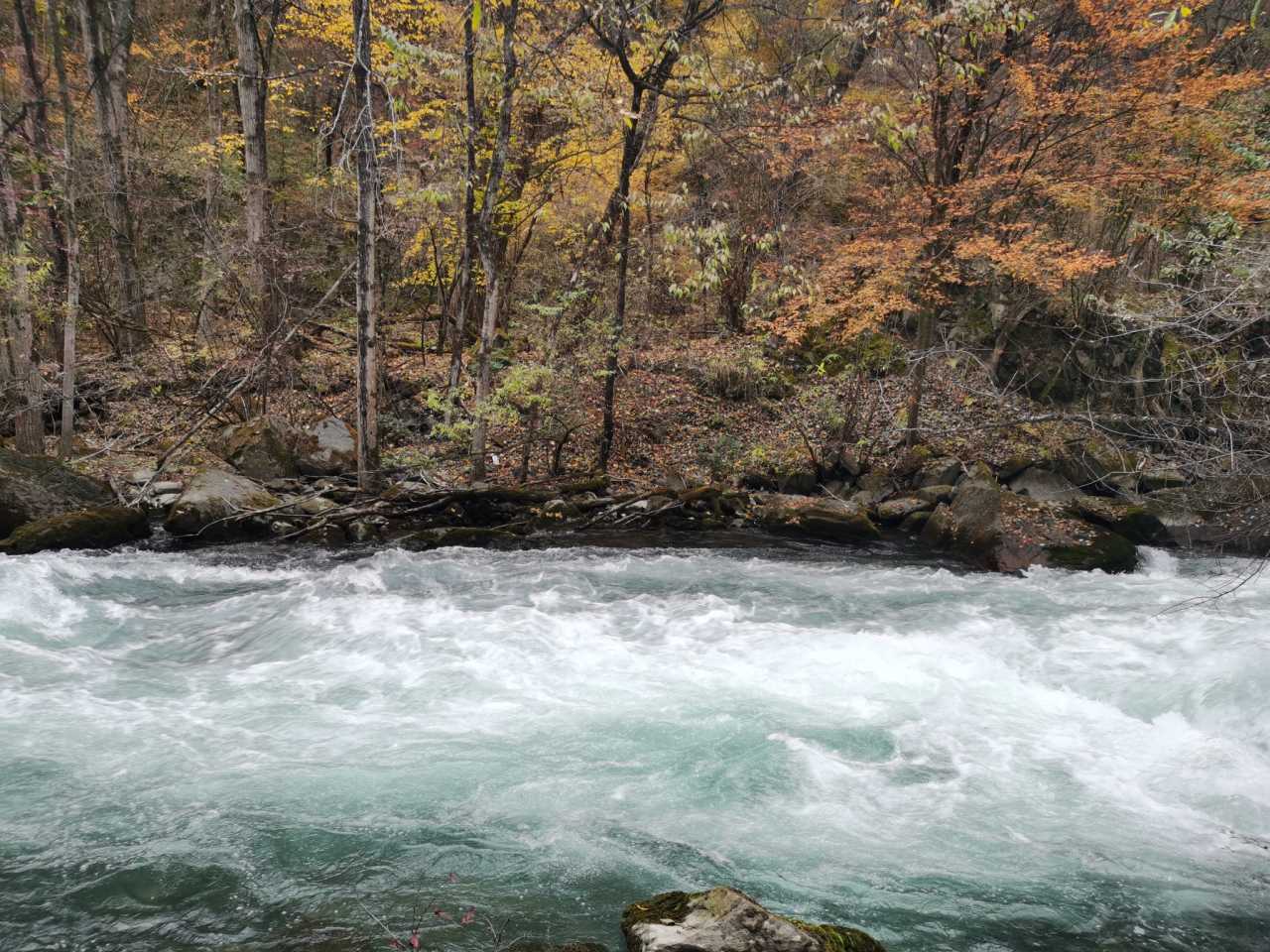
Songpinggou is often called "Little Jiuzhaigou," but I believe it has its own unique charm. At a lower altitude with abundant water, we followed the wooden boardwalk deeper into the reserve. The colorful forests on both sides hadn't completely shed their leaves—reds, yellows, and greens intertwined in layered patches.
But the biggest surprise was this: a thin layer of snow had already settled on the mountain peaks.
"Mom, look! Snow!" our four-year-old son shouted excitedly, pointing out the window. It was the first time in his little life he had ever seen snow. My mother's eyes crinkled into a smile as she pulled him close: "Come on, sweetie, Grandma will take you to touch the snow."
I pressed the shutter and captured that moment—it's still one of the most precious photos in my phone.
Overnight in Songpan: The First Night on the Plateau
By evening, we arrived in Songpan County—the gateway to the western Sichuan plateau, already close to 3,000 meters above sea level. I made a point to buy Rhodiola rosea oral liquid from the pharmacy and prepared oxygen bags for my mother and son.
For dinner, we had Tibetan hotpot—yak meat, highland barley cakes, and butter tea. My mother took a sip of the butter tea and wrinkled her nose: "This taste… too gamey." But my wife drank it with gusto, saying it was authentic Tibetan flavor.
After nightfall, Songpan was very quiet. Few people were on the streets, only the faint sound of chanting drifting from afar. The owner of our inn was a Tibetan man in his fifties. His Mandarin wasn't great, but he was incredibly warm-hearted, insisting on giving us a pot of butter tea to "warm ourselves up."
Lying under the starry sky of the plateau, I couldn't sleep for a long time. Not because of altitude sickness, but because I was moved—moved by everything we had encountered on this journey, and moved by the happiness of having my family all together.
[Link: Best family-friendly accommodations in Songpan County]
Day 2: Huanglong After Snow – A Fairyland's First Makeup
Heading to Huanglong, the Snow Growing Heavier
We set out at the crack of dawn. From Songpan to Huanglong, it was about 40 kilometers.

The higher we climbed, the heavier the snow fell.
At first, it was just a thin layer, scattered dots on the mountain peaks. Gradually, the entire mountain was covered in white. Crystal rime hung from the treetops, and the distant snow-capped peaks glowed gold in the morning light.
"Oh my god, it's so beautiful!" my wife couldn't help exclaiming.
I pulled over, and the whole family got out to take photos. Our son ran around in the snow, his little face red from the cold, but he was laughing with pure joy. My mother held my wife's hand, the two of them standing in the snow with endless snowy mountains behind them—at that moment, I thought, this is what happiness looks like.
Five-Color Pond: The Ultimate Contrast of White Snow and Blue Water
Huanglong Scenic Area uses a timed reservation system for tickets. We had booked the 9:00 AM entry slot online in advance.
After entering the park, the first thing we saw was the Welcome Pond. Normally a jade-green pool, it was now covered with a thin layer of ice, refracting dreamy light in the sun. A layer of snow had accumulated on the boardwalk beside the pond, crunching underfoot as we walked.
We took the cable car directly to the highlight of Huanglong—Five-Color Pond.
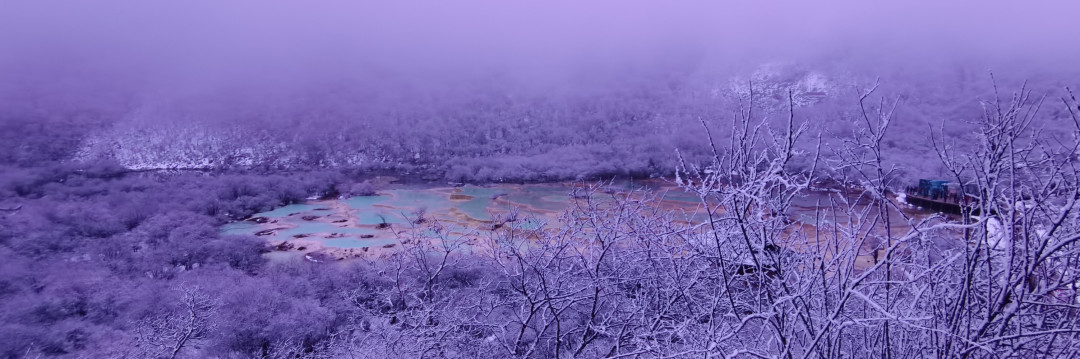
Five-Color Pond is Huanglong's iconic attraction. Layer upon layer of travertine pools of various sizes are arranged along the mountainside. On a sunny day, the water displays multiple colors—blue, green, yellow. But in November, Five-Color Pond revealed a different kind of beauty.
Snow covered parts of the pool edges, the pure white contrasting sharply with the emerald water. In the pools that weren't snow-covered, a thin layer of ice had formed, sparkling like diamonds in the sunlight. The distant snow-capped mountains, the dark green pine forests, and the pristine white snow together formed a scene straight out of an ink-wash painting.
I stood on the viewing platform and took a deep breath of the plateau air. That crisp, snow-scented air seemed to wake up my lungs.
My Mother's Highland Stroll: Tougher Than I Expected
To be honest, before going up to Huanglong, I was most worried about my mother. After all, she was over sixty, coming directly from the low-altitude Sichuan Basin to over 3,000 meters above sea level. No one could guarantee there wouldn't be problems.
But my mother's resilience surprised me.
We slowly walked down the boardwalk, stopping to rest every few steps. Although she moved slowly, her spirits were high. She even took the time to tell our son stories: "See these pools? They were formed by travertine deposits. It took tens of thousands of years to make them look like this."
I quietly asked my mother if she felt unwell. She waved her hand dismissively: "I'm fine. Much better than I expected. When you're out having fun, the most important thing is to enjoy yourself."
At that moment, I suddenly felt that bringing parents and children along on a trip like this was absolutely the right decision.
[Link: Essential tips for visiting Huanglong with elderly family members]
Relaxing After the Descent: Guozhuang Dance and the Starry Sky
By the time we came down from Huanglong, it was already past three in the afternoon. We didn't go straight to Jiuzhaigou; instead, we stayed another night in Songpan.
After dinner, I took the family to the county square. A group of Tibetan locals had gathered, forming a circle and performing the traditional Guozhuang dance. The music was lively, and the dancers moved gracefully. My son, full of energy, ran into the circle and tried to follow along. The locals laughed warmly and pulled him in.
For a moment, I stood on the sidelines, watching my mother clapping to the rhythm, my wife filming with her phone, and my son dancing clumsily but joyfully. The starry sky above Songpan stretched endlessly—I couldn't help but think: this is the kind of travel that truly matters.
Day 3: Jiuzhaigou in Snow – A World of Unearthly Beauty
Entering Jiuzhaigou: A Winter Wonderland
The next morning, we finally arrived at Jiuzhaigou National Park. By then, the snow had stopped, but the entire valley was blanketed in a thick layer of white.
The Jiuzhaigou first snow experience is something every traveler should witness at least once. The colorful forests that usually dominate the landscape were now adorned with snow, creating a scene that felt both surreal and sacred.
We took the park's shuttle bus directly to the highest point—Original Forest. Here, the snow was deepest, and the silence was almost absolute. The only sounds were the crunch of our footsteps and the occasional chirping of birds.
Nuorilang Waterfall: Frozen in Time
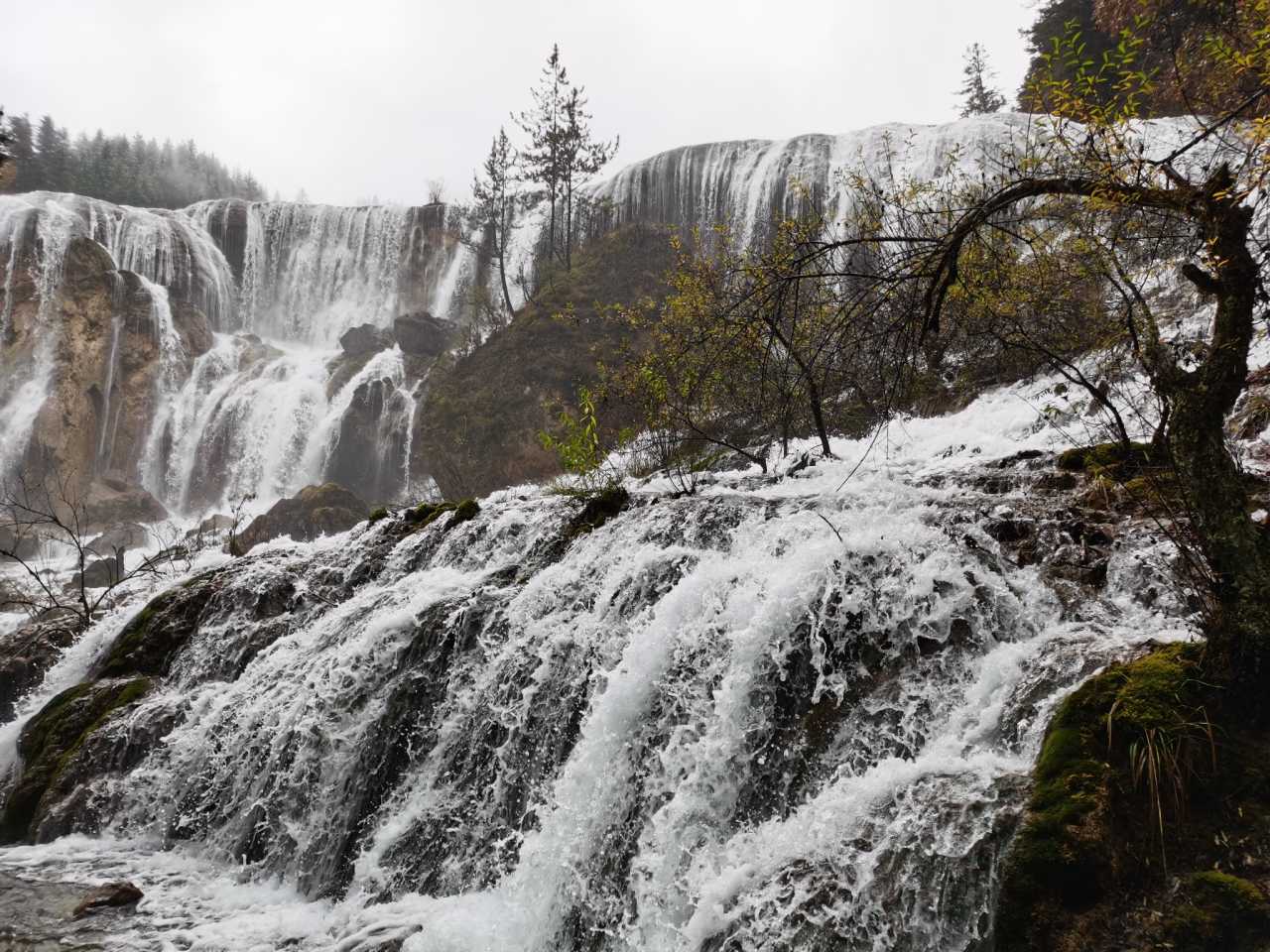
One of the most spectacular sights was Nuorilang Waterfall. In autumn, it's a roaring cascade. But after the snow, parts of the waterfall had frozen, creating massive icicles that hung like crystal curtains. The water that still flowed beneath the ice made a gentle, almost musical sound.
My son stood transfixed, his mouth wide open. "Daddy, is this really real?" he asked.
Yes, son. This is real. This is Jiuzhaigou in winter.
Five Flower Lake: A Palette of Turquoise and White
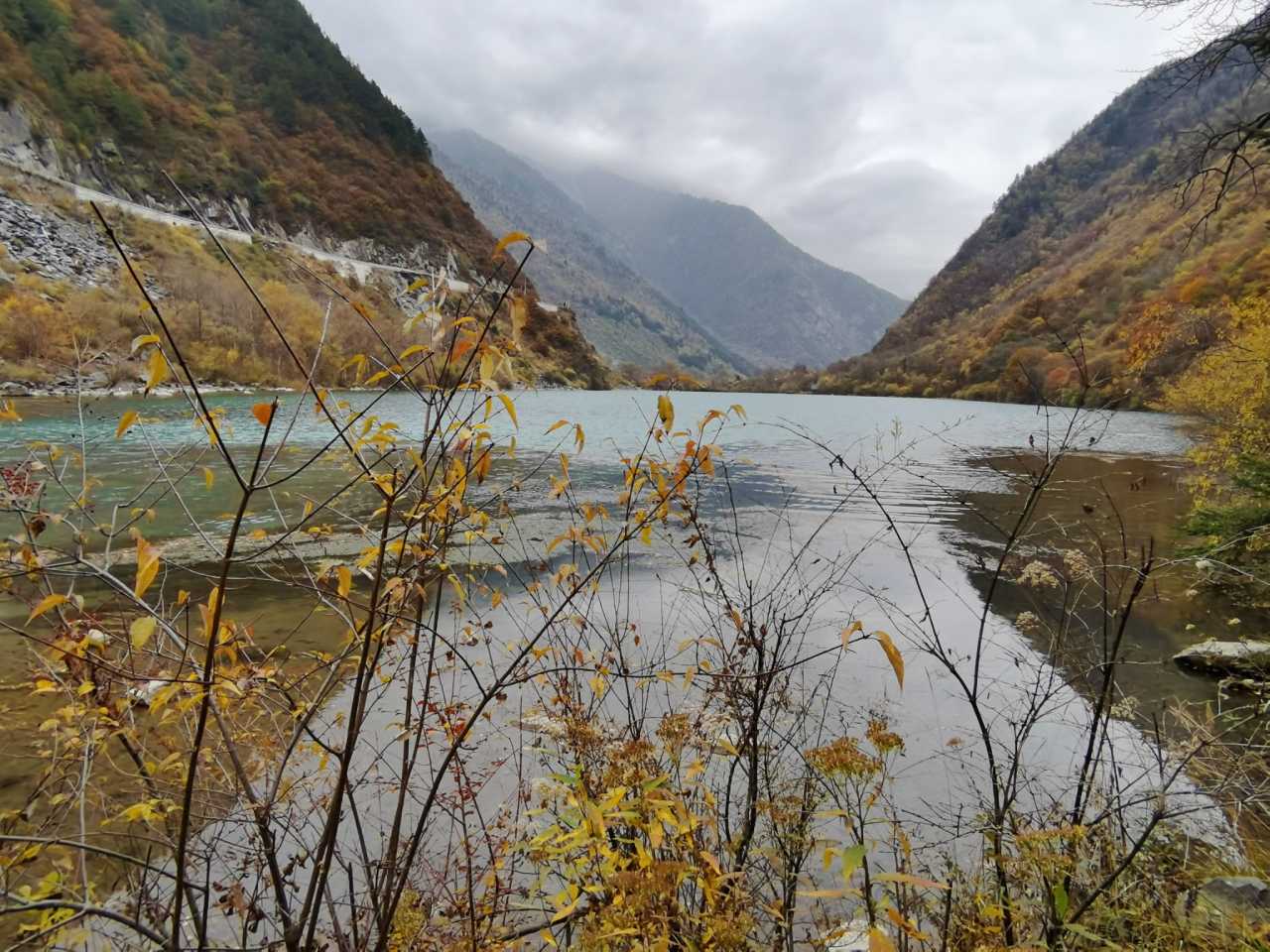
Five Flower Lake is famous for its incredible clarity and color variations. Even under a layer of snow, the lake's turquoise water remained visible, creating a stunning contrast with the white banks. Fallen leaves, frozen in the ice, looked like ancient fossils preserved in amber.
We spent nearly an hour here, taking photos and simply absorbing the beauty. My mother sat on a bench, her eyes fixed on the lake. "I've seen many beautiful places in my life," she said, "but this... this is something else."
Pearl Shoal Waterfall: A Hidden Gem
Less crowded than Nuorilang, Pearl Shoal Waterfall offered a more intimate experience. The snow-covered travertine terraces looked like pearl-studded steps leading to a celestial realm. The water, still flowing, created small streams that carved paths through the snow.
[Link: Complete Jiuzhaigou winter itinerary for 3 days]
Why November Is the Best Time for Jiuzhaigou and Huanglong
After this unforgettable journey, I can confidently say: November is the secret season for Jiuzhaigou and Huanglong. Here's why:
| Season | Pros | Cons |
|---|---|---|
| October (Peak Autumn) | Vibrant colors, warm weather | Massive crowds, high prices, difficult bookings |
| November (Late Autumn) | Fewer tourists, lower prices, snow scenery, unique photo opportunities | Cold weather, some facilities may close |
| December–February (Winter) | Deep snow, ice waterfalls | Extreme cold, some areas inaccessible |
In November, you get the best of both worlds: the lingering autumn colors and the magic of early snow. Plus, with fewer tourists, you can enjoy the scenery without the crowds.
Practical Tips for Your Jiuzhaigou November Trip
What to Pack
- Warm clothing: Temperatures can drop below freezing. Thermal underwear, fleece jackets, and down coats are essential.
- Waterproof boots: Snow and slush are common on the boardwalks.
- Sunglasses and sunscreen: The snow reflects sunlight strongly, and UV rays are intense at high altitudes.
- Oxygen cans: Available at pharmacies in Songpan and Jiuzhaigou.
- Snacks and hot drinks: Food options inside the park are limited and expensive.
Altitude Sickness Prevention
- Spend a night in Songpan (2,800m) before heading to Huanglong (3,100m+) or Jiuzhaigou (2,000m+).
- Take Rhodiola rosea supplements 2-3 days before your trip.
- Stay hydrated and avoid alcohol.
- Walk slowly and rest frequently.
Booking Tips
- Reserve tickets online at least 3-5 days in advance for both Huanglong and Jiuzhaigou.
- November is off-peak, but weekends can still be busy.
- Consider a guided tour if you're unfamiliar with the area.
[Link: How to book Jiuzhaigou tickets online]
FAQ: Everything You Need to Know About Jiuzhaigou in November
1. Is Jiuzhaigou worth visiting in November?
Absolutely. November offers a unique experience that combines autumn colors with early winter snow. The crowds are smaller, prices are lower, and the scenery is breathtakingly beautiful. Many photographers consider November the best month for capturing Jiuzhaigou's magic.
2. What is the weather like in Jiuzhaigou in November?
Daytime temperatures range from 5°C to 15°C (41°F to 59°F), while nighttime temperatures can drop below freezing (-5°C to 5°C / 23°F to 41°F). Snowfall is common, especially at higher elevations. Always check the forecast before your trip.
3. Can I visit Huanglong and Jiuzhaigou in the same trip?
Yes, and it's highly recommended. They are only about 100 kilometers apart. A 3-day itinerary (as described in this article) allows you to experience both without rushing. Just be mindful of altitude changes—Huanglong is higher than Jiuzhaigou.
4. Is it safe to drive to Jiuzhaigou in November?
Yes, but with caution. The roads are generally well-maintained, but snow and ice can make driving hazardous, especially on mountain passes. Check road conditions before departing, carry snow chains, and drive slowly. Alternatively, you can take a bus from Chengdu or fly to Jiuzhai Huanglong Airport.
5. What should I do if I experience altitude sickness?
Mild symptoms include headache, nausea, and fatigue. Rest, drink plenty of water, and use oxygen cans if needed. If symptoms worsen, descend to a lower altitude immediately. Songpan (2,800m) is a good acclimatization stop before heading to higher elevations.
Conclusion: Your Jiuzhaigou November Adventure Awaits
Four years later, I still remember that trip vividly. The snow, the laughter, the moments of quiet awe—they've become treasured family memories that we still talk about today.
If you're looking for a travel experience that's truly special, consider a Jiuzhaigou November trip. Skip the autumn crowds. Embrace the snow. Discover a world of unearthly beauty that most tourists never get to see.
Ready to plan your own Jiuzhaigou winter adventure?
Start by booking your tickets online, packing your warmest clothes, and preparing for a journey that will stay with you forever.
[Link: Book Jiuzhaigou tickets now] [Link: Find the best hotels near Jiuzhaigou] [Link: Download our complete Sichuan winter travel checklist]
Have you visited Jiuzhaigou or Huanglong in November? Share your experience in the comments below—we'd love to hear your story!
You may also like