Winter Solo Trip to Western Sichuan: Five Days, Four Nights – A Healing Journey of Self-Reconciliation
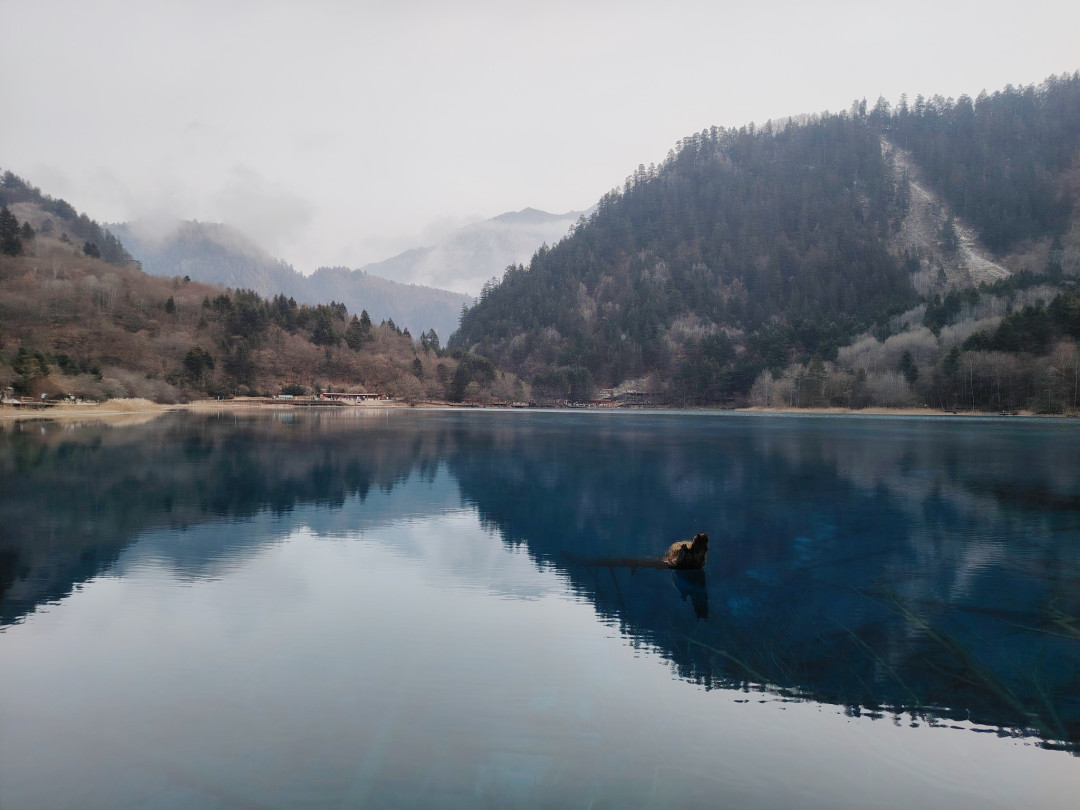
Meta Description: Planning a winter solo trip to Western Sichuan? Discover a 5-day, 4-night itinerary covering Jiuzhaigou, Xuebaoding Peak, and Songpan Ancient Town. Includes altitude sickness tips, packing list, and self-healing travel insights.
Introduction: When Life Hands You a Medical Report, Take a Trip
The words "thyroid cancer" stared back at me from the medical report. I didn't collapse in tears as I had imagined. Instead, a strange calm washed over me—it was time to give myself a trip. Without hesitation, I set my sights on Sichuan, the "second hometown" where I had spent four years of college. There, I had people I cared about, foods I dreamed of, and snow-capped mountains and alpine lakes that had appeared in my dreams countless times.
So I booked my flights, researched itineraries, packed my bags—all in one smooth motion. My winter solo trip to Western Sichuan had begun.
Why Western Sichuan for a Winter Solo Trip?
Many people asked me why I would bother traveling to the plateau while recovering from illness. My answer was simple: The more your body needs rest, the more your soul needs a complete reset. In winter, Western Sichuan is sparse with tourists, the snow mountains stand in silence, the alpine lakes are crystal clear—it's the perfect time for a conversation with yourself.
Five days and four nights—from the vibrant energy of Chengdu to the ancient tranquility of Songpan, from the biting winds of Xuebaoding Peak to the fairy-tale world of Jiuzhaigou Valley. This trip had no checklist anxiety, no social pressure—just me and the purest dialogue with the world.
[Link: Best time to visit Western Sichuan for solo travelers]
Pre-Trip Preparation: A Practical Checklist for the "Lazy Traveler"
What to Wear: Don't Let a "Southerner's" Stubbornness Ruin You
In winter, sub-zero temperatures are the norm in Western Sichuan. Here's my gear list:
- Upper body: Heavy down jacket / shell jacket + sweater + thermal underwear + scarf + hat + gloves
- Lower body: Fleece-lined thermal pants + waterproof outer pants + thick fleece socks + slip-resistant hiking boots
I bought hand warmers and heated insoles but never used them—if you're not particularly sensitive to cold, you can skip them. But moisturizer and sunscreen are absolutely essential—the dryness in Western Sichuan is beyond imagination, and chapped lips are a given.
Must-Have Items for Your Winter Sichuan Packing List
- Disposable underwear and towels (nothing dries in the high altitude)
- Moisturizer, lip balm, sunscreen (don't underestimate winter UV)
- Power bank (only those with 3C certification are allowed on planes)
- ID card, small amount of cash (some scenic areas have poor signal)
Accommodation Strategy for Your Western Sichuan Itinerary
- Chengdu: Stay near Chengdu East Station (convenient for catching the high-speed train the next day)
- Jiuzhaigou: Stay at Zangwang Square near the entrance (10-minute walk to the scenic area)
- Return trip: Stay near Shuangliu Airport (easy for early morning flights)
[Link: Where to stay in Jiuzhaigou for solo travelers]
5-Day Western Sichuan Itinerary: No Backtracking
Day 1: Zhongshan → Guangzhou → Chengdu (city walk + catching up with friends)
Day 2: Chengdu → Songpan Ancient Town → Xuebaoding Peak → Jiuzhaigou
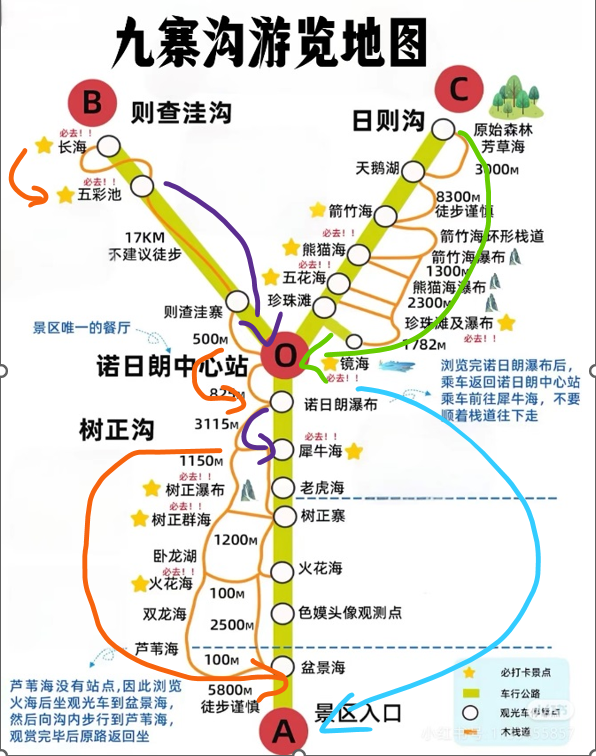
Day 3: Jiuzhaigou Left Line + Middle Line (in-depth exploration)
Day 4: Jiuzhaigou Right Line + Middle Line → Return to Chengdu
Day 5: Chengdu → Guangzhou → Zhongshan
Day 1: Chengdu – A Long-Awaited "Reunion"
When the plane landed at Tianfu Airport, Chengdu was drizzling with light rain. A friend messaged me: "You're in luck—you caught the big temperature drop." I wrapped my coat tighter and replied with a smile, "Perfect time to experience a real winter."
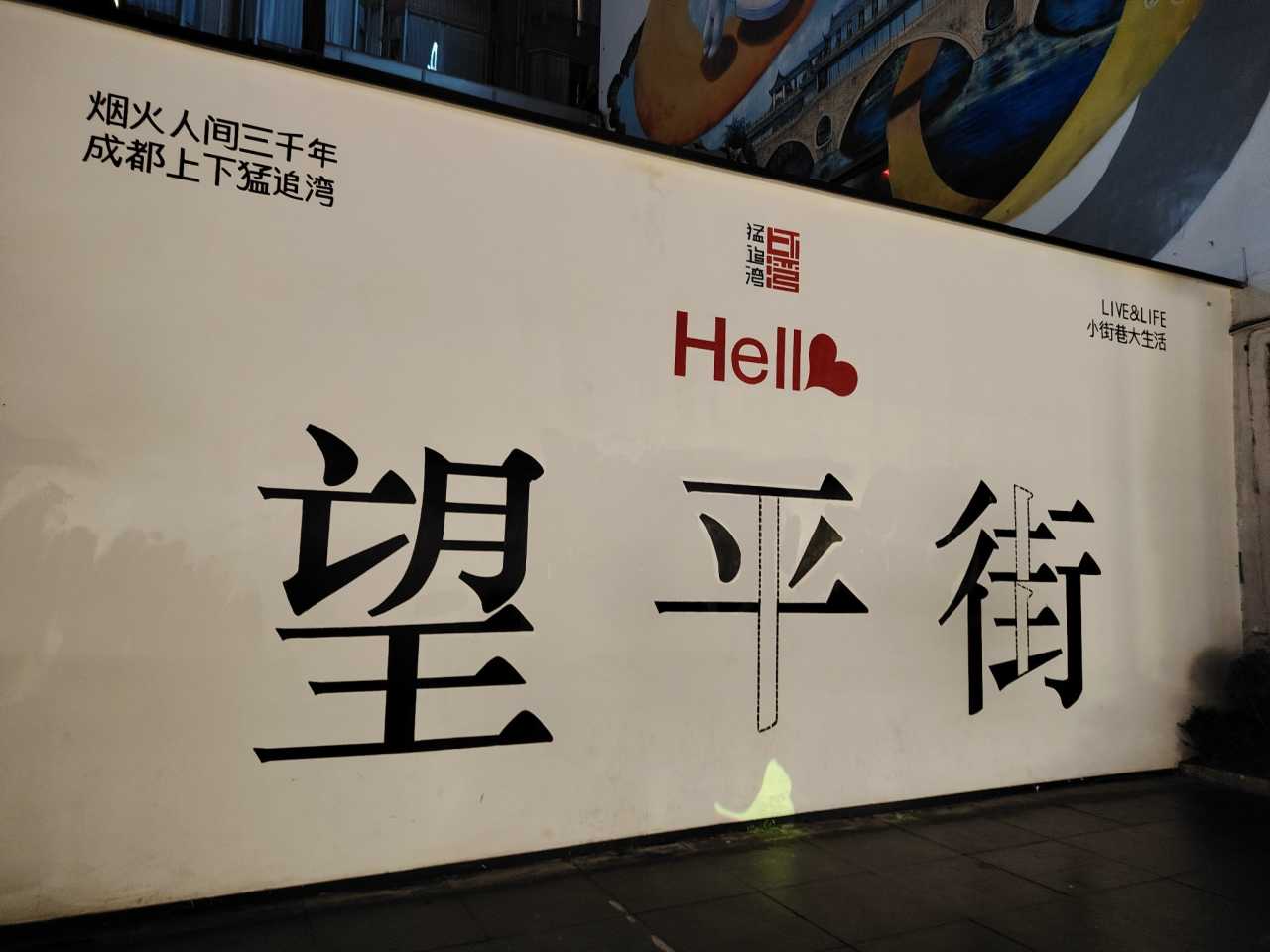
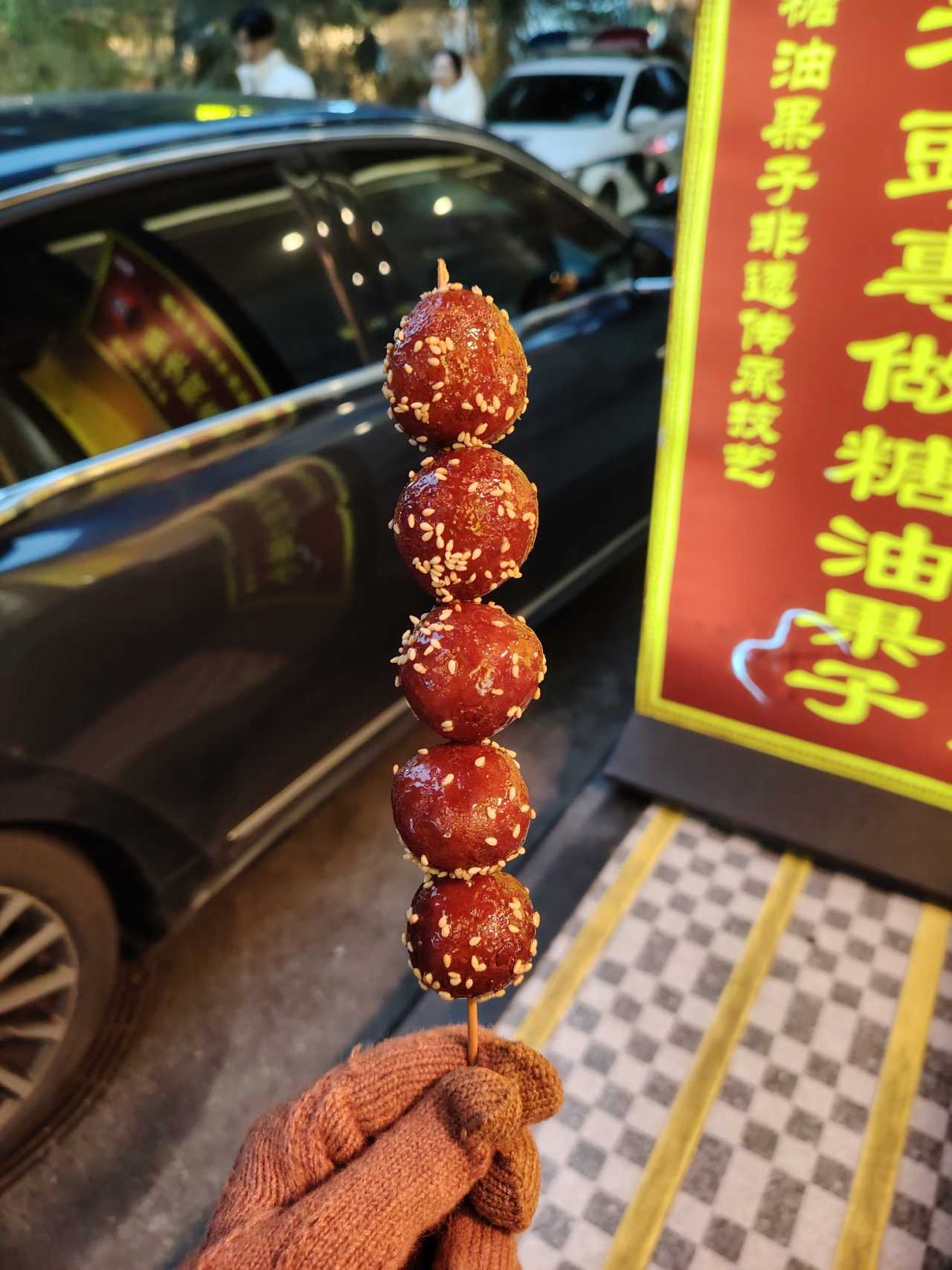
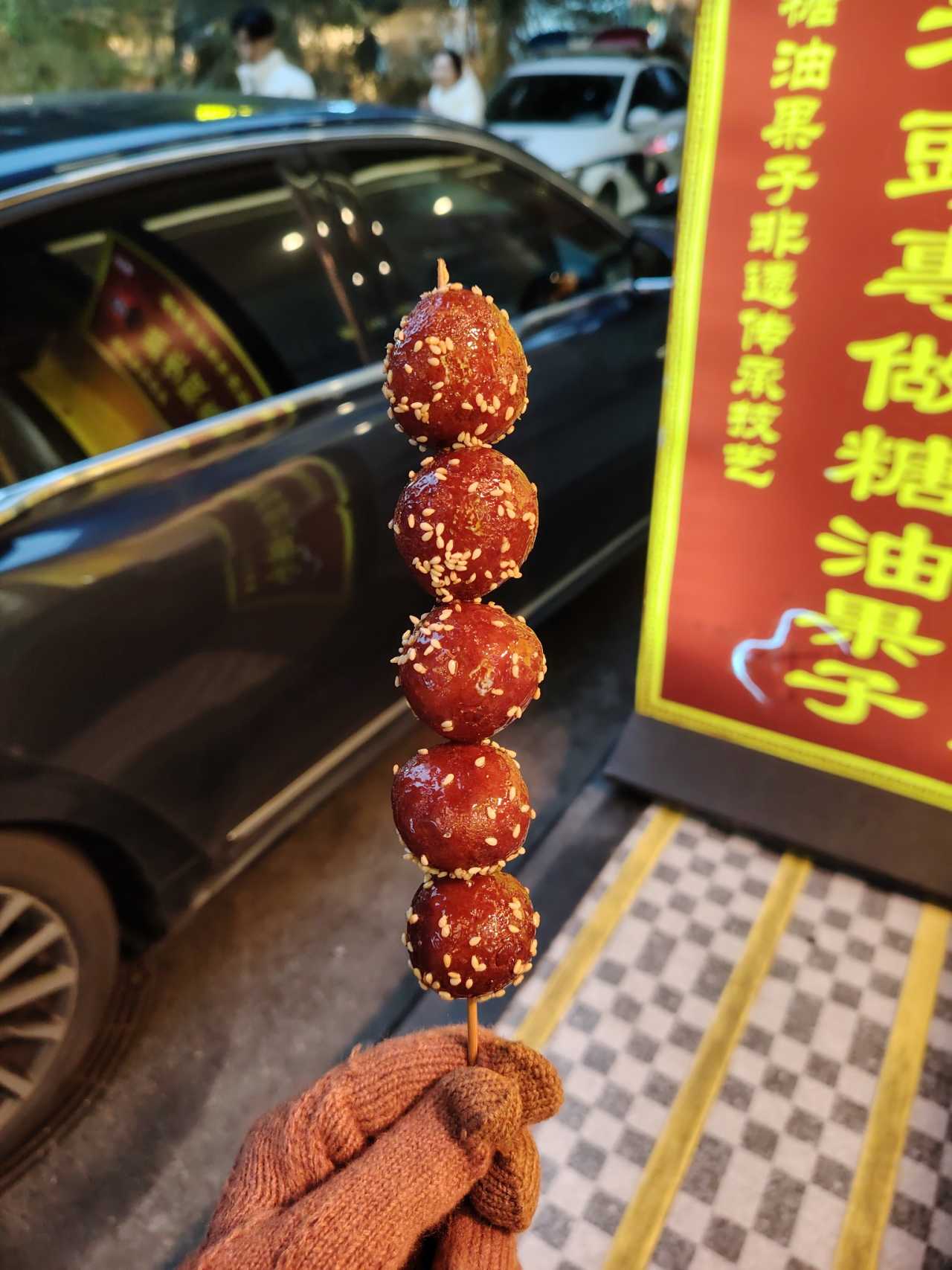
After dropping off my luggage, I headed straight to Wangping Street. This street held so many of my college memories—糖油果子 (sugar-coated fried dough balls), 蛋烘糕 (egg puffs), 老麻抄手 (old-style Sichuan wontons in spicy sauce)... every bite tasted like youth.
The 糖油果子 (sugar-coated fried dough balls) came out of the fryer crispy on the outside and chewy on the inside, sweet without being cloying. I finished one skewer in one go and couldn't resist buying a second. 蛋烘糕 (egg puffs) were a snack I hadn't had since graduation—sweet fillings wrapped in soft, fluffy batter. One bite, and I almost teared up—not from sentimentality, but because the taste of memory was so intense.
Walking from Wangping Street to Xiangxiang Alley, the smell of hotpot filled the air. I ducked into a random skewer shop and, as a Cantonese, ordered "barely spicy." My friend laughed at my clear broth pot: "This isn't hotpot—this is bathwater!" But I still got so spicy that I had to run out mid-meal to buy a cup of 凉虾 (cold rice jelly with brown sugar syrup)—my favorite sweet drink from college days, refreshing and spicy-relieving. One sip, and I was eighteen again.
At ten in the evening, I strolled with my friend on Anshun Bridge. In the drizzly Chengdu night, neon lights reflected on the Jin River as we talked about our past year's experiences, as if time had never passed. I got back to the hotel at one in the morning—that late-night decision would come back to haunt me with altitude sickness the next day.
[Link: Best street food in Chengdu for first-time visitors]
Day 2: Songpan Ancient Town & Xuebaoding Peak – A First Taste of Altitude Sickness
At six in the morning, I dragged my suitcase to catch the high-speed train. From Chengdu East Station, a 1-hour-50-minute ride brought me to Songpan Station. The view outside the window shifted from urban high-rises to snow-covered mountain ranges, and my mood brightened along with it.
Songpan Ancient Town: Two Hours Is Enough
Songpan Ancient Town sits at about 2,800 meters above sea level—not terribly high, but for someone who had stayed up late and skipped breakfast, a mild headache had already set in.
The town isn't large; two hours is enough to explore it. Recommended eats: - 牦牛肉串 (yak meat skewers): Firm texture, strong cumin flavor - 酥油茶 (butter tea): A stomach-warming miracle—one cup and you feel alive again - 牛肉饼 (beef pie): Crispy crust, juicy filling
By noon, the sun had come out. Sitting under the ancient city wall, soaking up the rays at -4°C (25°F), I realized something: Happiness can be simple—just being in a strange place, basking in an unfamiliar sun.
Xuebaoding Peak: A Lesson at 4,007 Meters
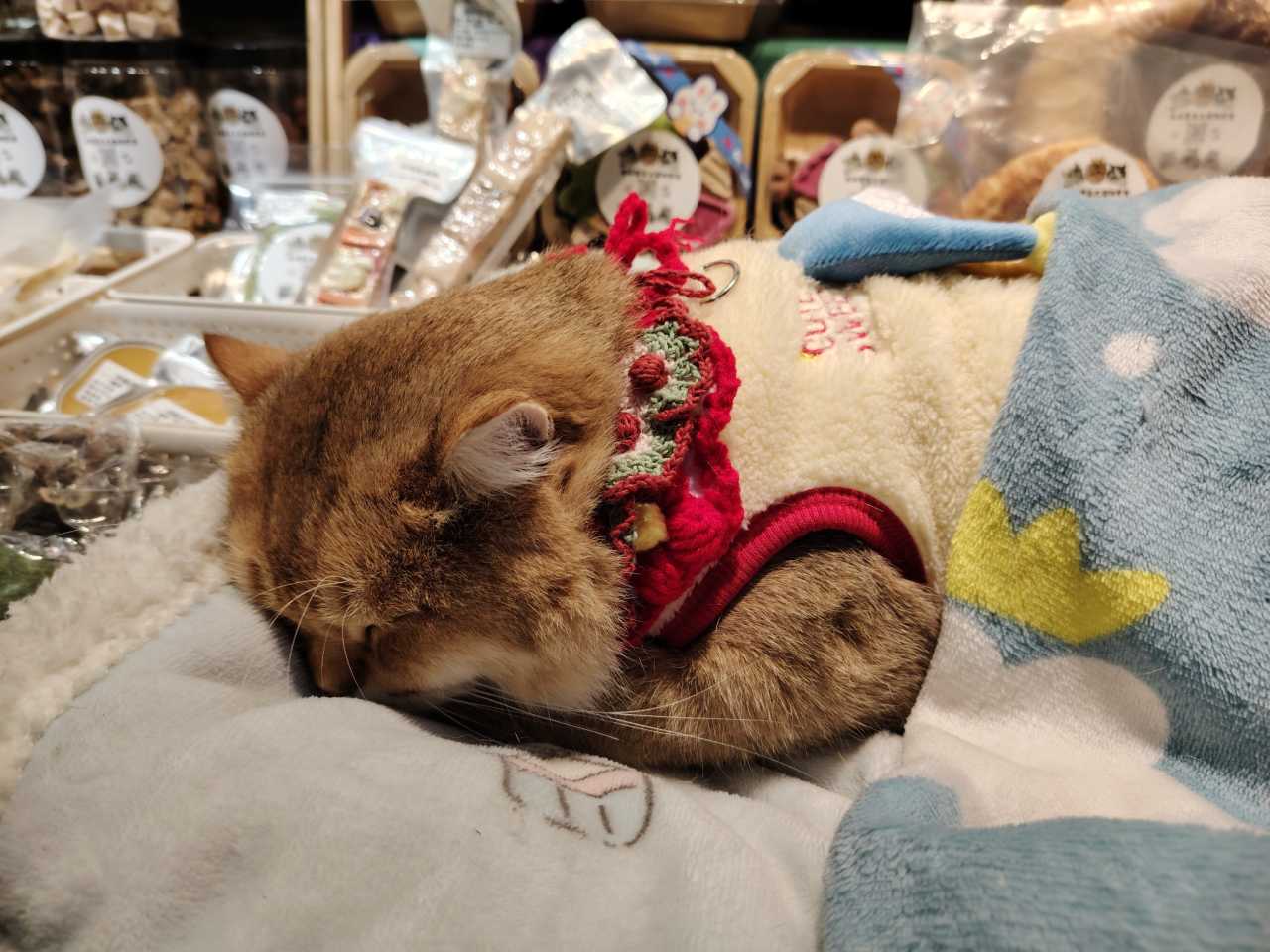
At two in the afternoon, I carpooled to Xuebaoding. We passed through Chuanzhusi Temple and stopped for ten minutes. There, I met a clingy orange cat with a scarred face and a swaggering walk. It rubbed against my leg and meowed, as if to say, "You're finally here."
At 3:30 PM, we arrived at the Xuebaoding viewing platform at 4,007 meters (13,150 feet). The combination of last night's late night, the bumpy mountain road, and the high altitude hit me like a freight train—a splitting headache, nausea, numbness in my limbs. The driver quickly handed me an oxygen canister. In that moment, I truly felt like I had "cheated death."

The other travelers got out to play in the snow and take photos, while I huddled in the car, sucking on oxygen. An hour later, the snow stopped, the sun came out, and I gradually recovered. I jumped out just in time to enjoy the last moments of the snow mountain scenery—cloud seas rolling, peaks towering—a grandeur so breathtaking it made all discomfort fade away.
Hard-learned lesson: Get plenty of rest before heading to high altitudes. No staying up late! No empty stomach! Altitude sickness is no joke.
At 7:30 PM, I took a bus from Songpan to Jiuzhaigou, a ride of about 2.5 hours. I arrived at the hotel around ten and collapsed into bed.
[Link: How to prevent altitude sickness in Western Sichuan]
Day 3-4: Jiuzhaigou – Two Days Immersed in a Fairy Tale
Day One: Right Line + Middle Line – An Ink-Wash Wonderland
At 8:30 AM, I walked into the scenic area. In the off-season, Jiuzhaigou had barely any visitors—it felt like the entire park was open just for me.
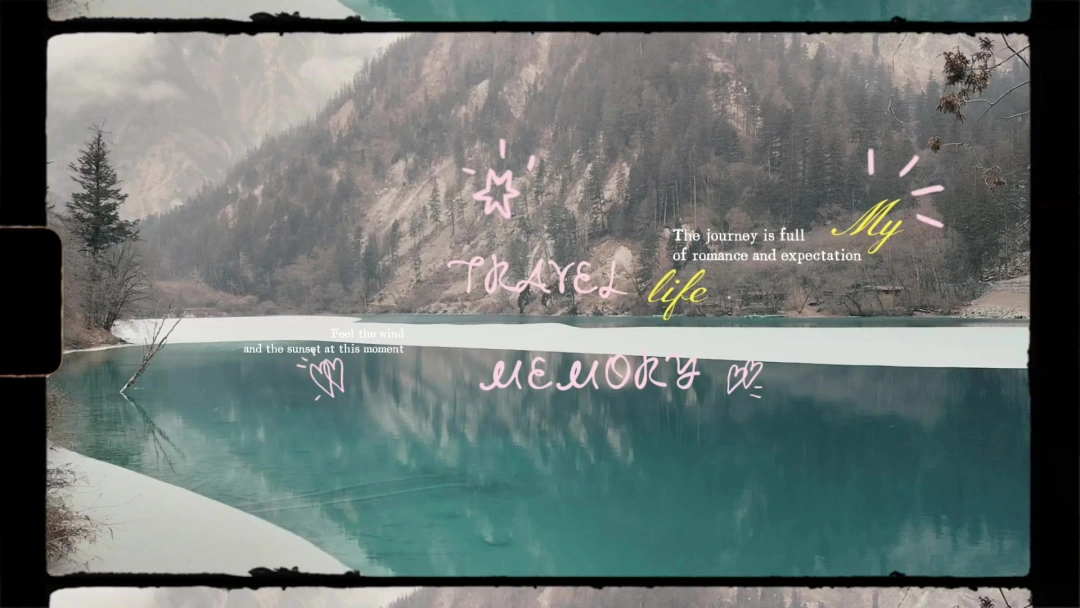
The shuttle bus took us to the highest point on the right line—Arrow Bamboo Lake (the primeval forest was closed due to winter fire prevention). In the morning, Jiuzhaigou was overcast with light snow. The lakes appeared deep and dark like ink, paired with mist-shrouded mountains—a scene straight out of a traditional Chinese painting.
Must-see spots on the right line: - Arrow Bamboo Lake: Winter transforms it into a mirror reflecting snow-covered peaks - Panda Lake: Named for the pandas that once visited, now frozen in winter beauty - Five Flower Lake: Even in winter, the underwater plants create stunning color patterns
By midday, the clouds parted. Sunlight hit the turquoise waters of Five Flower Lake, and the colors exploded—emerald, sapphire, amber—all layered like a painter's palette. I sat on a bench for 40 minutes, just watching the light shift across the water.
Day Two: Left Line + Middle Line – The Iconic Jiuzhaigou Experience
The left line is shorter but packs a punch. The highlight is Long Lake, the largest and deepest lake in Jiuzhaigou. In winter, it's partially frozen, with ice crystals forming intricate patterns along the shore.
Don't miss on the left line: - Long Lake: Surrounded by snow-capped peaks, it feels like the edge of the world - Colorful Pond: A small but vibrant pool that defies winter's gray palette
The middle line is where Jiuzhaigou's most famous attractions live: - Nuorilang Waterfall: Partially frozen in winter, creating a surreal ice sculpture - Shuzheng Waterfall: A series of cascades that look like frozen lace - Tiger Lake: Named for the tiger-stripe patterns in the limestone
By 4 PM, I was exhausted but exhilarated. I took the shuttle back to the entrance, stopping at the Rize Gully for one last look. The setting sun painted the snow peaks gold—a perfect farewell.
Evening: Return to Chengdu
At 6 PM, I boarded the bus back to Chengdu. The 7-hour ride felt shorter than expected—I spent most of it reviewing photos and journaling. Arriving in Chengdu at midnight, I checked into my hotel near Shuangliu Airport and ordered a bowl of dan dan noodles for a late-night snack.
Day 5: Departure – Carrying the Healing Home
My flight departed at 10 AM. I woke early, packed my souvenirs (mostly yak jerky and Sichuan peppercorns), and took a 15-minute taxi to the airport.
As the plane lifted off, I looked down at the snow-capped mountains shrinking into the distance. The thyroid cancer diagnosis hadn't changed—but something inside me had. The trip didn't "cure" me, but it reminded me that life is still beautiful, even when it's hard.
FAQ: Winter Solo Trip to Western Sichuan
1. Is it safe to travel alone in Western Sichuan in winter?
Yes, with proper preparation. Stick to well-traveled routes like the Chengdu-Jiuzhaigou corridor. Book accommodations in advance, carry extra layers, and always inform someone of your itinerary. The off-season means fewer tourists, but also fewer services—plan accordingly.
2. What is the best time for a winter solo trip to Jiuzhaigou?
December to February offers the lowest crowds and most dramatic winter scenery. January is the coldest but also the most serene. Avoid Chinese New Year week (late January/early February) when domestic tourism spikes.
3. How do I deal with altitude sickness in Western Sichuan?
- Acclimatize gradually: Spend a night in Chengdu (500m) before heading to Songpan (2,800m)
- Stay hydrated: Drink at least 2-3 liters of water daily
- Avoid alcohol and late nights: Both worsen symptoms
- Carry oxygen cans: Available at pharmacies in Chengdu and Songpan
- Listen to your body: If symptoms persist, descend immediately
4. What should I pack for a winter trip to Western Sichuan?
Essential items: heavy down jacket, thermal layers, waterproof boots, moisturizer, sunscreen, lip balm, power bank, disposable underwear, and cash. Hand warmers are optional—most travelers find them unnecessary if dressed properly.
5. Can I visit Jiuzhaigou in one day?
Technically yes, but two days are highly recommended. The park is large (over 700 square kilometers), and winter daylight hours are short (8 AM to 5 PM). Two days allow you to explore all three lines without rushing.
[Link: Jiuzhaigou winter travel tips for solo adventurers]
Conclusion: Your Healing Journey Awaits
This winter solo trip to Western Sichuan wasn't about escaping my diagnosis—it was about reconnecting with myself. The cold air, the silent snow mountains, the warm butter tea, the unexpected altitude sickness—every experience reminded me that healing isn't linear, and it doesn't have to be lonely.
If you're considering a solo trip to Western Sichuan, stop considering and start planning. The mountains will wait. The lakes will freeze. And when you arrive, you'll find exactly what you need—even if it's not what you expected.
Ready to plan your own winter solo trip to Western Sichuan? Start with our [5-day itinerary template] or [download our free packing checklist]. Your journey of self-reconciliation begins the moment you say "yes" to the unknown.
Have you taken a healing solo trip? Share your story in the comments below—or ask us any questions about traveling in Western Sichuan. We'd love to help you plan your adventure.
You may also like


