Winter in Seda: A Soulful Snow Journey Through the Buddhist Kingdom's Red Houses at 4,000 Meters
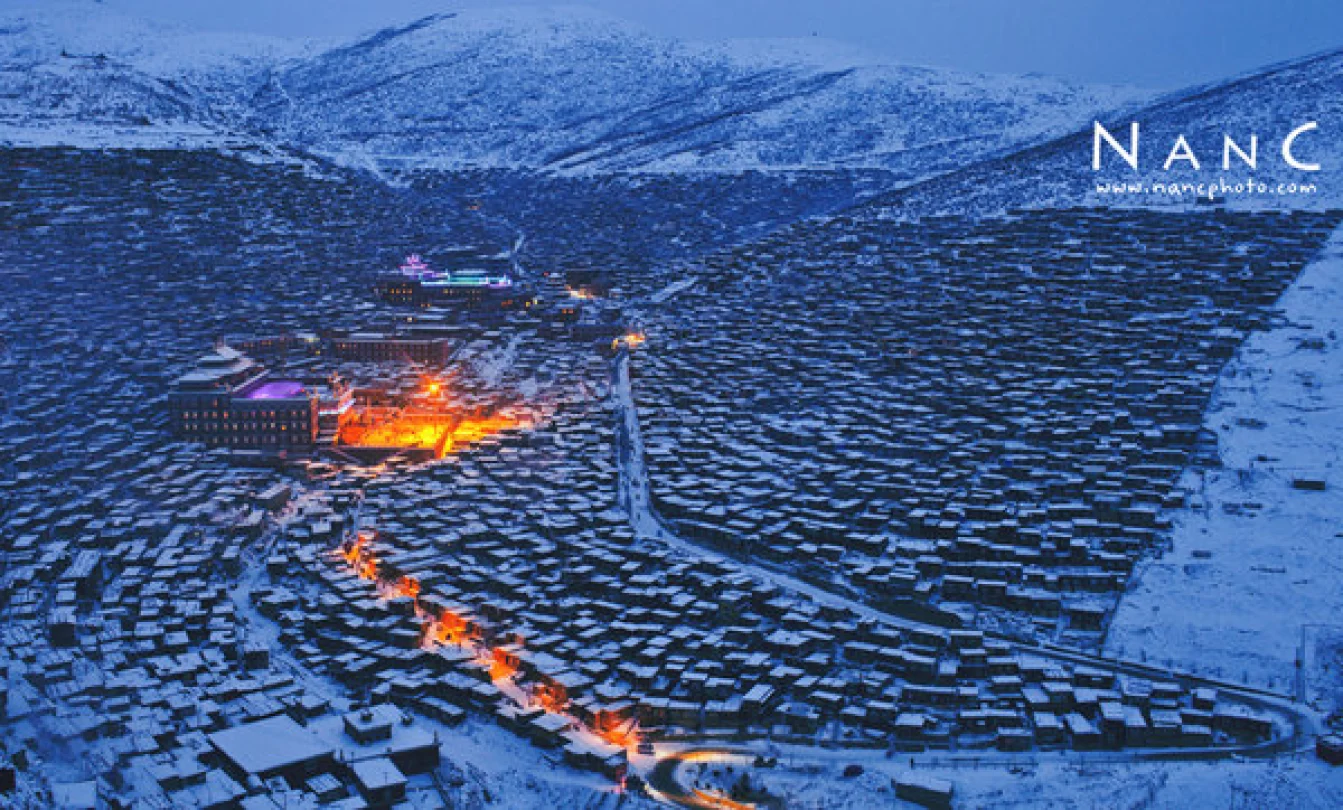
Meta Description: Discover winter in Seda, Sichuan's Buddhist Kingdom. Experience the red houses of Larung Gar Academy under snow, with travel tips, photography advice, and altitude survival guide for your 4,000-meter soul journey.
Weibo @多啦C梦的口袋 | Personal WeChat: nanc8899
I used to be a practicing lawyer—until one day I realized that, more than the verbal sparring of a courtroom, I was captivated by the interplay of light and shadow through a lens. So I quit my stable job, picked up my camera, and set out on a life of travel. My first book is now published, filled with travel essays, hundreds of photos, and little tips on photography and styling. Today, I want to take you to a place where snow falls in winter—Seda (Sertar) in Sichuan, that red-hued hidden realm known as the "Buddhist Kingdom."
Where Exactly Is Seda? Understanding the Buddhist Kingdom's Location
If you're interested in Tibetan culture, you've surely heard the name "Seda." It's located in the northeastern part of the Garzê Tibetan Autonomous Prefecture in Sichuan Province, bordering Qinghai Province to the north, with Aba Prefecture's Rangtang County to the east, Banma and Dari counties of Qinghai to the north, and Garzê and Luhuo counties to the west.
The heart of our destination—Seda Larung Gar Five Sciences Buddhist Academy—lies about 18 kilometers southeast of the county seat in the Larung Valley, at an altitude of 3,700 meters. When visiting in winter, prepare for altitudes that make every breath feel sacred.
[Link: High Altitude Travel Guide]
A Brief History of Larung Gar Academy
In 1980, the revered teacher Jigme Phuntsok, despite his advanced age and frail health, came to this desolate mountain valley and started from scratch, establishing a study center with just 32 students. With support from the 10th Panchen Lama, Ngapoi Ngawang Jigme, and Zhao Puchu, then president of the Buddhist Association of China, it gradually grew into the world's largest private Buddhist academy.
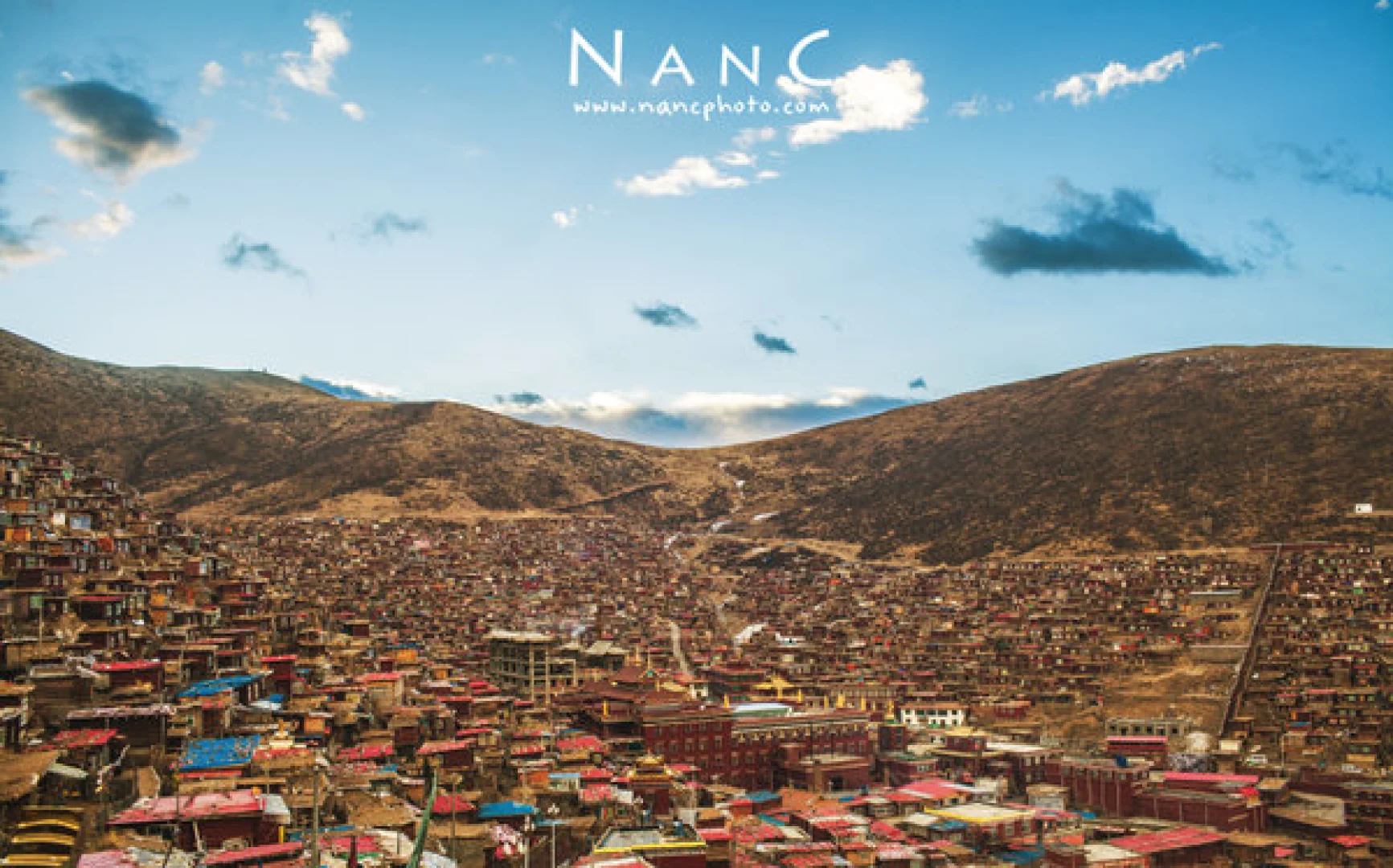
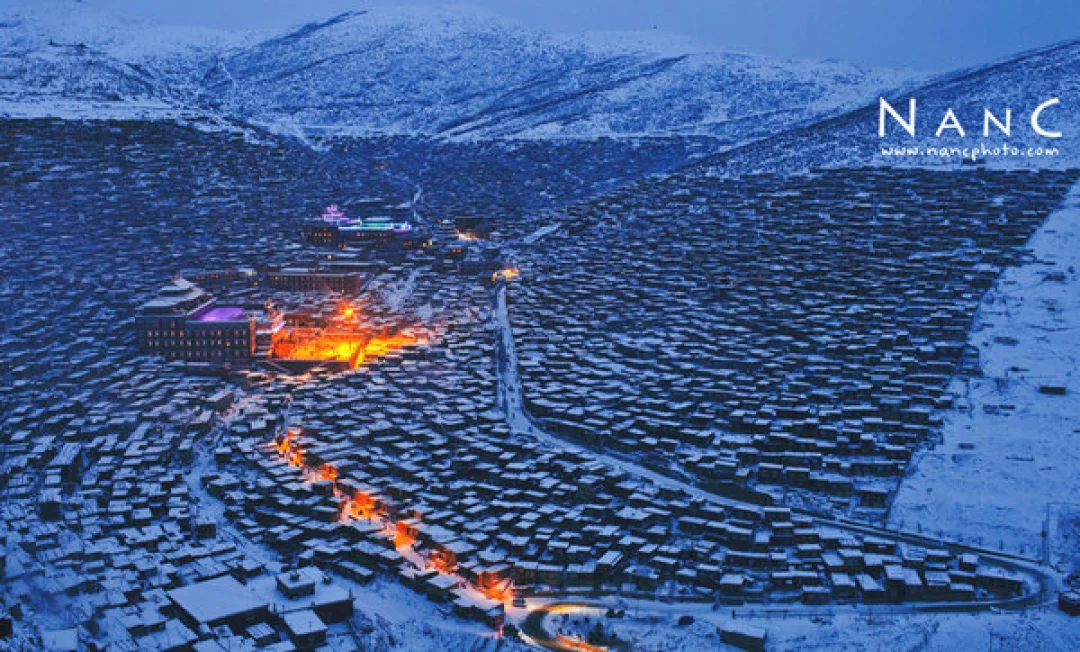
Today, the valley stretches for kilometers, densely packed with red wooden huts. Monks and nuns (female practitioners) in crimson robes move among them, and the air is filled with a tranquility that transcends the mundane world. In winter, snow blankets these red houses, creating a scene of haunting beauty.
Why Visit Seda in Winter? The Soulful Snow Experience
To be honest, I'm not a devout believer. What drew me here were the images I'd seen repeatedly on photography websites: rows upon rows of red houses arranged in an orderly chaos, and at night, lights twinkling like stars—a sight so magnificent it takes your breath away. Winter adds a layer of purity that summer cannot match.
In February 2013, just before Chinese New Year, I returned from a photo shoot in Thailand. In Chengdu, a few friends and I spontaneously decided: let's go to Seda! There were four of us, and we set off on a whim. But reality quickly gave us a rude awakening.
How to Reach Seda: Transportation Guide for Winter Travel
By Bus from Chengdu

The easiest way from Chengdu is to take a direct bus from Chadianzi Bus Terminal. There are one or two buses around 6 a.m. daily (one at 6:20, another at 6:25), costing around 200 RMB, with a journey of about 14 hours. Station phone: 028-87507768 / 87507760. Once you arrive at Seda county town, you can share a minivan to the Buddhist academy for 7 RMB per person, arriving in about half an hour.
By Chartered or Shared Car
We chose to charter a car, but our luck was terrible. At the entrance of the Kangding Hotel on Wuhouci Cross Street in Chengdu, we negotiated a price with a Tibetan driver, agreeing to depart at 10 p.m. But when we called him in the evening, he was unreachable. With no other option, we had to share a minivan on the spot. We set off at 3 a.m., and 16 hours later, we finally reached the academy's gate. The ride was bone-rattling; sitting in the back row, we were practically launched into the air every few seconds.
Price Reference for Chartered Cars: Minivan one-way 1,600–1,800 RMB, SUV 2,000–2,500 RMB. I strongly recommend choosing an SUV—the safety and comfort are incomparable, especially on icy winter roads.
[Link: Winter Road Safety in Sichuan]
Where to Stay in Seda During Winter: Accommodation Tips
We chose to stay at Larung Hotel at the top of the academy. During the off-season, a standard room costs around 160 RMB per night; during peak season (April to October), you'll need luck. No phone or online reservations accepted—just show up and hope for the best.
Important Note: In winter, the bathrooms are sealed shut! Don't expect to use the toilet or shower in your room. About 30 meters from the hotel is a primitive pit latrine. At night, with temperatures below minus 10 degrees Celsius, you'll need a flashlight and tread through the snow to relieve yourself. Want to wash your hair? Boil water in the lobby on the first floor, pour it into a basin, and make do. But I advise you: at high altitudes, don't catch a cold. Skip washing your hair or showering—just endure it.
Photography in Seda: Capturing the Snowy Buddhist Kingdom
Best Panoramic Viewpoints
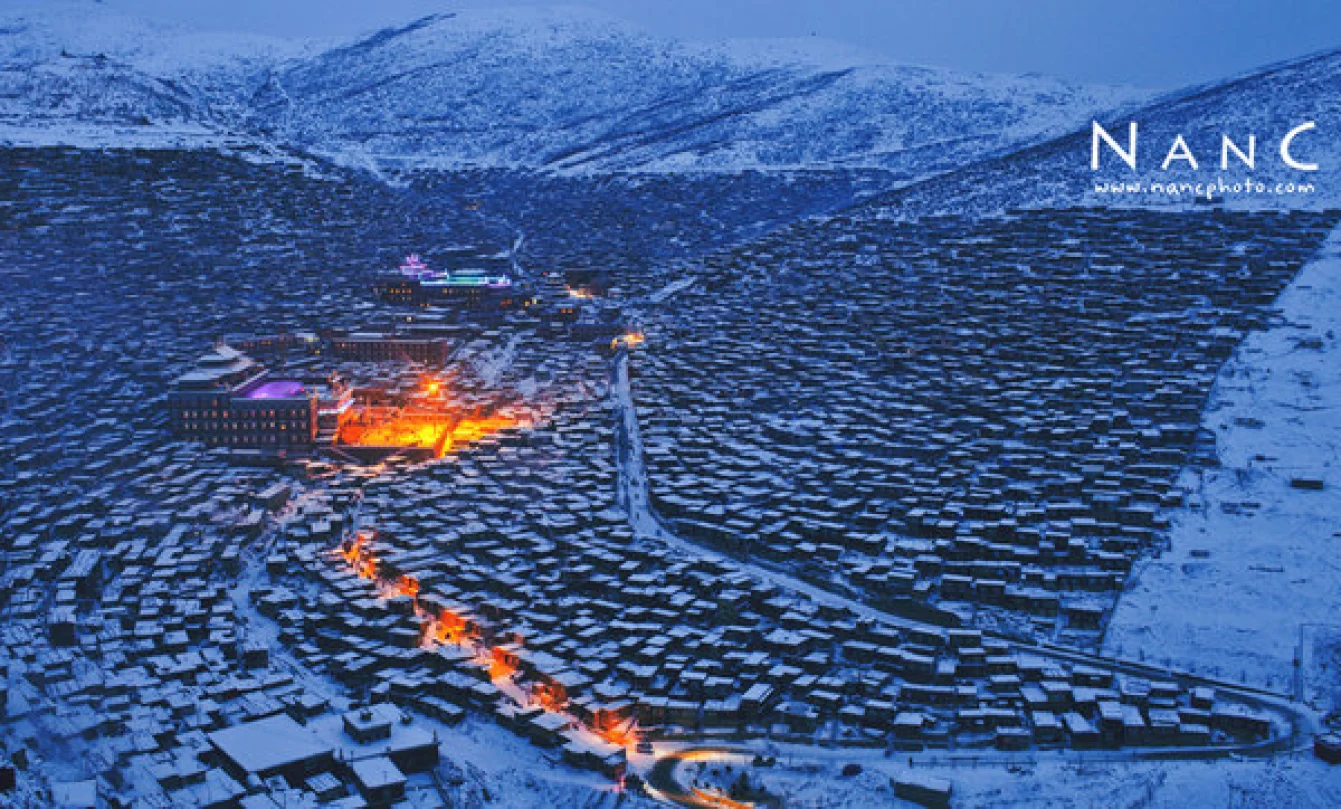
Climb the path next to the temple (Mandala) for about half an hour to reach the summit. This is the best spot for panoramic shots, ideal for sunrise (around 7 a.m.) and night views. But the mountain path is narrow—only one person can stand there, with a cliff beside it. When I stood there shooting night scenes, my legs were trembling the whole time.
Camera Settings and Essential Gear for Winter Photography
- Best Time for Night Shots: Just after sunset, before the sky goes completely dark, when it takes on a deep blue hue.
- Essential Gear: Tripod, shutter release cable, spare batteries. Cameras drain power incredibly fast in the snow.
- My Equipment: Canon EOS 5D Mark II + Canon EF 135mm f/2L USM, settings at f/5.6, 3.2s, ISO200.
Tips for Capturing People Respectfully
When photographing, always respect the locals' beliefs. Some monks and nuns don't want to be photographed and may even throw stones or plastic bottles at you. Use a telephoto lens for distant shots, or first communicate with friendly practitioners.
[Link: Ethical Photography in Tibetan Monasteries]
Surviving the Extreme Cold: My High Fever Experience
The next morning, we got to see the sunrise as we'd hoped. But soon, the sky began to dump thick, goose-feather snow. Excited, we rushed out to take photos in the snow. My scarf, gloves, and rabbit-fur hat all came in handy. But the price was steep.
That night, I went to the back mountain to shoot night scenes. At minus 15 degrees Celsius, I stood there for half an hour. My boots were drafty, and my feet ached to the bone from the cold. Back at the hotel, I boiled water to soak my feet, filled a hot water bottle, and tucked it into my bedding. But I woke up in the middle of the night in pain—lower back pain, dizziness, and a fever.
My friends rushed to the academy clinic in the middle of the night, only to find a caretaker who let them in to search for medicine themselves. The next day, a doctor came to my room and diagnosed me with a temperature of 38.7 degrees Celsius. Fortunately, after taking about 10 RMB worth of medicine, drinking plenty of water, and sleeping, my fever broke by the afternoon. A high fever at high altitude is extremely dangerous. This time, I was lucky—thanks to my friends' care and my own resilience.
Daily Life and Faith at Larung Gar Academy
At the academy, male and female dormitories are strictly separated. Monks (male) are absolutely forbidden from entering the nuns' (female) quarters, and vice versa. Tourists must also follow this rule.
Many nuns come from impoverished families or have faced setbacks in life and love, choosing to become practitioners. They live in low, makeshift huts built from plastic sheeting, straw, and mud bricks, with no source of income. Every day, they chant sutras and perform full-body prostrations, believing that through this life's hardships, they can pray for a better rebirth. Some call this faith. I think it's a devotion that transcends material things.
The Mandala: Sacred Heart of the Academy
The Mandala is the most sacred place at the academy, right next to Larung Hotel. Its upper level is for prayer wheel circumambulation; it's said that walking around it 100 times can cure illness. The lower level has prayer wheels, and people circle them morning and night. First-class blessings require 10,800 circuits, second-class 1,080, and third-class 108. In the open space beside the Mandala, there are always devout practitioners performing full-body prostrations, never stopping even in heavy snow.
Practical Tips for Your Winter Seda Trip
What to Pack for Extreme Cold
- Thermal layers: Base layer, fleece, and windproof outer shell
- Waterproof boots: Avoid drafty footwear like I had
- Hand warmers: Essential for photography sessions
- Flashlight: For nighttime bathroom visits
- Hot water bottle: Your best friend in unheated rooms
Altitude Sickness Prevention
- Ascend gradually; spend a night in Kangding or Daocheng en route
- Stay hydrated—drink at least 3 liters of water daily
- Avoid alcohol and heavy meals
- Carry Diamox (acetazolamide) if prone to altitude sickness
- Listen to your body: if you feel unwell, descend immediately
[Link: Altitude Sickness Treatment Guide]
Frequently Asked Questions About Winter in Seda
1. Is Seda open to tourists in winter?
Yes, Seda is open year-round. However, winter sees fewer tourists, so some facilities may be limited. Always check local regulations before traveling, as access policies can change.
2. What is the best time for photography in Seda?
Sunrise (around 7 a.m.) and sunset are ideal. For night shots, shoot just after sunset when the sky turns deep blue. Winter offers clearer skies and less atmospheric haze.
3. How dangerous is the altitude at Larung Gar Academy?
 The academy sits at 3,700 meters, with surrounding viewpoints reaching 4,000 meters. Altitude sickness is a real risk. Acclimatize for 1–2 days before any strenuous activity.
4. Can I shower or use modern bathrooms in winter?
No. In winter, hotel bathrooms are sealed. Prepare for primitive conditions: pit latrines, no running water for showers, and boiling water for basic hygiene.
5. What should I do if I get a fever at high altitude?
Descend immediately to lower elevation. A fever at altitude can rapidly escalate into life-threatening conditions like pulmonary or cerebral edema. Seek medical help at the academy clinic or evacuate to Seda county town.
Final Thoughts: A Soul Journey Worth Every Shiver
Winter in Seda is not a comfortable vacation—it's a pilgrimage. The cold bites, the altitude challenges, and the amenities are basic. But standing among those red houses under a blanket of snow, watching monks and nuns in crimson robes circle the Mandala in prayer, you feel something shift inside you.
This is not a trip for everyone. But if you're seeking an encounter with something larger than yourself—whether that's faith, beauty, or simply the raw power of nature at 4,000 meters—Seda in winter will give it to you.
Ready to plan your journey? Start by booking your bus from Chengdu, pack your warmest gear, and prepare for an experience that will stay with you long after the snow melts.
[Link: Book Your Seda Tour Package]
Have you visited Seda in winter? Share your experience in the comments below, or contact me at WeChat: nanc8899 for personalized travel advice.
You may also like


