Winter Fairy Tale: A Long-Awaited Reunion with Jiuzhaigou Amid Emerald Lakes and Blue Ice
Meta Description: Discover Jiuzhaigou in winter—a fairy tale of emerald lakes, blue ice, and snow-draped waterfalls. Expert photography tips, route guide, and FAQs for your 2025 winter trip. (155 characters)
Introduction: Why Jiuzhaigou in Winter Is a Must-See Destination
At twenty-five, I picked up my camera and embarked on a journey to measure the world through my lens. As a female photographer, I've always believed that the most breathtaking landscapes are often hidden in the most unexpected seasons. And this time, I want to take you to a place that defies expectation: Jiuzhaigou in winter—a fairy tale world sealed in ice, yet still radiant with color.
For many travelers, Jiuzhaigou is synonymous with autumn's golden foliage. But the winter Jiuzhaigou experience offers something far more rare: solitude, pristine blue ice, and emerald lakes that remain unfrozen even in sub-zero temperatures. This is the ultimate winter travel China destination for photographers, nature lovers, and anyone seeking a truly magical escape.
Prologue: Rebirth Beneath the Ice
Three million years ago, the blade of glaciers carved out Jiuzhaigou's unique valley terrain. Three hundred thousand years ago, earthquakes and gravity joined forces to create its magnificent waterfalls and lakes. Time flowed, landscapes shifted, and nature, with relentless patience, sculpted this paradise that has captivated the world.
For us Sichuanese, Jiuzhaigou is more than a tourist icon—it's a pride etched into our bones. In 1984, it became one of China's first national-level scenic areas, stepping into the public eye and gaining international fame. My parents, in their youth, once hitched a ride on a road maintenance truck, bumping along for three days just to reach this place. The awe they felt back then remains a favorite topic of conversation over tea.
"If winter is a letter sent by God, then falling snow is the most beautiful love poem written on that paper." After the trauma of the August 8, 2017 earthquake, and four years of protection and restoration, Jiuzhaigou finally "reapplied its makeup" and fully reopened to the public. At the start of 2022, I gathered a friend, avoided the crowds, and returned to this land that had haunted my dreams. What we didn't expect was to have the entire scenic area to ourselves—the sheer luxury of claiming a fantastical lake all to ourselves is unthinkable in any other season.
Now, follow my lens into this unparalleled winter journey to Jiuzhaigou.
Jiuzhaigou's "Y"-Shaped Map: A Route to Paradise
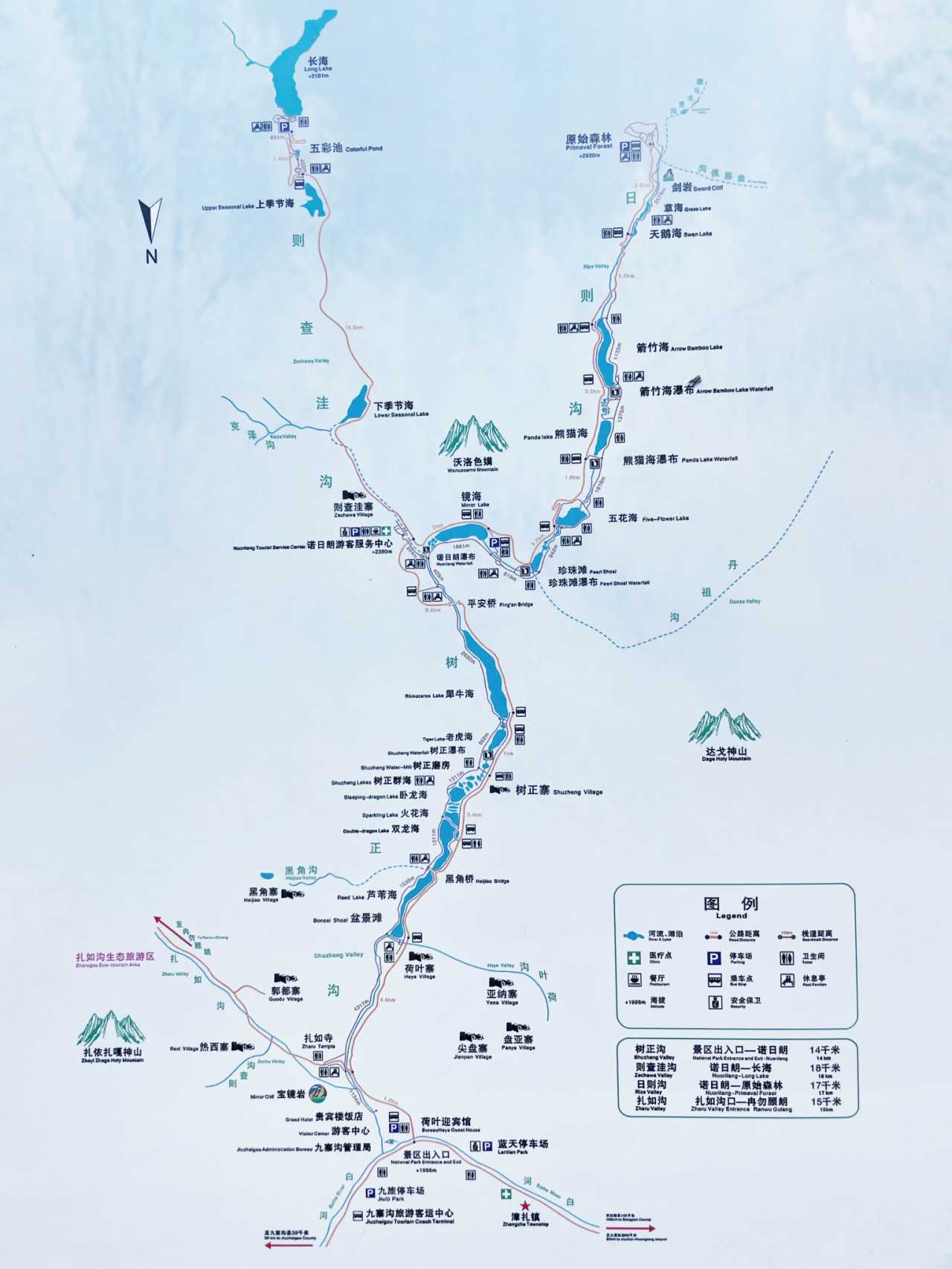
Understanding the Jiuzhaigou map is essential for planning your winter visit. The scenic area consists of three main valleys, forming a "Y" shape:
- Shuzheng Valley: The lower stem of the Y, with the park entrance at its base
- Rize Valley: The right branch of the Y, home to the most concentrated attractions
- Zechawa Valley: The left branch of the Y, featuring Long Lake and Five-Color Pond
During winter, the park operates with limited-area access, but all the must-see spots remain open, so rest assured you can visit. For the best Jiuzhaigou winter itinerary, focus on Rize Valley and Zechawa Valley.
Rize Valley: A Snow and Ice Symphony in Morning Light
As the first rays of sunlight touched the distant mountain peaks, we woke with the dawn. Entering the park at 8:30 AM, we boarded the first sightseeing bus, ready for a full day ahead. Jiuzhaigou's tourism infrastructure is well-developed; at each stop, the onboard guide would share the stories behind the scenery.
We traveled up along the Emerald River. On a winter morning, the snowy mountains were shrouded in mist, and the air was filled with a crisp freshness. Our first destination was the 17-kilometer-long Rize Valley scenic route—a landscape of ever-changing terrain and the most 精华 part of Jiuzhaigou.
Nuorilang Waterfall: The Frozen King
As the iconic symbol of Jiuzhaigou, Nuorilang Waterfall is the widest high-altitude travertine waterfall discovered in China. I had admired its beauty in countless promotional photos and videos, but standing before it in person, the visceral impact was unforgettable.

Nuorilang Lakes mark the starting point of Rize Valley, at an elevation between 2,353 and 2,365 meters. The rushing waters from over twenty lakes thread through the forest, plummeting over the cliff's edge like a Milky Way descending, their roar echoing through the valley. After the earthquake, when we saw news footage of Nuorilang's mudslides and its gentle streams turning into raging torrents, it broke our hearts as Sichuanese. Thankfully, after hundreds of clean-up operations, the waterfall has regained its former majesty.
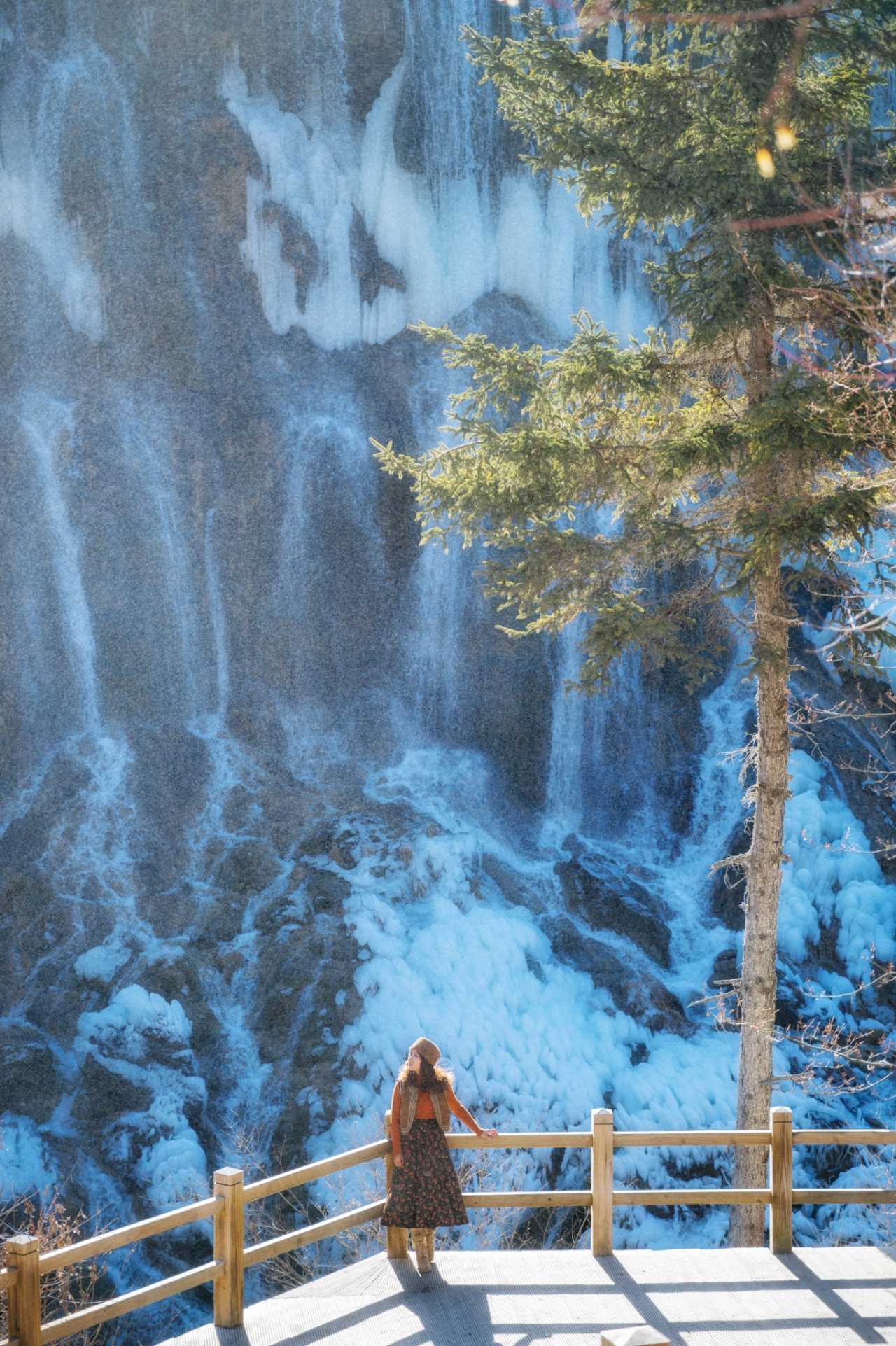
In winter, the waterfall reins in its summer exuberance. The cascading water freezes into pristine, crystal-clear icicles and ice curtains. This seemingly half-frozen ice cascade is the most wondrous artwork of winter Jiuzhaigou. We were incredibly lucky—the weather was clear during our visit, and the interplay of light and shadow rendered the ice waterfall breathtakingly beautiful.
Photography Tips for Nuorilang Waterfall: 1. Stand on the top platform and use a medium-to-telephoto lens to compress distance, framing both people and the waterfall to emphasize its grandeur 2. Under sunlight, the waterfall's mist scatters; use a fixed-aperture lens with a large aperture for dreamy portraits 3. Leverage the warm and cool contrasts between highlights and shadows to enhance color vibrancy in your photos
Pearl Shoal Waterfall: A Dreamy Encounter in Warm Sunlight
Our second stop was Pearl Shoal Waterfall—a place deeply familiar to those born in the 80s and 90s. As the melody "You carry the load, I lead the horse" plays in your mind, the image of the monk and his disciples leading a horse through the waterfall automatically appears. Yes, this is the filming location for the 1986 version of Journey to the West.
Leaving the road and crossing the stream, we found the wooden boardwalk's snow had been cleared, with non-slip hemp mats thoughtfully laid down. On both sides of the path, stream water gushed joyfully from the forest, converging into a vast fan-shaped travertine shoal. After a night of bitter cold, splashing droplets clung to the branches, freezing into translucent frost.
When the stream water reached a sudden drop-off, it plunged unexpectedly, sending up thousands of waves with a thunderous roar. The cascading waterfall resembled countless white hada (ceremonial silk scarves), forming the largest travertine waterfall in Jiuzhaigou—Pearl Shoal Waterfall. Sunlight streamed down from the distant mountain peaks, and the droplets kicked up by the waterfall sparkled like pearls, flying freely. In the bright light, the mist was crystal clear, and where it met the branches, it formed silver-glowing ice crystals.
Photography Tips for Pearl Shoal Waterfall: 1. Shoot against the light or with side lighting to outline the subject's silhouette 2. Slightly increase exposure compensation to keep the subject properly exposed while slightly overexposing the background for a dreamy effect 3. Set the aperture to the smallest setting, ISO to the lowest, and reduce shutter speed to below 1/10 second—even without a tripod, you can achieve a silky, long-exposure effect on the waterfall
Five-Flower Pond: God's Spilled Palette
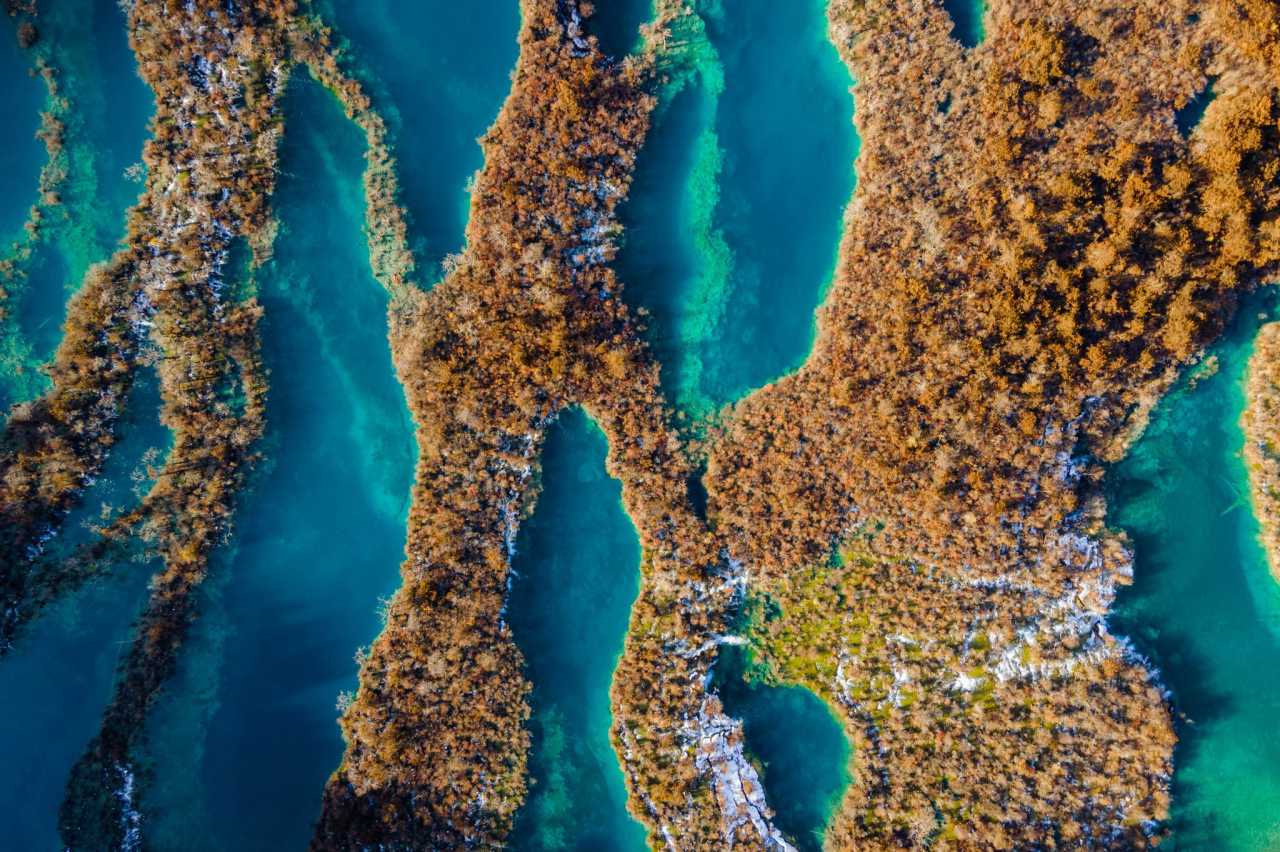
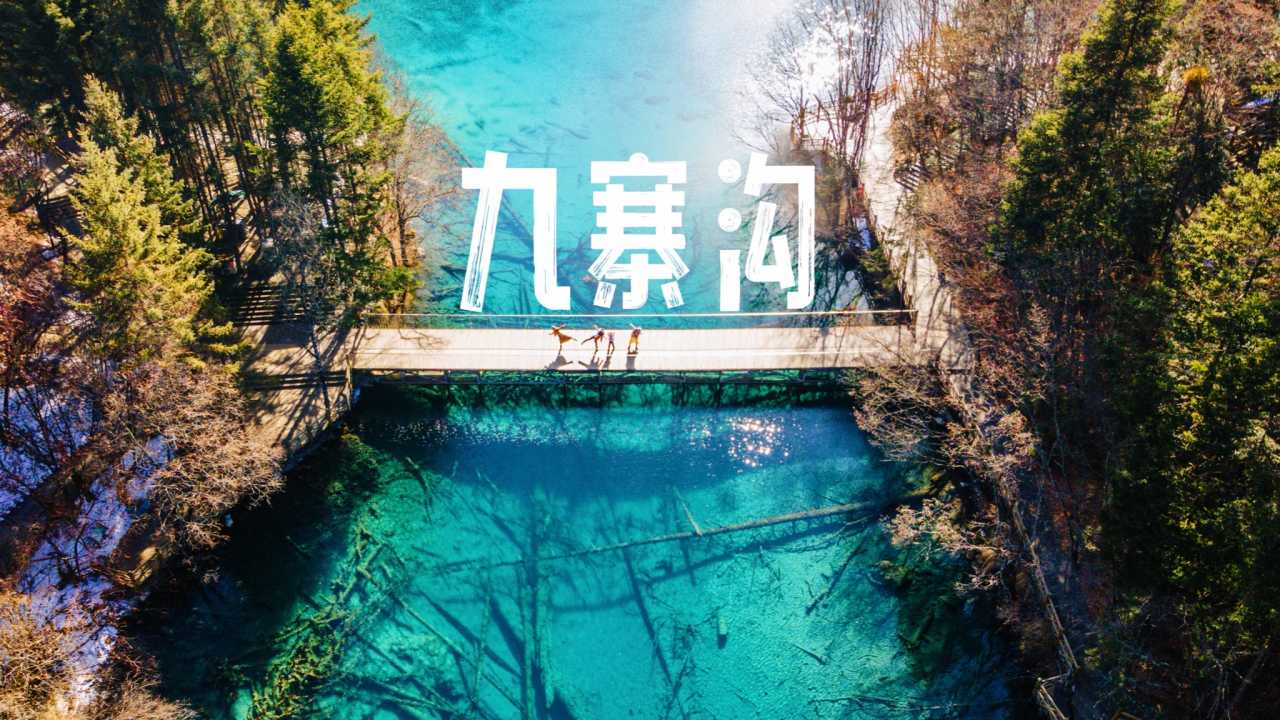
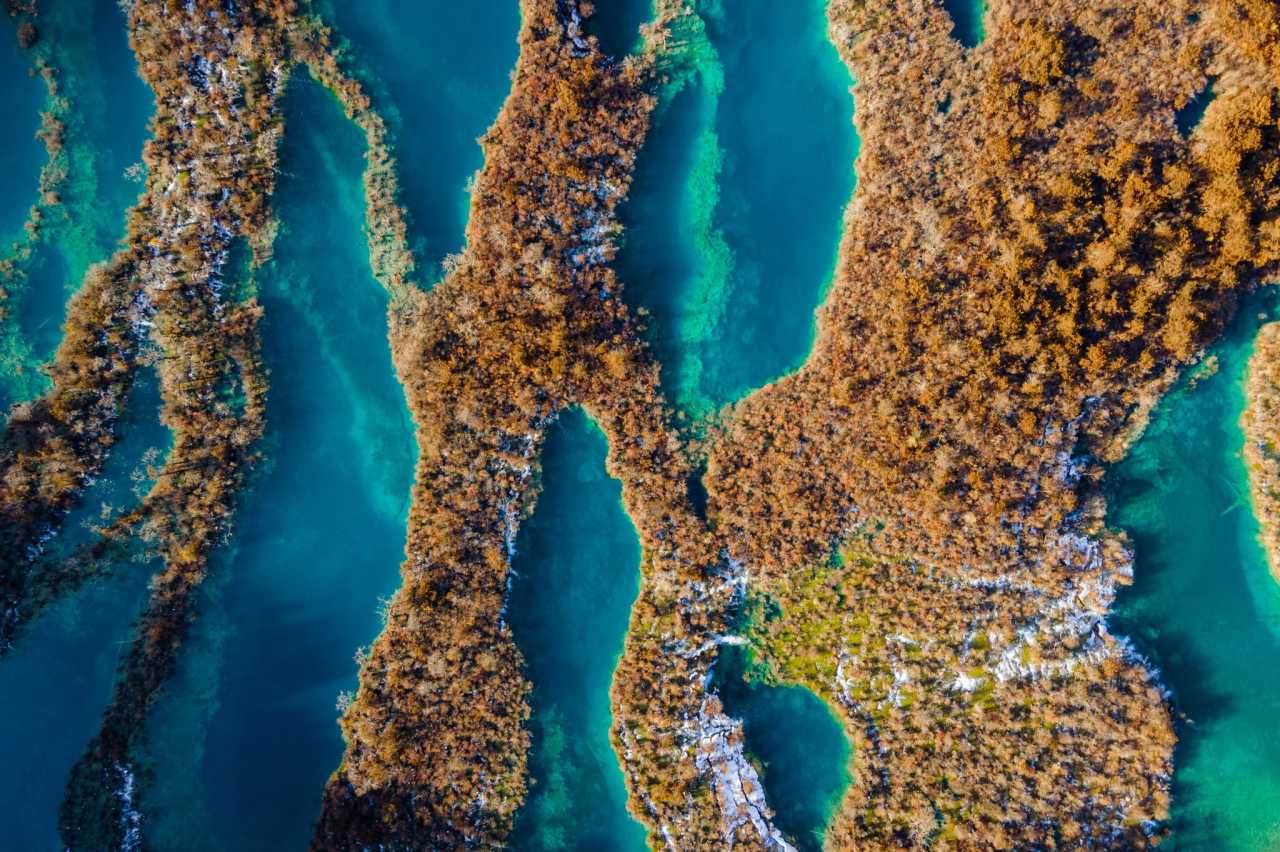
"They say after visiting Jiuzhaigou, you need not look at any other water"—water is the soul of Jiuzhaigou. Among its 114 lakes, large and small, Five-Flower Pond is the one most worth lingering at. Even in the biting cold of deep winter, the pond's waters brim with life.
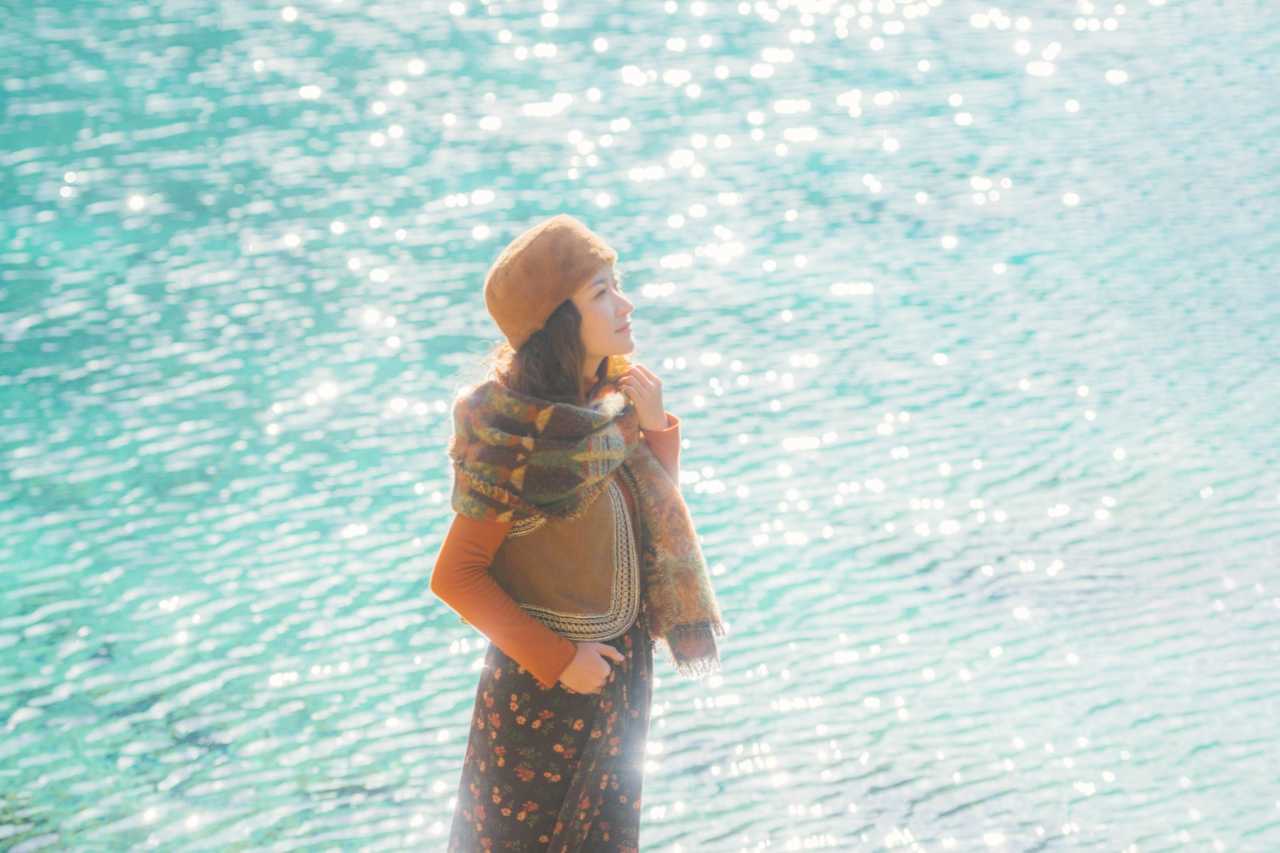
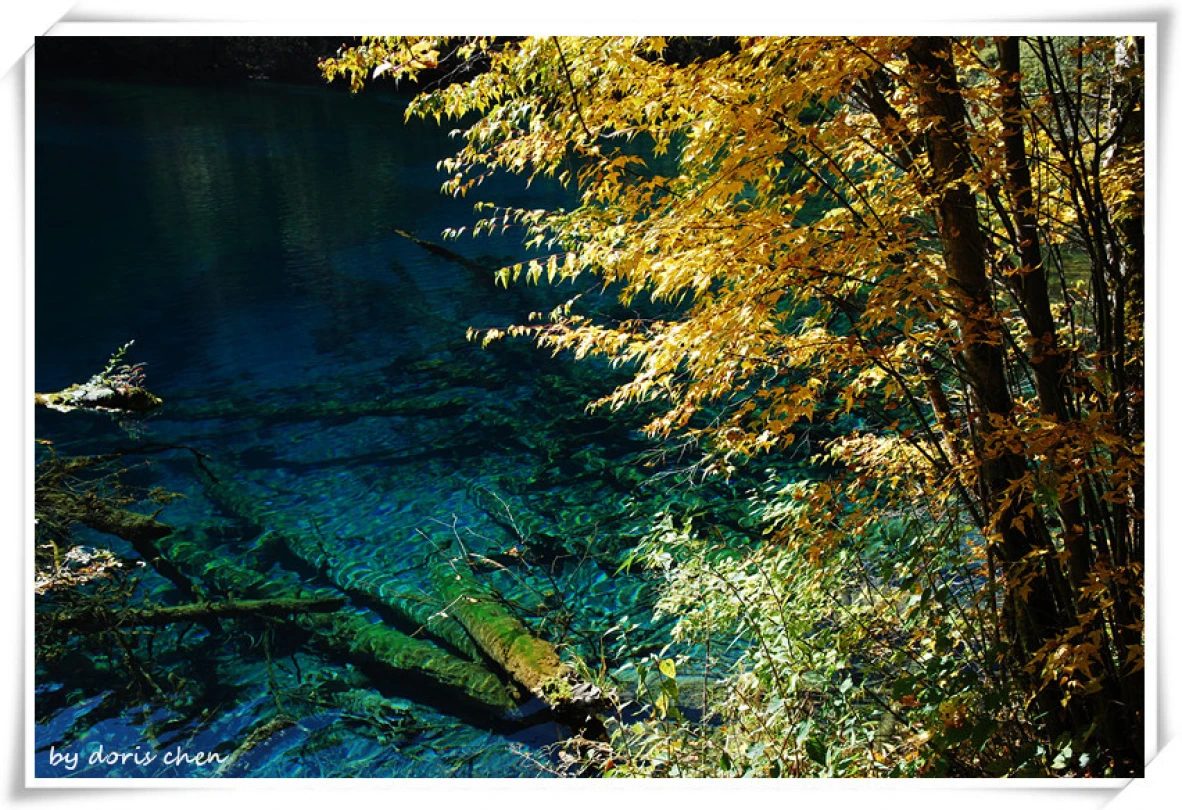
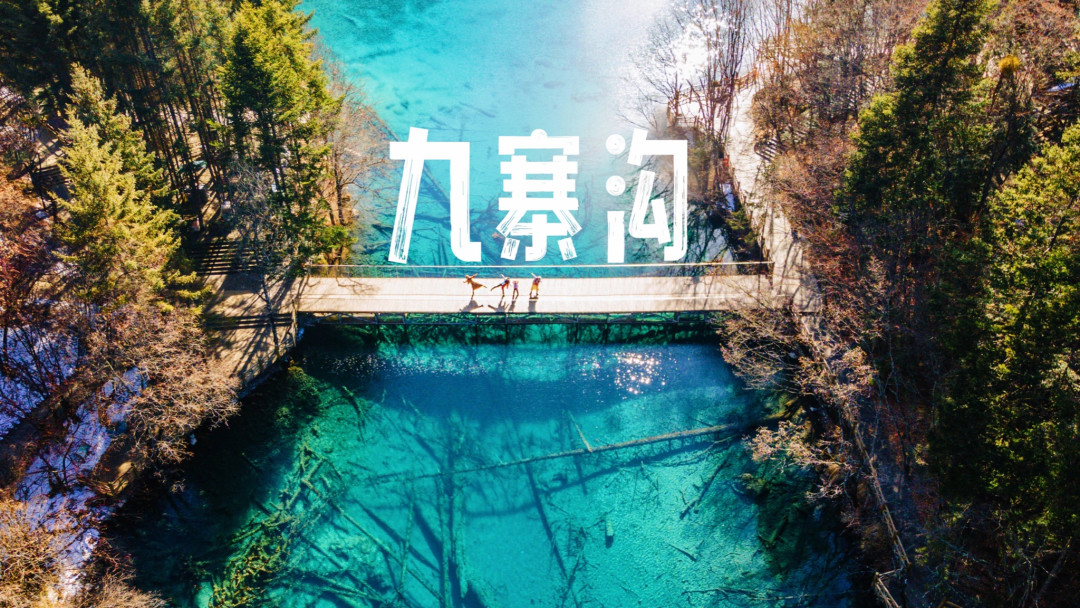
Thanks to travertine deposits, various algae, centuries-old submerged logs resting at the bottom, and the reflections of blue skies, white clouds, and forest edges, the entire lakebed shimmers with a riot of colors. The wooden bridge spanning the pond is the perfect spot to admire the water's hues. Walking across it, you can clearly see the lines beneath the surface—massive trees lying haphazardly, enveloped by the water, with aquatic plants growing freely on them like coral. Under sunlight, the lake's surface sparkles with rippling light.
Five-Flower Pond is God's personally spilled palette, a real-life fairy tale world. We stood quietly by the shore, soaking in this serene beauty, unable to tear ourselves away.
Photography Tips for Five-Flower Pond: 1. The wooden platform by the parking lot next to the lake is the prime spot—stand or sit on the edge to shoot 2. Use a wide-angle lens to combine the subject with the scenery; try to keep the subject's head within the water area to avoid a distracting horizon line 3. Wear yellow clothing for contrast, and use a medium-to-telephoto lens for overhead shots
Zechawa Valley: The Left Branch of Wonder
While Rize Valley steals the spotlight, Zechawa Valley offers its own winter magic. The left branch of the "Y" is home to Long Lake, the highest lake in Jiuzhaigou at 3,100 meters, and Five-Color Pond, a smaller but equally vibrant sibling of Five-Flower Pond.
In winter, Long Lake often freezes completely, creating a vast expanse of blue ice that mirrors the surrounding snow-capped peaks. Five-Color Pond, however, remains unfrozen due to its mineral-rich waters, offering a stunning contrast of turquoise hues against the white snow.
Photography Tip: Visit Zechawa Valley in the late afternoon when the low sun casts long shadows across the ice, creating dramatic textures and reflections.
Practical Tips for Your Winter Jiuzhaigou Visit
Best Time to Visit Jiuzhaigou in Winter
The winter season runs from December to February. January is the coldest month, with temperatures dropping to -15°C (5°F) at night. However, daytime temperatures often rise to 5°C (41°F), making it comfortable for sightseeing. The best time for photography is early morning (8:30–10:00 AM) and late afternoon (3:00–5:00 PM).
What to Pack for Jiuzhaigou Winter Travel
 - Clothing: Thermal layers, waterproof jacket, insulated pants, wool hat, gloves, and scarf - Footwear: Waterproof hiking boots with good grip (boardwalks can be icy) - Accessories: Sunglasses (snow glare is intense), lip balm, hand warmers - Camera Gear: Tripod for long-exposure shots, extra batteries (cold drains them fast), lens cloth for mist
Getting to Jiuzhaigou
- By Air: Jiuzhaigou Huanglong Airport (JZH) has flights from Chengdu, Xi'an, and other major cities. From the airport, it's a 1.5-hour drive to the park.
- By Road: From Chengdu, it's a 7–8 hour drive via the Dujiangyan-Wenchuan Highway. Winter driving requires snow chains.
- By Bus: Regular buses depart from Chengdu's Chadianzi Bus Station.
Entrance Fees and Tickets
- Winter season (November 16 – March 31): ¥80 (≈ $11 USD) for adults, plus ¥80 for the sightseeing bus
- Summer season (April 1 – November 15): ¥169 (≈ $23 USD) for adults
- Tips: Book tickets online in advance through the official Jiuzhaigou website or WeChat mini-program
FAQ: Everything You Need to Know About Jiuzhaigou in Winter
1. Is Jiuzhaigou open in winter?
 Yes, Jiuzhaigou is open year-round. Winter hours are 8:30 AM to 5:00 PM (last entry at 2:00 PM). The park operates with limited-area access, but all major attractions remain open.
2. Is it worth visiting Jiuzhaigou in winter?
Absolutely. Winter offers the lowest crowds, stunning frozen waterfalls, and the chance to see blue ice and emerald lakes without the summer crowds. It's a photographer's paradise with unique lighting and fewer tourists.
3. Do I need special equipment for winter photography?
 A tripod is recommended for long-exposure shots of waterfalls. Extra batteries are essential because cold temperatures drain them quickly. A lens cloth is useful for cleaning mist from the lens.
4. Can I see the Five-Flower Pond in winter?
Yes, Five-Flower Pond remains unfrozen in winter due to its mineral-rich waters and underground springs. The colors are even more vibrant against the snow.
5. Is it safe to visit Jiuzhaigou after the 2017 earthquake?
 Yes, the park has been fully restored and reopened since 2021. All trails and facilities are safe, and the park has implemented enhanced safety measures. The earthquake actually created new scenic features, such as the Double Dragon Sea.
6. What is the weather like in Jiuzhaigou in January?
Average temperatures range from -5°C to 5°C (23°F to 41°F). Snowfall is common, especially at higher elevations. The air is dry, so stay hydrated and use moisturizer.
Internal Linking Suggestions
- [Link: Best time to visit Jiuzhaigou for photography]
- [Link: Jiuzhaigou travel guide: Complete itinerary for 3 days]
- [Link: Top 10 winter destinations in China for photographers]
- [Link: How to get to Jiuzhaigou from Chengdu]
- [Link: Jiuzhaigou vs Huanglong: Which is better in winter?]
Conclusion: Your Winter Fairy Tale Awaits
Jiuzhaigou in winter is not just a destination—it's a once-in-a-lifetime experience. The emerald lakes, blue ice, and frozen waterfalls create a landscape that feels otherworldly. Whether you're a seasoned photographer or a casual traveler, this winter fairy tale will leave you speechless.
Don't let the cold deter you. Pack your warmest gear, grab your camera, and book your tickets. The silence of the snow, the shimmer of the ice, and the warmth of the sun on your face will reward you with memories that last a lifetime.
Ready to plan your winter Jiuzhaigou trip? Start by checking flight availability from your nearest city, and book your park tickets online to secure your spot. The fairy tale is waiting—are you ready to answer its call?
Follow my journey for more travel photography tips and hidden gems across China. Share your own Jiuzhaigou winter photos with #JiuzhaigouWinterFairyTale—I'd love to see your captures!