Wheels in Western Sichuan: Two Girls' 1,600-Kilometer Self-Drive Adventure – A Complete Travel Guide
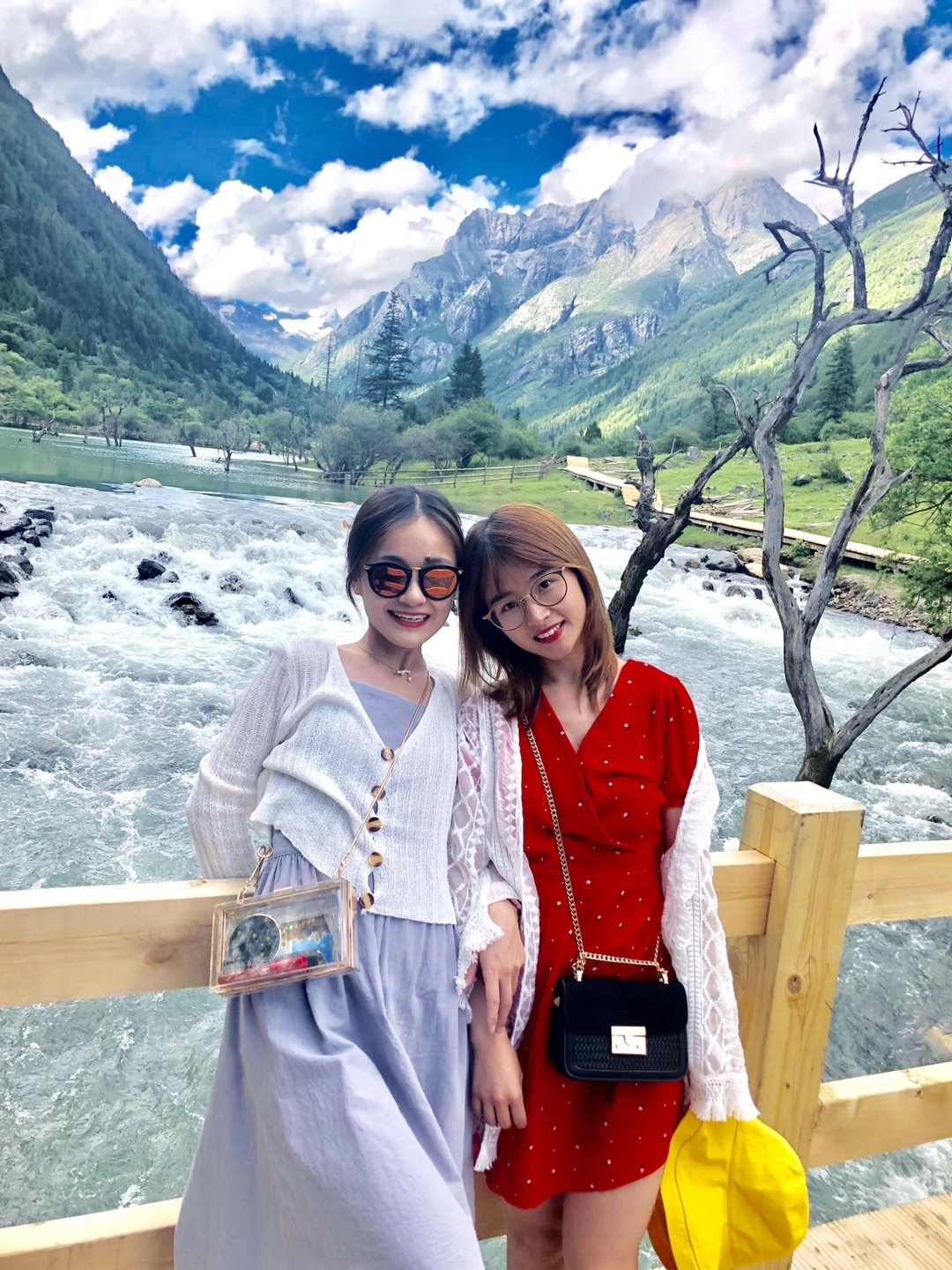
Meta Description: Two women, one car, 1,600 km through Western Sichuan. Discover road conditions, altitude sickness tips, hidden gems like Sertar at night, and why this self-drive loop is safer than you think. Read our honest 5-day itinerary.
Introduction: Why Two Women Chose to Self-Drive Western Sichuan
"Two girls driving themselves through Western Sichuan? You've got guts." — That was the most common reaction we heard before leaving.

On July 17, 2023, my best friend and I packed our luggage into the trunk of our rental car in Chengdu. She took the driver's seat, adjusted the rearview mirror; I settled into the passenger seat and opened the navigation app. No male driver. No tour guide. Just two women, one car, five days, and 1,600 kilometers of the Western Sichuan Mini Loop.
This article answers the questions every female traveler asks: Is it safe for women to self-drive in Western Sichuan? How difficult are the mountain roads? What about altitude sickness? Here's our real, unfiltered experience.
Day 1: Chengdu to Danba – Weather as the Ultimate Filter
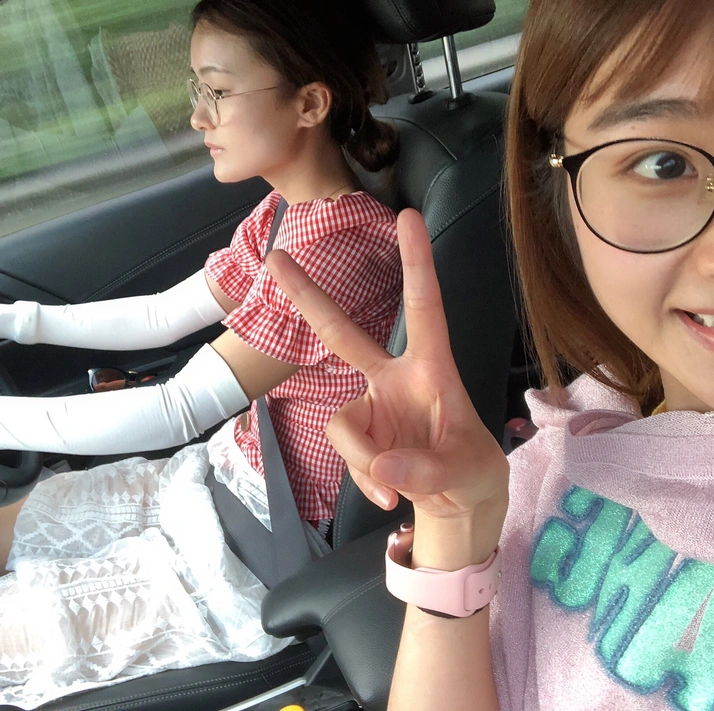
Mount Siguniang (Four Girls Mountain): Clear Skies and Snow-Capped Peaks
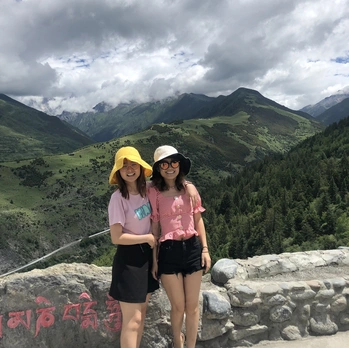
Our first major stop was Shuangqiao Valley at Mount Siguniang, accessible via National Highway G350. At the Balang Mountain Viewing Platform (4,481 meters above sea level), clouds churned beneath our feet while distant snow-capped peaks glittered in the sunlight.
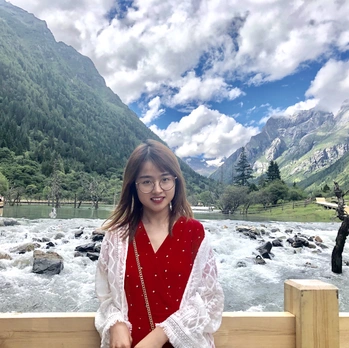
We were unbelievably lucky. The sky was a washed-clean blue without a single cloud. We quickly changed into dresses and went wild taking photos on the meadows, by the streams, and against the snowy mountain backdrop. The scenic area's shuttle bus is highly convenient—you can hop off at any stop for photos.
Top photo spots: Spend extra time at "Redwood Forest" (best reflections of snow peaks) and "Cow Shed" (most pristine alpine pastures).
Practical Tip: Shuangqiao Valley is the easiest of the three valleys at Mount Siguniang, with shuttle buses throughout. Altitude is about 3,800 meters. Bring sunscreen and sunglasses—UV rays are extremely strong.
Danba: Overnight in a Mountain Cleft
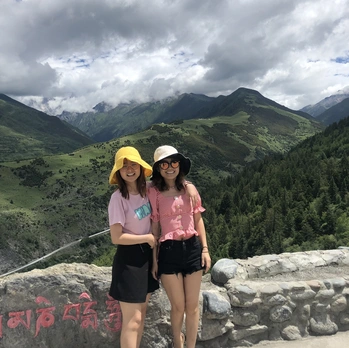
We arrived in Danba County in the evening. This town nestled in a crevice between mountains is a sight to behold: houses stacked layer upon layer along slopes, while the Dadu River roars past the edge of town. But the weather here is unpredictable—blazing sunshine one moment, torrential downpour the next. We'd barely settled into our hotel when rain began pounding the windows.
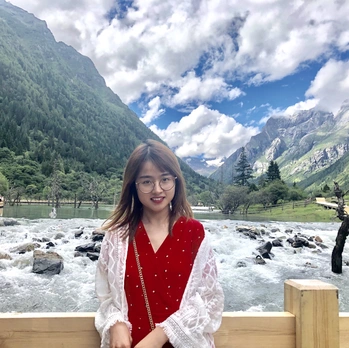
Accommodation Tip: Danba County town is small. Book your hotel in advance—prices spike during peak season. Choose a riverside hotel for the soothing sound of flowing water at night.
[Link: Best time to visit Western Sichuan]
Day 2: Mountain Roads, Rainstorms, and Landslides – The Real Western Sichuan
Jiaju Tibetan Village: A Scare in the Downpour
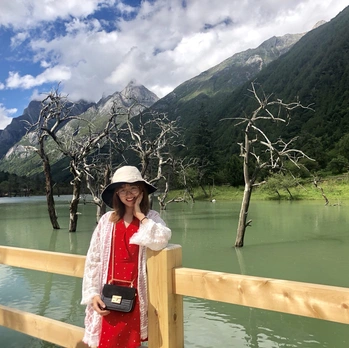
The next morning, rain was still falling. We gritted our teeth and drove to Jiaju Tibetan Village—a Tibetan settlement built high on a mountainside. The winding mountain road was dense with curves: mountain on one side, cliff on the other. Windshield wipers at their fastest setting couldn't clear the water streaming across the glass.
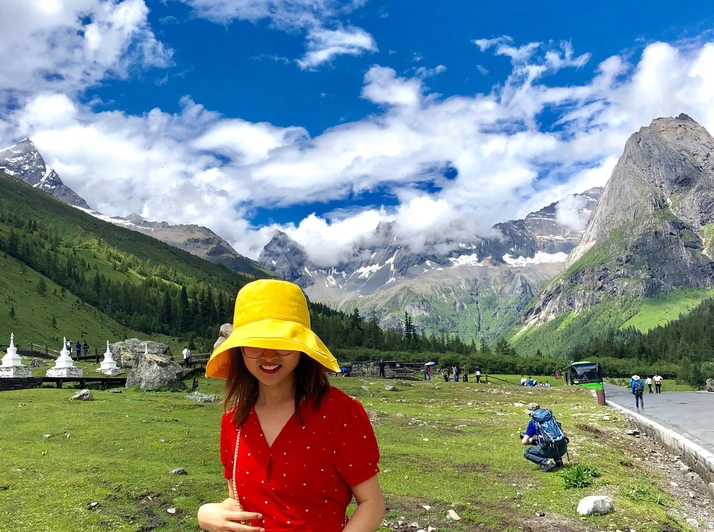
"Slow down—sharp turn ahead!" I gripped the armrest nervously.
"I know, just don't talk!" My friend stared ahead, both hands clenched on the wheel.
At the viewing platform, we huddled under a single broken umbrella. Thick fog had swallowed all scenery—only faint outlines of Tibetan-style rooftops emerged through the rain curtain. We made a snap decision: retreat.
The drive down was even scarier. Slippery roads combined with continuous downhill stretches had my heart in my throat. We exchanged a glance and laughed bitterly: "This trip to Western Sichuan is definitely not going to be easy."
China Panda Highway: A Breathtaking Reward After the Rain
Our original plan was to head to Guanyinqiao Town and then on to Sertar (Sêrtar). But National Highway G317 was closed due to mudslides from heavy rain. We improvised and took the China Panda Highway (G530) instead.
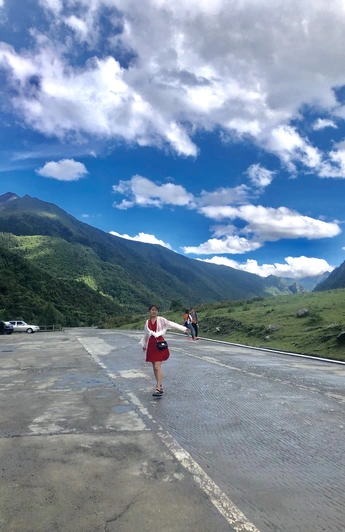
That decision became the most surprising turning point of the entire trip.
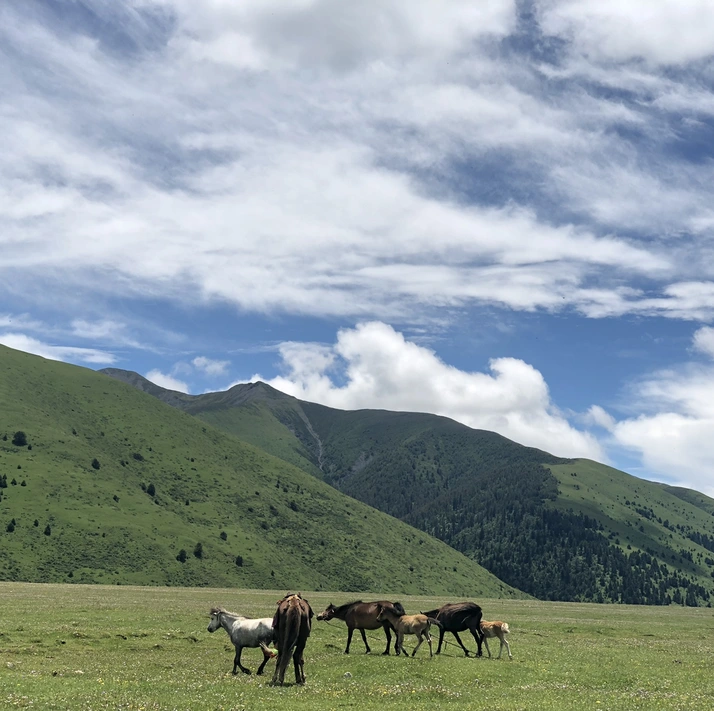
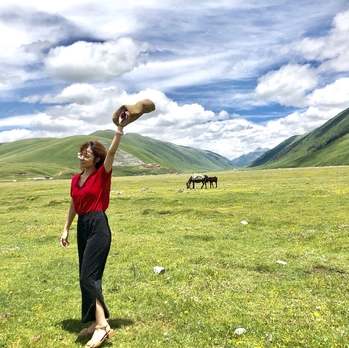
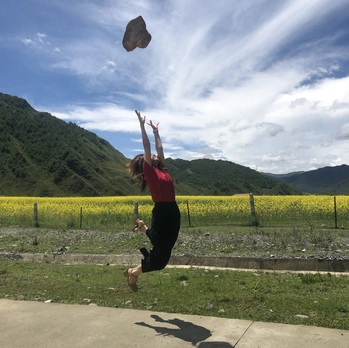
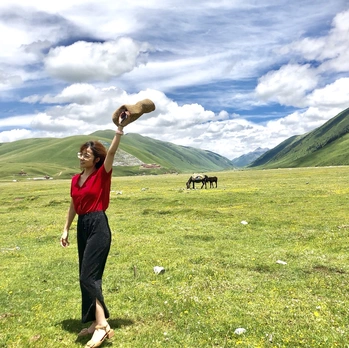
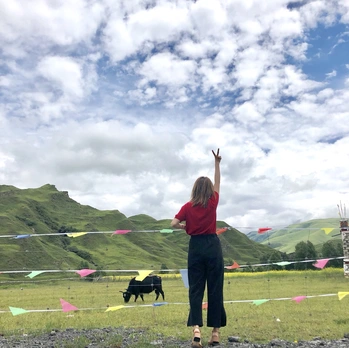
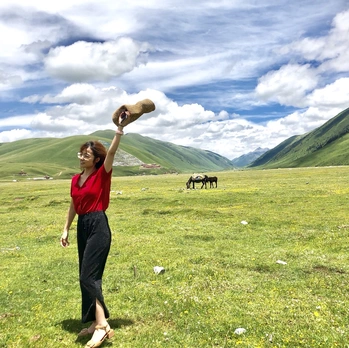
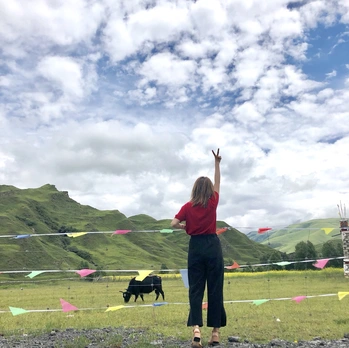
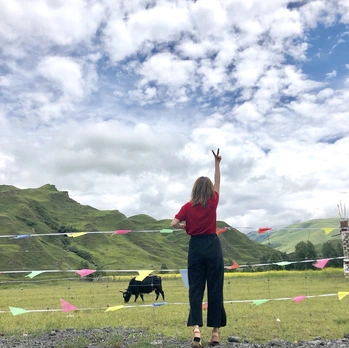
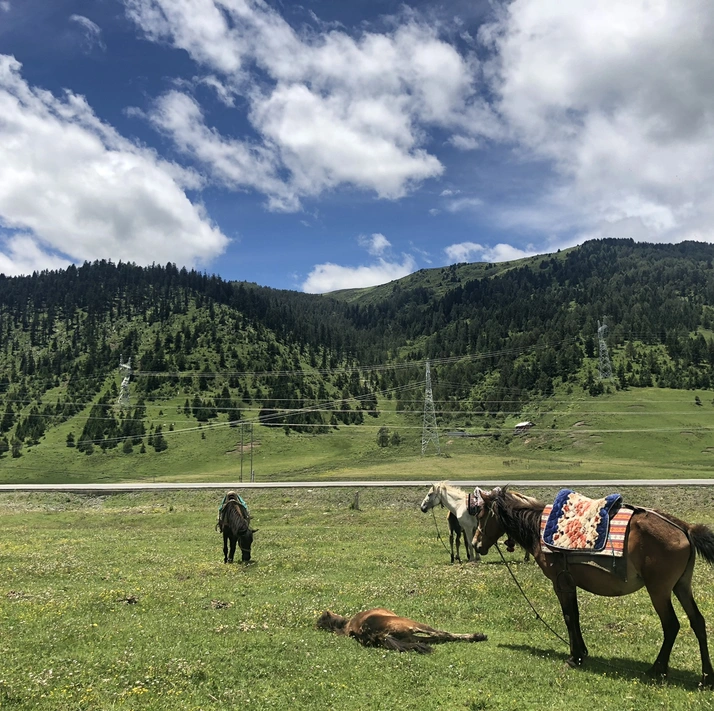
The rain miraculously stopped. Clouds parted, sunlight poured through gaps in the sky, and vast fields of golden rapeseed flowers spread out on either side—dazzlingly bright. Bamei Grassland and Longdeng Grassland weren't on today's itinerary, but the weather was too good to resist stopping for photos. Under blue sky and white clouds, herds of cattle, sheep, and horses grazed leisurely, occasionally lifting their heads to glance at us.
Lunch Recommendation in Bamei Town: Try the yak meat hotpot and highland barley flatbread—generous portions, delicious flavor. When the owner heard we were heading to Sertar, he warned: "There was a landslide on G317 last night. If you take a detour, you'll have to drive five or six more hours on mountain roads. A female driver might find it risky."
I looked at my best friend. She smiled. "We'll give it a try. If it doesn't work, we'll turn around."
The Road to Sertar: Rumors vs. Reality
We kept asking about road conditions as we went. In Luhuo County, a local police officer said the landslide section had been cleared and was passable. Our anxiety finally eased.
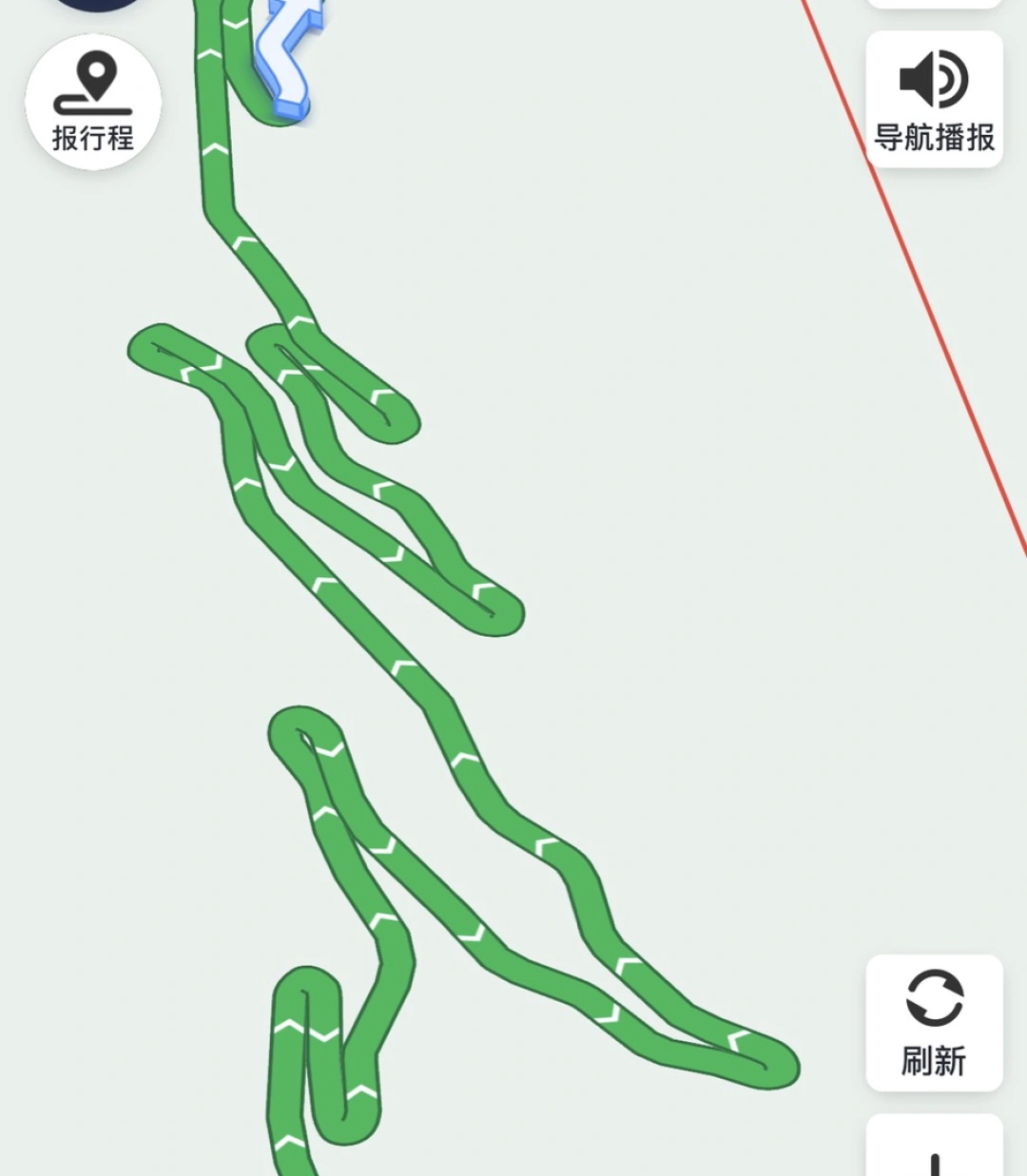
The truth: Online news had been somewhat exaggerated. The so-called "landslide" was just a trace of mud that had been cleared by a bulldozer. The day we drove, weather was good, and the entire road was smooth cement—no legendary muddy or gravel paths.
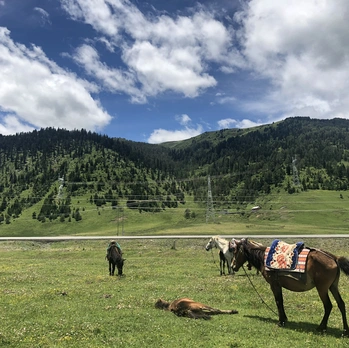
What to watch for: Cattle, sheep, and horses often wander along the roadside. These "big shots" are not to be messed with—hitting even one could mean astronomical compensation.
A Surprise on G548: Just before reaching Sertar, a troop of monkeys crouched on guardrails, staring eagerly at passing vehicles. We rolled down the window to feed them. They caught the food cleverly, making us snap several photos.
Sertar at Night: Awe Meets Altitude Sickness
We arrived at the Sertar Buddhist Academy at 6:30 PM. In summer, it gets dark here around 8:30 PM. There's a bus stop next to the parking lot (tickets cost 3 yuan per person—bring cash). The bus goes directly into the academy.
Accommodation at the academy can only be booked on the day of arrival. We arrived late, so only eight-person and sixteen-person dormitories were left. Since we wanted to take photos the next day, we decided to stay in Sertar County town instead.
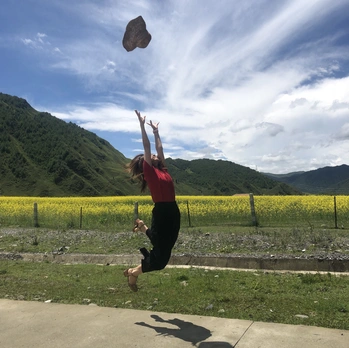
Before dark, we explored the academy. Deep-red monastic dormitories spread layer upon layer across hillsides, and the golden mandala temple glowed in the sunset. When night fell, the lights flickered on—thousands of lights twinkling in the darkness like stars scattered across the mountains.
But altitude sickness hit unexpectedly: Heart palpitations, shortness of breath, chest pain—every step felt like running an 800-meter sprint. The last bus left at 9:00 PM. We couldn't hold out any longer and caught the final bus down the mountain.
[Link: How to prevent altitude sickness in Tibet]
FAQ: Women Self-Driving in Western Sichuan
1. Is it safe for women to self-drive in Western Sichuan?
 Yes, with preparation. Road conditions on major routes (G350, G530, G317) are well-maintained cement or asphalt. The main risks are weather-related (sudden rain, fog) and altitude sickness. Drive during daylight, check weather forecasts, and carry emergency supplies.
2. What are the most challenging road conditions?
 Mountain roads near Jiaju Tibetan Village and some sections of G317 during heavy rain can be slippery with limited visibility. Always slow down on sharp curves and downhill stretches. The detour via G530 is scenic but adds 5-6 hours.
3. How do I handle altitude sickness?
 Start with lower-altitude stops (Danba at ~1,800m) and ascend gradually. Bring acetazolamide (Diamox), stay hydrated, avoid alcohol, and have a portable oxygen canister for emergencies. If symptoms worsen, descend immediately.
4. What should I pack for a 5-day Western Sichuan self-drive?
 - Sunscreen (SPF 50+), sunglasses, and a wide-brimmed hat - Warm layers (temperatures drop to 5°C at night even in summer) - Cash (many remote areas don't accept cards) - Portable oxygen canisters and basic first-aid kit - Snacks and plenty of water
5. Do I need a 4WD vehicle?
No. A standard sedan works for all paved roads on the Western Sichuan Mini Loop. However, if you plan to explore off-road or during monsoon season, consider a high-clearance vehicle.
Final Tips for Your Western Sichuan Self-Drive
- Book accommodations in advance during peak season (July-October). Danba and Sertar fill up quickly.
- Check road conditions daily via local police or hotel staff. G317 closures are common after heavy rain.
- Respect local wildlife – cattle, sheep, and monkeys have right of way. Avoid feeding animals from your car.
- Arrive at Sertar before 6 PM to secure accommodation inside the academy if you want sunrise photos.
- Download offline maps – mobile signals are unreliable in mountain areas.
Your Turn: Ready to Take the Wheel?
Two women, one car, 1,600 kilometers. We proved that female self-driving in Western Sichuan is not only possible but deeply rewarding. The landscapes, the unexpected detours, the kindness of locals—every moment was worth the anxiety.
Have you self-driven in Western Sichuan? Share your questions or experiences in the comments below. If you're planning your own trip, bookmark this guide—and remember: the best adventures start when you turn the key.
Start planning your Western Sichuan self-drive today. [Link: Western Sichuan road trip itinerary templates]
Article updated: July 2024. Road conditions may change seasonally. Always verify current conditions before traveling.
You may also like


