Vows in Action: Samantabhadra Faith at Sacred Mount Emei – A Complete Pilgrim's Guide
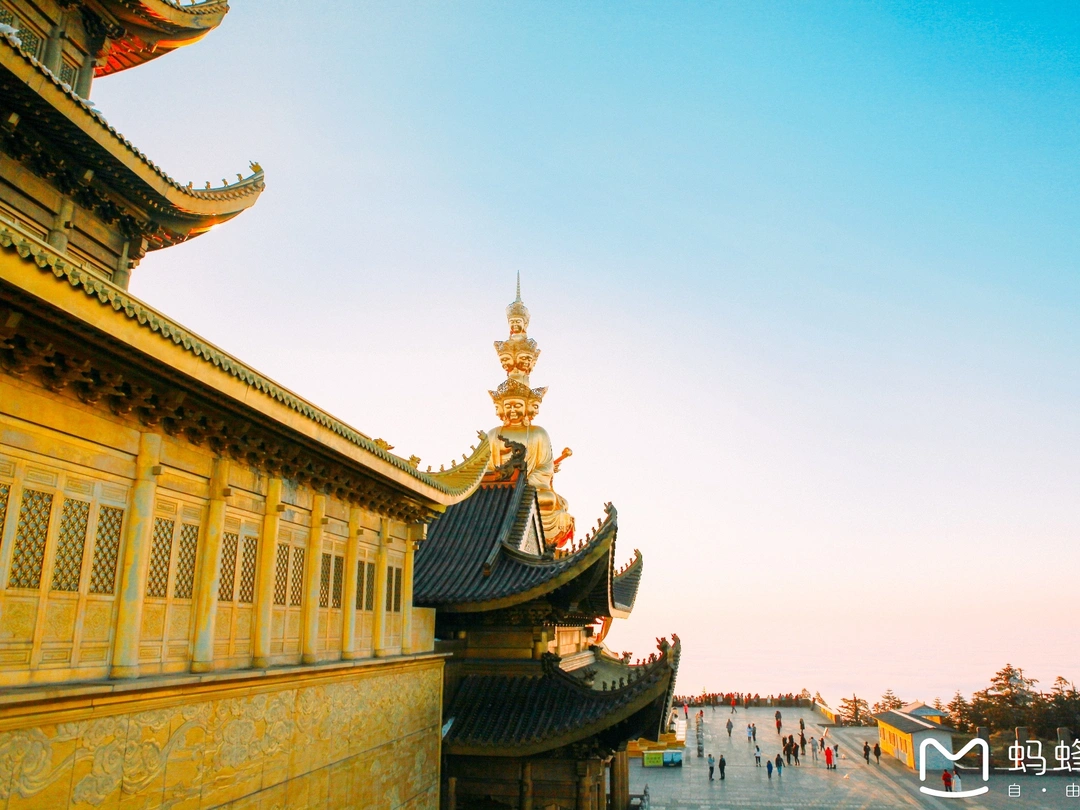
Meta Description: Discover the spiritual essence of Mount Emei, sacred site of Bodhisattva Samantabhadra. Explore the Golden Summit, ancient temples, and the transformative power of vows in action. Plan your pilgrimage today.
Introduction: Why Mount Emei Transcends Scenic Beauty
Amid the vast mountain ranges of southwestern China stands a peak that rivals neither the sheer cliffs of Huashan nor the surreal beauty of Huangshan, yet it surpasses them all with a quality the Chinese call "xiu" — an elegance both refined and enchanting. This is Mount Emei, a name that itself whispers poetry and Zen. For over a thousand years, countless pilgrims have crossed rivers and climbed mountains, driven by a single purpose: to reach the Golden Summit, witness a sunrise over a sea of clouds, and make a wish as the rare "Buddha's Light" appears.
But if you think Mount Emei is merely a scenic wonder, you have missed its deepest soul. This is the sacred site of Bodhisattva Samantabhadra (Puxian) , the living embodiment of "vows in action" — where every step is a prayer, and every thought a commitment. When you set foot on the mountain paths of Emei, each step becomes a form of spiritual practice, each intention a manifestation of willpower. Today, let us journey into this sacred land to explore how the Samantabhadra faith took root among the peaks and streams, and how it has been passed down through generations of pilgrims.
H2: Mount Emei – More Than "Elegance Under Heaven"

H3: Geography and Significance: A Mountain with Two Identities
Mount Emei is located within Emeishan City, Leshan Prefecture, Sichuan Province. Its main peak, Wanfoding (Ten Thousand Buddha Summit) , rises to 3,099 meters above sea level, towering over the Emei Plain with a relative elevation difference of over 2,700 meters. This dramatic vertical drop creates a unique climate and vegetation pattern, where "one mountain experiences four seasons, and ten miles away the weather is completely different." In spring, azaleas burst into bloom; summer brings cascading waterfalls and flowing streams; autumn paints the forests in layers of red; winter cloaks everything in snow and ice. No wonder ancient poets declared, "Mount Emei is the most elegant under heaven."
But Mount Emei's significance extends far beyond its natural beauty. It is one of China's "Four Great Buddhist Mountains," standing alongside: - Mount Wutai in Shanxi (sacred to Manjushri, Bodhisattva of Wisdom) - Mount Putuo in Zhejiang (sacred to Avalokiteshvara, Bodhisattva of Compassion) - Mount Jiuhua in Anhui (sacred to Kshitigarbha, Bodhisattva of Vows)
What sets Emei apart is its dedication to Samantabhadra, the Bodhisattva of Great Action and Vows. As the "Samantabhadra Sacred Site," it is believed that this bodhisattva manifests here to teach and liberate sentient beings. This identity grants Mount Emei an irreplaceable status in the hearts of Buddhists.
[Link: Four Great Buddhist Mountains of China]
H3: Samantabhadra – The Embodiment of Vows in Action
Samantabhadra, whose Sanskrit name "Samantabhadra" means "Universal Goodness" or "All-Auspicious," represents the principle of "great action" — the power to put Buddhist wisdom into practice. His cornerstone text, the Chapter on the Vows of Samantabhadra (Puxian Xingyuan Pin) , outlines ten great vows: 1. Revering all Buddhas 2. Praising the Thus-Come One 3. Making abundant offerings 4. Confessing evil deeds 5. Rejoicing in merits 6. Requesting the turning of the Dharma wheel 7. Entreating the Buddhas to remain in the world 8. Following the Buddha's teachings 9. Adapting to all beings 10. Dedicating all merits universally
These ten vows are not empty words; they demand that practitioners embody them through concrete action. Thus, the core of faith at Mount Emei is not about supernatural powers or miraculous feats. It is about xingyuan — "vows in action." Once you make a vow, you must act upon it. This spirit resonates powerfully with the mountain's rugged trails and demanding climbs: every step a pilgrim takes is a physical manifestation of their commitment.
[Link: Samantabhadra's Ten Great Vows Explained]
H2: A Millennium of Sacred Legacy – From the Eastern Han to Today
H3: Buddhism's Arrival and the Formation of the Samantabhadra Site
The connection between Mount Emei and Buddhism dates back to the Eastern Han Dynasty (25–220 CE) . Historical records suggest that around the 1st century CE, as Buddhism spread along the Silk Road into China, Emei's secluded, tranquil environment made it an ideal retreat for monks seeking solitude. During the Wei, Jin, and Southern and Northern Dynasties (220–589 CE) , as Buddhism flourished across China, the first temple structures began to appear on the mountain.
The transformation into Samantabhadra's sacred site truly took shape during the Tang Dynasty (618–907 CE) . During the reign of Emperor Xuanzong, a Chan master named Huitong built the earliest Samantabhadra Temple (the predecessor of today's Wannian Temple, or Ten Thousand Year Temple). Legend has it that during his meditation, Master Huitong had a vision of Samantabhadra manifesting before him, inspiring him to establish a permanent sacred site. Over subsequent dynasties, emperors issued imperial decrees to expand the temples. During the Song Dynasty (960–1279 CE) , Emperor Taizu, Zhao Kuangyin, sent envoys to Sichuan to cast a bronze statue of Samantabhadra, which was enshrined in Wannian Temple. That statue survives to this day, one of Mount Emei's most treasured artifacts.
H3: The Golden Summit – The Pure Land Closest to Heaven
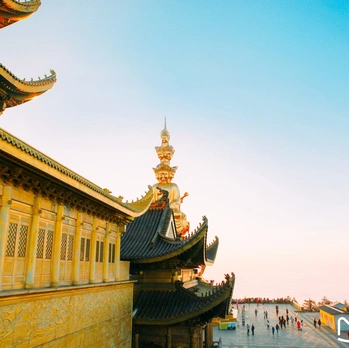
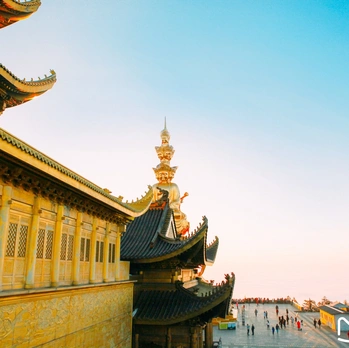
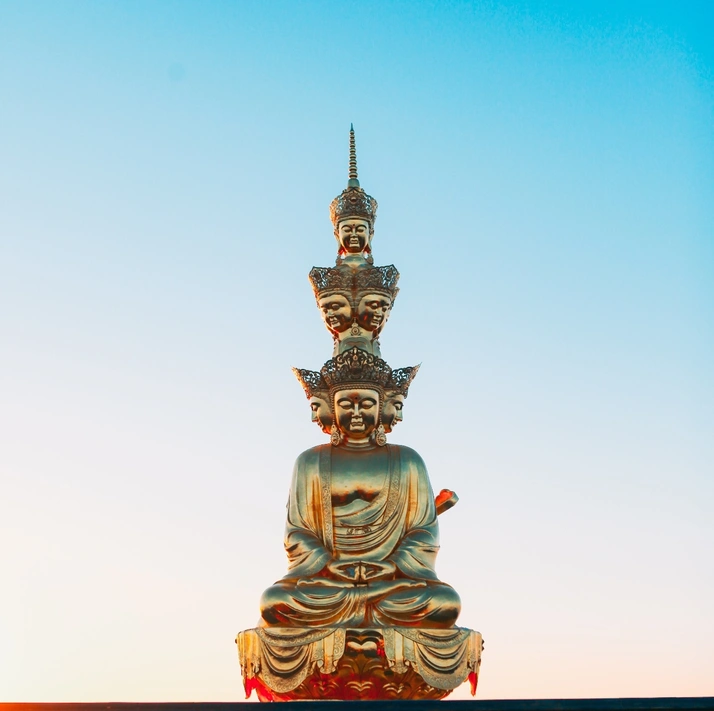
If Mount Emei is Samantabhadra's sacred site, then the Golden Summit (Jinding) is its heart. At 3,077 meters, it is the mountain's second-highest peak and an essential destination for both tourists and pilgrims. Its most iconic feature is the 48-meter-tall Ten-Direction Samantabhadra Golden Statue — the bodhisattva seated atop a six-tusked white elephant, facing all ten directions, symbolizing the universal vow to liberate all beings. The statue is entirely gilded, gleaming brilliantly under sunlight, and together with the sea of clouds, sunrise, Buddha's Light, and sacred lamps, it forms the "Four Great Wonders of the Golden Summit."
Standing on the Golden Summit, you are enveloped by a powerful religious atmosphere: devotees circumambulate the statue, chanting sutras; monks strike ritual instruments, their intonations echoing through the air; and when the Buddha's Light occasionally appears in the clouds, people kneel in fervent prayer. In that moment, you understand that Mount Emei's beauty is not meant to be "seen" — it is meant to be "felt." It compels every visitor to shed their restlessness and awaken a sense of reverence.
[Link: Golden Summit Mount Emei Travel Tips]
H3: An Unbroken Incense Flame for a Thousand Years
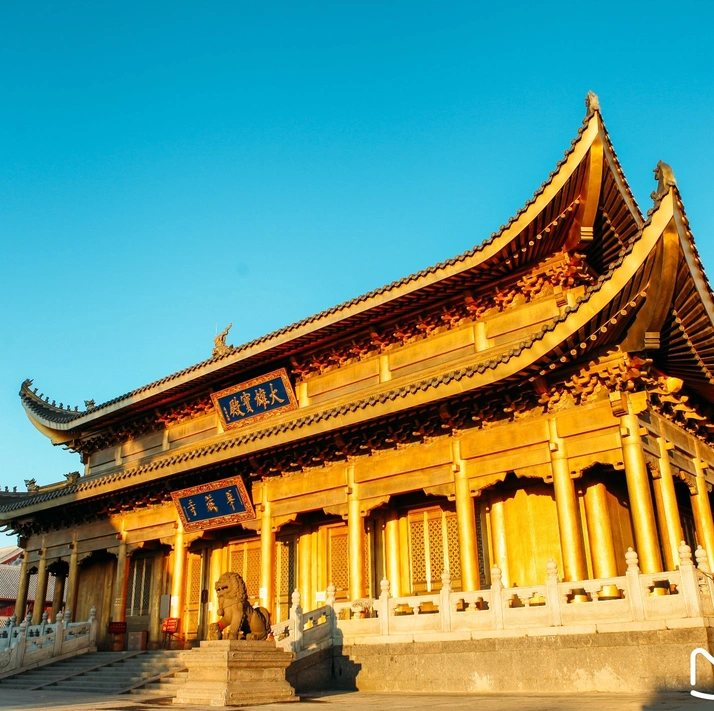
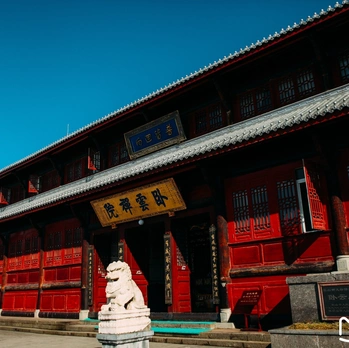
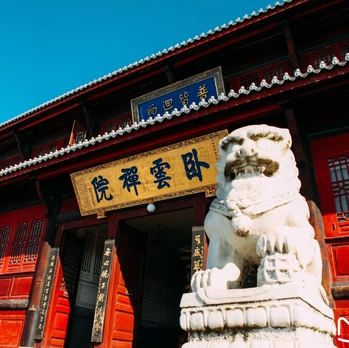
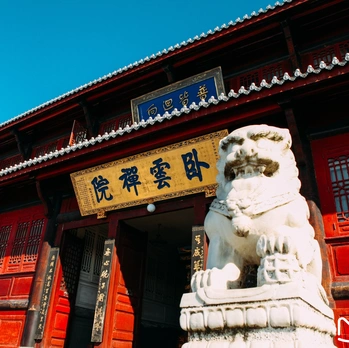
From the Tang Dynasty to the present, the Buddhist incense at Mount Emei has burned continuously for over a millennium. Even during times of upheaval, the monks remained, steadfastly guarding the sacred site. Today, the mountain is home to eight major temples: - Baoguo Temple (Temple of Repaying the Nation) - Fuhu Temple (Temple of the Subdued Tiger) - Wannian Temple (Ten Thousand Year Temple) - Qingyin Pavilion (Pure Sound Pavilion) - Hongchunping (Toon Tree Flat) - Xianfeng Temple (Immortal Peak Temple) - Xixiang Pond (Elephant-Washing Pond) - Huazang Temple (Flower-Treasure Temple)
These temples are scattered like pearls along the mountain, forming a complete pilgrimage route. Every year on significant Buddhist dates — especially Samantabhadra's birthday (21st day of the second lunar month) — Mount Emei hosts grand Dharma assemblies. Believers from across China and around the world converge here, performing three prostrations every three steps and five bows every five steps, expressing their devotion to Samantabhadra in the most humble manner.
[Link: Mount Emei Temple Guide]
H2: The Path of Vows in Action – A Journey from Pilgrimage to Inner Transformation
H3: Hiking Mount Emei as Spiritual Practice
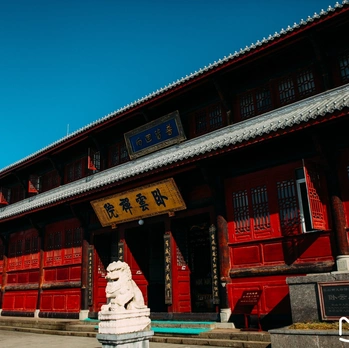
The physical act of hiking Mount Emei is itself a form of walking meditation. The main pilgrimage route stretches over 50 kilometers from Baoguo Temple at the base to the Golden Summit at the top. Pilgrims traditionally take two to three days to complete the ascent, staying overnight at temples along the way. Each step on the ancient stone stairs — worn smooth by countless feet over centuries — becomes a living expression of the Samantabhadra vow: to persist, to endure, and to transform intention into action.
Along the route, you encounter sacred landmarks that deepen the spiritual experience: - Qingyin Pavilion: A serene spot where two mountain streams converge, their sound likened to Buddhist chanting. - Xixiang Pond: Legend says Samantabhadra washed his white elephant here after descending from the summit. - Hongchunping: A flat area named after a thousand-year-old toon tree, where monks once meditated under its canopy.
H3: Modern Pilgrimage – Blending Tourism with Faith
Today, Mount Emei welcomes millions of visitors annually, from devout Buddhists to casual tourists. Yet the mountain retains its sacred character. The Samantabhadra faith continues to inspire: - Morning chanting at major temples, open to all who wish to participate. - Incense offerings at key shrines, where visitors light joss sticks and make silent wishes. - Circumambulation rituals around the Golden Summit statue, often accompanied by mantra recitation.
Even those who come for the scenery often leave with a transformed perspective. As one pilgrim noted: "I came to see the sunrise. I left with a renewed commitment to my own vows — to be kinder, more patient, and more present."
H2: FAQ – Samantabhadra Faith and Mount Emei Pilgrimage
Q1: What is the best time to visit Mount Emei for a pilgrimage?
A: The ideal pilgrimage season is spring (March–May) and autumn (September–November) when weather is mild and skies are clear. For Samantabhadra's birthday (21st day of the second lunar month, typically March–April), special ceremonies are held at major temples. Winter offers stunning snowscapes but trails can be icy.
Q2: How long does it take to complete the pilgrimage hike?
 A: The full hike from Baoguo Temple to the Golden Summit takes 2–3 days for most pilgrims. You can break the journey at temples like Hongchunping or Xianfeng Temple, which offer simple accommodations. Alternatively, a cable car from Jieyin Hall to the Golden Summit reduces hiking time to about 4–5 hours one way.
Q3: What should I bring for a Mount Emei pilgrimage?
 A: Essential items include: comfortable hiking shoes, warm clothing (summits can be 10–15°C cooler than the base), rain gear, water, snacks, and a flashlight. For religious practice, bring incense, prayer beads, or a copy of the Chapter on the Vows of Samantabhadra. Most temples provide basic supplies.
Q4: Can non-Buddhists participate in temple rituals?
A: Absolutely. Mount Emei welcomes all visitors with respect. You may observe or join in morning chanting (typically 4:30–6:00 AM), light incense, or circumambulate the Golden Summit statue. Just follow temple etiquette: speak softly, dress modestly, and remove shoes before entering shrine halls.
Q5: What is the significance of the "Buddha's Light" at Golden Summit?
A: The Buddha's Light (also known as Emei Buddha's Halo) is a rare optical phenomenon where a rainbow-colored halo appears around the observer's shadow on a cloud layer below. In Buddhist tradition, it is seen as Samantabhadra's blessing — a sign that one's vows are being heard. It most commonly occurs on sunny afternoons after rain.
H2: Plan Your Sacred Journey to Mount Emei
Whether you are a devout Buddhist seeking to deepen your practice or a traveler drawn by the mountain's legendary beauty, Mount Emei offers a transformative experience. The Samantabhadra faith calls you not just to visit, but to act — to make a vow, take a step, and let the mountain guide you toward inner peace.
Ready to walk the path of vows in action? Start planning your pilgrimage today: - Book your transportation to Emeishan City (high-speed rail from Chengdu takes about 1 hour). - Reserve temple accommodation in advance during peak seasons. - Download a pilgrimage map highlighting key temples and sacred sites. - Set your intention — what vow will you bring to the Golden Summit?
The mountain awaits. Your journey begins with a single step.
[Link: How to Get to Mount Emei from Chengdu] [Link: Best Mount Emei Hiking Routes for Pilgrims] [Link: Samantabhadra Chanting and Meditation Resources]


