Two Days in Mianyang: An SEO-Optimized Travel Guide to Li Bai’s Hometown and China’s Science City
Meta Description: Discover Mianyang in 48 hours—from ancient poetry to cutting-edge tech. This Mianyang travel guide covers rice noodles, museums, science exhibits, and night views. Plan your perfect Mianyang itinerary now.
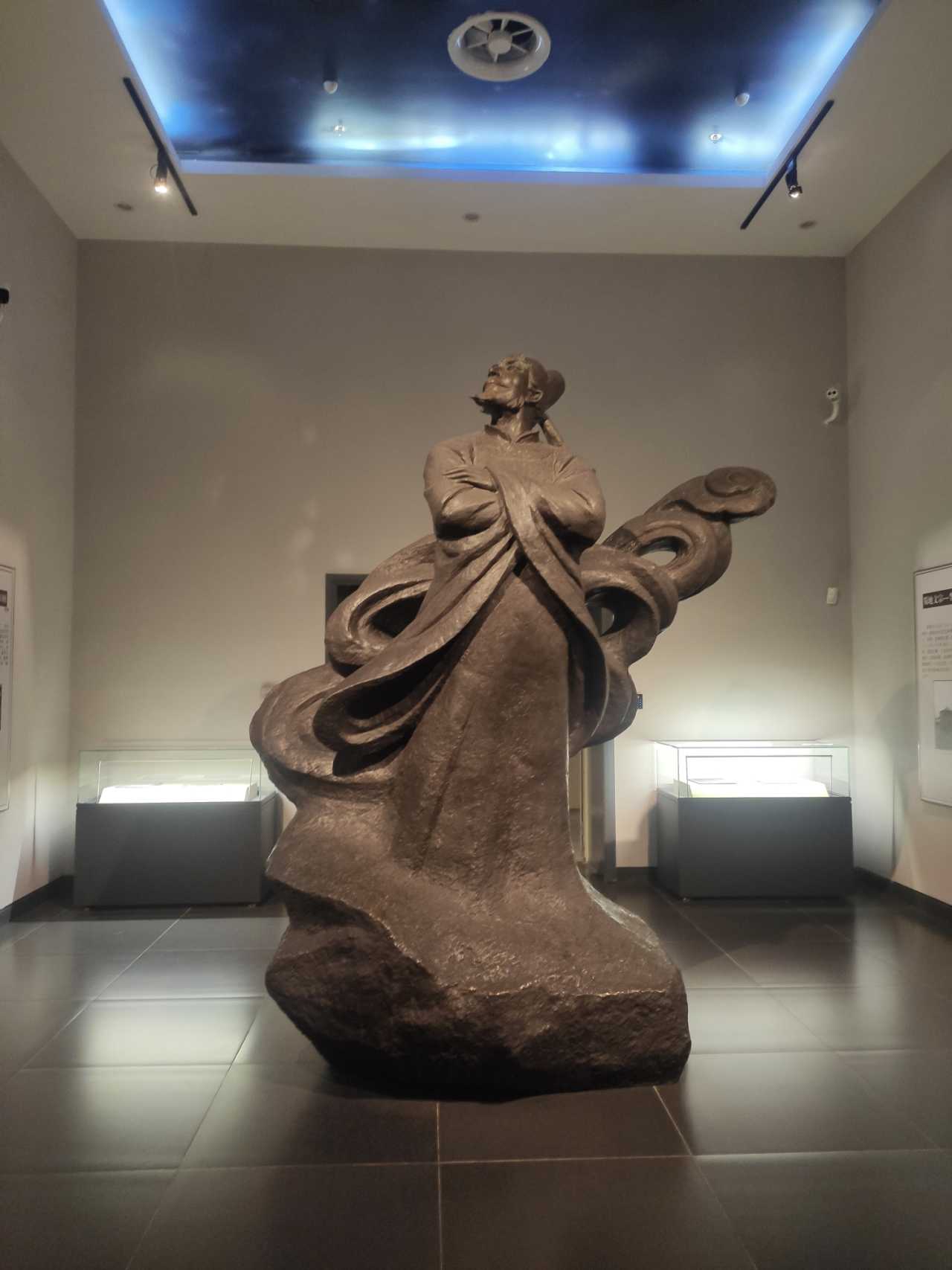
If Chengdu is a lazy teahouse and Chongqing a bubbling hotpot, then Mianyang is a cup of warm, sweet green tea—unremarkable at first sip, but leaving a lingering fragrance long after. This city, immortalized in Li Bai’s poetry and recorded in Lu You’s travelogues, holds both the gentle grace of a thousand-year literary tradition and the cutting-edge pulse of Chinese technology.
“Light mist and tall trees shroud Mianzhou,” wrote Luo Yin, painting Mianyang in朦胧 hues. “Towers rise above the clouds, far-off I see the western city walls,” Li Bai saw it as magnificent. But when you actually set foot here, you discover that Mianyang’s beauty is a wondrous chemical reaction of “mountains, water, city, culture, and science”—a gift of nature’s craftsmanship, the weight of millennia of history, and the awe-inspiring marvels of modern engineering.
What’s most captivating is the stark contrast between “Li Bai’s Hometown” and “Two Bombs City.” One is the peak of romanticism, the other the high ground of realism. One measures the heavens and earth with poetry, the other guards the nation with technology. This very contradiction forms Mianyang’s unique soul.
A two-day trip—not too long, not too short—is just enough to let you read this city.
Day One: Starting with a Bowl of Rice Noodles, Touching Mianyang’s Hearth and Civilization
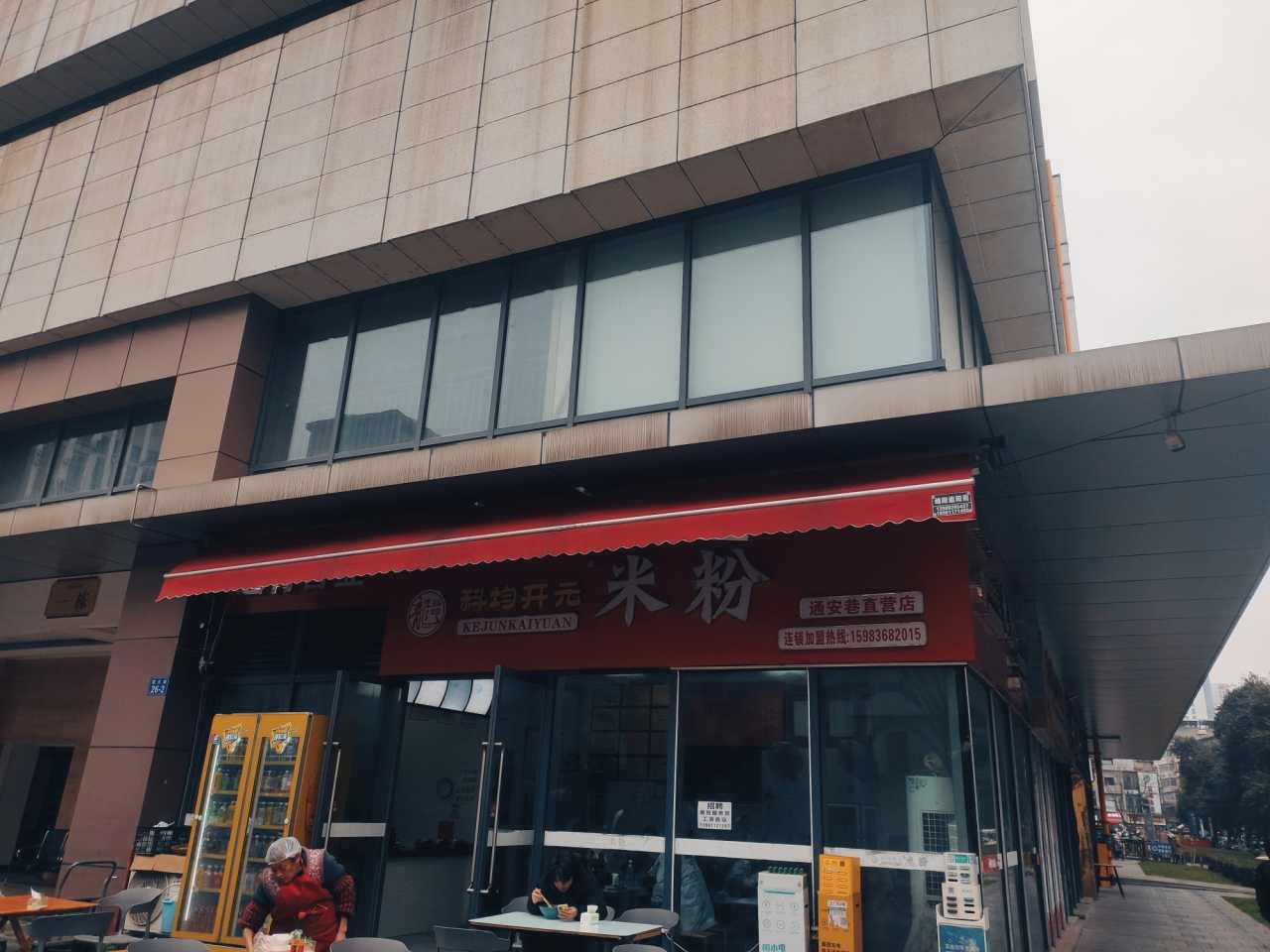
Breakfast Soul: Mianyang Rice Noodles (绵阳米粉)—The City’s Day Begins Here
The first thing to do upon arriving in Mianyang isn’t to see the sights, but to slurp a bowl of rice noodles. This is practically the ritual that starts every local’s day, and the city’s most unpretentious philosophy of life.
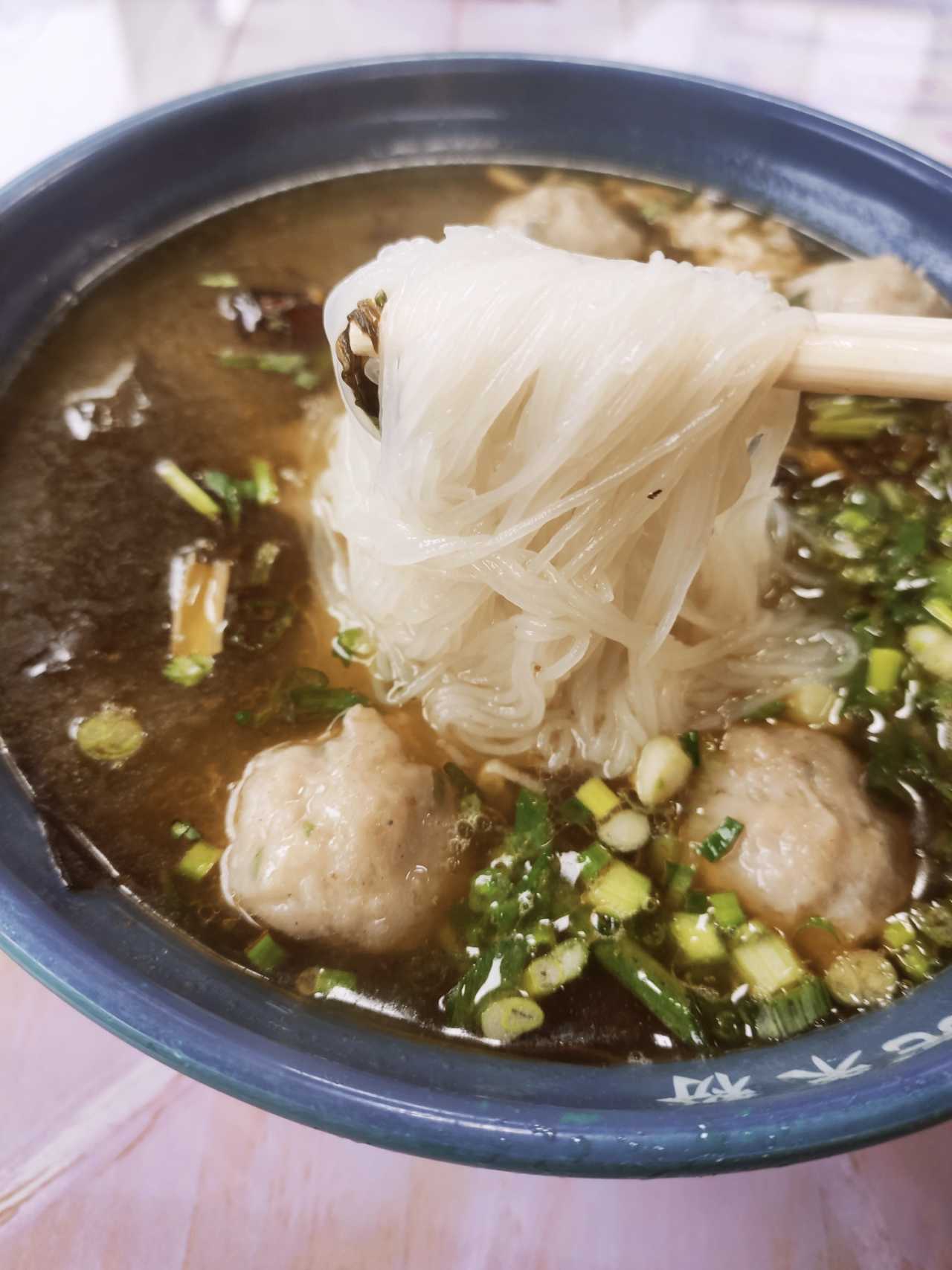
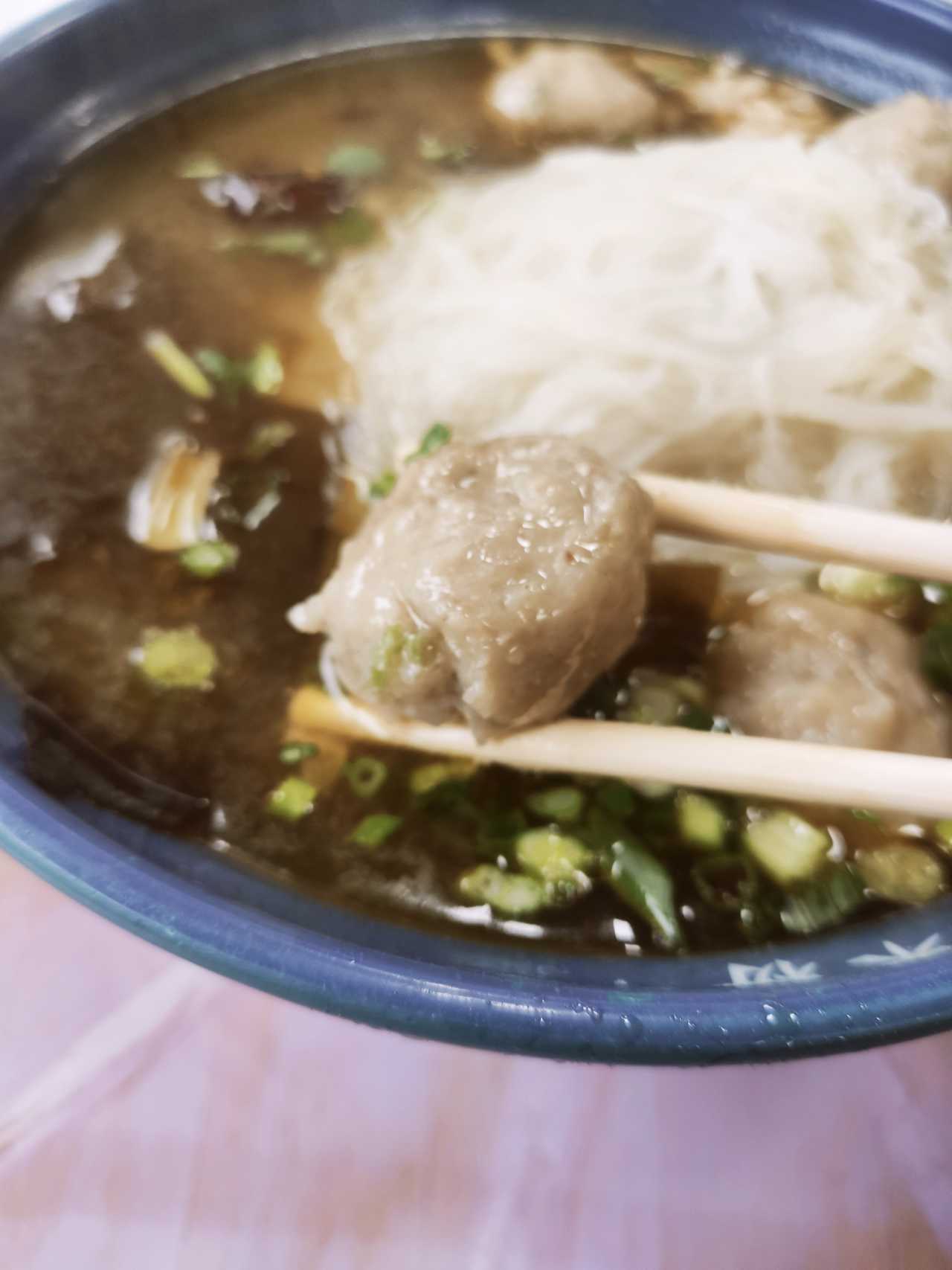
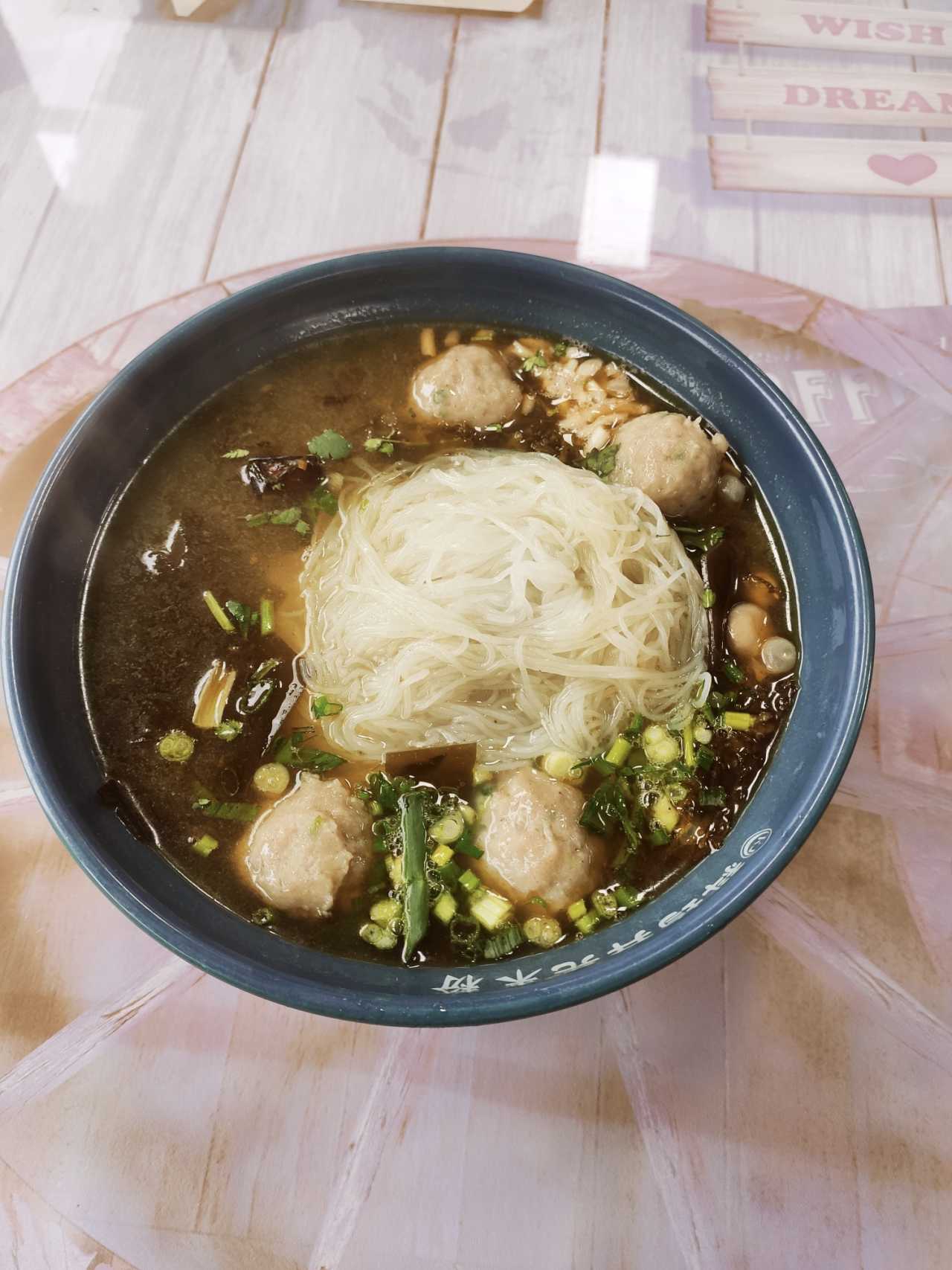
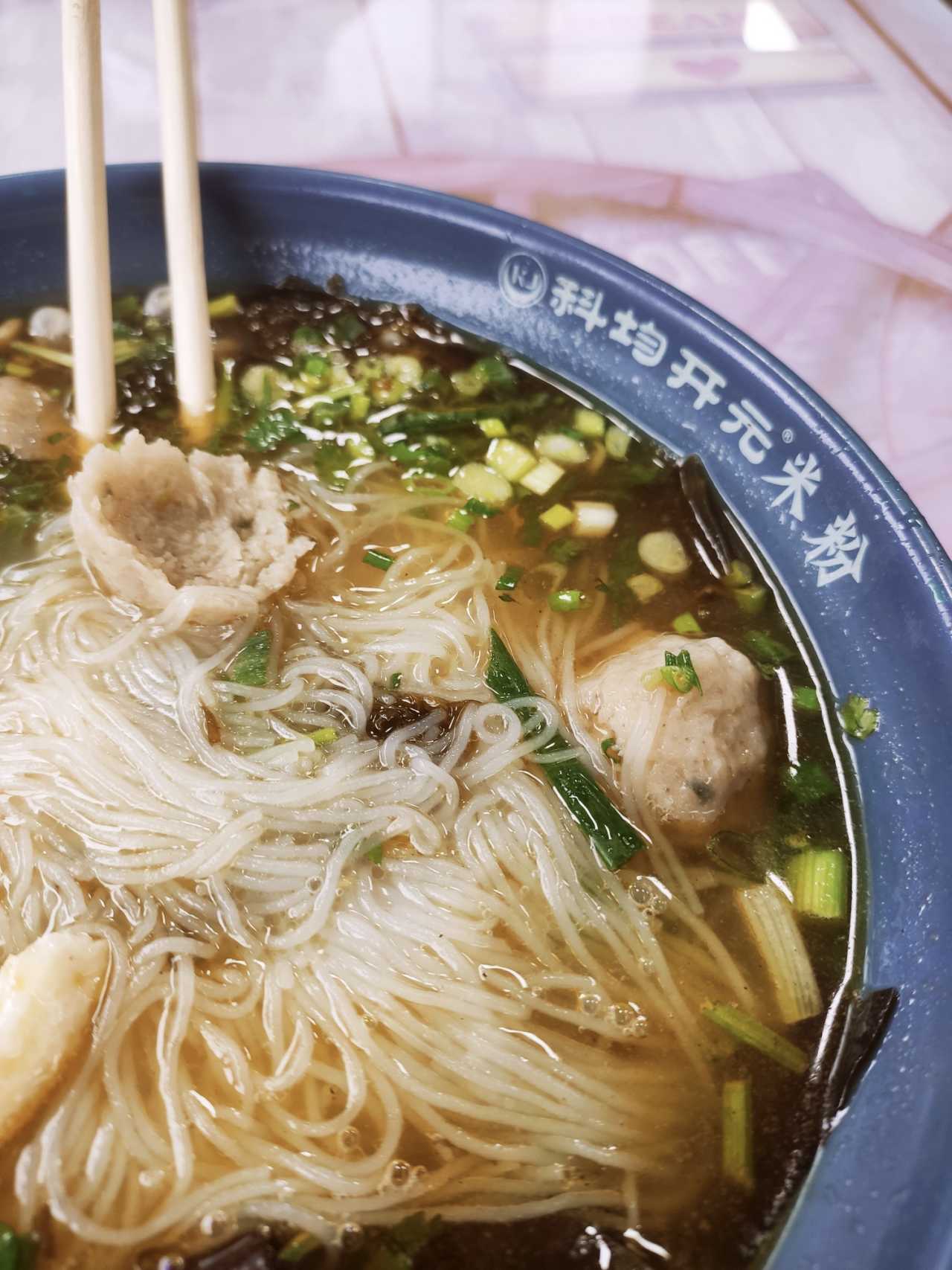
Mianyang rice noodles are extremely thin. A bamboo strainer dips them into boiling water for just a few seconds, and they’re done—so silky smooth they remind you of silk. The broth comes in two types: red and clear. The red broth, topped with beef or pork intestines, is fiery red, numbing, and fragrant—a paradise for lovers of bold flavors. The clear broth, with meatballs, bamboo shoots, and seaweed, is rich and mellow, perfect for those who want a gentle wake-up call for their taste buds.
There’s a secret to eating these noodles: always pair them with crispy pickled vegetables. They cut through the richness and lift the flavor. And if you can handle the unique taste of 折耳根 (fish mint), adding a bit of chopped fish mint is the true local way.
Recommended Old Shops: 开元米粉 (Kaiyuan Rice Noodles), 永华米粉 (Yonghua Rice Noodles), and 德华开元米粉 (Dehua Kaiyuan Rice Noodles). These time-honored names have branches all over the city and are safe bets for an authentic bowl.
First Stop: Mianyang Museum—A Time Tunnel Through Millennia
After a full stomach, head straight to the Mianyang Museum. Located at No. 7 Furong Road North, Youxian District, this comprehensive museum is the best window into Mianyang’s past and present.
Practical Information: - Opening Hours: Tuesday to Sunday, 9:00 AM–5:00 PM (last entry at 4:00 PM); closed on Mondays - Admission: Free, but advance reservation required via the official WeChat account - Recommended Visit Time: 1.5–2 hours
The museum building itself is worth seeing—a modern, grand structure that blends Mianyang’s technological elements with its historical and cultural imagery. But what truly amazes is its collection.
Must-See Highlights:
The Treasure of the Museum—Eastern Han Dynasty Money Tree (东汉摇钱树): Mianyang is a major site for unearthed Eastern Han money trees. This exquisitely crafted tree is not only a representative of Han burial culture but also embodies ancient people’s hopes for wealth and good fortune.
Eastern Han Bronze Horse and Chariot Figurines: These artifacts vividly reflect Mianyang’s transportation and military significance in ancient times. Looking at them, you can almost hear the echoes of chariots and horses from two thousand years ago.
Western Han Lacquerware: Exquisite craftsmanship and excellent preservation—a testament to the ingenuity of Han dynasty artisans.
The museum’s permanent exhibitions are organized into themed halls, covering artifacts from the Neolithic Age to the Qing Dynasty, including bronzeware, pottery, and jade. Special mention goes to the “Money Trees and Han Dynasty Pottery” section, a cultural symbol unique to Mianyang. Additionally, the “Mianyang Science City” exhibition showcases modern technological achievements in nuclear industry and aerospace, echoing the science museum you’ll visit later.
Nearby Connections: The museum is close to Fule Mountain Park. After your visit, you can take a stroll in the park, or return in the evening to see the night view of Yuewang Tower. [Link: Fule Mountain Park guide]
Second Stop: Mianyang Science and Technology Museum—Touching the Pulse of the Stars and Seas
If the museum is Mianyang’s “past,” then the Science and Technology Museum is its “present” and “future.”
Located at No. 288 Yihuan Road East, Youxian District, just one kilometer from the museum (a short walk), this modern science venue is themed around the “Two Bombs, One Satellite” program and aerospace. Its architecture rises in a spiral “Wings of Technology” form, symbolizing scientific progress and the spirit of exploration.
Practical Information: - Opening Hours: Wednesday to Sunday, 9:30 AM–5:00 PM (last entry at 4:00 PM); closed on Mondays and Tuesdays - Admission: Free, with reservation required using your ID card (some special-effects theaters or interactive experiences may charge a fee) - Recommended Visit Time: 1.5 hours; longer if you engage deeply with the exhibits
Core Exhibition Areas:
“Two Bombs, One Satellite” and Nuclear Technology Zone: Mianyang is a key base for China’s nuclear industry and aerodynamic research. This area uses models, graphics, and interactive devices to explain nuclear energy principles, applications, and the contributions of the scientists behind the “Two Bombs, One Satellite” project. A simulated nuclear reactor and displays about scientists like Deng Jiaxian inspire deep respect.
Aerospace and Aerodynamics Zone: Fighter jet models, simulated rocket launches, wind tunnel principles… This area highlights Mianyang’s role in China’s aerospace research. The most popular attractions are the VR space experience and the fighter jet simulator cockpit, letting you live out your “astronaut” dreams.
Information Technology and AI Zone: Robot performances, 5G communications, the Internet of Things—highly interactive, especially great for families with children.
Best Route: Start from the top floor with the “Two Bombs, One Satellite” area, then work your way down. This helps you better grasp the development of science and technology. [Link: Best science museums in Sichuan]
Dinner: Majia Alley (马家巷)—A Snack World in the Hearth of the City
As night falls, it’s time to experience Mianyang’s vibrant street food scene. Majia Alley, the city’s most famous snack street, is a feast for the eyes from start to finish. This short lane is packed with an overwhelming variety of treats.
Must-Try Recommendations:
谢智冷沾沾 (Xie Zhi Cold Skewers, 0.6 RMB per skewer): This is a unique Mianyang specialty. Everyone sits around a table covered with skewers of meat and vegetables. Three dipping sauces—numbing-spicy, garlic, and sour-spicy—are set out. You just grab whatever you want. Since everyone uses the same dipping sauce, patrons are very conscientious, dipping only once. It’s a fun, self-serve style. Each small skewer lets you taste different ingredients, and the value is unbeatable.
Other Recommendations: Grilled pig brain, spring rolls, mashed potatoes… Every one is worth a try. [Link: Mianyang street food guide]
Night Tour: Yuewang Tower—Where a Thousand-Year River Meets a Modern Science City
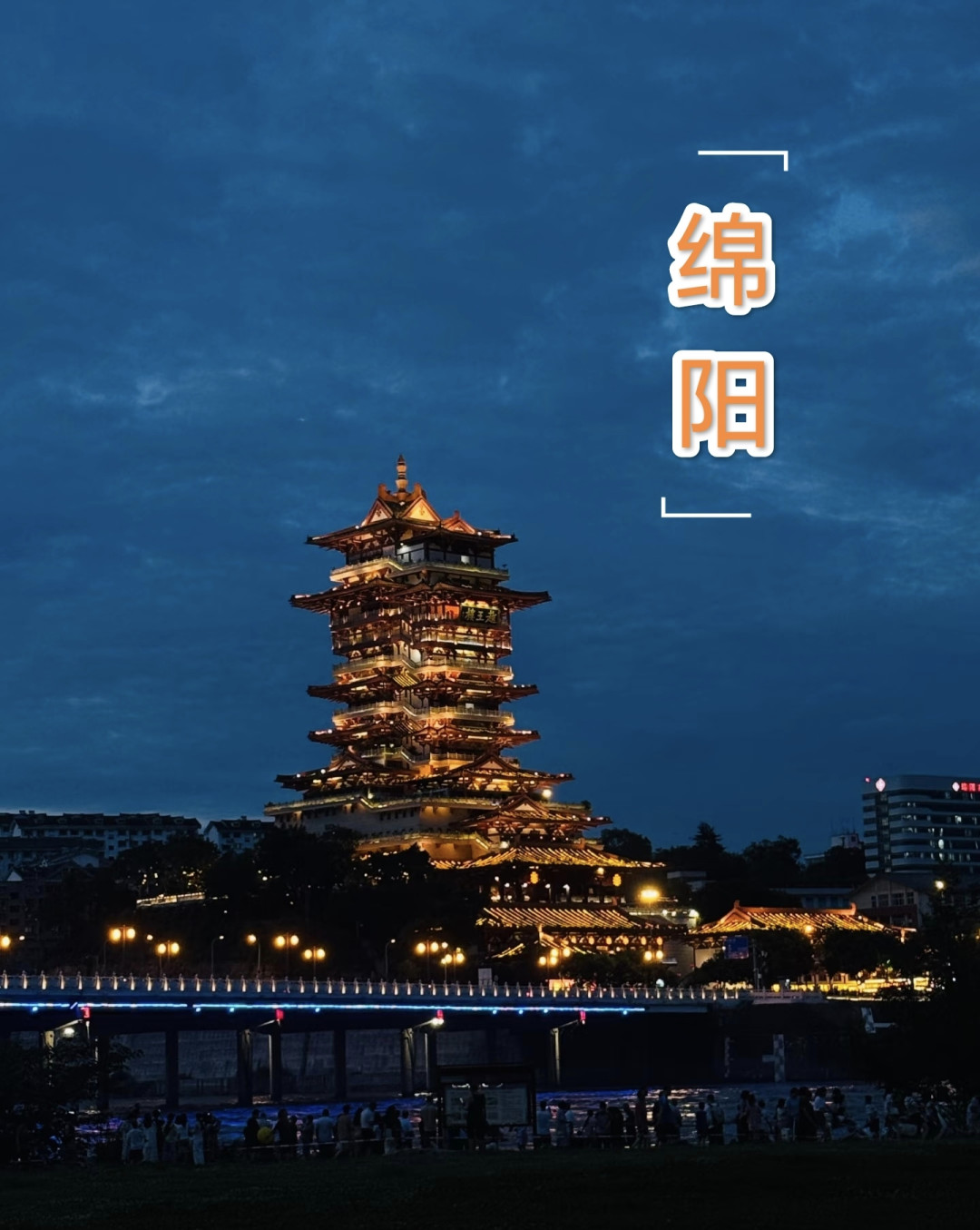
After eating your fill, head to the banks of the Fujiang River to see Yuewang Tower lit up at night—the perfect end to the day. Yuewang Tower, originally built during the Tang Dynasty, offers a stunning panorama of the city and the river. At night, the illuminated tower reflects on the water, creating a magical scene that blends ancient architecture with the modern skyline of China’s science city.
Pro Tip: Walk along the riverfront promenade for the best photo opportunities. The tower is especially beautiful during festivals and weekends when special light shows are held.
Day Two: Li Bai’s Footsteps and the Soul of a Poet

Morning: Fule Mountain Park—Where History Meets Nature
Start your second day with a visit to Fule Mountain Park, located near the Mianyang Museum. This scenic area combines natural beauty with historical sites. The park is named after the Fule Temple, a Buddhist complex dating back to the Tang Dynasty. Climb the steps to the top for a panoramic view of Mianyang and the Fujiang River.
Highlights: - Fule Temple: A serene Buddhist temple with ancient architecture and peaceful gardens. - Yuewang Tower: Visit during the day for a different perspective—you can climb to the top and see the city layout. - Walking Trails: The park has well-maintained paths perfect for a morning stroll or jog.
Practical Info: Free entry. Open daily from 7:00 AM to 6:00 PM. Allow 1–2 hours.
Late Morning: Li Bai’s Hometown—A Pilgrimage for Poetry Lovers
No trip to Mianyang is complete without visiting the birthplace of Li Bai, China’s most famous poet. Located in Jiangyou City (about 30 minutes from central Mianyang), the Li Bai Memorial Hall complex is a sprawling tribute to the poet’s life and work.
What to See: - Li Bai’s Former Residence: A reconstructed Tang Dynasty courtyard where the poet spent his childhood. - Memorial Hall: Exhibits of Li Bai’s calligraphy, poetry manuscripts, and artifacts from his life. - Poetry Stele Forest: Hundreds of stone tablets inscribed with Li Bai’s most famous poems. - Taibai Tower: A seven-story pagoda offering views of the surrounding countryside.
Practical Info: Admission is 50 RMB. Open daily from 8:30 AM to 5:30 PM. Allow 2–3 hours for a thorough visit. [Link: Li Bai travel guide]
Lunch: Local Specialties in Jiangyou
After exploring Li Bai’s hometown, enjoy a local lunch in Jiangyou. Try Jiangyou Tofu—a silky, delicate tofu dish served in a light broth—or Mianyang-style braised pork, which is tender and fragrant.
Afternoon: Return to Mianyang City—Shopping and Souvenirs
Head back to Mianyang city center for some last-minute shopping. The Mianyang Department Store area and Furong Road offer a mix of modern malls and traditional shops. Look for:
- Mianyang embroidery: Intricate silk embroidery featuring local landscapes.
- Li Bai-themed souvenirs: Calligraphy scrolls, poetry books, and postcards.
- Local snacks: Packaged Mianyang rice noodles or pickled vegetables to take home.
Evening: Farewell Dinner—Hotpot or Riverfront Dining
End your two-day Mianyang trip with a farewell dinner. Choose between a Sichuan hotpot experience (Mianyang has excellent hotpot restaurants) or a riverfront dining spot along the Fujiang River. Both options offer a perfect conclusion to your journey.
FAQ: Your Mianyang Travel Questions Answered
1. Is Mianyang worth visiting for a short trip?
Absolutely. Mianyang offers a unique blend of ancient culture (Li Bai’s hometown, Han Dynasty artifacts) and modern technology (Science Museum, nuclear research base). Two days is enough to experience the city’s highlights without feeling rushed.
2. How do I get to Mianyang from Chengdu?
Mianyang is about 1.5 hours from Chengdu by high-speed train (Chengdu East Station to Mianyang Station). Trains run frequently from 6:00 AM to 9:00 PM. Alternatively, you can drive (about 2 hours via the G5 Expressway).
3. What is the best time to visit Mianyang?
Spring (March–May) and autumn (September–November) are ideal, with mild temperatures and clear skies. Summer can be hot and humid, while winter is cold but less crowded. Avoid Chinese public holidays for a quieter experience.
4. Are the museums free? Do I need to book in advance?
Both the Mianyang Museum and the Science and Technology Museum are free, but advance reservations are required. Book through their official WeChat accounts or websites. ID card or passport number is needed for entry.
5. What local dishes should I try besides rice noodles?
Don’t miss Mianyang cold skewers (冷沾沾), grilled fish (especially in Majia Alley), Sichuan-style hotpot, and Jiangyou tofu. For dessert, try glutinous rice balls with sweet osmanthus syrup.
Ready to Explore Mianyang?
Mianyang is a city of contrasts—where ancient poetry meets cutting-edge science, where quiet temples stand beside bustling noodle shops. Whether you’re a history buff, a tech enthusiast, or a food lover, this two-day Mianyang itinerary offers something for everyone.
Plan your trip now: Book your high-speed train from Chengdu, reserve your museum slots, and pack your appetite. Mianyang is waiting to surprise you.
[Link: How to get from Chengdu to Mianyang] | [Link: Best hotels in Mianyang] | [Link: Mianyang travel tips]
Internal Linking Suggestions: - [Link: Top 10 things to do in Mianyang] - [Link: Mianyang vs. Chengdu: Which city to visit?] - [Link: Sichuan travel itinerary: 7 days] - [Link: Li Bai poetry collection] - [Link: China science city guide]
Call to Action: Have you visited Mianyang? Share your experience in the comments below! Or if you’re planning a trip, save this guide and start packing. Don’t forget to subscribe to our newsletter for more off-the-beaten-path China travel guides.
You may also like


