Two Days in Anyue: The Ultimate Guide to Tang and Song Stone Carvings, Lemon Countryside, and "Anning's Stone Light"
Meta Description: Discover Anyue's hidden treasures—over 100,000 Tang and Song stone carvings, China's lemon capital, and a peaceful countryside escape from Chengdu. This 2-day itinerary covers the best Anyue attractions, driving routes, and insider tips for an unforgettable "Anning's Stone Light" journey.
Introduction: Why Anyue Should Be Your Next Weekend Escape
The National Day holiday dilemma is universal: stay home with regret or brave the crowds? For us, the answer was clear—a place not too far from Chengdu, rich in history, and blissfully uncrowded. That place was Anyue County in Ziyang City, Sichuan Province.
Welcome to "Anning's Stone Light"—a poetic fusion of Anyue's ancient stone carvings, its world-famous lemons (ningmeng), and the serenity of rural Sichuan. At just 140 kilometers from Chengdu (under a two-hour drive), Anyue offers a rare combination: nationally significant cultural relics without the tourist hordes.
In this comprehensive guide, we'll walk you through a perfect two-day itinerary covering both the Northern and Southern routes of Anyue's cliffside treasures, practical travel tips, and why this destination deserves a spot on your China travel bucket list.
What Is "Anning's Stone Light"? Decoding the Name
The phrase "Anning's Stone Light" captures the essence of Anyue in three characters:
- An (安) – From Anyue County, meaning "dwelling peacefully in the mountains." This small county boasts over 1,500 years of recorded history.
- Ning (柠) – Short for lemons (ningmeng). Anyue is China's only national lemon production base, accounting for 80% of the country's lemon output. It's officially "China's Lemon Capital."
- Stone (石) – Refers to Anyue's stone carvings. Scattered across the countryside are over 100,000 Tang and Song dynasty cliffside carvings, including 10 national key cultural relics protection sites. Anyue is known as "Home of Chinese Stone Carving Art" and "China's Capital of Buddhist Sculpture."
For humanities enthusiasts, the title "Home of Chinese Stone Carving Art" alone is enough to spark excitement. And since the carvings are spread across rural areas with no public transportation, self-driving is the only option—which naturally keeps the crowds away. Even during peak holidays, you'll have these masterpieces almost to yourself.
The only downside? Our visit was too early for lemon season. Otherwise, the "Anning's Stone Light" experience would have been perfect.
Anyue Stone Carvings: An Overview You Need to Know
Anyue's cliffside carvings span from the Southern and Northern Dynasties (420-589 AD) through the Tang, Song, Ming, and Qing dynasties. They "build on the Longmen Grottoes above and inspire the Dazu Rock Carvings below"—a direct link in the evolution of Chinese grotto art.
Key facts: - Nearly 500 grottoes and over 100,000 statues - 10 national-level protected sites, 8 of which are stone carvings: Wolfo Yuan (Reclining Buddha Temple), Pikong Cave, Thousand Buddha Stockade, Yuanjue Cave, Huayan Cave, Mingshan Temple, Peacock Cave, and Xuanmiao Temple - Predominantly Buddhist, blending elements from the Three Teachings (Buddhism, Taoism, Confucianism) - Known as the "living fossil" of late Chinese grotto art
Why aren't Anyue's carvings as famous as Dazu's? Because they're scattered across towns and wilderness—as if ancient craftsmen carved wherever they found suitable rock. Folk legend even suggests Anyue carvings were practice pieces; once perfected, craftsmen moved to Dazu, giving rise to the Dazu Rock Carvings.
Two Main Routes for Visiting

- Northern Route: Mainly Tang dynasty carvings—grand and imposing. Highlights: Wolfo Yuan, Mumen Temple, Yuanjue Cave, Thousand Buddha Stockade, Xuanmiao Temple
- Southern Route: Mainly Song dynasty carvings—exquisite and delicate. Highlights: Pikong Cave, Huayan Cave, Peacock Cave, Mingshan Temple, Tapo
Each of these ten sites is a masterpiece worth savoring.
Practical Information: Transportation, Accommodation, and Tickets
Getting There
Anyue stone carvings are extremely scattered. Self-driving or hiring a car is essential—there are no dedicated tourist buses. Fortunately, roads have been improved, and each site is accessible by car.
Distance from Chengdu: Approximately 140 km, under 2 hours by car.
Suggested starting point: Depart from Chengdu early morning.
Where to Stay
We recommend staying in Anyue county town, which offers many hotel options. During National Day, we booked on the day itself and found a room easily at a reasonable price—and they allowed dogs.
Our choice: Lijing Garden Hotel (Anyue county town)—convenient for both routes.
Ticket Prices (2024)
| Site | Price | Notes |
|---|---|---|
| Yuanjue Cave | 28 RMB/person | Must-see on Northern Route |
| Pikong Cave | 18 RMB/person | Song dynasty masterpiece |
| Huayan Cave | 10 RMB/person | Exquisite carvings |
| Wolfo Yuan | Free | Reclining Buddha |
| Mumen Temple | Free | Tang dynasty |
| Thousand Buddha Stockade | Free | Northern Route |
| Peacock Cave | Free | Southern Route |
| Mingshan Temple | Free | Southern Route |
| Tapo | Free | Southern Route |
Day 1: Northern Route – Tang Dynasty Grandeur
1. Wolfo Yuan (Reclining Buddha Temple) – The Iconic First Stop
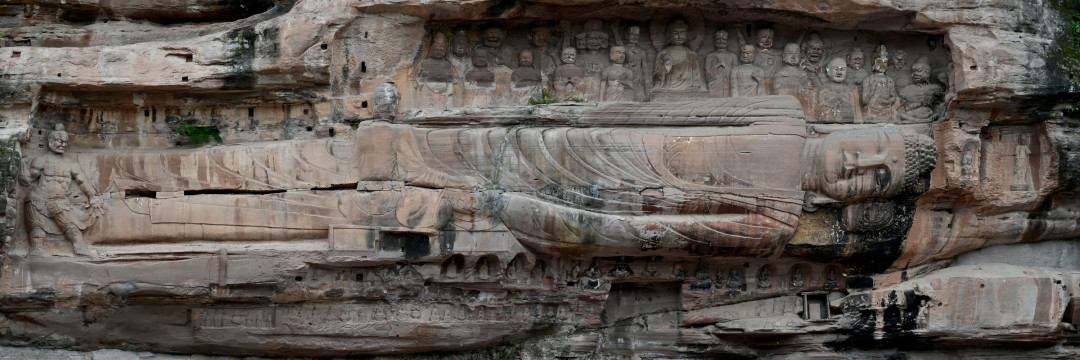
The moment I saw the reclining Buddha in an online photo, I knew it would be our first stop—and the cover image of this travelogue.
What makes it special: This is the earliest and most complete full-body reclining Buddha statue in China, dating back 1,300 years to the Tang dynasty. It depicts Shakyamuni's nirvana.
Location: Wofo Valley, Bamiao Township, 25 km north of Anyue county town.
Key details: - Carved during the Kaiyuan era (713-741 AD) of the Tang dynasty - Sits 7 meters above ground, 23 meters long, head 3 meters long, shoulders 3.1 meters wide - Faces south, head east, feet west, hands placed flat - Unique feature: Unlike other reclining Buddhas that lie on their right side, this is the only one lying on its left side
The statue is elegant and graceful, with bold, flowing robe lines characteristic of High Tang Buddhist art. Shakyamuni's eyes are half-closed, serene and peaceful.
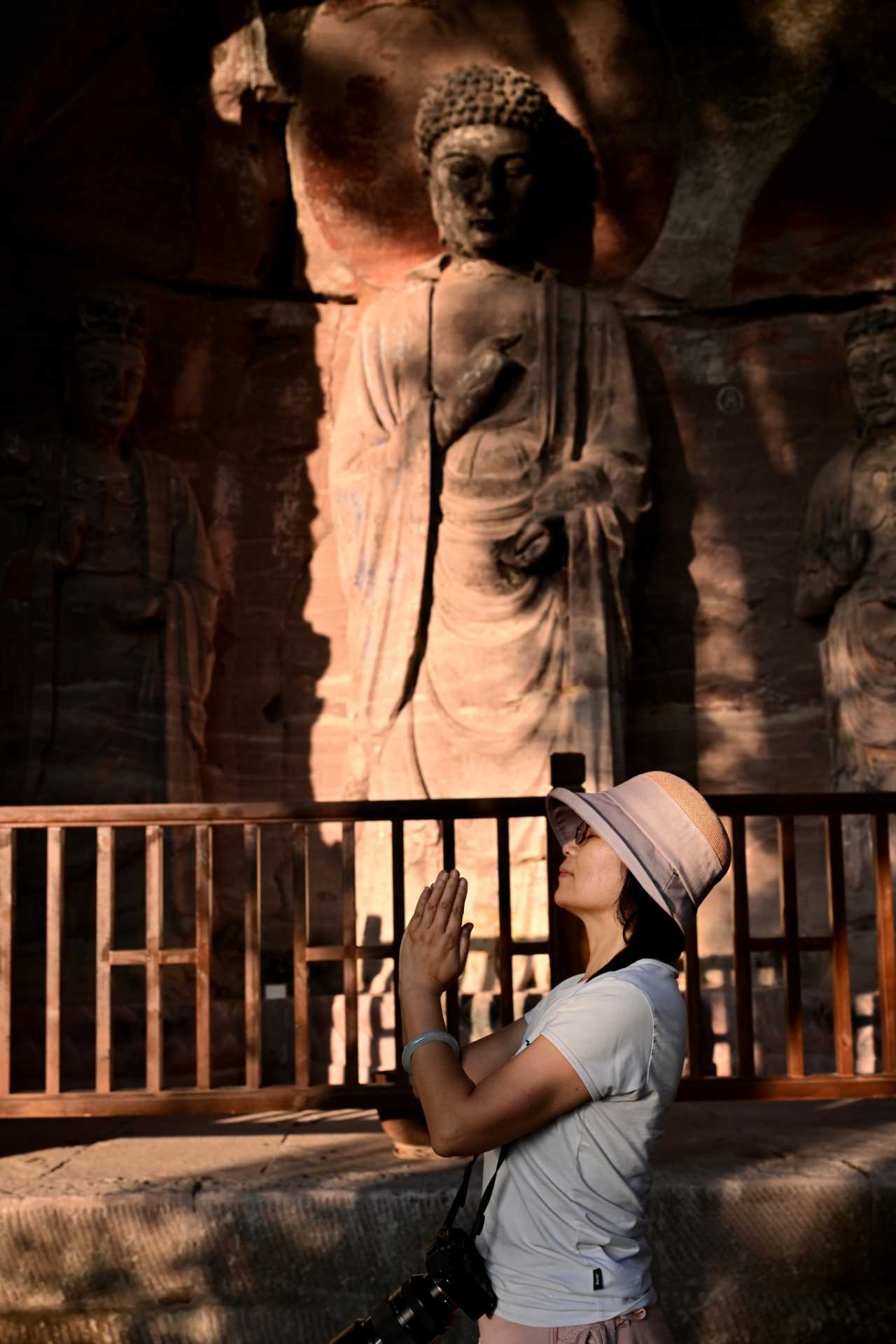
Practical tips: - Free admission - Has a visitor center and large parking lot - During peak times, the narrow road may cause congestion—consider parking at the village party-mass service center and walking - The walk offers beautiful scenery: mountain on one side, lake on the other - Near the east gate, you'll find a plaque inscribed by Zhao Puchu, renowned Chinese calligrapher - It's also a filming location for the game Black Myth: Wukong—a title that has boosted tourism to many sites
[Link: Other Black Myth: Wukong filming locations in Sichuan]
2. Mumen Temple – Tang Dynasty Simplicity
Located nearby, Mumen Temple features Tang dynasty carvings in a simpler, more intimate setting. Free admission.
3. Yuanjue Cave – The Crowning Jewel of the Northern Route
Ticket: 28 RMB/person
Yuanjue Cave is considered one of the finest examples of Anyue stone carving art. The cave features a stunning array of bodhisattvas, disciples, and celestial beings, all carved with remarkable precision and life-like expression.
Why visit: The carvings here demonstrate the transition from Tang grandeur to Song refinement, making it a crucial site for understanding Chinese Buddhist art evolution.
4. Thousand Buddha Stockade – A Hidden Gem
Free admission. As the name suggests, this site features thousands of small Buddha statues carved into a cliff face. It's less crowded than the major sites, offering a more contemplative experience.
Day 2: Southern Route – Song Dynasty Elegance
1. Pikong Cave – Song Dynasty Masterpiece
Ticket: 18 RMB/person
Pikong Cave is arguably the most exquisite site on the Southern Route. The carvings here are incredibly detailed, with flowing robes, delicate facial features, and intricate decorative elements.
What to look for: The central Buddha figure surrounded by a host of attendants, each with unique expressions and postures. The carving technique is so refined that you can see individual strands of hair and folds in clothing.
2. Huayan Cave – Intimate and Exquisite
Ticket: 10 RMB/person
Huayan Cave features a smaller but exceptionally well-preserved collection of Song dynasty carvings. The cave's intimate scale allows you to appreciate the details up close.
3. Peacock Cave – Unique Subject Matter
Free admission. As the name suggests, this site features peacock-themed carvings—a rare subject in Chinese Buddhist art. The peacock is associated with the bodhisattva Mahamayuri in Buddhist tradition.
4. Mingshan Temple – Temple and Carvings in Harmony
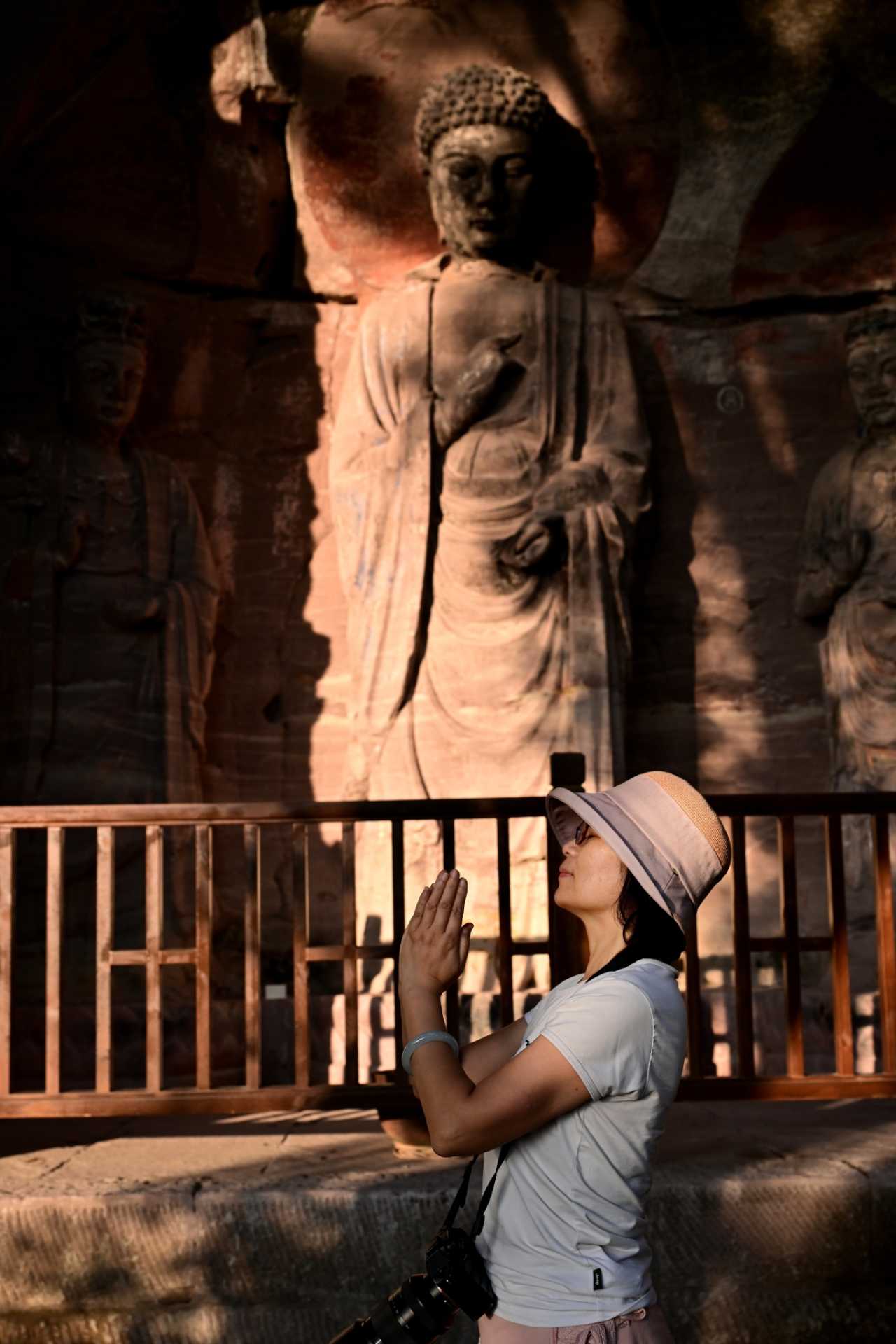
Free admission. Mingshan Temple combines a functioning temple with ancient cliffside carvings. The contrast between living Buddhist practice and historical art creates a unique atmosphere.
5. Tapo – The Southernmost Point
Free admission. Tapo marks the southern end of the Southern Route. The carvings here are more weathered but no less fascinating, offering a glimpse into the natural aging process of stone art.
Travel Tips for Your Anyue Adventure
Best Time to Visit
- Spring (March-May): Mild temperatures, blooming flowers, and lemon blossoms
- Autumn (September-November): Clear skies, comfortable weather, and autumn foliage
- Avoid summer: Hot and humid; some sites lack shade
- Lemon season: October to January for fresh lemons
What to Bring
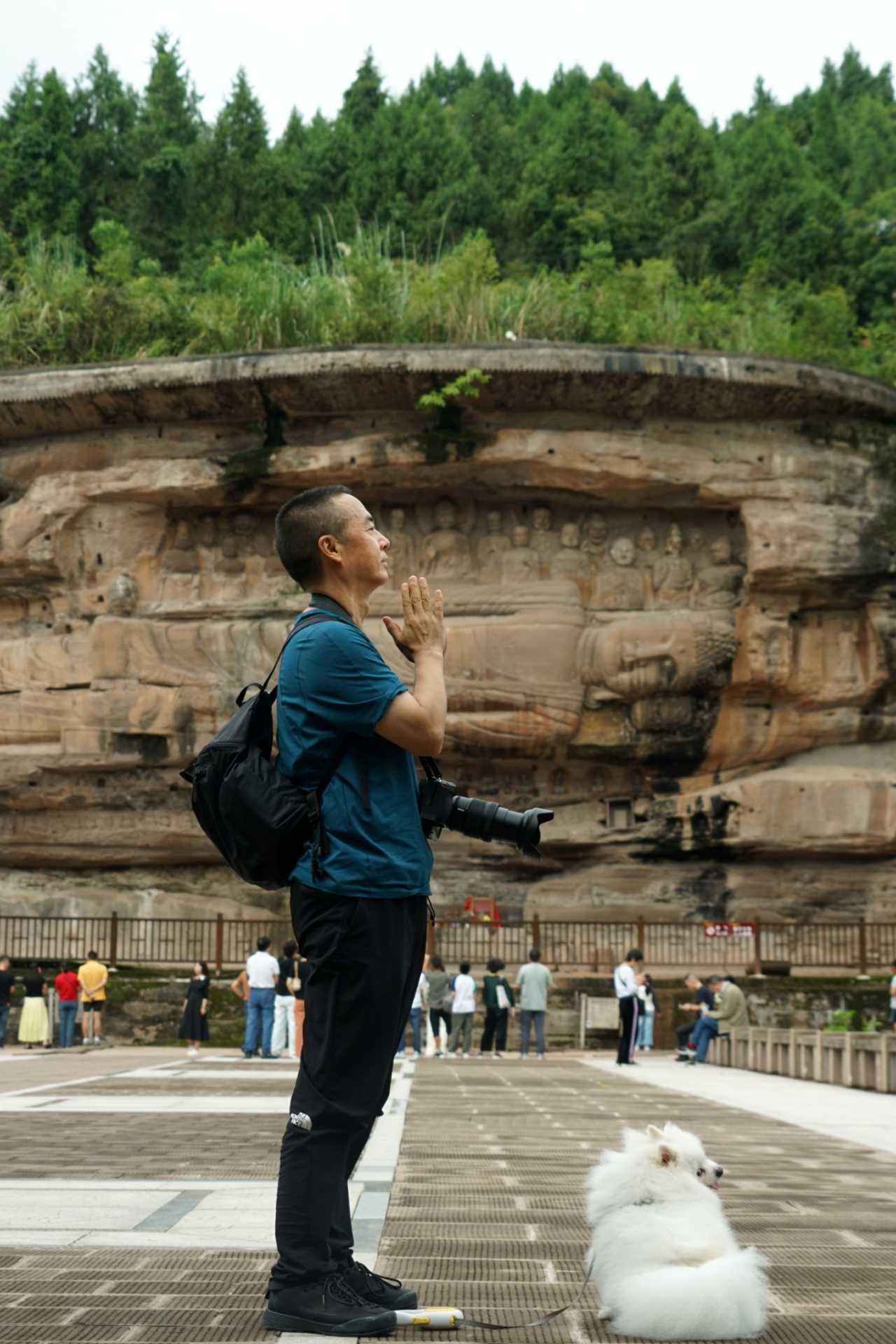
- Comfortable walking shoes (some sites require short hikes)
- Water and snacks (limited food options near some sites)
- Camera with zoom lens (carvings are often elevated)
- Sun protection (hat, sunscreen, sunglasses)
- Insect repellent (rural areas)
Driving Tips
- Roads are generally good but narrow in some areas
- GPS navigation works well; search for site names in Chinese
- Allow extra time between sites (20-40 minutes driving each)
- Parking is free at most sites
Dog-Friendly Travel
Many sites allow well-behaved dogs on leashes. Our dog Doudou enjoyed the trip immensely—plenty of open space and fresh air.
Frequently Asked Questions About Anyue Stone Carvings
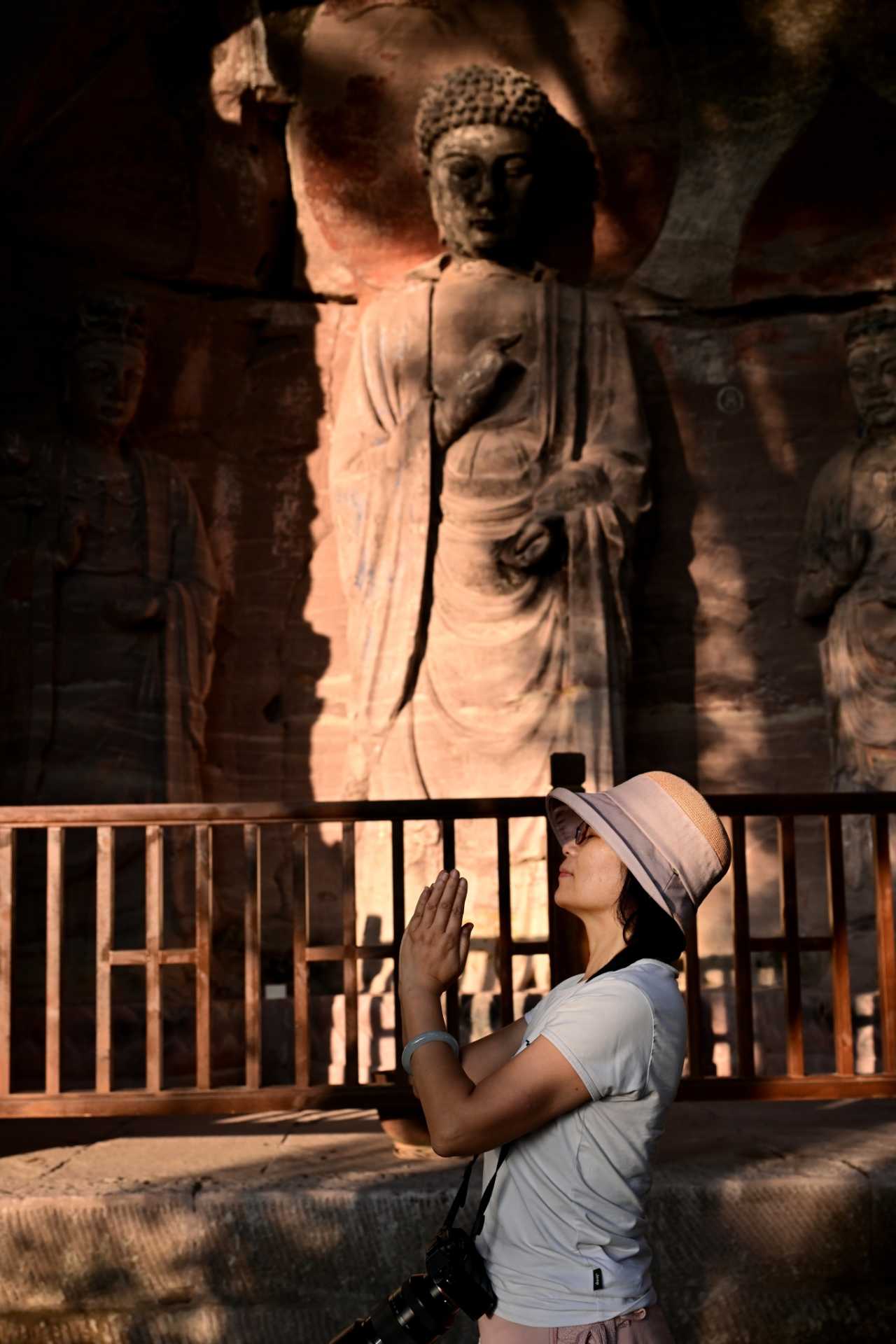
Q1: How do Anyue stone carvings compare to Dazu Rock Carvings?
Anyue carvings are less concentrated and less developed for tourism, but many experts consider them equally impressive artistically. They're often described as "practice pieces" that inspired Dazu. If you've seen Dazu, Anyue offers a more raw, authentic experience with fewer crowds.
Q2: Can I visit Anyue without a car?
Not recommended. The carvings are scattered across rural areas with no public transportation. Self-driving or hiring a private car is essential. Some local tour operators offer guided trips from Chengdu.
Q3: How much time do I need for each site?
- Major sites (Wolfo Yuan, Yuanjue Cave, Pikong Cave): 1-1.5 hours each
- Smaller sites (Mumen Temple, Peacock Cave): 30-45 minutes each
- Total for both routes: 2 full days
Q4: Are there English guides or information at the sites?
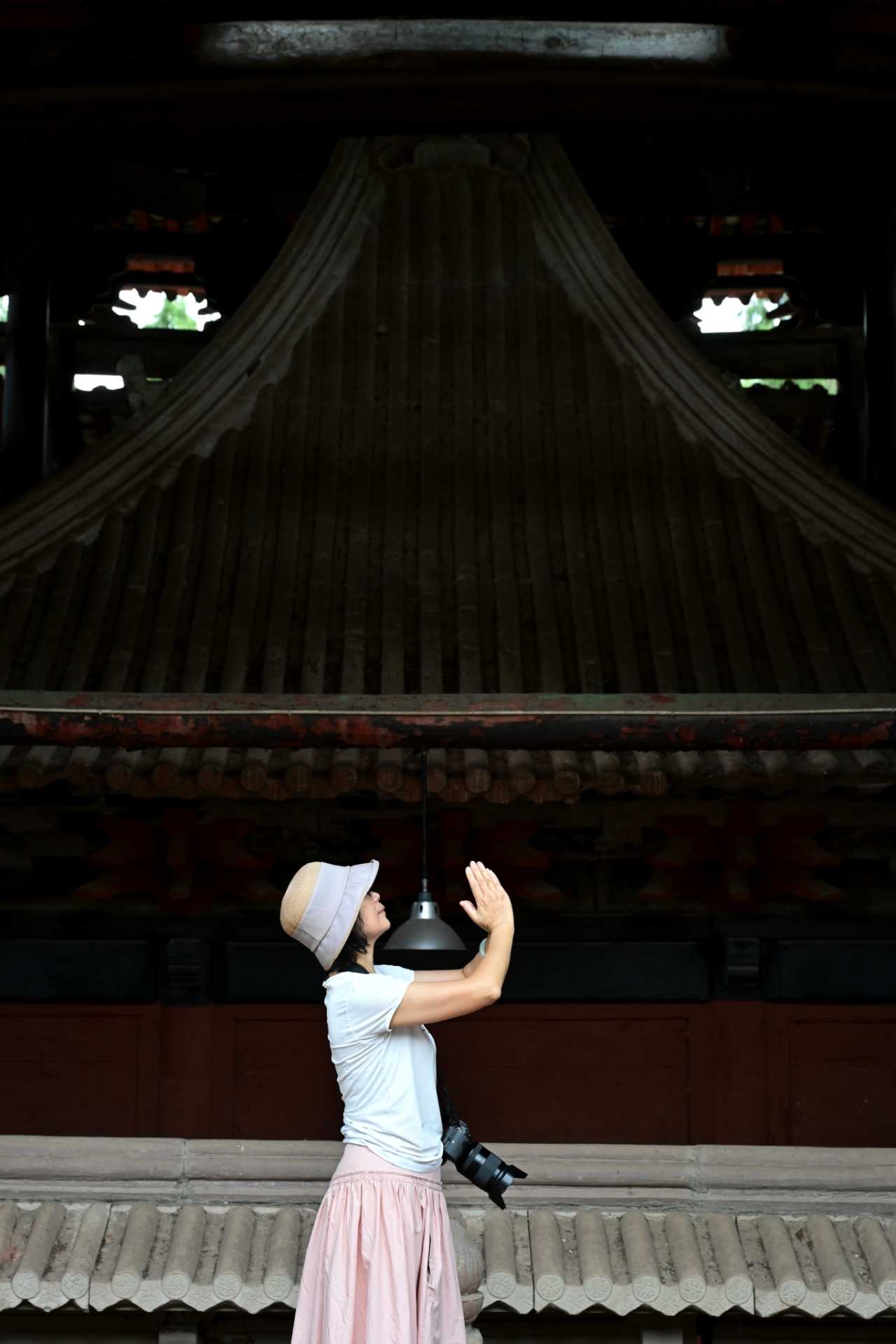
Most sites have limited English signage. We recommend downloading offline translation apps or hiring a local guide. Some sites have QR codes with basic English descriptions.
Q5: Is Anyue safe for solo travelers?
Yes, Anyue is very safe. The county town is small and friendly, and the rural areas are peaceful. However, some sites are remote—let someone know your itinerary and carry a charged phone.
Why You Should Visit Anyue Now
Anyue represents everything that makes Chinese cultural travel rewarding: world-class art, deep history, authentic rural life, and the joy of discovery without the crowds. The "Anning's Stone Light" experience—stone carvings, lemon countryside, and peaceful wandering—is a rare combination you won't find elsewhere.
What you'll gain: - A deeper understanding of Chinese Buddhist art evolution - Stunning photography opportunities - A peaceful escape from city life - The satisfaction of discovering a hidden gem before it becomes famous
What you'll miss if you don't go: - The chance to see 1,300-year-old masterpieces in near solitude - The unique atmosphere of rural Sichuan - The taste of China's lemon capital (if you visit in season)
Plan Your Anyue Trip Today
Ready to experience "Anning's Stone Light"? Here's your action plan:
- Choose your dates – Avoid Chinese public holidays if possible; weekends are fine
- Book accommodation – Anyue county town hotels are affordable and dog-friendly
- Prepare your car – Ensure it's in good condition for rural roads
- Download offline maps – Some rural areas have limited cell service
- Pack wisely – Comfortable shoes, sun protection, and a sense of adventure
[Link: More Sichuan hidden gem destinations]
Share your Anyue experience: Tag us on social media with #AnningsStoneLight and #AnyueStoneCarvings. We'd love to see your photos and hear your stories!
Traveled by: Myself, my wife, and our dog Doudou
Last updated: October 2024
You may also like


