Trekking Through Genie and Seda: An Autumn Feast in the Wilds of Western Sichuan – Your Ultimate Guide to a 12-Day Adventure
Meta Description: Discover the ultimate autumn trek through Genie and Seda in Western Sichuan. From 4,000m plateaus to alpine meadows, this 12-day journey offers solitude, stunning colors, and raw adventure. Plan your escape today.
Introduction: When the National Day Crowds Give Way to Mountain Silence
Every National Day holiday, while most travelers shuffle through crowded scenic spots, a different kind of adventurer chooses another path. They pack their bags, step into the wilds of Western Sichuan, measure the land with their feet, and feel autumn with their hearts. This year, an outdoor team of 18 set out from Guangzhou for a 12-day journey—trekking through Genie and driving through Seda. On plateaus above 4,000 meters, they wrote a story of courage, friendship, and the beauty of nature.
This was no ordinary trip. It was a conversation with oneself, a challenge of limits, and the deepest possible reading of autumn. While city ginkgo leaves barely turned yellow, the colorful forests of Western Sichuan were already blazing. While social media feeds filled with check-in photos at tourist traps, this group's albums held snow-capped peaks, alpine meadows, starry skies, and moments that could never be replicated.
If you're seeking an autumn trek in Western Sichuan that offers solitude, raw beauty, and a true test of endurance, this guide will show you exactly how to plan it—including the Genie Seda trekking route, altitude preparation tips, and the best Western Sichuan autumn photography spots.
Setting Out: A Carefully Planned "Escape" from Guangzhou to Chengdu
From Guangzhou to Chengdu: Hearts Already Wandering
The team had been preparing for a month. Their leader, Puppet—a Guangzhou-based outdoor guide whose professionalism and reputation attracted a growing following—had organized this 12-day itinerary, which set a new record with 18 participants. Puppet even made the unprecedented offer of a refundable deposit for those who chose to fly, but no one took him up on it.
The departure opportunity came thanks to team member Jiajia, who discovered a bargain: China Southern Airlines' "3-person group ticket to Chengdu for 480 yuan." So all 18 coordinated to depart on the evening of the 26th, a full day earlier than planned. This decision later proved to be the smartest move of the entire trip—it earned them rare good weather and breathtaking scenery.
The gender ratio was heavily skewed: the front row had only five men—Puppet, Blackie, Boss Lai, Brother Hua, and Damai—while the back row had thirteen women. Among them, the "Tao Kao E Gua" four sisters—Taozi, Koala, Elim, and Ice Melon—reunited after their 2020 Gongga Loop trek.
Pro tip for your own trip: Book flights early and aim for a mid-week departure to avoid the National Day rush. The Guangzhou to Chengdu group ticket strategy can save you hundreds.
Departure Day: The "Escape Game" Heats Up
Departure day fell on a workday, and no one could focus. Damai left for the airport as early as 3 PM, setting off a chain reaction—everyone started heading out early. By 5 PM, the die-hard office workers finally clocked out and rushed straight to Baiyun Airport.
With oversized bags and backpacks everywhere, they turned heads wherever they went. Late at night, around 11 PM, the group finally arrived at their hotel in Chengdu. The neighboring room tempted them with the aroma of barbecue and beer—how could they resist? The "Tao Kao E Gua" foursome ordered barbecue with cola to cap off the perfect first day.
[Link: Best budget hotels in Chengdu for trekking groups]
The Long Haul: 15 Hours of Driving and Unexpected Drama
Chengdu to Litang: A Game of Cat and Mouse
The next day, they split into two groups at 8 AM sharp: the market team to buy vegetables and meat, and the supermarket team to stock up on cooking essentials. The plan was to be ready by 9:30 AM, waiting for their chartered driver.
But an ordinary day of driving turned into a circus orchestrated by the charter boss. The driver arrived as scheduled, but the vehicles had changed from "9+7+7 seats" to "7+7+7 seats"—still enough seats for 18 people, but absolutely no room for luggage. Puppet tried multiple times to negotiate, but in the end, they had to pay extra and arrange for an SUV to haul the luggage to Kangding, where one of the 7-seaters would be swapped for a pickup truck.
While waiting for the SUV, Koala set up shop—the girls lined up for braided hairstyles. By the time everyone's head was freshly styled, the SUV was still repeating "almost there, almost there." They finally met up at 11:30 AM, two hours behind schedule.
By the time they reached Kangding in the afternoon, swapping vehicles took another hour. The driver, Silang, apparently thought everyone needed entertainment, so he staged his own "cat and mouse" routine—a frustrating waste of another hour. They finally arrived at the Litang hotel at 2:30 AM. To make matters worse, the entire town had a power outage. Thankfully, the hotel had a generator. A quick wash and straight to bed.
Fifteen hours on the road—the longest drive many of them had ever experienced.
Key lesson: Always confirm vehicle details in writing. The Chengdu to Litang road trip is long enough without vehicle drama.
The Eye of Genie: A Window to Heaven
First Taste of the Plateau: Vomiting and Beauty Side by Side
On the third day, they saw Litang at 3 AM and again at 7 AM. As one of the highest-altitude counties, the altitude hit hard. Exhausted from the long drive, barely anyone had slept, and they set off again with dark circles under their eyes.
The 100-kilometer drive from Litang to the Eye of Genie took about two hours, winding up along National Road S460, crossing a pass at 4,600 meters. Their little pickup truck lacked power—after climbing, it started giving up, stalling and restarting repeatedly. Despite the stop-and-go, they somehow caught up with the two vans ahead—turns out the three people in that van were suffering from altitude sickness, vomiting as they went.
Just as they were about to laugh, Koala got out and crouched down. She chose a surprisingly scenic spot for her "artificial waterfall"—the most colorful stretch of autumn leaves along the road. Perfect for enjoying the view.
Vomiting their way along, they finally reached the Eye of Genie. The moment they stepped out, a figure flashed by—Brother Hua was already rushing off to create his own "artificial waterfall." It was quite a sight; they'd never seen anyone throw up so violently. This would foreshadow what came later.
Altitude sickness tip: Acclimatize for at least 24 hours in Litang before attempting high-altitude hikes. Bring altitude sickness medication and stay hydrated.
The Eye of Genie: A Masterpiece from Above
The Eye of Genie is famous because its water and grass patterns resemble a human pupil, earning it the local name "the eye that leads to heaven." But from ground level, the lake is small, shallow, and not particularly blue—just a round alpine lake, looking rather ordinary. Perhaps only from a bird's-eye view can you truly appreciate nature's divine artistry.
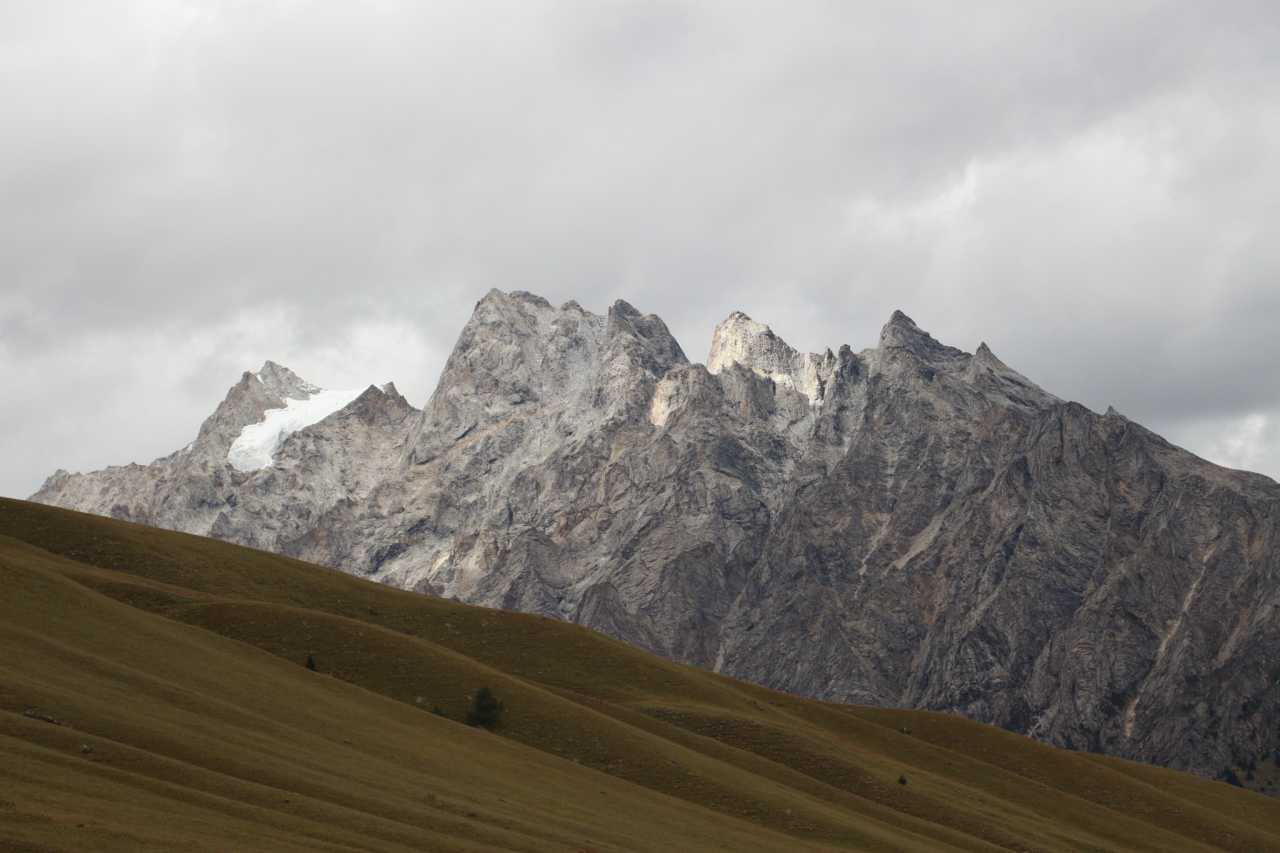
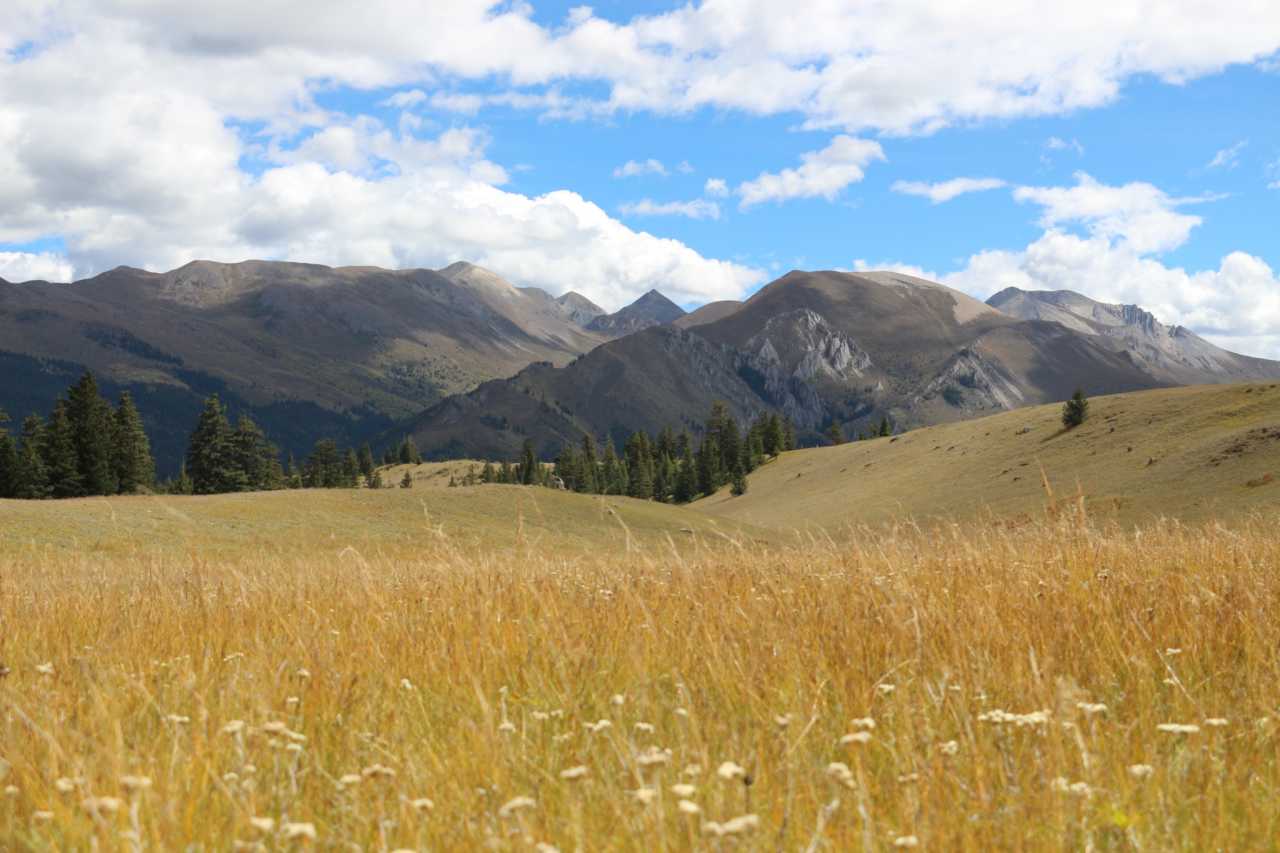
More captivating than the Eye itself were the towering Genie peaks, the brilliant autumn river valley, the free wind, the endless wilderness, and the sheer exhilaration of it all.
Photography tip: For the best Eye of Genie photography, bring a drone or hike to a higher vantage point. The aerial view is where the magic happens.
[Link: Best drones for high-altitude photography]
The Trek Begins: From New Lenggu Temple to Hangda Camp
New Lenggu Temple: Starting at the Sacred Gate
After leaving the Eye of Genie, they continued to New Lenggu Temple—the starting point of the Genie C+V trek. After a bumpy ride on a dirt road, they arrived at noon (and yes, Brother Hua threw up again). There were hardly any tourists, and no other trekkers in sight—they were the only hiking group. After meeting up with the motorcycle team and handing over their luggage, they were ready to go.
"Lenggu" means "sacred gate." New Lenggu Temple sits at the foot of Mount Genie, as if guarding the mountain's holy entrance. Its red, white, and yellow walls are distinctly Tibetan, with a golden roof glittering brilliantly—a perfect blend of elegance and opulence. As they passed through the temple, a friendly young monk ran over to greet them and offered words of encouragement.
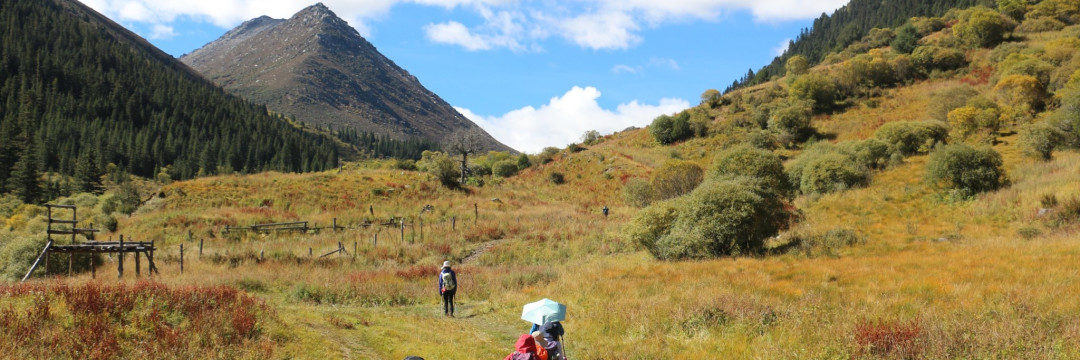
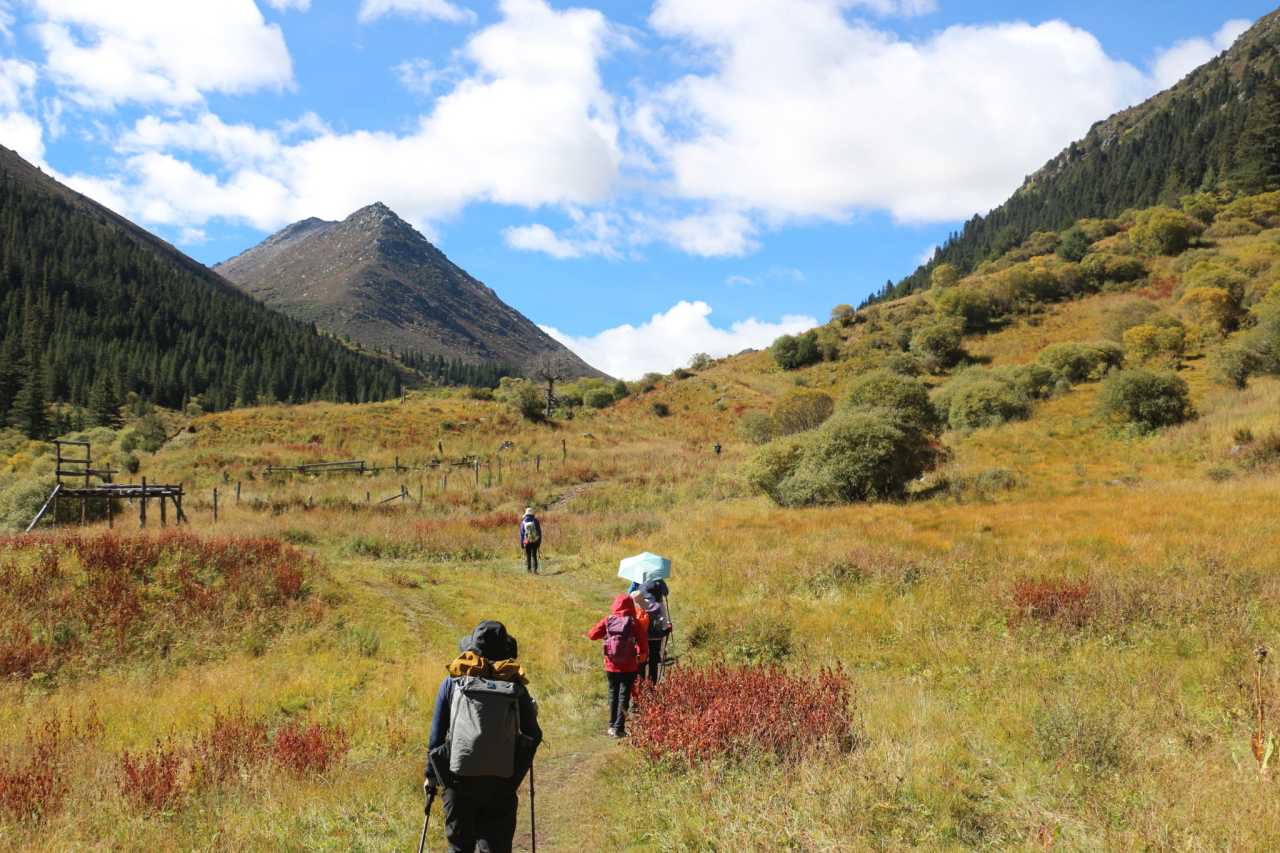
They started climbing behind the temple, with tall spruce trees lining the path, blocking out the blue sky and blazing sun, casting dappled shadows. Hanging moss drifted in the wind, adding a touch of loneliness to the primeval forest.
Trekking route note: The Genie C+V trek is a moderate-to-challenging route. Start early to avoid afternoon winds and altitude complications.
Alpine Meadow: Autumn That Takes Your Breath Away
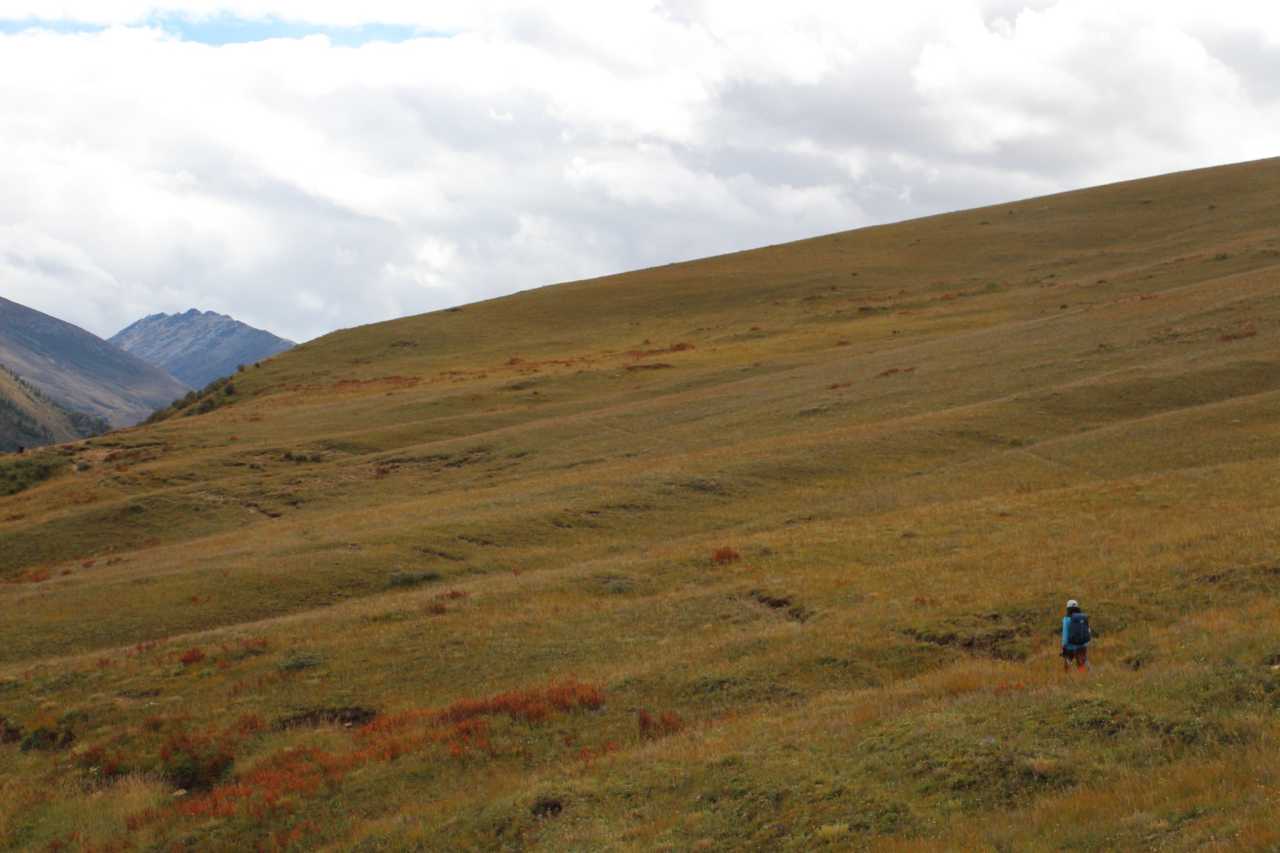
The selection of the rear guard came sooner than expected. Right from the start, clear groups formed: Jiejie, Sister Jade, April, and Damai led the charge; Blackie and Flathead Fish stayed at the very back; everyone else scattered in between. Koala and Elim's altitude sickness hit harder than anticipated—they started feeling drowsy as soon as they began climbing, missing the most beautiful alpine meadow on the ridge.

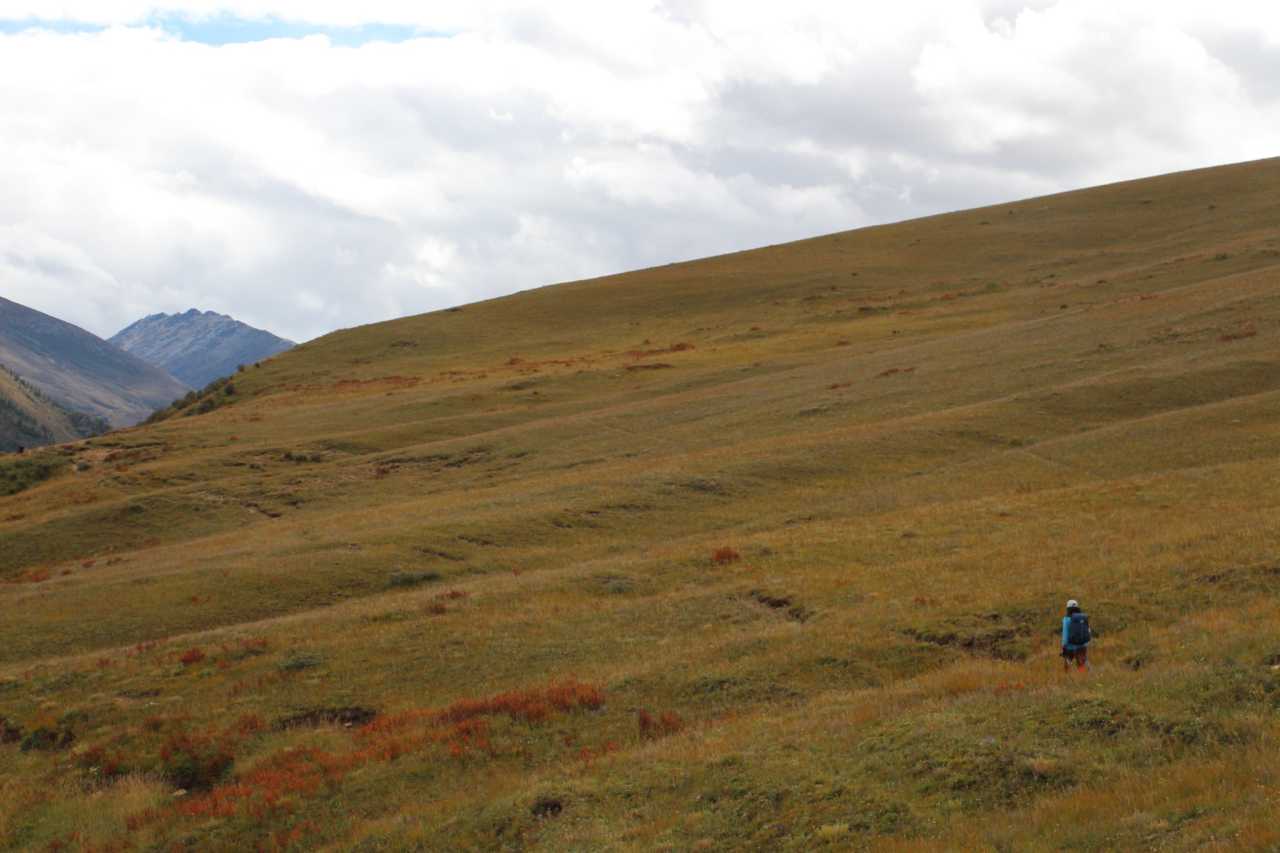
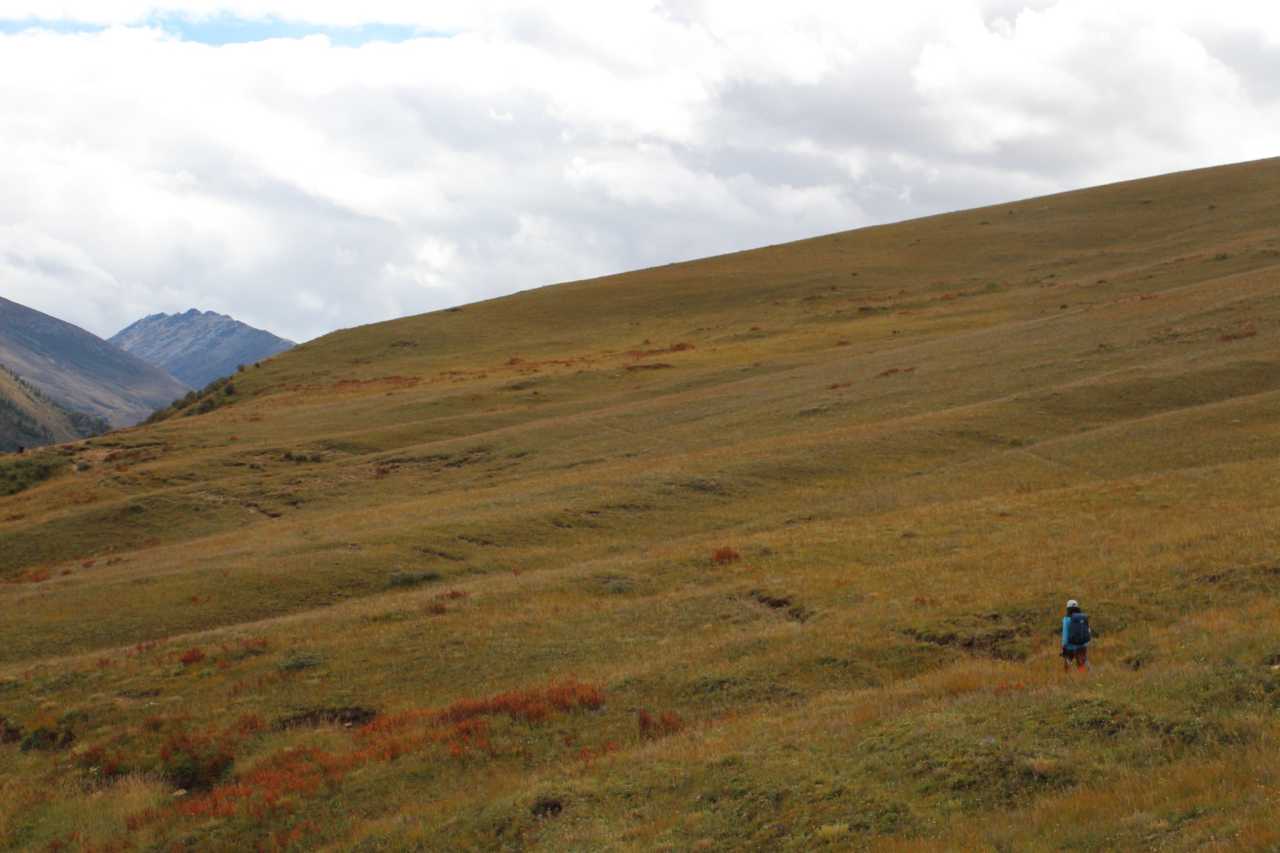
The alpine meadow was a carpet of gold and crimson, with wildflowers clinging to life in the thin air. The contrast between the deep green pines and the fiery autumn leaves was something you could only see in Western Sichuan. This was the feast they had come for—a visual banquet that no camera could fully capture.
Best time to visit: Late September to mid-October is the peak autumn season in Western Sichuan. Colors are at their most vibrant.
Hangda Camp: Night Under the Stars
After a grueling climb, they reached Hangda Camp at 4,200 meters. The camp was a simple clearing surrounded by jagged peaks. Tents went up quickly, and soon the smell of instant noodles and hot tea filled the air. The group huddled together, sharing stories and laughter as the temperature dropped below freezing.
The sky that night was a masterpiece. With zero light pollution, the Milky Way stretched across the horizon like a river of diamonds. Shooting stars streaked by every few minutes. For a moment, everyone forgot the altitude sickness, the exhaustion, the 15-hour drives—they were just tiny humans under an infinite sky.
Camping gear tip: Bring a 4-season tent and a sleeping bag rated to -10°C or lower. The nights are brutally cold at 4,200 meters.
Seda: The Crimson Monastery on the Plateau
Driving to Seda: A Scenic Transition
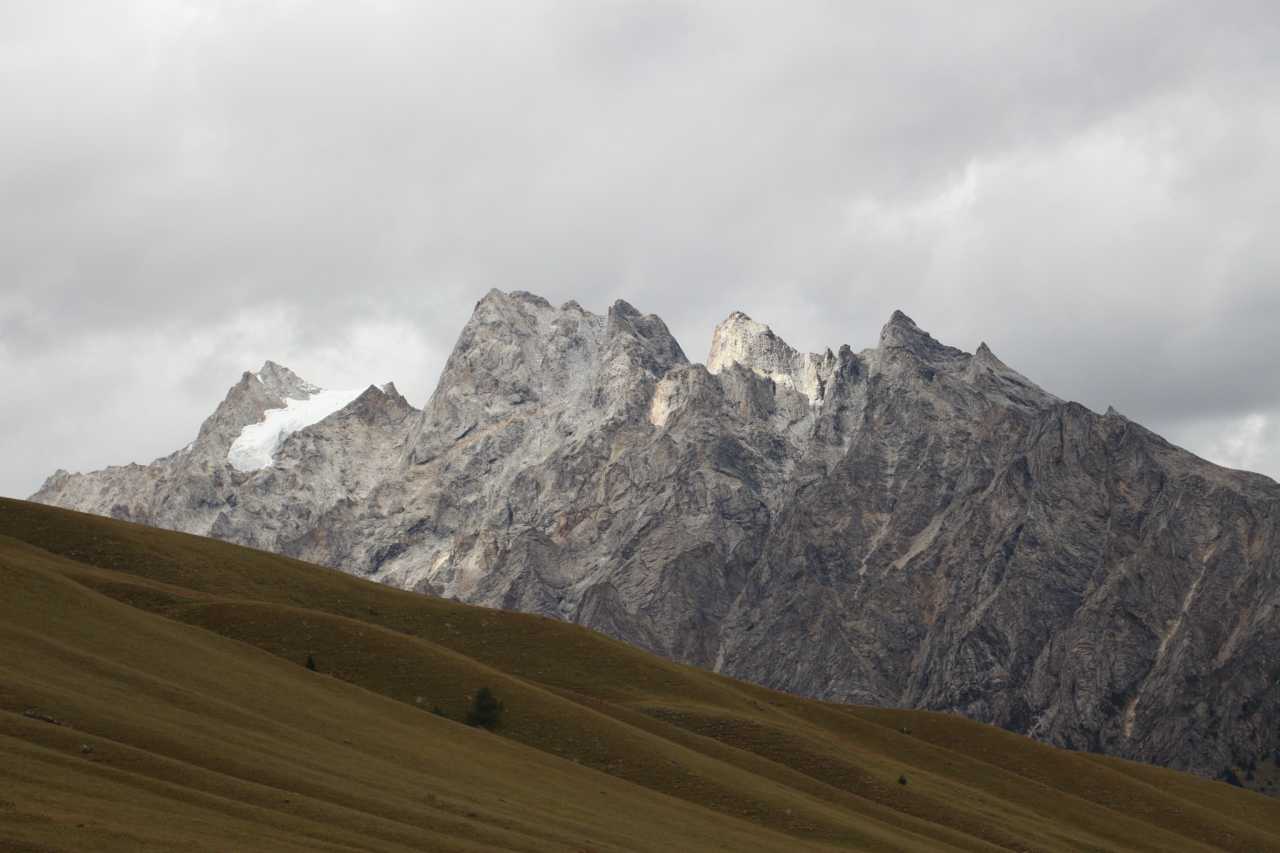
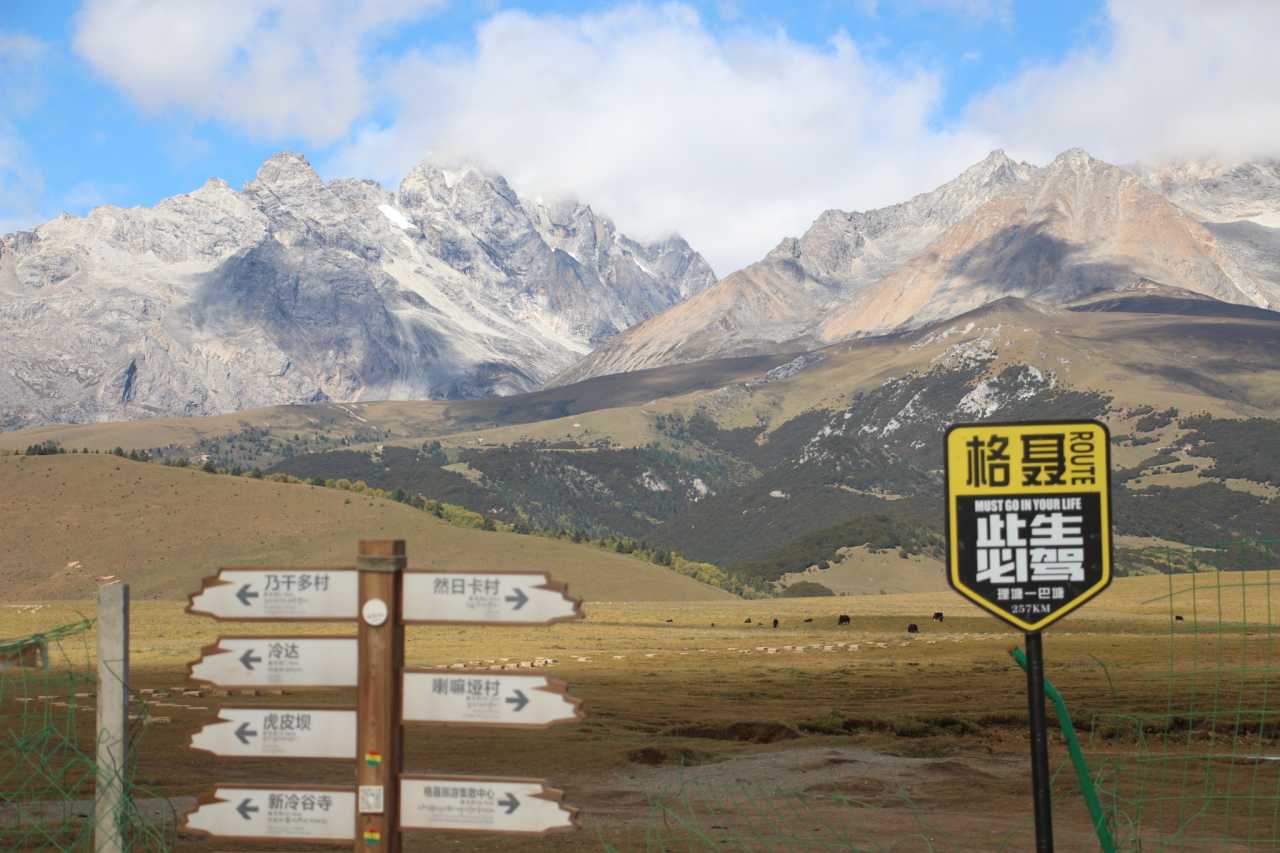
After completing the Genie trek, the group drove to Seda—a journey that took them through some of the most dramatic landscapes in Western Sichuan. The road wound through deep gorges, past turquoise rivers, and over passes that seemed to touch the sky.
Seda is famous for the Seda Larung Gar Buddhist Academy—the largest Tibetan Buddhist institute in the world. Thousands of crimson-colored wooden huts cling to the hillsides, creating a surreal, almost otherworldly sight. Monks and nuns in maroon robes walk the narrow alleys, prayer flags flutter in the wind, and the sound of chanting fills the air.
Exploring Seda: A Spiritual Interlude
The group spent two days exploring Seda. They visited the main prayer hall, climbed to the hilltop for panoramic views, and even attended a teaching session. For many, this was a spiritual reset—a chance to reflect on the journey so far and the challenges ahead.
Cultural tip: Respect local customs. Dress modestly, ask before taking photos of monks or nuns, and avoid loud conversations near prayer halls.
[Link: Tibetan Buddhist etiquette guide for travelers]
FAQ: Planning Your Own Genie and Seda Trek
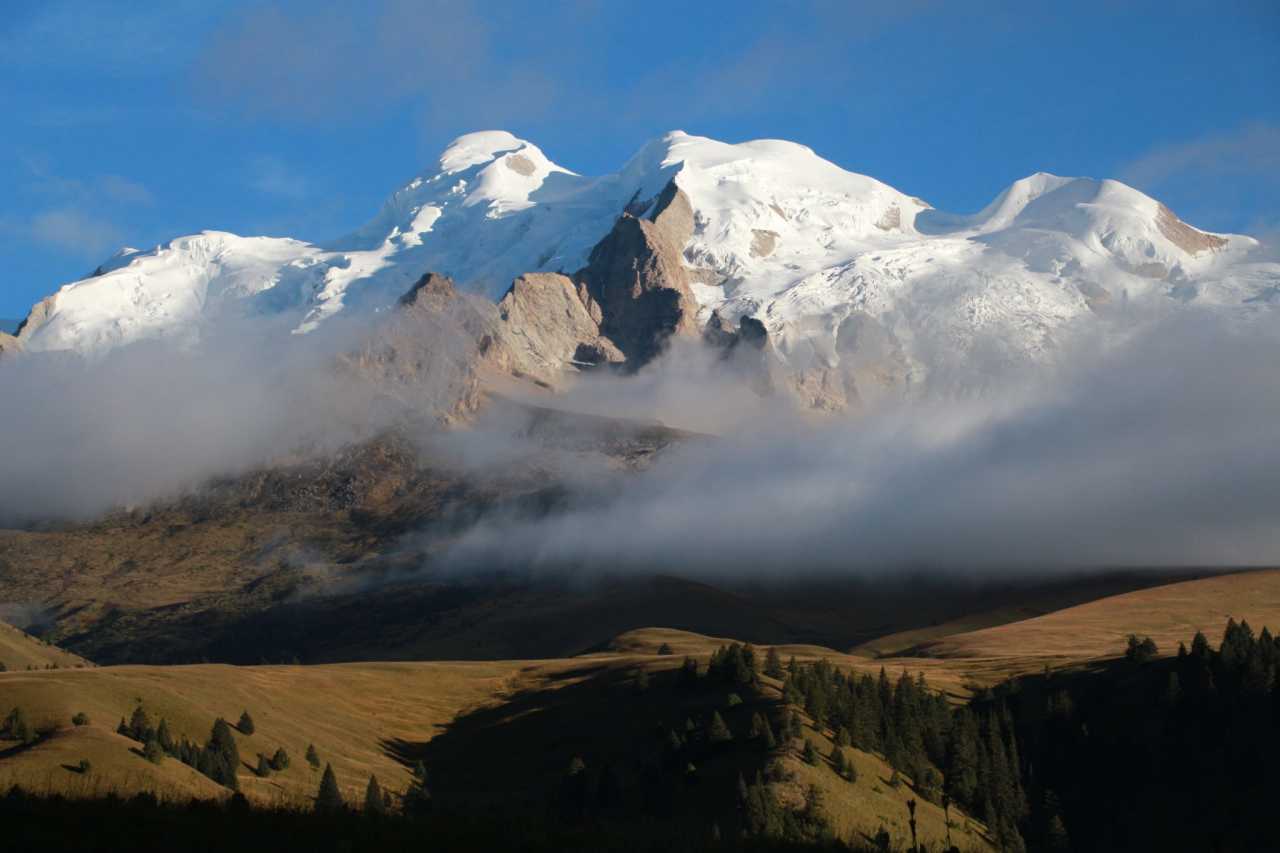
1. What is the best time to trek through Genie and Seda?
The best time for a Western Sichuan autumn trek is from late September to mid-October. During this period, the autumn foliage is at its peak, temperatures are moderate (though cold at night), and the skies are generally clear. Avoid the National Day holiday (October 1-7) if possible, as crowds and prices spike.
2. How difficult is the Genie C+V trek?
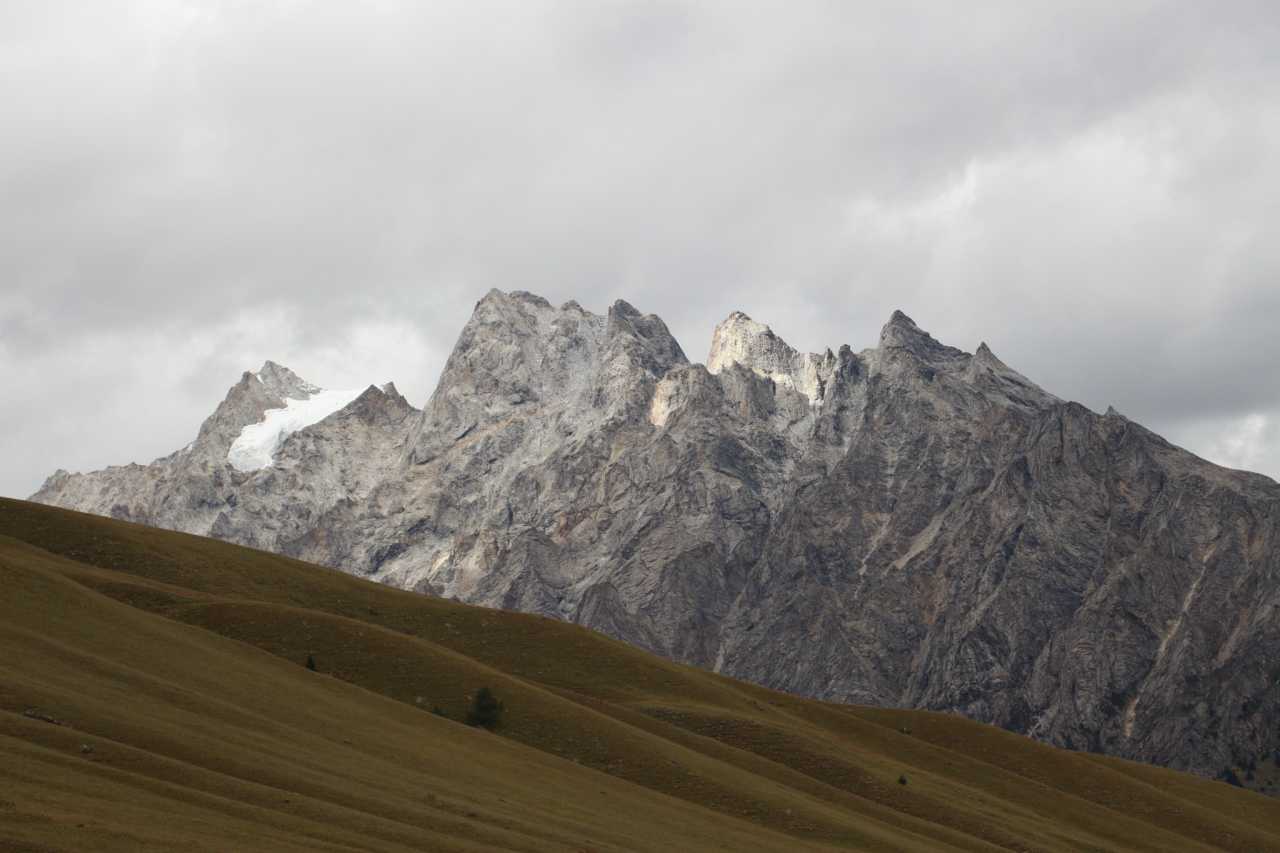
The Genie C+V trek difficulty is moderate to challenging. It involves multiple days of hiking at altitudes between 4,000 and 5,000 meters, with steep ascents and descents. Prior trekking experience and good physical fitness are recommended. Altitude sickness is a real risk—acclimatize properly.
3. What should I pack for a Genie and Seda trek?
Essentials include: - Altitude sickness medication (Diamox recommended) - 4-season tent and sleeping bag (rated to -10°C) - Waterproof hiking boots and gaiters - Layered clothing (thermal base, fleece, down jacket, shell) - Sun protection (hat, sunglasses, SPF 50+ sunscreen) - First aid kit and water purification tablets - Headlamp with extra batteries - High-energy snacks (nuts, energy bars, dried fruit)
4. Can I do this trek independently, or do I need a guide?
While it's possible to do the Genie Seda trekking route independently, a guide is strongly recommended. The terrain is remote, weather can change rapidly, and altitude sickness can be dangerous. A local guide also handles logistics like vehicle rentals, permits, and camping arrangements.
5. How do I get to the starting point from Chengdu?
The most common route is to fly or take a train to Chengdu, then drive to Litang (about 12-15 hours). Many travelers charter a Chengdu to Litang group vehicle to share costs. From Litang, it's a 2-hour drive to the Eye of Genie and New Lenggu Temple.
Conclusion: Your Autumn Feast Awaits
The journey through Genie and Seda is more than a trek—it's a transformation. It's the moment you stand at 4,600 meters, gasping for air but grinning from ear to ear. It's the night you sleep under the Milky Way, feeling both insignificant and infinitely connected. It's the taste of victory when you complete a climb that seemed impossible.
This autumn, don't just watch the leaves change color from your window. Step into the wilds of Western Sichuan. Measure the land with your feet. Feel the cold wind on your face. And discover the feast that nature has prepared for those brave enough to seek it.
Ready to plan your own adventure? [Link: Book a guided Genie and Seda trek today] or [Link: Download our free Western Sichuan trekking checklist]
Article originally adapted from a Mafengwo travelogue. All factual details preserved and expanded for SEO optimization.
You may also like


