Treading Millennia-Old Stone Slabs, Seeking Echoes of Ancient Shu: A Time-Traveling Trek
Meta Description: Discover the Ancient Shu Road, a UNESCO Tentative World Heritage site winding through Sichuan and Shaanxi. Trek the Golden Bull Road, explore millennium-old cypress groves, and uncover 2,300 years of Chinese history. Plan your adventure today.
Prologue: When Footsteps Knock on History's Door
Hidden among the towering peaks where Sichuan and Shaanxi provinces meet lies a network of stone pathways polished smooth by centuries of use. Once the "highways" of ancient China, they connected the Land of Abundance (the Chengdu Plain) with the Guanzhong Plain (the Xi'an region), carrying the footsteps of merchants, armies, scholars, and messengers. This is the Ancient Shu Road — a millennium-old route winding through the Qinling Mountains, the Daba Mountains, the Jialing River, and the Han River.
Today, as modern highways and railways streak like silver dragons through these mountains, over 80% of these ancient roads have vanished into the dust of history. The remaining 20% are listed on the UNESCO Tentative World Heritage List, forming the core area for a bid to be recognized as a World Natural and Cultural Heritage site. And I, along with four like-minded companions, decided to measure this fading imprint of civilization with our own feet.
What Is the Ancient Shu Road? A Millennium-Long Epic of a Single Path
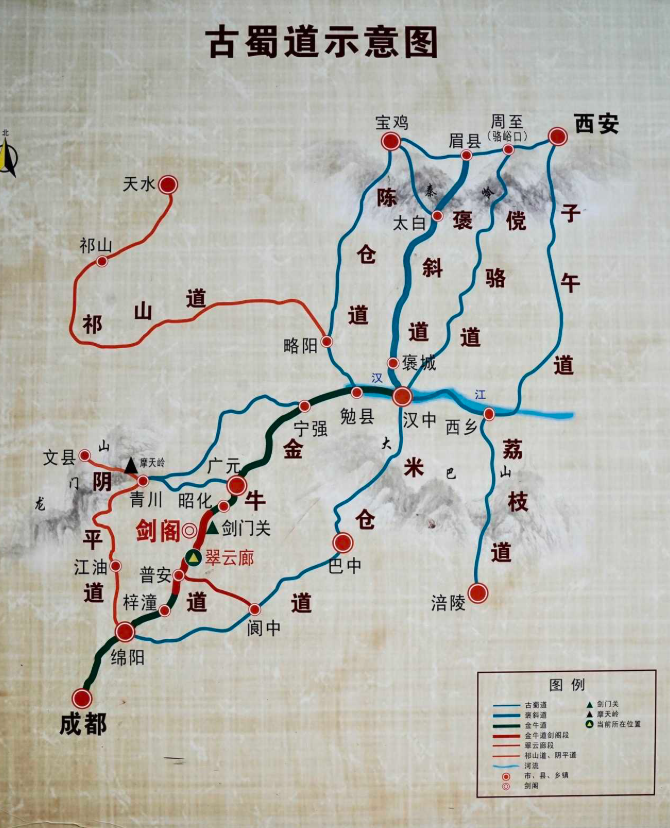
The Ancient Shu Road is not a single route but a network of ancient roads. Scholars generally agree that it consists of seven main routes: four in the north — the Chencang Road, the Baoye Road, the Tangluo Road, and the Ziwu Road — and three in the south — the Golden Bull Road, the Rice Granary Road, and the Lychee Road. These roads spread like arteries across the land, winding through perilous mountains and valleys, narrow and treacherous, rising and falling with the terrain.
The focus of our trek was the oldest and most culturally rich of them all: the Golden Bull Road (also known as the Sword Gate Shu Road or the Stone Ox Road).
The Legendary Origins of the Golden Bull Road
During the Warring States period (475–221 BCE), King Huiwen of Qin wanted to conquer the Shu kingdom but had no road to reach it. He devised a ruse, claiming he had stone oxen that could "produce gold dung" and wished to gift them to the Shu king. Greedy and gullible, the Shu king ordered five strong men and over a thousand laborers to carve a path through the mountains to receive the oxen. Once the road was built, the Qin army followed, and the Shu kingdom was destroyed.
From 316 BCE, when Qin conquered Ba and Shu, the Golden Bull Road served as an official thoroughfare for over 2,300 years, only fading from use in 1936 when the Sichuan-Shaanxi Highway opened. Stretching over 600 kilometers, it began in Chengdu, passed through Luojiang County in Deyang, Zitong County in Mianyang, and Jiange County in Guangyuan, then headed northeast to Ningqiang County in Shaanxi, finally reaching Hanzhong, where it connected to the Baoye Road and extended all the way to Xi'an.
[Link: History of the Warring States period in China]
Our Trekking Route: Three Highlight Sections, a Seven-Day Journey
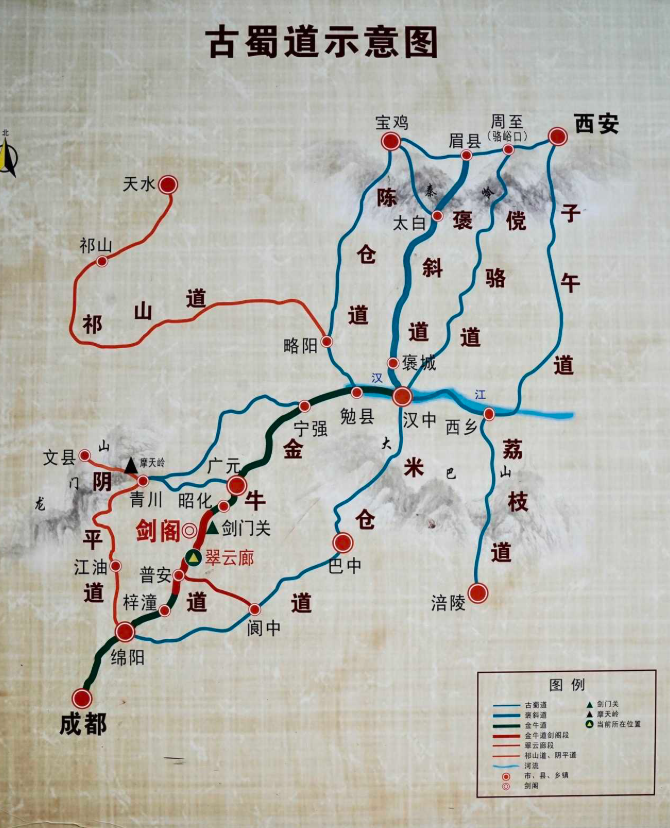
We chose the three most representative segments of the Golden Bull Road:
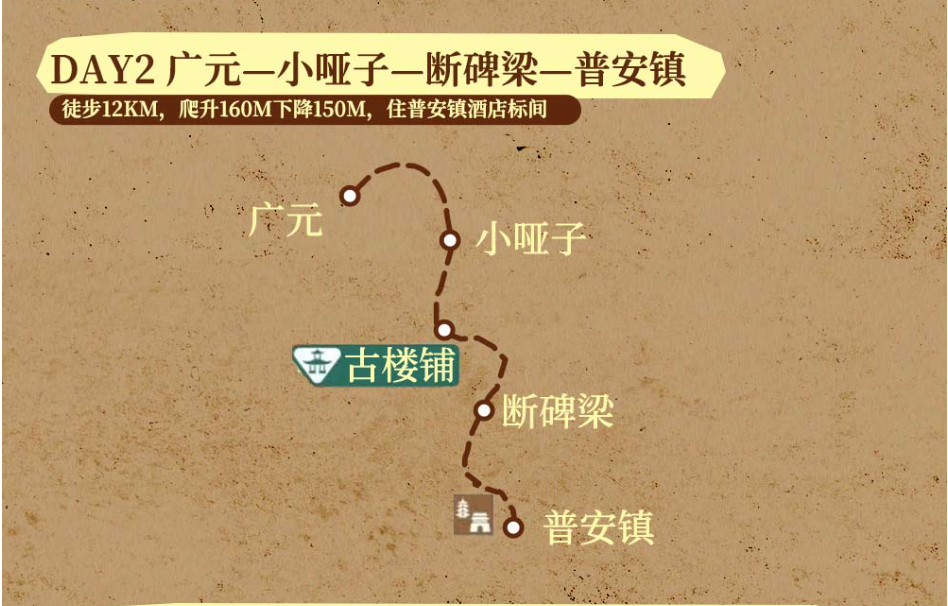
- Segment 1: Xiaoyazi → Broken Stele Ridge → Pu'an Town
- Segment 2: Pu'an Town → Chaoshou Post → Hanyang Post → Green Cloud Corridor → Xiasi Town
- Segment 3: Xiasi Town → Sword Gate Pass → Gaomiao Post → Wangfu Bridge → Zhaohua Ancient City
The entire trip lasted seven days, with three days of hiking and the rest spent visiting the Thousand Buddha Cliff, the Huangze Temple, and the ancient city of Langzhong.
Travel Companions
Cai Cai, Qiu Qiu, A Cai, Lao Fan, and Liang Tongxue — five kindred spirits — along with two professional guides, formed our 11-person trekking team.
Day One: From the City to the Ancient Road, the First Step Across a Millennium
Arriving in Guangyuan: First Impressions of the Northern Gateway of Sichuan

On the evening of July 12, we flew into Guangyuan. This city, historically known as Lizhou, has long been called the "Northern Gateway of Sichuan, the Throat of the Shu Road." It is a concentrated showcase of pre-Qin plank road culture and Shu Road culture, as well as a core corridor of Three Kingdoms history. More importantly, it is the birthplace of the only female emperor in Chinese history — Wu Zetian.
[Link: Top attractions in Guangyuan, Sichuan]
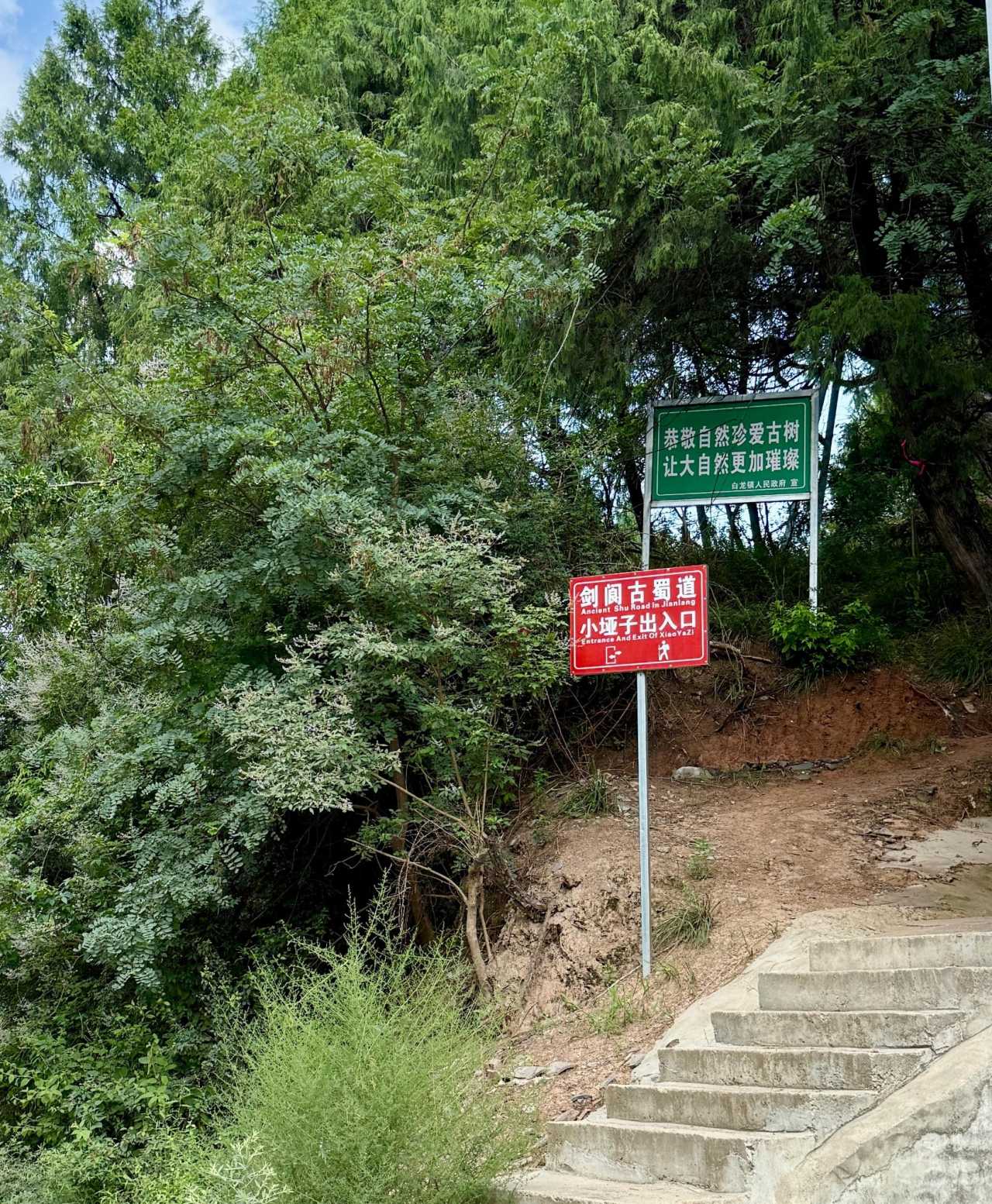
Xiaoyazi: The Charm of an Original Earth Path
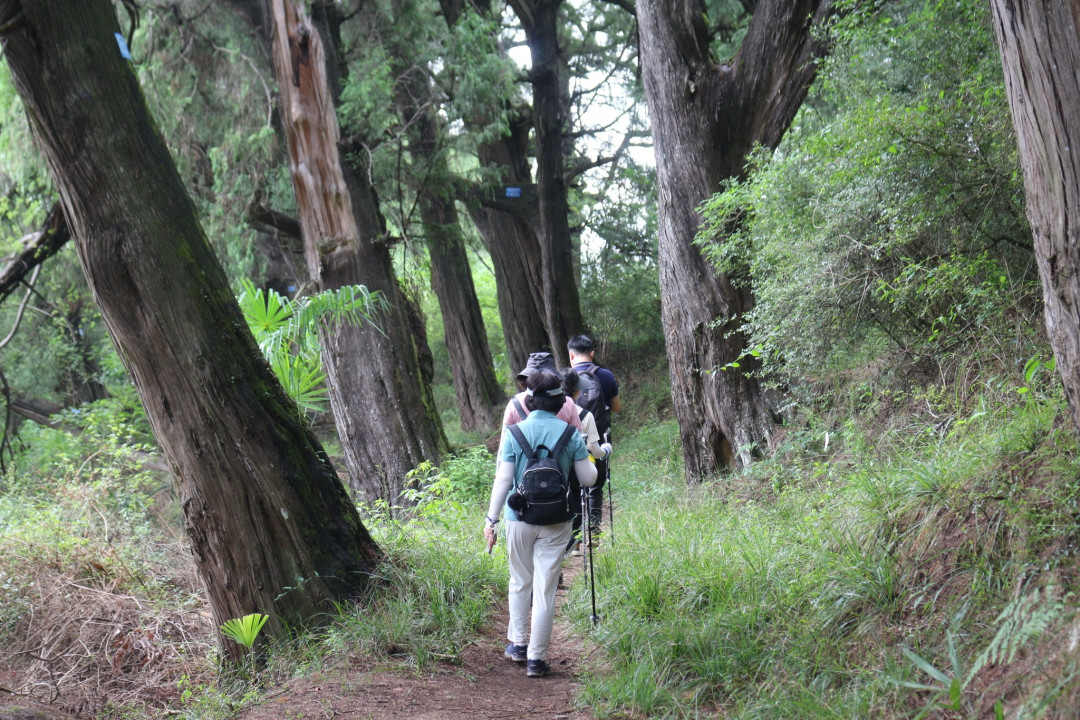
The next morning, we drove to our starting point — Xiaoyazi. This is the beginning of the southern section of the Green Cloud Corridor on the Golden Bull Road. Unlike other segments, the path here is unpaved earth, making it more comfortable to walk on and more authentic in feel. On both sides, millennium-old cypress trees stood in dense rows, as if lining up to welcome us.
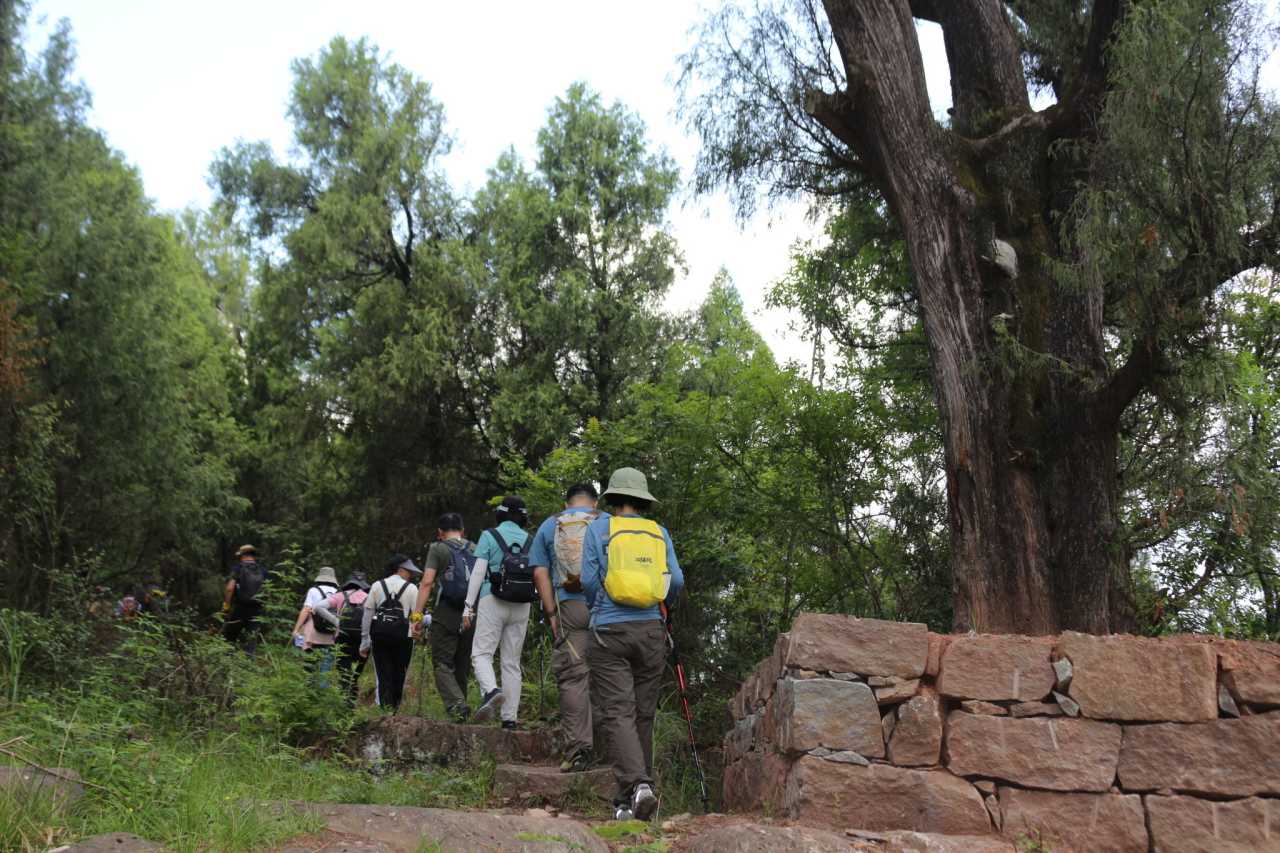
Stepping onto the trail, we began our first day of hiking. The winding earth path was flanked by towering ancient cypresses, their thick trunks and lush foliage shielding us from the scorching sun. Walking among them, I couldn't help but appreciate the wisdom of the old saying: "One generation plants trees, another enjoys their shade."
Our guide told us that this section of the Ancient Shu Road had only been lightly maintained and remained largely in its original state. Beneath the earth beneath our feet lay the blue stone slabs laid a thousand years ago. Over the centuries, wind and sand had piled up layer by layer, burying the stones and shaping the path as we saw it today.
The Origin of the Imperial Cypress Ancient Road
After Emperor Qin Shi Huang unified China, he recognized the strategic importance of the Ba-Shu region and ordered countless cypress trees to be planted along the Golden Bull Road, along with numerous state-run post stations and rest stops for merchants. More than 2,000 years later, these trees still thrive, earning the road the title of "the world's oldest road greening project." In honor of the First Emperor's achievements, the Golden Bull Road is still called the "Imperial Cypress Ancient Road," and a village along its southern section is named Imperial Cypress Village.
The Dust of History and the Vigil of Ancient Cypresses
During the late Han and Three Kingdoms period, Liu Bei's entry into Sichuan, as well as Zhuge Liang and Jiang Wei's northern expeditions against the Cao Wei kingdom, all passed through the Golden Bull Road. During the Tianbao era of Emperor Xuanzong's reign in the Tang dynasty, when the An Lushan Rebellion broke out, the emperor himself fled to Chengdu via this very road. The great poet Li Bai's famous poem "The Difficulty of the Shu Road" vividly describes the perils of this ancient path.
The wheel of history never stops turning. Everything from the past has dissolved into this long, deep ancient road, leaving only these cypress trees — like forgotten specks of dust, waiting to be rediscovered one day.
Gulou Post and Broken Stele Ridge
Gulou Post was once a relay station on the Golden Bull Road for transmitting messages, but today only its name remains; the "post" itself is long gone. There were no supply points along the entire hiking route, so we brought packed lunches and ate under a giant cypress tree at midday.
In recent years, the government has taken steps to protect the ancient cypresses along the Shu Road. Many trees bear nameplates indicating their age; some have been coated with tung oil to prevent insect damage, while others have been fitted with nutrient drips. A sudden downpour added an unexpected twist to our hike — the earth turned soft and muddy, and our rain jackets made us feel like we were in a steam bath, sweat pouring down. But when the rain cleared, all the fatigue turned into beautiful memories.
The broken stele had long been buried under yellow earth, with only a signboard telling me it had once existed. By the end of the hike, our shoes were caked with mud — the proudest badge of honor for any trekker.
Crane Mountain Taoist Temple and Pu'an Town
After a brief rest, we drove to the Crane Mountain Taoist Temple on Mount Crane in Pu'an Town, Jia... (continued in next section)
Day Two: Pu'an Town to Xiasi Town — Walking Through the Green Cloud Corridor
Chaoshou Post and Hanyang Post: Relics of the Post System
On the second day, we set out from Pu'an Town and followed the ancient path toward Chaoshou Post and Hanyang Post. These were once bustling relay stations where horses were changed and messengers rested. Today, only stone foundations and a few broken walls remain, but the atmosphere is palpable. The Green Cloud Corridor — a continuous stretch of ancient cypress trees — provides a natural canopy that makes this section one of the most photographed on the entire route.
[Link: Best hiking trails in Sichuan]
Xiasi Town: Gateway to Sword Gate Pass
By late afternoon, we reached Xiasi Town, a historic settlement that served as a staging post for travelers heading north. The town retains its old-world charm, with traditional wooden buildings and narrow lanes. We stayed at a local guesthouse, enjoying a hearty meal of Sichuan cuisine — mapo tofu, twice-cooked pork, and local pickles.
Day Three: Sword Gate Pass to Zhaohua Ancient City — The Heart of Three Kingdoms History
Sword Gate Pass: The Impregnable Fortress
The highlight of Day Three was Sword Gate Pass (Jianmen Pass), one of the most famous strategic points on the Golden Bull Road. Known as the "First Pass Under Heaven," it has witnessed countless battles, from the Three Kingdoms era to the Second Sino-Japanese War. The pass is flanked by sheer cliffs, and the narrow stone path winds upward through a series of gates. Standing at the top, looking down at the winding road below, you can almost hear the echoes of ancient armies.
Gaomiao Post and Wangfu Bridge
From Sword Gate Pass, we continued to Gaomiao Post, another well-preserved relay station, and then crossed Wangfu Bridge, a stone arch bridge dating back to the Ming dynasty. The bridge spans a deep ravine, and the view of the surrounding mountains is breathtaking.
Zhaohua Ancient City: A Living Museum
Our final destination was Zhaohua Ancient City, a perfectly preserved Ming- and Qing-era town on the banks of the Jialing River. With its cobblestone streets, ancient city walls, and traditional courtyard houses, Zhaohua feels like stepping back in time. We spent the evening exploring the town and sampling local snacks.
[Link: Ancient towns in Sichuan worth visiting]
Beyond the Trek: Thousand Buddha Cliff, Huangze Temple, and Langzhong
After completing the three-day hike, we spent the remaining days exploring:
- Thousand Buddha Cliff (Qianfo Ya) — a cliff face carved with over 7,000 Buddhist statues dating from the Tang to the Qing dynasties.
- Huangze Temple — a temple dedicated to Wu Zetian, located in Guangyuan, featuring beautiful architecture and a museum of her life.
- Langzhong Ancient City — one of the best-preserved ancient cities in China, known for its Feng Shui layout, historic buildings, and delicious vinegar products.
[Link: Langzhong travel guide]
Frequently Asked Questions About the Ancient Shu Road Trek
1. How difficult is the Ancient Shu Road trek?
The trek is moderately challenging. The terrain is uneven, with some steep sections, but no technical climbing is required. Good physical fitness and proper hiking shoes are essential. The total hiking time is about three days, covering approximately 30-40 kilometers.
2. When is the best time to trek the Ancient Shu Road?
The best seasons are spring (March-May) and autumn (September-November). Summer can be hot and humid, with frequent rain, while winter may bring snow and ice, making the path slippery.
3. Do I need a guide to trek the Ancient Shu Road?

Yes, it is highly recommended to hire a local guide. The trail is not always well-marked, and sections can be overgrown. A guide ensures you stay on the correct path and provides valuable historical context. You can arrange guides through local tour operators in Guangyuan or Chengdu.
4. What should I pack for the trek?
Essentials include: sturdy hiking boots, rain gear, insect repellent, a hat, sunscreen, a reusable water bottle, snacks, a first-aid kit, and a camera. Pack light, as you'll be carrying your own gear.
5. Can I visit the Ancient Shu Road independently without a trekking group?
Yes, you can visit individual sections independently, especially near Sword Gate Pass and Zhaohua Ancient City, which are accessible by road. However, for the full trekking experience through the Green Cloud Corridor, a guided group is recommended for safety and navigation.
Conclusion: Step into History — Plan Your Ancient Shu Road Adventure Today
Treading the millennia-old stone slabs of the Ancient Shu Road is more than a hike — it's a pilgrimage through 2,300 years of Chinese history. From the legendary Golden Bull Road to the towering Sword Gate Pass, from the silent vigil of Imperial Cypress trees to the living heritage of Zhaohua Ancient City, every step connects you to the merchants, armies, poets, and emperors who walked before you.
The road is fading, but its echoes remain. Don't let this UNESCO Tentative World Heritage site disappear into dust without experiencing it yourself.
Start planning your Ancient Shu Road trek today. Whether you join a guided group or explore independently, the journey will leave you with memories that last a lifetime.
[Link: Book your Sichuan adventure tour]
Have you trekked the Ancient Shu Road? Share your experience in the comments below, or ask us any questions about planning your trip!